Lorans
Italy
Table of Contents
- Package leaflet: Information for the patient
- Lorans 2mg/ml oral drops, solution
- 1. What Lorans is and what it is used for
- 2. What you should know before taking Lorans
- 3. How to take Lorans
- 4. Possible side effects
- 5. How to store Lorans
- 6. Package contents and other information
- Patient information leaflet: information for the patient
- Lorans 1mg tablets, 2.5mg tablets
- 1. What Lorans is and what it is used for
- 2. What you should know before taking Lorans
- 3. How to take Lorans
- 4. Possible side effects
- 5. How to store Lorans
- 6. Package contents and other information
Package leaflet: Information for the patient
Lorans 2mg/ml oral drops, solution
Lorazepam
Please read this leaflet carefully before taking this medicine because it contains
important information for you.
- Keep this leaflet. You may need to read it again.
- If you have any questions, ask your doctor or pharmacist.
- This medicine has been prescribed for you only. Do not give it to other people, even if their symptoms are the same as yours, because it could be harmful.
- If you experience any side effects, including those not listed in this leaflet, tell your doctor or pharmacist. See section 4.
Contents of this leaflet:
- What Lorans is and what it is used for
- What you need to know before taking Lorans
- How to take Lorans
- Possible side effects
- How to store Lorans
- Contents of the pack and other information
1. What Lorans is and what it is used for
Lorans contains the active substance lorazepam and belongs to a group of medicines called benzodiazepines, which can help relieve anxiety.
Lorazepam is indicated for the treatment of anxiety, anxiety-related disorders, and sleep disorders.
Benzodiazepines are used only when the condition is severe and causes distress in normal daily life.
2. What you should know before taking Lorans
Do not take Lorans
- if you are allergic to lorazepam, benzodiazepines, or any of the other ingredients of this medicine (listed in section 6)
- if you suffer from a disease called myasthenia gravis which causes muscle weakness and fatigue
- if you have severe liver problems (severe hepatic insufficiency)
- if you have severe respiratory problems (severe respiratory insufficiency)
- if you have breathing problems during sleep (sleep apnea)
- if you have a type of eye disease characterized by pain and increased pressure inside the eye, known as narrow-angle glaucoma
- if you are or think you may be pregnant
- if you are breastfeeding.
If any of these conditions apply to you, do not take Lorans and consult your doctor or pharmacist.
Warnings and precautions
Talk to your doctor or pharmacist before taking Lorans.
It is particularly important to consult your doctor or pharmacist before taking Lorans:
- if you have respiratory or heart problems, as benzodiazepines may cause respiratory depression, which in severe cases can lead to death,
- if you suffer or have ever suffered from allergic reactions to benzodiazepines. This medicine may cause severe and rapidly occurring allergic reactions (anaphylactic/anaphylactoid reactions), or swelling of the face, tongue, and throat with difficulty swallowing and breathing (angioedema). Sometimes, these reactions can be fatal. If one or more of these symptoms occur, go immediately to the nearest emergency department,
- if you abuse or have previously abused drugs or alcohol. In such cases, you may be more likely to become dependent on Lorans (feel the need to continue taking the medicine) (see sections 3 “How to take Lorans” and 4 “Possible side effects”),
- if you suffer from depression, as Lorans may bring out or increase suicidal thoughts you may have due to this illness,
- if you have kidney or liver problems: your doctor will arrange appropriate monitoring and advise you on the most suitable dosage for your condition.
Tolerance and dependence
The effectiveness of Lorans may decrease after several weeks of use. Lorans is recommended for short-term treatment only.
The use of benzodiazepines may lead to the development of physical dependence (physical symptoms that decrease or disappear only after taking the medicine) and psychological dependence (increasing need, desire, or excessive urge to take the medicine). The risk of dependence increases with dose and duration of treatment; it is higher in patients with a history of drug, medicine, or alcohol abuse, or marked personality disorders.
Once physical dependence has developed, abruptly stopping treatment will result in withdrawal symptoms (see section 3 “If you stop taking Lorans”).
Do not stop taking Lorans suddenly. Consult your doctor, who will assess whether and how to discontinue treatment with this medicine (see section 3 “If you stop taking Lorans”).
Memory disturbances
Lorans may cause an inability to remember events occurring after taking the medicine (anterograde amnesia). To reduce the risk of this happening, ensure you can have an uninterrupted sleep of 7–8 hours after taking this medicine.
Paradoxical reactions
Lorans may cause mental reactions and effects opposite to those expected (paradoxical effects), such as anxiety states and sleep disturbances (see section 4 Possible side effects). These effects are more common in children and elderly people.
If you experience these effects, consult your doctor.
If you are elderly and/or have specific health conditions
If you are elderly and/or your general health condition is very weak, or if you suffer from significant brain disorders (especially cerebral arteriosclerosis), you are more sensitive to the effects of Lorans.
Lorans may cause fatigue, weakness, and drowsiness, which may increase the risk of falls, often with serious consequences.
If you suffer from low blood pressure, this medicine may increase episodes of blood pressure drop.
If you have severe liver problems
If you have severe liver problems, with or without cerebral symptoms such as mental confusion, altered level of consciousness, or coma, you must not take Lorans, as it could worsen your condition (see also section 2 Do not take Lorans).
Children
Lorans must not be given to children under 12 years of age.
Other medicines and Lorans
Tell your doctor or pharmacist if you are taking, have recently taken, or might take any other medicines.
Lorans may affect how other medicines work. In particular, you must inform your doctor if you are already taking:
- medicines for sleep (hypnotics, barbiturates),
- medicines for mental disorders (neuroleptics, especially clozapine and loxapine),
- medicines for anxiety/tranquilizers (anxiolytics and sedatives),
- antidepressants,
- strong painkillers (narcotic analgesics, such as opioids),
- antiepileptics (e.g., valproate),
- anesthetics,
- allergy medicines that cause drowsiness (sedative antihistamines),
- probenecid (a medicine used to treat gout),
- medicines for mood or mental disorders (e.g., loxapine),
- medicines for bronchial asthma (theophylline and aminophylline),
- baclofen (a medicine used as a muscle relaxant),
- sodium oxybate (a medicine for sleep disorders),
- caffeine.
The concomitant use of Lorans and opioids (strong painkillers, medicines for substitution therapy, and some cough medicines) increases the risk of drowsiness, breathing difficulties (respiratory depression), coma, and can be life-threatening. For this reason, concomitant use should only be considered when no other treatment options are possible.
In any case, if your doctor prescribes Lorans together with opioids, the dose and duration of concomitant treatment must be limited by your doctor.
Inform your doctor about all opioid medicines you are taking and carefully follow the dose recommended by your doctor. It may be helpful to inform friends or family members to watch for the signs and symptoms listed above. Contact your doctor if such symptoms occur.
Inform your doctor or pharmacist that you are taking Lorans before taking any other medicine.
Lorans with food, drinks, and alcohol
You must not consume alcohol during treatment with benzodiazepines. The sedative effect may be increased when the medicine is taken with alcohol.
Inform your doctor or pharmacist if you consume caffeine (a substance mainly found in coffee, but also in many energy drinks), as it may reduce the effects of Lorans.
Pregnancy and breastfeeding
If you are pregnant, think you may be pregnant, are planning a pregnancy, or are breastfeeding, consult your doctor or pharmacist before taking this medicine.
Pregnancy
Do not take Lorans during pregnancy, as benzodiazepines, including lorazepam, may cause harm to the fetus if taken during the first trimester of pregnancy (see section 2 “Do not take Lorans”).
If your doctor decides that Lorans must be taken during the last stages of pregnancy or during childbirth, the newborn may, after birth, show reduced muscle tone, breathing difficulties, feeding problems, decreased motor activity, and low body temperature. If Lorans is taken in the late stages of pregnancy, the newborn may develop withdrawal symptoms after birth.
Breastfeeding
Do not take Lorans if you are breastfeeding, as benzodiazepines, including lorazepam, may pass into breast milk and cause drowsiness and reduced ability to suckle in the newborn (see section 2 “Do not take Lorans”).
Driving and using machines
Lorans may cause sedation, reduced attention, memory disturbances, difficulty concentrating, and impaired muscle function. These effects may negatively affect your ability to perform tasks requiring alertness, such as driving or operating machinery. Additionally, if the duration of sleep during Lorans intake is insufficient, the risk of concentration difficulties may be increased.
Do not drive or operate machinery during treatment with Lorans.
Avoid concomitant alcohol intake, as the sedative effect may be increased when the medicine is taken with alcohol. This negatively affects your ability to drive or operate machinery.
Lorans contains ethanol
This medicine contains 70% vol ethanol (alcohol), e.g., up to 707 mg per dose, equivalent to 17 ml of beer or 7 ml of wine per dose. It may be harmful to alcoholics.
This should be taken into account in pregnant or breastfeeding women, children, and high-risk groups such as patients with liver disease or epilepsy.
Anti-doping tests
For individuals engaged in sports, the use of medicines containing ethyl alcohol may lead to a positive result in anti-doping tests, depending on the blood alcohol concentration limits set by certain sports federations.
3. How to take Lorans
Take this medicine exactly as directed by your doctor. If you have any doubts, consult your doctor or pharmacist.
Your doctor will prescribe the dose of Lorans appropriate for your needs and will ensure you use the lowest effective dose necessary to control your symptoms.
Treatment should be as short as possible to avoid the risk of dependence (when the body becomes accustomed to a substance and can no longer do without it) (see sections 2 "Warnings and precautions" and 4 "Side effects"). Discontinuation of the medicine must always be gradual.
Adults and children from 12 years of age
-
Anxiety: the recommended dose is 10–20 drops once or three times daily. In particularly severe cases, your doctor may instruct you to increase the dose up to 50 drops once or three times daily. Your doctor will advise you on how to divide the daily dose into multiple administrations throughout the day. The total duration of treatment should not exceed 8–12 weeks, including a gradual withdrawal period.
-
Sleep disorders: the recommended dose is 20–50 drops of Lorans to be taken in the evening. The duration of treatment generally ranges from a few days to two weeks, up to a maximum of four weeks, including a gradual withdrawal period.
Children
Lorans must not be used in children under 12 years of age.
Elderly patients (over 65 years of age) or patients with hepatic or renal impairment
If you are over 65 years of age or suffer from hepatic insufficiency or renal problems, your doctor may prescribe lower doses.
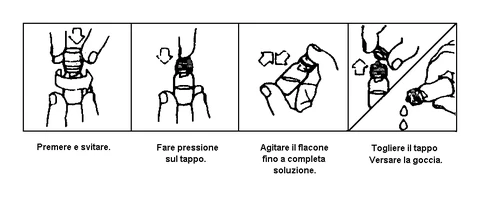
Instructions for use of the bottle:
- To open the bottle, press down and simultaneously unscrew.
- Press on the plastic cap to release the powder and shake until completely dissolved.
- To dispense the drops, remove the cap and invert the bottle.
- To close, press down and simultaneously screw on the cap.
- To reopen, press down and simultaneously unscrew.
If you take more Lorans than you should
If you have taken more drops of Lorans than prescribed by your doctor, go immediately to the nearest emergency department for medical assistance. Inform them that you are taking Lorans oral drops, solution, and bring the packaging with you, even if empty.
If you forget to take Lorans
Do not take a double dose to make up for the forgotten dose. If you forget to take a dose of Lorans for sleep disorders, take the missed dose only if you will subsequently be able to sleep for 7–8 hours.
If you stop taking Lorans
Do not stop taking Lorans suddenly.
The number of Lorans drops and the frequency of administration should always be gradually reduced before stopping treatment. This allows your body to adjust to the absence of the medicine and reduces the risk of experiencing withdrawal symptoms that may occur when stopping Lorans. Your doctor will advise you on how to gradually reduce the dose.
If you abruptly stop taking Lorans, you may experience withdrawal symptoms such as headache, muscle pain, anxiety, tension, nervousness, confusion, irritability, mood disturbances, dizziness, nausea, diarrhea, loss of appetite, or more severe symptoms such as mental disturbances, hypersensitivity to noise, light and physical touch, hallucinations, epileptic seizures, numbness and tingling in the extremities.
Additionally, if you stop treatment, the symptoms for which you started taking Lorans may return, but in a more severe form (rebound insomnia and anxiety).
If you have any questions about the use of this medicine, consult your doctor or pharmacist.
4. Possible side effects
Like all medicines, this medicine can cause side effects, although not everybody gets them.
The most common side effects, which mainly occur at the beginning of treatment and usually disappear with subsequent doses, are:
- reduced ability to perceive emotions,
- mental confusion,
- drowsiness,
- headache,
- dizziness,
- unsteadiness when walking (ataxia),
- muscle weakness,
- fatigue,
- double vision (diplopia).
Other side effects observed occasionally are:
- reduced number of blood cells called platelets or thrombocytes (thrombocytopenia),
- severe reduction in the number of blood cells called white blood cells or granulocytes (agranulocytosis),
- reduced number of all blood cells, i.e. red blood cells, white blood cells and platelets (pancytopenia),
- severe allergic reactions (hypersensitivity, anaphylactic/anaphylactoid reactions, allergic dermatitis, angioedema),
- syndrome caused by increased release into the blood of antidiuretic hormone (SIADH),
- low levels of sodium in the blood (hyponatremia),
- changes in appetite,
- sleep disturbances,
- changes in sexual desire,
- agitation, aggression, mood swings, disorientation, depression, unmasking of pre-existing depression, irritability, delirium, anger, nightmares, hallucinations, psychosis (a mental disorder which may include hallucinations, incoherent or disorganized speech, and agitated behaviour), psychological and physical dependence, behavioural changes, disinhibition, benzodiazepine abuse, delusion, euphoria, restlessness,
- suicidal thoughts / suicide attempt,
- extrapyramidal symptoms, such as involuntary movements,
- tremors,
- seizures/epileptic fits,
- coma,
- difficulty in articulating words (dysarthria),
- balance disorders and disorders of the autonomic nervous system (e.g., drop in blood pressure when assuming an upright position),
- amnesia,
- loss of concentration/attention,
- visual disturbances, eye function disorders,
- low blood pressure (hypotension),
- respiratory depression up to complete cessation of breathing (apnea),
- worsening of nocturnal apnea,
- worsening of chronic lung diseases with breathing difficulties,
- dry mouth, excessive saliva production (sialorrhea),
- nausea,
- constipation,
- yellowing of the skin (jaundice),
- skin reactions,
- increased bilirubin, increased transaminases, increased alkaline phosphatase,
- falls and resulting injuries.
Lorans may also cause dependence, i.e. a state in which the body becomes so accustomed to the medicine that it cannot do without it. In such cases, when attempting to stop treatment with the medicine, withdrawal symptoms may occur (see section 3 “If you stop taking Lorans”).
Reporting of side effects
If you experience any side effects, including those not listed in this leaflet, talk to your doctor or pharmacist. You can also report side effects directly via
http://www.agenziafarmaco.gov.it/content/come-segnalare-una-sospetta-reazione-avversa.
By reporting side effects, you can help provide more information on the safety of this medicine.
5. How to store Lorans
Keep this medicine out of the sight and reach of children.
Do not use this medicine after the expiry date stated on the pack after "Exp.".
The expiry date refers to the last day of that month.
Before opening the vial, this medicine does not require any special storage conditions.
After first opening and dissolving the powder contained in the stopper into the solvent contained in the vial, the vial must be stored in the refrigerator (2°C – 8°C) for a maximum period of 30 days.
Do not dispose of any medicine via wastewater or household waste. Ask your pharmacist how to dispose of medicines you no longer use. This will help protect the environment.
6. Package contents and other information
What Lorans contains
The active substance is lorazepam.
The reservoir cap of each bottle of Lorans oral drops, solution contains 20 mg of lorazepam.
20 drops (0.5 ml) contain 1 mg of lorazepam.
The other components are:
- reservoir cap: mannitol,
- bottle with solvent: ethanol, purified water.
Description of the appearance of Lorans and contents of the package
Lorans oral drops, solution is packaged in a cardboard box containing a glass bottle with the solvent solution and the reservoir cap containing the active substance in powder form. The reconstituted solution of Lorans oral drops is clear and colourless.
Marketing Authorization Holder
Teofarma s.r.l.
Via Fratelli Cervi, 8
27010 Valle Salimbene (Pavia) – Italy
Manufacturer
Doppel Farmaceutici S.r.l.
Quinto de’ Stampi manufacturing site
Via Volturno, 48
20089 Rozzano (MI)
Italy
Patient information leaflet: information for the patient
Lorans 1mg tablets, 2.5mg tablets
Lorazepam
Please read this leaflet carefully before taking this medicine because it contains
important information for you.
- Keep this leaflet. You may need to read it again.
- If you have any questions, consult your doctor or pharmacist.
- This medicine has been prescribed for you only. Do not give it to others, even if they have the same symptoms as yours, because it could be harmful.
- If you experience any side effect, including those not listed in this leaflet, contact your doctor or pharmacist. See section 4.
Contents of this leaflet:
- What Lorans is and what it is used for
- What you need to know before taking Lorans
- How to take Lorans
- Possible side effects
- How to store Lorans
- Contents of the pack and other information
1. What Lorans is and what it is used for
Lorans contains the active substance lorazepam and belongs to a group of medicines called benzodiazepines, which can help relieve anxiety.
Lorazepam is indicated for the treatment of anxiety, anxiety-related disorders, and sleep disorders.
Benzodiazepines are used only when the condition is severe and causes distress in normal daily life.
2. What you should know before taking Lorans
Do not take Lorans
- if you are allergic to lorazepam, to benzodiazepines, or to any of the other ingredients of this medicine (listed in section 6)
- if you suffer from a disease called myasthenia gravis which causes muscle weakness and fatigue
- if you have severe liver problems (severe hepatic insufficiency)
- if you have severe respiratory problems (severe respiratory insufficiency)
- if you have breathing problems during sleep (sleep apnea)
- if you have a type of eye disease characterized by pain and increased pressure inside the eye, called narrow-angle glaucoma
- if you are or think you may be pregnant
- if you are breastfeeding.
If any of these conditions apply to you, do not take Lorans and consult your doctor or pharmacist.
Warnings and precautions
Talk to your doctor or pharmacist before taking Lorans.
It is particularly important to consult your doctor or pharmacist before taking Lorans:
- if you have respiratory or heart problems, because benzodiazepines can cause respiratory depression, which in severe cases may even lead to death;
- if you suffer or have ever suffered from allergic reactions to benzodiazepines. This medicine may cause severe and rapidly occurring allergic reactions (anaphylactic/anaphylactoid reactions) or swelling of the face, tongue, and throat with difficulty swallowing and breathing (angioedema). Sometimes, these reactions may be fatal. If one or more of these symptoms occur, go immediately to the nearest emergency department;
- if you abuse or have previously abused drugs or alcohol. In such cases, you may be more likely to become dependent on Lorans (feel the need to continue taking the medicine) (see sections 3 "How to take Lorans" and 4 "Possible side effects");
- if you suffer from depression, because Lorans may trigger or worsen suicidal thoughts you may have due to this illness;
- if you have kidney or liver problems: your doctor will arrange for appropriate monitoring and will advise you on the most suitable dosage for your condition.
Tolerance and dependence
The effectiveness of Lorans may decrease after several weeks of use. Lorans is recommended for short-term treatment only.
The use of benzodiazepines may lead to the development of physical dependence (physical symptoms that decrease or disappear only after taking the medicine) and psychological dependence (increasing need, desire, or excessive urge to take the medicine). The risk of dependence increases with dose and duration of treatment; it is higher in patients with a history of drug, medicine, or alcohol abuse, or with marked personality disorders. Once physical dependence has developed, abruptly stopping treatment will result in withdrawal symptoms (see section 3 "If you stop taking Lorans").
Do not stop taking Lorans suddenly. Consult your doctor, who will assess whether and how to discontinue treatment with this medicine (see section 3 "If you stop taking Lorans").
Memory disturbances
Lorans may cause an inability to remember events occurring after taking the medicine (anterograde amnesia). To reduce the risk of this happening, ensure you can have an uninterrupted sleep of 7–8 hours after taking this medicine.
Paradoxical reactions
Lorans may cause mental reactions and effects opposite to those expected (paradoxical effects), such as anxiety states and sleep disturbances (see section 4 Possible side effects). These effects are more common in children and elderly people.
If you experience these effects, consult your doctor.
If you are elderly and/or have specific health conditions
If you are elderly and/or your general health condition is very weak, or if you suffer from significant brain disorders (especially cerebral arteriosclerosis), you are more sensitive to the effects of Lorans.
Lorans may cause fatigue, weakness, and drowsiness, which may increase the risk of falls, often with serious consequences.
If you suffer from low blood pressure, this medicine may increase the frequency of episodes of low blood pressure.
If you have severe liver problems
If you suffer from severe liver problems, with or without cerebral symptoms such as mental confusion, altered level of consciousness, or coma, you must not take Lorans, as it could worsen your condition (see also section 2 Do not take Lorans).
Children
Lorans must not be given to children under 12 years of age.
Other medicines and Lorans
Tell your doctor or pharmacist if you are taking, have recently taken, or might take any other medicine.
Lorans may affect how other medicines work. In particular, you must inform your doctor if you are already taking:
- medicines for sleep (hypnotics, barbiturates),
- medicines for mental disorders (neuroleptics, especially clozapine and loxapine),
- medicines for anxiety/tranquillisers (anxiolytics and sedatives),
- antidepressants,
- strong painkillers (narcotic analgesics, such as opioids),
- antiepileptics (e.g., valproate),
- anaesthetics,
- allergy medicines that cause drowsiness (sedating antihistamines),
- probenecid (a medicine used to treat gout),
- medicines for mood or mental disorders (e.g., loxapine),
- medicines for bronchial asthma (theophylline and aminophylline),
- baclofen (a medicine used as a muscle relaxant),
- sodium oxybate (a medicine for sleep disorders),
- caffeine.
The concomitant use of Lorans and opioids (strong painkillers, medicines for substitution therapy, and some cough medicines) increases the risk of drowsiness, breathing difficulties (respiratory depression), coma, and may be life-threatening. For this reason, concomitant use should only be considered when no other treatment options are possible.
In any case, if your doctor prescribes Lorans together with opioids, the dose and duration of concomitant treatment must be limited by the doctor.
Inform your doctor about all opioid medicines you are taking and carefully follow the dose recommended by your doctor. It may be helpful to inform friends or family members to watch for the signs and symptoms listed above. Contact your doctor if such symptoms occur.
Inform your doctor or pharmacist that you are taking Lorans before taking any other medicine.
Lorans with food, drinks, and alcohol
You must not consume alcohol during treatment with benzodiazepines. The sedative effect may be increased when the medicine is taken together with alcohol.
Inform your doctor or pharmacist if you consume caffeine (a substance found mainly in coffee, but also in many energy drinks), as it may reduce the effects of Lorans.
Pregnancy and breastfeeding
If you are pregnant, think you may be pregnant, are planning a pregnancy, or are breastfeeding, consult your doctor or pharmacist before taking this medicine.
Pregnancy
Do not take Lorans during pregnancy, as benzodiazepines, including lorazepam, may cause harm to the fetus if taken during the first trimester of pregnancy (see section 2 "Do not take Lorans").
If your doctor decides that Lorans should be taken during the last stages of pregnancy or during childbirth, the newborn may present with reduced muscle tone, breathing difficulties, feeding problems, decreased motor activity, and low body temperature after birth. If Lorans is taken in the late stages of pregnancy, the newborn may develop withdrawal symptoms after birth.
Breastfeeding
Do not take Lorans if you are breastfeeding, as benzodiazepines, including lorazepam, may pass into breast milk and cause drowsiness and reduced ability to suckle in the newborn (see section 2 "Do not take Lorans").
Driving and using machines
Lorans may cause sedation, reduced attention, memory disturbances, difficulty concentrating, and impaired muscle function. These effects may negatively affect your ability to perform tasks requiring alertness, such as driving or operating machinery.
Additionally, if the duration of sleep during treatment with Lorans is insufficient, the difficulty in concentration is more likely to increase.
Do not drive or operate machinery while being treated with Lorans.
Avoid concomitant alcohol consumption, as the sedative effect may be increased when the medicine is taken with alcohol. This negatively affects your ability to drive or use machinery.
Lorans contains lactose monohydrate
If your doctor has diagnosed you with an intolerance to certain sugars, consult him before taking this medicine.
3. How to take Lorans
Take this medicine exactly as directed by your doctor. If you have any doubts, consult your doctor or pharmacist.
Your doctor will prescribe the dose of Lorans appropriate for your needs and will advise you to use the lowest effective dose necessary to control your symptoms.
Treatment should be as short as possible to avoid the risk of developing dependence (when the body becomes accustomed to a substance and can no longer do without it) (see sections 2 “Warnings and precautions” and 4 “Undesirable effects”). Discontinuation of the medicine must always be gradual.
Adults and children from 12 years of age
- Anxiety: The recommended dose is 1–3 tablets of Lorans 1 mg daily. In particularly severe cases, your doctor may instruct you to increase the dose. The maximum dose is 3 tablets of Lorans 2.5 mg per day. Your doctor will advise you on how to divide the daily dose into several administrations throughout the day. The total duration of treatment should not exceed 8–12 weeks, including a period of gradual withdrawal.
- Sleep disorders: The recommended dose is 1 to 2.5 mg daily, taken in the evening. Treatment duration generally ranges from a few days to two weeks, up to a maximum of four weeks, including a period of gradual withdrawal.
Children
Lorans must not be used in children under 12 years of age.
Elderly patients (over 65 years of age) or patients with hepatic or renal impairment
If you are over 65 years of age or suffer from hepatic insufficiency or renal problems, your doctor may prescribe lower doses.
If you take more Lorans than you should
If you have taken more Lorans tablets than prescribed by your doctor, go immediately to the nearest emergency department for medical assistance. Inform them that you are taking Lorans tablets and take the packaging with you, even if empty.
If you forget to take Lorans
Do not take a double dose to make up for the missed dose.
If you forget to take a Lorans tablet for sleep disorders, take the missed tablet only if you can subsequently sleep for 7–8 hours.
If you stop taking Lorans
Do not stop taking the tablets abruptly.
The number of Lorans tablets and the frequency of administration should always be gradually reduced before stopping treatment. This allows your body to adapt to the absence of the medicine and reduces the risk of withdrawal symptoms that may occur when stopping Lorans. Your doctor will advise you on how to gradually reduce the dose.
If you stop taking Lorans abruptly, you may experience withdrawal symptoms such as headache, muscle pain, anxiety, tension, nervousness, confusion, irritability, mood disturbances, dizziness, nausea, diarrhoea, and loss of appetite, or more severe symptoms such as mental disturbances, hypersensitivity to noise, light and physical contact, hallucinations, seizures, numbness and tingling in the extremities.
Additionally, if you discontinue treatment, the symptoms for which you took Lorans may return, but in a more severe form (rebound insomnia and rebound anxiety).
If you have any doubts about how to use this medicine, consult your doctor or pharmacist.
4. Possible side effects
Like all medicines, this medicine can cause side effects, although not everybody gets them.
The most common side effects, which mainly occur at the beginning of treatment and usually disappear with subsequent doses, are:
- reduced ability to perceive emotions,
- mental confusion,
- drowsiness,
- headache,
- dizziness,
- unsteadiness while walking (ataxia),
- muscle weakness,
- fatigue,
- double vision (diplopia).
Other side effects observed occasionally are:
- reduced number of blood cells called platelets or thrombocytes (thrombocytopenia),
- severe reduction in the number of blood cells called white blood cells or granulocytes (agranulocytosis),
- reduced number of all blood cells, i.e. red blood cells, white blood cells and platelets (pancytopenia),
- severe allergic reactions (hypersensitivity, anaphylactic/anaphylactoid reactions, allergic dermatitis, angioedema),
- syndrome caused by increased release into the blood of antidiuretic hormone (SIADH),
- low sodium levels in the blood (hyponatremia),
- changes in appetite,
- sleep disturbances,
- changes in sexual desire,
- agitation, aggression, mood swings, disorientation, depression, unmasking of pre-existing depression, irritability, delirium, anger, nightmares, hallucinations, psychosis (a mental disorder that may include hallucinations, incoherent or disorganized speech, and agitated behaviour), psychological and physical dependence, behavioural changes, disinhibition, benzodiazepine abuse, delusions, euphoria, restlessness,
- suicidal thoughts / suicide attempt,
- extrapyramidal symptoms, such as involuntary movements,
- tremors,
- seizures/epileptic fits,
- coma,
- difficulty in articulating words (dysarthria),
- balance disorders and autonomic nervous system disorders (e.g. drop in blood pressure when standing up),
- amnesia,
- loss of concentration/attention,
- visual disturbances, eye function disorders,
- low blood pressure (hypotension),
- respiratory depression, up to complete cessation of breathing (apnoea),
- worsening of sleep apnoea,
- worsening of chronic lung diseases with breathing difficulty,
- dry mouth, excessive saliva production (sialorrhoea),
- nausea,
- constipation,
- yellowing of the skin (jaundice),
- skin reactions, increased bilirubin, increased transaminases, increased alkaline phosphatase,
- falls and resulting injuries.
Lorans may also cause dependence, i.e. a state in which the body becomes so accustomed to the medicine that it cannot do without it. In such cases, withdrawal symptoms may occur when attempting to stop treatment with the medicine (see section 3 “If you stop taking Lorans”).
Reporting of side effects
If you experience any side effects, including those not listed in this leaflet, talk to your doctor or pharmacist. You can also report side effects directly via
http://www.agenziafarmaco.gov.it/content/come-segnalare-una-sospetta-reazione-avversa.
By reporting side effects, you can help provide more information on the safety of this medicine.
5. How to store Lorans
Keep this medicine out of the sight and reach of children.
Do not use this medicine after the expiry date stated on the packaging after "Exp.".
The expiry date refers to the last day of that month.
Do not store above 25°C.
Do not dispose of any medicine via wastewater or household waste. Ask your pharmacist how to
dispose of medicines you no longer use. This will help protect the environment.
6. Package contents and other information
What Lorans contains
The active substance is lorazepam.
Each Lorans 1 mg tablet contains 1 mg of lorazepam.
Each Lorans 2.5 mg tablet contains 2.5 mg of lorazepam.
The other components are: monohydrate lactose, pregelatinized corn starch, povidone,
magnesium stearate, colouring agents*.
*The colouring agents are:
Lorans 1 mg tablets: sunset yellow (E110)
Lorans 2.5 mg tablets: no additional colouring agent added.
Description of the appearance of Lorans and pack contents
Lorans 1 mg tablets are orange, oval-shaped, scored on one side and marked with "1" on the other side.
Lorans 2.5 mg tablets are white, oval-shaped, scored on one side and marked with "2.5" on the other side.
Lorans tablets are packaged in blisters contained in cardboard boxes, available in the following pack sizes:
- Lorans 1 mg: 20 or 30 tablets
- Lorans 2.5 mg: 20 or 30 tablets
Not all pack sizes may be marketed.
Marketing Authorisation Holder
Teofarma s.r.l.
Via Fratelli Cervi, 8
27010 Valle Salimbene (Pavia) – Italy
Manufacturer
Doppel Farmaceutici S.r.l.
Quinto de’ Stampi manufacturing site
Via Volturno, 48
20089 Rozzano (MI)
Italy