Loqtorzi
Italy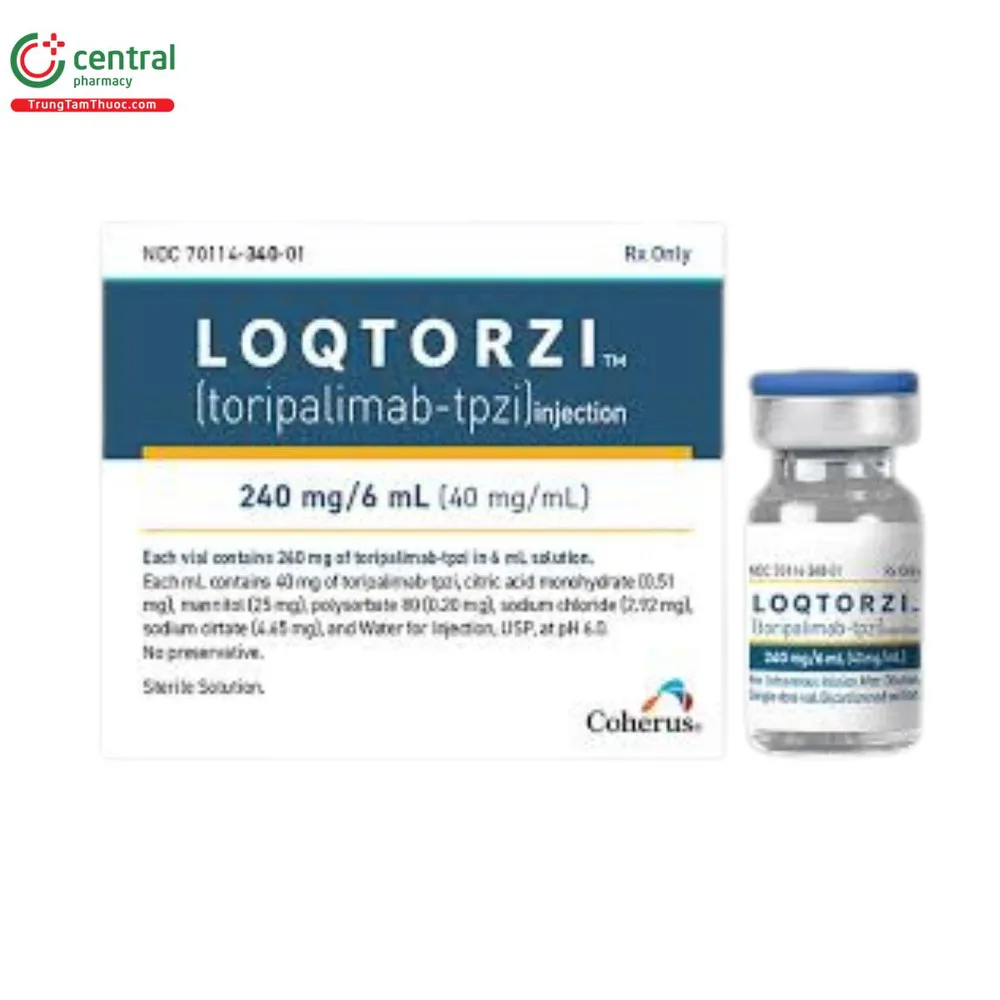
Table of Contents
- Package leaflet: Information for the patient
- LOQTORZI 240 mg concentrate for solution for infusion
- 1. What LOQTORZI is and what it is used for
- 2. What you should know before you are given LOQTORZI
- 3. How LOQTORZI is administered
- 4. Possible side effects
- 5. How to store LOQTORZI
- 6. Package contents and other information
Package leaflet: Information for the patient
LOQTORZI 240 mg concentrate for solution for infusion
toripalimab
This medicinal product is subject to additional monitoring. This will allow for the rapid identification of new safety information. You can help by reporting any adverse reactions you experience while taking this medicine. See the end of section 4 for information on how to report adverse reactions.
Please read this leaflet carefully before you are given this medicine as it contains important information for you.
- Keep this leaflet. You may need to read it again.
- It is important that you carry the patient alert card with you during treatment.
- If you have any questions, consult your doctor.
- If you experience any adverse reactions, including those not listed in this leaflet, consult your doctor. See section 4.
Contents of this leaflet
- What LOQTORZI is and what it is used for
- What you need to know before you are given LOQTORZI
- How LOQTORZI is administered
- Possible side effects
- How to store LOQTORZI
- Contents of the pack and other information
1. What LOQTORZI is and what it is used for
LOQTORZI contains the active substance toripalimab, which is a monoclonal antibody, a type of protein designed to recognise and bind to a specific target substance in the body.
LOQTORZI is used in adults to treat:
- a type of head and neck cancer called nasopharyngeal carcinoma, which originates in the upper part of the throat, behind the nose and near the base of the skull. It is used when the cancer has spread to other parts of the body or has recurred after prior treatment and cannot be surgically removed;
- a type of oesophageal cancer called oesophageal squamous cell carcinoma. It is used when the cancer cannot be surgically removed, has recurred after prior treatment, or has spread to other parts of the body.
LOQTORZI is administered in combination with other anticancer medicines. It is important that you also read the package leaflets of these medicines. If you have any doubts about LOQTORZI or these other medicines, consult your doctor.
The active substance in LOQTORZI, toripalimab, works by binding to a target protein called programmed death receptor-1 (PD-1). PD-1 can deactivate T-lymphocytes (a type of white blood cell that is part of the immune system, the body's natural defences), thereby preventing the immune system from fighting the tumour. By binding to PD-1, toripalimab blocks its action and prevents the deactivation of T-lymphocytes, helping to enhance their activity against the tumour.
2. What you should know before you are given LOQTORZI
You must not be given LOQTORZI
- if you are allergic to toripalimab or to any of the other ingredients of this medicine (listed in section 6).
Warnings and precautions
Talk to your doctor or nurse before receiving LOQTORZI if:
- you have an autoimmune disease (a condition in which the body attacks its own cells);
- you have lung or breathing problems (pneumonitis);
- you have been told that cancer has spread to your brain;
- you have active viral hepatitis infection, including hepatitis B (HBV) or C (HCV);
- you have active tuberculosis (TB);
- you have human immunodeficiency virus (HIV) infection or acquired immunodeficiency syndrome (AIDS);
- you have liver damage;
- you have kidney damage;
- you have received a solid organ transplant or an allogeneic hematopoietic stem cell transplant (stem cells taken from a donor);
- you are currently taking medicines that suppress the immune system, such as corticosteroids (e.g., prednisone).
LOQTORZI acts on the immune system. It may cause inflammation in certain parts of the body. The risk of these side effects may be higher if you already have an autoimmune disease (a condition in which the body attacks its own cells). In addition, flare-ups of autoimmune disease may occur more frequently, although in most cases they are mild.
If any of the above situations apply to you (or if you have any doubts), speak with your doctor before you are given LOQTORZI.
Serious side effects may occur with LOQTORZI treatment. These side effects can potentially be life-threatening and may occur at any time during treatment or even after treatment has ended. More than one side effect may occur simultaneously.
If you experience any of the following conditions, contact your doctor or seek immediate medical attention:
- inflammation of the lungs (pneumonitis), which may include symptoms such as shortness of breath, chest pain, or cough;
- inflammation of the large intestine (colitis), which may include symptoms such as diarrhoea or more frequent bowel movements than usual, black, tarry, sticky stools, or stools containing blood or mucus, severe pain or tenderness in the stomach area;
- inflammation of the liver (hepatitis), which may include symptoms such as nausea or vomiting, reduced appetite, pain on the right side of the stomach, yellowing of the skin or whites of the eyes, dark-coloured urine, or increased tendency to bleed or bruise more easily than normal;
- inflammation of hormone-producing glands (especially the thyroid, pituitary, and adrenal glands), which may include symptoms such as rapid heartbeat, weight loss, increased sweating, weight gain, hair loss, feeling cold, constipation, deeper voice, muscle pain, dizziness or fainting, persistent or unusual headache;
- type 1 diabetes, including diabetic ketoacidosis (acid in the blood caused by diabetes), which may include symptoms such as increased appetite or thirst, need to urinate more often, weight loss, feeling tired or unwell, stomach pain, fast and deep breathing, confusion, unusual drowsiness, sweet-smelling breath, sweet or metallic taste in the mouth, or different-smelling urine or sweat;
- inflammation of the kidneys (nephritis), which may include symptoms such as changes in the amount or colour of urine;
- skin inflammation, which may include symptoms such as rash, itching, blistering, peeling or sores on the skin, and/or mouth ulcers or ulcers in the lining of the nose, throat, or genital area;
- inflammation of the heart muscle (myocarditis), which may include symptoms such as shortness of breath, irregular heartbeat, feeling tired, or chest pain;
- inflammation of the muscles (myositis), which may include symptoms such as muscle pain or weakness;
- inflammation of the uvea, the layer beneath the white part of the eye (uveitis), which may include changes in vision;
- inflammation of the pancreas (pancreatitis), which may include symptoms such as abdominal pain, nausea, and vomiting;
- inflammation of the bladder (cystitis), which may include symptoms such as painful urination and blood in the urine;
- inflammation of the joints (arthritis/arthralgia), which may include symptoms such as joint pain, redness, or swelling, or permanent joint damage;
- infusion reactions, which may include symptoms such as fever, chills, itching or rash, nausea, and low blood pressure;
- problems in other parts of the body (see section 4 “Possible side effects”).
Your doctor may give you other medicines to prevent more serious complications and reduce symptoms, delay your next dose of LOQTORZI, or stop treatment with LOQTORZI.
Please note that these signs and symptoms may sometimes appear late and may develop weeks or months after the last dose. Before treatment, your doctor will check your general health. Blood tests will also be performed during treatment.
Use of LOQTORZI may lead to episodes of rejection of solid organ transplants (such as kidney, lung, heart, or liver transplants) in transplant recipients, or complications including graft-versus-host disease (GVHD) in patients who have received an allogeneic hematopoietic stem cell transplant (stem cells taken from a donor). These complications can be serious and may result in death. They may occur if you have previously undergone such a transplant or if you will undergo one in the future. Your doctor will monitor you for signs and symptoms of these complications, which may include rash, liver inflammation, abdominal pain, or diarrhoea.
Children and adolescents
LOQTORZI must not be used in children and adolescents under 18 years of age, as it has not been studied in patients under 18 years of age.
Other medicines and LOQTORZI
Inform your doctor or nurse
- if you are taking medicines that suppress the immune system, such as corticosteroids (e.g., prednisone). These medicines may interfere with the effect of LOQTORZI. However, during treatment with LOQTORZI, your doctor may give you corticosteroids to reduce side effects that may occur. Corticosteroids may also be administered before receiving LOQTORZI in combination with chemotherapy to prevent and/or treat nausea, vomiting, and other side effects caused by chemotherapy;
- if you are currently taking, have recently taken, or might take any other medicine. Do not take any other medicines during treatment without first discussing it with your doctor.
Pregnancy
- Unless specifically recommended by your doctor, you must not be given LOQTORZI during pregnancy.
- If you are pregnant, suspect you may be pregnant, or are planning a pregnancy, consult your doctor before receiving this medicine.
- LOQTORZI may cause harm or death to the unborn child.
- If you are a woman of childbearing potential, you must use effective contraception during treatment with LOQTORZI and for at least 4 months after the last dose.
Breastfeeding
- If you are breastfeeding, consult your doctor before receiving this medicine.
- You must not breastfeed during treatment and for at least 4 months after the last dose of LOQTORZI.
- It is not known whether LOQTORZI passes into breast milk.
Driving and using machines
LOQTORZI may have a minor effect on the ability to drive and use machines. Dizziness or fatigue are possible side effects. Do not drive or operate machinery if you are not sure you feel well.
LOQTORZI contains sodium
This medicine contains less than 1 mmol (23 mg) of sodium per dose, i.e., it is essentially “sodium-free”. However, before administration, LOQTORZI is mixed with a solution containing sodium. Consult your doctor if you are on a low-salt diet.
3. How LOQTORZI is administered
LOQTORZI will be administered in a hospital or clinic under the supervision of a doctor experienced
in the treatment of cancer.
The recommended dose is 240 mg every 3 weeks. It will be given by a doctor as an intravenous
infusion (a drip into a vein). The first infusion will last approximately 60 minutes. This duration may
be reduced to approximately 30 minutes for subsequent doses.
Your doctor will decide the number of treatments required.
LOQTORZI is administered in combination with other anticancer medicines. LOQTORZI will be
given first, followed by the other medicines.
If you miss an appointment for LOQTORZI administration
Contact your doctor or hospital immediately to reschedule your appointment. It is very important
not to miss doses of this medicine.
If you stop treatment with LOQTORZI
Stopping treatment may cause the effect of the medicine to cease. Do not stop treatment with
LOQTORZI without discussing it with your doctor.
If you have any doubts about the use of this medicine, consult your doctor or nurse.
Patient alert card
The patient alert card provided to you by your doctor contains important information from this
package leaflet. It is important that you carry this patient alert card with you during treatment.
4. Possible side effects
Like all medicines, this medicine can cause side effects, although not everyone experiences them.
Below are the serious side effects (listed by frequency) that may lead to hospitalization or death.
Uncommon (may affect up to 1 in 100 people)
- Inflammation of the lungs (pneumonitis)
- Inflammation of the skin (immune-mediated skin reactions)
- Inflammation of the liver (hepatitis)
- Inflammation of the heart muscle (myocarditis)
- Inflammation of muscles (myositis)
- Inflammation of the large intestine (colitis)
- Inflammation of the adrenal glands (adrenal insufficiency)
- Inflammation of the kidneys (nephritis)
- Reduced platelet count (immune-mediated thrombocytopenia)
- Inflammation of the thyroid gland (hyperthyroidism/thyroiditis)
- Inflammation of the thyroid gland (hypothyroidism)
- Inflammation of insulin-producing cells (diabetes mellitus/hyperglycaemia)
- Inflammation of the pituitary gland (hypophysitis)
- Infusion-related reactions
Rare (may affect up to 1 in 1,000 people)
- Inflammation of the pancreas (pancreatitis)
- Inflammation of the bladder (cystitis)
- Inflammation of the joints (arthritis/arthralgia)
Problems affecting other body parts/Other immune-mediated side effects (frequency cannot be estimated based on available data for toripalimab, but have been reported with this class of medicines)
- Inflammation of the brain (encephalitis), which may include confusion, fever, memory problems, or seizures
- Myasthenic syndrome, a condition characterized by muscle weakness and rapid fatigue
- Nerve inflammation, including Guillain-Barré syndrome, whose symptoms may include weakness in the arms and legs or facial muscles, double vision, and tingling in the hands and feet
- Rhabdomyolysis, whose symptoms may include muscle and joint stiffness and muscle spasms
- Organ transplant rejection
- Inflammation of the uvea (uveitis)
If you experience any of these serious side effects, seek urgent medical help or contact your healthcare provider immediately.
The following side effects have been reported in clinical studies with toripalimab:
Very common (may affect more than 1 in 10 people)
- Decreased appetite
- Weight loss
- Fatigue
- Pyrexia (fever)
- Cough
- Abdominal pain (stomach ache)
- Pain
- Nausea
- Vomiting
- Diarrhoea/colitis (inflammation of the large intestine)
- Constipation
- Neuropathy (nerve damage)
- Anaemia (low red blood cell levels)
- Thrombocytopenia (low platelet levels, components that help blood clotting)
- Leucopenia (low white blood cell levels)
- Neutropenia (low neutrophil levels, a type of white blood cell)
- Upper respiratory tract infection (infection of the nose and throat)
- Hyponatraemia (low sodium levels in the blood)
- Hypoproteinaemia (low protein levels in the blood)
- Hypokalaemia (low potassium levels in the blood, which may cause weakness, muscle cramps, tingling, and heart rhythm disturbances)
- Hyperglycaemia (high blood glucose levels)
- Hyperuricaemia (high levels of uric acid, a metabolic by-product, in the blood)
- Hyperbilirubinaemia (high bilirubin levels in the blood—a product of red blood cell breakdown—which may cause yellowing of the skin and eyes)
- Proteinuria (excessive protein in urine)
- Haematuria (presence of blood in urine)
- Rash, including skin inflammation, itching, blistering, peeling or sores on the skin, acne-like skin problems
- Itching
- Pain
- Musculoskeletal pain (in muscles and bones)
- Hypothyroidism (underactive thyroid, with fatigue, weight gain, and changes in skin and hair)
- Arrhythmia (abnormal or irregular heartbeat)
- Abnormal liver function test results
- Abnormal thyroid function test results
- Abnormal blood lipid level test results
- Abnormal urine test results
Common (may affect up to 1 in 10 people)
- Vomiting; abdominal bloating and distension; acid reflux; blood in stool
- Slowed intestinal transit or intestinal obstruction
- Mouth sores or burning sensation in mouth, gums, throat, or oesophagus; dry mouth; toothache
- Hyperthyroidism (overactive thyroid)
- Chills; flu-like illness
- Pain (in muscles, bones, lymph nodes, chest)
- Eye disorders (dryness or itching of eyes, cataract)
- Kidney damage
- Shortness of breath; lung inflammation; fluid around the lungs; nosebleeds; coughing up blood; congestion or irritation of upper respiratory tract
- Reduced platelet count (increased tendency to bruise or bleed)
- Difficulty sleeping; mood changes
- Night sweats; increased sweating
- Nerve inflammation causing numbness, weakness, tingling, or sharp pain; headache; dizziness
- Lung infection, urinary tract infection, general infection, ear infection, fungal mouth infection, herpes virus infection
- Patchy skin discoloration (including depigmentation, vitiligo), hair loss, dry skin, changes in hair colour, increased sensitivity to sunlight, skin peeling or sores
- Muscle weakness
- Liver inflammation
- High or low blood pressure; blood clots; tumour-related pain
- Ear disorders, ear pain, ringing in ears; hearing loss; blurred vision
- Lung infection, upper respiratory tract infection, urinary tract infection
Uncommon (may affect up to 1 in 100 people)
- Stomach inflammation
- Pancreatitis (inflammation of the pancreas)
- Type 1 diabetes, including diabetic ketoacidosis
- Muscle pain
- Temperature intolerance, thirst
- Breathing difficulties, wheezing, hoarseness
- Sinus congestion, abnormal voice quality
- Medication infusion-related reactions
- Altered taste sensation; drowsiness; speech disorder
- Conjunctivitis, gingivitis, skin and subcutaneous tissue infections
- Joint inflammation; disc protrusion; muscle spasms
- Liver pain, gallbladder inflammation
- Reduced secretion of hormones produced by adrenal glands; pituitary gland inflammation, located at the base of the brain; thyroid gland inflammation
- Fluid accumulation around the heart; heart muscle inflammation; heart muscle damage
- Tumour bleeding, tumour rupture
- Genital oedema, scrotal oedema
- Eye inflammation (causing eye pain and redness), problems with eye movement coordination; optic nerve swelling
- Allergic reaction
Rare (may affect up to 1 in 1,000 people)
- Presence of gas in the intestinal wall, loss of sensation in the mouth, swelling or colour change of the tongue
- Inflammation of the layers lining the lungs; increased sputum production
- Vocal cord thickening
- Diverticulitis
- Skin inflammation (thickened skin, sometimes scaly; chronic itching or peeling; skin pain)
- Muscle inflammation, which may include muscle pain or weakness (myositis), possibly associated with a rash (dermatomyositis)
- Inflammation of subcutaneous fat, skin bruising
- Overactivity of parathyroid glands; reduced pituitary gland activity
- Limb paralysis, attention disorder
- Aortic aneurysm
- Abnormal menstruation
- Vaginal discharge or itching or skin pain outside the vagina
- Hearing loss; loss of balance
- Swelling, itching of eyelids; hypermetropia
- Infection
If you experience any of the side effects listed above, contact your healthcare providers immediately.
Changes in laboratory test results
LOQTORZI alone or in combination may cause changes in laboratory test results performed by your doctor, including:
- Abnormal liver function tests (including increased levels of liver enzymes aspartate aminotransferase, alanine aminotransferase, gamma-glutamyl transferase, or alkaline phosphatase in the blood);
- Abnormal kidney function tests (increased levels of creatinine and other waste products, uric acid, urea in the blood; increased number of cells or amount of protein in urine; abnormally increased waste products in urine);
- Increased levels of the enzyme that breaks down fats and the enzyme that breaks down starch;
- Reduced levels of potassium, calcium, sodium, magnesium, chloride, phosphate, and proteins in the blood;
- Reduced levels of calcium, potassium, magnesium, sodium, or phosphate in the blood;
- Increased levels of muscle enzymes in the blood;
- Abnormal thyroid function tests; positive anti-thyroid antibodies; weight gain;
- Abnormal blood lipid and protein levels;
- Disturbances in blood acid-base balance;
- Reduction in more than one type of blood cell (white blood cells, red blood cells, platelets);
- Increased white blood cells, neutrophils; abnormal eosinophil count, increased platelet count;
- Increased or decreased levels of hormones produced by endocrine glands in the blood;
- Abnormal cardiac test results.
Reporting of side effects
If you experience any side effect, including those not listed in this leaflet, talk to your doctor or nurse. You may also report side effects directly via the national reporting system listed in Annex V. By reporting side effects, you can help provide more information on the safety of this medicine.
5. How to store LOQTORZI
LOQTORZI will be administered in a hospital or clinic, and healthcare professionals will be responsible for its storage.
If you are given a box of LOQTORZI, follow these storage instructions:
- Keep this medicine out of the sight and reach of children.
- Do not use this medicine after the expiry date stated on the carton and on the vial label. The expiry date refers to the last day of that month.
- Store in a refrigerator (2-8 °C). Do not freeze. Keep in the original carton, protected from light.
- If the diluted solution is not used immediately, it can be stored at room temperature (up to 25 °C) for a maximum of 8 hours or at 2-8 °C for a maximum of 24 hours from the time of dilution until the end of administration.
- Do not use this medicine if visible particles are present.
- Do not store unused medicine for later use. Unused medicine and waste material derived from this medicine must be disposed of in accordance with local regulations. This will help protect the environment.
6. Package contents and other information
What LOQTORZI contains
- The active substance is toripalimab.
One 6 mL vial of concentrate for solution for infusion contains 240 mg of toripalimab.
Each mL of concentrate for solution for infusion contains 40 mg of toripalimab.
- The other components are monohydrate citric acid, mannitol, polysorbate 80, sodium chloride, dihydrate sodium citrate (section 2 “LOQTORZI contains sodium”), and water for injections.
Description of the appearance of LOQTORZI and contents of the pack
LOQTORZI is a solution that ranges from clear to slightly opalescent, colourless to slightly yellow, and is practically free from visible particles.
It is available in cartons containing one glass vial with 6 mL of concentrate for solution for infusion.
Marketing Authorisation Holder
Topalliance Biosciences Europe Limited
Ground Floor
Two Dockland Central
Guild Street
I.f.s.c.
Dublin 1
Co. Dublin
D01 K2C5
Ireland
Manufacturer
Eurofins PHAST GmbH
Kardinal-Wendel-Strasse 16
Homburg
Saarland
Germany
Other sources of information
More detailed information on this medicinal product is available on the website of the European Medicines Agency: http://www.ema.europa.eu.
The following information is intended exclusively for healthcare professionals:
Preparation
- Visually inspect the solution for the presence of particles and discoloration. The solution is from clear to slightly opalescent, colourless to slightly yellow. Discard the vial if visible particles are observed.
- Dilute LOQTORZI before intravenous administration.
- Withdraw the required volume of LOQTORZI and slowly inject it into a 100 mL or 250 mL infusion bag containing 9 mg/mL (0.9%) sodium chloride injectable solution. Mix the diluted solution by gently inverting the bag. Do not shake. The final concentration of the diluted solution must be between 1 mg/mL and 3 mg/mL.
Administration
- Administer the diluted solution by intravenous infusion using an infusion pump with an in-line sterile filter (pore size 0.2 micron or 0.22 micron).
- First infusion: administer over at least 60 minutes.
- Subsequent infusions: if no infusion-related reactions occurred during the first infusion, subsequent infusions may be administered over 30 minutes.
- Do not administer concomitantly with other medicinal products through the same infusion line.
- When administered on the same day as chemotherapy, LOQTORZI should be administered before chemotherapy.
Any unused medicinal product and waste materials derived from it must be disposed of in accordance with local regulations.
ANNEX IV
SCIENTIFIC CONCLUSIONS AND REASONS FOR THE VARIATION OF THE TERMS OF THE MARKETING AUTHORISATION
Scientific conclusions
Taking into account the assessment by the Pharmacovigilance Risk Assessment Committee (PRAC) of the Periodic Safety Update Report (PSUR) for toripalimab, the scientific conclusions of the PRAC are as follows:
Considering the available data in the literature and spontaneous reports regarding an increased risk of immune-mediated adverse reactions in patients with pre-existing autoimmune disease, and taking into account a plausible mechanism of action, the PRAC considers that the association between toripalimab and an increased risk of immune-mediated adverse reactions in patients with pre-existing autoimmune disease is at least a reasonable possibility. The PRAC concluded that the product information for toripalimab should be amended accordingly.
Having reviewed the PRAC recommendation, the Committee for Human Medicinal Products (CHMP) agrees with the general conclusions and the reasoning of the recommendation.
Reasons for the variation of the terms of the marketing authorisation
Based on the scientific conclusions on toripalimab, the CHMP considers that the benefit-risk balance of the medicinal product containing toripalimab remains unchanged, subject to the proposed amendments to the product information.
The CHMP recommends the variation of the terms of the marketing authorisation.