Loette
Italy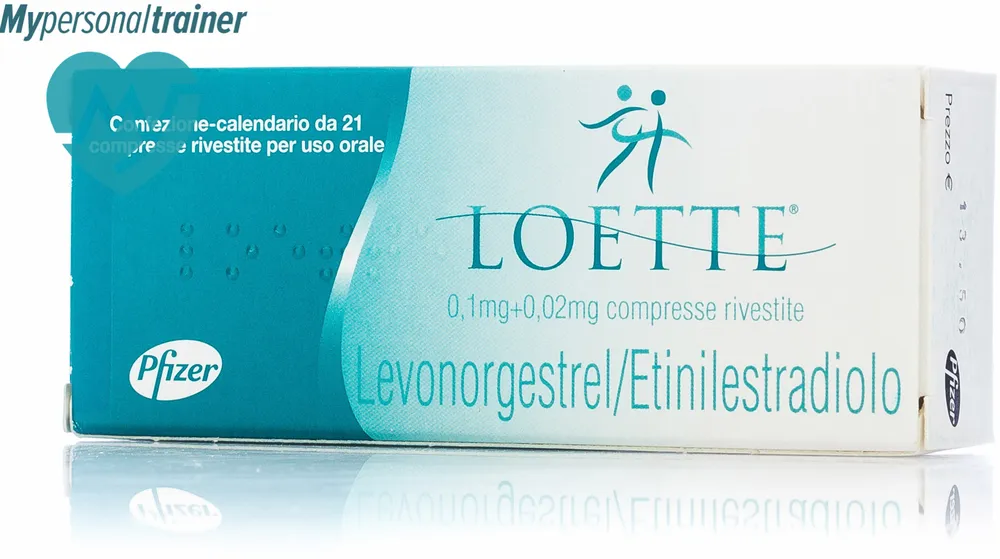
Table of Contents
Package leaflet: Information for the user
LOETTE 0.100 mg + 0.02 mg film-coated tablets
Levonorgestrel/Ethinyloestradiol
Please read all of this leaflet carefully before you start taking this medicine because it contains important information for you.
- Keep this leaflet. You may need to read it again.
- If you have any questions, ask your doctor or pharmacist.
- This medicine has been prescribed for you only. Do not pass it on to others, even if their symptoms are the same as yours, because it could be harmful.
- If you experience any side effects, including those not listed in this leaflet, tell your doctor or pharmacist. See section 4.
Contents of this leaflet:
- What LOETTE is and what it is used for
- What you need to know before taking LOETTE
- How to take LOETTE
- Possible side effects
- How to store LOETTE
- Contents of the pack and other information
1. What LOETTE is and what it is used for
LOETTE is an oral contraceptive, i.e. it is used to prevent pregnancy.
LOETTE is a combined pill, as each coated tablet contains a combination of two different female hormones, namely levonorgestrel (a progestogen) and ethinylestradiol (an oestrogen).
2. What you should know before taking LOETTE
This patient information leaflet describes certain conditions under which you must stop taking the product or during which the product's effectiveness may be reduced. In such cases, you should either abstain from sexual intercourse or use additional non-hormonal contraceptive precautions such as condoms or other barrier methods. Do not use rhythm or basal body temperature methods, which may be unreliable, since the pill alters the normal fluctuations in body temperature and cervical mucus that occur during the menstrual cycle.
Before starting or restarting the use of this pill, it is advisable to have a thorough medical examination. Additionally, periodic check-ups—at least once a year—are recommended while using this product.
The frequency and type of examination will be determined by your doctor and should include monitoring of blood pressure, breast and abdominal examination, a general gynecological examination including a Pap test, and appropriate blood tests.
You should schedule your first follow-up visit 3 months after starting the combined oral contraceptive.
Like all contraceptive pills, LOETTE does not protect against HIV (AIDS) infection or any other sexually transmitted disease.
LOETTE is prescribed for personal use only and should not be shared among multiple individuals.
Do not take LOETTE
Do not take LOETTE if you have any of the conditions listed below. If you have any of the conditions listed below, consult your doctor. Your doctor will discuss with you other birth control methods that may be more suitable for your individual situation.
- if you are allergic to either of the active substances (levonorgestrel or ethinylestradiol) or to any of the other components of this medicine (listed in section 6);
- if you have (or have ever had) a blood clot in a vein of the leg (deep vein thrombosis, DVT), lung (pulmonary embolism, PE), or other organs;
- if you know you have a blood clotting disorder such as protein C deficiency, protein S deficiency, antithrombin-III deficiency, factor V Leiden mutation, or antiphospholipid antibodies;
- if you have (or have ever had) a heart attack or stroke;
- if you have (or have previously had) a condition that could be a warning sign of a future heart attack (e.g., angina pectoris, causing severe chest pain) or stroke (e.g., transient ischemic attack, which leaves no lasting effects);
- if you have any of the following conditions:
- very high blood pressure
- diseases related to high blood pressure
- kidney problems
- if you have (or have ever had) a type of migraine called “migraine with aura”;
- severe diabetes with blood vessel damage;
- if you have or have ever had severe liver disease, until liver function returns to normal;
- if you have or have ever had pancreatitis (inflammation of the pancreas) associated with a severe fat metabolism disorder (hypertriglyceridemia);
- if you have or have ever had a liver tumor (benign or malignant);
- if you have or have ever had a hormone-sensitive tumor of the breast or uterus (estrogen- and progestin-sensitive tumors that may grow faster due to hormonal stimulation), or if such a tumor is suspected;
- if you have ever experienced yellowish discoloration of the skin and mucous membranes (jaundice);
- if you have unexplained vaginal bleeding;
- if you are or think you may be pregnant;
- if you are being treated with ritonavir, a medicine used to treat HIV infection;
- if you have hepatitis C and are taking other medicines containing ombitasvir/paritaprevir/ritonavir, dasabuvir, glecaprevir/pibrentasvir, or sofosbuvir/velpatasvir/voxilaprevir (see section “Other medicines and LOETTE”)
Warnings and precautions
Talk to your doctor or pharmacist before taking LOETTE.
Contact your doctor as soon as possible if:
- you notice any change in your health;
- you detect a breast lump;
- you need to take other medicines (see also “Other medicines and LOETTE”);
- you are immobilized or require surgery (consult your doctor at least four weeks in advance);
- you experience heavy or unusual vaginal bleeding;
- you have missed tablets during the first week of use and had sexual intercourse in the seven days before missing the tablets;
- you do not have menstrual periods for two consecutive cycles or suspect you may be pregnant; do not start a new pack without your doctor’s approval.
Inform your doctor if any of the following conditions apply to you, as you may require close monitoring. Your doctor may recommend a different, non-hormonal contraceptive method. Contact your doctor if any of the following conditions develop or worsen while using LOETTE:
- if you smoke;
- if you are overweight;
- if you have impaired glucose tolerance (a sugar). If you have diabetes or pre-existing glucose intolerance, your doctor will monitor you closely during treatment with this medicine;
- heart valve problems or heart rhythm disorders;
- inflammation of veins under the skin (superficial phlebitis);
- if migraine (severe headache on one side of the head) occurs for the first time or worsens. Your doctor may advise stopping treatment with this medicine;
- if you have varicose veins;
- if you notice mood changes (depression) or worsening of pre-existing depression. LOETTE should be discontinued if severe depression develops;
- high blood pressure. If your blood pressure increases, you must stop treatment with this medicine;
- if you have epilepsy;
- if you have breast nodules;
- if a close relative has had breast cancer;
- liver or gallbladder diseases;
- if you have hearing loss due to a condition known as otosclerosis;
- if you have Crohn’s disease or ulcerative colitis (chronic inflammatory bowel diseases);
- if you have systemic lupus erythematosus (SLE, a disease affecting the body’s natural defense system);
- if you have hemolytic uremic syndrome (HUS, a blood clotting disorder causing kidney failure);
- if you have sickle cell anemia (an inherited red blood cell disorder);
- if you have high cholesterol or triglyceride levels in the blood or a family history of such condition. Hypertriglyceridemia has been associated with an increased risk of developing pancreatitis (inflammation of the pancreas);
- certain medical conditions associated with resistance to activated protein C, hyperhomocysteinemia, antithrombin-III deficiency, protein C deficiency, protein S deficiency, antiphospholipid antibody syndrome (anticardiolipin antibodies, lupus anticoagulant), which predispose to venous or arterial thrombosis;
- if you are undergoing surgery or will be bedridden for a long time (see section 2 “Blood clots”);
- if you have recently given birth, as the risk of developing blood clots is higher. Ask your doctor how long after delivery you can start taking LOETTE;
- if you suffer from fluid retention in the body. Caution is needed if you have other conditions that may worsen due to increased fluid in the body;
- if you have gallstones (small stones forming in the gallbladder, a small organ involved in fat digestion);
- if you have a skin disease causing itching, red spots, and blisters (herpes gestationis). You may have experienced this condition during a previous pregnancy;
- if yellowish and/or brown patches appear on the skin (chloasma). These patches are more likely to reappear during LOETTE treatment if you had them during a previous pregnancy. In such cases, avoid direct exposure to sunlight or ultraviolet rays (e.g., in a tanning bed) while using this medicine;
- if you have porphyria (a disorder characterized by attacks affecting hemoglobin production);
- if you have a disease characterized by involuntary, irregular, and sudden movements (Sydenham’s chorea);
- if you have low folate (vitamin B) levels in the blood;
- if you notice yellowish discoloration of the skin and mucous membranes (jaundice), with or without itching. These symptoms may be caused by impaired bile flow (a substance produced by the liver and involved in digestion) and may indicate liver problems. If you experience this condition, stop treatment with this medicine;
- if blood laboratory tests show significantly elevated levels of substances normally produced by the liver. In this case, treatment with LOETTE should be temporarily suspended until these values return to normal;
- if you have vision problems such as double vision, bulging eyes, or retinal changes.
- if you experience symptoms of angioedema such as swelling of the face, tongue, and/or throat and/or difficulty swallowing or hives with breathing difficulty, contact a doctor immediately. Medicines containing estrogens may cause or worsen symptoms of hereditary or acquired angioedema.
Psychiatric disorders
Some women using hormonal contraceptives, including LOETTE, have reported depression or depressed mood. Depression can be severe and may sometimes lead to suicidal thoughts. If you experience mood changes or depressive symptoms, contact your doctor as soon as possible for further medical advice.
LOETTE and blood clots in veins and arteries
Using any combined oral contraceptive, including LOETTE, increases the risk of developing a blood clot in a vein (venous thrombosis) compared to women not using a contraceptive pill. The excess risk is highest during the first year of use for a woman who has never previously used a combined pill.
The risk of venous blood clots while taking a combined pill increases:
- if you are undergoing surgery, have had a serious accident, or must remain immobile for a long time. It is important to inform your doctor that you are using LOETTE, as you may need to stop taking it. Your doctor will advise when to restart; usually, you can resume about two weeks after regaining mobility.
The likelihood of a blood clot increases with continued use of the pill.
- Among 100,000 women who do not take the pill and are not pregnant, about 5–10 may develop a blood clot in a year.
- Among 100,000 women taking a pill like LOETTE, 30–40 may develop a blood clot in a year; the exact number is not known.
- Among 100,000 pregnant women, about 60 may develop a blood clot in a year.
A blood clot in a vein may travel to the lungs and block blood vessels (pulmonary embolism). Venous blood clots can be fatal in 1–2% of cases.
The level of risk may vary depending on the type of pill used. Discuss available options with your doctor.
The use of combined oral contraceptives has been associated with an increased risk of blood clot in an artery (arterial thrombosis), such as in blood vessels of the heart (heart attack) or brain (stroke).
The risk of heart attack or stroke increases:
- with increasing age
- with the number of cigarettes smoked. In particular, if you are over 35 years old and taking the pill, you must stop smoking.
- if fat levels in the blood are high (cholesterol or triglycerides)
- if you have high blood pressure
- if you are overweight
- if you have diabetes
Stop taking LOETTE and contact your doctor immediately if you notice possible signs of a blood clot, such as:
- severe pain and/or swelling in one leg
- sudden severe chest pain that may spread to the left arm
- sudden shortness of breath
- sudden cough without an obvious cause
- any unusual, severe, or prolonged headache or worsening of migraine
- partial or complete blindness or double vision
- difficulty or inability to speak
- dizziness or fainting
- weakness, unusual sensation, or numbness in any part of the body
LOETTE and cancer
A slightly increased incidence of breast cancer has been observed in women using combined oral contraceptives, but it is not known whether this is caused by the treatment. For example, more tumors may be detected in women using combined pills because they undergo more frequent medical check-ups. The frequency of breast cancer gradually decreases after stopping combined hormonal contraceptives. It is important to have regular breast examinations and contact your doctor if you notice any lumps.
Cases of cervical cancer have been reported in long-term users of combined oral contraceptives, but it is unclear whether this is partly attributable to sexual behavior and other factors such as human papillomavirus (HPV).
Rarely, benign liver tumors and, even more rarely, malignant liver tumors have been reported in users of the pill. Contact your doctor if you experience unusual, severe abdominal pain.
Irregular bleeding
During the first few months of taking LOETTE, unexpected bleeding (i.e., bleeding outside the tablet-free days) may occur. Consult your doctor if irregular bleeding persists beyond three treatment cycles or reappears after a previous period of regularity.
Sometimes, menstruation may not occur during the days when you are not taking tablets. It is unlikely that you are pregnant if you have taken this medicine correctly. However, if you realize you have not taken the medicine correctly or if withdrawal bleeding does not occur for the second time, you must confirm you are not pregnant before continuing LOETTE.
Reduced or lost effectiveness
The contraceptive effect of LOETTE may be reduced if you miss a tablet, experience vomiting or diarrhea, or take certain other medicines.
Preparations containing Hypericum perforatum (St. John’s wort) reduce the effectiveness of oral contraceptives. Therefore, if you need to take such preparations, your doctor will advise you to use an alternative contraceptive method to LOETTE.
Unintended pregnancies and return of menstrual bleeding have been reported. Hypericum perforatum-containing preparations induce enzymes responsible for drug metabolism, and this effect may persist for at least 2 weeks after stopping treatment.
See also section “Other medicines and LOETTE” and section 3 “What to do in case of vomiting and diarrhea.”
Children
The safety and efficacy of LOETTE have been established only in women of reproductive age. Therefore, use of this medicine is contraindicated in girls before the onset of the first menstrual period.
Elderly
The safety and efficacy of LOETTE have been established only in women of reproductive age. Therefore, use of this medicine is not recommended in women after the onset of menopause.
Other medicines and LOETTE
Inform your doctor or pharmacist if you are taking, have recently taken, or might take any other medicines.
Interactions between LOETTE and other medicines may lead to irregular bleeding between periods and loss of contraceptive effectiveness, resulting in risk of unintended pregnancy.
The following medicine must not be taken with LOETTE (see section “Do not take LOETTE”):
ritonavir (a medicine used to treat HIV infection), because it reduces the effectiveness of LOETTE.
The following medicines may reduce the effectiveness of LOETTE and therefore their concomitant use is not recommended:
- phenobarbital, phenytoin, primidone, carbamazepine, oxcarbazepine, topiramate, and felbamate (medicines used to treat seizures and epilepsy);
- barbiturates (medicines used as sedatives and tranquilizers);
- rifabutin and rifampicin (antibiotics used to treat tuberculosis);
- griseofulvin (a medicine used to treat fungal infections);
- modafinil (a medicine used for excessive sleepiness);
- some protease inhibitors and nevirapine (medicines used to treat HIV/AIDS);
- herbal preparations containing Hypericum perforatum (St. John’s wort), a natural substance used for depression.
Always inform the doctor prescribing the pill about any medicines you are already taking, and also inform all other doctors or dentists prescribing you medicines that you are using LOETTE, so they can determine whether and for how long you need to use additional contraceptive methods.
The following medicines may increase the effectiveness and/or side effects caused by LOETTE:
- atorvastatin (a medicine used to lower blood fat levels);
- vitamin C;
- paracetamol (a medicine used for pain and fever reduction);
- indinavir (a medicine used to treat HIV infection);
- fluconazole and voriconazole (medicines used to treat fungal infections);
- troleandomycin (an antibiotic). Concomitant administration of LOETTE and troleandomycin may increase the risk of bile retention in the liver (intrahepatic cholestasis).
LOETTE may interfere with the effectiveness and/or side effects of the following medicines:
- cyclosporine (a medicine used to prevent organ rejection after transplantation);
- theophylline (a medicine used for asthma);
- corticosteroids (medicines used for inflammation and allergies);
- lamotrigine (a medicine used for epilepsy);
- levothyroxine (a medicine used for underactive thyroid);
- valproate (a medicine used for seizures);
- flunarizine (a medicine used for migraine). Concomitant administration of LOETTE and flunarizine increases the risk of milk secretion from the breast in women who are not breastfeeding (galactorrhea).
If you are taking any of the medicines listed above, you must use a barrier contraceptive method (e.g., condom) in addition to LOETTE—not only during concomitant use but also for an additional 7 days afterward. In the case of treatment with rifampicin, you must use a barrier contraceptive method for up to 28 days after stopping the concomitant treatment.
If concomitant treatment must continue after you have finished all tablets in a pack of LOETTE, you must immediately start the next pack of LOETTE without observing the tablet-free interval.
If you are prescribed long-term treatment with any of the medicines listed above, your doctor may recommend using a different medicine or a barrier contraceptive method to prevent unintended pregnancies.
Interactions with laboratory tests
The use of LOETTE may affect the results of certain laboratory tests, such as values measuring liver, thyroid, adrenal gland, and kidney function, as well as levels of certain blood proteins, including proteins affecting lipid (fat) metabolism, carbohydrate (sugar) metabolism, blood clotting, and the clot-dissolving mechanism (fibrinolysis).
Additionally, blood levels of folic acid may decrease. However, these values generally remain within the normal range.
Do not use LOETTE if you have hepatitis C and are taking other medicines containing ombitasvir/paritaprevir/ritonavir, dasabuvir, glecaprevir/pibrentasvir, or sofosbuvir/velpatasvir/voxilaprevir, as these products may cause increases in liver function blood test results (elevated liver enzyme ALT).
Your doctor will prescribe a different type of contraceptive before starting treatment with these medicines.
LOETTE may be resumed approximately 2 weeks after completing this treatment. See section "Do not use LOETTE."
Pregnancy and breastfeeding
If you are pregnant, suspect you may be pregnant, planning a pregnancy, or breastfeeding, consult your doctor or pharmacist before taking this medicine.
Pregnancy
Do not take LOETTE if you are pregnant.
If you discover you are pregnant while taking LOETTE, stop taking this medicine and consult your doctor.
If you have recently given birth and wish to start or resume treatment with LOETTE, your doctor will consider the increased risk of blood clot formation in blood vessels.
Breastfeeding
The use of LOETTE during breastfeeding is not recommended because this medicine may alter breast milk and reduce its production. In addition, LOETTE passes into breast milk, although no adverse effects on the infant’s health are currently known.
If you wish to breastfeed, your doctor will recommend another suitable form of contraception.
Driving and using machines
No effects of LOETTE on the ability to drive or operate machinery are known.
LOETTE contains lactose
LOETTE contains lactose, a type of sugar. If your doctor has diagnosed you with an intolerance to certain sugars, contact them before taking this medicine.
3. How to take LOETTE
Take this medicine exactly as directed by your doctor or pharmacist. If you have any doubts, consult your doctor or pharmacist.
The LOETTE pack contains 21 tablets. You must take one tablet daily for 21 consecutive days. Take the first tablet from the blister pack compartment marked with the day of the week on which you start treatment (for example, if you start on Friday, take the tablet marked “Fri”). Continue taking the following tablets in the order indicated by the arrows until the pack is finished. This will make it easier for you to keep track of whether you have taken your tablets each day.
After taking all 21 tablets, you must stop taking tablets for 7 days. Your period usually begins 2 or 3 days after taking the last tablet.
After the 7-day break, start taking tablets from the new calendar pack of LOETTE, beginning with the compartment marked with the same day of the week as when you started the first pack (e.g., “Fri”).
You should swallow the tablets whole, without chewing them, preferably at the same time each day, ideally after the evening meal.
How to start taking LOETTE
- If you have not used any hormonal contraceptive during the previous month: Start taking LOETTE on the first day of your cycle, that is, the first day of your period. For example, if your period starts on Friday, take the tablet marked Friday. Then continue in the order indicated by the arrows. If you start taking LOETTE between the 2nd and 5th day of your cycle, you must use a barrier contraceptive method (e.g., condom) during the first 7 days of taking this medicine.
- If you were using another combined oral contraceptive (containing two active ingredients): You may take the first tablet of LOETTE:
- the day after the last active tablet (the last tablet containing active ingredients) of your previous contraceptive. If your previous contraceptive pack also contains inactive tablets, you may take LOETTE the day after the last active tablet (in case of doubt, ask your doctor), or
- the day after your usual pill-free interval, or
- the day after the last placebo tablet (the last tablet that does not contain active ingredients) of your previous contraceptive.
- If you were using a progestogen-only contraceptive method (the so-called mini-pill, an injectable method, an implant, or an intrauterine device):
- If you were using the mini-pill: you may start taking LOETTE at any time, beginning the day after you stopped the mini-pill.
- If you were using an implant or intrauterine device: start taking LOETTE on the same day the implant or intrauterine device is removed.
- If you were using an injectable contraceptive: start taking LOETTE on the day the next injection was due.
In each case, you must use a barrier contraceptive method (e.g., condom) for the first 7 days of treatment with LOETTE.
- After an abortion during the first 3 months of pregnancy: You may start taking LOETTE immediately, and no additional barrier contraceptive methods (e.g., condom) are needed during the first days of taking LOETTE.
- After childbirth or an abortion during the second trimester of pregnancy: Your doctor will decide whether to start treatment between days 21 and 28 after childbirth or later. If you are breastfeeding, or after an abortion, your doctor will assess whether you can take LOETTE. Your doctor will advise you to use a barrier contraceptive method (e.g., condom) during the first 7 days of taking this medicine. If you have had sexual intercourse before starting LOETTE, make sure you are not pregnant or wait for the onset of your first period.
If you take more LOETTE than you should
In case of accidental ingestion/overdose of LOETTE, contact your doctor immediately or go to the nearest hospital.
If you take more tablets than you should, you may experience stomach and intestinal problems (nausea and abdominal pain), breast tenderness, confusion, drowsiness/fatigue, and vaginal bleeding.
If you forget to take LOETTE
If you forget to take one or more LOETTE tablets, there is a risk of unintended pregnancy.
- If you realize you missed a tablet within 12 hours of your usual time, take the missed tablet immediately and continue taking the following tablets at your usual time.
- If you realize you missed a tablet more than 12 hours after your usual time, or if you missed two or more tablets, there is a risk of becoming pregnant. The risk of pregnancy is particularly high if you miss tablets at the beginning or end of the pack. In this case, follow the rules below:
If you missed 1 tablet during the first week of taking LOETTE:
Take the missed tablet as soon as you remember, even if this means taking two tablets on the same day, and continue taking the following tablets at your usual time. For the next 7 days, you must also use a barrier contraceptive method (e.g., condom). If you had sexual intercourse during the week before you missed the tablet, there is a possibility of pregnancy. Inform your doctor immediately.
If you missed 1 tablet during the second week of taking LOETTE:
Take the missed tablet as soon as you remember, even if this means taking two tablets on the same day, and continue taking the following tablets at your usual time. LOETTE remains effective, provided you have taken the tablets correctly during the 7 days before the missed tablet. Otherwise, or if you missed more than one tablet, you must use additional contraceptive protection for 7 days to prevent pregnancy.
If you missed 1 tablet during the third week of taking LOETTE:
You may choose one of the following two options without needing additional contraceptive protection (e.g., condom), provided you took the tablets correctly during the 7 days before the missed tablet. Otherwise, follow the first option and use additional precautions to prevent pregnancy for the next 7 days.
- Take the missed tablet as soon as you remember, even if this means taking two tablets on the same day, and continue taking the following tablets at your usual time. After finishing the first pack, immediately start taking tablets from the next pack without observing the pill-free interval between the two packs. In this way, your period will not occur until after the second pack is finished. However, you may experience vaginal bleeding during tablet intake.
Or:
- Do not take any further tablets from the current pack. After a 7-day interval, including the day on which the tablet was missed, resume taking LOETTE starting a new pack. If you missed tablets and do not have a menstrual period during the first regular pill-free interval, there may be a pregnancy. For this reason, consult your doctor before continuing treatment with LOETTE.
| more than one tablet forgotten in a cycle | consult your doctor | |
| before | had intercourse in the week |
What to do in case of vomiting and diarrhoea
If you vomit or have diarrhoea within 3–4 hours after taking the tablet, the situation is similar to that which
occurs when you forget to take a tablet. You must use tablets from a new pack, as described above (see section
“If you forget to take LOETTE”).
What to do in case of unexpected bleeding
With all oral contraceptives, you may experience vaginal bleeding between periods during the first few months
of use. Irregular bleeding usually disappears once your body has adapted to the pill (typically after about
3 cycles of use). You should always consult your doctor, but especially if such bleeding persists, becomes heavy,
or recurs frequently.
What to do in case of absence of menstruation
If you have taken all tablets correctly, have not vomited, and have not taken any other medicines, it is very
unlikely that you are pregnant. Continue using the product as usual.
However, if you miss your period for two consecutive cycles, pregnancy may have occurred. Consult your
doctor immediately. Do not start a new pack until your doctor has ruled out pregnancy.
If you stop treatment with LOETTE
You may stop using LOETTE at any time. If you do not wish to become pregnant, consult your doctor for advice
on alternative methods of contraception.
After stopping LOETTE, you may not have a menstrual period for several months (amenorrhoea). This is more
common if you already had irregular cycles before starting treatment with this medicine.
This effect usually resolves spontaneously, but if it does not, you should inform your doctor.
If you stop taking LOETTE because you wish to become pregnant, it is advisable to wait until your periods
become regular again before trying to conceive.
If you have any doubts about the use of this medicine, consult your doctor or pharmacist.
4. Possible side effects
Like all medicines, this medicine can cause side effects, although not everybody will experience them.
If you experience any side effect, especially if it is severe or persistent, or if you notice any change in your health that you think could be due to LOETTE, inform your doctor.
All women taking combined hormonal contraceptives have an increased risk of developing blood clots in veins (venous thromboembolism (VTE)) or blood clots in arteries (arterial thromboembolism (ATE)). For more detailed information on the different risks associated with taking combined hormonal contraceptives, see section 2 “What you need to know before taking LOETTE”.
STOP taking LOETTE immediately and contact your doctor immediately if you experience any of the following side effects, as they are serious:
- any of the following symptoms of angioedema: swelling of the face, tongue and/or throat and/or difficulty swallowing or hives with possible breathing difficulties (see also “Warnings and precautions”).
- harmful blood clots in a vein or an artery, for example:
- in a leg or foot (DVT)
- in a lung (PE)
- heart attack
- stroke
- mini-stroke or temporary symptoms similar to those of a stroke, known as transient ischaemic attack (TIA)
- blood clots in the liver, stomach/intestine, kidneys or eye. The likelihood of developing a blood clot may be higher if you have any other condition that increases this risk (see section 2 for more information on conditions that increase the risk of blood clots and symptoms of a blood clot)
- inflammation of a vein (phlebitis)
- high blood pressure (hypertension)
- problems with the coronary arteries, the blood vessels supplying blood to the heart
- increased levels of fats (cholesterol, triglycerides) in the blood
- development of breast lumps (fibrocystic mastopathy), severe breast pain (mastodynia)
- severe and unusual headache and migraine, as they may be symptoms that can precede a stroke
- dizziness
- changes in vision, as they may be symptoms that precede a stroke or loss of vision
- worsening of epileptic seizures
- benign or malignant liver tumours (e.g. focal nodular hyperplasia or hepatic adenoma)
- yellowish/yellow skin and mucous membranes (cholestatic jaundice)
- appearance of yellowish and/or brown patches on the skin (chloasma)
- inflammation of the optic nerve (optic neuritis)
- malignant cervical tumour
- breast cancer
The following side effects have been reported more commonly during use of LOETTE. Consult your doctor, who may recommend an alternative medicine to LOETTE:
- nausea and feeling unwell
- headache, migraine
- weight gain or weight loss
- irritability
- nervousness
- heavy legs
- breast tenderness, such as pain on touch, increased sensitivity, swelling or discharge
- bleeding between periods, infrequent bleeding (oligomenorrhoea), absence of bleeding (amenorrhoea) and painful menstrual periods (dysmenorrhoea)
- changes in vaginal discharge
- changes in sexual desire
- eye irritation after using contact lenses
- fluid retention in the body and/or swelling (oedema)
- vaginal infection, including vaginal candidiasis
- increased or decreased appetite
- depressed mood
The following side effects have been reported rarely:
- vomiting, abdominal pain, stomach cramps
- bloating sensation
- skin disorders: patchy hair loss (alopecia), acne, excessive and abnormal hair growth, oily skin (seborrhoea), skin rash (exanthema), a type of skin reaction called “nodular erythema”, a type of skin reaction called “erythema multiforme”
- inflammation of the pancreas (pancreatitis)
- chronic inflammatory bowel diseases (Crohn’s disease and ulcerative colitis)
- severe abdominal pain which may be a symptom of serious intestinal problems (ischaemic colitis)
- very severe allergic reactions, including very rare cases of hives, angioedema, and severe reactions with respiratory and circulatory symptoms
- worsening of systemic lupus erythematosus (an autoimmune disease)
- decreased levels of folate (vitamin B) in the blood
- worsening of varicose veins
- gallstones (small stones developing in the gallbladder, a small organ involved in fat digestion)
- worsening of porphyria, a disease affecting haemoglobin production
- depression
- worsening of pre-existing gallbladder diseases
Reporting of side effects
If you experience any side effect, including those not listed in this leaflet, talk to your doctor or pharmacist. You can also report side effects directly via the national reporting system at: https://www.aifa.gov.it/content/segnalazioni-reazioni-avverse.
By reporting side effects, you can help provide more information on the safety of this medicine.
5. How to store LOETTE
Keep this medicine out of the sight and reach of children.
Do not use this medicine after the expiry date stated on the carton and blister after "Exp.".
The expiry date refers to the last day of that month.
Do not store above 25°C.
Store in the original packaging to protect the medicine from light and moisture.
Do not dispose of medicines via wastewater or household waste. Ask your pharmacist how to dispose of medicines you no longer use. This will help protect the environment.
6. Package contents and other information
What LOETTE contains
The active substances are levonorgestrel and ethinylestradiol.
Each coated tablet contains 0.100 mg of levonorgestrel and 0.02 mg of ethinylestradiol.
The other components are: lactose (see section 2 “LOETTE contains lactose”), microcrystalline cellulose, potassium polycrilin, magnesium stearate, macrogol, hypromellose, titanium dioxide, red iron oxide (E172), ethylene glycol ester of montanic acid (E wax).
Description of the appearance of LOETTE and contents of the pack
Film-coated tablets for oral use.
Carton containing 1 calendar pack of 21 coated tablets.
Carton containing 3 calendar packs of 21 coated tablets.
Marketing Authorization Holder and Manufacturer
Pfizer Italia S.r.l.
Via Isonzo, 71
04100 Latina
Manufacturer
Pfizer Ireland Pharmaceuticals
Little Connell, Newbridge, County Kildare
Ireland