Lithium carbonate L.F.M.
Italy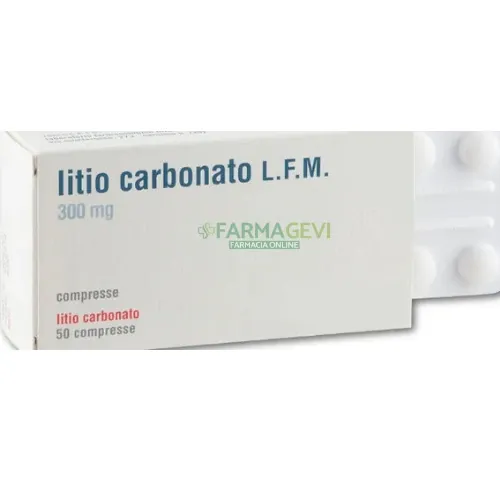
Table of Contents
- Package leaflet: Information for the patient
- LITHIUM CARBONATE L.F.M. 300 mg tablets
- 1. What LITIO CARBONATO L.F.M. is and what it is used for
- 2. What you need to know before taking LITIUM CARBONATE L.F.M.
- 3. How to take LITHIUM CARBONATE L.F.M.
- 4. Possible side effects
- 5. How to store LITHIUM CARBONATE L.F.M.
- 6. Package contents and other information
Package leaflet: Information for the patient
LITHIUM CARBONATE L.F.M. 300 mg tablets
Read this leaflet carefully before taking this medicine because it contains
important information for you.
Keep this leaflet. You may need to read it again.
If you have any questions, ask your doctor or pharmacist.
This medicine has been prescribed for you only. Do not give it to other people, even if their
symptoms are the same as yours, because it could be dangerous.
If you experience any side effect, including those not listed in this leaflet, contact your doctor or pharmacist. See section 4.
Contents of this leaflet:
- What LITHIUM CARBONATE L.F.M. is and what it is used for
- What you need to know before taking LITHIUM CARBONATE L.F.M.
- How to take LITHIUM CARBONATE L.F.M.
- Possible side effects
- How to store LITHIUM CARBONATE L.F.M.
- Contents of the pack and other information
1. What LITIO CARBONATO L.F.M. is and what it is used for
LITIO CARBONATO L.F.M. contains the active substance lithium carbonate, which belongs to a class of medicines called antipsychotics that act on the central nervous system as mood stabilizers.
This medicine is used to prevent and control:
excitement states in manic and hypomanic forms (mental disorders characterized by more or less severe excitement, socially inappropriate behavior, disorganized and unproductive behavior, excessive energy, urgent sexual desire, hyperactivity, irritability, anger, aggressiveness, loss of contact with reality, and impaired ability to think and judge clearly);
depressive states (a mood disorder characterized by frequent and intense feelings of dissatisfaction and sadness, bad mood, and negative thoughts) and chronic depressive psychosis (characterized by slowing of movements, apathy, feelings of guilt, and self-punitive behaviors);
manic-depressive psychosis (mental disorders characterized by alternating episodes of depressed mood and episodes of elation).
It is also used to treat cluster headache (a specific type of headache characterized by severe stabbing pain and symptoms such as tearing, nasal congestion or runny nose, facial sweating, affecting one side of the head), but only in patients who do not respond to other therapies, due to the toxicity of lithium carbonate.
2. What you need to know before taking LITIUM CARBONATE L.F.M.
Do not take LITIUM CARBONATE L.F.M.
if you are allergic to the active substance or to any of the other ingredients of this medicine
(listed in section 6);
if you have heart problems;
if you have severe kidney problems (renal failure);
if you are very weak (severe debilitation);
if you have significantly reduced sodium levels in the body;
if you are undergoing treatment with medicines that increase urine elimination (diuretics);
if you are pregnant, think you may be pregnant, or are breastfeeding (see section
Pregnancy and breastfeeding);
if the person taking this medicine is under 12 years of age, unless otherwise advised
by a doctor.
Warnings and precautions
Talk to your doctor or pharmacist before taking LITIUM CARBONATE L.F.M.
Due to their toxicity, lithium salts should not be prescribed unless blood levels can be monitored.
Treatment will begin with low doses of the medicine, which your doctor will adjust later based on the amount of lithium in your blood (lithaemia) (see section "How to use LITIUM CARBONATE L.F.M.").
Inform your doctor if you have other medical conditions (including urinary tract infections), alternating episodes of excitement (manic phases) and depression (depressive phases), if you are taking new medicines, or if you are changing your diet, particularly regarding salt and fluid intake. If you wish to switch from one formulation of this medicine to another, consult your doctor, who will carefully monitor your health status and take the same precautions as at the beginning of treatment, since the amount of medicine absorbed by the body may vary significantly between different formulations.
Before starting treatment with lithium salts, your doctor will check the function of your heart, kidneys, and thyroid gland. These checks will be repeated periodically throughout treatment, every 6–12 months (unless your doctor advises otherwise). If gradual or sudden changes in kidney function occur—even within normal limits—your doctor will reassess your treatment. Additionally, during lithium therapy, you will need periodic blood tests (haemogram).
Please note that if you have been taking lithium for more than 10 years and have severe kidney problems (severe renal failure), small fluid-filled spherical formations (microcysts) or tumours (oncocytoma and renal collecting duct carcinoma) may develop in the kidneys (see section "Possible side effects").
Exercise particular caution when using lithium and inform your doctor:
if you have reduced thyroid function, the gland producing hormones (hypothyroidism); your doctor will perform careful monitoring before and during treatment; if hypothyroidism develops during treatment, your doctor will prescribe replacement therapy with thyroid hormones;
if you have heart disease or if you or a family member has a heart rhythm disorder known as “QT interval prolongation”;
if you have Addison’s disease, a condition characterized by severely reduced hormone production by the adrenal glands;
if you have low sodium levels in the blood, as this increases lithium toxicity;
if you are dehydrated due to excessive sweating, diarrhoea, or vomiting, as this may reduce tolerance to the medicine. In such cases, increase your intake of salt and fluids and inform your doctor. If, together with these symptoms, you also develop an infection with elevated body temperature, your doctor may reduce or discontinue treatment;
if you have a hereditary genetic disease affecting water and salt exchange in cells of certain organs, leading to thick, sticky mucus that impairs the function of affected organs, particularly lungs and intestines (cystic fibrosis);
if you have severe muscle weakness (myasthenia gravis);
if you decide to abruptly stop treatment, as this may increase the risk of relapse (see section "If you stop taking LITIUM CARBONATE L.F.M.");
if you are scheduled for surgery, as lithium enhances the effects of medicines used to block muscles during surgery (neuromuscular blockers).
Your doctor will inform you and your family members that you must contact them immediately and stop treatment if any of the following early signs of medicine toxicity occur:
diarrhoea, nausea, vomiting, abdominal pain, drowsiness, loss of muscle coordination, sedation, tremors affecting hands and head (fine tremors), muscle weakness, and feeling cold.
Discontinue lithium intake at least one week before starting electroconvulsive therapy (ECT) and resume lithium treatment several days after ECT completion.
Additionally, discontinue lithium therapy 24 hours before major surgical procedures, as reduced lithium excretion associated with anaesthesia may lead to lithium accumulation. Lithium therapy should be resumed as soon as possible after surgery.
Children
This medicine must not be used in children under 12 years of age.
Other medicines and LITIUM CARBONATE L.F.M.
Inform your doctor or pharmacist if you are taking, have recently taken, or might take any other medicines.
Avoid concomitant use of LITIUM CARBONATE L.F.M. with the following medicines:
medicines used for mental illnesses (antipsychotics) such as clozapine, haloperidol, phenothiazines, sulpiride, sertindole, thioridazine, chlorpromazine;
medicines used to treat depression (antidepressants) such as venlafaxine, tricyclic antidepressants, and selective serotonin reuptake inhibitors (SSRIs);
medicines used to treat high blood pressure such as methyldopa and acetazolamide;
antiepileptic medicines such as phenytoin, phenobarbital, and carbamazepine;
medicines used to treat heart conditions and high blood pressure such as ACE inhibitors, angiotensin receptor antagonists, and calcium antagonists such as verapamil and diltiazem;
medicines used to treat heart rhythm disorders (amiodarone);
non-steroidal anti-inflammatory drugs (NSAIDs), used to relieve pain and inflammation, such as diclofenac, ibuprofen, indomethacin, mefenamic acid, naproxen, ketorolac, nimesulide, piroxicam, and selective COX-2 inhibitors;
medicines used to treat inflammation and allergies (corticosteroids);
medicines that promote urine elimination, used to treat high blood pressure (diuretics), including indapamide, acetazolamide, amiloride, triamterene, furosemide, bumetanide, and ethacrynic acid. If you are taking these medicines, consult your doctor, as lithium dosage adjustments may be necessary;
medicines used to relieve nausea (metoclopramide);
medicines used for infections (antibiotics) such as metronidazole;
aminophylline and other xanthines, medicines that dilate the bronchi and facilitate breathing;
mannitol, which promotes intestinal evacuation;
products containing urea;
alkalinizing agents such as sodium bicarbonate;
medicines used during surgery to block muscles (neuromuscular blockers).
The following medicines may reduce lithium levels in the body, potentially reducing its effectiveness:
empagliflozin (used to treat diabetes or heart failure)
dapagliflozin (used to treat diabetes, heart failure, or chronic kidney disease)
LITIUM CARBONATE L.F.M. with food and alcohol
Do not consume alcohol during treatment with this medicine, as it may increase lithium blood levels.
Do not drink excessive amounts of coffee during treatment with this medicine, as it may decrease lithium blood levels.
Pregnancy and breastfeeding
If you are pregnant, suspect you may be pregnant, planning a pregnancy, or breastfeeding, consult your doctor or pharmacist before taking this medicine.
Do not take this medicine if you are pregnant or suspect pregnancy, as it may harm the unborn baby.
Do not take this medicine if you are breastfeeding, as lithium passes into breast milk and may cause problems in the infant.
Due to the potential fetal toxicity of lithium (teratogenicity), perform a pregnancy test before starting treatment with this medicine.
If you are already on lithium therapy and plan to become pregnant, discontinue treatment gradually under close medical supervision to avoid relapse (see section "If you stop taking LITIUM CARBONATE L.F.M.").
Resume treatment a few days after delivery, always under close medical supervision and starting with low doses to prevent manic episodes and relapses. Avoid breastfeeding.
In newborns of mothers who took LITIUM CARBONATE L.F.M. as an antipsychotic during the last three months of pregnancy, the following symptoms have been observed: tremor, muscle stiffness and/or weakness, drowsiness, agitation, breathing difficulties, and feeding problems. If your baby shows any of these symptoms, contact your doctor immediately.
Driving and using machines
Lithium may impair mental or physical abilities and therefore may affect your ability to drive vehicles or operate machinery.
If you perform activities requiring quick reflexes, take these effects into account.
LITIUM CARBONATE L.F.M. contains less than 1 mmol (23 mg) of sodium per dose, i.e., it is essentially 'sodium-free'.
3. How to take LITHIUM CARBONATE L.F.M.
Take this medicine exactly as instructed by your doctor or pharmacist.
If you have any doubts, consult your doctor or pharmacist.
It is always necessary to start treatment with low doses of the medicine, which your doctor will adjust gradually depending on your health condition and the lithium blood levels (lithiemia).
The recommended dose for adults and adolescents is 300 mg (1 tablet) 2 to 6 times daily, administered at regular intervals.
Maximum doses should be used in the initial treatment of severe conditions, while minimum doses are used for preventive maintenance therapy.
Within 4-8 days after starting treatment, you must have blood tests to measure the lithium levels (lithiemia) 10-12 hours after the last dose. Your doctor will adjust your dose to maintain adequate lithium blood levels (0.4–1 mEq/litre). Repeat these blood tests weekly for four additional weeks, until your dosage is stabilized, and then every three months thereafter.
For the treatment of acute mania, it is necessary to maintain lithium blood levels within the range of 0.8–1 mEq/litre, while for preventive therapy, levels of 0.6–0.75 mEq/litre are generally sufficient. Your doctor will adjust the dosage based on your lithium blood levels.
Use in adolescents
In adolescents aged 12–18 years, treatment should be administered under strict medical supervision and for the shortest possible duration.
If you take more LITHIUM CARBONATE L.F.M. than you should
In case of accidental overdose of LITHIUM CARBONATE L.F.M., inform your doctor immediately or go to the nearest hospital so that urgent measurement of lithium blood levels can be performed.
Early signs of lithium toxicity include: reduced or absent response to everyday situations and events (apathy); restlessness that may be confused with depressive illness itself.
In cases of severe toxicity, main symptoms include: irregular heartbeat; dizziness; altered consciousness; increased reflexes; a state of wakeful unconsciousness in which there is no self-awareness or awareness of the surrounding environment (vigilant coma).
If you forget to take LITHIUM CARBONATE L.F.M.
Do not take a double dose to make up for the missed dose. Inform your doctor.
If you stop taking LITHIUM CARBONATE L.F.M.
If you need to discontinue treatment with this medicine, consult your doctor, who will gradually reduce the dose over several weeks.
Do not stop taking this medicine abruptly, as this may lead to relapse.
If you have any doubts about how to use this medicine, consult your doctor or pharmacist.
4. Possible side effects
Like all medicines, this medicine can cause side effects, although not everybody gets them.
The onset and severity of side effects are generally determined by the amount of lithium in the blood, the individual patient's sensitivity to lithium, and the patient's age. Some patients may have blood lithium levels considered toxic without showing any signs of toxicity; others, conversely, may develop toxicity at therapeutic doses.
At the beginning of treatment, some side effects may occur which usually disappear with continued treatment or with a temporary reduction in dose. If they persist, treatment must be discontinued.
The following side effects may occur:
- mild hand tremors;
- excessive urine production and increased frequency of urination (polyuria);
- moderate thirst;
- general malaise.
Within the first 24 hours after the initial administration of lithium, the following adverse effects may occur:
- increased excretion of sodium, potassium, and mineralocorticoids in the urine. Subsequently, potassium excretion normalizes and sodium retention may occur, leading to swelling of the lower limbs (pretibial edema). These side effects usually disappear within a few days;
- kidney problems with increased urine output and reduced ability of the kidneys to reabsorb fluids, potentially leading to a condition called diabetes insipidus.
Early signs of lithium toxicity occurring at low blood levels include:
- diarrhea, nausea, vomiting, abdominal pain;
- drowsiness, sedation;
- muscle weakness and problems with movement coordination (motor incoordination);
- dry mouth;
- feeling cold;
- slowed speech;
- involuntary and rapid eye movements (nystagmus).
At higher lithium blood levels, the above effects may worsen and the following may occur:
- exaggerated reflexes (hyperreflexia);
- loss of muscle coordination (ataxia);
- dizziness and hearing disturbances such as ringing in the ears (tinnitus);
- blurred vision;
- excessive urine production and increased frequency of urination (polyuria).
At very high lithium blood levels, very serious effects may occur, such as:
- seizures;
- circulatory disturbances;
- psychiatric disturbances such as stupor;
- coma and death.
During treatment, in addition to the above, the following adverse effects have been reported:
- epileptic seizures, either as true seizures characterized by loss of consciousness, muscle rigidity, jerking movements, and collapse, or as absence seizures, i.e., sudden interruptions of consciousness;
- speech difficulties, delays in the development and acquisition of motor, cognitive, and communication skills (psychomotor retardation);
- dizziness, vertigo, confusion;
- involuntary loss of urine and feces (incontinence);
- drowsiness, fatigue, deep sleep often irresistible, with complete muscle relaxation and lack of response to external stimuli (lethargy);
- restlessness, mental slowing with detachment from reality (stupor), coma;
- tremors, muscle hyperirritability (muscle contractions, clonic movements of the legs);
- loss of muscle coordination (ataxia), jerky movements (choreoathetoid), tendon reflex hyperexcitability, dry mouth;
- heart and circulatory problems, such as low blood pressure (hypotension), sudden loss of blood circulation (peripheral circulatory collapse), conditions and symptoms due to the heart's inability to pump sufficient blood to meet the body's needs (circulatory failure);
- changes in heart rhythm, such as QT interval prolongation, disturbances in heart rhythm (cardiac and ventricular arrhythmias) including torsades de pointes, ventricular tachycardia, ventricular fibrillation, and cardiac arrest;
- sudden death;
- excessive urine production and increased frequency of urination (polyuria), and increased levels of protein (albuminuria) or sugar (glucosuria) in the urine;
- reduced urine output (oliguria);
- severe kidney problems with structural changes in the kidneys (glomerular and interstitial fibrosis, nephron atrophy);
- swelling (thyroid goiter) and/or reduced thyroid function (hypothyroidism), which may cause accumulation of a dense mucous substance in the skin and subcutaneous tissue (myxedema);
- rare cases of increased thyroid function (hyperthyroidism);
- loss of appetite (anorexia), nausea, vomiting, and diarrhea;
- reduced number of white blood cells (leukopenia);
- blood cell abnormalities;
- visual disturbances (transient scotomas);
- dryness, thinning, and hair loss (alopecia);
- loss of skin sensitivity (cutaneous anesthesia);
- skin inflammation (chronic folliculitis and psoriasis);
- excessive fluid loss from the body (dehydration) and weight loss;
- changes in heart and brain parameters measured by electrocardiogram (ECG) and electroencephalogram (EEG).
Frequency not known (frequency cannot be estimated from available data):
- small fluid-filled spherical formations (microcysts) or tumors (oncocytoma and collecting duct renal carcinoma) in the kidneys, especially in patients treated with lithium for more than 10 years and who have severe kidney problems (severe renal failure);
- skin or mucosal rash (drug-induced lichenoid reaction).
Reporting of side effects
If you experience any side effect, including those not listed in this leaflet, please consult your doctor or pharmacist. You may also report side effects directly via the national reporting system at https://www.aifa.gov.it/content/segnalazioni-reazioni-avverse. By reporting side effects, you can help provide more information on the safety of this medicine.
5. How to store LITHIUM CARBONATE L.F.M.
Keep this medicine out of the sight and reach of children.
Do not use this medicine after the expiry date stated on the packaging after "Exp.".
The expiry date refers to the last day of that month. Keep the container tightly closed.
Do not dispose of any medicine via wastewater or household waste. Ask your pharmacist how to
dispose of medicines no longer in use. This will help protect the environment.
6. Package contents and other information
What LITIO CARBONATO L.F.M. contains
- The active substance is lithium carbonate. Each tablet contains 300 mg of lithium carbonate.
- The other components are: maize starch, sodium carboxymethylcellulose, microcrystalline cellulose, magnesium stearate, sodium lauryl sulfate, talc.
Description of the appearance of LITIO CARBONATO L.F.M. and package contents
Pack containing 50 tablets in blister.
Marketing Authorization Holder and Manufacturer
Laboratorio Farmacologico Milanese S.r.l., Via Monterosso 273, 21042 – Caronno Pertusella (VA).