Lisinopril and hydrochlorothiazide Zentiva
Italy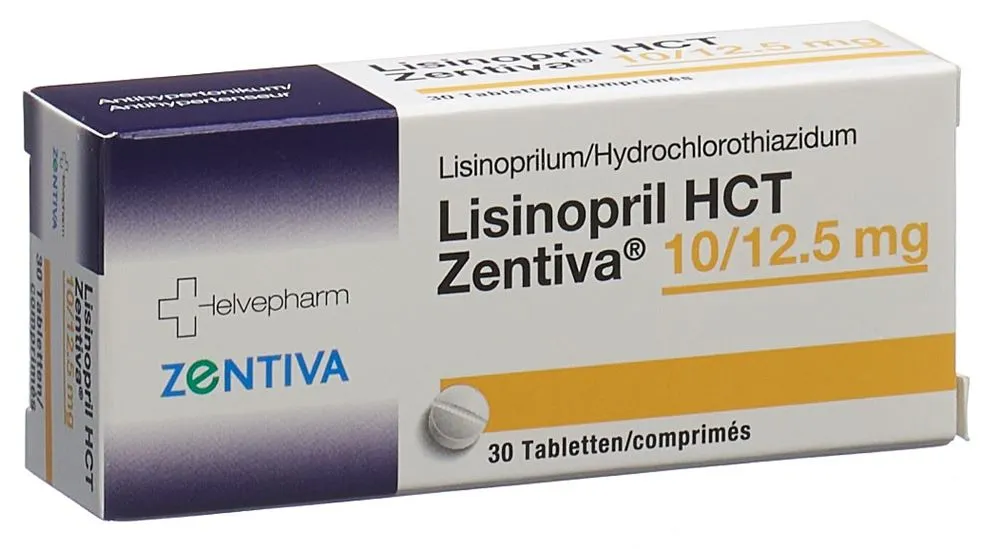
Table of Contents
- PATIENT INFORMATION LEAFLET
- Lisinopril and Hydrochlorothiazide Zentiva 20 mg + 12.5 mg tablets
- 1. What Lisinopril and Hydrochlorothiazide Zentiva is and what it is used for
- 2. What you need to know before taking Lisinopril and Hydrochlorothiazide Zentiva
- 3. How to take Lisinopril and Hydrochlorothiazide Zentiva
- 4. Possible side effects
- 5. How to store Lisinopril and Hydrochlorothiazide Zentiva
- 6. Package contents and other information
PATIENT INFORMATION LEAFLET
Lisinopril and Hydrochlorothiazide Zentiva 20 mg + 12.5 mg tablets
Generic medicine
Please read all of this leaflet carefully before taking this medicine because it contains important information for you.
- Keep this leaflet. You may need to read it again.
- If you have any questions, ask your doctor or pharmacist.
- This medicine has been prescribed for you only. Do not give it to other people, even if they have the same symptoms as you, because it may be harmful.
- If you experience any side effect, including those not listed in this leaflet, tell your doctor or pharmacist. See section 4.
Contents of this leaflet:
- What Lisinopril and Hydrochlorothiazide Zentiva is and what it is used for.
- What you need to know before taking Lisinopril and Hydrochlorothiazide Zentiva.
- How to take Lisinopril and Hydrochlorothiazide Zentiva.
- Possible side effects.
- How to store Lisinopril and Hydrochlorothiazide Zentiva.
- Contents of the pack and other information.
1. What Lisinopril and Hydrochlorothiazide Zentiva is and what it is used for
Lisinopril and Hydrochlorothiazide Zentiva is a combination of lisinopril and hydrochlorothiazide.
Lisinopril is a medicine that lowers blood pressure (antihypertensive). It belongs to a group of
medicines called angiotensin-converting enzyme (ACE) inhibitors. It works by relaxing blood vessels, making it easier for blood to flow.
Hydrochlorothiazide is a diuretic belonging to the class of thiazide diuretics. It allows the kidneys to produce more urine, thereby reducing blood volume.
Lisinopril and Hydrochlorothiazide Zentiva is used for:
- treating high blood pressure (essential hypertension).
Lisinopril and Hydrochlorothiazide Zentiva should be used in patients whose blood pressure is not
adequately controlled by lisinopril alone.
2. What you need to know before taking Lisinopril and Hydrochlorothiazide Zentiva
Do not take Lisinopril and Hydrochlorothiazide Zentiva
- if you are allergic to lisinopril or hydrochlorothiazide or to any of the other ingredients of this medicine (listed in section 6);
- if you are allergic to other medicines belonging to the class of ACE inhibitors;
- if you are allergic to medicines used to treat infections (sulfamethizole/sulfamethoxazole);
- if you have ever experienced sudden swelling of the hands, feet, ankles, face, lips, tongue or throat, especially after treatment with an ACE inhibitor. You may also have had difficulty swallowing or breathing;
- if you have hereditary angioedema (a condition that makes you more prone to the swelling described above);
- if you have severe kidney problems;
- if you have stopped passing urine;
- if you have severe liver problems;
- if you are more than three months pregnant (it is better to avoid Lisinopril and Hydrochlorothiazide Zentiva even in the early stages of pregnancy – see section “Pregnancy”);
- if you have taken or are currently taking sacubitril/valsartan, a medicine used to treat chronic heart failure in adults, as this increases the risk of angioedema (rapid swelling under the skin, for example in the throat);
- if you have diabetes or impaired kidney function and are being treated with a blood pressure-lowering medicine containing aliskiren.
Do not take Lisinopril and Hydrochlorothiazide Zentiva if any of the conditions listed above apply to you. If you are unsure, consult your doctor or pharmacist before taking Lisinopril and Hydrochlorothiazide Zentiva.
Warnings and precautions
Talk to your doctor or pharmacist before taking Lisinopril and Hydrochlorothiazide Zentiva:
- if you have narrowing (stenosis) of the aorta (an artery of the heart), of a heart valve (mitral valve), or of the renal artery;
- if you have thickening of the heart muscle (known as hypertrophic cardiomyopathy);
- if you have blood vessel disorders (vascular collagenopathy);
- if you have low blood pressure. You may feel dizzy or lightheaded, especially when standing up;
- if you have kidney problems or are on dialysis, have had a kidney transplant, or are taking neprilysin inhibitors (NEP) (such as racecadotril – a medicine used for diarrhoea);
- if you have liver problems;
- if you have diabetes;
- if you have previously had skin cancer or develop unexpected skin lesions during treatment. Treatment with hydrochlorothiazide, particularly long-term use at high doses, may increase the risk of certain types of non-melanoma skin cancer and lip cancer. Protect your skin from exposure to sunlight and UV rays while taking Lisinopril and Hydrochlorothiazide Zentiva;
- if you experience vision changes or eye pain. These may be symptoms of fluid accumulation in the vascular layer of the eye (choroidal effusion) or increased pressure in the eye, which may occur from a few hours to one week after taking Lisinopril and Hydrochlorothiazide Zentiva. This condition can lead to permanent vision loss if not treated. If you have previously been allergic to penicillin or sulfonamides, you may be at higher risk;
- if you have recently had diarrhoea or vomiting (feeling unwell);
- if your doctor has advised you to monitor your salt intake;
- if you have high cholesterol levels and are receiving a treatment called “LDL apheresis”;
- if you have ever had systemic lupus erythematosus (SLE);
- if you are of African origin, as Lisinopril and Hydrochlorothiazide Zentiva may be less effective. You may also be more likely to experience the side effect “angioedema” (a severe allergic reaction with swelling of the hands, feet, ankles, face, lips, tongue or throat);
- if you are taking any of the following medicines, the risk of angioedema (rapid swelling under the skin, for example in the throat) may increase:
- Racecadotril, a medicine used to treat diarrhoea, and other medicines belonging to the class of neprilysin inhibitors (NEP);
- Medicines used to prevent rejection of transplanted organs and to treat cancer (such as temsirolimus, sirolimus, everolimus and other medicines belonging to the class of mTOR inhibitors);
- Vildagliptin, a medicine used to treat diabetes.
- if you have previously experienced breathing or lung problems (including inflammation or fluid in the lungs) after taking hydrochlorothiazide. If you develop shortness of breath or severe difficulty breathing after taking Lisinopril and Hydrochlorothiazide Zentiva, consult a doctor immediately.
- if you are taking any of the following medicines for high blood pressure:
- an "angiotensin II receptor antagonist" (AIIRA) (also known as sartans – for example valsartan, telmisartan, irbesartan), particularly if you have kidney problems related to diabetes;
- aliskiren. Your doctor may check your kidney function, blood pressure, and blood electrolyte levels (e.g. potassium) at regular intervals.
See also the information under the heading "Do not take Lisinopril and Hydrochlorothiazide Zentiva".
You must inform your doctor if you think you are pregnant (or if there is a possibility of becoming pregnant).
Lisinopril and Hydrochlorothiazide Zentiva is not recommended during early pregnancy and must not be taken if you are more than three months pregnant, as it may cause serious harm to the unborn child if taken during this period (see section “Pregnancy”).
If you are unsure whether any of the conditions listed above apply to you, discuss them with your doctor or pharmacist before taking Lisinopril and Hydrochlorothiazide Zentiva.
Treatment of allergies such as those to insect stings
Inform your doctor if you are undergoing or are about to undergo treatment to reduce the effects of an allergy such as to insect stings (desensitisation treatment).
If you take Lisinopril and Hydrochlorothiazide Zentiva while undergoing this treatment, it may cause you to have a severe allergic reaction.
Surgery
If you are about to undergo surgery (including dental surgery), inform your doctor or dentist that you are taking Lisinopril and Hydrochlorothiazide Zentiva. This is because you may experience a drop in blood pressure (hypotension) if certain local or general anaesthetics are administered while you are taking Lisinopril and Hydrochlorothiazide Zentiva.
Doping tests
The hydrochlorothiazide contained in this medicine may cause a positive result in doping tests.
For athletes: using this medicine without a medical need constitutes doping and may lead to a positive doping test.
Children and adolescents
Lisinopril and Hydrochlorothiazide Zentiva must not be given to children, as the safety and efficacy of lisinopril/hydrochlorothiazide have not been established in this age group.
Other medicines and Lisinopril and Hydrochlorothiazide Zentiva
Inform your doctor or pharmacist if you are taking, have recently taken, or might take any other medicines.
Lisinopril and Hydrochlorothiazide Zentiva may affect how some medicines work, and some medicines may affect Lisinopril and Hydrochlorothiazide Zentiva.
In particular, inform your doctor or pharmacist if you are taking any of the following medicines:
- sacubitril/valsartan – a medicine used to treat chronic heart failure in adults (see also section "Do not take Lisinopril and Hydrochlorothiazide Zentiva" and “Warnings and precautions”);
- other medicines that help lower blood pressure;
- medicines that help you urinate (diuretics);
- non-steroidal anti-inflammatory drugs (NSAIDs) such as indomethacin, used to treat pain and arthritis;
- medicines for depression, anaesthetics, and medicines for mental health conditions, including lithium;
- aspirin (acetylsalicylic acid), if you are taking more than 3 grams per day;
- potassium supplements (including salt substitutes), potassium-sparing diuretics, and other medicines that may increase potassium levels in the blood (such as trimethoprim and cotrimoxazole for bacterial infections; cyclosporine, an immunosuppressant used to prevent rejection of transplanted organs; and heparin, a medicine used to thin the blood and prevent clotting);
- calcium salts;
- insulin or oral medicines for treating diabetes (such as vildagliptin);
- medicines for treating asthma;
- medicines used to treat nasal or sinus congestion or other cold remedies (including those available over-the-counter);
- allopurinol (for gout);
- medicines for irregular heartbeat (such as procainamide);
- cardiac glycosides (to treat heart failure);
- medicines containing gold, such as sodium aurothiomalate, which may be administered by injection;
- amphotericin B injection (to treat fungal infections);
- carbenoxolone (to treat oesophageal or oral inflammation or ulcers);
- corticosteroids (steroid medicines);
- corticotropin (a hormone);
- medicines for constipation (stimulant laxatives);
- cholestyramine and colestipol (to lower cholesterol, prevent diarrhoea or reduce itching);
- muscle relaxants such as tubocurarine;
- trimethoprim (an antibiotic);
- sotalol (a beta-blocker);
- lovastatin (to lower cholesterol);
- dextran sulfate (used in the “LDL apheresis” treatment to lower cholesterol);
- chemotherapy for cancer (cytostatics);
- other medicines known to have an effect on the heart called “Torsade de pointes”;
- racecadotril (a medicine used for diarrhoea, see also section “Warnings and precautions”);
- medicines usually used to prevent rejection of transplanted organs (sirolimus, everolimus and other medicines belonging to the class of mTOR inhibitors). See section “Warnings and precautions”.
Your doctor may consider it necessary to adjust your dose and/or take other precautions:
If you are taking an angiotensin II receptor antagonist (AIIRA) or aliskiren (see also section "Do not take Lisinopril and Hydrochlorothiazide Zentiva" and “Warnings and precautions”).
Lisinopril and Hydrochlorothiazide Zentiva with food, drinks and alcohol
Lisinopril and Hydrochlorothiazide Zentiva can be taken with or without food. Drinking alcohol together with Lisinopril and Hydrochlorothiazide Zentiva may cause excessive lowering of blood pressure when standing.
Pregnancy, breastfeeding and fertility
If you are pregnant, think you may be pregnant, are planning to become pregnant, or are breastfeeding, consult your doctor or pharmacist before taking this medicine.
Pregnancy
You must inform your doctor if you think you are pregnant (or if there is a possibility of becoming pregnant). Your doctor will usually advise you to stop taking Lisinopril and Hydrochlorothiazide Zentiva before becoming pregnant or as soon as you know you are pregnant, and will recommend an alternative medicine.
Lisinopril and Hydrochlorothiazide Zentiva is not recommended during pregnancy and must not be taken if you are more than three months pregnant, as it may cause serious harm to the unborn child if taken after the third month of pregnancy.
Breastfeeding
Inform your doctor if you are breastfeeding or planning to breastfeed. Lisinopril and Hydrochlorothiazide Zentiva is not recommended for breastfeeding mothers, and your doctor may choose an alternative treatment if you wish to breastfeed, especially if your baby is a newborn or was born prematurely.
Driving and using machines
This medicine may occasionally cause dizziness or fatigue, which may affect your ability to drive or operate machinery, especially at the beginning of treatment, when the dose is changed, or when taken together with alcohol. If this happens, do not drive or operate any tools or machines.
You should wait to see how the medicine affects you before engaging in these activities.
Lisinopril and Hydrochlorothiazide Zentiva contains sodium
This medicine contains less than 1 mmol (23 mg) of sodium per dose, i.e. it is essentially “sodium-free”.
3. How to take Lisinopril and Hydrochlorothiazide Zentiva
Take this medicine exactly as your doctor or pharmacist has told you.
If you are unsure, consult your doctor or pharmacist.
Taking the medicine
Swallow the tablet with a glass of water.
Try to take the tablets at the same time each day.
It does not matter whether you take Lisinopril and Hydrochlorothiazide Zentiva before or after meals.
The recommended dose is:
Adults
The usual dose is one tablet once daily. If necessary, your doctor may increase the dose to two tablets once daily.
Elderly
Dose adjustment is not required.
Children and adolescents
Lisinopril and Hydrochlorothiazide Zentiva is not recommended for use in children and adolescents.
Reduced kidney function
Dose adjustment may be necessary. Follow your doctor's instructions.
If you take more Lisinopril and Hydrochlorothiazide Zentiva than you should
If you have taken more tablets of Lisinopril and Hydrochlorothiazide Zentiva than prescribed, inform your doctor or go to hospital immediately. Take the medicine pack with you so that the tablets can be identified. An overdose may cause blood pressure to drop too low, dehydration, electrolyte disturbances, and kidney failure.
If you forget to take Lisinopril and Hydrochlorothiazide Zentiva
If you forget to take a dose, take it as soon as you remember. However, if it is almost time for your next dose, skip the missed dose.
Do not take a double dose to make up for a forgotten dose.
If you stop taking Lisinopril and Hydrochlorothiazide Zentiva
Do not stop taking the tablets, even if you feel well, unless your doctor tells you to.
If you have any doubts about how to use this medicine, consult your doctor or pharmacist.
4. Possible side effects
Like all medicines, this medicine can cause side effects, although not everybody gets them.
Lisinopril and Hydrochlorothiazide Zentiva contains two medicines: lisinopril and hydrochlorothiazide. The following side effects have been reported with these medicines individually. This means they may also occur with Lisinopril and Hydrochlorothiazide Zentiva.
Possible side effects with lisinopril
Severe allergic reactions (rare, may affect up to 1 in 1,000 people):
If you have a severe allergic reaction, stop taking Lisinopril and Hydrochlorothiazide Zentiva and contact a doctor immediately.
Signs may include sudden onset of:
- swelling of the face, lips, tongue or throat. This may make swallowing difficult;
- severe or sudden swelling of the hands, feet or ankles;
- difficulty breathing;
- severe skin itching (with lumps).
Severe liver problems (very rare, may affect up to 1 in 10,000 people):
Signs may include:
- yellowing of the skin or eyes (jaundice), dark-coloured urine, or loss of appetite. If this occurs, contact a doctor immediately.
Other possible side effects:
Common (may affect up to 1 in 10 people):
- headache;
- dizziness or lightheadedness, especially when standing up quickly;
- fainting;
- diarrhoea;
- feeling unwell (vomiting);
- dry, persistent cough;
- kidney problems (shown in a blood test).
Uncommon (may affect up to 1 in 100 people):
- mood changes, including depression;
- tingling sensation felt as “pins and needles”;
- sensation of spinning (dizziness);
- changes in taste;
- sleep disturbances;
- heart attack or stroke;
- irregular heartbeat;
- change in colour of fingers and toes (Raynaud’s syndrome);
- runny nose;
- feeling of sickness (nausea);
- stomach pain and indigestion;
- changes in blood tests assessing liver function;
- skin rash;
- itching;
- inability to achieve an erection (impotence);
- feeling of weakness;
- feeling of tiredness;
- increased levels of certain substances in the blood (urea, creatinine or potassium).
Rare (may affect up to 1 in 1,000 people):
- changes in certain blood cells or other blood components. Signs may include tiredness and paleness;
- confusion;
- changes in smell;
- dry mouth;
- skin rash with dark red, swollen, itchy lumps (urticaria);
- hair loss (alopecia);
- psoriasis (a skin condition);
- blood infection;
- kidney failure or uraemia (a toxic condition caused by kidney failure and characterised by accumulation of urea in the blood);
- breast enlargement in men;
- syndrome of inappropriate antidiuretic hormone secretion (SIADH);
- low sodium levels in the blood, which may cause weakness, tiredness, headache, nausea, feeling unwell (vomiting), and cramps.
Very rare (may affect up to 1 in 10,000 people):
- bone marrow problems or reduced number of blood cells and/or platelets. You may notice tiredness, infection (which may be severe), fever, shortness of breath, or increased bruising or bleeding;
- swollen glands (lymph nodes);
- increased immune response (autoimmune disease);
- low blood sugar levels (hypoglycaemia). Signs may include feeling hungry or weak, sweating, and rapid heartbeat;
- sudden sensation of wheezing or shortness of breath (bronchospasm);
- lung inflammation (which may make you feel breathless);
- sinusitis (a feeling of pain and swelling behind the cheeks and eyes);
- eosinophilic pneumonia. Signs include a combination of the following side effects:
- sinusitis;
- feeling like you have the flu;
- increasing shortness of breath;
- stomach or intestinal pain;
- skin rash;
- a "tingling" or numbness sensation in the arms or legs.
- inflammation of the pancreas. This causes moderate to severe stomach pain;
- swelling of the intestinal lining. This may cause sudden stomach pain, diarrhoea, or feeling unwell (vomiting);
- sweating;
- severe skin reactions or skin rash. Symptoms include redness, blisters, and peeling of the skin, which may develop rapidly, and may include blisters in the mouth and nose;
- reduced or absent urine production;
- hepatitis (liver inflammation), jaundice, liver failure.
Frequency not known (frequency cannot be estimated from the available data):
- depression;
- hot flushes.
Possible side effects with hydrochlorothiazide
Very rare (may affect up to 1 in 10,000 people):
Acute respiratory distress (signs include severe shortness of breath, fever, weakness, and confusion).
Frequency not known (frequency cannot be estimated from the available data):
- inflammation of a salivary gland;
- skin and lip cancer (non-melanoma skin cancer);
- reduced number of blood cells and/or platelets. You may notice tiredness, infection (which may be severe), fever, shortness of breath, or increased bruising or bleeding;
- loss of appetite;
- increased blood sugar (glucose) levels (hyperglycaemia);
- sugar in the urine;
- increased blood uric acid levels;
- altered levels of certain substances in the blood (for example, low levels of sodium and potassium). You may notice muscle weakness, thirst, “pins and needles” sensations, cramps, or feeling unwell;
- increased or high levels of fats in the blood (including cholesterol);
- gout;
- feeling restless;
- depression;
- sleep disturbances;
- tingling sensation, felt as “pins and needles”;
- lightheadedness;
- vision changes that may make things appear yellow;
- temporary vision problems;
- Decreased vision or eye pain due to high pressure (possible signs of fluid accumulation in the vascular layer of the eye (choroidal effusion) or acute angle-closure glaucoma).
- if you suddenly have a red and painful eye, inform your doctor immediately; treatment may be needed to prevent permanent vision loss;
- sensation of spinning (dizziness);
- feeling of fainting (especially when standing);
- damage to blood vessels causing reddish or purplish spots on the skin;
- breathing difficulties. You may feel short of breath if the lungs become inflamed or accumulate fluid;
- stomach irritation;
- diarrhoea;
- constipation;
- inflammation of the pancreas. This causes moderate to severe stomach pain;
- yellowing of the skin or whites of the eyes (jaundice);
- skin problems, including rash caused by sensitivity to sunlight, skin rash, severe skin rash developing rapidly with blisters or peeling of the skin, and possibly blisters in the mouth, worsening of existing lupus-like reactions, or appearance of unusual skin reactions;
- allergic reactions;
- muscle cramps and muscle weakness;
- kidney problems, which may be severe (shown in blood tests);
- fever;
- weakness.
Reporting of side effects
If you get any side effects, talk to your doctor or pharmacist. This includes any possible side effects not listed in this leaflet.
You can also report side effects directly via the national reporting system at www.agenziafarmaco.gov.it/content/segnalazioni-reazioni-avverse.
By reporting side effects, you can help provide more information on the safety of this medicine.
5. How to store Lisinopril and Hydrochlorothiazide Zentiva
Keep this medicine out of the sight and reach of children.
Do not store above 30°C.
Do not use this medicine after the expiry date stated on the carton. The expiry date refers to the last day of that month.
Do not dispose of medicines via wastewater or household waste. Ask your pharmacist how to dispose of medicines you no longer use. This will help protect the environment.
6. Package contents and other information
What Lisinopril and Hydrochlorothiazide Zentiva contains
The active substances are lisinopril (as lisinopril dihydrate) and hydrochlorothiazide, 20 mg and 12.5 mg,
respectively.
The other components are: mannitol, calcium hydrogen phosphate dihydrate, pregelatinized corn starch,
sodium croscarmellose, magnesium stearate.
Description of the appearance of Lisinopril and Hydrochlorothiazide Zentiva and package contents
Lisinopril and Hydrochlorothiazide Zentiva 20 mg + 12.5 mg are white, round tablets with a score line and
imprinted with "LH" on one side.
The score line on the tablet is intended to facilitate swallowing by making it easier to break the tablet, and is not intended for dividing the tablet into two equal doses.
Packaging:
Blister packs: 14 tablets
Tablet containers: 30 and 100 tablets
It is possible that not all pack sizes are marketed.
Marketing Authorization Holder
Zentiva Italia S.r.l.
Via P. Paleocapa 7
20121 Milan
Manufacturer
Actavis Ltd.
BLB 016, Bulebel Industrial Estate
Zejtun ZTN 3000
Malta
This medicinal product is authorized in the European Economic Area and in the United Kingdom (Northern Ireland)
under the following names:
Italy: Lisinopril and Hydrochlorothiazide Zentiva 20 mg + 12.5 mg tablets