Likacin
Italy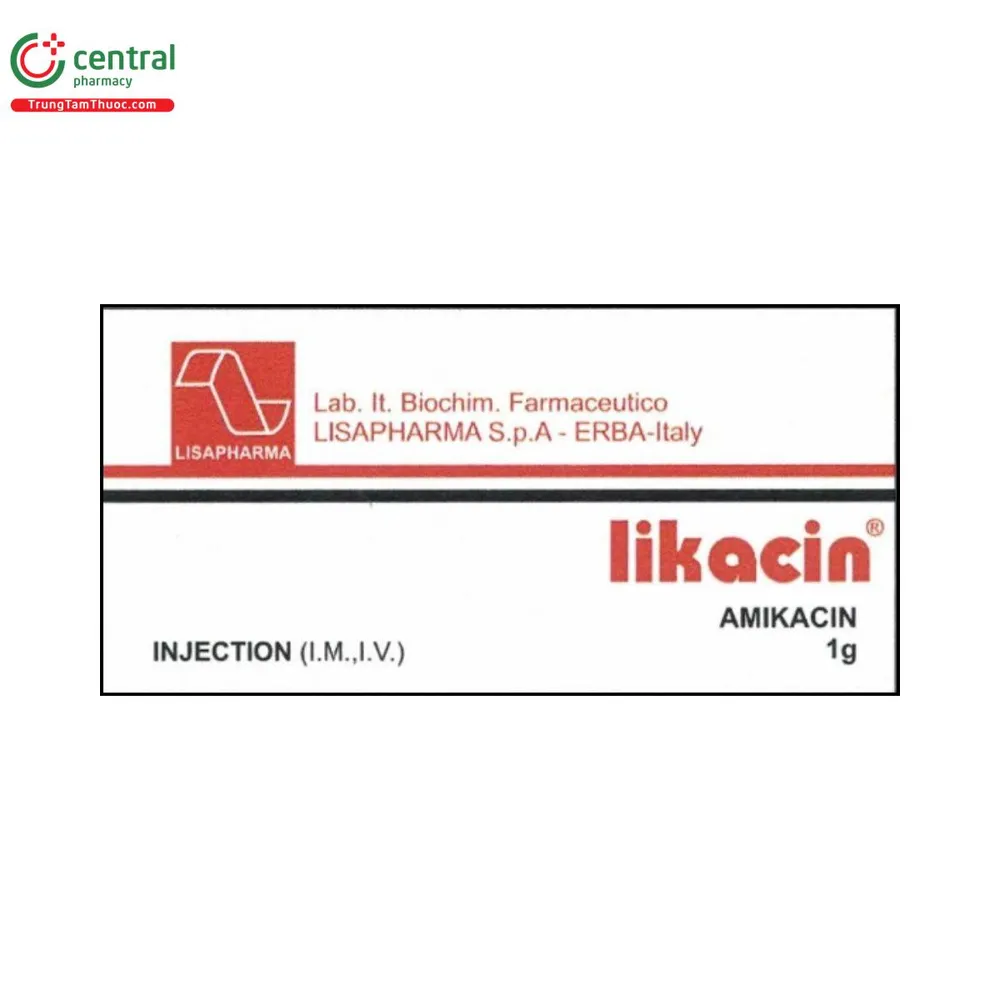
Table of Contents
- Package leaflet: Information for the patient
- LIKACIN 5% GEL
- 1. What LIKACIN Gel is and what it is used for
- 2. What you need to know before using LIKACIN Gel
- 3. How to use LIKACIN Gel
- 4. Possible side effects
- 5. How to store LIKACIN Gel
- 6. Package contents and other information
- Patient Information Leaflet: Information for the user
- LIKACIN 250 mg/2 ml solution for injection, 500 mg/2 ml solution for injection, 1 g/4 ml solution for injection
- 3. How to use LIKACIN
- 4. Possible side effects
- 5. How to store LIKACIN
- 6. Package contents and other information
- The following information is intended exclusively for healthcare professionals:
Package leaflet: Information for the patient
LIKACIN 5% GEL
amikacin sulfate
Please read this leaflet carefully before using this medicine because it contains important information for you.
- Keep this leaflet. You may need to read it again.
- If you have any questions, consult your doctor.
- This medicine has been prescribed for you only. Do not give it to other people, even if their symptoms are the same as yours, because it could be harmful.
- If any side effect occurs, including those not listed in this leaflet, consult your doctor. Contents of this leaflet:
- What LIKACIN Gel is and what it is used for
- What you need to know before using LIKACIN Gel
- How to use LIKACIN Gel
- Possible side effects
- How to store LIKACIN Gel
- Contents of the pack and other information
1. What LIKACIN Gel is and what it is used for
LIKACIN Gel is a medicinal product containing amikacin, a semisynthetic antibiotic belonging to the aminoglycoside group.
LIKACIN Gel is indicated for short-term treatment of serious infections caused by Gram-negative microorganisms sensitive to the antibiotic.
2. What you need to know before using LIKACIN Gel
Do not use LIKACIN Gel
- if you are allergic to the active substance or to any of the other ingredients of this medicine (listed in section 6). Warnings and precautions Talk to your doctor or pharmacist before using LIKACIN Gel. If you or your family members have a genetic disease causing mitochondrial mutation or hearing loss induced by antibiotics, we recommend informing your doctor or pharmacist before taking an aminoglycoside, as certain mitochondrial mutations associated with this product may increase the risk of hearing loss. Your doctor may recommend genetic testing prior to administration of LIKACIN GEL. Inform your doctor before using LIKACIN Gel if you have kidney problems (renal insufficiency). Do not use this medicine for longer than prescribed by your doctor to avoid developing possible antibiotic resistance, irritation, or infections. In such cases, discontinue treatment and consult your doctor, who will prescribe an appropriate therapy.
Other medicines and LIKACIN Gel
Inform your doctor if you are taking, have recently taken, or might take any other medicines.
In particular, ask your doctor for advice before using LIKACIN Gel if you are taking medicines such as:
- fast-acting diuretics (increase urine production; for example ethacrynic acid, furosemide and mannitol);
- antibiotics of the aminoglycoside family;
- other antibiotics (cephaloridine, colistin, paromomycin). Pregnancy and breastfeeding Pregnancy If you are pregnant, think you might be pregnant, planning to become pregnant, or breastfeeding, ask your doctor for advice before using this medicine. In pregnant women, this medicine should be used only when strictly necessary and under the direct supervision of a doctor. Breastfeeding Use of this medicine is not recommended during breastfeeding. Driving and using machines This medicine does not affect the ability to drive vehicles or operate machinery. LIKACIN Gel contains methyl-p-hydroxybenzoate and propyl-p-hydroxybenzoate: these may cause allergic reactions (including delayed reactions).
3. How to use LIKACIN Gel
Use this medicinal product exactly as stated in this leaflet and according to your doctor's instructions.
The recommended dose is one application per day (3–5 cm or more, depending on the size of
the affected area); apply the gel to the skin, gently massaging it in.
If you use more LIKACIN Gel than you should
In case of excessive use or accidental ingestion of the product, contact your doctor.
If you forget to use LIKACIN Gel
If you miss a dose, apply the gel as soon as possible and continue according to the prescribed schedule.
Do not apply the gel more than once a day.
If you stop treatment with LIKACIN Gel
If you have any doubts about using this medicinal product, consult your doctor or pharmacist.
4. Possible side effects
Like all medicines, this medicine can cause side effects, although not everyone experiences them.
The main side effects that may occur during treatment with LIKACIN Gel are generally associated with administration of higher doses or longer treatment periods than those recommended.
Stop treatment with this medicine immediately and consult a doctor or go to the nearest hospital if:
- you experience ringing or buzzing in the ears, partial hearing loss, or dizziness;
- you develop signs of drug hypersensitivity, such as skin rash, difficulty breathing or swallowing, or any other allergic reaction.
Other side effects include:
- Disorders of the auditory nerve (ototoxicity)
- Ringing in the ears (tinnitus)
- Hearing loss
- Altered sensation, numbness, or tingling (paresthesia)
- Tremor
- Headache (cephalalgia)
- Dizziness
- Blood in the urine (hematuria)
- Presence of white blood cells in urine
- Presence of urinary casts (indicative of renal failure)
- Increased blood urea nitrogen
- Reduced urine output (oliguria)
- Kidney function problems (renal failure)
- Presence of albumin in urine (albuminuria)
- Nausea
- Vomiting
- Skin rash
- White blood cells associated with allergies (eosinophilia)
- Low red blood cell count (anemia)
- Low blood pressure (hypotension)
- Fever
If side effects become severe, or if you experience any side effect not listed in this leaflet, contact your doctor or pharmacist.
Reporting of side effects
If you experience any side effect, including those not listed in this leaflet, talk to your doctor or pharmacist.
You can also report side effects directly via the national reporting system at https://www.aifa.gov.it/content/segnalazioni-reazioni-avverse.
By reporting side effects, you help provide more information on the safety of this medicine.
5. How to store LIKACIN Gel
Keep this medicine out of the sight and reach of children.
Store below 30°C.
Do not use this medicine after the expiry date stated on the packaging after "Exp.".
The expiry date refers to the last day of that month.
The stated expiry date applies only to the product stored in its original, undamaged packaging and properly stored.
Do not dispose of any medicine via wastewater or household waste. Ask your pharmacist how to dispose of medicines you no longer use. This will help protect the environment.
6. Package contents and other information
What LIKACIN Gel contains
- Each 100 g of gel contains the active substance: Amikacin sulfate equivalent to Amikacin 5.0 g.
- The other ingredients are hydroxyethylcellulose, methyl p-hydroxybenzoate, propyl p-hydroxybenzoate, glycerin, purified water.
Description of the appearance of LIKACIN Gel and contents of the packaging
Pack containing one 30 g tube of gel.
Marketing Authorization Holder and Manufacturer
Laboratorio Italiano Biochimico Farmaceutico LISAPHARMA S.p.A.
Via Licinio, 11 - 22036 ERBA (CO)
Patient Information Leaflet: Information for the user
LIKACIN 250 mg/2 ml solution for injection, 500 mg/2 ml solution for injection, 1 g/4 ml solution for injection
amikacin (sulfate)
Please read this leaflet carefully before using this medicine because it contains important information for you.
- Keep this leaflet. You may need to read it again.
- If you have any questions, ask your doctor or nurse.
- This medicine has been prescribed for you only. Do not give it to other people, even if their symptoms are the same as yours, as it could be harmful.
- If you experience any side effects, including those not listed in this leaflet, contact your doctor or nurse.
Contents of this leaflet
- What LIKACIN is and what it is used for
- What you need to know before using LIKACIN
- How to use LIKACIN
- Possible side effects
- How to store LIKACIN
- Contents of the pack and other information
1. What LIKACIN is and what it is used for
LIKACIN belongs to a group of medicines called aminoglycoside antibiotics, used to treat severe bacterial infections that can be killed by the active substance amikacin.
Amikacin is indicated for the treatment of:
- blood infections (bacteraemia, septicaemia, including endocarditis, an infection of the inner lining of the heart resulting from blood infection);
- generalized infections (sepsis) in newborns when other aminoglycosides cannot be used;
- severe respiratory tract infections;
- severe bone and joint infections;
- severe infections of the central nervous system, including meningitis;
- severe infections affecting abdominal organs and tissues, including peritonitis;
- infections occurring after surgery, including those following vascular surgery;
- infections associated with burns;
- severe, complicated, and recurrent urinary tract infections;
- staphylococcal infections, particularly in cases of allergy to other antibiotics or when infections involve Gram-negative bacteria.
In some cases, you may also be given another antibiotic at the same time.
2. What you need to know before using LIKACIN
Do not use Likacin
- if you are allergic (hypersensitive) to the active substance (amikacin), to other similar substances (other aminoglycosides), or to any of the other ingredients of this medicine (listed in section 6).
Warnings and precautions
Talk to your doctor, pharmacist, or nurse before taking Likacin.
If you or your family members have a genetic disorder causing mitochondrial mutation or hearing loss induced by antibiotics, please inform your doctor or pharmacist before taking an aminoglycoside, as certain mitochondrial mutations associated with this product may increase the risk of hearing loss. Your doctor may recommend genetic testing before administration of Likacin.
Inform your doctor especially if:
- you have kidney problems;
- you have hearing or balance disorders;
- you have parkinsonism (a disease characterized by tremors, stiffness, and slowness of movement);
- you have myasthenia gravis (a disease characterized by muscle weakness and fatigue);
- you are elderly;
- you are dehydrated;
- use of anaesthetics or muscle-paralyzing medicines is expected.
Carefully follow your doctor’s instructions regarding treatment duration and required monitoring tests, such as audiometry (a test measuring hearing ability), blood and urine tests to assess kidney function. Your doctor will determine the number of treatment days based on your clinical condition.
Children
Aminoglycosides should be used with caution in newborns and premature infants and only under direct medical supervision.
Since potential harmful effects of amikacin on hearing and balance in children are not fully known, this antibiotic should be used in pediatric patients only when necessary and with careful monitoring.
Other medicines and Likacin
Inform your doctor or pharmacist if you are currently using, have recently used, or might use any other medicine.
Pay particular attention and inform your doctor if you are taking or are about to take any of the following medicines:
- other antibiotics for treating infections (e.g. bacitracin, amphotericin B, paromomycin, polymyxin B, colistin, vancomycin, kanamycin, gentamicin, tobramycin, neomycin, streptomycin, cephalosporins, e.g. cephaloridine)
- viomycin (used to treat tuberculosis)
- cisplatin or platinum compounds (anticancer drugs)
- cyclosporine, tacrolimus (substances used to prevent organ transplant rejection)
- furosemide or ethacrynic acid (diuretics used to treat high blood pressure)
- bisphosphonates, used to treat certain bone diseases
- vitamin B1
- anaesthetics (medicines that reduce sensitivity to pain and cause sedation) and neuromuscular blockers
- neuromuscular blocking agents (muscle-paralyzing medicines such as tubocurarine, succinylcholine, decamethonium, atracurium, rocuronium, vecuronium) or citrate (used as an anticoagulant in blood transfusion bags);
- indomethacin, used to treat inflammatory and painful conditions.
Pregnancy and breastfeeding
If you are pregnant, think you may be pregnant, planning to become pregnant, or are breastfeeding, consult your doctor or pharmacist before using this medicine.
This medicine will be administered during pregnancy and breastfeeding only if your doctor considers that the benefit to you outweighs any possible risk to the newborn.
Driving and using machines
The effects of amikacin on the ability to drive and use machines have not been specifically studied. However, due to possible side effects such as dizziness and vertigo (see section 4), your ability to drive or operate machinery may be impaired.
Likacin contains:
- Sodium salts:
- LIKACIN 250 mg/2 ml solution for injection and LIKACIN 500 mg/2 ml solution for injection contain less than 1 mmol (23 mg) of sodium per 2 ml, i.e., essentially ‘sodium-free’.
- LIKACIN 1 g/4 ml solution for injection contains 1.421 mmol (or 32.66 mg) of sodium per 4 ml. This should be taken into account in patients with impaired renal function or those on a low-sodium diet.
- Sodium bisulfite: may rarely cause severe hypersensitivity reactions and bronchospasm.
3. How to use LIKACIN
Take this medicine exactly as directed by your doctor or pharmacist. If you have
any doubts, consult your doctor, pharmacist, or nurse.
Likacin will be administered to you by intramuscular injection or intravenous route.
The doctor will determine the route of administration based on the severity of the infection being treated.
Adults and children over 12 years
The recommended dose, administered intramuscularly or intravenously, is 15 mg/kg per day, given as a single daily dose or divided into two equal doses of 7.5 mg/kg every 12 hours. The maximum daily dose must not exceed 1.5 g of amikacin.
Children between 4 weeks and 12 years of age
The recommended dose for children with normal renal function is 15–20 mg per kg of body weight per day, administered as a single dose of 15–20 mg per kg of body weight or divided into two doses of 7.5 mg per kg of body weight every 12 hours, given by intramuscular or intravenous route (slow intravenous infusion).
In both adults and children from 4 weeks of age, in case of endocarditis (inflammation of the membrane lining the heart and heart valves caused by infection) or febrile neutropenia (reduction in the number of a type of white blood cells accompanied by fever), Likacin must be administered twice daily.
Newborns
The initial dose is 10 mg per kg of body weight, followed by 7.5 mg per kg of body weight every 12 hours (see Warnings and Precautions).
Premature newborns
The recommended dose in premature newborns is 7.5 mg per kg of body weight every 12 hours (see Warnings and Precautions).
High-risk infections and/or those caused by the bacterium Pseudomonas: in adults, the initial dose may be increased to 500 mg every 8 hours, but the daily dose must never exceed 1.5 g, nor should treatment be prolonged for more than 10 days. The maximum total dose is 15 g.
Uncomplicated urinary tract infections (excluding those caused by Pseudomonas): 7.5 mg per kg of body weight divided into two doses (one every 12 hours).
Renal impairment:
in patients with kidney problems, the daily dose must be reduced and/or the intervals between doses increased to avoid drug accumulation.
If you take more Likacin than you should
If you accidentally ingest or receive an excessive dose of this medicine, contact your doctor immediately or go to the nearest hospital. Taking a high dose of amikacin may lead to kidney damage, hearing impairment, and damage to the brain or nervous system, possibly resulting in neuromuscular blockade (paralysis) with respiratory arrest.
If you forget to use Likacin
Do not take a double dose to make up for the missed dose.
If you stop using Likacin
If you have any questions about using this medicine, consult your doctor or pharmacist. Seek medical advice if you intend to stop treatment.
4. Possible side effects
Like all medicines, this medicine can cause side effects, although not everybody will experience them.
All antibiotics belonging to the aminoglycoside class are potentially harmful to the ear, kidneys, and neuromuscular system.
Stop treatment and contact your doctor immediately if you experience:
skin rash, skin irritation (urticaria), itching, bronchial constriction (bronchospasm), allergic reactions (hypersensitivity), even severe ones (anaphylactic reactions, anaphylactic shock, and anaphylactoid reactions), which may present as difficulty swallowing, swelling of the face, hands and feet, eyes, lips, tongue and/or face;
- persistent perception of noise in the ear (tinnitus), balance disorders;
- blindness, retinal infarction (cessation of blood flow to the eye);
- loss of motor function (paralysis);
- impaired kidney function (acute renal failure, toxic nephropathy, presence of cells in urine, nephrotoxicity).
Other side effects include:
- Uncommon (may affect up to 1 in 100 people):
- further infection or colonization (with resistant microorganisms, fungi or yeasts)
- nausea, vomiting
- Rare (may affect up to 1 in 1,000 people):
- decreased number of red blood cells in the blood (anaemia)
- increased number of a certain type of white blood cells in the blood (eosinophilia)
- decreased levels of magnesium in the blood (hypomagnesaemia)
- tremor, altered sensation and tingling (paraesthesia), headache, disturbance of balance
- blindness, damage to the retina, cessation of blood flow to the eye (retinal infarction)
- weakening of hearing ability (hearing loss), ringing or buzzing in the ears (tinnitus)
- low blood pressure (hypotension)
- itching, urticaria
- joint pain (arthralgia), involuntary contractions of one or more muscles (muscle spasms)
- reduced urine production (oliguria), increased creatinine or nitrogen in the blood (signs of impaired kidney function), presence of albumin, red blood cells or white blood cells in the urine
- fever
- Not known (frequency cannot be estimated from the available data):
- allergic reactions (hypersensitivity, anaphylactic reactions, anaphylactic shock and anaphylactoid reactions);
- paralysis;
- deafness;
- temporary interruption of breathing (apnoea);
- bronchial constriction (bronchospasm);
- impaired kidney function (acute renal failure, toxic nephropathy, presence of cells in urine).
Reporting of side effects
If you experience any side effect, including those not listed in this leaflet, tell your doctor, pharmacist or nurse.
You can also report side effects directly via the reporting system at https://www.aifa.gov.it/content/segnalazioni-reazioni-avverse.
By reporting side effects, you can help provide more information on the safety of this medicine.
5. How to store LIKACIN
Keep this medicine out of the sight and reach of children.
This medicine does not require any special storage conditions.
Do not use this medicine after the expiry date stated on the packaging after "Exp.". The expiry date refers to the last day of that month.
Do not dispose of any medicine via wastewater or household waste. Ask your pharmacist how to dispose of medicines you no longer use. This will help protect the environment.
6. Package contents and other information
What Likacin contains
- The active substance is amikacin (as sulfate).
- The other components are: sodium citrate, sodium bisulfite, sulfuric acid, water for injections.
Description of the appearance of Likacin and package contents
Injectable solution for intramuscular and intravenous use.
Carton box containing: a sterilized glass vial fitted with a rubber stopper and sealed with an aluminum cap.
Each vial contains:
Active substance:
Amikacin sulfate equivalent to 250, 500, or 1000 mg of amikacin.
Pack sizes contain:
- 1 Vial of 250 mg/2 ml
- 1 Vial of 500 mg/2 ml
- 1 Vial of 1 g/4 ml
Marketing Authorization Holder and Manufacturer
Lab. It. Biochim. Farm.co LISAPHARMA S.p.A. - Via Licinio 11 - 22036 Erba (CO)
The following information is intended exclusively for healthcare professionals:
Dosage and method of administration
A recommended method for determining doses to administer to patients with suspected or confirmed impaired renal function is to multiply the serum creatinine concentration by 9: the result obtained represents the dosing interval in hours between doses.
Normal dosage (7.5 mg/kg) at prolonged intervals:
C (mg/100 ml) I (hours)
1.5 x 9 = 13.5
2.0 x 9 = 18
2.5 x 9 = 22.5
3.0 x 9 = 27
3.5 x 9 = 31.5
4.0 x 9 = 36
4.5 x 9 = 40.5
5.0 x 9 = 45
5.5 x 9 = 49.5
6.0 x 9 = 54
Reduced dosage at fixed intervals:
Initial dose: 7.5 mg/kg
Patient's creatinine clearance (ml/min)
Maintenance dose (every 12 hours): = X 7.5
Normal creatinine clearance (ml/min)
Intramuscular administration is preferred, but if necessary, intravenous administration (intravenous infusion) may be used with the same dosing regimen.
Intravenous infusion administration
In adults, the preparation for slow intravenous infusion should be administered using a volume of diluent (100–200 ml for the 500 mg vial and 200 ml for the 1000 mg vial) to allow each dose to be infused over a period of 30 to 60 minutes.
Therefore, the vial must be diluted with appropriate solvents such as physiological saline, 5% glucose solution, or Ringer's lactate solution.
Compatible diluents for infusion include: normal saline solution, 5% dextrose solution, and Ringer's lactate solution.
Amikacin must not be mixed with other infusion substances but must be administered alone according to the established dosing regimen.
Specific recommendation for intravenous administration
In pediatric patients, the volume of diluent to be used will depend on the amount of amikacin tolerated by the patient. Normally, the solution should be infused over 30 to 60 minutes. In very young children, an infusion duration of 1 to 2 hours is recommended.
Solutions containing 2.5 mg/ml of active substance may be used within 24 hours if stored in a refrigerator and in any case not above 25°C.
Overdose
In case of overdose, there is a general risk of nephrotoxic, ototoxic, and neurotoxic reactions (neuromuscular blockade). Neuromuscular blockade with respiratory arrest requires appropriate treatment including administration of ionized calcium (e.g., calcium gluconate or calcium glucoheptonate at 10–20% solution). In cases of overdose or toxic reaction, peritoneal dialysis or hemodialysis may assist in removing amikacin from the blood. Amikacin levels can also be reduced by continuous arteriovenous hemofiltration. In neonates, exchange transfusion may also be considered.
Incompatibilities
Avoid mixing amikacin with other antibiotics in the same syringe or infusion vial. Related effects are described in the precautions and interactions section.
August 2023