Levothyroxine Doc Generici
Italy
Table of Contents
- Patient Information Leaflet
- Levotiroxina DOC 25 microgram tablets, 50 microgram tablets, 75 microgram tablets, 100 microgram tablets, 125 microgram tablets, 150 microgram tablets, 200 microgram tablets
- 1. What Levotiroxina DOC is and what it is used for
- 2. What you should know before taking Levotiroxina DOC
- 3. How to take Levothyroxine DOC
- 4. Possible side effects
- 5. How to store Levotiroxina DOC
- 6. Package contents and other information
Patient Information Leaflet
Levotiroxina DOC 25 microgram tablets, 50 microgram tablets, 75 microgram tablets, 100 microgram tablets, 125 microgram tablets, 150 microgram tablets, 200 microgram tablets
Generic medicine
Please read all of this leaflet carefully before taking this medicine because it contains important information for you.
- Keep this leaflet. You may need to read it again.
- If you have any questions, ask your doctor or pharmacist.
- This medicine has been prescribed for you only. Do not give it to others, even if they have the same symptoms as you, because it could be harmful.
- If you experience any side effects, including those not listed in this leaflet, tell your doctor or pharmacist. See section 4.
Contents of this leaflet:
- What Levotiroxina DOC is and what it is used for
- What you need to know before taking Levotiroxina DOC
- How to take Levotiroxina DOC
- Possible side effects
- How to store Levotiroxina DOC
- Contents of the pack and other information
1. What Levotiroxina DOC is and what it is used for
Thyroxine is a hormone naturally produced in the body by the thyroid gland.
Sodium levothyroxine is a synthetic version of this hormone.
Levotiroxina DOC is used to replace the missing hormone and/or to suppress the activity of the thyroid gland.
Levotiroxina DOC is used:
- to replace the missing hormone in all forms of reduced thyroid function (hypothyroidism) or after surgical removal of the thyroid gland,
- to prevent the recurrence of goitre after surgical removal in patients with normal thyroid function,
- to treat non-malignant goitre (benign struma) in patients with normal thyroid function. Levotiroxina DOC 25 micrograms
- as an adjunctive therapy in the antithyroid treatment of an overactive thyroid, after achieving normal metabolic status,
- for malignant tumours of the thyroid, particularly after surgery, to suppress tumour regrowth and to compensate for the lack of thyroid hormone.
- Levotiroxina DOC 50 micrograms
- as an adjunctive therapy in the antithyroid treatment of an overactive thyroid, after achieving normal metabolic status,
- for malignant tumours of the thyroid, particularly after surgery, to suppress tumour regrowth and to compensate for the lack of thyroid hormone.
Levotiroxina DOC 75 micrograms
- as an adjunctive therapy in the antithyroid treatment of an overactive thyroid, after achieving normal metabolic status,
- for malignant tumours of the thyroid, particularly after surgery, to suppress tumour regrowth and to compensate for the lack of thyroid hormone.
Levotiroxina DOC 100 micrograms
- as an adjunctive therapy in the antithyroid treatment of an overactive thyroid, after achieving normal metabolic status,
- for malignant tumours of the thyroid, particularly after surgery, to suppress tumour regrowth and to compensate for the lack of thyroid hormone,
- in thyroid suppression testing.
Levotiroxina DOC 125 micrograms
- for malignant tumours of the thyroid, particularly after surgery, to suppress tumour regrowth and to compensate for the lack of thyroid hormone.
Levotiroxina DOC 150 micrograms
- for malignant tumours of the thyroid, particularly after surgery, to suppress tumour regrowth and to compensate for the lack of thyroid hormone,
- in thyroid suppression testing.
Levotiroxina DOC 175 micrograms
- for malignant tumours of the thyroid, particularly after surgery, to suppress tumour regrowth and to compensate for the lack of thyroid hormone.
Levotiroxina DOC 200 micrograms
- for malignant tumours of the thyroid, particularly after surgery, to suppress tumour regrowth and to compensate for the lack of thyroid hormone,
- in thyroid suppression testing.
2. What you should know before taking Levotiroxina DOC
Do not take Levotiroxina DOC
- if you are allergic to levothyroxine or to any of the other ingredients of this medicine (listed in section 6);
- if you have untreated overactive thyroid (hyperthyroidism, thyrotoxicosis);
- if you have inactive adrenal glands (adrenal insufficiency) and do not have adequate replacement therapy;
- if you have untreated pituitary insufficiency;
- if you have an acute heart condition (heart attack or inflammation of the heart muscle);
- if you are pregnant, Levotiroxina DOC must not be taken simultaneously with other medicines used to treat an overactive thyroid (antithyroid drugs).
Before starting treatment with Levotiroxina DOC, the following disorders or conditions must be ruled out or treated:
- coronary heart disease,
- chest pain with a feeling of pressure in the chest (angina pectoris),
- fatty deposits in the arteries (arteriosclerosis),
- high blood pressure (hypertension),
- a condition in which the pituitary gland and the adrenal cortex do not produce sufficient amounts of hormones (pituitary and/or adrenal insufficiency),
- areas of the thyroid gland producing uncontrolled amounts of thyroid hormone (thyroid autonomy).
Warnings and precautions
Thyroid hormones are not indicated for weight reduction. Taking thyroid hormones will not reduce weight if thyroid hormone levels in the blood are within the normal range.
Increasing the dose without medical advice may cause serious or even life-threatening side effects, especially when combined with certain weight-loss medicines (see section 2 “Other medicines and Levotiroxina DOC”).
If you need to switch from your current medicine to another containing levothyroxine, a thyroid imbalance may occur. Speak to your doctor if you have questions about switching medicines. Careful monitoring (clinical and biological) is required during the transition period. You must inform your doctor if you experience side effects, as this may indicate that the dose needs to be increased or decreased.
Talk to your doctor or pharmacist before taking Levotiroxina DOC,
- if you have had reduced thyroid function for a long time, either from birth or acquired during childhood;
- if you have heart problems including angina pectoris, coronary artery disease, weakened heart muscle (heart failure), heart rhythm disorders, hypertension, or arteriosclerosis;
- if you have recently had a heart attack;
- if you are taking medicines to prevent blood clotting (e.g. fenprocouone). The dose of this medicine may need to be adjusted (see section 2 “Other medicines and Levotiroxina DOC”);
- if you are being treated for diabetes. The dose of your antidiabetic medicine may need to be adjusted, as levothyroxine can increase blood sugar levels (see section 2 “Other medicines and Levotiroxina DOC”);
- if you have entered menopause. Your thyroid function should be monitored more frequently to avoid elevated levothyroxine levels in the blood, which may lead to osteoporosis (bone fragility);
- if you have epilepsy (seizures). Seizures have rarely been reported at the beginning of levothyroxine treatment or when the dose has been increased rapidly;
- if you have myxoedema (swelling of the skin and subcutaneous tissue), as the dose of Levotiroxina DOC may need to be reduced;
- if you have a disease of the small intestine, as this may impair drug absorption (malabsorption syndromes, e.g. coeliac disease, lactose intolerance). These conditions must be treated to ensure the effectiveness of Levotiroxina DOC therapy;
- if you have reduced adrenal gland function (adrenal insufficiency), pituitary dysfunction, or thyroid dysfunction with uncontrolled production of thyroid hormones, as these conditions must be medically evaluated before starting Levotiroxina DOC;
- if you are scheduled for laboratory tests to monitor thyroid hormone levels, you must inform your doctor and/or laboratory staff that you are taking or have recently taken biotin (also known as vitamin H, vitamin B7, or vitamin B8). Biotin can interfere with laboratory test results. Depending on the test, results may be falsely high or falsely low due to biotin. Your doctor may ask you to stop taking biotin before undergoing laboratory tests. You should also be aware that other products you may be taking, such as multivitamin complexes or supplements for hair, skin, and nails, may contain biotin, which could affect laboratory test results. Inform your doctor and/or laboratory staff if you are taking such products (refer to the information in section “Other medicines and Levotiroxina DOC”).
Talk to your doctor if you experience signs of psychiatric disorders.
Blood pressure will be monitored regularly when starting levothyroxine treatment in preterm infants with very low birth weight, as a rapid drop in blood pressure (circulatory collapse) may occur.
In elderly patients, the dose must be carefully and individually adjusted, especially in those with heart problems, and they should be monitored by a doctor.
Blood tests
Before starting levothyroxine, your doctor will perform a blood test to determine how much thyroxine your thyroid gland produces and what dose of medicine is required. Once you start taking the medicine, your doctor will ask you to have regular blood tests to monitor how well the medicine is working.
Other medicines and Levotiroxina DOC
Inform your doctor or pharmacist if you are taking, have recently taken, or might take any other medicines. This includes over-the-counter drugs, herbal remedies, and vitamin supplements.
Many medicines affect the action of levothyroxine. The effects of other drugs may also be influenced by levothyroxine. If you are scheduled for a test using iodinated contrast agents, you must inform your doctor that you are taking Levotiroxina.
If you are taking or have recently taken biotin, you must inform your doctor and/or laboratory staff when undergoing laboratory tests to monitor thyroid hormone levels. Biotin can affect laboratory test results (see section “Warnings and precautions”).
The following medicines may affect the action of levothyroxine:
- antiepileptic drugs or seizure medications such as carbamazepine, phenytoin, primidone, and barbiturates;
- products containing St. John’s wort (a herbal medicine);
- sertraline, lithium – used to treat depression, mood disorders, and anxiety;
- statins such as simvastatin and lovastatin (used to treat high cholesterol levels in the blood);
- rifampicin – used to treat infections;
- imatinib, sunitinib, 5-fluorouracil – used to treat certain types of cancer;
- beta-blockers such as propranolol, atenolol, and sotalol – used to treat hypertension and heart problems;
- estrogen-containing drugs for hormone replacement therapy (HRT) and contraception (“the pill”);
- androgen-containing drugs for male hormone replacement therapy;
- glucocorticoids such as cortisone, hydrocortisone, prednisolone, and dexamethasone – used to treat inflammation;
- amiodarone – used to treat irregular heartbeat;
- anti-inflammatory drugs such as phenylbutazone or acetylsalicylic acid;
- methadone – used for opioid substitution therapy;
- furosemide – used to treat hypertension or oedema;
- propylthiouracil – used for overactive thyroid;
- iodide – used to protect the thyroid gland from radiation;
- oral contrast agents – taken before certain radiological exams to improve visibility of body parts during scanning;
- chloroquine/proguanil – used for malaria prophylaxis and in rheumatic diseases;
- ritonavir – used to control HIV and hepatitis C viruses;
- weight-loss medicines (e.g. orlistat);
- proton pump inhibitors (such as omeprazole, esomeprazole, pantoprazole, rabeprazole, and lansoprazole) – used to reduce stomach acid production, which may decrease levothyroxine absorption from the intestine and thus reduce its effectiveness. If you are taking levothyroxine during treatment with proton pump inhibitors, your doctor must monitor your thyroid function and may need to adjust the dose of Levotiroxina DOC.
Levotiroxina DOC should be taken at least 4–5 hours before taking the following medicines:
- calcium, magnesium, aluminium, or iron supplements, lanthanum;
- cholestyramine, colestipol, or clofibrate – used to reduce blood cholesterol levels;
- polystyrene sulfonate sodium – used to treat kidney diseases;
- orlistat – used for weight loss;
- cimetidine – used to reduce excess gastric acid;
- proton pump inhibitors such as omeprazole, esomeprazole – used to treat excess stomach acid;
- sucralfate, antacids – used to treat gastric ulcers.
The following medicines may be affected by levothyroxine:
- anticoagulant drugs to prevent blood clots such as warfarin, dicoumarol, and fenprocumone;
- medicines used to treat diabetes such as insulin and metformin;
- tricyclic antidepressants such as amitriptyline, imipramine, and dosulepin;
- drugs that stimulate the sympathetic nervous system such as adrenaline (used to treat severe allergic reactions) or phenylephrine (a decongestant used in many cold and flu treatments);
- digoxin – used to treat heart problems;
- phenytoin – an antiepileptic medicine.
Levotiroxina DOC with food and drinks
Soy-containing products and high-fibre foods may affect the absorption of levothyroxine. As a result, your doctor may need to adjust the dose of levothyroxine.
Pregnancy and breastfeeding
If you are pregnant, think you may be pregnant, or are planning to become pregnant, ask your doctor or pharmacist for advice before taking this medicine.
Continuous treatment with thyroid hormones is particularly important during pregnancy and breastfeeding and should therefore be continued under the supervision of your doctor.
The requirement for levothyroxine may increase during pregnancy due to increased blood levels of oestrogens (female sex hormones). Monitoring of thyroid function and possible dose adjustment of levothyroxine are therefore advisable during and after pregnancy.
Even during high-dose levothyroxine therapy, the amount of thyroid hormone passing into breast milk during breastfeeding is very low and therefore harmless.
Suppression tests must not be performed during pregnancy and breastfeeding.
Driving and using machines
Levotiroxina DOC is not expected to affect the ability to drive or use machinery, as levothyroxine is identical to the naturally occurring thyroid hormone.
Levotiroxina DOC contains sodium
This medicine contains less than 1 mmol (23 mg) of sodium per tablet, i.e. essentially ‘sodium-free’.
3. How to take Levothyroxine DOC
Take this medicine exactly as directed by your doctor or pharmacist. If
you have any doubts, consult your doctor or pharmacist.
Particular caution is required at the beginning of treatment with thyroid hormones in elderly patients,
patients with coronary heart disease, and patients with severe or chronic hypofunction of the thyroid gland.
This means that a low starting dose should be chosen, increased slowly and at longer time intervals, with
frequent monitoring of thyroid hormones.
Experience has shown that a lower dose is also sufficient in patients with reduced body weight and in
patients with large goiters.
Dosage
For individual treatment, tablets are available with strengths ranging from 25 to 200
micrograms of Levothyroxine, meaning that in most cases only one tablet per day needs to be taken.
Your doctor will determine your individual dose based on laboratory tests and examinations. In general,
treatment starts with a low dose, which is increased every 2–4 weeks until the full individual dose is reached.
During the first weeks of treatment, you will undergo laboratory tests to adjust the dose appropriately.
| Use of Levotiroxina DOC | Recommended daily dose of Levotiroxina DOC | |
| to replace natural thyroid hormones when your or your child's thyroid gland does not produce enough - initial dose - maintenance dose | adults 25–50 micrograms 100–200 micrograms | children 12.5–50 micrograms 100–150 micrograms per m2 of body surface area |
| to replace natural thyroid hormones when your child's thyroid gland does not produce enough - initial dose for the first 3 months - maintenance dose | Neonates and infants 10–15 micrograms per kg individual dose as recommended by the physician | |
| to prevent recurrence of goitre after surgery | 75–200 micrograms | |
| for treatment of benign goitre in patients with preserved thyroid function | 75–200 micrograms | |
| to suppress tumour growth in patients with thyroid cancer | 150–300 micrograms | |
| to balance thyroid hormone levels when overproduction of hormones is treated with antithyroid medicines | 50–100 micrograms | |
| to test thyroid function | Levotiroxina DOC 100 microgram tablets 200 micrograms (equivalent to 2 tablets/day) starting 2 weeks before the test Levotiroxina DOC 150 microgram tablets 150 micrograms (1 tablet/day) starting 2 weeks before the test Levotiroxina DOC 200 microgram tablets 200 micrograms (1 tablet/day) starting 2 weeks before the test | |
Method of administration
The total daily dose should be taken in the morning, on an empty stomach, at least half an hour before breakfast, as the active substance is better absorbed when the stomach is empty rather than during or after a meal. The tablets must be swallowed whole, without chewing, with a glass of water.
Infants should receive the total daily dose at least half an hour before their first meal of the day, preferably with water to facilitate swallowing. If necessary, the tablet may be divided.
It is not recommended that the tablets be crushed and dispersed in water or other liquids, as this could lead to inaccuracies in dosing.
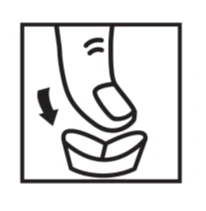
Levotiroxina DOC tablets may be divided into equal doses.
Notice on divisibility
Place the tablet with the score line facing upwards on a flat, hard surface. To divide the tablet, press straight down with the thumb at the center of the tablet.
Duration of treatment
You must take this medicine for the length of time indicated by your doctor.
If you have an underactive thyroid gland or have undergone surgical removal of the thyroid due to malignant tumor, you will likely need to take Levotiroxina for life.
For benign goitre and for prevention of recurrent goitre growth, you must take Levotiroxina for a period ranging from several months to several years, or even for the rest of your life.
In supportive therapy for the treatment of an overactive thyroid, you must take levotiroxina for the entire duration of treatment with a thyrostatic medicine.
For the treatment of benign goitre with normal thyroid function, a treatment period of 6 months to 2 years is required. If treatment with Levotiroxina DOC has not produced the desired results within this period, alternative therapeutic options should be considered.
For performing thyroid suppression tests, 150 or 200 micrograms of Levotiroxina DOC are taken daily for 14 days.
If you take more Levotiroxina DOC than you should
If you (or someone else) take more tablets than prescribed, or if you suspect that a child may have ingested some, contact your doctor, the nearest hospital emergency department, or a poison control center immediately. Signs of overdose may include: agitation, confusion, irritability, fever, chest pain (angina), rapid or irregular heartbeat, rapid breathing, muscle cramps, headache, restlessness, hyperactivity, hot flushes, sweating, dilated pupils, diarrhoea, tremor, difficulty sleeping, anxiety or nervousness, fatigue, emotional lability, and seizures. These symptoms may take up to 6 days to appear. Bring all remaining tablets and this package leaflet with you so that medical staff know exactly what has been taken.
If you forget to take Levotiroxina DOC
If you miss a dose, take your usual dose at the next scheduled time. Do not take a double dose to make up for forgotten doses. If in doubt, consult your doctor or pharmacist.
If you stop taking Levotiroxina DOC
These tablets are intended for long-term treatment. You may need to take them for the rest of your life. Do not stop taking the tablets unless your doctor has instructed you to do so.
If you have any doubts about how to use this medicine, consult your doctor or pharmacist.
4. Possible side effects
Like all medicines, this medicine can cause side effects, although not everyone experiences them.
Stop taking the tablets and go to hospital immediately if you have:
- an allergic reaction such as swelling of the face, tongue, lips and/or throat and/or difficulty swallowing or hives with potential breathing difficulties (angioedema), severe itching of the skin with raised lumps, joint pain, sensitivity to sunlight, general feeling of being unwell (frequency not known). Urgent medical intervention may be required.
Some patients may experience a serious reaction due to high levels of thyroid hormone. This is called "thyrotoxic crisis". Stop taking the tablets and go to hospital if you experience any of the following symptoms (frequency not known):
- very high temperature, rapid heartbeat, irregular heartbeat, low blood pressure, heart failure, jaundice, confusion, seizures and coma.
Tell your doctor or pharmacist if any of the following side effects persist,
worsen, or if you notice any side effects not listed below.
Most side effects resemble the symptoms of hyperthyroidism (where the thyroid gland produces excess thyroxine) and are due to the dose of the medicine being too high. They usually disappear after the dose has been reduced or treatment stopped. Inform your doctor if any side effects occur. He/she will decide whether the daily dose should be reduced or whether you should stop taking the tablets for a few days. However, do not change the dose or stop taking the tablets without first discussing it with your doctor.
Not known: frequency cannot be determined from available data
- increased appetite
- restlessness, excitability, difficulty sleeping (insomnia)
- tremor, headache, seizure
- chest pain (angina pectoris), strong, irregular or rapid heartbeat, heart failure, heart attack
- high blood pressure (hypertension), hot flushes
- shortness of breath (dyspnea)
- diarrhoea, vomiting, feeling unwell (nausea), stomach pain
- increased sweating, itching, skin rash, urticaria, muscle cramps, muscle weakness, joint pain
- A decrease in bone density (osteoporosis), particularly in women who have reached menopause and are taking high doses for long periods
- in women: irregular menstruation
- fever (high temperature), swelling (oedema), general feeling of being unwell
- weight loss
- overactive thyroid (hyperthyroidism)
Additional side effects in children
Rare: may affect up to 1 in 1,000 people
- increased pressure around the brain in children not caused by a tumour or other diseases ( benign intracranial hypertension )
Not known: frequency cannot be determined from available data
- growth in children may slow down or stop due to changes in bone development
- temporary hair loss in children
- skull deformity in newborns caused by premature closure of the skull bone joints ( craniosynostosis )
- heat intolerance
In case of hypersensitivity to levothyroxine or to any of the other components of Levotiroxina DOC, allergic reactions of the skin and respiratory tract may occur.
Reporting of side effects
If you experience any side effect, including those not listed in this leaflet, talk to your doctor or pharmacist. You can also report side effects directly via the national reporting system at http://www.aifa.gov.it/content/segnalazioni-reazioni-avverse.
By reporting side effects, you can help provide more information on the safety of this medicine.
5. How to store Levotiroxina DOC
Keep this medicine out of sight and reach of children.
Do not use this medicine after the expiry date stated on the packaging after "Exp.". The expiry date refers to the last day of that month.
Do not store above 30 °C.
Do not dispose of any medicine via wastewater or household waste. Ask your pharmacist how to dispose of medicines no longer used. This will help protect the environment.
6. Package contents and other information
What Levotiroxina DOC contains
-
The active substance is anhydrous sodium levothyroxine.
Levotiroxina DOC 25 microgram tablets: Each tablet contains 25 micrograms of anhydrous sodium levothyroxine.
Levotiroxina DOC 50 microgram tablets: Each tablet contains 50 micrograms of anhydrous sodium levothyroxine.
Levotiroxina DOC 75 microgram tablets: Each tablet contains 75 micrograms of anhydrous sodium levothyroxine.
Levotiroxina DOC 100 microgram tablets: Each tablet contains 100 micrograms of anhydrous sodium levothyroxine.
Levotiroxina DOC 125 microgram tablets: Each tablet contains 125 micrograms of anhydrous sodium levothyroxine.
Levotiroxina DOC 150 microgram tablets: Each tablet contains 150 micrograms of anhydrous sodium levothyroxine.
Levotiroxina DOC 200 microgram tablets: Each tablet contains 200 micrograms of anhydrous sodium levothyroxine. -
The other components are microcrystalline cellulose, maize starch, heavy magnesium oxide, sodium carboxymethylstarch type A and vegetable magnesium stearate.
Description of the appearance of Levotiroxina DOC and contents of the pack
Levotiroxina DOC tablets are white, circular, uncoated, convex tablets (scored tablets) with a break line on one side and the dosage (25, 50, 75, 100, 125, 150 or 200) printed on the other. The tablets have a diameter of approximately 7 mm and a height of approximately 3 mm.
Levotiroxina DOC 25 microgram, 50 microgram, 100 microgram and 200 microgram tablets are packed in blisters containing 15, 20, 25, 30, 50, 60, 84, 90 or 100 tablets.
Levotiroxina DOC 75 microgram, 125 microgram and 150 microgram tablets are packed in blisters containing 20, 25, 30, 50, 60, 90 or 100 tablets. Not all pack sizes may be marketed.
Marketing Authorization Holder
DOC Generici Srl
Via Turati 40
20121 Milan
Italy
Manufacturer
Aristo Pharma GmbH
Wallenroder Straße 8-10
13435 Berlin
Germany
This medicinal product is authorized in the European Economic Area (EEA) Member States under the following names:
Austria: Levothyroxin Aristo 25/50/100/200 Mikrogramm Tabletten
Czech Republic: Levothyroxine Aristo 25/50/100/200 mikrogramů tablety
Germany: L-Thyroxin Aristo 25/50/100/200 Mikrogramm Tabletten
Finland: Levothyroxine Aristo 25/50/100/200 mikrog tablettia
Ireland: Levothyroxine sodium Aristo 25/50/100/200 microgram tablets
Italy: Levotiroxina DOC 25/50/100/200 microgrammi compresse
Netherlands: Levothyroxinenatrium Aristo 25/50/100/200 microgram tabletten
Poland: Eferox 25/50/100/200 mikrogramów tabletki
Portugal: Levotiroxina Aristo 25/50/100/200 microgramas comprimidos
Spain: Levotiroxina Aristo 25/50/100/200 microgramas comprimidos EFG
Sweden: Levothyroxine Aristo 25/50/100/200 mikrogram tabletter