Leukeran
Italy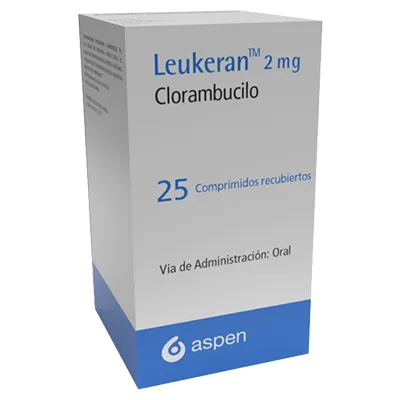
Table of Contents
- Package leaflet: Information for the user
- LEUKERAN 2 mg film-coated tablets
- 1. What LEUKERAN is and what it is used for
- 2. What you need to know before taking LEUKERAN
- 3. How to take LEUKERAN
- 4. Possible side effects
- 5. How to store LEUKERAN
- 6. Package contents and other information
- The following information is intended exclusively for healthcare professionals
Package leaflet: Information for the user
LEUKERAN 2 mg film-coated tablets
chlorambucil
Read this leaflet carefully before taking this medicine because it contains important information for you.
- Keep this leaflet. You may need to read it again.
- If you have any questions, ask your doctor or pharmacist.
- This medicine has been prescribed for you only. Do not give it to other people, even if their symptoms are the same as yours, as it may be harmful.
- If you experience any side effects, including those not listed in this leaflet, consult your doctor or pharmacist. See section 4.
Contents of this leaflet:
- What LEUKERAN is and what it is used for
- What you need to know before taking LEUKERAN
- How to take LEUKERAN
- Possible side effects
- How to store LEUKERAN
- Contents of the pack and other information
1. What LEUKERAN is and what it is used for
LEUKERAN contains the active substance chlorambucil, which belongs to a class of medicines called antineoplastics (medicines used in the treatment of malignant tumours).
LEUKERAN is indicated for the treatment of:
- Hodgkin's disease (a malignant tumour of the lymph nodes)
- Certain forms of non-Hodgkin's lymphoma (another type of malignant tumour of the lymph nodes)
- Chronic lymphocytic leukaemia (a malignant tumour of lymphocytes, blood cells belonging to the group of white blood cells)
- Waldenström's macroglobulinaemia (a type of lymphoma in which the tumour cells produce a large amount of an abnormal protein called macroglobulin)
2. What you need to know before taking LEUKERAN
Do not take LEUKERAN
- if you are allergic to chlorambucil or to any of the other ingredients of this medicine (listed in section 6).
Warnings and precautions
LEUKERAN is a cytotoxic agent (capable of killing cells) and should only be used under the supervision of physicians experienced in the administration of such medicines.
Consult your doctor before LEUKERAN is administered to you if:
-
you have recently received or are scheduled to receive vaccination with so-called “live” vaccines. LEUKERAN causes a reduction in immune defenses, and concomitant administration of these types of vaccines must be avoided, as severe or fatal infections may occur.
-
you are a potential candidate for bone marrow transplantation (autologous stem cell transplant), because long-term use of chlorambucil may reduce the number of available stem cells.
-
you have recently undergone (within at least 4 weeks) radiotherapy or have received other cytotoxic agents, LEUKERAN must not be administered to you.
-
you have liver disease, as signs and symptoms of toxicity must be closely monitored. Furthermore, if you suffer from severe hepatic impairment, your doctor will take this into account when determining the most appropriate dose of LEUKERAN for you.
-
you have kidney disease.
Safe handling of LEUKERAN: see section “How to take LEUKERAN”
Other medicines and LEUKERAN
Inform your doctor or pharmacist if you are taking, have recently taken, or might take any other medicines.
In particular:
- if you have received or are scheduled to receive vaccination (see section Warnings and precautions).
- fludarabine, pentostatin, and cladribine (anticancer medicines that inhibit cell proliferation), because concomitant use of these medicines with LEUKERAN has increased the cytotoxicity of chlorambucil in vitro.
LEUKERAN with food, drinks and alcohol
Chlorambucil tablets must be administered orally and should be taken daily on an empty stomach (at least one hour before meals or three hours after meals).
Pregnancy, breastfeeding and fertility
If you are pregnant, suspect you may be pregnant, plan to become pregnant, or are breastfeeding, consult your doctor or pharmacist before taking this medicine.
Pregnancy
Whenever possible, do not take chlorambucil during pregnancy, particularly during the first trimester.
Your doctor will assess, for each individual patient, the risk to the fetus against the expected therapeutic benefits for the mother.
Breastfeeding
Mothers undergoing treatment with LEUKERAN must not breastfeed.
Fertility
This medicine may cause cessation of the normal menstrual cycle and suppression of ovarian function (inhibiting ovulation, which is the release of the egg from the ovaries) in women.
In men, this medicine may cause cessation of sperm production, although it is believed that a total dose of at least 400 mg is required.
A variable degree of recovery of spermatogenesis (sperm production) has been observed in patients with lymphoma after treatment with total doses of chlorambucil ranging from 410 to 2600 mg.
Adequate contraceptive precautions must be used when either partner is being treated with LEUKERAN.
Driving and using machines
There are no data regarding the effects on the ability to drive vehicles and use machinery.
LEUKERAN contains lactose. If your doctor has diagnosed you with an intolerance to certain sugars, contact him before taking this medicine.
3. How to take LEUKERAN
Take this medicine exactly as described in this leaflet or as your doctor has instructed you. If you are unsure, consult your doctor.
Hodgkin’s disease
Adults
Used as a single agent in palliative treatment (acts on symptoms but not on the underlying cause of the disease) of advanced disease, it is generally administered at a dose of 0.2 mg/kg/day for 4–8 weeks.
LEUKERAN is normally used in combination therapy, and various treatment regimens have been employed.
LEUKERAN has been used as an alternative to nitrogen mustard, with reduced toxicity but similar therapeutic effects.
Children
LEUKERAN may be used in the treatment of Hodgkin’s disease in children. Treatment regimens are similar to those used in adults.
Non-Hodgkin lymphomas
Adults
Used as a single agent in palliative treatment of advanced disease, it is initially administered at a dose of 0.1–0.2 mg/kg/day for 4–8 weeks; maintenance therapy is achieved by reducing the daily dose or by intermittent treatment cycles.
LEUKERAN is useful in the treatment of advanced and diffuse lymphocytic lymphomas and in cases relapsing after radiotherapy. There is no significant difference in response rate between chlorambucil alone or in combination chemotherapy regimens in advanced non-Hodgkin lymphocytic lymphomas.
Children
LEUKERAN may be used in the treatment of non-Hodgkin lymphomas in children. Treatment regimens are similar to those used in adults.
Chronic lymphocytic leukaemia
Adults
Treatment with LEUKERAN is generally initiated once symptoms have appeared or when there are signs of impaired bone marrow function (but not bone marrow failure), as indicated by peripheral blood counts.
LEUKERAN is initially administered at a dose of 0.15 mg/kg/day until the white blood cell count falls below 10,000 per mm³.
Treatment may be resumed 4 weeks after completion of the initial course and continued at a dose of 0.1 mg/kg/day.
Typically, after approximately 2 years of therapy, the white blood cell count tends to normalize in a number of patients, the spleen and lymph nodes become non-palpable, and the percentage of lymphocytes in the bone marrow is reduced to less than 20%.
If evidence of bone marrow failure is present, patients should initially be treated with prednisolone, and treatment with LEUKERAN should only be initiated once signs of recovery of bone marrow function are observed. High-dose intermittent therapy has been compared with daily dosing of LEUKERAN, but no significant differences in therapeutic response or frequency of adverse effects have been observed between the two treatment groups.
Waldenström’s macroglobulinaemia
Adults
LEUKERAN is the treatment of choice for Waldenström’s macroglobulinaemia.
Initial doses are approximately 6–12 mg/day until leukopenia occurs; thereafter, doses of 2–8 mg/day are used.
Safe handling of LEUKERAN tablets
Handling of LEUKERAN tablets must follow the recommendations described for cytotoxic drugs, in accordance with current regulations.
Provided that the outer coating of the tablet is intact, there is no risk in handling LEUKERAN tablets.
LEUKERAN tablets must not be divided.
If you take more LEUKERAN than you should
Reversible pancytopenia (reduction in all blood cells) is the main sign of accidental overdose with chlorambucil.
Severe central nervous system reactions may occur, including agitated behaviour and ataxia (loss of control of body movements), up to generalized seizures.
Treatment
As no antidote exists, careful monitoring of haematological status is required, together with general supportive measures and, when necessary, blood transfusions.
In case of accidental ingestion/overdose of Leukeran, contact your doctor immediately or go to the nearest hospital.
If you have any doubts about how to use this medicine, consult your doctor or pharmacist.
4. Possible side effects
Like all medicines, this medicine can cause side effects, although not everybody gets them.
There is currently no clinical documentation available to support the determination of the frequency of side effects for this product. The incidence of side effects may vary depending on the dose received and whether chlorambucil is administered in combination with other therapeutic agents.
The side effects reported with Leukeran are listed below, classified by frequency:
Very common (may affect more than 1 in 10 people)
- Leukopenia (reduction in white blood cells), neutropenia (reduction in neutrophils), thrombocytopenia (reduction in platelets), pancytopenia (reduction in all blood cells), or bone marrow failure (bone marrow suppression)
Common (may affect up to 1 in 10 people)
- Secondary acute malignant blood disorders (especially leukemia and myelodysplastic syndrome, i.e. impaired bone marrow function resulting in poor formation or malfunction of blood cells), particularly after long-term treatment.
- Anaemia
- Seizures in children with a kidney disorder known as nephrotic syndrome.
- Gastrointestinal disturbances such as nausea, vomiting, diarrhoea, and oral ulceration.
Uncommon (may affect up to 1 in 100 people)
- Dermatitis
Rare (may affect up to 1 in 1,000 people)
- Allergic reactions such as urticaria and angioneurotic edema, following the first or subsequent administrations. Stevens-Johnson syndrome and toxic epidermal necrolysis. Rarely, progression of skin rash to severe conditions including Stevens-Johnson syndrome and toxic epidermal necrolysis has been reported.
- Seizures (patients with a history of seizure disorders may be particularly susceptible), focal partial and/or generalized seizures in children and adults receiving chlorambucil at daily therapeutic doses or intermittent high-dose regimens.
- Hepatotoxicity, jaundice.
- Drug fever.
Very rare (may affect up to 1 in 10,000 people)
-
Irreversible bone marrow failure. Although myelosuppression (decreased bone marrow activity) occurs frequently, it is normally reversible provided therapy is discontinued in time.
-
Movement disorders including tremors, muscle contractions, and myoclonus (brief, involuntary muscle twitching) in the absence of seizures. Peripheral neuropathies (dysfunction or damage of peripheral nerves).
-
Interstitial pulmonary fibrosis (transformation of lung tissue into scar tissue), interstitial pneumonia (inflammation and progressive scarring of the lungs). In patients with chronic lymphocytic leukemia undergoing long-term treatment with chlorambucil, severe interstitial pulmonary fibrosis has occasionally been reported, which may however regress after discontinuation of therapy.
-
Abacterial cystitis (bladder inflammation not due to bacterial infection).
Not known (frequency cannot be estimated from the available data)
- Absence of menstruation (amenorrhoea)
- Absence of spermatozoa (azoospermia)
Reporting of side effects
If you experience any side effects, including those not listed in this leaflet, please inform your doctor, pharmacist or nurse. You can also report side effects directly via the national reporting system at the website
http://www.agenziafarmaco.gov.it/it/responsabili.
By reporting side effects, you can help provide more information on the safety of this medicine.
5. How to store LEUKERAN
Keep this medicine out of the sight and reach of children.
Do not use this medicine after the expiry date stated on the pack after "Exp". The
expiry date refers to the product kept in its original packaging and properly stored.
Store in a dry place.
Store in the refrigerator (2°C - 8°C).
Do not dispose of any medicine via wastewater or household waste. Ask your pharmacist how
to dispose of medicines no longer required. This will help protect the environment.
6. Package contents and other information
- The active substance is chlorambucil. One film-coated tablet contains 2 mg of chlorambucil.
- The other components are: Tablet core: microcrystalline cellulose, anhydrous lactose, anhydrous colloidal silica, stearic acid. Tablet coating: hypromellose, titanium dioxide, synthetic yellow iron oxide, synthetic red iron oxide, macrogol.
Description of the appearance of LEUKERAN and package contents
Film-coated tablets in bottles of 25 tablets
Marketing Authorization Holder
Aspen Pharma Trading Limited
3016 Lake Drive,
Citywest Business Campus,
Dublin 24, Ireland
Tel: 0039 0687502429
Manufacturer
Excella GmbH – Nürnberger Strasse 12 – Feucht - Germany
The following information is intended exclusively for healthcare professionals
Monitoring
Since LEUKERAN may cause irreversible bone marrow aplasia (complete suppression of bone marrow activity), blood tests in patients undergoing treatment must be carefully monitored through weekly full blood counts. At therapeutic doses, LEUKERAN reduces lymphocyte counts and has less effect on neutrophil counts, platelet counts, and hemoglobin levels. Therapy need not be discontinued at the first sign of neutrophil reduction, but it should be borne in mind that the reduction may continue for 10 days or more after the last dose.
When lymphocytic infiltration of the bone marrow (replacement of bone marrow by lymphocytes) or hypoplasia (reduced capacity for blood cell production) is present, the daily dose should not exceed 0.1 mg/kg body weight.
Children with nephrotic syndrome (a kidney disease characterized by protein loss in urine), patients receiving high-dose intermittent regimens, and patients with a clinical history of seizure disorders should be closely monitored after administration of LEUKERAN, as they may be at increased risk of seizures.
Mutagenesis and carcinogenesis
Chlorambucil has been shown to cause chromatid or chromosomal damage in humans. Secondary malignant blood disorders (particularly leukemia, a cancer of white blood cells, and myelodysplastic syndrome, a disorder of bone marrow function characterized by reduced blood cell production) have been reported, especially after long-term treatment (see section “Possible side effects”).
A comparison between patients with ovarian carcinoma treated with alkylating agents versus untreated patients has shown that the use of alkylating agents, including chlorambucil, markedly increases the incidence of acute leukemia.
Acute myelogenous leukemia has also been reported in a small proportion of patients receiving long-term treatment with chlorambucil as adjuvant therapy for breast cancer.
The risk of developing leukemia should be weighed against the potential therapeutic benefits of chlorambucil use.
Teratogenesis
LEUKERAN, like other cytotoxic agents, is potentially teratogenic (may cause malformations).