Leqembi
Italy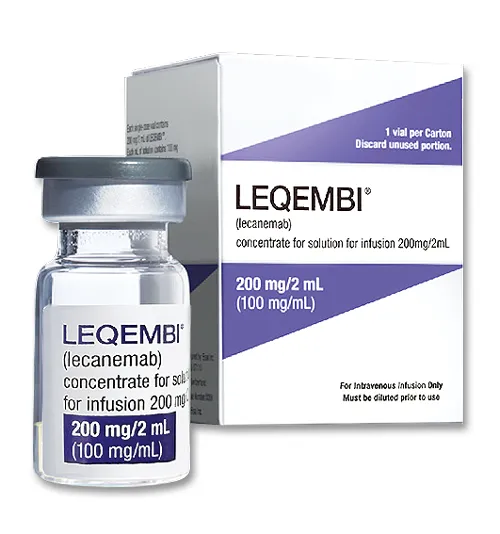
Table of Contents
- Package leaflet: Information for the user
- LEQEMBI 100 mg/mL concentrate for solution for infusion
- 1. What LEQEMBI is and what it is used for
- 2. What you need to know before using LEQEMBI
- 3. How to use LEQEMBI
- 4. Possible side effects
- 5. How to store LEQEMBI
- 6. Package contents and other information
- The following information is intended exclusively for healthcare professionals:
Package leaflet: Information for the user
LEQEMBI 100 mg/mL concentrate for solution for infusion
lecanemab
This medicinal product is subject to additional monitoring. This will allow for rapid identification of new safety information. You can help by reporting any side effects you experience while taking this medicine. See the end of section 4 for information on how to report side effects.
Please read this leaflet carefully before using this medicine because it contains important information for you.
- Keep this leaflet. You may need to read it again.
- It is important that you always carry your patient card with you.
- If you have any questions, ask your doctor.
- If you experience any side effect, including those not listed in this leaflet, tell your doctor. See section 4.
Contents of this leaflet
- What LEQEMBI is and what it is used for
- What you need to know before using LEQEMBI
- How to use LEQEMBI
- Possible side effects
- How to store LEQEMBI
- Contents of the pack and other information
1. What LEQEMBI is and what it is used for
What LEQEMBI is
LEQEMBI contains the active substance lecanemab. It belongs to a group of medicines called
anti-dementia drugs, which are used to treat Alzheimer's disease. Lecanemab is a
monoclonal antibody. These medicines work like the antibodies naturally produced
by the body, binding to harmful target proteins and stimulating the body's immune system
to clear them away. Lecanemab binds to a protein called beta-amyloid, which is
involved in Alzheimer's disease.
Who can take LEQEMBI
LEQEMBI is used to treat mild cognitive impairment or mild dementia due to Alzheimer's disease
(also known as the early stage of Alzheimer's disease) in adults who carry one copy of a gene called
apolipoprotein E4, also known as ApoE4, as well as in adults who do not carry this gene. Your doctor will perform tests to ensure that LEQEMBI is suitable for you.
How LEQEMBI works
Alzheimer's disease is a condition that affects the brain. Accumulations of beta-amyloid
damage brain cells and impair their normal functioning. Over time, this leads to problems with memory, thinking, and behaviour. Alzheimer's disease symptoms may vary from person to person. Usually, symptoms develop slowly and worsen over time, eventually becoming severe enough to interfere with daily activities.
LEQEMBI works by binding to these accumulations and reducing them. In patients with mild cognitive impairment, LEQEMBI may delay the onset of dementia. In people with mild dementia, LEQEMBI may slow the progression to more severe symptoms.
2. What you need to know before using LEQEMBI
Do not use LEQEMBI
- if you are allergic to lecanemab or to any of the other ingredients of this medicine (listed in section 6).
- if you have an uncontrolled bleeding disorder.
- if magnetic resonance imaging (MRI), a medical imaging technique that uses a magnetic field and radio waves generated by a computer to create detailed images of organs and tissues in the body, of your brain shows small areas of bleeding or fluid in the brain, or evidence of more extensive past brain hemorrhages.
- if you are taking medicines (called anticoagulants) to prevent blood clots from forming.
Warnings and precautions
Allergic reactions
Inform the healthcare professional who administered LEQEMBI immediately if you experience an allergic reaction during or shortly after the administration of LEQEMBI. See section 4 for signs of an allergic reaction.
Amyloid-related imaging abnormalities (ARIA)
LEQEMBI may cause a side effect called amyloid-related imaging abnormalities, or "ARIA". There are two main types of ARIA:
- Accumulation of fluid in one or more areas of the brain (this phenomenon is known as ARIA-E).
- Spots of bleeding in the brain or on the surface of the brain (this phenomenon is called ARIA-H).
Most people with ARIA do not have symptoms. Symptoms of ARIA may occur in 2 out of 100 people. Symptoms include headache, confusion, dizziness, blurred vision, feeling unwell (nausea), difficulty walking, or seizures (epileptic fits). In a small number of people (fewer than 1 in 100), these symptoms may be severe.
If you experience any of these symptoms, contact your doctor urgently.
ARIA can be seen on a brain MRI.
Your doctor will schedule an MRI before your third, fifth, seventh, and fourteenth doses of LEQEMBI.
This is a routine safety monitoring procedure to check for possible ARIA.
Additional scans may be performed at any time during treatment if your doctor considers it necessary.
Depending on the MRI results, your doctor may temporarily or permanently stop treatment with LEQEMBI.
Genetic risk factors for ARIA
Some people carry a gene called "apolipoprotein E4", also known as ApoE4. This means they may be at higher risk of ARIA. Your doctor may prescribe a genetic test for ApoE4 to determine whether you are a carrier and at increased risk of developing ARIA.
Medicines used to prevent or dissolve blood clots
The risk of having a more extensive brain bleed (known as intracerebral hemorrhage) during treatment with LEQEMBI is higher in patients taking medicines used to prevent blood clots from forming (anticoagulants) or to dissolve them (thrombolytic agents). Inform your doctor that you are being treated with LEQEMBI before taking any medicine to prevent blood clots or to dissolve them. LEQEMBI can be used together with aspirin and other medicines that prevent blood cells from sticking together (antiplatelet agents).
Infusion-related reactions
Infusion-related reactions are a very common side effect and may be severe (see section 4 for symptoms). If you experience an infusion-related reaction, you may be given medicines before infusions to reduce the risk of such a reaction. These medicines may include antihistamines, paracetamol, anti-inflammatory drugs, or steroids. You will be monitored for 2.5 hours after your first infusion to watch for any signs of infusion-related reactions.
Autosomal dominant Alzheimer’s disease and adults with Down syndrome
The use of LEQEMBI in the treatment of autosomal dominant Alzheimer’s disease and in adults with Down syndrome has not been established.
Mini-strokes (transient ischemic attack, TIA), stroke, or seizures
Inform your doctor before receiving LEQEMBI if you have had a mini-stroke (TIA), stroke, or seizure (epileptic fit) within the past 12 months. The use of LEQEMBI in patients who have previously had a mini-stroke, stroke, or seizure (epileptic fit) has not been established.
Patients with reduced immune response or taking immunosuppressants
Inform your doctor before receiving LEQEMBI if you have an immune disorder or if you are taking other injectable medicines or medicines that suppress the immune system. The use of LEQEMBI in patients with a suppressed immune system has not been established.
Children and adolescents
LEQEMBI is not intended for use in children and adolescents under 18 years of age.
Other medicines and LEQEMBI
Inform your doctor if you are taking, have recently taken, or might take any other medicines. In particular, inform your doctor:
- if you are taking medicines (called anticoagulants) that prevent blood clots from forming. LEQEMBI must not be used with these medicines.
Pregnancy and breastfeeding
If you are pregnant, think you might be pregnant, planning to become pregnant, or breastfeeding, consult your doctor before this medicine is administered to you. It is not known whether LEQEMBI could harm the unborn baby.
If you are a woman of childbearing potential, you must use a contraceptive method during treatment with LEQEMBI and for up to 2 months after the last dose of LEQEMBI. Before starting treatment, it will be checked that you are not pregnant.
If you become pregnant while taking LEQEMBI, inform your doctor. The use of LEQEMBI is not recommended during pregnancy.
If you are breastfeeding, you and your doctor will decide whether to continue breastfeeding or continue treatment. It is not known whether LEQEMBI passes into breast milk.
Driving and using machines
While taking LEQEMBI, some patients may experience symptoms such as dizziness or confusion. This could affect your ability to drive or operate machinery. If you experience these side effects due to LEQEMBI, ask your doctor whether you may continue driving and using machines.
LEQEMBI contains polysorbate 80
This medicine contains 0.5 mg of polysorbate in each 1 mL of LEQEMBI. Polysorbates may cause allergic reactions. Inform your doctor if you have known allergies.
This medicine does not contain sodium, but the concentrate must be diluted with a sodium chloride solution; this should be taken into account when calculating your daily dietary sodium intake.
Patient card
The most important information contained in this patient information leaflet is also included on the patient card provided to you by your doctor. It is important that you always carry this card with you and show it to your partner or caregivers.
3. How to use LEQEMBI
LEQEMBI will be administered under the supervision of a healthcare professional.
Dosage
The recommended dose is 10 milligrams per kilogram of body weight (mg/kg). It must be
administered every 2 weeks.
LEQEMBI is given through an intravenous infusion (IV), also known as a "drip" (a needle inserted into a vein). Each infusion will last approximately 1 hour.
If you miss an LEQEMBI infusion
If you miss an LEQEMBI infusion, contact your doctor to arrange to receive it as soon as possible. Do not wait until your next scheduled infusion.
When to stop using LEQEMBI
Based on clinical test results, if you develop ARIA or experience other adverse reactions, your doctor may advise you to temporarily suspend or permanently discontinue treatment.
If you have any doubts about how to use this medicine, consult your doctor.
4. Possible side effects
Like all medicines, this medicine can cause side effects, although not everybody gets them.
The following side effects have been reported with LEQEMBI:
Serious side effects
Up to 1 in 10 people may experience the following side effect:
- Allergic reaction during or shortly after administration of the medicine. Signs of an allergic reaction include subcutaneous swelling, breathing difficulties due to airway narrowing, severe potentially life-threatening allergic reaction, skin rash, and headache.
Up to 1 in 100 people may experience the following side effect:
- Large areas of bleeding in the brain (known as intracerebral haemorrhages). Symptoms of this side effect may include severe headache, confusion, seizures, or stroke.
If you experience these side effects, contact your doctor urgently.
Other side effects
More than 1 in 10 people may experience the following side effects:
- Infusion-related reactions. Signs include fever, flu-like symptoms such as chills, widespread pain, feeling of shivering, joint pain, feeling unwell (nausea), vomiting, low blood pressure, high blood pressure, or low oxygen levels in the blood which may cause breathing difficulties or shortness of breath, changes in heart rate, feeling of rapid heartbeat, or restlessness.
- Headache.
- ARIA. Signs of ARIA include headache, confusion, dizziness, blurred vision, feeling unwell (nausea), difficulty walking, or seizures (epileptic seizures). One of the two main types of ARIA, ARIAH, is associated with small areas of bleeding in the brain.
Up to 1 in 10 people may experience the following side effects:
- Delayed allergic reactions. Signs include skin rash, headache, runny nose, and hair loss.
- ARIA-E, related to temporary accumulation of fluid in one or more regions of the brain. Please refer to the ARIA signs listed above.
- Abnormal heart rhythm (so-called “atrial fibrillation”). Signs include irregular heartbeat (racing or pounding heartbeat in the chest), chest pain, shortness of breath, dizziness or feeling faint, fatigue, or difficulty performing physical activity.
- Feeling unwell (nausea).
Talk to your doctor about how to manage these side effects.
Reporting of side effects
If you get any side effects, including those not listed in this leaflet, talk to your doctor. You can also report side effects directly through the national reporting system listed in Annex V. By reporting side effects, you can help provide more information on the safety of this medicine.
5. How to store LEQEMBI
- Keep this medicine out of the sight and reach of children.
- Do not use this medicine after the expiry date stated on the carton and on the vial label after “Exp.” or “EXP”. The expiry date refers to the last day of that month.
- Store in the original packaging to protect the medicine from light.
- Store in the refrigerator (2 °C–8 °C). Do not freeze or shake.
- After dilution, immediate use is recommended. Chemical and physical in-use stability has been demonstrated for 24 hours at 25 °C. From a microbiological standpoint, unless the dilution method excludes the risk of microbial contamination, the product should be used immediately. Otherwise, the duration and conditions of in-use storage are the responsibility of the user.
6. Package contents and other information
What LEQEMBI contains
- The active substance is lecanemab. Each mL of concentrate contains 100 mg of lecanemab.
- The other ingredients are water for injections, histidine, histidine monohydrochloride monohydrate, arginine hydrochloride and polysorbate 80.
Description of the appearance of LEQEMBI and contents of the pack
LEQEMBI is a concentrate for solution for infusion. Each carton contains 1 vial of 2 mL of concentrate or 1 vial of 5 mL of concentrate. The concentrate is from clear to slightly opalescent and from colourless to pale yellow.
It is possible that not all pack sizes are marketed.
Marketing Authorisation Holder and Manufacturer
Eisai GmbH
Edmund-Rumpler-Straße 3
60549 Frankfurt am Main
Germany
email: [email protected]
For further information on this medicinal product, please contact the local representative of the Marketing Authorisation Holder:
België/Belgique/Belgien Lietuva
Eisai SA/NV Eisai GmbH
Tél/Tel: + 32 (0) 2 502 58 04 Tel: + 49 (0) 69 66 58 50
(Germany)
България Luxembourg/Luxemburg
Eisai GmbH Eisai SA/NV
Tel: + 49 (0) 69 66 58 50 Tél/Tel: + 32 (0) 2 502 58 04
(Germany) (Belgique/Belgien)
Česká republika Magyarország
Eisai GesmbH organizačni složka Eisai GmbH
Tel.: + 420 242 485 839 Tel: + 49 (0) 69 66 58 50
(Germany)
Danmark Malta
Eisai AB Eisai GmbH
Tlf: + 46 (0) 8 501 01 600 Tel: + 49 (0) 69 66 58 50
(Sverige) (Germany)
Deutschland Nederland
Eisai GmbH Eisai B.V.
Tel: + 49 (0) 69 66 58 50 Tel: + 31 (0) 900 575 3340
Eesti Norge
Eisai GmbH Eisai AB
Tel: + 49 (0) 69 66 58 50 Tlf: + 46 (0) 8 501 01 600
(Germany) (Sverige)
Ελλάδα Österreich
Eisai GmbH Eisai GesmbH
Tel: + 49 (0) 69 66 58 50 Tel: + 43 (0) 1 535 1980-0
España Polska
Eisai Farmacéutica, S.A. Eisai GmbH
Tel: + (34) 91 455 94 55 Tel: + 49 (0) 69 66 58 50
(Germany)
France Portugal
Eisai SAS Eisai Farmacêutica, Unipessoal Lda
Tél: + (33) 1 47 67 00 05 Tel: + 351 214 875 540
Hrvatska România
Eisai GmbH Eisai GmbH
Tel: + 49 (0) 69 66 58 50 Tel: + 49 (0) 69 66 58 50
(Germany) (Germany)
Ireland Slovenija
Eisai GmbH Eisai GmbH
Tel: + 49 (0) 69 66 58 50 Tel: + 49 (0) 69 66 58 50
(Germany) (Germany)
Ísland Slovenská republika
Eisai AB Eisai GesmbH organizačni složka
Sími: + 46 (0) 8 501 01 600 Tel.: + 420 242 485 839
(Svíþjóð)
Italia Suomi/Finland
Eisai S.r.l. Eisai AB
Tel: + 39 02 5181401 Puh/Tel: + 46 (0) 8 501 01 600
(Ruotsi/Sverige)
Κύπρος Sverige
Eisai GmbH Eisai AB
Tel: + 49 (0) 69 66 58 50 Tel: + 46 (0) 8 501 01 600
(Germany)
Latvija
Eisai GmbH
Tel: + 49 (0) 69 66 58 50
(Germany)
Other sources of information
More detailed information on this medicinal product is available on the website of the European Medicines Agency: https://www.ema.europa.eu.
<------------------------------------------------------------------------------------------------------------------------>
The following information is intended exclusively for healthcare professionals:
See section 3 for the medicinal product's dosage instructions.
Instructions for preparation
LEQEMBI is for single use only.
LEQEMBI is a concentrate and must be diluted prior to infusion.
Dose calculation
More than one vial of LEQEMBI concentrate may be required to administer the total dose to the patient.
The prescribed dose for the patient is expressed in mg/kg (see section 3). Based on the prescribed dose, calculate the total dose to be administered.
Total LEQEMBI dose in mg = patient's weight in kg × prescribed dose in mg/kg.
The volume of LEQEMBI concentrate required to prepare the dose (mL) = total dose in mg divided by 100 (the concentration of LEQEMBI concentrate is 100 mg/mL).
Preparation of LEQEMBI infusion
During preparation of the diluted LEQEMBI solution for intravenous infusion, use aseptic technique.
- Check that the LEQEMBI liquid is from clear to slightly opalescent and from colourless to pale yellow.
- Withdraw the required volume of LEQEMBI from the vial(s) and add it to 250 mL of 0.9% sodium chloride injection solution.
- Gently invert the infusion bag containing the diluted LEQEMBI solution to ensure complete mixing. Do not shake.
- Infusion bags made of polypropylene, polyvinyl chloride, coextruded polyolefin/polyamide, or ethylene/propylene copolymer have been confirmed compatible for lecanemab administration.
- After dilution, immediate use is recommended. Chemical and physical in-use stability has been demonstrated for 24 hours at 25 °C. From a microbiological standpoint, unless the method of dilution excludes the risk of microbial contamination, the product should be used immediately. Otherwise, the duration and conditions of in-use storage prior to use are the responsibility of the user.
- Prior to infusion, allow the diluted LEQEMBI solution to warm to room temperature.
- Any unused medicinal product and waste materials derived from this medicinal product must be disposed of in accordance with local regulations.
Method of administration
LEQEMBI is for intravenous use only.
LEQEMBI is diluted prior to intravenous infusion (as per the preparation instructions above).
Prior to administration, the diluted medicinal product should be visually inspected for particulate matter or discoloration. Do not use if the product has changed colour or contains opaque particles.
The diluted solution is infused through an intravenous line over approximately 1 hour. Use of a sterile, low-protein-binding, in-line 0.2 micron filter is recommended (compatible filter materials are polytetrafluoroethylene, polyethersulfone, polycarbonate, polyvinylidenedifluoride, polypropylene, polyurethane, and polysulfone).