Lenzetto
Italy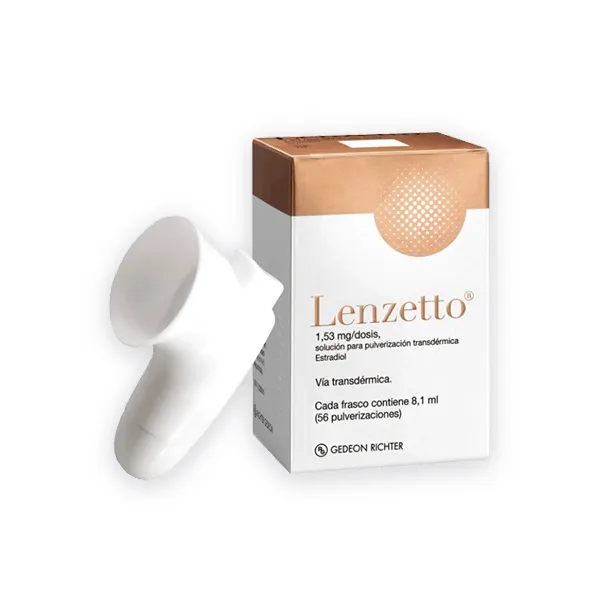
Table of Contents
- Package leaflet: Information for the user
- Lenzetto 1.53 mg/application, transdermal spray, solution
- 1. What Lenzetto is and what it is used for
- 2. What you should know before using Lenzetto
- 3. How to use Lenzetto
- 4. Possible side effects
- 5. How to store Lenzetto
- 6. Package contents and other information
Package leaflet: Information for the user
Lenzetto 1.53 mg/application, transdermal spray, solution
estradiol
Please read all of this leaflet carefully before you start using this medicine because it contains important information for you.
- Keep this leaflet. You may need to read it again.
- If you have any questions, ask your doctor or pharmacist.
- This medicine has been prescribed for you only. Do not give it to other people, even if they have the same symptoms as yours, because it may be harmful.
- If you experience any side effect, including those not listed in this leaflet, talk to your doctor or pharmacist. See section 4.
Contents of this leaflet:
- What Lenzetto is and what it is used for
- What you need to know before using Lenzetto
- How to use Lenzetto
- Possible side effects
- How to store Lenzetto
- Contents of the pack and other information
1. What Lenzetto is and what it is used for
Lenzetto is a Hormone Replacement Therapy (HRT). It contains the active substance
estradiol, a female hormone belonging to the group of estrogens. Lenzetto is used in
women who have been postmenopausal for at least 6 months after their last natural period.
Lenzetto may also be used in women who have undergone surgical removal of the ovaries,
as this causes immediate menopause.
Lenzetto is a spray solution containing small amounts of a medicine called estradiol. When
sprayed onto the skin as directed, it passes through the skin into your bloodstream.
Lenzetto is used for:
Relief of symptoms occurring after menopause
During menopause, the amount of estrogen produced by a woman's body decreases. This
can cause symptoms such as hot face, neck, and chest ("hot flushes"). Lenzetto relieves
these postmenopausal symptoms. Lenzetto will be prescribed to you only if your symptoms
are significantly affecting your daily life.
Lenzetto is indicated for the treatment of estrogen deficiency symptoms after menopause,
when menstruation has ceased due to menopause. Estrogen deficiency symptoms include
hot flushes (sudden waves of heat and sweating throughout the body), sleep disturbances,
irritability, and vaginal dryness.
Experience with treatment in women over 65 years of age is limited.
Lenzetto is not a contraceptive.
2. What you should know before using Lenzetto
Medical history and regular check-ups
Hormone replacement therapy (HRT) involves certain risks that should be considered when deciding whether to start or continue treatment.
Experience in treating women with premature menopause (due to ovarian failure or surgery) is limited. If you have premature menopause, the risks of using HRT may differ. Discuss this with your doctor.
Before starting (or restarting) HRT, your doctor will ask about your personal and family medical history. Your doctor may decide to perform a physical examination, which may include a breast examination and/or an internal pelvic examination, if necessary.
Once you have started treatment with Lenzetto, you should see your doctor for regular check-ups (at least once a year). During these visits, discuss with your doctor the benefits and risks of continuing Lenzetto therapy.
Have regular breast examinations as recommended by your doctor.
Do not use Lenzetto
If any of the following apply to you. If you are unsure about any of the conditions listed below, consult your doctor before using Lenzetto.
Do not use Lenzetto:
- if you have or have ever had breast cancer, or if you suspect you may have it;
- if you have estrogen-dependent cancer, such as cancer of the lining of the womb (endometrium), or if it is suspected you may have it;
- if you have any unexplained vaginal bleeding;
- if you have untreated excessive thickening of the lining of the womb (endometrial hyperplasia);
- if you have or have ever had a blood clot in a vein (thrombosis), for example in the legs (deep vein thrombosis) or in the lungs (pulmonary embolism);
- if you have a blood clotting disorder (such as protein C deficiency, protein S deficiency, or antithrombin deficiency);
- if you have or have recently had a disease caused by blood clots in the arteries, such as heart attack, stroke, or angina;
- if you have or have ever had liver disease and your liver function tests have not returned to normal;
- if you have a rare inherited blood disorder called "porphyria";
- if you are allergic (hypersensitive) to estradiol or to any of the other ingredients of this medicine (listed in section 6).
If any of the above conditions occur for the first time while using Lenzetto, stop using it immediately and contact your doctor immediately.
Warnings and precautions
Talk to your doctor or pharmacist before using Lenzetto.
Inform your doctor if you have ever had any of the following conditions before starting treatment, as they may recur or worsen during treatment with Lenzetto. In such cases, you may need to have more frequent check-ups:
- fibroids in the uterus;
- growth of the uterine lining outside the uterus (endometriosis) or a history of excessive growth of the uterine lining (endometrial hyperplasia);
- increased risk of developing blood clots (see "Blood clots in a vein (thrombosis)");
- increased risk of developing estrogen-dependent cancer (e.g. if you have a mother, sister, or grandmother who had breast cancer);
- high blood pressure;
- a liver disorder such as a benign liver tumour;
- diabetes;
- gallstones;
- migraine or severe headaches;
- a systemic autoimmune disease affecting multiple organs (systemic lupus erythematosus, SLE);
- epilepsy;
- asthma;
- a disease affecting the eardrum and hearing (otosclerosis);
- very high levels of fats in the blood (triglycerides);
- fluid retention due to heart or kidney problems;
- hereditary or acquired angioedema.
Stop using Lenzetto and contact your doctor immediately
If you experience any of the following while using HRT:
- any of the conditions listed under "DO NOT use Lenzetto"
- yellowing of the eyes or face (jaundice). These may be signs of liver disease.
- swelling of the face, tongue, and/or throat and/or difficulty swallowing or hives with breathing difficulties, which may indicate angioedema.
- a significant increase in blood pressure (symptoms may include headache, fatigue, dizziness);
- new-onset headaches resembling migraines;
- if you become pregnant;
- if you notice signs of a blood clot such as:
- painful swelling and redness in the legs
- sudden chest pain
- difficulty breathing
For more information, see "Blood clots in a vein (thrombosis)".
Note: Lenzetto is not a contraceptive. If less than 12 months have passed since your last menstrual period or if you are under 50 years of age, you may still need to use additional contraception to prevent pregnancy. Consult your doctor.
HRT and cancer
Excessive thickening of the lining of the womb (endometrial hyperplasia) and cancer of the
womb lining (endometrial cancer)
Using estrogen-only HRT increases the risk of excessive thickening of the womb lining (endometrial hyperplasia) and cancer of the womb lining (endometrial cancer).
Taking a progestogen in addition to estrogen for at least 12 days of each 28-day cycle protects against this increased risk. Therefore, if you still have your womb, your doctor will prescribe a separate progestogen. If you have had your womb removed (hysterectomy), discuss with your doctor whether you can safely take this product without a progestogen.
Among women who still have their womb and who do not use HRT, on average, 5 out of 1,000 will be diagnosed with endometrial cancer between the ages of 50 and 65.
For women aged 50 to 65 who still have their womb and who take estrogen-only HRT, between 10 and 60 out of 1,000 will be diagnosed with endometrial cancer (i.e. 5 to 55 additional cases), depending on the dose and duration of use.
Lenzetto contains a higher dose of estrogen than other estrogen-only HRT products. The risk of endometrial cancer during use of Lenzetto combined with a progestogen is not known.
Unexpected bleeding
You will have monthly bleeding (so-called withdrawal bleeding) while using Lenzetto if it is taken in combination with a sequentially administered progestogen.
However, if you experience unexpected bleeding or spotting (bleeding between periods) in addition to monthly bleeding that:
- continues beyond the first 6 months
- starts after you have been using Lenzetto for more than 6 months
- continues after you have stopped using Lenzetto
contact your doctor as soon as possible.
Breast cancer
Evidence shows that taking combined estrogen-progestogen HRT or estrogen-only HRT increases the risk of breast cancer. The additional risk depends on how long HRT is used. This additional risk becomes apparent within 3 years of use. After stopping HRT, the additional risk decreases over time, but may persist for 10 years or more if HRT has been used for more than 5 years.
Comparison
Among women aged 50 to 54 who do not use HRT, breast cancer will be diagnosed in an average of about 13–17 out of 1,000 over a 5-year period.
Among 50-year-old women who start taking estrogen-only HRT for 5 years, there will be 16–17 cases per 1,000 users (i.e. 0–3 additional cases).
Among 50-year-old women who start taking combined estrogen-progestogen HRT for 5 years, there will be 21 cases per 1,000 women treated (i.e. 4 to 8 additional cases).
Among women aged 50 to 59 who do not use HRT, breast cancer will be diagnosed in an average of 27 out of 1,000 over a 10-year period.
Among 50-year-old women who start taking estrogen-only HRT for 10 years, there will be 34 cases per 1,000 users (i.e. 7 additional cases).
Among 50-year-old women who start taking combined estrogen-progestogen HRT for 10 years, there will be 48 cases per 1,000 users (i.e. 21 additional cases).
Regularly check your breasts. Contact your doctor if you notice any changes such as:
- skin retraction
- nipple changes
- any lump you can see or feel.
Additionally, it is recommended to participate in mammographic screening programmes when offered. For mammographic screening, it is important that you inform the nurse/healthcare professional performing the X-ray that you are using HRT, as this medication can increase breast density, which may affect the mammogram results.
When breast density is increased, a mammogram may not detect all lumps.
Ovarian cancer
Ovarian cancer is rare – much rarer than breast cancer. The use of estrogen-only or combined estrogen-progestogen HRT has been associated with a slight increase in the risk of ovarian cancer.
The risk of ovarian cancer varies with age. For example, among women aged 50 to 54 who do not use HRT, about 2 out of 2,000 will be diagnosed with ovarian cancer over 5 years. For women who have been using HRT for 5 years, there will be about 3 cases per 2,000 women treated (i.e. about 1 additional case).
Effect of HRT on the heart and circulation
Blood clot in a vein (thrombosis)
The risk of blood clot in a vein is approximately 1.3 to 3 times higher in HRT users compared to non-users, especially during the first year of use.
Blood clots can be serious, and if one travels to the lungs, it can cause chest pain, shortness of breath, fainting, and even death.
The likelihood of developing a blood clot in the veins increases with age and if any of the following apply to you. Inform your doctor if any of these situations apply to you:
- inability to walk for long periods due to major surgery, injury, or illness (see also section 3 if surgery is required);
- if you are severely overweight (BMI >30 kg/m²);
- if you have a blood clotting disorder requiring long-term treatment with a medicine used to prevent blood clots;
- if any of your close relatives have ever had a blood clot in the leg, lung, or another organ;
- if you have systemic lupus erythematosus (SLE);
- if you have cancer.
For signs of a blood clot, see "Stop using Lenzetto and contact your doctor immediately".
Among women in their fifties who do not use HRT, it is expected that on average 4 to 7 out of 1,000 will develop a blood clot in a vein over a 5-year period.
Among women in their fifties using combined estrogen-progestogen HRT for more than 5 years, there will be 9 to 12 cases per 1,000 users (i.e. 5 additional cases).
Among women in their fifties who have had their womb removed and who are using estrogen-only HRT for more than 5 years, there will be 5 to 8 cases per 1,000 users (i.e. 1 additional case).
Heart disease (heart attack)
There is no evidence that HRT prevents heart disease.
Women over 60 years of age who use combined estrogen-progestogen HRT have a slightly higher chance of developing heart disease compared to those who do not use HRT.
For women who have had their womb removed and who are using estrogen-only therapy, there is no increased risk of developing heart disease.
Stroke
The risk of stroke is about 1.5 times higher in HRT users compared to non-users. The number of additional stroke cases due to HRT increases with age.
Comparison
Among women in their fifties who do not use HRT, on average 8 out of 1,000 may have a stroke over a 5-year period. For women in their fifties who use HRT, there will be 11 cases per 1,000 users over 5 years (i.e. 3 additional cases).
Other conditions
HRT does not prevent memory loss. There is evidence of an increased risk of memory loss in women who start using HRT after age 65. Consult your doctor.
Children
Estradiol spray may be accidentally transferred from the skin to other people.
Do not allow others, especially children, to come into contact with the area of skin where the spray was applied. Cover the area if necessary after the spray has dried. If a child comes into contact with the area of skin where estradiol was sprayed, wash the child’s skin with soap and water as soon as possible. Due to estradiol transfer, young children may show signs of unexpected puberty (e.g. breast budding). In most cases, symptoms disappear once the child is no longer exposed to the estradiol spray.
Contact your doctor if you notice signs or symptoms (breast development or other sexual changes) in a child who may have been accidentally exposed to estradiol spray.
Other medicines and Lenzetto
Inform your doctor if you are using, have recently used, or might use any other medicines.
Some medicines may interfere with the effect of Lenzetto. This could lead to irregular bleeding. This applies to the following medicines:
- medicines for epilepsy (such as phenobarbital, phenytoin, and carbamazepine);
- medicines for tuberculosis (such as rifampicin, rifabutin);
- medicines for HIV infection (such as nevirapine, efavirenz, ritonavir, and nelfinavir);
- herbal remedies containing St John’s wort (Hypericum perforatum).
HRT may interfere with the action of other medicines:
- An antiepileptic medicine (lamotrigine), as this may increase the frequency of seizures;
- Medicines for hepatitis C virus (HCV) (such as ombitasvir/paritaprevir/ritonavir with or without dasabuvir, and glecaprevir/pibrentasvir regimens) may cause increases in blood test results related to liver function (elevated liver enzyme ALT) in women using COCs containing ethinylestradiol. Lenzetto contains estradiol instead of ethinylestradiol. It is not known whether an increase in liver ALT enzyme may occur when using Lenzetto with these HCV treatment regimens.
Inform your doctor or pharmacist if you are taking or have recently taken any other medicines, including those obtained without a prescription, herbal medicines, or other natural products. Your doctor will advise you.
Diagnostic tests
If you need a blood test, inform your doctor or laboratory staff that you are using Lenzetto, as this medicine may affect the results of certain tests.
Pregnancy and breastfeeding
Lenzetto is intended only for postmenopausal women. If you become pregnant, stop using Lenzetto and contact your doctor.
Do not use Lenzetto while breastfeeding.
Driving and using machines
Lenzetto has no effect on the ability to drive or operate machinery.
Lenzetto contains alcohol
This medicine contains 65.47 mg of alcohol (ethanol) per dose, equivalent to 72.74% w/v.
It may cause a burning sensation on damaged skin.
Alcohol-based liquids are flammable. Keep away from fire. Avoid use near open flames, lit cigarettes, or certain hot devices (e.g. hairdryers) during application of the spray to the skin, until the spray has dried completely.
3. How to use Lenzetto
Use this medicine exactly as instructed by your doctor. If you have any doubts, consult your doctor or pharmacist.
Your doctor will aim to prescribe the lowest dose needed to treat your symptoms for the shortest necessary duration. During treatment, your doctor may adjust the dose according to your individual needs. Speak with your doctor if you think the dose is too strong or not strong enough.
If you have not had a hysterectomy (surgery to remove the uterus), your doctor will prescribe tablets containing another hormone called progesterone to counteract the effects of oestrogen on the lining of the uterus. Your doctor will explain how to take these tablets. After completing the course of progestin treatment, a withdrawal bleed may occur. (See section "Unexpected bleeding".)
If surgery is required
If you are about to undergo surgery, inform your surgeon that you are using Lenzetto. You may need to stop using Lenzetto approximately 4–6 weeks before the operation to reduce the risk of a blood clot (see section 2, Blood clots in a vein).
Ask your doctor when you can restart using Lenzetto.
Where to apply Lenzetto
The spray should be applied to dry, healthy skin on the inner forearm. If this is not possible, it should be applied to the inner thigh.
Do not apply Lenzetto to the breast or any area near the breast.
How to apply Lenzetto
Before using a new dispenser for the first time, the pump must be primed by spraying 3 times with the cap still closed:
Hold the container upright as shown in Figure 1. With the cap still closed, press the button down 3 times with your thumb or index finger.
The medicine is now ready for use.
DO NOT prime the dispenser before each administration; prime the dispenser only once, before starting to use a new container.
If you miss one or more doses, prime the dispenser according to the instructions provided in the section “If you forget to use Lenzetto”.
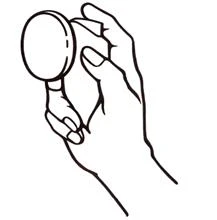
Figure 1
Hold in upright position.
Ensure that the skin where you intend to spray the medicine is healthy, clean, and dry.
How to apply the daily dose
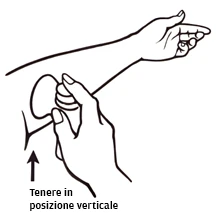
Figure 2
To apply the daily dose, remove the plastic cap, hold the container upright, and place the flat plastic cone against the skin. (Figure 2)
You may need to move your arm or adjust the conical part of the container on your arm so that the cone lies flat against the skin with no gaps between the cone and the skin.
Press the actuator button down once. You must press it fully down and hold it before releasing.
If a second spray is required, move the cone along the arm so that it is near the area where you have already sprayed. Press the button down once.
If a third spray is required, move the cone again along the arm and press the button down once.
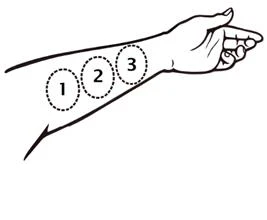
Figure 3
If the second or third spray cannot be applied to the same inner forearm, you may also use the spray on the other inner forearm. If you have difficulty positioning the cone on the forearms as shown in Figure 3, or if it is difficult for you to use it on the forearms, you may also apply the spray to the inner surface of the thigh.
After using Lenzetto, always replace the cap on the container (Figure 4).
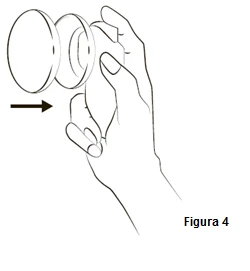
If you use the product as directed, regardless of the form or type of spray dispersion on the skin, each spray will deliver the same amount of active ingredient onto the skin.
Allow the spray to dry for at least 2 minutes before dressing and for at least 60 minutes before bathing or washing. If the Lenzetto spray comes into contact with another area of your skin, such as your hands, wash the area immediately with soap and water.
Lenzetto must not be used on broken or damaged skin.
Do not massage or rub Lenzetto into the skin.
Do not allow other people to touch the area of skin where the spray has been applied until the spray has dried completely, and if necessary, cover the area with clothing 2 minutes after application. If another person (especially a child) accidentally touches the area of your skin where you have sprayed Lenzetto, tell them to wash the area of their skin immediately with soap and water.
How much Lenzetto to use
Your doctor will likely start you on the lowest dose (one spray per day), and you should report back to your doctor whether the medicine is effective. If necessary, your doctor may increase the dose to two sprays per day. The maximum daily dose is 3 sprays.
How often to use Lenzetto
The total number of sprays (doses) prescribed by your doctor should be applied at the same time every day.
How long you should continue using Lenzetto
Discuss with your doctor every 3–6 months regarding how long you should continue using Lenzetto. You should use Lenzetto only for as long as needed to relieve menopausal hot flushes.
Other useful information
Sunscreen products may alter the absorption of Lenzetto oestrogen.
Avoid using sunscreen on the area of skin where you intend to spray Lenzetto. However, if you need to use sunscreen, apply it at least one hour before using Lenzetto.
Lenzetto should be used with caution under extreme temperature conditions, such as in saunas or during sun exposure.
Limited data are available on whether the rate and extent of absorption of Lenzetto may be reduced in obese or overweight women. Consult your doctor. During treatment with Lenzetto, your doctor may adjust the dose according to your individual needs.
If you use more Lenzetto than you should
If you use more Lenzetto than prescribed, or if children have accidentally used the medicine, contact your doctor or hospital immediately for advice on risks and necessary actions.
If you use more Lenzetto than you should, you may experience nausea, vomiting, and withdrawal bleeding (abnormal vaginal bleeding).
If you forget to use Lenzetto
If you forget to use Lenzetto at the usual time, spray the medicine as soon as you remember, then use it the next day as normal. If it is almost time for your next dose, wait and apply the next dose as usual. If you miss one or more doses, you will need to prime the pump by spraying into the cap.
Do not use a double dose to make up for a forgotten dose.
Missing a dose may increase the likelihood of withdrawal bleeding and spotting.
If you have any questions about the use of this medicine, consult your doctor or pharmacist.
If you stop treatment with Lenzetto
Your doctor will also advise you on how to stop using this medicine when treatment is complete.
If you have any questions about the use of this medicine, consult your doctor or pharmacist.
4. Possible side effects
Like all medicines, this medicine can cause side effects, although not everyone experiences them.
The following conditions have been reported more frequently in women who use HRT than in women who do not:
- breast cancer
- abnormal growth or cancer of the uterine lining (endometrial hyperplasia or cancer)
- ovarian cancer
- blood clots in the veins of the legs or lungs (venous thromboembolism)
- heart disease
- stroke
- gallbladder disease
- high blood pressure
- liver problems
- high blood sugar levels
- possible memory loss if HRT is started after the age of 65.
For more information about these side effects, see section 2.
Some side effects may be serious.
The following symptoms require immediate medical attention:
- sudden chest pain;
- chest pain spreading to the arm or neck;
- difficulty breathing;
- painful swelling or redness in the legs;
- yellowing of the eyes and face (jaundice);
- unexpected vaginal bleeding (breakthrough bleeding) or spotting after using Lenzetto for some time or after stopping treatment;
- breast changes including skin retraction, nipple changes, lumps that can be seen or felt;
- painful menstrual cycles;
- dizziness and fainting;
- changes in speech;
- changes in vision;
- unexplained headaches resembling migraines.
If any of the side effects worsen, or if you notice any side effects not listed in this leaflet, inform your doctor or pharmacist.
The following side effects have been reported with Lenzetto:
Common side effects (may affect up to 1 in 10 people):
Headache, abdominal pain, rash, itching, irregular uterine bleeding or vaginal bleeding including spotting, breast tenderness, breast pain, weight gain or weight loss.
Uncommon side effects (may affect up to 1 in 100 people):
Hypersensitivity reactions, depressed mood, insomnia (difficulty sleeping), dizziness, vertigo (a sensation of dizziness or spinning), visual disturbances, palpitations (awareness of heartbeat), diarrhoea, dyspepsia (indigestion), increased blood pressure, erythema nodosum (characterized by red, painful skin nodules), urticaria (generalized or localized rash or hives), skin irritation, swelling due to fluid retention (oedema), muscle pain, change in breast colour, breast discharge, polyps (small growths) in the uterus or cervix, endometrial hyperplasia, ovarian cyst, genital inflammation (vaginitis), increased liver enzymes and cholesterol in blood, pain under the arm.
Rare side effects (may affect up to 1 in 1,000 people):
Anxiety, decreased or increased sexual desire, migraine, intolerance to contact lenses, swelling, vomiting, increased body hair, acne, muscle cramps, painful menstruation, premenstrual-like syndrome, breast enlargement, fatigue.
Other side effects with frequency “not known” (frequency cannot be estimated from the available data) have been reported with Lenzetto during post-marketing surveillance: hair loss (alopecia), chloasma (brown-golden pigmented spots, known as “pregnancy mask”, especially on the face), change in skin colour.
The following side effects have been reported with other HRTs:
Severe allergic reaction causing swelling of the face or throat (angioedema), anaphylactoid/anaphylactic reactions (severe allergic reactions causing breathing difficulties or dizziness), glucose intolerance, depression, mood disorders, irritability, exacerbation of chorea (Sydenham's chorea), exacerbation of epilepsy, dementia, exacerbation of asthma, gallbladder disease, yellowing of the skin (jaundice), inflammation of the pancreas, benign neoplasm of the smooth muscle of the uterus, various skin disorders: change in skin colour, especially on the face or neck known as “pregnancy mask” (chloasma); red, painful nodules (erythema nodosum); rash with redness or target-shaped sores (erythema multiforme), haemorrhagic rash, hair loss, joint pain, milk discharge from the breast, breast lumps, increase in size of benign neoplasm of the smooth muscle of the uterus, changes in cervical secretion and internal cervical lining (“neck” of the uterus), vaginal inflammation, fungal infections of the vagina (vaginal candidiasis), abnormally low levels of calcium in the blood.
Reporting of side effects
If you experience any side effect, including those not listed in this leaflet, talk to your doctor or pharmacist. You can also report side effects directly via the national reporting system at the website:
https://www.aifa.gov.it/content/segnalazioni-reazioni-avverse.
By reporting side effects, you can help provide more information on the safety of this medicine.
5. How to store Lenzetto
Keep this medicine out of the sight and reach of children.
Do not use this medicine after the expiry date stated on the carton and
on the label of the container. The expiry date refers to the last day of that month.
Use within 56 days of first use.
Do not refrigerate or freeze this medicine.
Do not store above 25°C.
This medicine contains ethanol, which is flammable. Keep away from heat sources,
open flames, or other sources of ignition.
Do not dispose of any medicine via wastewater or household waste. Ask your pharmacist
how to dispose of medicines you no longer use. This will help protect the environment.
6. Package contents and other information
What Lenzetto contains
- The active substance is estradiol (as estradiol hemihydrate). Each spray delivers 1.53 mg of estradiol (equivalent to 1.58 mg of estradiol hemihydrate).
- The other components are octisalate and 96% ethanol.
Description of the appearance of Lenzetto and the contents of the pack
Lenzetto is a transdermal spray containing a solution of estradiol and octisalate in ethanol. It is supplied with a metering pump.
Lenzetto is provided in a plastic container with a plastic cap. Inside, there is a glass container holding 6.5 mL of solution, designed to deliver 56 sprays of 90 microlitres each after priming. Mark the number of sprays used by referring to the table printed on the carton.
Each spray contains 1.53 mg of estradiol.
Do not use each Lenzetto container for more sprays than indicated on the label, even if the bottle is not completely empty.
Pack sizes:
1 plastic container of 6.5 mL (56 sprays)
3 plastic containers of 3x6.5 mL (3x56 sprays).
Not all pack sizes may be marketed.
Marketing Authorisation Holder:
Gedeon Richter Plc.
Gyömrői út 19-21.
1103 Budapest
Hungary
Manufacturer:
Gedeon Richter România S.A.
Cuza Vodă street 99-105
Târgu-Mureş
Romania – 540306
Gedeon Richter Plc.
Gyömrői út 19-21.
1103 Budapest
Hungary