Lenvima
Italy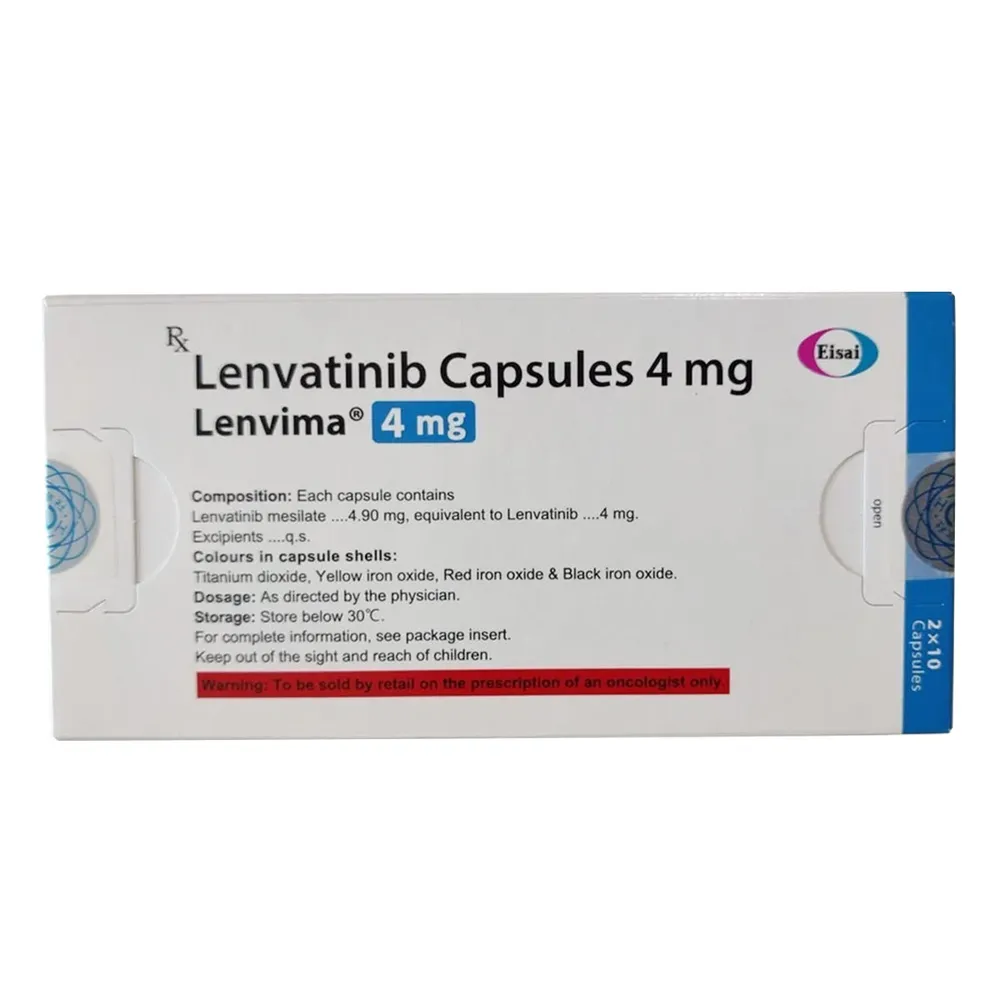
Table of Contents
Package leaflet: Information for the user
LENVIMA 4 mg hard capsules, 10 mg hard capsules
Lenvatinib
Please read this leaflet carefully before taking this medicine because it contains
important information for you.
- Keep this leaflet. You may need to read it again.
- If you have any questions, ask your doctor or pharmacist.
- This medicine has been prescribed for you only. Do not give it to other people, even if their symptoms are the same as yours, because it could be harmful.
- If you experience any side effects, including those not listed in this leaflet, inform your doctor, pharmacist or nurse. See section 4.
Contents of this leaflet:
- What LENVIMA is and what it is used for
- What you need to know before taking LENVIMA
- How to take LENVIMA
- Possible side effects
- How to store LENVIMA
- Contents of the pack and other information
1. What LENVIMA is and what it is used for
What LENVIMA is
LENVIMA is a medicine that contains the active substance lenvatinib. It is used to treat advanced or progressive thyroid cancer in adults when treatment with radioactive iodine has not helped to stop the disease.
LENVIMA may also be used alone to treat liver cancer (hepatocellular carcinoma) in adults who have not previously been treated with another anticancer medicine that spreads through the bloodstream. LENVIMA is administered when the patient's liver cancer has spread or cannot be removed by surgery.
LENVIMA may also be used in combination with another anticancer medicine called pembrolizumab to treat advanced cancer of the lining of the uterus (endometrial carcinoma) in adult women whose cancer has spread after prior treatment with another anticancer medicine that spreads through the bloodstream, or cannot be removed by surgery or radiotherapy.
How LENVIMA works
LENVIMA blocks the action of proteins called tyrosine kinase receptors (RTKs), which are involved in the development of new blood vessels that supply oxygen and nutrients to cells, helping them grow. These proteins may be present in high amounts in cancer cells.
By blocking their action, LENVIMA can slow down the rate of cancer cell multiplication and tumour growth, and help cut off the blood supply that the tumour needs.
2. What you need to know before taking LENVIMA
Do not take LENVIMA
- if you are allergic to lenvatinib or to any of the other ingredients of this medicine (listed in section 6)
- if you are breastfeeding (see section “Pregnancy, breastfeeding and fertility”).
Warnings and precautions
Talk to your doctor before taking LENVIMA
- if you have high blood pressure
- if you are a woman of childbearing potential (see section “Pregnancy, breastfeeding and fertility”)
- if you have previously had heart problems or stroke
- if you have liver or kidney problems
- if you have recently undergone surgery or radiotherapy
- if you are scheduled for a surgical procedure. If you are to undergo major surgery, your doctor may consider interrupting LENVIMA treatment, as the medicine may affect wound healing. LENVIMA may be restarted once adequate wound healing has been established.
- if you are over 75 years old
- if you belong to an ethnic group other than white or Asian
- if you weigh less than 60 kg
- if you have a history of abnormal connections forming (known as fistulas) between different organs in the body or from an organ to the skin
- if you have or have had an aneurysm (a weakening and bulging of a blood vessel wall) or a tear in the wall of a blood vessel
- if you have or have had mouth, tooth, and/or jaw pain, swelling or mouth ulcers, numbness or a feeling of heaviness in the jaw, or loose teeth. You may be advised to undergo a dental examination before starting LENVIMA, as jaw bone damage (osteonecrosis) has been reported in patients treated with LENVIMA. If you need invasive dental treatment or dental surgery, inform your dentist that you are being treated with LENVIMA, especially if you are or have previously been treated with injectable bisphosphonates (used to prevent or treat bone diseases).
- if you are taking or have taken medicines used to treat osteoporosis (anti-resorptive bone agents) or anticancer medicines that affect blood vessel formation (so-called angiogenesis inhibitors), as the risk of jaw bone damage may be higher. Before starting LENVIMA, your doctor may perform certain tests, for example, to monitor your blood pressure and liver or kidney function, and to check whether you have low levels of blood salts and high levels of thyroid-stimulating hormone in the blood. Your doctor will discuss the results of these tests with you and decide whether you can receive LENVIMA treatment. You may require additional treatment with other medicines, a lower dose of LENVIMA, or closer monitoring due to an increased risk of side effects.
If you have any doubts, talk to your doctor before taking LENVIMA.
Children and adolescents
The use of LENVIMA is not currently recommended in children and adolescents under 18 years of age.
Other medicines and LENVIMA
Tell your doctor or pharmacist if you are taking, have recently taken, or might take any other medicines. This includes herbal preparations and over-the-counter medicines.
Pregnancy, breastfeeding and fertility
If you are pregnant, suspect you may be pregnant, planning to become pregnant, or breastfeeding, consult your doctor or pharmacist before taking this medicine.
- If you are a woman of childbearing potential, use highly effective contraceptive methods during treatment with this medicine and for at least one month after the end of treatment. It is not known whether LENVIMA may reduce the effectiveness of oral contraceptive pills; therefore, if this is your usual method of contraception, you should use an additional barrier method, such as a diaphragm or condom, if you have sexual intercourse during treatment with LENVIMA.
- Do not take LENVIMA if you are planning a pregnancy during treatment, as it may cause severe harm to the unborn child.
- If you become pregnant during treatment with LENVIMA, inform your doctor immediately. Your doctor will help you decide whether to continue treatment.
- Do not breastfeed while taking LENVIMA, as the medicine passes into breast milk and may cause severe harm to the breastfed infant.
Driving and using machines
LENVIMA may cause side effects that could impair your ability to drive or operate machinery. Avoid driving or operating machinery if you experience dizziness or fatigue.
3. How to take LENVIMA
Take this medicine exactly as your doctor has told you. If you are unsure, consult your doctor or pharmacist.
Dosage
Thyroid cancer
- The recommended dose of LENVIMA is usually 24 mg once daily (2 capsules of 10 mg and 1 capsule of 4 mg).
- If you have severe liver or kidney problems, the recommended dose is 14 mg once daily (1 capsule of 10 mg and 1 capsule of 4 mg).
- Your doctor may reduce the dose if you experience problems due to side effects.
Liver cancer
- The recommended dose of LENVIMA depends on your body weight at the start of treatment. The usual dose is 12 mg once daily (3 capsules of 4 mg) if you weigh 60 kg or more, and 8 mg once daily (2 capsules of 4 mg) if you weigh less than 60 kg.
- Your doctor may reduce the dose if you have problems due to side effects.
Uterine cancer
- The recommended dose of LENVIMA is 20 mg once daily (2 capsules of 10 mg) in combination with pembrolizumab. Pembrolizumab is administered by your doctor as an intravenous injection, at a dose of 200 mg every 3 weeks or 400 mg every 6 weeks.
- Your doctor may reduce the dose if you experience problems due to side effects.
How to take the medicine
- You may take the capsules with or without food.
- Do not open the capsules to avoid exposure to the capsule contents.
- Swallow the capsules whole with water. If you are unable to swallow the capsules whole, you may prepare a liquid mixture using water, apple juice, or milk. The liquid mixture can be administered orally or via a feeding tube. If administered via a feeding tube, the liquid mixture must be prepared with water. If not used immediately after preparation, the liquid mixture may be stored in a covered container and refrigerated at a temperature between 2 °C and 8 °C for up to 24 hours. Shake the liquid mixture for 30 seconds after removing it from the refrigerator. If the
liquid mixture is not used within 24 hours of preparation, it must be discarded.
Preparation and administration of the liquid mixture:
o Place the whole capsules corresponding to the prescribed dose (up to 5 capsules) in a small container (capacity of approximately 20 mL (4 teaspoons)) or in an oral dosing syringe (20 mL); do not break or crush the capsules.
o Add 3 mL of liquid to the container or oral dosing syringe. Wait 10 minutes to allow the capsule shells (outer surface) to dissolve, then mix or shake the mixture for 3 minutes until the capsules are completely dissolved.
- If the liquid mixture is prepared in an oral dosing syringe, cap the syringe, remove the plunger, and use a second syringe or medicine dropper to add the liquid into the first syringe, then reinsert the plunger before mixing. o Drink the liquid mixture directly from the container or use an oral dosing syringe to administer it directly into the mouth or via a feeding tube. o Then, add an additional 2 mL of liquid to the container or oral dosing syringe using a second syringe or medicine dropper, mix or shake, and then administer the liquid mixture. Repeat this step at least two times, or until no visible residue of the mixture remains, to ensure that all of the medicine is taken.
- Take the capsules at approximately the same time each day.
How long to take LENVIMA
You will usually continue taking this medicine for as long as you are benefiting from it.
If you take more LENVIMA than you should
If you take more LENVIMA than you should, contact your doctor or pharmacist immediately. Take the medicine pack with you.
If you forget to take LENVIMA
Do not take a double dose (two doses at the same time) to make up for a missed dose.
What you should do if you miss a dose depends on how much time remains until your next scheduled dose.
- If 12 hours or more remain before your next dose: take the missed dose as soon as you remember. Then take your next dose at the usual time.
- If less than 12 hours remain before your next dose: skip the missed dose. Then take your next dose at the usual time.
4. Possible side effects
Like all medicines, this medicine can cause side effects, although not everybody gets them.
Tell your doctor immediately if you notice any of the following side effects – urgent medical
treatment may be needed:
-
numbness or weakness on one side of the body, severe headache, seizures, confusion, difficulty speaking, changes in vision, or dizziness; these may be signs of stroke, bleeding in the brain, or the effect of a severe increase in blood pressure in the brain.
-
chest pain or pressure, arm, back, neck or jaw pain, shortness of breath, rapid or irregular heartbeat, cough, bluish colouring of the lips or fingers, or extreme tiredness: these may be signs of a heart problem, a blood clot in the lungs, or air leaking from the lungs into the chest cavity, preventing the lungs from expanding properly.
-
severe stomach (abdominal) pain, which may be due to a perforation in the intestinal wall or a fistula (an abnormal connection from the intestine to another part of the body or the skin via a tubular passage).
-
black, tar-like or bloody stools, or coughing up blood: these may be signs of internal bleeding.
-
yellowing of the skin or whites of the eyes (jaundice), or drowsiness, confusion, poor concentration: these may be signs of liver problems.
-
diarrhoea, nausea and vomiting: these are very common side effects, which may become serious if they lead to dehydration and possibly subsequent kidney failure. Your doctor may prescribe medicines to reduce these side effects.
-
mouth, teeth and/or jaw pain, swelling or mouth ulcers, numbness or heaviness in the jaw, or loosening of a tooth; these could be signs of jaw bone damage (osteonecrosis).
Tell your doctor immediately if any of the above side effects occur.
The following side effects may occur with this medicine when given alone:
Very common (may affect more than 1 in 10 people)
- high or low blood pressure
- loss of appetite or weight loss
- nausea and vomiting, constipation, diarrhoea, abdominal pain, indigestion
- marked tiredness or weakness
- hoarseness
- swelling of the legs
- rash
- dry, sore or inflamed mouth, altered taste sensation
- joint or muscle pain
- dizziness
- hair loss
- bleeding (most commonly nosebleeds, but also other types of bleeding, e.g. blood in urine, bruising, bleeding from gums or intestinal wall)
- difficulty sleeping
- changes in urine test results regarding protein (elevated) and urinary tract infections (increased frequency of urination and/or pain during urination)
- headache
- back pain
- redness, pain and swelling of the skin on hands and feet (palmar-plantar erythrodysesthesia)
- underactive thyroid (tiredness, weight gain, constipation, feeling cold, dry skin)
- changes in blood test results regarding potassium levels (low) and calcium levels (low)
- decrease in white blood cell count
- changes in blood test results regarding liver function
- low platelet count in the blood, which may cause bruising and impaired wound healing
- changes in blood test results regarding magnesium (low), cholesterol (high), and thyroid-stimulating hormone (high)
- changes in blood test results regarding kidney function and kidney failure
- increased lipase and amylase (enzymes involved in digestion)
Common (may affect up to 1 in 10 people)
- loss of body fluids (dehydration)
- palpitations
- dry skin, thickening of the skin and itching
- feeling of bloating or excess gas
- heart problems or blood clots in the lungs (difficulty breathing, chest pain) or in other organs
- liver failure
- drowsiness, confusion, poor concentration, loss of consciousness, which may be signs of liver failure
- feeling unwell
- inflammation of the gallbladder
- stroke
- anal fistula (a small channel forming between the anus and surrounding skin)
- a hole (perforation) in the stomach or intestine
Uncommon (may affect up to 1 in 100 people)
- painful infection or irritation near the anus
- mini-stroke
- liver damage
- severe pain in the upper left part of the abdomen, which may be associated with fever, chills, nausea and vomiting (splenic infarction)
- inflammation of the pancreas (pancreatitis)
- impaired wound healing
- jaw bone damage (osteonecrosis)
- inflammation of the colon (colitis)
- decreased secretion of hormones produced by the adrenal glands
Not known (the following side effects have been reported after marketing of LENVIMA, but their frequency is unknown):
- other types of fistulas (an abnormal connection between different organs in the body or between the skin and an underlying structure, such as the throat and trachea). Symptoms depend on where the fistula is located. Inform your doctor if new or unusual symptoms occur, e.g. coughing when swallowing.
- dilation and weakening of a blood vessel wall or a tear in the blood vessel wall (aneurysms and arterial dissections).
When this medicine is given in combination with pembrolizumab, the following side effects may
occur:
Very common (may affect more than 1 in 10 people)
- changes in urine test results regarding protein (elevated) and urinary tract infections (increased frequency of urination and pain during urination)
- low platelet count in the blood, which may cause bruising and impaired wound healing
- decrease in white blood cell count
- decrease in red blood cell count
- underactive thyroid (tiredness, weight gain, constipation, feeling cold, dry skin) and changes in blood test results regarding thyroid-stimulating hormone levels (elevated)
- overactive thyroid (symptoms may include rapid heartbeat, sweating, weight loss)
- changes in blood test results regarding calcium levels (low)
- changes in blood test results regarding potassium levels (low)
- changes in blood test results regarding cholesterol levels (elevated)
- changes in blood test results regarding magnesium levels (low)
- loss of appetite or weight loss
- dizziness
- headache
- back pain
- dry, sore or inflamed mouth, altered taste sensation
- bleeding (most commonly nosebleeds, but also other types of bleeding, e.g. blood in urine, bruising, bleeding from gums or intestinal wall)
- high blood pressure
- hoarseness
- nausea and vomiting, constipation, diarrhoea, abdominal pain
- increased amylase (enzyme involved in digestion)
- increased lipase (enzyme involved in digestion)
- changes in blood test results regarding liver function
- changes in blood test results regarding kidney function
- redness, pain and swelling of the skin on hands and feet (palmar-plantar erythrodysesthesia)
- rash
- joint or muscle pain
- marked tiredness or weakness
- swelling of the legs
Common (may affect up to 1 in 10 people)
- loss of body fluids (dehydration)
- difficulty sleeping
- palpitations
- low blood pressure
- blood clots in the lungs (difficulty breathing, chest pain)
- inflammation of the pancreas
- feeling of bloating or excess gas
- indigestion
- inflammation of the gallbladder
- hair loss
- kidney failure
- feeling unwell
- inflammation of the colon (colitis)
- decreased secretion of hormones produced by the adrenal glands
- a hole (perforation) in the stomach or intestine
Uncommon (may affect up to 1 in 100 people)
- headache, confusion, seizures and vision changes
- signs of stroke, including numbness or weakness on one side of the body, severe headache, seizures, confusion, difficulty speaking, vision changes or dizziness
- mini-stroke
- signs of a heart problem, including chest pain or pressure, arm, back, neck or jaw pain, shortness of breath, rapid or irregular heartbeat, cough, bluish colouring of the lips or fingers, extreme tiredness
- severe breathing difficulty and chest pain caused by air leaking from the lungs into the chest cavity, preventing the lungs from expanding
- painful infection or irritation near the anus
- anal fistula (a small channel forming between the anus and surrounding skin)
- liver failure or signs of liver damage, including yellowing of the skin or whites of the eyes (jaundice), drowsiness, confusion, poor concentration
- dry skin, thickening and itching of the skin
- impaired wound healing
Reporting of side effects
If you get any side effects, including ones not listed in this leaflet, talk to your doctor or pharmacist.
You can also report side effects directly via the national reporting system listed in Annex V. By reporting
side effects, you can help provide more information on the safety of this medicine.
5. How to store LENVIMA
- Keep this medicine out of the sight and reach of children.
- Do not use this medicine after the expiry date stated on the carton after “Exp.” and on each blister after “EXP”. The expiry date refers to the last day of that month.
- Do not store above 25°C. Keep in the original blister to protect the medicine from moisture.
- Do not dispose of any medicine via wastewater or household waste. Ask your pharmacist how to dispose of medicines you no longer use. This will help protect the environment.
6. Package contents and other information
What LENVIMA contains
- The active substance is lenvatinib.
- LENVIMA 4 mg hard capsules: - Each hard capsule contains 4 mg of lenvatinib (as mesilate).
- LENVIMA 10 mg hard capsules: - Each hard capsule contains 10 mg of lenvatinib (as mesilate).
- The other components are calcium carbonate, mannitol, microcrystalline cellulose, hydroxypropylcellulose, low-substituted hydroxypropylcellulose, talc. The capsule shell contains hypromellose, titanium dioxide (E171), yellow iron oxide (E172), and red iron oxide (E172). The printing ink contains shellac, black iron oxide (E172), potassium hydroxide, and propylene glycol.
Description of the appearance of LENVIMA and contents of the pack
- The 4 mg capsule has a yellowish-red body and a yellowish-red cap, approximately 14.3 mm in length, printed in black ink with “Є” on the cap and “LENV 4 mg” on the body.
- The 10 mg capsule has a yellow body and a yellowish-red cap, approximately 14.3 mm in length, printed in black ink with “Є” on the cap and “LENV 10 mg” on the body.
- The capsules are supplied in blisters made of polyamide/aluminum/PVC with an aluminum peelable lid, in cardboard packs containing 30, 60, or 90 hard capsules. Not all pack sizes may be marketed.
Marketing Authorization Holder
Eisai GmbH
Edmund-Rumpler-Straße 3
60549 Frankfurt am Main
Germany
E-mail: [email protected]
Manufacturer
Eisai GmbH
Edmund-Rumpler-Straße 3
60549 Frankfurt am Main
Germany
For further information about this medicinal product, please contact the local representative of the Marketing Authorization Holder:
België/Belgique/Belgien Lietuva
Eisai SA/NV Ewopharma AG atstovybė
Tél/Tel: +32 (0) 800 158 58 Tel: +370 5 2430444
България Luxembourg/Luxemburg
Ewopharma AG Eisai SA/NV
Teл.: +359 2 962 12 00 Tél/Tel: +32 (0) 800 158 58
(Belgique/Belgien)
Česká republika Magyarország
Eisai GesmbH organizačni složka Ewopharma Hungary Ltd.
Tel.: + 420 242 485 839 Tel.: +36 1 200 46 50
Danmark Malta
Eisai AB Cherubino LTD
Tlf: + 46 (0) 8 501 01 600 Tel: +356 21343270
(Sverige) [email protected]
Deutschland Nederland
Eisai GmbH Eisai B.V.
Tel: + 49 (0) 69 66 58 50 Tel: + 31 (0) 900 575 3340
Eesti Norge
Ewopharma AG Eesti filiaal Eisai AB
Tel: +372 6015540 Tlf: + 46 (0) 8 501 01 600
(Sverige)
Ελλάδα Österreich
Arriani Pharmaceutical S.A. Eisai GesmbH
Τηλ: + 30 210 668 3000 Tel: + 43 (0) 1 535 1980-0
España Polska
Eisai Farmacéutica, S.A. Ewopharma AG Sp. z o.o
Tel: + (34) 91 455 94 55 Tel.: +48 (22) 620 11 71
France Portugal
Eisai SAS Eisai Farmacêutica, Unipessoal Lda
Tél: + (33) 1 47 67 00 05 Tel: + 351 214 875 540
Hrvatska România
Ewopharma d.o.o Ewopharma AG
[email protected] Tel:+40 21 260 13 44
Tel: +385 (0) 1 6646 563
Ireland Slovenija
Eisai GmbH Ewopharma d.o.o.
Tel: + 49 (0) 69 66 58 50 Tel: +386 590 848 40
(Germany)
Ísland Slovenská republika
Eisai AB Eisai GesmbH organizační složka
Sími: + 46 (0) 8 501 01 600 Tel.: +420 242 485 839
(Svíþjóð) (Česká republika)
Italia Suomi/Finland
Eisai S.r.l. Eisai AB
Tel: + 39 02 5181401 Puh/Tel: + 46 (0) 8 501 01 600
(Ruotsi/Sverige)
Κύπρος Sverige
Arriani Pharmaceuticals S.A. Eisai AB
Τηλ: + 30 210 668 3000 Tel: + 46 (0) 8 501 01 600
(Ελλάδα)
Latvija United Kingdom (Northern Ireland)
Ewopharma AG Pārstāvniecība Eisai GmbH
Tel: +371 67450497 Tel: + 49 (0) 69 66 58 50
(Germania)
More detailed information on this medicinal product is available on the European Medicines Agency website: http://www.ema.europa.eu.