Lemtrada
Italy
Table of Contents
- Package leaflet: Information for the patient
- LEMTRADA 12 mg concentrate for solution for infusion
- 1. What LEMTRADA is and what it is used for
- 2. What you should know before you are given LEMTRADA
- 3. How LEMTRADA will be administered
- 4. Possible side effects
- 5. How to store LEMTRADA
- 6. Package contents and other information
- The following information is intended for healthcare professionals only:
Package leaflet: Information for the patient
LEMTRADA 12 mg concentrate for solution for infusion
alemtuzumab
▼ This medicinal product is subject to additional monitoring. This will allow for rapid identification of new safety information. You can help by reporting any side effects you experience while taking this medicine. See the end of section 4 for information on how to report side effects.
Please read this leaflet carefully before you are given this medicine because it contains important information for you.
* Keep this leaflet. You may need to read it again.
* If you have any questions, ask your doctor.
* If you experience any side effect, including those not listed in this leaflet, contact your doctor. See section 4.
Contents of this leaflet:
- What LEMTRADA is and what it is used for
- What you need to know before being given LEMTRADA
- How LEMTRADA will be administered
- Possible side effects
- How to store LEMTRADA
- Contents of the pack and other information
1. What LEMTRADA is and what it is used for
LEMTRADA contains the active substance alemtuzumab, which is used to treat a form of multiple sclerosis (MS) in adults called relapsing-remitting multiple sclerosis (RRMS). LEMTRADA does not cure MS, but it can reduce the number of relapses. It may also help slow down or stop some of the signs and symptoms of MS. In clinical studies, patients treated with LEMTRADA had fewer relapses and were less likely to experience worsening of their disability compared to patients treated with a beta-interferon given several times a week.
LEMTRADA is used if your MS is highly active despite having been treated with at least one other MS medicine, or if your MS is rapidly evolving.
What is multiple sclerosis?
MS is an autoimmune disease that affects the central nervous system (brain and spinal cord). In MS, the immune system mistakenly attacks the protective covering (myelin) of nerve fibres, causing inflammation. When inflammation causes symptoms, this is known as an "attack" or "relapse". In RRMS, patients experience relapses followed by periods of improvement.
The symptoms you experience depend on which part of the central nervous system is affected. Nerve damage caused by inflammation may be reversible, but as the disease progresses, damage can accumulate and become permanent.
How LEMTRADA works
LEMTRADA modulates the immune system to limit attacks on the nervous system.
2. What you should know before you are given LEMTRADA
DO NOT use LEMTRADA
if you are allergic to alemtuzumab or to any of the other ingredients of this medicine (listed in
section 6)
if you have human immunodeficiency virus (HIV)
if you have a severe infection.
if you have any of the following conditions:
o another autoimmune disease other than multiple sclerosis
o uncontrolled high blood pressure
o history of tears in the blood vessels supplying the brain
o history of stroke
o history of heart attack or chest pain
o history of bleeding disorders
Warnings and precautions
Talk to your doctor before receiving LEMTRADA. After a course of treatment with LEMTRADA, you may
be at increased risk of developing other autoimmune diseases or of getting serious infections. It is important that
you understand these risks and know how to monitor them. You will be given a patient alert card and a patient
guide containing further information. It is important that you carry the patient alert card with you during
treatment and for 4 years after your last infusion of LEMTRADA, as side effects may occur years after
treatment. Show the patient alert card to your doctor whenever you receive medical treatment, even if it is not
related to multiple sclerosis.
Your doctor will take blood samples before starting treatment with LEMTRADA to check whether you can
take this medicine. Your doctor will also ensure that you do not have certain conditions or disorders before
starting treatment with LEMTRADA.
- Autoimmune diseases Treatment with LEMTRADA may increase the risk of autoimmune diseases: these are diseases in which the immune system mistakenly attacks the body itself. Further information on diseases observed in patients with multiple sclerosis treated with LEMTRADA is provided below.
Autoimmune diseases may occur many years after treatment with LEMTRADA, therefore regular blood and urine tests are required for 4 years after the last infusion. These tests are necessary even if you feel well and your multiple sclerosis symptoms are under control. You should also monitor yourself for specific signs and symptoms. Furthermore, these conditions may occur even beyond 4 years after the last infusion, so you must continue to remain vigilant for signs and symptoms, even after monthly blood and urine tests are no longer required. Details on signs and symptoms, tests, and actions to take are described in sections 2 and 4 – autoimmune diseases.
Useful information on these autoimmune diseases (and tests to diagnose them) can be found in the LEMTRADA
patient guide.
o Acquired haemophilia A
Uncommonly, patients have developed a bleeding disorder called acquired haemophilia A, caused by antibodies acting against factor VIII (a protein necessary for normal blood clotting). This condition must be diagnosed and treated immediately. Symptoms of acquired haemophilia A are described in section 4.
o Idiopathic thrombocytopenic purpura (ITP)
Commonly, patients have developed a bleeding disorder called idiopathic thrombocytopenic purpura (ITP), caused by a decrease in platelet count.
This condition must be diagnosed and treated early, as otherwise the effects may be serious or even fatal. Signs and symptoms of ITP are described in section 4.
o Kidney diseases (such as anti-glomerular basement membrane disease)
Rarely, patients have developed autoimmune kidney problems, such as anti-glomerular basement membrane (anti-GBM) disease. Signs and symptoms of kidney diseases are described in section 4. If left untreated, these conditions may lead to kidney failure requiring dialysis or transplantation and may result in death.
o Thyroid diseases
Patients have very commonly developed an autoimmune thyroid disease that impairs its ability to produce or regulate hormones important for metabolism.
LEMTRADA may cause different types of thyroid diseases, including:
- Overactive thyroid (hyperthyroidism), when the thyroid produces excessive amounts of hormones
- Underactive thyroid (hypothyroidism), when the thyroid produces insufficient amounts of hormones.
Signs and symptoms of thyroid diseases are described in section 4.
If you develop a thyroid disease, in most cases you will need to take medication for the rest of your life to manage it and, in some cases, surgical removal of the thyroid may be necessary.
Adequate treatment of a thyroid disease is essential, especially if you become pregnant after treatment with LEMTRADA. An untreated thyroid disease may harm the fetus or newborn after birth.
o Liver inflammation
Some patients have developed liver inflammation after receiving LEMTRADA. Liver inflammation may be detected through blood tests which you will need to have regularly after treatment with LEMTRADA. If you experience one or more of the following symptoms, inform your doctor: nausea, vomiting, abdominal pain, fatigue, loss of appetite, yellowing of the eyes or skin, dark urine, or bleeding or bruising more easily than normal.
o Thrombotic thrombocytopenic purpura (TTP)
A blood clotting disorder called thrombotic thrombocytopenic purpura (TTP) may occur with LEMTRADA. Blood clots form in blood vessels, which can occur anywhere in the body. Seek immediate medical attention if you experience any of the following symptoms: skin or mouth bruising that may appear as small red spots, with or without extreme unexplained fatigue, fever, confusion, speech disturbances, yellowing of the skin or eyes (jaundice), reduced urine output, or dark urine. Immediate medical consultation is advised as TTP can be fatal (see section 4 "Possible side effects").
o Sarcoidosis
Cases of an immune system disorder (sarcoidosis) have been reported in patients treated with LEMTRADA. Symptoms may include persistent dry cough, shortness of breath, chest pain, fever, swollen lymph nodes, weight loss, skin rashes, and blurred vision.
o Autoimmune encephalitis
Autoimmune encephalitis (an immune-mediated brain disorder) may occur after receiving LEMTRADA. This condition may include symptoms such as behavioral and/or psychiatric changes, short-term memory loss, or seizures. Symptoms may resemble a relapse of MS. If you develop one or more of these symptoms, contact your doctor.
o Other autoimmune diseases
Uncommonly, patients have developed autoimmune diseases affecting red blood cells or white blood cells. These conditions may be detected through blood tests which you will need to have regularly after treatment with LEMTRADA. If you develop one of these conditions, your doctor will inform you and take necessary measures to treat it.
- Infusion reactions Most patients treated with LEMTRADA experience side effects during or within 24 hours after infusion. To help reduce infusion reactions, your doctor will administer another medicine (or medicines) before the infusion (see section 4 – infusion reactions).
- Other serious reactions occurring shortly after LEMTRADA infusion Some patients have experienced serious or life-threatening reactions after LEMTRADA infusion, including pulmonary haemorrhage, heart attack, stroke, or tears in the blood vessels supplying the brain. These reactions may occur after infusion of any dose during the treatment course. In most cases, reactions occurred within 1-3 days after infusion. Your doctor will monitor vital signs, including blood pressure, before and during infusion. Seek immediate help if you experience any of the following symptoms: difficulty breathing, coughing up blood, chest pain, facial asymmetry, sudden severe headache, weakness on one side of the body, difficulty speaking, or neck pain.
- Haemophagocytic lymphohistiocytosis Treatment with LEMTRADA may increase the risk of excessive activation of white blood cells associated with inflammation (haemophagocytic lymphohistiocytosis), which can be fatal if not diagnosed and treated early. If you experience multiple symptoms such as fever, swollen lymph nodes, bruising, or skin rash, contact your doctor immediately.
- Adult-onset Still's disease (AOSD) AOSD is a rare condition that may cause multi-organ inflammation with various symptoms such as fever >39°C or 102.2°F lasting more than 1 week, joint pain and stiffness with or without swelling, and/or skin rash. If a combination of these symptoms occurs, contact your doctor immediately.
- Infections Patients treated with LEMTRADA are more likely to develop serious infections (see section 4 – infections). In general, infections can be treated with standard medicines.
To reduce the risk of infection, your doctor will assess whether other medicines you are taking may affect your immune system. Therefore, it is important that you inform your doctor about all medicines you are taking.
Also, inform your doctor if you have a serious infection before starting treatment with LEMTRADA; your doctor should delay treatment until the infection has resolved.
Patients treated with LEMTRADA are more likely to develop herpes infections (e.g., cold sores). In general, once a patient has had a herpes infection, they are more likely to have another. In addition, you may develop a herpes infection for the first time.
Your doctor may prescribe a medicine to reduce the risk of developing a herpes infection, which should be taken on the days you receive LEMTRADA and for one month after treatment.
In addition, infections causing cervical abnormalities (the neck of the uterus) may occur. Therefore, all female patients are advised to have an annual check-up, such as a cervical smear test. Your doctor will explain which tests you will need.
Infections due to a virus called cytomegalovirus have been reported in patients treated with LEMTRADA. Most cases occurred within two months after starting treatment with alemtuzumab. Inform your doctor immediately if you experience symptoms of infection such as fever and swollen glands.
Patients treated with LEMTRADA have also had infections due to a virus called Epstein-Barr virus (EBV), including cases of severe and sometimes fatal liver inflammation. Seek immediate medical advice if you experience symptoms of infection such as fever, swollen lymph nodes, or fatigue.
Patients treated with LEMTRADA also have an increased risk of listeria infection (a bacterial infection caused by eating contaminated food). A listeria infection can cause serious illness, including meningitis, but can be treated with appropriate medicines. To reduce this risk, you must avoid eating raw or undercooked meat, soft cheeses, and unpasteurised dairy products two weeks before treatment, during treatment, and for at least one month after treatment with LEMTRADA.
- Pneumonia and pericarditis Pneumonia (inflammation of lung tissue) has been reported in patients treated with LEMTRADA. Most cases occurred within the first month after treatment with LEMTRADA. Cases of pericardial effusion (fluid accumulation around the heart) and pericarditis (inflammation of the lining around the heart) have also been reported in patients treated with LEMTRADA. You should report symptoms such as shortness of breath, cough, difficulty breathing, chest pain or tightness, and blood in sputum to your doctor, as these may be caused by pneumonia, pericardial effusion, or pericarditis.
If you live in an area where tuberculosis infections are common, you may be at higher risk of developing tuberculosis. Therefore, your doctor will perform tests for tuberculosis.
If you are a carrier of hepatitis B or hepatitis C (liver infections), extreme caution is required before starting treatment with LEMTRADA, as it is unknown whether treatment could reactivate the hepatitis infection, which could subsequently damage your liver.
There have been cases of a rare brain infection called PML (progressive multifocal leukoencephalopathy) in patients who received Lemtrada. PML has been reported in patients with other risk factors, particularly previous treatment for MS with drugs known to carry a risk of causing PML.
PML can lead to severe disability for weeks or months and can be fatal.
Symptoms may resemble an MS relapse and include progressive weakness or clumsiness of limbs, vision problems, speech difficulties, or changes in thinking, memory, and orientation leading to confusion and personality changes. It is important to inform family members or healthcare providers about your treatment, as they may observe symptoms you are unaware of. Contact your doctor immediately if you develop symptoms suggestive of PML.
- Gallbladder inflammation LEMTRADA may increase the likelihood of gallbladder inflammation. This can be a serious, life-threatening medical condition. You should contact your doctor if you experience symptoms such as stomach pain or tenderness, fever, nausea, or vomiting.
- Previously diagnosed cancer If you have had cancer in the past, inform your doctor.
- Vaccines It is not known whether LEMTRADA affects your response to a vaccine; therefore, if you have not received all required vaccinations, your doctor will decide whether to administer them before starting treatment with LEMTRADA. In particular, your doctor will determine whether to vaccinate you against chickenpox if you have never had it.
Any vaccination must be given at least 6 weeks before starting treatment with LEMTRADA.
YOU MUST NOT receive certain types of vaccines (live viral vaccines) if you have recently been given LEMTRADA.
Children and adolescents
LEMTRADA is not indicated for use in children and adolescents under 18 years of age, as it has not been studied in patients with multiple sclerosis under 18 years of age.
Other medicines and LEMTRADA
Inform your doctor or pharmacist if you are taking, have recently taken, or might take any other medicines (including vaccinations or herbal remedies).
Besides LEMTRADA, there are other treatments (including those for multiple sclerosis or for treating other conditions) that may affect the immune system, and therefore your ability to fight infections. If you are taking any of these medicines, your doctor may ask you to stop taking them before starting treatment with LEMTRADA.
Pregnancy
If you are pregnant, think you may be pregnant, or are planning to become pregnant, ask your doctor for advice before being given this medicine.
Women of childbearing potential must use effective contraception during all treatment cycles with LEMTRADA and for 4 months after each treatment cycle.
If you become pregnant after treatment with LEMTRADA and develop a thyroid disease during pregnancy, special care is required. Thyroid diseases can harm the baby (see section 2 Warnings and precautions – autoimmune diseases).
Breast-feeding
It is not known whether LEMTRADA can pass into breast milk, but there is a possibility that it might, so breast-feeding is not recommended during all treatment cycles with LEMTRADA and for 4 months after each treatment cycle. However, breast milk may have benefits (it helps protect the baby from infections), so talk to your doctor if you are planning to breast-feed. Your doctor will advise you on what is best for you and your baby.
Fertility
LEMTRADA may remain in your body during the treatment cycle and for 4 months after. It is not known whether LEMTRADA affects fertility during this period. Talk to your doctor if you are considering becoming pregnant. There is no evidence that LEMTRADA affects male fertility.
Driving and using machines
Many patients experience side effects during or within 24 hours after LEMTRADA infusion. Some of these, such as dizziness, may make driving or operating machinery unsafe. If you experience these, stop these activities until you feel better.
LEMTRADA contains potassium and sodium
This medicine contains less than 1 mmol of potassium (39 mg) per infusion, i.e. essentially “potassium-free”.
This medicine contains less than 1 mmol of sodium (23 mg) per infusion, i.e. essentially “sodium-free”.
3. How LEMTRADA will be administered
Your doctor will explain how LEMTRADA will be administered to you. Please consult your doctor for any questions.
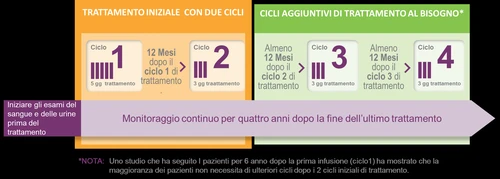
The initial treatment will consist of one infusion per day for 5 consecutive days (cycle 1) and one infusion per day for 3 consecutive days one year later (cycle 2).
There will be no treatment with LEMTRADA between the two cycles. Two treatment cycles may reduce MS activity for up to 6 years.
Some patients, if they experience symptoms or signs of MS disease activity after the initial two cycles, may receive 1 or 2 additional treatment cycles, consisting of one infusion per day for 3 consecutive days. These additional treatment cycles may be administered twelve months or more after the previous treatment.
The maximum daily dose is 1 infusion.
LEMTRADA will be administered to you by intravenous infusion. Each infusion will last approximately 4 hours. Monitoring for adverse reactions and follow-up tests must continue for 4 years after the last infusion.
To help you better understand the duration of treatment effects and required monitoring, please refer to the diagram below.
Monitoring after treatment with LEMTRADA
After receiving LEMTRADA, you will need to undergo regular examinations to ensure that any potential side effects can be diagnosed and treated immediately. These examinations, described in section 4 - Major side effects, must continue for 4 years after the last infusion.
If you are given more LEMTRADA than you should receive
Patients who have accidentally received too high a dose of LEMTRADA during an infusion have experienced severe reactions such as headache, rash, decreased blood pressure, or increased heart rate. Doses higher than recommended may cause more severe or prolonged infusion reactions (see section 4) or have stronger effects on the immune system. In such cases, treatment consists of stopping the administration of LEMTRADA and managing the symptoms.
Missed doses of LEMTRADA
It is unlikely that a dose will be missed, as it is administered by healthcare professionals.
However, please note that if a dose is missed, it should not be administered on the same day as a scheduled dose.
If you have any questions about the use of this medicine, consult your doctor.
4. Possible side effects
Like all medicines, this medicine can cause side effects, although not everyone will experience them.
The main serious side effects are the autoimmune disorders described in section 2, which include:
- acquired haemophilia A (a type of bleeding disorder), (uncommon – may affect up to 1 in 100 people): may present with spontaneous bruising, nosebleeds, painful or swollen joints, other types of bleeding, or cuts that may take longer than usual to stop bleeding.
- ITP (immune thrombocytopenic purpura), (common – may affect up to 1 in 10 people): may present with widespread small red, pink, or purple spots on the skin; easy bruising; bleeding from cuts that is difficult to stop; heavier, longer, or more frequent menstrual periods or bleeding between periods; increased occurrence or duration of bleeding from gums or nose, or coughing up blood.
- thrombotic thrombocytopenic purpura (TTP), (rare – may affect up to 1 in 1,000 people): may present as bruising on the skin or in the mouth, which may appear as red spots, with or without unexplained extreme fatigue, fever, confusion, speech disturbances, yellowing of the skin or eyes (jaundice), reduced urine output, or dark-coloured urine.
- kidney disorders, (rare – may affect up to 1 in 1,000 people): may present with blood in the urine (urine may appear red or tea-coloured) or swelling of the legs or feet. They may also cause lung damage, which can lead to coughing up blood.
If you notice any of the signs or symptoms of bleeding or kidney disorders, contact your doctor immediately
to report the symptoms. If you are unable to contact your doctor, you must seek immediate medical care.
- thyroid disorders, (very common – may affect more than 1 in 10 people): may present with excessive sweating; unexplained weight loss or gain; swollen eyes; nervousness; rapid heartbeat; feeling cold; increased fatigue; or onset of constipation.
- disorders of red and white blood cells, (uncommon – may affect up to 1 in 100 people), diagnosed through blood tests.
- sarcoidosis (uncommon – may affect up to 1 in 100 people): symptoms may include persistent dry cough, shortness of breath, chest pain, fever, swollen lymph nodes, weight loss, skin rashes, or blurred vision.
- autoimmune encephalitis (uncommon – may affect up to 1 in 100 people): may include symptoms such as behavioural and/or psychiatric changes, short-term memory loss, or seizures. Symptoms may resemble a relapse of MS.
All of these serious side effects may occur many years after administration of
LEMTRADA. If you notice any of these signs or symptoms, contact your doctor immediately to report them.
You will also need to undergo regular blood and urine tests to ensure that, if you develop any of these disorders,
they can be treated immediately.
Summary of tests you will undergo for autoimmune disorders:
| Test | When? | For how long? |
| Blood tests (to diagnose all the major serious adverse reactions listed above) | Before starting treatment and every month after treatment | For 4 years following the last LEMTRADA infusion |
| Urine test (additional tests to diagnose kidney disorders) | Before starting treatment and every month after treatment | For 4 years following the last LEMTRADA infusion |
After this period, if you experience symptoms of ITP, acquired haemophilia A, TTP, kidney or thyroid disorders, your doctor will carry out further examinations. You must continue to monitor for signs and symptoms of adverse reactions for more than 4 years, as explained in detail in the patient guide, and you must continue to carry your patient alert card with you.
Another important adverse reaction is an increased risk of infections (information on how frequently patients develop infections is provided below). In most cases, these are mild infections, but serious infections may also occur.
Contact your doctor immediately if you experience any of the following signs of infection:
- fever and/or chills
- swollen lymph nodes
To help reduce the risk of certain infections, your doctor may consider vaccinating you against varicella and/or administering other vaccinations deemed necessary for you (see section 2: What you need to know before LEMTRADA is given to you – Vaccines). Your doctor may also prescribe medication for cold sores (see section 2: What you need to know before LEMTRADA is given to you – Infections).
The most frequent adverse reactions are infusion reactions (information on how frequently patients experience these is provided below), which may occur during or within 24 hours after the infusion. Most reactions are mild, but serious reactions may also occur. Allergic reactions may occasionally occur.
To help reduce infusion reactions, your doctor will administer a medication (corticosteroids) before each of the first 3 infusions in a LEMTRADA treatment cycle. Additional treatments may also be given before the infusion or when symptoms occur to help limit these reactions. Furthermore, you will be monitored during the infusion and for 2 hours after the infusion ends. In case of serious reactions, the infusion may be slowed or even stopped.
Please refer to the LEMTRADA patient guide for further information about these events.
These are the adverse reactions you may experience:
Very common (may affect more than 1 in 10 people):
- Infusion reactions occurring during or within 24 hours after infusion: changes in heart rate, headache, rash, body rash, fever, hives, chills, itching, redness of the face and neck, fatigue, nausea
- Infections: respiratory tract infections such as cold and sinusitis, urinary tract infections, herpes infections
- Decrease in white blood cell count (lymphocytes, leukocytes, neutrophils)
- Thyroid disorders, such as overactive or underactive thyroid gland
Common (may affect up to 1 in 10 people):
- Infusion reactions occurring during or within 24 hours after infusion: indigestion, chest discomfort, pain, dizziness, altered taste, difficulty sleeping, shortness of breath or dyspnea, decreased blood pressure, infusion site pain
- Infections: cough, ear infection, flu-like illness, bronchitis, lung infection, oral or vaginal candidiasis, cold sores, swollen lymph nodes, influenza, herpes zoster infection (the varicella virus), dental infection
- Increased white blood cell count, such as neutrophils, eosinophils (another type of white blood cells), anemia, decreased red blood cell count, bruising or bleeding, swollen lymph nodes
- Exaggerated immune response
- Back, neck, arm or leg pain, muscle pain, muscle spasms, joint pain, mouth or throat pain
- Inflammation of mouth/gums/tongue
- General discomfort, weakness, vomiting, diarrhea, abdominal pain, gastroenteritis, hiccups
- Abnormal liver function tests
- Heartburn
- Urine test abnormalities: presence of blood or protein in urine, reduced heart rate, irregular or abnormal heartbeat, high blood pressure, impaired kidney function, white blood cells in urine
- Bruising
- MS relapse
- Tremor, loss of sensation, burning or tingling sensations
- Overactive or underactive thyroid (autoimmune), thyroid antibodies or goitre (swelling of the thyroid gland in the neck)
- Swelling of arms and/or legs
- Vision problems, conjunctivitis, eye disease associated with thyroid disorder
- Dizziness or loss of balance, headache
- Anxiety, depression
- Unusually heavy, prolonged or irregular menstrual periods
- Acne, skin redness, excessive sweating, skin discoloration, skin lesions, dermatitis
- Nosebleeds, bruising
- Hair loss
- Asthma
- Muscle and bone pain, chest discomfort
Uncommon (may affect up to 1 in 100 people):
- Infections: intestinal flu, gum inflammation, fungal nail infection, tonsillitis, acute sinusitis, bacterial skin infection, cytomegalovirus infection
- Pneumonia
- Athlete’s foot
- Abnormal vaginal smear
- Sensory disturbances, such as numbness, tingling and pain, tension headache
- Double vision
- Ear pain (otalgia)
- Difficulty swallowing, sore throat, productive cough
- Weight loss, weight gain, decreased red blood cells, increased blood glucose, increased size of red blood cells
- Constipation, acid reflux, dry mouth
- Rectal bleeding
- Bleeding gums
- Decreased appetite
- Blisters, night sweats, facial swelling, eczema
- Stiffness, discomfort in arms or legs
- Kidney stones, excretion of ketones in urine, kidney disease
- Weakened/diminished immune system
- Tuberculosis
- Inflammation of the gallbladder with or without stones
- Genital warts (condylomas)
- Autoimmune disorder characterized by bleeding (acquired haemophilia A)
- Sarcoidosis
- Autoimmune brain disorder (autoimmune encephalitis)
- Skin patches that have lost color (vitiligo)
- Autoimmune patchy hair loss (alopecia areata)
Rare (may affect up to 1 in 1,000 people):
- Excessive activation of white blood cells associated with inflammation (hemophagocytic lymphohistiocytosis)
- Autoimmune blood clotting disorder (thrombotic thrombocytopenic purpura, TTP)
Not known (frequency cannot be estimated from the available data):
- Listeriosis/listeria meningitis
- Pulmonary hemorrhage
- Heart attack
- Stroke
- Tears in carotid or vertebral arteries (blood vessels supplying the brain)
- Infection due to a virus called Epstein-Barr virus
- Inflammatory condition affecting multiple organs, adult-onset Still’s disease (AOSD)
Show the alert card and this leaflet to any doctor involved in your treatment, not only your neurologist.
You will find this information also in the patient alert card and patient guide, which were provided to you by your doctor.
If you experience any adverse reaction, including those not listed in this leaflet, contact your doctor. You may also report adverse reactions directly via the national reporting system listed in Annex V. By reporting adverse reactions, you can help provide more information on the safety of this medicine.
5. How to store LEMTRADA
Keep this medicine out of the sight and reach of children.
Do not use this medicine after the expiry date stated on the outer packaging and on the label of the vial after Scad or EXP. The expiry date refers to the last day of that month.
Store in a refrigerator (2 °C-8 °C).
Do not freeze.
Store in the original packaging to protect the medicine from light.
Immediate use of the medicine after dilution is recommended due to the potential risk of microbial contamination. If not used immediately, the storage times and conditions prior to use are the responsibility of the user and must not exceed 8 hours between 2 °C and 8 °C, protected from light.
6. Package contents and other information
What LEMTRADA contains
The active substance is alemtuzumab.
Each vial contains 12 mg of alemtuzumab in 1.2 mL.
The other components are:
- disodium phosphate dihydrate (E339)
- disodium edetate dihydrate
- potassium chloride (E508)
- potassium dihydrogen phosphate (E340)
- polysorbate 80 (E433)
- sodium chloride
- water for injections
Description of the appearance of LEMTRADA and package contents
LEMTRADA is a clear, sterile concentrate for infusion solution, colourless to pale yellow, contained in a glass vial with a stopper.
Each pack contains one vial.
Marketing Authorisation Holder
Sanofi Belgium
Leonardo Da Vincilaan 19
B-1831 Diegem
Belgium
Manufacturer
Genzyme Ireland Limited, IDA Industrial Park, Old Kilmeaden Road, Waterford, Ireland.
For further information on this medicinal product, please contact the local representative of the Marketing Authorisation Holder:
België/Belgique/Belgien/ Lietuva
Luxemburg/Luxembourg Swixx Biopharma UAB
Sanofi Belgium Tel. +370 5 236 91 40
Tél/Tel: + 32 2 710 54 00
България Magyarország
Swixx Biopharma EOOD SANOFI-AVENTIS Zrt
Тел.: +359 (0)2 4942 480 Tel: +36 1 505 0050
Česká republika Malta
Sanofi s.r.o. Sanofi S.r.l.
Tel: +420 233086 111 Tel: +39 02 39394275
Danmark Nederland
Sanofi A/S Sanofi B.V.
Tlf: +45 45 16 70 00 Tel: +31 20 245 4000
Deutschland Norge
Sanofi Belgium sanofi-aventis Norge AS
Tel: +49 (0) 6102 3674 451 Tlf: + 47 67 10 71 00
Eesti Österreich
Swixx Biopharma OÜ sanofi-aventis GmbH
Tel. +372 640 10 30 Tel: + 43 1 80 185 - 0
Ελλάδα Polska
Sanofi-Aventis Μονοπρόσωπη AEBE Sanofi Sp. z o.o.
Τηλ: +30 210 900 16 00 Tel.: +48 22 280 00 00
España Portugal
sanofi-aventis, S.A. Sanofi – Produtos Farmacêuticos, Lda.
Tel: +34 93 485 94 00 Tel: +351 21 35 89 400
France România
Sanofi Winthrop Industrie Sanofi Romania SRL
Tél: 0 800 222 555 Tel: +40 (0) 21 317 31 36
From outside France: +33 1 57 63 23 23
Hrvatska Slovenija
Swixx Biopharma d.o.o. Swixx Biopharma d.o.o.
Tel: +385 1 2078 500 Tel: +386 1 235 51 00
Ísland Slovenská republika
Vistor hf. Swixx Biopharma s.r.o.
Sími: +354 535 7000 Tel.: +421 2 208 33 600
Ireland Suomi/Finland
sanofi-aventis Ireland Ltd. T/A SANOFI Sanofi Oy
Tel: +353 (0) 1 403 56 00 Puh/Tel: + 358 201 200 300
Italia Sverige
Sanofi S.r.l. Sanofi AB
Tel: 800536389 Tel: +46 (0)8 634 50 00
Κύπρος United Kingdom (Northern Ireland)
C.A. Papaellinas Ltd. sanofi-aventis Ireland Ltd. T/A SANOFI
Τηλ: +357 22 741741 Tel: +44 (0) 800 035 2525
Latvija
Swixx Biopharma SIA
Tel: +371 6 616 47 50
Other sources of information
To support patient education regarding potential adverse reactions and instructions on what to do if certain adverse reactions occur, the following risk-minimisation materials are available:
1 Patient Alert Card: for the patient to show to other healthcare professionals, to inform them about the use of LEMTRADA
2 Patient Guide: for further information on autoimmune reactions, infections, and other information.
More detailed information on this medicinal product is available on the website of the European Medicines Agency: http://www.ema.europa.eu.
The following information is intended for healthcare professionals only:
Risk minimisation information - autoimmune conditions
- It is very important that patients understand the need for regular monitoring (for 4 years after the last infusion), even if they have no symptoms and their Multiple Sclerosis is well controlled.
- Regular monitoring must be planned and managed together with the patient.
- Patients with poor adherence may require additional counselling to highlight the risks associated with missed scheduled assessments.
- Test results must be monitored and careful attention must be paid to symptoms of adverse events.
- Review the LEMTRADA patient guide and the package leaflet with the patient. Remind the patient to pay close attention to symptoms related to autoimmune conditions and to contact their doctor if they have any concerns.
The following educational materials are also available for healthcare professionals:
- LEMTRADA Healthcare Provider Guide
- LEMTRADA Training Form
- LEMTRADA Prescriber Checklist
For further information, please read the Summary of Product Characteristics (available on the EMA website mentioned above).
Information on the preparation and administration of LEMTRADA and patient monitoring
-
Patients must be treated with corticosteroids immediately before LEMTRADA infusion for the first 3 days of each treatment cycle. Premedication with antihistamines and/or antipyretics may also be considered prior to administering LEMTRADA.
-
All patients must be given an oral antiviral medication against herpes during treatment and for 1 month afterwards. In clinical trials, patients received acyclovir 200 mg twice daily or equivalent.
-
Perform baseline testing and screening as described in the Summary of Product Characteristics, section 4.
-
Before administration, inspect the vial contents to exclude the presence of foreign particles or colour changes. Do not use if foreign particles are present or if the concentrate has changed colour. DO NOT SHAKE THE VIALS BEFORE USE.
-
Using aseptic technique, withdraw 1.2 mL of LEMTRADA from the vial and inject it into 100 mL of 9 mg/mL (0.9%) sodium chloride infusion solution or 5% glucose solution. The bag
should be gently inverted to mix the solution. Great care must be taken to ensure the sterility of the prepared solution. -
Administer the LEMTRADA infusion solution intravenously over approximately 4 hours.
-
No other medicinal products should be added to the LEMTRADA infusion solution, nor should they be infused simultaneously through the same intravenous line.
-
The medicinal product is recommended to be used immediately after dilution due to the potential risk of microbial contamination. If not used immediately, the storage times and conditions prior to use are the responsibility of the user and must not exceed 8 hours between 2°C and 8°C, protected from light.
-
Observe proper procedures for handling and disposal. Spills or waste from this medicinal product must be disposed of in accordance with local regulations.
After each infusion, the patient should be observed for 2 hours for infusion-related reactions. If necessary, symptomatic treatment may be initiated (see Summary of Product Characteristics). Perform monthly testing for autoimmune conditions for 4 years after the last infusion. For further information, consult the LEMTRADA Healthcare Provider Guide or read the Summary of Product Characteristics available on the EMA website mentioned above.
ANNEX IV
SCIENTIFIC CONCLUSIONS AND REASONS FOR THE VARIATION TO THE TERMS OF THE
MARKETING AUTHORISATION(S)
Scientific conclusions
Taking into account the assessment of the Pharmacovigilance Risk Assessment Committee (PRAC) regarding the final report of the mandated non-interventional PASS study for the above-mentioned medicinal product(s), the CHMP’s scientific conclusions are as follows:
The CHMP agrees with the scientific conclusions drawn by the PRAC.
Reasons for the variation to the terms of the marketing authorisation(s)
Based on the scientific conclusions regarding the results of the study for the above-mentioned medicinal product(s), the CHMP considers that the benefit-risk balance of this medicinal product(s) remains unchanged, subject to the proposed amendments to the product information.
The CHMP considers that the terms of the marketing authorisation(s) for the above-mentioned medicinal product(s) should be varied.