Leflunomide Sandoz
Italy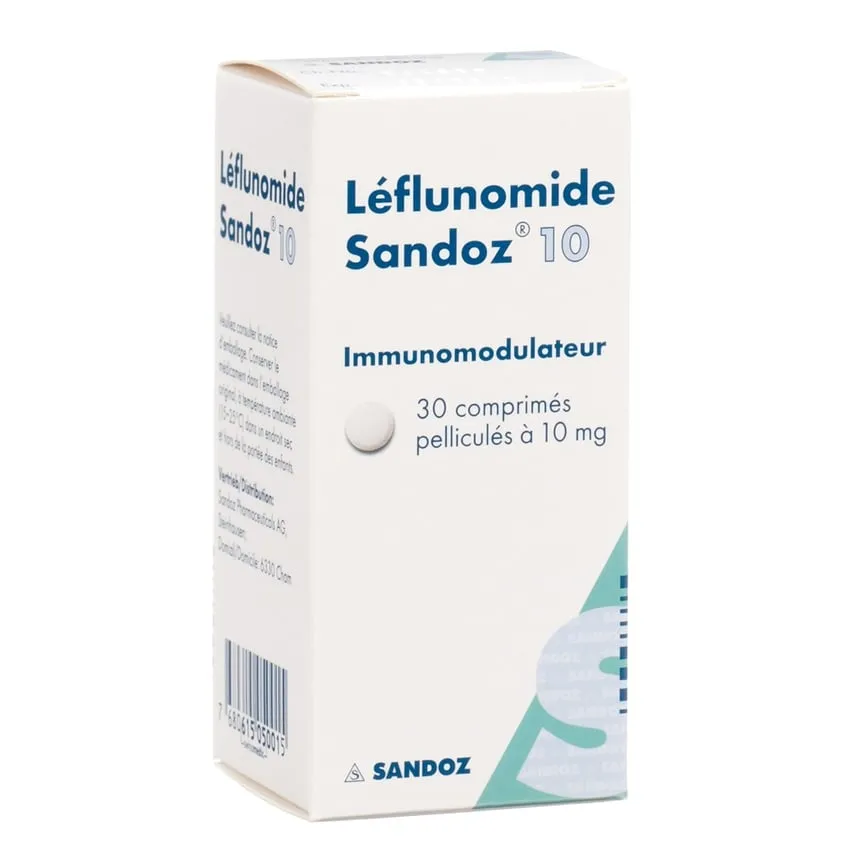
Table of Contents
- Patient Information Leaflet: Information for the User
- Leflunomide Sandoz 10 mg film-coated tablets, 20 mg film-coated tablets
- 1. What Leflunomide Sandoz is and what it is used for
- 2. What you need to know before taking Leflunomide Sandoz
- 3. How to take Leflunomide Sandoz
- 4. Possible side effects
- 5. How to store Leflunomide Sandoz
- 6. Package contents and other information
Patient Information Leaflet: Information for the User
Leflunomide Sandoz 10 mg film-coated tablets, 20 mg film-coated tablets
Generic medicine
Please read all of this leaflet carefully before you start taking this medicine, as it contains important information for you.
- Keep this leaflet. You may need to read it again.
- If you have any questions, ask your doctor, pharmacist, or nurse.
- This medicine has been prescribed for you only. Do not give it to other people, even if they have the same symptoms as yours, as it may be harmful.
- If you experience any side effects, including those not listed in this leaflet, tell your doctor, pharmacist, or nurse. See section 4.
Contents of this leaflet:
- What Leflunomide Sandoz is and what it is used for
- What you need to know before taking Leflunomide Sandoz
- How to take Leflunomide Sandoz
- Possible side effects
- How to store Leflunomide Sandoz
- Contents of the pack and other information
1. What Leflunomide Sandoz is and what it is used for
Leflunomide Sandoz belongs to a group of medicines called disease-modifying antirheumatic drugs (DMARDs). It contains the
active substance leflunomide.
Leflunomide Sandoz is used to treat adult patients with active rheumatoid arthritis or active psoriatic arthritis.
Symptoms of rheumatoid arthritis include joint inflammation, swelling, limited movement, and pain. Other systemic symptoms may include loss of
appetite, fever, fatigue, and anaemia (a deficiency of red blood cells).
Symptoms of active psoriatic arthritis include joint inflammation, swelling, limited movement, pain, and red, scaly skin patches (skin lesions).
2. What you need to know before taking Leflunomide Sandoz
Do not take Leflunomide Sandoz
- if you have previously had an allergic reaction to leflunomide (especially a severe skin reaction, often accompanied by fever, joint pain, red skin spots or blisters, for example Stevens-Johnson syndrome), peanuts, soy, or any of the excipients in this medicinal product (listed in section 6)
- if you have any liver problems
- if you have moderate to severe kidney problems
- if you have very low protein levels in the blood (hypoproteinemia)
- if you have any disorder affecting the immune system (e.g. AIDS)
- if you have any bone marrow disorder, or if your red blood cell or white blood cell count is low, or if your platelet count is reduced
- if you have a serious infection
- if you are pregnant, think you may be pregnant, or are breastfeeding.
Warnings and precautions
Talk to your doctor, pharmacist, or nurse before taking Leflunomide Sandoz
- if you need a specific blood test (calcium level). False low calcium levels may be observed.
- if you have ever had interstitial lung disease
- if you have ever had tuberculosis or have been in close contact with someone who has or has had tuberculosis. Your doctor may carry out tests to check whether you have tuberculosis.
- if you are male and wish to father a child. Since it cannot be excluded that Leflunomide Sandoz passes into semen, you must use a reliable contraceptive method during treatment with Leflunomide Sandoz. Men who wish to conceive a child should consult their doctor, who may advise stopping Leflunomide Sandoz and taking certain medicines to rapidly and adequately remove leflunomide from the body. You will then need a blood test to confirm that Leflunomide Sandoz has been adequately eliminated from the body, and you must wait at least another 3 months before attempting to conceive a child.
Leflunomide Sandoz may occasionally cause problems affecting the blood, liver, lungs, or nerves in the arms and legs. Leflunomide Sandoz may also cause some serious allergic reactions (including drug reaction with eosinophilia and systemic symptoms [DRESS]), or increase the risk of developing serious infections. For further information, see section 4 (Possible side effects).
DRESS initially presents with flu-like symptoms and a skin rash on the face, followed by widespread rash, high temperature, increased liver enzyme levels observed in blood tests, an increase in a type of white blood cell (eosinophilia), and swollen lymph nodes.
Before and during treatment with Leflunomide Sandoz, your doctor will prescribe regular blood tests to monitor blood cells and liver function. Your doctor will also regularly check your blood pressure, as Leflunomide Sandoz may cause an increase in blood pressure.
Inform your doctor if you develop unexplained chronic diarrhoea. Your doctor may perform further tests for differential diagnosis.
Children and adolescents
The use of Leflunomide Sandoz is not recommended in children and adolescents under 18 years of age.
Other medicines and Leflunomide Sandoz
Tell your doctor or pharmacist if you are taking, have recently taken, or might take any other medicines.
This is particularly important if you are taking:
- other medicines for rheumatoid arthritis, such as antimalarials (e.g. chloroquine and hydroxychloroquine), intramuscular or oral gold, D-penicillamine, azathioprine, and other immunosuppressive drugs (e.g. methotrexate), as these combinations are not recommended
- warfarin and other oral anticoagulants used to thin the blood, as monitoring is required to reduce the risk of adverse effects of this medicine
- teriflunomide for multiple sclerosis
- repaglinide, pioglitazone, nateglinide, or rosiglitazone for diabetes
- daunorubicin, doxorubicin, paclitaxel, or topotecan for cancer
- duloxetine for depression, urinary incontinence, or kidney disease in diabetics
- alosetron for managing severe diarrhoea
- theophylline for asthma
- tizanidine, to relax muscles
- oral contraceptives (containing ethinylestradiol and levonorgestrel)
- cefaclor, benzylpenicillin (penicillin G), ciprofloxacin for infections
- indometacin, ketoprofen for pain or inflammation
- furosemide for heart disease (diuretic, water pill)
- zidovudine for HIV infection
- rosuvastatin, simvastatin, atorvastatin, pravastatin for hypercholesterolemia (high cholesterol)
- sulfasalazine for inflammatory bowel disease or rheumatoid arthritis
- a medicine called cholestyramine (used to lower cholesterol) or activated charcoal, as these medicines may reduce the absorption of Leflunomide Sandoz by the body. If you are already taking non-steroidal anti-inflammatory drugs (NSAIDs) and/or corticosteroids, you may continue taking them after starting treatment with Leflunomide Sandoz.
Vaccinations
If you need to be vaccinated, consult your doctor. Some vaccinations should not be given during treatment with Leflunomide Sandoz and for a certain period after stopping treatment.
Leflunomide Sandoz with food, drinks and alcohol
Leflunomide Sandoz can be taken with or without food.
During treatment with Leflunomide Sandoz, drinking alcoholic beverages is not recommended. Consuming alcohol while taking Leflunomide Sandoz may increase the risk of liver damage.
Pregnancy and breastfeeding
Do not take Leflunomide Sandoz if you are, or think you may be, pregnant. If you are pregnant or become pregnant during treatment with Leflunomide Sandoz, the risk of having a baby with serious birth defects increases. Women of childbearing potential must not take Leflunomide Sandoz without using reliable contraceptive measures.
If you plan to become pregnant after stopping treatment with Leflunomide Sandoz, inform your doctor, as it is necessary to ensure that all traces of Leflunomide Sandoz have been eliminated from the body before attempting pregnancy. Elimination of Leflunomide Sandoz may take up to two years. This period may be shortened to several weeks if you take certain medicines that accelerate the removal of Leflunomide Sandoz from the body.
In both cases, blood tests must confirm that Leflunomide Sandoz has been adequately eliminated from the body; after this, you must wait at least one additional month before attempting pregnancy.
For further information on laboratory tests, contact your doctor.
If you suspect you are pregnant during treatment with Leflunomide Sandoz or within two years after stopping treatment, you must contact your doctor immediately. Your doctor will prescribe a pregnancy test. If pregnancy is confirmed, your doctor may recommend treatment with certain medicines to rapidly and adequately remove Leflunomide Sandoz from the body, thereby reducing the risk to the baby.
Do not take Leflunomide Sandoz during breastfeeding, as leflunomide passes into breast milk.
Driving and using machines
Leflunomide Sandoz may cause dizziness, which may affect your ability to concentrate and react. If you experience dizziness, avoid driving and using machines.
Leflunomide Sandoz contains lactose and soy lecithin
- If your doctor has diagnosed you with an intolerance to certain sugars, consult him before taking this medicine.
- If you are allergic to peanuts or soy, do not use this medicine.
3. How to take Leflunomide Sandoz
Take this medicine exactly as directed by your doctor or pharmacist. If you have
any doubts, consult your doctor or pharmacist.
The recommended initial dose of Leflunomide Sandoz is one 100 mg tablet once
daily for the first three days. Afterwards, most patients require:
- for rheumatoid arthritis: 10 or 20 mg of Leflunomide Sandoz once daily, depending on the severity of the disease.
- for psoriatic arthritis: 20 mg of Leflunomide Sandoz once daily.
Swallow the tablet whole with a generous amount of water.
It may take about 4 weeks or longer before you notice an improvement in your symptoms.
Some patients may experience further improvement even after 4–6 months of treatment.
You will generally need to take Leflunomide Sandoz for long periods of time.
If you take more Leflunomide Sandoz than you should
If you take more Leflunomide Sandoz than prescribed, contact your doctor or seek medical advice immediately.
If possible, bring the tablets or the pack with you to show the healthcare professionals.
If you forget to take Leflunomide Sandoz
If you forget to take a dose, take it as soon as you remember, unless it is almost time for your next dose.
Do not take a double dose to make up for a forgotten dose.
If you have any further questions about the use of this medicine, consult your doctor, pharmacist, or nurse.
4. Possible side effects
Like all medicines, this medicinal product can cause side effects, although not everyone experiences them.
Immediately inform your doctor and stop treatment with Leflunomide Sandoz:
- if you experience a feeling of weakness, lightheadedness or dizziness, or if you have difficulty breathing, as these may be signs of a severe allergic reaction
- if you develop a skin rash or mouth ulcers, as these may indicate serious, and sometimes life-threatening, allergic reactions (such as Stevens-Johnson syndrome, toxic epidermal necrolysis, erythema multiforme), drug reaction with eosinophilia and systemic symptoms [DRESS], see section 2.
Immediately inform your doctor if you experience:
- pale skin, tiredness or appearance of bruises, as these may indicate blood disorders caused by an imbalance among the different types of blood cells
- tiredness, abdominal pain or jaundice (yellowing of the eyes or skin), as these may indicate serious conditions such as liver failure, which can be potentially fatal
- any symptoms of infection, such as fever, sore throat or cough, as this medicine may increase the risk of developing serious, potentially life-threatening infections
- cough or breathing problems, as these may indicate lung problems (interstitial lung disease or pulmonary hypertension)
- unusual tingling, weakness or pain in hands or feet, as these may indicate nerve problems (peripheral neuropathy).
Common side effects (may affect up to 1 in 10 patients)
- mild decrease in white blood cell count (leucopenia)
- mild allergic reactions
- loss of appetite, weight loss (usually not significant)
- tiredness (asthenia)
- headache, dizziness
- abnormal skin sensations, such as tingling (paraesthesia)
- moderate increase in blood pressure
- diarrhoea
- nausea, vomiting
- inflammation of the mouth or mouth ulcers
- abdominal pain
- increased levels in some liver function tests
- increased hair loss
- eczema, dry skin, rash, itching
- tendinitis (pain due to inflammation of the membrane covering the tendons, usually in the feet or hands)
- increase in certain blood enzymes (creatine phosphokinase)
- nerve problems in arms and legs (peripheral neuropathy)
- colitis
Uncommon side effects (may affect up to 1 in 100 patients)
- decrease in red blood cell count (anaemia) and decrease in platelet count (thrombocytopenia)
- decreased potassium levels in the blood
- anxiety
- taste disturbances
- urticaria
- tendon rupture
- increased levels of fats in the blood (cholesterol and triglycerides)
- decreased phosphate levels in the blood
Rare side effects (may affect up to 1 in 1,000 patients)
- increase in blood cells called eosinophils (eosinophilia); mild decrease in white blood cell count (leucopenia); reduction in all blood cells (pancytopenia)
- marked increase in blood pressure
- lung inflammation (interstitial lung disease)
- increase in certain liver values, which may progress to serious conditions such as hepatitis and jaundice
- severe infections called sepsis, which may be fatal
- increase in certain blood enzymes (lactate dehydrogenase)
Very rare side effects (may affect up to 1 in 10,000 patients)
- marked decrease in certain white blood cells (agranulocytosis)
- severe and potentially life-threatening allergic reactions
- inflammation of small blood vessels (vasculitis, including necrotizing cutaneous vasculitis)
- inflammation of the pancreas (pancreatitis)
- severe liver damage, such as liver failure or necrosis, which may be fatal
- severe, sometimes fatal, reactions (Stevens-Johnson syndrome, toxic epidermal necrolysis, erythema multiforme)
Other side effects with unknown frequency may also occur, such as kidney failure, decreased levels of uric acid in the blood, pulmonary hypertension, male infertility (reversible upon discontinuation of this medicine), cutaneous lupus (characterized by skin rash/erythema on areas of skin exposed to light), psoriasis (new onset or worsening), and DRESS.
Reporting of side effects
If you experience any side effect, including those not listed in this leaflet, talk to your doctor or pharmacist. You can also report side effects directly via the national reporting system at http://www.aifa.gov.it/content/segnalazioni-reazioni-avverse. By reporting side effects, you can help provide more information on the safety of this medicine.
5. How to store Leflunomide Sandoz
Keep this medicine out of the sight and reach of children.
Do not use this medicine after the expiry date stated on the bottle and outer packaging. The expiry date refers to the last day of that month.
Keep the bottle tightly closed to protect the medicine from moisture.
Do not dispose of any medicine via wastewater or household waste. Ask your pharmacist how to
dispose of medicines no longer in use. This will help protect the environment.
6. Package contents and other information
What Leflunomide Sandoz contains
- The active substance is leflunomide. Each film-coated tablet contains 10 mg of leflunomide.
- The active substance is leflunomide. Each film-coated tablet contains 20 mg of leflunomide.
- The other ingredients (excipients) are: monohydrate lactose, low-substituted hydroxypropylcellulose, tartaric acid, sodium lauryl sulfate, and magnesium stearate in the tablet core; lecithin (soy), poly(vinyl alcohol), talc, titanium dioxide (E171), and xanthan gum in the coating film.
Description of the appearance of Leflunomide Sandoz and package contents
Leflunomide Sandoz 10 mg film-coated tablets are round, biconvex, white to almost white in colour, with a diameter of approximately 6 mm.
Leflunomide Sandoz 20 mg film-coated tablets are round, biconvex, white to almost white in colour, with a diameter of approximately 8 mm and a break line on one side. The tablets may be divided into two equal parts.
[10 mg] The film-coated tablets are packaged in bottles.
Pack sizes of 10, 20, 28, 30, 42, 50, 56, 60, 90, 98 and 100 film-coated tablets are available.
[20 mg] The film-coated tablets are packaged in bottles.
Pack sizes of 10, 15, 20, 28, 30, 42, 50, 56, 60, 90, 98 and 100 film-coated tablets are available.
Not all pack sizes may be marketed.
Marketing Authorization Holder
Sandoz S.p.A., Largo U. Boccioni, 1 - 21040 Origgio (VA)
Manufacturer responsible for batch release
Haupt Pharma Münster GmbH
Schleebrüggenkamp 15, 48159 Münster, Germany
Salutas Pharma GmbH
Otto-von-Guericke-Allee 1, 39179 Barleben, Germany
This medicinal product has been authorised in EEA Member States under the following names:
Belgium Leflunomid Sandoz 10 mg filmomhulde tabletten
Leflunomid Sandoz 20 mg filmomhulde tabletten
Germany Leflunomid 1 A Pharma 10 mg, Filmtabletten
Leflunomid 1 A Pharma 20 mg, Filmtabletten
Italy Leflunomide Sandoz
Leflunomide Sandoz
Latvia Leflunomide Sandoz 20 mg apvalkotās tabletes
Lithuania Leflunomide Sandoz 20 mg plėvele dengtos tabletės
Netherlands Leflunomide Sandoz 10 mg, filmomhulde tabletten
Leflunomide Sandoz 20 mg, filmomhulde tabletten
Poland Leflunomide Sandoz
Leflunomide Sandoz
United Kingdom Leflunomide 10 mg Film-coated Tablets
Leflunomide 20 mg Film-coated Tablets
Czech Republic Leflunomid Sandoz 20 mg
Slovakia Leflunomid Sandoz 20 mg filmom obalené tablety
Romania LEFLUNOMIDA SANDOZ 10 mg, comprimate filmate
LEFLUNOMIDA SANDOZ 20 mg, comprimate filmate
Hungary Leflunomid Sandoz 10 mg filmtabletta
Leflunomid Sandoz 20 mg filmtabletta
Estonia Leflunomide Sandoz, 20 mg