Lasonil anti-inflammatory and anti-rheumatic
Italy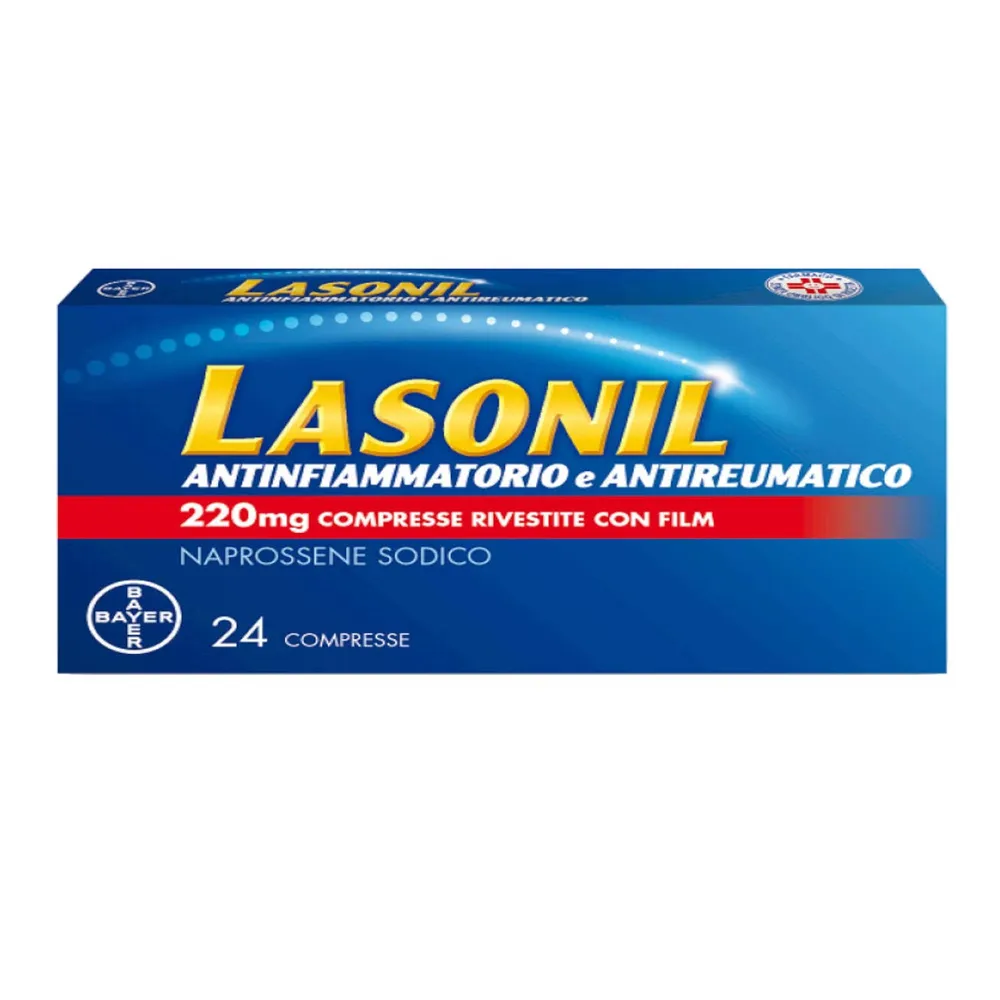
Table of Contents
- Package leaflet: Information for the user
- Lasonil anti-inflammatory and anti-rheumatic 220 mg film-coated tablets
- 1. What Lasonil anti-inflammatory and anti-rheumatic is and what it is used for
- 2. What you need to know before taking Lasonil anti-inflammatory and anti-rheumatic
- 3. How to take Lasonil anti-inflammatory and anti-rheumatic
- 4. Possible adverse effects
- 5. How to store Lasonil anti-inflammatory and anti-rheumatic
- 6. Contents of the pack and other information
Package leaflet: Information for the user
Lasonil anti-inflammatory and anti-rheumatic 220 mg film-coated tablets
Naproxen sodium
Please read all of this leaflet carefully before taking this medicine because it contains
important information for you.
Always take this medicine exactly as described in this leaflet or as your doctor or
pharmacist has instructed you.
- Keep this leaflet. You may need to read it again.
- If you need more information or advice, consult your pharmacist.
- If you experience any side effects, including those not listed in this leaflet, contact your doctor or pharmacist. See section 4.
- Consult your doctor if you do not notice any improvement or if your symptoms worsen after 3 days in case of a cold, or after 7 days if you are taking the medicine for symptomatic pain relief.
Contents of this leaflet:
- What Lasonil anti-inflammatory and anti-rheumatic is and what it is used for
- What you need to know before taking Lasonil anti-inflammatory and anti-rheumatic
- How to take Lasonil anti-inflammatory and anti-rheumatic
- Possible side effects
- How to store Lasonil anti-inflammatory and anti-rheumatic
- Contents of the pack and other information
1. What Lasonil anti-inflammatory and anti-rheumatic is and what it is used for
Lasonil anti-inflammatory and anti-rheumatic is a medicine belonging to the category of non-steroidal anti-inflammatory/anti-rheumatic drugs, known as NSAIDs.
This medicine is used for the symptomatic treatment of headache, backache, joint and muscle pain, toothache, and cold-related illnesses. It is also indicated for menstrual pain and mild pain associated with arthritis and osteoarthritis.
Consult a doctor if you do not feel better or if you feel worse after 3 days of treatment for a cold-related illness, or after 7 days when using the medicine for symptomatic pain relief.
2. What you need to know before taking Lasonil anti-inflammatory and anti-rheumatic
Do not take Lasonil anti-inflammatory and anti-rheumatic
If you are allergic to naproxen or to any of the other ingredients of this medicine
(listed in section 6);
If you have previously suffered from asthma, urticaria (itching and small skin rashes) or allergic-type
reactions after taking acetylsalicylic acid or other painkillers, antipyretics,
non-steroidal anti-inflammatory drugs (NSAIDs);
If you suffer from severe renal failure (the laboratory test assessing kidney function,
called “creatinine clearance”, shows values below 20 ml/min);
If you suffer from severe heart failure;
If you have liver cirrhosis or a severe form of hepatitis (liver inflammation);
If you are undergoing intensive therapy with diuretics (medicines that increase urine production);
If you have gastric or duodenal ulcer;
If you have active bleeding or are at risk of bleeding;
If you are being treated with anticoagulants (medicines that delay blood clotting), as this medicine may enhance their effect;
If you are pregnant or breastfeeding (see “Pregnancy, breastfeeding and fertility”);
If you are under 16 years of age;
If you have previously experienced gastrointestinal bleeding or perforation following treatment
with certain medicines, or have suffered from recurrent gastrointestinal bleeding/ulceration (two or more distinct episodes of proven ulceration or bleeding).
Warnings and precautions
Talk to your doctor or pharmacist before taking Lasonil anti-inflammatory and anti-rheumatic.
Do not use the product for gastrointestinal tract pain.
Avoid using Lasonil anti-inflammatory and anti-rheumatic concomitantly with other NSAIDs, including selective COX-2 inhibitors.
After administration of painkillers, antipyretics, non-steroidal anti-inflammatory drugs, worsening of asthma may occur.
To minimize side effects, take the lowest effective dose for the shortest possible duration necessary to control symptoms (see the sections below on gastrointestinal and cardiovascular risks).
If pain persists, or if redness/swelling of the painful area occurs, or if new symptoms appear different from those for which you took the medicine, consult your doctor.
Take the medicine only after consulting your doctor:
- if you suffer from hepatic insufficiency (reduced liver function) and are undergoing intensive therapy with diuretics (medicines that increase urine production);
- if you are receiving concomitant treatment with other medicines that may increase the risk of ulceration or bleeding, such as antidepressants, other painkillers or steroid medicines (e.g., cortisone);
- if you have previously experienced adverse effects on the gastrointestinal tract due to taking painkillers, antipyretics, NSAIDs;
- if you have a history of gastrointestinal disease (ulcerative colitis, Crohn’s disease);
- if you suffer from hypertension (high blood pressure) and/or heart failure, since fluid retention, hypertension and edema (swelling) have been observed in association with NSAID treatment, along with a modest increase in the risk of arterial thrombotic events (e.g., myocardial infarction or stroke);
- if you suffer from coagulation disorders or are on anticoagulant therapy (medicines that delay blood clotting); in this case, you must be closely monitored by your doctor, since naproxen inhibits platelet aggregation and may prolong bleeding time.
Allergic or allergy-like reactions
Painkillers, antipyretics, non-steroidal anti-inflammatory drugs may cause allergic reactions,
potentially fatal. These reactions may occur in patients with a history of angioedema
(swelling of the skin of the face and mucous membranes), altered bronchial reactivity (asthma), rhinitis (runny nose), nasal polyps (small growths in the nasal cavities), allergic diseases, chronic respiratory diseases or allergy to acetylsalicylic acid. This may also occur in patients who experience allergic reactions (skin reactions, urticaria) to naproxen or other NSAIDs.
Skin reactions
Severe skin reactions including exfoliative dermatitis, Stevens-Johnson syndrome, toxic epidermal necrolysis, drug reaction with eosinophilia and systemic symptoms (DRESS), have been reported in association with Lasonil anti-inflammatory and anti-rheumatic.
If you notice any of the symptoms related to these severe skin reactions described in section 4, stop treatment with Lasonil anti-inflammatory and anti-rheumatic and seek immediate medical advice.
Elderly
Elderly patients are more likely to experience adverse reactions to NSAIDs, especially gastrointestinal bleeding and perforation, which may be fatal (see “How to take Lasonil anti-inflammatory and anti-rheumatic”).
Gastrointestinal bleeding, ulceration and perforation
During treatment with all NSAIDs, gastrointestinal bleeding, ulceration and perforation have been reported at any time, with or without warning symptoms or previous history of serious gastrointestinal events, and may be fatal.
The risk of gastrointestinal bleeding, ulceration or perforation is higher in the elderly and in patients with a history of ulcers, especially if complicated by bleeding or perforation (see “Do not take Lasonil anti-inflammatory and anti-rheumatic”). Since the risk increases with higher NSAID doses, these patients should start treatment with the lowest available dose (see “How to take Lasonil anti-inflammatory and anti-rheumatic”).
Caution is also required in patients taking concomitant medicines that may increase the risk of ulceration or bleeding, such as oral corticosteroids, selective serotonin reuptake inhibitors (medicines used for depression) or antiplatelet agents such as acetylsalicylic acid (see “Other medicines and Lasonil anti-inflammatory and anti-rheumatic”).
In all these cases, concomitant use of protective agents (misoprostol or proton pump inhibitors) should be considered.
Patients with a history of gastrointestinal toxicity, particularly the elderly, should report any unusual gastrointestinal symptoms (especially gastrointestinal bleeding), particularly during the initial stages of treatment.
If gastrointestinal bleeding or ulceration occurs while taking Lasonil anti-inflammatory and anti-rheumatic, discontinue treatment immediately.
NSAIDs should be administered with caution in patients with a history of gastrointestinal disease (ulcerative colitis, Crohn’s disease), as these conditions may be aggravated (see “Possible side effects”).
Cardiovascular and cerebrovascular effects
Medicines such as Lasonil anti-inflammatory and anti-rheumatic may be associated with a modest
increase in the risk of heart attack (“myocardial infarction”) or stroke. The risk is greater with high doses and prolonged treatment. Do not exceed the recommended dose or duration of treatment (7 days for symptomatic pain treatment and 3 days for cold-related illnesses).
If you have heart problems or a history of stroke, or if you think you may be at risk for these conditions (e.g., if you have high blood pressure, diabetes, high cholesterol or smoke), discuss your treatment with your doctor or pharmacist.
Painkillers, antipyretics, non-steroidal anti-inflammatory drugs may cause fluid retention, which rarely, especially in elderly patients, may precipitate congestive heart failure.
Naproxen may reduce the antiplatelet effect of acetylsalicylic acid. Patients should consult their doctor if they are being treated with acetylsalicylic acid and intend to use naproxen/naproxen sodium (see section “Other medicines and Lasonil anti-inflammatory and anti-rheumatic”).
Signs of an allergic reaction to this medicine, including breathing difficulties, swelling of the face and neck area (angioedema) and chest pain, have been reported with naproxen. Immediately stop taking Lasonil anti-inflammatory and anti-rheumatic and contact your doctor or emergency medical services if you notice any of these signs.
Effects on the liver
Severe liver reactions, including jaundice (yellowing of the skin and whites of the eyes) and hepatitis (in some cases fatal), have been reported with the use of naproxen or other NSAIDs. Cross-reactivity has also been reported.
Children and adolescents
This medicine must not be taken by children or adolescents under 16 years of age (see “Do not take Lasonil anti-inflammatory and anti-rheumatic”).
Other medicines and Lasonil anti-inflammatory and anti-rheumatic
Inform your doctor or pharmacist if you are taking, have recently taken or might take any other medicines.
- Other NSAIDs: do not take this medicine in combination with medicines containing naproxen, acetylsalicylic acid or other painkillers, antipyretics, anti-inflammatory drugs, due to increased risk of gastrointestinal bleeding.
- Aspirin/acetylsalicylic acid for prevention of blood clots.
- Anticoagulants (medicines that delay blood clotting): NSAIDs may increase the effects of anticoagulants such as warfarin (increased prothrombin time and reduced platelet aggregation).
- Cyclosporine (an immunosuppressant used after organ transplantation): concomitant use of cyclosporine may increase its concentration, increasing the risk of nephrotoxicity (kidney damage).
- Lithium (a medicine used in bipolar depression, a condition characterized by alternating depressed and euphoric mood): concomitant use may increase lithium levels, potentially causing nausea, polydipsia (increased thirst), polyuria (increased urine output), tremors and confusion.
- Methotrexate (a medicine used in certain cancers and rheumatoid arthritis): concomitant use of Lasonil anti-inflammatory and anti-rheumatic with methotrexate (at doses exceeding 15 mg/week) may lead to increased methotrexate concentrations, increasing the risk of toxicity of this substance.
- Corticosteroids: concomitant use increases the risk of gastrointestinal ulceration or bleeding (see “Warnings and precautions”).
- Antiplatelet agents and selective serotonin reuptake inhibitors (SSRIs): concomitant use increases the risk of gastrointestinal bleeding (see “Warnings and precautions”). Naproxen reduces platelet aggregation and prolongs bleeding time. This should be taken into account when measuring bleeding time.
- Diuretics, ACE inhibitors and angiotensin II antagonists (medicines used to lower blood pressure): NSAIDs may reduce the effect of diuretics (medicines that increase urine production) and other antihypertensive medicines (for high blood pressure). In some patients with impaired renal function (e.g., dehydrated patients or elderly patients with compromised kidney function), concomitant administration of an ACE inhibitor or angiotensin II antagonist and agents that inhibit the cyclooxygenase system may lead to further deterioration of kidney function, up to acute renal failure (rapid reduction in kidney function), usually reversible. These interactions should be considered in patients taking Lasonil anti-inflammatory and anti-rheumatic concomitantly with ACE inhibitors or angiotensin II antagonists. Therefore, the combination should be used with caution, especially in elderly patients. If you are taking these medicines, ensure adequate hydration and consider monitoring kidney function after starting concomitant therapy.
Interference with laboratory tests: sodium naproxen interferes with certain urine tests,
such as 17-ketosteroid and 5-indoleacetic acid analyses.
Lasonil anti-inflammatory and anti-rheumatic with food
The absorption rate of naproxen may be slowed by concomitant food intake.
Pregnancy, breastfeeding and fertility
If you are pregnant, suspect you may be pregnant, are planning a pregnancy, or are breastfeeding, consult your doctor before taking this medicine.
Do not take Lasonil anti-inflammatory and anti-rheumatic if you are pregnant or suspect you may be pregnant, as it may harm the fetus or cause problems during delivery.
NSAIDs may cause kidney and heart problems in the fetus. They may affect the tendency of the mother and baby to bleed and may delay or prolong labor beyond the expected duration. From the 20th week of pregnancy, NSAIDs may cause kidney problems in the fetus, thereby reducing amniotic fluid levels surrounding the baby (oligohydramnios) or cause narrowing of a blood vessel (ductus arteriosus) in the baby’s heart.
This medicine may pass into breast milk; therefore, do not take Lasonil anti-inflammatory and anti-rheumatic during breastfeeding.
If you are a woman of childbearing age, have fertility problems, or are undergoing fertility investigations, be aware that the use of Lasonil anti-inflammatory and anti-rheumatic may interfere with fertility.
This effect is reversible upon discontinuation of treatment.
Driving and using machines
Due to the possible occurrence of drowsiness, dizziness, vertigo or insomnia, Lasonil
anti-inflammatory and anti-rheumatic may impair your ability to drive and use machinery.
Avoid these activities, or others requiring particular alertness, if affected.
Lasonil anti-inflammatory and anti-rheumatic contains sodium
This medicine contains less than 1 mmol (23 mg) of sodium per tablet, i.e., essentially “sodium-free”.
The maximum daily dosage of 3 tablets results in a maximum sodium intake of
60 mg of sodium (main component of table salt). This corresponds to 3%
of the maximum recommended daily dietary sodium intake for an adult.
3. How to take Lasonil anti-inflammatory and anti-rheumatic
Take this medicine exactly as stated in this leaflet or as directed by your doctor or pharmacist. If you have any doubts, consult your doctor or pharmacist.
The recommended dose is:
- Symptomatic pain treatment: 1 tablet every 8–12 hours, for no more than 7 days
- Cold-related illnesses: 1 tablet every 8–12 hours, for no more than 3 days
You may achieve greater benefit by starting with 2 tablets, followed by 1 tablet every 12 hours, as needed. The maximum daily dose is 3 tablets.
Take the medicine with food.
Swallow the film-coated tablet whole, with a glass of water.
Warning: Do not exceed the recommended doses or duration of treatment without medical advice.
Adverse effects can be minimized by using the lowest effective dose for the shortest possible duration needed to control symptoms (see "Warnings and precautions").
Use in children and adolescents
The safety and efficacy in children under 16 years of age have not yet been established (see "What you need to know before taking Lasonil anti-inflammatory and anti-rheumatic").
Use in the elderly
Use the lowest effective dose.
Use in patients with renal, hepatic or cardiac impairment
If you suffer from renal and/or cardiac insufficiency (reduced kidney function and/or weakened heart) and/or severe hepatic insufficiency (severe reduction in liver function), a dose reduction may be necessary.
If you take more Lasonil anti-inflammatory and anti-rheumatic than you should
Signs of overdose may include dizziness, drowsiness, stomach burning, epigastric pain, digestive disturbances, nausea and vomiting, transient alterations in liver function, hypoprothrombinemia (decreased blood prothrombin), renal dysfunction, metabolic acidosis (increased acidity in body fluids), apnea (cessation of breathing), and disorientation.
Seizures have been reported in some patients, although it is unclear whether these were related to naproxen overdose.
Cases of reversible acute renal failure (rapid reduction in kidney function) have been described.
In case of overdose, treatment is symptomatic (to relieve symptoms) and supportive.
In the event of accidental ingestion or intake of an excessive dose of Lasonil anti-inflammatory and anti-rheumatic, contact your doctor immediately or go to the nearest hospital.
If you have any doubts about how to use this medicine, consult your doctor or pharmacist.
4. Possible adverse effects
Like all medicines, this medicine can cause adverse effects, although not everyone experiences them.
The most commonly observed adverse events affect the stomach and intestines. Peptic ulcers, gastrointestinal perforation or bleeding, sometimes fatal, may occur, particularly in elderly patients.
After administration of Lasonil anti-inflammatory and anti-rheumatic, the following have been reported: nausea, vomiting, diarrhoea, flatulence (intestinal gas), constipation, dyspepsia (indigestion), abdominal pain, melaena (passage of black, tarry stools), haematemesis (vomiting blood or material resembling "coffee grounds"), ulcerative stomatitis (inflammation of the oral mucosa), exacerbation of colitis (inflammation of the final portion of the intestine), and Crohn's disease (a chronic inflammatory bowel disease).
Gastritis has been observed less frequently.
Oedema (swelling), hypertension (high blood pressure), and heart failure have been reported in association with treatment with NSAIDs.
Very rarely, blistering reactions have occurred, including Stevens-Johnson syndrome and toxic epidermal necrolysis (two severe, potentially fatal skin diseases).
Medicines such as Lasonil anti-inflammatory and anti-rheumatic may be associated with a small increased risk of heart attack ("myocardial infarction") or stroke.
Lasonil anti-inflammatory and anti-rheumatic causes a slight and transient, dose-dependent increase in bleeding time. However, these values often do not exceed the upper limit of the reference range.
The adverse effects observed with naproxen and sodium naproxen-based medicines, including those requiring prescription, are listed below.
Stop taking Lasonil anti-inflammatory and anti-rheumatic and contact your doctor immediately if you notice any of the following adverse effects:
Common adverse effects (may affect up to 1 in 10 people)
- dizziness,
- headache,
- drowsiness,
- dyspepsia (indigestion),
- nausea,
- heartburn,
- abdominal pain.
Uncommon adverse effects (may affect up to 1 in 100 people)
- somnolence (profound drowsiness),
- insomnia,
- drowsiness,
- vertigo,
- diarrhoea,
- constipation,
- vomiting,
- skin rash,
- pruritus (itching),
- urticaria (itching and small skin spots).
Rare adverse effects (may affect up to 1 in 1,000 people)
- hyperglycaemia (increased blood sugar levels),
- hypoglycaemia (decreased blood sugar levels),
- tachycardia (rapid heartbeat),
- peptic ulcer with or without haemorrhage or perforation,
- gastrointestinal haemorrhage,
- haematemesis (vomiting blood or material resembling "coffee grounds"),
- melaena (passage of black, tarry stools),
- angioedema (swelling of the skin of the face and mucous membranes),
- myalgia (muscle pain),
- muscle weakness,
- impaired renal function,
- glomerulonephritis (a type of kidney inflammation),
- peripheral oedema (swelling of the extremities), particularly in patients with high blood pressure or renal failure,
- fever (including chills).
Very rare adverse effects (may affect up to 1 in 10,000 people)
- anaphylaxis/anaphylactoid reactions (severe allergic or allergy-like reactions), including fatal shock,
- blood formation disorders: leucopenia (deficiency of white blood cells), thrombocytopenia (deficiency of platelets), agranulocytosis (absence of blood cells called granulocytes), aplastic anaemia (due to failure in red blood cell production), eosinophilia (increase in blood cells called eosinophils), haemolytic anaemia (due to destruction of red blood cells);
- psychiatric disorders,
- depression,
- sleep disorders,
- difficulty concentrating,
- aseptic meningitis (non-infectious inflammation of the meninges),
- cognitive disorders (memory problems),
- convulsions,
- visual disturbances,
- corneal opacity,
- papillitis (inflammation of the anterior part of the optic nerve),
- retrobulbar optic neuritis (inflammation of the posterior part of the optic nerve),
- papilloedema (swelling of the optic disc at the back of the eye),
- hearing loss,
- tinnitus (ringing or buzzing in the ear),
- hearing disturbances,
- interstitial nephritis (a type of kidney inflammation),
- papillary necrosis (kidney damage due to analgesic abuse),
- nephrotic syndrome (a kidney disease characterized by protein loss in urine),
- renal failure (reduced kidney function),
- kidney disease,
- haematuria (blood in urine),
- proteinuria (protein in urine),
- congestive heart failure (inability of the heart to pump blood effectively),
- hypertension (high blood pressure),
- pulmonary oedema (fluid in the lungs),
- palpitations (sensation of irregular or rapid heartbeat),
- vasculitis (inflammation of blood vessels),
- dyspnoea (difficulty breathing),
- asthma,
- eosinophilic pneumonia (a type of lung inflammation),
- alveolitis (inflammation of lung alveoli),
- pancreatitis (inflammation of the pancreas),
- colitis (inflammation of the final portion of the intestine),
- aphthous ulcers (small mouth ulcers),
- stomatitis (inflammation of the oral mucosa),
- oesophagitis (inflammation of the oesophagus),
- intestinal ulceration,
- cramp-like abdominal pain,
- hepatitis (inflammation of the liver, including fatal cases),
- jaundice (yellowing of the skin and whites of the eyes),
- alopecia (hair loss, usually reversible),
- photosensitivity (sensitivity to sunlight),
- porphyria (a rare condition involving altered activity of certain enzymes),
- erythema multiforme (target-shaped red patches on the skin),
- severe blistering reactions, including Stevens-Johnson syndrome and toxic epidermal necrolysis (two severe, potentially fatal skin diseases),
- erythema nodosum (red nodules under the skin),
- fixed drug eruption (redness and blisters),
- lichen planus (inflammatory reaction with small, purple papules),
- pustules,
- skin eruptions,
- systemic lupus erythematosus (an autoimmune disease manifesting with muscle and joint pain),
- photosensitivity reactions, including late cutaneous porphyria ("pseudoporphyria") or epidermolysis bullosa,
- ecchymoses (bruises),
- purpura (red skin spots),
- sweating,
- closure of the ductus arteriosus (a small vessel essential for fetal blood circulation),
- infertility (in women),
- oedema (swelling),
- thirst,
- malaise,
- increased blood creatinine,
- altered liver function tests,
- increased blood potassium.
Adverse effects with unknown frequency: frequency cannot be estimated from the available data
- Widespread rash, high body temperature, increased liver enzymes, blood abnormalities (eosinophilia), swollen lymph nodes and involvement of other organs (drug reaction with eosinophilia and systemic symptoms, also known as DRESS). See also section 2.
- A distinctive skin allergic reaction known as fixed drug eruption, which usually recurs at the same site or sites upon re-exposure to the medicine and may appear as round or oval patches with redness and skin swelling, skin rash with blisters (urticaria), and itching sensation.
- Chest pain, which may be a sign of a potentially serious allergic reaction called Kounis syndrome.
Reporting of adverse effects
If you experience any adverse effect, including those not listed in this leaflet, consult your doctor or pharmacist. You may also report adverse effects directly via the national reporting system at the website
https://www.aifa.gov.it/content/segnalazioni-reazioni-avverse
. By reporting adverse effects, you can help provide more information on the safety of this medicine.
5. How to store Lasonil anti-inflammatory and anti-rheumatic
Keep this medicine out of the sight and reach of children.
Do not use this medicine after the expiry date stated on the blister pack and carton.
The expiry date refers to the last day of that month. The expiry date applies to the product in its original packaging, correctly stored.
Store in the original packaging to protect the medicine from light.
Do not dispose of any medicine via wastewater or household waste. Ask your pharmacist how to dispose of medicines no longer in use. This will help protect the environment.
6. Contents of the pack and other information
What Lasonil anti-inflammatory and anti-rheumatic contains
- The active substance is sodium naproxen. One film-coated tablet contains 220 mg of sodium naproxen (equivalent to 200 mg of naproxen).
- The other components are: microcrystalline cellulose, povidone K 30, talc, magnesium stearate; coating film: Opadry Blue YS 1-4215.
Description of the appearance of Lasonil anti-inflammatory and anti-rheumatic and contents of the pack
Lasonil anti-inflammatory and anti-rheumatic is presented as film-coated tablets.
Pack contents: 10, 12, 20 or 24 tablets.
Marketing Authorization Holder and Manufacturer
Marketing Authorization Holder
Bayer S.p.A., Viale Certosa 130, 20156 Milan, Italy
Manufacturer
Bayer Bitterfeld GmbH - Greppin – Germany