Lasix vials
Italy
Table of Contents
- Package leaflet: Information for the patient
- LASIX INJECTION VIALS 20 mg/2 ml injectable solution
- 1. What Lasix Injection is and what it is used for
- 2. What you need to know before taking Lasix Injection
- 3. How to take Lasix Ampoules
- 4. Possible side effects
- 5. How to store Lasix Fials
- 6. Package contents and other information
Package leaflet: Information for the patient
LASIX INJECTION VIALS 20 mg/2 ml injectable solution
furosemide
Please read this leaflet carefully before using this medicine because it contains important information for you.
- Keep this leaflet. You may need to read it again.
- If you have any questions, ask your doctor, pharmacist, or nurse.
- This medicine has been prescribed for you only. Do not give it to other people, even if their symptoms are the same as yours, as it may be harmful.
- If you experience any side effects, including those not listed in this leaflet, contact your doctor, pharmacist, or nurse. See section 4.
Contents of this leaflet:
- What Lasix Vials are and what they are used for
- What you need to know before using Lasix Vials
- How to use Lasix Vials
- Possible side effects
- How to store Lasix Vials
- Contents of the pack and other information
1. What Lasix Injection is and what it is used for
Lasix Injection contains furosemide, a substance that belongs to a group of medicines called diuretics, which
help produce more urine, thereby helping to relieve disorders caused by excessive fluid accumulation in the
body ( edema ).
Lasix Injection is used to treat edema caused by heart diseases (obstruction or heart failure), liver (hepatic ascites due to cirrhosis), kidneys (nephrotic syndrome; in this case Lasix Injection may also be used in combination with other medicines such as ACTH or corticosteroids), and peripheral edema (for example in the ankles and legs), when oral administration of Lasix is not possible, or when rapid removal of excess fluid is required.
Lasix Injection is also used in cases of mild to moderate hypertension (high blood pressure).
Contact your doctor if you do not feel better or if you feel worse.
2. What you need to know before taking Lasix Injection
Do not take Lasix Injection
- if you are allergic to the active substance, to any of the antibiotics belonging to the sulphonamide class (or sulfonylureas: you may also be allergic to these substances), or to any of the other ingredients of this medicine (listed in section 6);
- if you are dehydrated;
- if you are not passing urine or your urine output is significantly reduced (renal failure with oliguria or anuria) and does not respond to treatment with medicines containing a substance called furosemide;
- if your blood potassium levels are lower than normal (hypokalaemia);
- if your blood sodium levels are lower than normal (hyponatraemia);
- if your body is unable to produce adequate amounts of adrenal hormones (Addison's disease);
- if you are in the first trimester of pregnancy or are breastfeeding;
- if you have taken an excessive amount (overdose) of digitalis.
Lasix Injection must not be used also under the following conditions:
- in case of precoma (a condition characterised by mental confusion, apathy, muscle weakness);
- in case of coma due to impaired liver function (hepatic encephalopathy);
- in case of hypovolaemia (a significant decrease in your blood volume).
Warnings and precautions
Talk to your doctor, pharmacist, or nurse before taking Lasix Injection.
Your doctor will carry out a series of clinical checks before prescribing Lasix Injection if:
- you are a patient with urinary tract obstruction (for example, if you have difficulty emptying your bladder due to an enlarged prostate or urethral narrowing); since Lasix Injection is a medicine that increases diuresis, the ability to pass urine must be ensured;
- you suffer from low blood pressure (hypotension);
- you suffer from sudden drops in blood pressure, especially if you are a patient with narrowing (stenosis) of the heart arteries (coronary arteries) or of the blood vessels supplying the brain;
- you are elderly, are taking other medicines that may cause a drop in blood pressure, or suffer from other diseases that pose a risk of low blood pressure;
- you have diabetes;
- you have gout;
- you have severe liver or kidney problems (hepatorenal syndrome); if you have a disease of the adrenal glands (see section 2 “What you need to know before taking Lasix”);
- your blood protein levels are low (hypoproteinaemia).
Your doctor may also regularly prescribe tests to monitor blood and urine sugar levels, blood creatinine or uric acid levels, and to check levels of certain electrolytes such as potassium and sodium, which are particularly important if you suffer from disorders affecting electrolyte balance or following episodes of vomiting, diarrhoea, or excessive sweating.
Your doctor must also correct any possible reduction in circulating blood volume, dehydration, and any significant disturbances in the balance of mineral salts and in the acidity or alkalinity of the blood.
This may require a temporary suspension of the medicine.
Depending on the results of clinical monitoring, your doctor may decide to adjust the dose of Lasix Injection you are taking.
If you suffer from a chronic autoimmune disease that can affect various organs and tissues of the body, called systemic lupus erythematosus, taking this medicine could worsen your condition. The use of this medicine may also trigger the onset of this disease in individuals in whom it has not yet been diagnosed (see section 4 “Possible side effects”).
Children
Administration in premature infants should be accompanied by appropriate medical monitoring to prevent the development of kidney complications (nephrolithiasis or nephrocalcinosis).
Other medicines and Lasix Injection
Tell your doctor or pharmacist if you are taking, have recently taken, or might take any other medicines.
Particular caution is necessary if Lasix Injection is taken together with:
- chloral hydrate (a sedative medicine): skin flushing, sudden sweating, agitation, nausea, increased blood pressure, and increased heart rate (tachycardia) may occur if furosemide is taken less than 24 hours after chloral hydrate; concomitant use of furosemide and chloral hydrate is not recommended;
- aminoglycoside antibiotics (e.g. gentamicin, amikacin, neomycin, netilmicin, tobramycin, vancomycin) and other medicines toxic to the ear (ototoxic), such as cisplatin (an anticancer drug): furosemide may enhance the toxic effects, even irreversible ones, that all these medicines have on the ear (auditory system). The combination of these drugs should therefore only be used if strictly necessary;
- sucralfate (a medicine used to treat stomach ulcers): this medicine should be administered at least 2 hours apart, as sucralfate may reduce the effect of furosemide;
- lithium salts (used to treat mental disorders): furosemide may enhance the toxic effects of lithium on the heart and nervous system;
- ACE inhibitors and angiotensin II antagonists (medicines used to lower blood pressure): due to the risk of developing severe hypotension and impaired kidney function; if you take these medicines with furosemide, follow your doctor’s instructions carefully;
- risperidone (an antipsychotic medicine, used to treat mental disorders): your doctor will consider the risks and benefits before prescribing furosemide together with this medicine due to an increased risk of death, especially in elderly patients with dementia;
- levothyroxine (a medicine used to stimulate the thyroid gland): high doses of furosemide may lead to an overall reduction in thyroid hormone levels;
- non-steroidal anti-inflammatory drugs (NSAIDs; including acetylsalicylic acid): they may reduce the effect of furosemide and furosemide may increase the toxicity of salicylates;
- phenytoin (an antiepileptic drug): may reduce the effect of furosemide;
- corticosteroids, carbenoxolone, liquorice, and prolonged use of laxatives: concurrent use with Lasix Injection may increase the risk of excessively reducing blood potassium levels (hypokalaemia);
- diuretics: taking furosemide together with other medicines of the same class leads to a greater reduction in blood pressure;
- probenecid (a medicine used to treat gout) and methotrexate (a medicine used to treat certain types of cancer and some severe inflammatory diseases): they may reduce the effects of furosemide and simultaneously increase its side effects;
- antidiabetic medicines (such as biguanides, sulfonylureas, and thiazolidinediones) and sympathomimetics (such as adrenaline and noradrenaline): furosemide may reduce their effectiveness;
- peripheral muscle relaxants (curare agents) and theophylline (a medicine used in certain respiratory diseases): furosemide may enhance their effects;
- antibiotics belonging to the cephalosporin group: concurrent administration of these medicines and Lasix Injection may cause impaired kidney function;
- cyclosporine A (used to prevent transplant rejection): taking it with furosemide increases the risk of developing gouty arthritis (a form of acute inflammatory arthritis);
- contrast media (substances used in certain radiological examinations): furosemide may increase the harmful effects of these substances on the kidneys;
- aliskiren (used to treat high blood pressure): may reduce blood concentrations of orally administered furosemide. The effects of aliskiren on intravenous furosemide solution have not been studied.
Lasix Injection and food
Lasix Injection may rarely lead to a decrease in blood potassium; it is therefore important that you follow a diet rich in this mineral by consuming potatoes, bananas, oranges, tomatoes, spinach, and dried fruit during treatment with this medicine.
Pregnancy and breastfeeding
If you are pregnant, think you may be pregnant, are planning a pregnancy, or are breastfeeding, consult your doctor or pharmacist before taking this medicine.
Pregnancy
You must not take this medicine during the first three months of pregnancy, as furosemide crosses the placental barrier. You may take Lasix during the second and third trimesters of pregnancy only if your doctor considers it strictly necessary, and your doctor will monitor your baby’s growth regularly.
Breastfeeding
You must not take Lasix if you are breastfeeding, as furosemide passes into breast milk and may reduce milk production.
Driving and using machines
Lasix Injection may affect your ability to drive or use machines.
Do not drive or operate machinery requiring particular attention while taking this medicine, as it may cause low blood pressure and thereby reduce reflex speed and level of attention.
Lasix Injection contains sodium
This medicine contains less than 1 mmol (23 mg) of sodium per dose (1 - 2 vials), i.e. it is practically “sodium-free”.
For athletes: using this medicine without therapeutic need constitutes doping and may lead to a positive anti-doping test.
3. How to take Lasix Ampoules
The recommended dose is 20 mg (1 ampoule), 1 - 2 times daily, according to medical prescription.
The dose used should be the lowest sufficient to achieve the desired effect.
Method of administration
Lasix Ampoules is normally administered by intravenous injection or slow infusion; the infusion rate will be carefully determined by the doctor or nurse, particularly in patients with severe kidney disorders.
Patients with kidney or liver disorders
In case of kidney disease (low glomerular filtration), liver disease (hepatic cirrhosis), or concurrent impaired function of both kidneys and liver, the doctor may adjust the dose.
In exceptional cases (i.e. when administration of the medicine is not possible either intravenously or orally), Lasix Ampoules may be administered by intramuscular injection.
Opening the ampoules
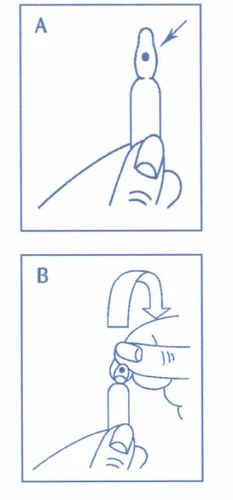
To open the ampoule:
hold the ampoule vertically, ensuring the coloured mark is in the position shown in figure (A).
push back the upper part of the ampoule as shown in figure (B).
If you take more Lasix Ampoules than you should
Due to the conditions of administration, it is unlikely that you will receive more medicine than intended.
However, please note that symptoms of overdose depend on excessive fluid loss through urine, such as dehydration, excessive concentration of blood, disturbances in heart rhythm (A-V block and ventricular fibrillation), marked decrease in blood pressure, even severe (severe hypotension up to shock), kidney disorders (acute renal failure), formation of blood clots in blood vessels (thrombosis), delirium, muscle paralysis, apathy, and confusion.
If you stop treatment with Lasix Ampoules
Consult your doctor if you intend to discontinue treatment.
If you have any doubts about how to use this medicine, consult your doctor or pharmacist.
4. Possible side effects
Like all medicines, this medicine can cause side effects, although not everybody will experience them.
You must stop treatment with this medicine and contact your doctor or nurse immediately if you experience any of the following symptoms: difficulty breathing or swallowing, swelling of the face, eyes, lips and/or tongue, skin irritation: these may be symptoms of a severe allergic reaction (anaphylactic shock), which is rare.
The side effects that may occur with furosemide are listed below.
Very common (may affect more than 1 in 10 people)
- electrolyte disturbances (imbalance of salts present in the blood);
- dehydration; reduction in blood volume (hypovolaemia), particularly in elderly patients;
- increase in certain blood test values (creatinine and triglycerides);
- reduction in blood pressure (including orthostatic hypotension) following intravenous infusion.
Common (may affect up to 1 in 10 people)
- increased concentration of blood (haemoconcentration);
- reduction in sodium levels in the blood (hyponatraemia);
- reduction in chloride levels in the blood (hypochloraemia);
- reduction in potassium levels in the blood (hypokalaemia);
- increased blood cholesterol levels;
- increased levels of uric acid in the blood (hyperuricaemia);
- gout (inflammation of the joints causing pain and swelling);
- brain disturbances as a consequence of liver disorders (hepatic encephalopathy);
- production of a large amount of urine (polyuria).
Uncommon (may affect up to 1 in 100 people)
- reduction in the number of blood cells called platelets (thrombocytopenia);
- diabetes and worsening of pre-existing diabetes (impaired glucose tolerance, clinical manifestation of latent diabetes mellitus);
- drowsiness;
- headache;
- dizziness;
- confusion;
- visual disturbances;
- hearing disorders, sometimes irreversible (deafness);
- changes in heart rhythm (cardiac arrhythmias);
- dry mouth;
- nausea;
- intestinal motility disorders;
- itching, urticaria, skin irritation, formation of blisters on the skin and mucous membranes (symptoms of skin diseases such as bullous dermatitis, exfoliative dermatitis, erythema multiforme, or pemphigoid);
- appearance of small red or purplish spots on the skin, with or without joint pain, muscle pain, weakness, and fever (may be symptoms of inflammation of blood vessel walls, known as purpura);
- allergic reaction to sunlight, presenting as skin irritation accompanied by itching (photosensitivity reaction);
- sudden severe muscle pain caused by involuntary contraction of one or more muscles (cramps);
- muscle weakness (myasthenia);
- cramps, muscle spasms, involuntary muscle contractions, and tremors (symptoms of a condition known as tetany);
- fatigue.
Rare (may affect up to 1 in 1,000 people)
- reduction in white blood cells in the blood (leucopenia);
- increase in white blood cells in the blood (eosinophilia);
- altered sensation in limbs or other parts of the body (paraesthesia);
- inflammation of blood vessels (vasculitis);
- vomiting and diarrhoea;
- a kidney disease called interstitial nephritis;
- fever.
Very rare (may affect up to 1 in 10,000 people)
- inadequate production in the bone marrow of all types of blood cells (aplastic anaemia);
- severe reduction in the number of white blood cells called granulocytes (agranulocytosis);
- excessive reduction in haemoglobin concentration in the blood due to abnormal destruction of red blood cells (haemolytic anaemia);
- ringing in the ears (tinnitus);
- severe inflammation of the pancreas (acute pancreatitis);
- impairment of normal bile flow (cholestasis);
- increased levels of certain liver enzymes in the blood (transaminases).
Not known (frequency cannot be estimated from the available data)
- reduction in calcium levels in the blood (hypocalcaemia);
- reduction in magnesium levels in the blood (hypomagnesaemia);
- alteration in blood acidity (metabolic alkalosis);
- increased blood urea levels;
- Bartter syndrome (a rare kidney disease) in cases of furosemide abuse or prolonged use;
- formation of blood clots within blood vessels (thrombosis);
- skin diseases such as urticaria, appearance of red papules or widespread blisters and peeling, particularly on legs, arms, hands and feet, which may extend to the face and lips, occasionally accompanied by fever. These may be symptoms of serious skin conditions such as Stevens-Johnson syndrome, toxic epidermal necrolysis, acute generalised exanthematous pustulosis (AGEP), or Dress syndrome;
- lichenoid reactions, characterised by small itchy, reddish-purple, polygonal lesions on the skin, genitals, or in the mouth;
- increased sodium levels in urine tests;
- increased chloride levels in urine tests;
- difficulty emptying the bladder (urinary retention, in patients with prostatic hypertrophy, urethral stenosis, or other bladder emptying difficulties);
- impaired kidney function (renal failure);
- pain at the injection site;
- onset or worsening of a chronic autoimmune disease affecting various organs and tissues of the body, known as systemic lupus erythematosus;
- dizziness, fainting, and loss of consciousness (due to symptomatic hypotension or other causes);
- severe damage to skeletal muscle and release into the blood of substances contained in muscle cells (rhabdomyolysis), usually in the context of severe potassium deficiency in the blood.
Additional side effects in children
- kidney stones (nephrolithiasis) or calcifications in the kidneys (nephrocalcinosis) in preterm neonates;
- increased risk of heart abnormalities (patent ductus arteriosus) in premature infants receiving furosemide during the first weeks of life.
Reporting of side effects
If you experience any side effect, including those not listed in this leaflet, talk to your doctor or pharmacist.
You can also report side effects directly via the national reporting system at:
http://www.aifa.gov.it/content/segnalazioni-reazioni-avverse.
By reporting side effects, you can help provide more information on the safety of this medicine.
5. How to store Lasix Fials
Keep in the original packaging to protect the medicine from light.
Keep this medicine out of the sight and reach of children.
Do not use this medicine after the expiry date stated on the packaging after "Exp.". The expiry date refers to the last day of that month.
Do not dispose of any medicine via wastewater or household waste. Ask your pharmacist how to dispose of medicines no longer required. This will help protect the environment.
6. Package contents and other information
What Lasix Injection contains
- The active substance is furosemide. Each ampoule contains 20 mg of furosemide.
- The other components are sodium hydroxide, sodium chloride and water for injections.
Description of the appearance of Lasix Injection and contents of the pack
Lasix Injection 20 mg/2 ml solution for injection comes in a box containing 5 glass ampoules of 2 ml of solution.
Marketing Authorization Holder and Manufacturer
Marketing Authorization Holder
Sanofi-Aventis Deutschland GmbH - Industriepark Höchst - 65926 Frankfurt am Main - Germany
Representative for Italy
Sanofi S.r.l. - Viale L. Bodio, 37/B - Milan
Manufacturer
Delpharm Dijon - 6 Boulevard de l’Europe - 21800 Quétigny - France
The following information is intended exclusively for physicians or healthcare professionals:
Administration method of the medicinal product
Intravenous injection/infusion
Intravenous furosemide must be injected or infused slowly, without exceeding a rate of 4 mg/minute. In patients with severe renal impairment (serum creatinine > 5 mg/dL), a maximum infusion rate of 2.5 mg per minute is recommended.
Intramuscular injection
Intramuscular administration should be limited to exceptional circumstances, when neither intravenous nor oral administration is possible. It should be emphasized that intramuscular injection is not suitable for the treatment of acute conditions, such as pulmonary edema.
Incompatibilities
Furosemide, being an anthranilic acid derivative, dissolves in alkaline environments forming a salt. The solution has a pH of approximately 9 and has no buffering effect; below pH 7, the active substance precipitates. Therefore, it should be noted that Lasix Injection may be mixed with alkaline or neutral solutions or weakly acidic solutions with modest buffering capacity, such as isotonic physiological saline or Ringer's solution. Acidic solutions, especially those with high buffering capacity, must not be mixed with Lasix Injection.
Lasix Injection must not be mixed with other medicinal products in the same syringe.
Once diluted, the solution should be used as soon as possible. Infusion solutions should be used immediately after preparation.
Special instructions for disposal and handling
Ampoules with predetermined break point.