Lactulose ABC
Italy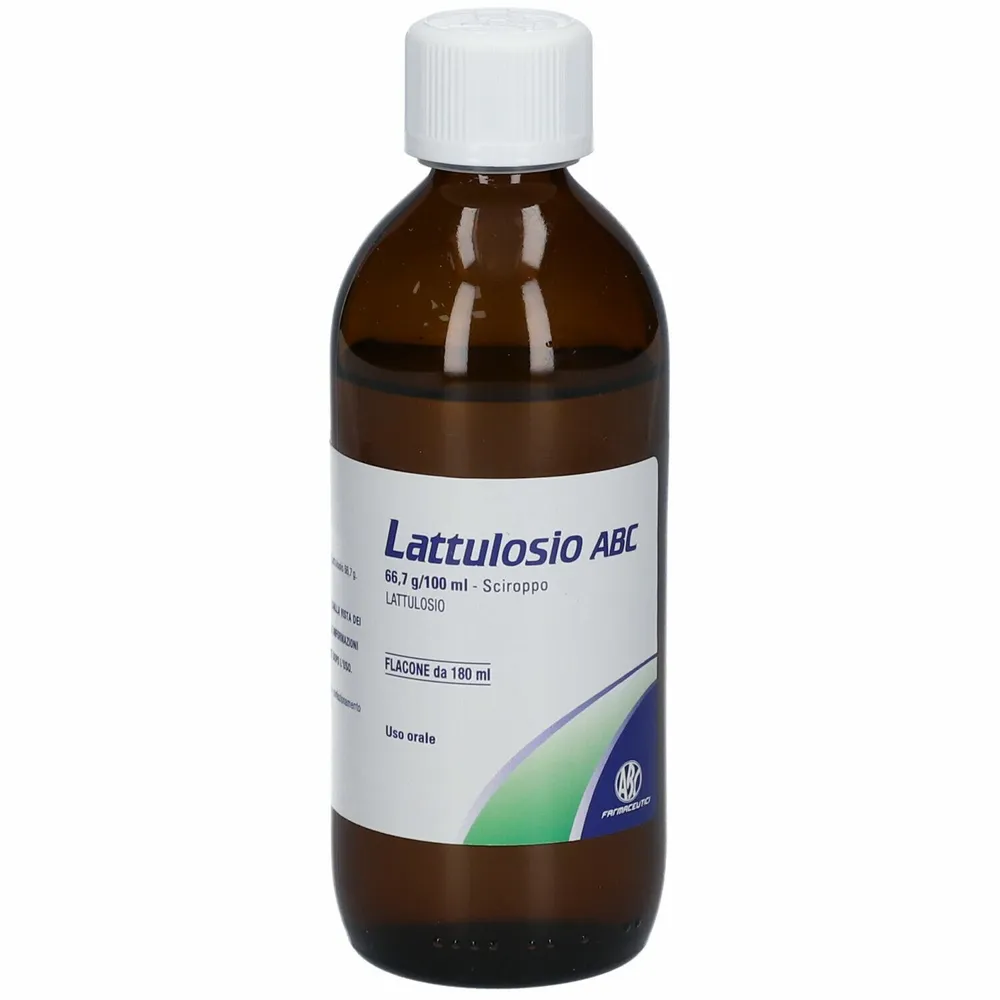
Table of Contents
- PACKAGE LEAFLET: INFORMATION FOR THE PATIENT
- LACTULOSE ABC 66.7 g / 100 ml syrup
- 1. What Lattulosio ABC is and what it is used for
- 2. What you should know before using Lactulose ABC
- 3. How to use Lactulose ABC
- 4. Possible side effects
- 5. How to store Lactulose ABC
- 6. Package contents and other information
PACKAGE LEAFLET: INFORMATION FOR THE PATIENT
LACTULOSE ABC 66.7 g / 100 ml syrup
Liquid lactulose
Please read all of this leaflet carefully before you start using this medicine because it contains important information for you.
Always use this medicine exactly as described in this leaflet or as your doctor or pharmacist has told you to do.
- Keep this leaflet. You may need to read it again;
- If you need more information or advice, consult your pharmacist;
- If you experience any side effects, including those not listed in this leaflet, contact your doctor or pharmacist. See section 4.
- Contact your doctor if you do not notice any improvement or if you notice worsening of symptoms after 7 days.
Contents of this leaflet:
- What Lactulose ABC is and what it is used for
- What you need to know before taking Lactulose ABC
- How to take Lactulose ABC
- Possible side effects
- How to store Lactulose ABC
- Contents of the pack and other information
1. What Lattulosio ABC is and what it is used for
Lattulosio ABC contains the active substance lactulose, a sugar belonging to a group of
medicinal products called laxatives, used to facilitate intestinal evacuation.
This medicine is indicated for the short-term treatment of occasional constipation.
Consult your doctor if you do not feel better or if you feel worse after 7 days.
2. What you should know before using Lactulose ABC
Do not use Lactulose ABC
- if you are allergic to lactulose or to any of the other ingredients of this medicine (listed in section 6);
- if you have abdominal pain of unknown origin, nausea, vomiting;
- if you have an intestinal obstruction or narrowing (stenosis);
- if you have unexplained rectal bleeding (rectal haemorrhage);
- if you are severely dehydrated;
- if you have or are at risk of gastrointestinal tract perforations.
Warnings and precautions
Talk to your doctor or pharmacist before using Lactulose ABC.
- Consult your doctor before taking this medicine if you suffer from abdominal pain of unknown origin. If you do not notice improvement after a few days of treatment (2-3 days), consult your doctor. Frequent or prolonged use, or use with excessive doses of laxatives, may cause persistent diarrhoea, resulting in loss of water, mineral salts (especially potassium), and other essential nutrients. In more severe cases, dehydration (excessive loss of body water) or hypokalaemia (decreased potassium levels in the blood) may occur, which can lead to problems affecting the heart, nerves, and muscles (cardiac or neuromuscular dysfunction), particularly if you are also taking medicines used to treat heart conditions (cardiac glycosides), medicines used to lower blood pressure (diuretics), or corticosteroid anti-inflammatory drugs. Laxative abuse may lead to dependence (possible need to progressively increase the dose), chronic constipation, and intestinal atony (loss of normal intestinal function).
Health education notes:
First and foremost, it should be noted that in most cases, a balanced diet rich in water and fibre (bran, vegetables, and fruit) can resolve constipation. Many people believe they suffer from constipation if they do not defecate every day. This is a misconception, as this condition is entirely normal for many individuals.
Instead, constipation should be considered when bowel movements are reduced compared to your usual habits and are associated with hard stools. If episodes of constipation occur repeatedly, you should consult a doctor.
The treatment of chronic or recurrent constipation always requires medical supervision for diagnosis, prescription of medications, and monitoring during therapy.
Other medicines and Lactulose ABC
Inform your doctor or pharmacist if you are taking, have recently taken, or might take any other medicines.
Avoid taking laxatives together with other medicines: if you are taking another medicine, wait at least 2 hours before taking the laxative.
Inform your doctor if you are taking:
- neomycin or other antibiotics (medicines used to treat bacterial infections);
- digitalis, used to treat heart diseases;
- diuretics; medicines used to reduce blood pressure;
- corticosteroids, medicines used for inflammatory conditions.
Pregnancy and breastfeeding
If you are pregnant, think you may be pregnant, planning a pregnancy, or are breastfeeding, consult your doctor or pharmacist before using this medicine.
During pregnancy and breastfeeding, you may take this medicine.
Driving and using machines
This medicine does not alter or has negligible effects on the ability to drive and use machinery.
Lactulose ABC contains galactose and lactose.
If your doctor has diagnosed you with an intolerance to certain sugars, contact him or her before taking this medicine.
Lactulose ABC contains fructose.
Lactulose ABC contains sodium benzoate.
This medicine contains 53 mg of sodium benzoate per 45 ml dose.
Sodium benzoate may increase jaundice (yellowing of the skin and eyes) in newborns up to 4 weeks of age.
Lactulose ABC contains sodium.
This medicine contains less than 1 mmol (23 mg) of sodium per 45 ml dose, i.e., essentially 'sodium-free'.
3. How to use Lactulose ABC
Use this medicine exactly as stated in this leaflet or as directed by your
doctor or pharmacist. If you have any doubts, consult your doctor or pharmacist.
Dosage
The correct dose is the lowest dose sufficient to produce easy evacuation of soft stools.
It is recommended to initially use the lowest recommended doses.
When necessary, the dose may be increased. Do not exceed the maximum recommended daily dose.
| Patients | Initial daily dose | Maintenance daily dose |
| Adults and adolescents | 15-45 ml (equivalent to 10 – 30 g of lactulose) | 15-30 ml (equivalent to 10 – 20 g of lactulose) |
| Children (7-14 years) | 15 ml (equivalent to 10 g of lactulose) | 10-15 ml (equivalent to 6.67 – 10 g of lactulose) |
| Children (1-6 years) | 5-10 ml (equivalent to 3.33 – 6.67 g of lactulose) | 5-10 ml (equivalent to 3.33 – 6.67 g of lactulose) |
| Children under 1 year | 2.5 to 5 ml (equivalent to 1.66 – 3.33 g of lactulose) | 2.5 to 5 ml (equivalent to 1.66 – 3.33 g of lactulose) |
Lactulose may be administered as a single daily dose or divided into two daily administrations.
Duration of treatment
Laxatives should be used as infrequently as possible and for no longer than seven days. Use for longer periods requires a doctor's prescription following appropriate clinical evaluation.
Several days (2–3 days) of treatment may be necessary before achieving the desired effect.
Method of administration
Use the graduated dosing cup supplied with the package.
You may take the solution diluted or undiluted, together with a large glass of water. Swallow the medicine quickly. Do not retain it in the mouth. If taking a single daily dose, take the medicine at the same time each day, for example at breakfast time.
If you take more Lactulose ABC than you should
In case of accidental ingestion/overdose, abdominal pain and diarrhoea may occur; in such cases, discontinue treatment and drink/give fluids to replace fluid and electrolyte losses (salts present in the blood).
If you forget to take Lactulose ABC
Do not take a double dose to make up for a forgotten dose.
If you have any doubts about how to use this medicine, consult your doctor or pharmacist.
4. Possible side effects
Like all medicines, this medicine may cause side effects, although not everybody gets them.
Occasionally: isolated cramp-like pains or abdominal colic, more frequent in cases of severe constipation, and flatulence during the first days of treatment, which normally disappears after a few days.
Since the following reactions have been reported through spontaneous reports from a population of unknown size, it is not possible to estimate their frequency.
Flatulence (gas), abdominal pain, nausea and vomiting; diarrhoea (mainly following excessive doses).
Electrolyte imbalance (alteration of the amount of salts in the blood) due to diarrhoea.
Allergic reactions, skin rash, pruritus, urticaria.
Following the instructions contained in this leaflet reduces the risk of side effects.
Reporting of side effects
If you experience any side effects, including those not listed in this leaflet, please contact your doctor or pharmacist. You may also report side effects directly via the website:
https://www.aifa.gov.it/content/segnalazioni-reazioni-avverse
By reporting side effects, you can help provide more information on the safety of this medicine.
5. How to store Lactulose ABC
Keep this medicine out of the sight and reach of children.
Do not use this medicine after the expiry date stated on the packaging after "Exp.".
The expiry date refers to the last day of that month.
Do not dispose of any medicine via wastewater or household waste. Ask your pharmacist how to dispose of medicines you no longer use. This will help protect the environment.
6. Package contents and other information
What Lactulose ABC contains
The active substance is liquid lactulose. 100 ml of syrup contain 66.7 g of lactulose.
The other ingredients are: sodium benzoate, purified water.
Description of the appearance of Lactulose ABC and contents of the pack
Glass bottles of 180 ml and 300 ml with child-resistant closure, supplied with a graduated polypropylene dosing cup ranging from 2.5 ml to 30 ml.
Marketing Authorization Holder
ABC Farmaceutici S.p.A. – Corso Vittorio Emanuele II, 72 – 10121 Turin
Manufacturer
ABC Farmaceutici S.p.A. – Canton Moretti 29 – 10015 San Bernardo d’Ivrea (TO) – Italy