Kurovent
ItalyTable of Contents
- PACKAGE LEAFLET
- 1. WHAT KUROVENT 12 mcg INHALATION POWDER, HARD CAPSULES IS AND WHAT IT IS USED FOR
- 2. BEFORE TAKING KUROVENT 12 mcg INHALATION POWDER,
- 3. HOW TO TAKE KUROVENT 12 mcg INHALATION POWDER, CAPSULES
- Instructions for using the inhaler
- 4. POSSIBLE ADVERSE REACTIONS
- 5. HOW TO STORE KUROVENT 12 mcg INHALATION POWDER,
- 6. OTHER INFORMATION
PACKAGE LEAFLET
Read this leaflet carefully before you start taking this medicine.
- Keep this leaflet. You may need to read it again.
- If you have any doubts, ask your doctor or pharmacist.
- This medicine has been prescribed for you personally. Never give it to others. It may be harmful to other people, even if their symptoms are the same as yours.
- If you notice any adverse reactions not listed in this leaflet, inform your doctor or pharmacist.
Contents of this leaflet:
- What KUROVENT 12 mcg inhalation powder, hard capsules is and what it is used for
- Before you take KUROVENT 12 mcg inhalation powder, hard capsules
- How to take KUROVENT 12 mcg inhalation powder, hard capsules
- Possible side effects
- How to store KUROVENT 12 mcg inhalation powder, hard capsules
- Further information
KUROVENT 12 mcg inhalation powder, hard capsules R03AC13
Formoterol Fumarate (as dihydrate)
The active substance is formoterol fumarate dihydrate.
Each capsule contains 12.5 micrograms (mcg) of formoterol fumarate dihydrate, equivalent to
12.0 micrograms (mcg) of formoterol fumarate.
The excipient is monohydrate lactose.
Marketing Authorization Holder
Italchimici SpA
Via Pontina 5, Km 29,
00040 Pomezia (Rome), Italy
Manufacturer and Controller
LICONSA, Liberación Controlada de Sustancias Activas, S.A.
Avda. Miralcampo, Nº 7, Polígono Industrial Miralcampo
E-19200 Azuqueca de Henares (Guadalajara), SPAIN
1. WHAT KUROVENT 12 mcg INHALATION POWDER, HARD CAPSULES IS AND WHAT IT IS USED FOR
KUROVENT 12 mcg is supplied in a pack containing 1 inhaler + 60 capsules or 100 capsules in blisters.
KUROVENT 12 mcg belongs to a group of medicines called selective beta-2 adrenergic agonists.
KUROVENT 12 mcg is used for the prevention and treatment of bronchospasm in patients with obstructive lung diseases such as bronchial asthma and chronic bronchitis, with or without emphysema, as well as bronchospasm induced by allergens, exercise, or cold.
2. BEFORE TAKING KUROVENT 12 mcg INHALATION POWDER,
HARD CAPSULES
Do not take KUROVENT 12 mcg inhalation powder, hard capsules:
- if you are hypersensitive (allergic) to formoterol or to beta-2 agonists in general, or to lactose (which contains small amounts of milk proteins), or to any of the excipients
- if you have cardiac arrhythmias, subvalvular aortic stenosis, hypertrophic cardiomyopathy
- if you have thyrotoxicosis
- if you have hypokalaemia
- if you have confirmed or suspected prolongation of the QT interval
Be cautious with KUROVENT 12 mcg inhalation powder, hard capsules especially:
- if you have heart problems such as: ischaemic heart disease, severe heart failure
- if you have an aneurysm or severe heart failure
- if you have hypertension (high blood pressure)
- if you have diabetes, since blood glucose levels should be monitored more frequently
- if you have severe acute asthma, as the risk of hypokalaemia is increased
- if paradoxical bronchospasm occurs, treatment must be immediately discontinued
- because treatment should be combined with inhaled anti-inflammatory drugs or oral corticosteroids
- in cases of premature labour or threatened abortion, as formoterol should not be used in these conditions
- during labour, as it induces relaxation of uterine smooth muscle
- if you are being treated for phaeochromocytoma (a tumour of the adrenal medulla)
Contact your doctor if asthma symptoms remain unchanged or worsen during treatment with KUROVENT. Do not stop treatment with KUROVENT without first consulting your doctor.
Pregnancy
Ask your doctor or pharmacist for advice before taking any medicine.
There are inadequate data regarding the use of formoterol in pregnant women.
KUROVENT must not be used during pregnancy unless safer alternatives are unavailable.
Breast-feeding
Ask your doctor or pharmacist for advice before taking any medicine.
KUROVENT must not be used during breast-feeding.
Driving and use of machines:
No effects have been observed.
In case of adverse effects such as tremor and irritability, the ability to drive or operate machinery may be impaired.
For those engaged in sports activities:
using the medicine without therapeutic need constitutes doping and may lead to a positive anti-doping test.
KUROVENT contains lactose:
if your doctor has diagnosed you with an intolerance to certain sugars, consult your doctor before taking this product.
Taking other medicines:
Inform your doctor or pharmacist if you are taking any other medicines, including those not requiring a prescription.
The concomitant use of beta-adrenergic agents or ephedrine and anticholinergic substances may enhance the effects and adverse reactions of KUROVENT.
The use of a beta-blocker, even in the form of eye drops, may completely or partially antagonize the effect of KUROVENT.
KUROVENT may interact with monoamine oxidase inhibitors (medicines used to treat depression). Therefore, it must not be administered to patients taking these drugs and for up to 14 days after their discontinuation.
Concomitant administration of antidepressants and cardiac glycosides may increase the risk of arrhythmias.
Diuretics, xanthines (aminophylline, theophylline), and steroids may enhance the hypokalaemic effect of formoterol. Their simultaneous administration may cause severe arrhythmia, especially in patients with cardiac ischaemia.
Hypokalaemia may increase the susceptibility to arrhythmias in patients treated with digitalis glycosides.
The bronchodilator effect of KUROVENT may be enhanced by concomitant administration of corticosteroids and xanthine derivatives.
Concomitant use of KUROVENT and corticosteroids may increase blood glucose levels.
There is an increased risk of arrhythmia in patients receiving anaesthesia with halogenated hydrocarbons.
The effect of KUROVENT may be enhanced in patients treated with anticholinergic drugs (used for gastrointestinal, genitourinary and respiratory diseases), corticosteroids, and xanthine derivatives (used for asthma symptoms).
Quinidine, disopyramide, procainamide, phenothiazines, antihistamines, tricyclic antidepressants, and erythromycin may cause prolongation of the QT interval and increase the risk of ventricular arrhythmia.
3. HOW TO TAKE KUROVENT 12 mcg INHALATION POWDER, CAPSULES
RIGID
Always take KUROVENT 12 mcg exactly as prescribed by your doctor. If you are unsure, you must consult your doctor or pharmacist.
KUROVENT 12 mcg is for inhalation use only.
Adults
The usual dose for adults is 1 capsule (equivalent to formoterol fumarate 12 mcg) twice daily.
- Symptomatic treatment of bronchial asthma and chronic obstructive lung diseases with reversible component: if needed to control symptoms, an additional 1–2 capsules may be inhaled per day. If higher doses are required more than twice a week, consult your doctor.
- Prophylaxis of exercise-induced bronchospasm or prior to unavoidable exposure to a known allergen: the usual dose is 1 capsule 15 minutes before starting physical exercise or allergen exposure. Adult patients with severe asthma may inhale 2 capsules.
Children from six years of age
- Symptomatic treatment of bronchial asthma and reversible chronic obstructive lung diseases: the usual maintenance dose is 1 capsule twice daily.
- Prophylaxis of exercise-induced bronchospasm or prior to unavoidable exposure to a known allergen: 1 capsule 15 minutes before starting physical exercise or allergen exposure.
KUROVENT 12 mcg must not be administered to children under six years of age.
If you feel that the effect of KUROVENT 12 mcg is too strong or too weak, consult your doctor or pharmacist.
Your doctor or pharmacist should provide instructions on how to use the inhaler.
The gelatin capsule may fragment, and small pieces of gelatin may enter the mouth or throat during inhalation. This risk is minimized by puncturing the capsule only once.
The capsules must remain in the blister pack until the time of use.
Instructions for using the inhaler
- Remove the cap.
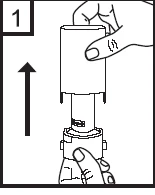
- Hold the base of the inhaler steady in an upright position and rotate the mouthpiece in the direction indicated by the arrow.
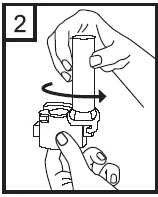
- Place the capsule into the designated compartment of the inhaler. It is important that the capsule be removed from the blister pack only immediately before administration.
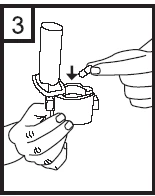
- Turn the mouthpiece back to the closed position.
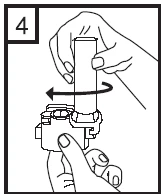
- Hold the inhaler in an upright position, press the buttons once. This will pierce the capsule. Release the buttons.
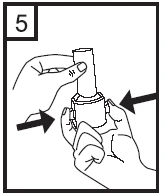
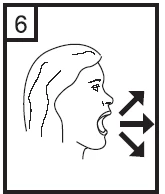
- Breathe out fully.
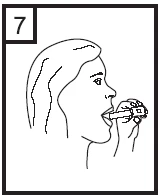
- Place the mouthpiece in your mouth and tilt your head slightly backward. Close your lips tightly around the inhaler and inhale rapidly and as deeply as possible.
-
Hold your breath as long as possible while removing the inhaler from your mouth. Then breathe normally. Open the inhaler and check whether any powder remains in the capsule: if so, repeat steps 6 to 8.
-
After use, remove the empty capsule and close the inhaler.
Cleaning the inhaler:
To remove any residual powder, it is recommended to clean the inhaler and the capsule compartment with a dry cloth. A soft brush may also be used for this purpose.
If you take more KUROVENT 12 mcg than you should:
Contact your doctor immediately or go to the nearest hospital if symptoms occur such as:
nausea, vomiting, tachycardia, tremor, headache, drowsiness, palpitations, ventricular arrhythmias,
metabolic acidosis, hypotension, hypokalaemia, hyperglycaemia, and QTc interval prolongation.
KUROVENT 12 mcg may cause ischaemic heart disease.
If you forget to take KUROVENT 12 mcg:
Do not take a double dose to make up for missed doses.
4. POSSIBLE ADVERSE REACTIONS
Like all medicines, KUROVENT 12 mcg can cause adverse reactions:
- Common: headache, palpitations, and tremor.
- Uncommon: restlessness, dizziness, anxiety, nervousness, insomnia, tachycardia (increased heart rate), worsened bronchospasm (bronchial constriction causing breathing difficulty), muscle cramps, myalgia (muscle pain), sleep disturbances, restlessness.
- Rare: hypersensitivity reactions (severe hypotension, angioedema i.e. swelling of extremities, abdomen, throat and other organs, bronchospasm i.e. bronchial constriction causing breathing difficulty, exanthema i.e. skin rash, urticaria and pruritus), nausea, taste disturbances, oropharyngeal irritation (throat irritation), cardiac arrhythmias (atrial fibrillation usually associated with palpitations, fainting and chest pain, supraventricular tachycardia i.e. accelerated heart rhythm, extrasystoles i.e. irregular heartbeat), hypokalaemia.
- Very rare: peripheral oedema (swelling of feet, hands and ankles), hyperglycaemia (increased blood glucose levels which may cause thirst, frequent urination and fatigue), angina pectoris (intense pain due to chest tightness or pressure sensation), QTc interval prolongation (abnormal heart rhythm), fluctuating blood pressure, paradoxical bronchospasm (airway constriction after treatment with the bronchodilator), hyperkalaemia.
An increase in blood levels of insulin, free fatty acids, and ketone bodies may also occur.
Some of these adverse effects may resolve spontaneously; inform your doctor if they persist or are particularly bothersome.
If you notice any adverse reaction not listed in this leaflet, inform your doctor or pharmacist.
5. HOW TO STORE KUROVENT 12 mcg INHALATION POWDER,
HARD CAPSULES
Do not store above 25°C.
Keep in the original packaging.
Do not use KUROVENT 12 mcg after the expiry date stated on the packaging.
Keep out of the reach and sight of children.
Supply only upon presentation of a medical prescription.
6. OTHER INFORMATION
Marketing Authorization Holder in Italy:
Italchimici SpA
Via Pontina 5, Km 29
00040 Pomezia (Roma)
Tel: 06-916391
November 2012