Krenosin
Italy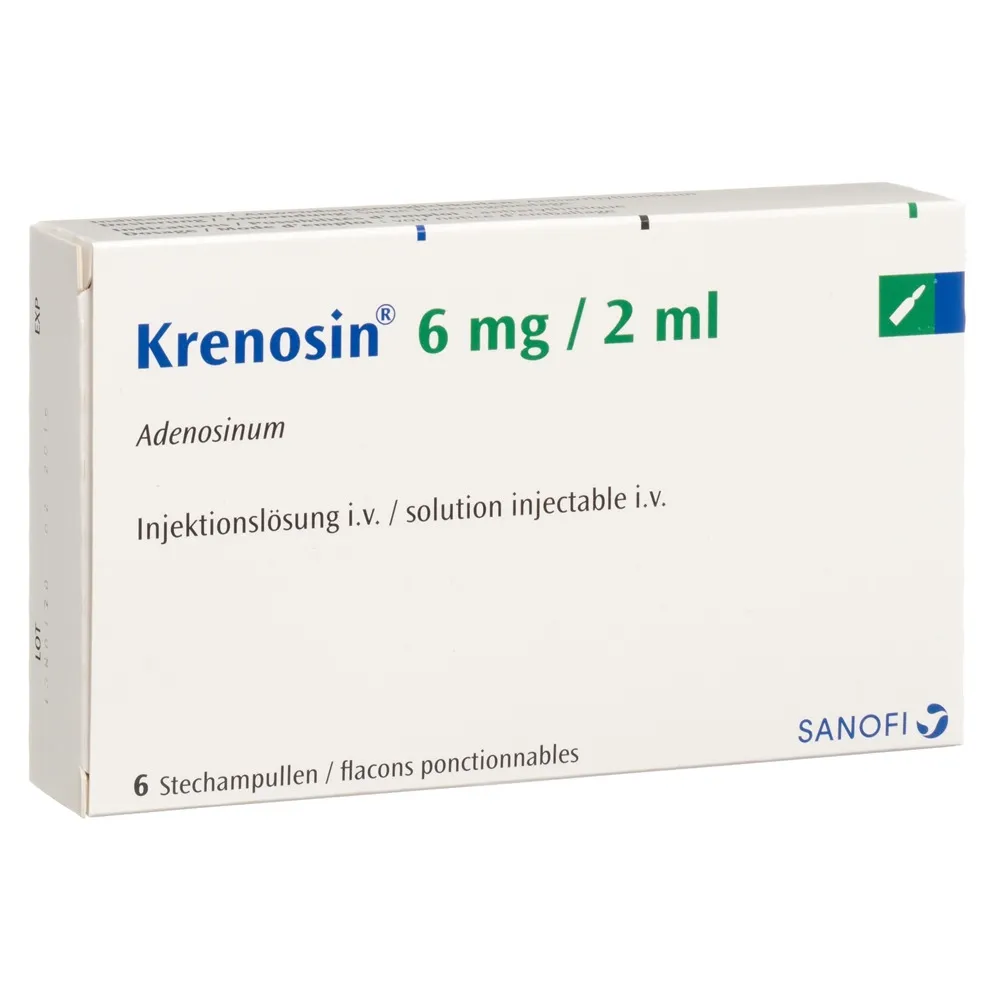
Table of Contents
- Package leaflet: Information for the patient
- Krenosin 6 mg/2 ml injection solution for intravenous use
- 1. What Krenosin is and what it is used for
- 2. What you need to know before taking Krenosin
- 3. How to take Krenosin
- 4. Possible side effects
- 5. How to store Krenosin
- 6. Package contents and other information
Package leaflet: Information for the patient
Krenosin 6 mg/2 ml injection solution for intravenous use
adenosine
Please read all of this leaflet carefully before you start taking this medicine, as it contains
important information for you.
- Keep this leaflet. You may need to read it again.
- If you have any questions, ask your doctor, pharmacist, or nurse.
- This medicine has been prescribed for you only. Do not give it to others, even if their symptoms are the same as yours, as it could be harmful.
- If you experience any adverse reactions, including those not listed in this leaflet, contact your doctor, pharmacist, or nurse. See section 4.
Contents of this leaflet:
- What Krenosin is and what it is used for
- What you need to know before taking Krenosin
- How to take Krenosin
- Possible side effects
- How to store Krenosin
- Contents of the pack and other information
1. What Krenosin is and what it is used for
Krenosin contains adenosine, which works by regulating the heartbeat.
Adults
Krenosin is used to treat disturbances in heart rhythm where the heart beats very rapidly (paroxysmal supraventricular tachycardias, including those associated with accessory conduction pathways such as Wolff-Parkinson-White syndrome).
Children and adolescents
Krenosin is used to regulate the heartbeat when a child has a heart rhythm disorder called "paroxysmal supraventricular tachycardia" (PSVT).
2. What you need to know before taking Krenosin
Do not take Krenosin
- if you are allergic to the active substance or to any of the other ingredients of this medicine (listed in section 6);
- if you have heart rhythm disorders (second- or third-degree atrioventricular block, sick sinus syndrome) unless you have a properly functioning pacemaker;
- if you have lung problems with breathing difficulties (chronic obstructive pulmonary disease with evidence of bronchospasm, such as bronchial asthma);
- if you have a heart condition called "long QT syndrome";
- if you have very low blood pressure (severe hypotension);
- if your heart is not functioning adequately (uncompensated heart failure);
- if you are taking the medicine dipyridamole (a medicine used to thin the blood).
Warnings and precautions
Talk to your doctor, pharmacist, or nurse before taking Krenosin.
Krenosin may cause a significant drop in blood pressure (relevant hypotension), and your doctor will take special precautions if:
- you have a narrowing (stenosis) of a blood vessel supplying the heart called the left main coronary artery;
- you have reduced blood volume (hypovolemia) that has not been corrected;
- you have a narrowing of a heart valve (valvular stenosis);
- you have an abnormal connection between different parts of the heart (left-to-right shunt);
- you have an infection of the membrane surrounding the heart (pericarditis) or fluid accumulation between the heart and the surrounding membrane (pericardial effusion);
- you have nerve damage affecting blood pressure regulation, heart rate, digestion, urine production, and other body functions (autonomic dysfunction);
- you have narrowing of the neck blood vessels (carotid stenosis) leading to insufficient blood supply to the brain (cerebrovascular insufficiency);
- you have recently had a heart attack;
- you have heart problems (severe heart failure or minor conduction defects such as, for example, first-degree atrioventricular block, bundle branch block), as these conditions may transiently worsen during treatment;
- you have an irregular heart rhythm (atrial fibrillation/flutter, especially if you have abnormal conduction through accessory pathways);
- you have recently undergone a heart transplant or have an abnormal heart rhythm (occult sino-atrial disease), as rare cases of severe slowing of the heart rate (bradycardia) have been reported, particularly in these conditions, sometimes requiring temporary pacemaker insertion. The presence of a markedly slowed heart rate (severe bradycardia) may indicate another underlying disease that could lead to further heart complications (torsades de pointes, especially in cases of QT interval prolongation);
- you have undergone a heart transplant less than one year ago, as your heart may be more sensitive to Krenosin;
- you have long-standing lung disease (chronic obstructive pulmonary disease), as Krenosin may worsen bronchial narrowing and increase breathing difficulties (bronchospasm).
Krenosin will be administered in a hospital setting by trained medical personnel equipped with resuscitation equipment, as transient, potentially life-threatening changes in heart rhythm may occur (see "How to take Krenosin").
Your doctor will immediately stop administration of Krenosin if severe chest pain (angina), markedly slow heart rate (severe bradycardia), severe drop in blood pressure (severe hypotension), potentially life-threatening respiratory failure, or cardiac arrest occur.
Krenosin may trigger seizures if you are predisposed.
Children and adolescents
In children and adolescents (under 18 years of age), Krenosin may cause a serious, unexpected disturbance in heart rhythm in children with a heart rhythm disorder called "Wolff-Parkinson-White (WPW) syndrome."
Other medicines and Krenosin
Inform your doctor, pharmacist, or nurse if you are taking, have recently taken, or might take any other medicines.
The effects of Krenosin may be influenced by, or may influence, the following medicines:
- dipyridamole (a medicine used to thin the blood), as it may enhance the effect of Krenosin. You must not be given Krenosin if you are taking dipyridamole. If Krenosin use is essential, your doctor may decide to stop dipyridamole 24 hours before administering Krenosin or to reduce the dose of Krenosin;
- aminophylline, theophylline, and other medicines belonging to the same class (medicines used to treat respiratory problems): administration of these medicines must be stopped at least 24 hours before starting Krenosin therapy;
- medicines used to treat certain heart conditions (such as cardiac conduction disorders), particularly those that affect heart rate such as digoxin and verapamil, or those that affect the strength of heart contractions such as digoxin, as their concomitant use with Krenosin may rarely lead to disturbances in heart rhythm (ventricular fibrillation).
Krenosin with food and drinks
Do not consume tea, coffee, chocolate, or cola-based drinks for at least 12 hours before receiving Krenosin.
Pregnancy and breastfeeding
If you are pregnant, think you may be pregnant, are planning a pregnancy, or are breastfeeding, consult your doctor or pharmacist before taking this medicine.
Pregnancy
Krenosin must not be administered during pregnancy unless your doctor considers it absolutely necessary.
Breastfeeding
Krenosin must not be administered if you are breastfeeding.
Driving and using machines
Krenosin has no effect on the ability to drive or operate machinery.
Krenosin contains sodium
This medicine contains less than 1 mmol (23 mg) of sodium per vial, i.e., essentially 'sodium-free'.
3. How to take Krenosin
Krenosin is a medicine intended for hospital use only, in hospitals equipped with monitoring and resuscitation equipment for the heart and lungs immediately available.
Adults and elderly
The medicine will be administered to you by medical and healthcare personnel specialized in the administration of Krenosin, at doses considered most appropriate for your condition.
Newborns and children
The doctor will decide whether it is necessary to administer this medicine to your child, at which doses (according to the child's weight), and whether multiple injections are required.
- Your child will be carefully monitored, including by electrocardiogram
- The medicine will be administered by a doctor or nurse through an injection into your child's vein
If you take more Krenosin than you should
If you have accidentally ingested/absorbed an excessive dose of Krenosin, inform your doctor immediately or go to the nearest hospital.
Rapid intravenous administration (known as bolus administration) of Krenosin may cause headache, flushing, breathing difficulties, low blood pressure, and changes in heart rhythm.
Excessive administration of Krenosin may lead to a severe drop in blood pressure (severe hypotension), reduced heart rate (bradycardia), and cessation of heartbeat (asystole).
If you forget to take Krenosin
Healthcare personnel will not administer a double dose to make up for the missed dose.
If you stop treatment with Krenosin
If you have any doubts about the use of this medicine, consult your doctor, pharmacist, or nurse.
4. Possible side effects
Like all medicines, this medicine can cause side effects, although not everyone gets them.
Side effects are usually mild, short-lived (generally less than 1 minute), and well tolerated. However, serious side effects may also occur.
Your doctor may give you certain medicines (methylxanthines such as intravenous aminophylline or theophylline) to stop persistent side effects.
The following side effects have been observed:
Very common (may affect more than 1 in 10 people)
- Slowing of the heartbeat (bradycardia),
- Changes in heartbeat (sinus pause, atrioventricular block, atrial extrasystoles, escape beats, disturbances in ventricular excitability such as ventricular extrasystoles, non-sustained ventricular tachycardia),
- Difficulty breathing (dyspnea) or urge to take a deep breath,
- Tightness, pain, and pressure in the chest,
- Flushing (reddening of the skin).
Common (may affect up to 1 in 10 people)
- Headache,
- Dizziness and mental confusion,
- Nausea,
- Burning sensation at the injection site,
- Anxiety.
Uncommon (may affect up to 1 in 100 people)
- Increased heart rate (sinus tachycardia), palpitations,
- Feeling of pressure in the head,
- Visual disturbances (blurred vision),
- Increased rate and depth of breathing (hyperventilation),
- Metallic taste,
- Heaviness in the upper limbs,
- Pain in arms, neck, and back,
- Sweating,
- General malaise, weakness, pain.
Rare (may affect up to 1 in 10,000 people)
- Severe slowing of the heartbeat (bradycardia not corrected by atropine and which may require temporary pacing),
- Heart rhythm disturbances (atrial fibrillation, ventricular excitability including torsades de pointes and ventricular fibrillation; see "Warnings and precautions"),
- Transient worsening of increased intracranial pressure that resolves spontaneously and rapidly,
- Constriction of the airways causing breathing difficulty (bronchospasm; see "Warnings and precautions"),
- Reactions at the injection site.
Frequency not known (frequency cannot be estimated from the available data)
- Low blood pressure, sometimes severe;
- Brain-related disorders, such as temporary impairment of blood circulation (transient ischemic attack), also due to the blood pressure-lowering effect of adenosine;
- Severe heart problems (acute myocardial infarction with ST-segment elevation), especially in patients with pre-existing severe coronary artery disease;
- Allergic reactions, including swelling of the face, hands and feet, lips, tongue, or throat (angioedema), skin redness (rash), sometimes with itching (urticaria);
- Cardiac arrest, sometimes fatal, especially in patients with other pre-existing heart diseases (e.g., ischemia; see "Warnings and precautions");
- Loss of consciousness, syncope;
- Seizures, especially if already predisposed (see "Warnings and precautions");
- Respiratory failure (see "Warnings and precautions"), respiratory arrest (apnea); sometimes associated with bronchial constriction, with fatal outcomes;
- Vomiting;
- Spasm of a coronary artery which may lead to a heart attack.
Reporting of side effects
If you experience any side effect, including any not listed in this leaflet, talk to your doctor, pharmacist, or nurse. You can also report side effects directly via the national reporting system at
http://www.aifa.gov.it/content/segnalazioni-reazioni-avverse .
By reporting side effects, you can help provide more information on the safety of this medicine.
5. How to store Krenosin
This medicinal product does not require any special storage conditions.
Do not refrigerate.
Do not use the remaining contents of a partially used vial.
Keep this medicinal product out of the sight and reach of children.
Do not use this medicinal product after the expiry date which is stated on the packaging after
"Exp".
The expiry date refers to the last day of that month.
Do not use if there are obvious signs of deterioration.
Do not dispose of any medicinal product via wastewater or household waste. Ask your pharmacist
how to dispose of medicines no longer required. This will help protect the environment.
6. Package contents and other information
What Krenosin contains
- The active substance is adenosine: 1 vial contains 6 mg of adenosine.
- Other components are: sodium chloride and water for injections. Each vial contains 18 mg of sodium chloride (9 mg/ml).
Description of the appearance of Krenosin and contents of the pack
Krenosin 6 mg/2 ml solution for injection for intravenous use – 6 vials
Marketing Authorization Holder and Manufacturer
Marketing Authorization Holder
Sanofi S.r.l
Viale L. Bodio, 37/B
Milan, Italy
Manufacturer
FAMAR HEALTH CARE SERVICES MADRID S.A.U.
Avda. Leganés, 62
28923 Alcorcón - Madrid (Spain)
CENEXI HSC
2, Rue Louis Pasteur
14200 Hérouville-Saint-Clair (France)
The following information is intended exclusively for physicians or healthcare professionals:
How to take Krenosin
Adults:
Initial dose: 3 mg administered intravenously as a rapid bolus (over 2 seconds).
Second dose: if the first administration does not suppress supraventricular tachycardia within 1 or 2 minutes, a further dose of 6 mg should be administered as a rapid intravenous bolus.
Third dose: if the second administration does not suppress supraventricular tachycardia within 1 or 2 minutes, 12 mg should be administered as a rapid intravenous bolus.
Additional or higher doses are not recommended.
Children and adolescents:
Cardiorespiratory resuscitation equipment must be available for immediate use during administration of Krenosin, if needed.
Krenosin requires continuous ECG monitoring and recording during administration.
The recommended dosage for the treatment of paroxysmal supraventricular tachycardia in the pediatric population is as follows:
First bolus: 0.1 mg/kg body weight (maximum dose of 6 mg).
Increments: 0.1 mg/kg body weight, repeated up to the suppression of supraventricular tachycardia. The maximum dose is 12 mg.
No controlled pediatric studies have been conducted.
Elderly:
Dosages are the same as those recommended for adults.
Method of administration
Krenosin must be administered as a rapid intravenous bolus injection into a vein or via an infusion line.
If administered through an infusion line, the line should be as proximal as possible and must be followed immediately by a rapid flush with physiological saline solution.
If administered through a peripheral vein, a large-bore cannula should be used.
If you take more Krenosin than you should
Adenosine has a very short half-life (less than 10 seconds).
Due to the pharmacological activity of adenosine, the well-known symptoms associated with bolus administration (headache, flushing, dyspnea, hypotension, arrhythmia, AV block) may be intensified.
Overdose may cause severe hypotension, bradycardia, and asystole.
Adverse events are generally transient (following intravenous administration, all symptoms resolve within 1 or 2 minutes after completion).
Treatment of any prolonged adverse event should be individualized and symptomatic.
Methylxanthines, such as theophylline and aminophylline, act as adenosine receptor antagonists and may be used to counteract any persistent or bothersome effects.
In cases of prolonged asystole, intracavitary pacemaker stimulation is required.
Possible side effects
Adenosine-induced bradycardia may predispose to ventricular excitability disturbances, including ventricular fibrillation and torsades de pointes, which justify the recommendations in the section "How to take Krenosin".
Rare cases of ventricular fibrillation have been reported, sometimes requiring resuscitation or resulting in fatal outcomes. In many of these cases, concomitant use of digoxin was present, and less frequently, digoxin and verapamil (see section “Other medicines and Krenosin”).
The above-mentioned cardiac arrhythmias occur at the time of conversion to sinus rhythm.