Iopidine
Italy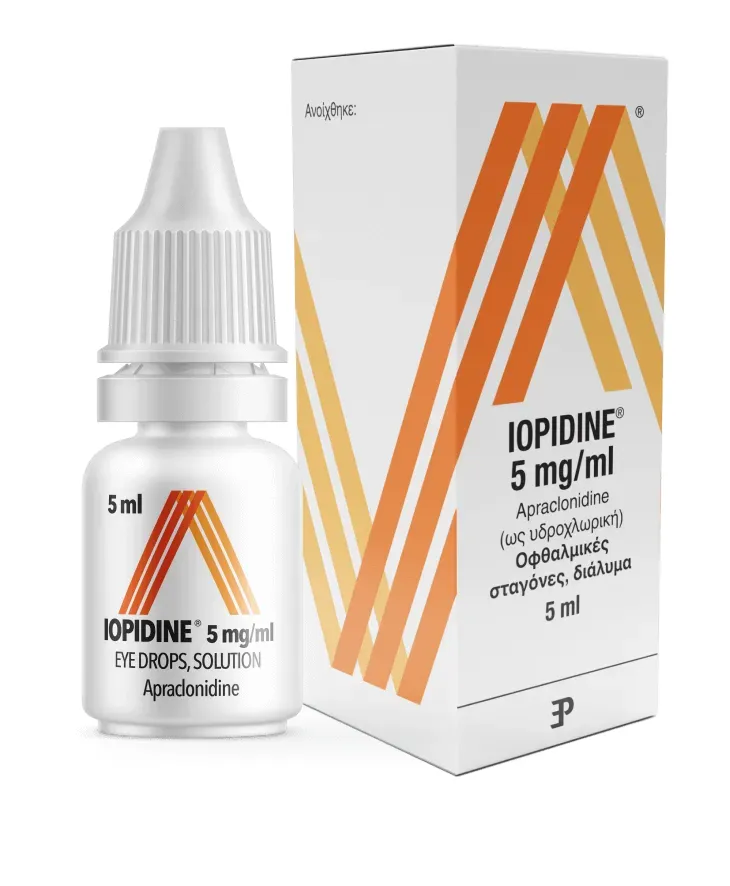
Table of Contents
Package leaflet: Information for the user
IOPIDINE 5 mg/ml eye drops, solution
Apraclonidine (as hydrochloride)
Please read all of this leaflet carefully before you start using this medicine because it contains important information for you.
- Keep this leaflet. You may need to read it again.
- If you have any questions, ask your doctor or pharmacist.
- This medicine has been prescribed for you only. Do not give it to other people, even if their symptoms are the same as yours, as it may be harmful.
- If you experience any side effects, including those not listed in this leaflet, tell your doctor or pharmacist. See section 4.
Contents of this leaflet:
1. What IOPIDINE is and what it is used for
2. What you need to know before using IOPIDINE
3. How to use IOPIDINE
4. Possible side effects
5. How to store IOPIDINE
6. Contents of the pack and other information
1. What IOPIDINE is and what it is used for
IOPIDINE 5 mg/ml eye drops, solution contains apraclonidine (as hydrochloride) as the active substance.
IOPIDINE belongs to a group of medicines known as alpha agonists.
It is used in the treatment of chronic glaucoma in patients who are already taking other medicines for this condition.
In these patients, IOPIDINE helps reduce intraocular pressure and may delay the need for surgery to relieve eye pressure.
2. What you should know before using IOPIDINE
Do not use IOPIDINE
if you have a history of severe or unstable heart disease or circulatory problems.
if you are allergic to apraclonidine, clonidine, or any of the other ingredients of this
medicinal product listed in section 6.
if you are currently taking antidepressants belonging to the class of monoamine oxidase inhibitors or tricyclic antidepressants.
if you are currently taking, orally or by injection, medicines belonging to the sympathomimetic class.
in CHILDREN.
Ask your doctor for advice.
Warnings and precautions
Talk to your doctor or pharmacist before using IOPIDINE.
Take special care:
Use IOPIDINE only for instillation into the eye(s).
If used for a prolonged period, IOPIDINE may no longer be able to control intraocular pressure. Your doctor will examine you regularly during treatment with IOPIDINE to ensure that the eye drops are still effective.
Since IOPIDINE reduces intraocular pressure, you must have regular check-ups to ensure that the pressure in your eyes remains under control.
If you have a history of, or are taking medication for any of the following conditions:
Any heart disease (including angina, heart attack, or heart failure)
High blood pressure or other circulatory problems (including stroke, Raynaud’s disease, and fainting)
Kidney or liver disorders
Depression
Parkinson’s disease
Diabetes or hypoglycemia. IOPIDINE may mask the signs and symptoms of acute hypoglycemia, such as tachycardia or tremors.
If you are due to undergo surgery.
If none of these situations apply to you, you may continue using IOPIDINE, but you must discuss this with your doctor first.
IOPIDINE with food, drinks and alcohol
You must not drink alcohol during treatment with IOPIDINE, as it may enhance its effects.
Other medicines and IOPIDINE
Tell your doctor or pharmacist if you are taking, have recently taken, or might take any other medicines, including those not requiring a prescription.
IOPIDINE must not be used if you are taking antidepressants belonging to the class of monoamine oxidase inhibitors or tricyclic antidepressants. Furthermore, do not use IOPIDINE if you are taking, orally or by injection, medicines belonging to the sympathomimetic class.
IOPIDINE may increase the effects of certain medicines used to treat depression, asthma, hypertension, heart medications containing digoxin or digitoxin, certain forms of mental illness, and Parkinson’s disease; it may also interact with certain painkillers, sedatives, anesthetics, tricyclic antidepressants, phenothiazines, cough and cold remedies, glaucoma medications such as timolol or brimonidine, and eye drops used to whiten the eyes.
Pregnancy and breastfeeding
If you are pregnant, think you might be pregnant, planning to become pregnant, or are breastfeeding, consult your doctor or pharmacist before using this medicinal product.
IOPIDINE should not be used during pregnancy or breastfeeding.
Driving and using machines
This type of medicine may cause drowsiness and dizziness. If this occurs, do not drive or operate machinery.
Important information about contact lens use
IOPIDINE contains benzalkonium chloride
This medicinal product contains 0.1 mg of benzalkonium chloride per ml, equivalent to a concentration of 0.01%.
Benzalkonium chloride may be absorbed by soft contact lenses and may cause discoloration. Remove your contact lenses before using this medicine and wait 15 minutes before reinserting them.
Benzalkonium chloride may also cause eye irritation, particularly if you have dry eye or corneal disorders (affecting the transparent outer layer of the eye). If you experience any abnormal sensation, burning, or pain in the eye after using this medicine, speak with your doctor.
3. How to use IOPIDINE
Recommended dose
The recommended dose is 1 drop in the eye or eyes, 3 times daily.
1 2 3
Remove the loose ring on the cap when opening the bottle for the first time.
Always use IOPIDINE exactly as directed by your doctor. If you have any doubts, consult your doctor
or pharmacist.
How to use IOPIDINE
Wash your hands before starting.
Unscrew the bottle cap.
Turn the bottle upside down and hold it between your thumb and fingers.
Tilt your head backward.
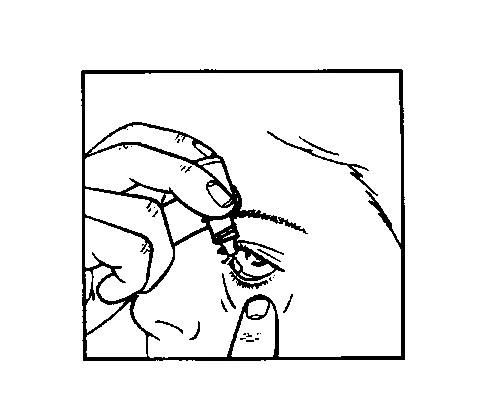
Pull down the lower eyelid with one finger to form a "pocket" between the eyelid and the eye.
The drop should be instilled at this point (figure 1).
Bring the dropper close to the eye. Use a mirror if it helps.
Do not touch the eye, eyelid, surrounding areas, or any other surfaces with the dropper. This could
contaminate the eye drops.
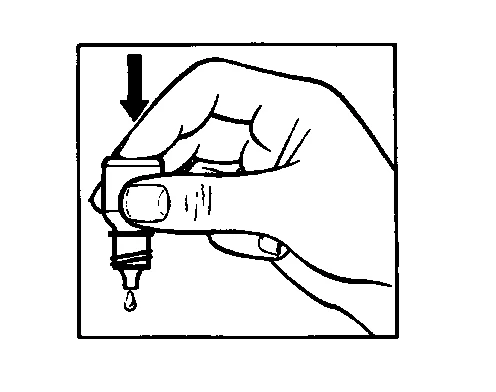
Gently squeeze the base of the bottle to release one drop at a time (figure 2).
Do not squeeze the bottle forcefully; a slight pressure on the bottom is sufficient.
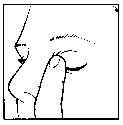
After applying IOPIDINE, press gently with a finger at the inner corner of the eye, near the nose (figure
3). This helps prevent IOPIDINE from spreading into the rest of the body.
If you need to apply the eye drops to both eyes, repeat the steps for the other eye. Immediately
after use, close the bottle tightly.
If a drop does not enter the eye, repeat the procedure.
If IOPIDINE is swallowed, contact your doctor immediately.
If you forget to use IOPIDINE
Continue with the next dose as scheduled. However, if the time for the next dose is approaching, you may skip the missed dose and resume your regular dosing schedule.
Do not take a double dose to make up for a forgotten dose.
If you use more IOPIDINE than you should
Rinse thoroughly with lukewarm water. Do not instill further drops until the time of your next scheduled dose.
In case of accidental ingestion, overdose symptoms may include low blood pressure, drowsiness, slow heart rate, hypoventilation (reduced rate and depth of breathing), and seizures.
If you are using other eye drops or ophthalmic ointments
Wait at least 5 minutes between applications of different medications. It is recommended to administer ophthalmic ointments last.
If you have any doubts about how to use this medicine, consult your doctor or pharmacist.
4. Possible side effects
Like all medicines, this medicine can cause side effects, although not everyone experiences them.
IOPIDINE may trigger allergic reactions. If one or more of the following ocular symptoms occur:
- redness - itching - discomfort - excessive tearing - unusual sensation - swelling of the eye and eyelid, consult your doctor immediately.
If your vision worsens immediately after applying IOPIDINE, stop using it and consult your doctor immediately.
The following effects may occur in one or both eyes, either individually or in combination:
Very common (may affect more than 1 in 10 people): increased redness, itching, inflammation.
Common (may affect up to 1 in 10 people): discomfort, increased tear production, eyelid swelling, sensation of sand in the eyes, dry eye, crusting on the eyelid.
Uncommon (may affect up to 1 in 100 people): swelling under the eyelids, eye swelling, abnormal vision, pain, inflammation and irritation of the eyes or eyelids, damage to the corneal surface (the front part of the eye), light sensitivity, redness of the eyelid, contraction or elevation of the eyelids, increased pupil size, reduced vision, blurred vision, drooping of the eyelid, ocular discharge or whitening.
Effects may also occur in other parts of the body, including:
Common (may affect up to 1 in 10 people): dry mouth, nasal inflammation, dermatitis, dry nasal mucosa, weakness, headache, altered taste.
Uncommon (may affect up to 1 in 100 people): chest pain, swelling of the hands, feet or extremities, irregular heartbeat, constipation, nausea, feeling of fatigue, sore throat, runny nose, muscle pain, coordination abnormalities, drowsiness, dizziness, tingling sensation, nervousness, depression, difficulty sleeping, shortness of breath or breathing difficulties, unusual sense of smell, facial swelling, irritability, dilation of blood vessels.
Reporting of side effects
If you experience any side effect, including those not listed in this leaflet, talk to your doctor or pharmacist. You can also report side effects directly via the national reporting system at the following website: https://www.aifa.gov.it/content/segnalazioni-reazioni-avverse.
By reporting side effects, you can help provide more information on the safety of this medicine.
5. How to store IOPIDINE
Keep this medicine out of the sight and reach of children.
Do not refrigerate or freeze. Do not store above 25°C.
Keep the bottle tightly closed in its original packaging.
Do not use this medicine after the expiry date stated on the bottle and packaging
after Exp. The expiry date refers to the last day of the month indicated.
Do not use the eye drops 4 weeks after first opening the bottle, to avoid the risk of infection.
Do not dispose of any medicine via wastewater or household waste. Ask your pharmacist
how to dispose of medicines no longer required. This will help protect the environment.
6. Package contents and other information
What IOPIDINE contains
The active substance is apraclonidine 5 mg/ml (as hydrochloride).
The other components are sodium chloride, sodium acetate trihydrate, benzalkonium chloride, hydrochloric acid and/or sodium hydroxide (to adjust pH), and purified water.
Description of the appearance of IOPIDINE and contents of the pack
IOPIDINE is a clear, colourless to pale yellow solution, supplied in a pack containing one plastic bottle of 5 ml or 10 ml with a screw cap.
Marketing Authorisation Holder and Manufacturer:
Marketing Authorisation Holder
Essential Pharma Limited,
Vision Exchange Building
Triq it-Territorjals, Zone 1,
Central Business District,
Birkirkara, CBD 1070,
Malta
Manufacturer
SA Alcon-Couvreur NV
Rijksweg 14, B-2870 Puurs, Belgium.