Insulin aspart Sanofi
Italy
Table of Contents
- Package leaflet: Information for the user
- Insulina aspart Sanofi 100 units/ml solution for injection in vial
- 1. What Insulina aspart Sanofi is and what it is used for
- 2. What you need to know before using Insulina aspart Sanofi
- 3. How to use Insulina aspart Sanofi
- 4. Possible side effects
- 5. How to store Insulina aspart Sanofi
- 6. Package contents and other information
- Package leaflet: information for the user
- Insulina aspart Sanofi 100 units/ml solution for injection in cartridge
- 1. What Insulina aspart Sanofi is and what it is used for
- 2. What you need to know before using Insulina aspart Sanofi
- 3. How to use Insulina aspart Sanofi
- 4. Possible side effects
- 5. How to store Insulina aspart Sanofi
- 6. Package contents and other information
- Patient Information Leaflet: Information for the user
- Insulina aspart Sanofi 100 units/ml, solution for injection in pre-filled pen
- 1. What Insulina aspart Sanofi is and what it is used for
- 2. What you need to know before using Insulina aspart Sanofi
- 3. How to use Insulina aspart Sanofi
- 4. Possible side effects
- 5. How to store Insulina aspart Sanofi
- 6. Package contents and other information
- INSTRUCTIONS FOR USE
Package leaflet: Information for the user
Insulina aspart Sanofi 100 units/ml solution for injection in vial
insulin aspart
This medicinal product is subject to additional monitoring. This will allow rapid identification of new safety information. You can help by reporting any side effects you experience while taking this medicine. See the end of section 4 for information on how to report side effects.
Please read all of this leaflet carefully before you start using this medicine, as it contains important information for you.
- Keep this leaflet. You may need to read it again.
- If you have any questions, ask your doctor, pharmacist or nurse.
- This medicine has been prescribed for you only. Do not give it to other people, even if their symptoms are the same as yours, as it may be harmful to them.
- If you experience any side effect, including those not listed in this leaflet, tell your doctor, pharmacist or nurse. See section 4.
Contents of this leaflet
- What Insulina aspart Sanofi is and what it is used for
- What you need to know before using Insulina aspart Sanofi
- How to use Insulina aspart Sanofi
- Possible side effects
- How to store Insulina aspart Sanofi
- Contents of the pack and other information
1. What Insulina aspart Sanofi is and what it is used for
Insulina aspart Sanofi is a modern, fast-acting insulin (an insulin analogue).
Modern insulins are improved versions of human insulin.
Insulina aspart Sanofi is used to lower high blood sugar levels in adults, adolescents, and children from the age of 1 year onwards who have diabetes mellitus (diabetes). Diabetes is a condition in which the body does not produce enough insulin to control blood sugar levels. Treatment with insulin aspart helps prevent complications of diabetes.
Insulin aspart begins to lower blood sugar levels 10–20 minutes after injection, reaches its maximum effect between 1 and 3 hours after injection, and its effect lasts for 3–5 hours. Due to this short duration of action, insulin aspart is usually administered in combination with intermediate- or long-acting insulin preparations. Additionally, Insulina aspart Sanofi can be used for continuous subcutaneous infusion via insulin pumps.
2. What you need to know before using Insulina aspart Sanofi
Do not use Insulina aspart Sanofi
- If you are allergic to insulin aspart or to any of the other ingredients of this medicine (listed in section 6 “Contents of the pack and other information”).
- If you experience warning signs of hypoglycaemia (low blood sugar levels) (see section 4 “Summary of serious and very common side effects”).
- If the protective cap is loose or missing. Each vial is equipped with an aluminium protective cap with a tamper-evident seal. If it is not in perfect condition when you receive the vial, return it to your supplier.
- If it has not been stored correctly or has been frozen (see section 5 “How to store Insulina aspart Sanofi”).
- If the insulin does not appear clear and colourless.
Do not use Insulina aspart Sanofi if any of these situations apply. Speak to your doctor, nurse or pharmacist for advice.
Before using Insulina aspart Sanofi
- Check the label to make sure you are using the correct type of insulin.
- Remove the protective cap.
- Always use a new needle for each injection to prevent contamination.
- Needles and syringes must not be shared with others.
Warnings and precautions
Record the brand name (“Insulina aspart Sanofi”) and the batch number (shown on the outer packaging and on the label of each vial) of the medicine you are using, and provide this information if you need to report any side effects.
Skin changes at the injection site
The injection site should be rotated to prevent skin changes such as the appearance of lumps under the skin. Insulin may not work as well if you inject into an area with lumps (see “How to use Insulina aspart Sanofi”). If you are currently injecting into an area with lumps, consult your doctor before starting to inject in another area. Your doctor may ask you to monitor your blood glucose more closely and may adjust your insulin dose or that of your other antidiabetic medicines.
Certain conditions and activities may affect your insulin requirements. Consult your doctor:
- If you have kidney, liver, adrenal, pituitary or thyroid gland disorders.
- If you increase your physical activity or wish to change your usual diet, as this may affect your blood sugar levels.
- If you become ill, continue your insulin therapy and consult your doctor.
- If you plan to travel abroad; travelling across time zones may alter your insulin requirements and injection times.
Children and adolescents
Do not administer this medicine to children under 1 year of age, as no clinical studies have been conducted in children under 1 year of age.
Other medicines and Insulina aspart Sanofi
Inform your doctor, nurse or pharmacist if you are taking, have recently taken or might take any other medicines.
Some medicines affect blood sugar levels and may alter your insulin requirements. Listed below are the most common medicines that may affect insulin treatment.
Your blood sugar level may decrease (hypoglycaemia) if you take:
- Other medicines for the treatment of diabetes
- Monoamine oxidase inhibitors (MAOIs) (used to treat depression)
- Beta-blockers (used to treat high blood pressure)
- Angiotensin-converting enzyme (ACE) inhibitors (used to treat certain heart conditions or high blood pressure)
- Salicylates (used to relieve pain and reduce fever)
- Anabolic steroids (such as testosterone)
- Sulfonamides (used to treat infections)
Your blood sugar level may increase (hyperglycaemia) if you take:
- Oral contraceptives (birth control pills)
- Thiazides (used to treat high blood pressure or fluid retention)
- Glucocorticoids (such as “cortisone” used to treat inflammation)
- Thyroid hormones (used to treat thyroid gland disorders)
- Sympathomimetics (such as epinephrine [adrenaline], salbutamol, terbutaline used to treat asthma)
- Growth hormone (a medicine used to stimulate skeletal and somatic growth and which significantly affects the body’s metabolic processes)
- Danazol (a medicine that affects ovulation)
Octreotide and lanreotide (used to treat acromegaly, a rare hormonal disorder usually occurring in middle-aged adults, caused by excessive production of growth hormone by the pituitary gland) may increase or decrease blood sugar levels.
Beta-blockers (used to treat high blood pressure) may weaken or completely suppress the warning symptoms that help you recognize low blood sugar levels.
Pioglitazone (tablets used to treat type 2 diabetes)
Some patients with long-standing type 2 diabetes and heart disease or a history of stroke who were treated with pioglitazone and insulin have developed heart failure. Inform your doctor immediately if you experience signs of heart failure, such as unusual shortness of breath, rapid weight gain, or localized swelling (oedema).
If you are taking any of the medicines listed above, inform your doctor, nurse or pharmacist.
Insulina aspart and alcohol
If you consume alcohol, your insulin requirements may change, as blood sugar levels may increase or decrease. Careful monitoring is recommended.
Pregnancy and breastfeeding
If you are pregnant, think you may be pregnant or are planning to become pregnant, ask your doctor for advice before taking this medicine. Insulina aspart may be used during pregnancy. Insulin requirements may need adjustment during pregnancy and after delivery. It is important to carefully control diabetes, especially to prevent episodes of hypoglycaemia, for the health of your baby.
There are no restrictions on the use of insulin aspart during breastfeeding.
Consult your doctor, nurse or pharmacist before taking this medicine during pregnancy or breastfeeding.
Driving and using machines
Contact your doctor regarding the suitability of driving or using machines:
- if you experience frequent episodes of hypoglycaemia
- if you have difficulty recognizing the warning signs of hypoglycaemia
If your blood glucose is low or high, your ability to concentrate and react may be impaired, and consequently your ability to drive or use machines. Be aware that you may be putting yourself or others at risk.
Insulina aspart Sanofi acts rapidly; therefore, if hypoglycaemia occurs, it may appear earlier after injection compared to soluble human insulin.
Insulina aspart Sanofi contains sodium
This medicine contains less than 1 mmol of sodium (23 mg) per dose, i.e. is essentially “sodium-free”.
3. How to use Insulina aspart Sanofi
Dose and when to take insulin
Always use insulin exactly as prescribed by your doctor and follow his or her instructions carefully. If you
are unsure, consult your doctor, nurse, or pharmacist.
Insulina aspart is generally taken immediately before meals. Eat a meal or snack within 10 minutes after
injection to avoid low blood sugar levels. If necessary, insulina aspart may be administered immediately
after a meal (see “How and where to inject” below).
Do not change your insulin unless your doctor tells you to do so. If your doctor changes the type or
brand of insulin you are using, a dose adjustment may be required by your doctor.
Use in children and adolescents
Insulina aspart may be used in adolescents and children aged 1 year and older instead of soluble human
insulin when a rapid onset of action is preferred. For example, when it is difficult to estimate the dose
for a child in relation to meals.
Use in specific patient groups
If you have reduced kidney or liver function, or if you are over 65 years of age, it is important to monitor
your blood sugar levels regularly and discuss insulin dose adjustments with your doctor.
How to use and where to inject
Insulina aspart Sanofi is for subcutaneous injection (under the skin) or for continuous subcutaneous
infusion using insulin pumps. Administration via insulin pumps requires complete training by a healthcare
professional. Never inject directly into a vein (intravenous route) or into muscle (intramuscular route). If
necessary, Insulina aspart Sanofi may be administered intravenously, but this must be performed only
by a doctor or other healthcare professional.
With each injection, rotate the injection site within the particular area of skin you usually use. This may
reduce the risk of developing lumps or skin depressions (see section 4 “Possible side effects”). The best
areas for self-injection are: the front of the waist (abdomen), the upper arm, or the front of the thigh.
Insulin will act more quickly if injected into the front of the waist (abdomen). Always check your blood
glucose levels regularly.
How to handle Insulina aspart Sanofi in vial
- Draw into the syringe the same amount of air as the dose of insulin you intend to inject. Inject this air into the vial.
- Invert the vial and syringe and draw the correct dose of insulin into the syringe. Remove the needle from the vial. Then expel air from the syringe and check that the dose is correct.
How to inject Insulina aspart Sanofi
- Inject the insulin under the skin. Use the injection technique recommended by your doctor or nurse.
- Keep the needle under the skin for at least 6 seconds to ensure that all the insulin has been injected.
- After each injection, dispose of the needle.
Use in insulin pumps
Insulina aspart Sanofi must never be mixed with other insulins when used with insulin pumps.
Follow your doctor’s instructions and recommendations regarding the use of Insulina aspart Sanofi in
an insulin pump. Before using Insulina aspart Sanofi in an insulin pump, you must have received thorough
instructions on its use and information on any actions to take in case of illness, blood sugar levels too high
or too low, or insulin pump malfunction.
- Before inserting the needle, wash your hands and the skin at the insertion site thoroughly with water and soap to prevent possible infections at the infusion site.
- When filling a new reservoir, ensure that no large air bubbles remain in the syringe or tubing.
- The infusion set (tubing and needle) must be changed according to the instructions provided in the product information supplied with the infusion set.
To obtain the benefit of insulin infusion and to detect possible malfunctions of the insulin pump, regular
monitoring of blood sugar levels is recommended.
What to do in case of insulin pump malfunction
You must always have an alternative method available for subcutaneous insulin injection in case of insulin
pump malfunction.
If you use more insulin than you should
If you use too much insulin, your blood sugar level will drop too low (hypoglycaemia) (See “Summary of
serious and very common side effects” in section 4).
If you forget to use insulin
If you forget to use insulin, your blood sugar level may become too high (hyperglycaemia) (See “Effects
of diabetes” in section 4).
If you stop using insulin
Do not stop using insulin without first talking to your doctor, who will advise you on how to proceed.
Stopping treatment may cause high blood sugar levels (severe hyperglycaemia) and ketoacidosis (See
“Effects of diabetes” in section 4).
If you have any further questions about the use of this medicine, ask your doctor, nurse, or pharmacist.
4. Possible side effects
Like all medicines, this medicine can cause side effects, although not everybody gets them.
Summary of serious and very common side effects
Low blood sugar level (hypoglycaemia) is a very common side effect. It may occur in more than 1 in 10 people.
You may experience low blood sugar if:
- You inject too much insulin.
- You eat too little or miss meals.
- You are more physically active than usual.
- You consume alcohol (see “insulin aspart with alcohol” in section 2).
Signs of low blood sugar: Cold sweating; cold, pale skin; headache; rapid heartbeat; feeling unwell; intense hunger; temporary visual disturbances; drowsiness; unusual tiredness and weakness; nervousness or trembling; anxiety; confusion; difficulty concentrating.
Severe hypoglycaemia can lead to loss of consciousness. If prolonged severe hypoglycaemia is not treated, it may cause brain damage (temporary or permanent) and may even lead to death. Recovery of consciousness may be faster with an injection of the hormone glucagon given by someone who knows how to use it. If you are given glucagon, you will need glucose or a sugary snack as soon as you regain consciousness. If you do not respond to glucagon treatment, you must be treated in hospital.
What to do if your blood sugar level is low:
- If your blood sugar is low, eat sugar cubes or another sugary snack (e.g. sweets, biscuits, fruit juice). Check your blood sugar if possible, then rest. Always carry sugar cubes or sugary snacks with you to use if needed.
- When symptoms of hypoglycaemia have disappeared or when blood glucose has stabilised, continue your insulin treatment as usual.
- If you become unconscious due to low blood sugar, if you needed a glucagon injection, or if you have frequent episodes of low blood sugar, speak with a doctor. You may need to adjust the timing of your insulin, food intake, or physical activity.
Inform people close to you that you have diabetes and explain the possible consequences, including the risk of fainting (becoming unconscious) due to hypoglycaemia. Explain that if you faint, they should turn you onto your side and seek immediate medical help. It is important that no food or drink is given, as this could cause choking.
Severe allergic reactions to Insulina aspart Sanofi or one of its components (called systemic allergic reaction) are a very rare but potentially life-threatening side effect. It may occur in up to 1 in 10,000 people.
Contact your doctor immediately:
- If signs of allergy spread to other parts of the body.
- If you suddenly feel unwell and: start sweating; feel sick (vomiting); have difficulty breathing; your heartbeat is rapid; you feel dizzy.
If you notice any of these signs, contact your doctor immediately.
Other side effects
Skin changes at the injection site: If you inject insulin too often in the same spot, the subcutaneous fatty tissue at the injection site may thin (lipoatrophy) or thicken (lipohypertrophy) (may affect up to 1 in 100 people). Lumps under the skin may also be caused by the build-up of a protein called amyloid (cutaneous amyloidosis; frequency is unknown). Insulin may not work as well as it should if injected into an area with lumps. Change your injection site with each injection to prevent these skin changes. If you notice a dent or thickening of the skin at the injection site, inform your doctor or nurse. These reactions may worsen or may alter insulin absorption if injected into such areas.
Uncommon side effects (may affect up to 1 in 100 people)
Signs of allergy: Local allergic reactions (pain, redness, urticaria, inflammation, bruising, swelling, and itching) at the injection site. These usually disappear within a few weeks of treatment. If they do not disappear or if they spread to other parts of the body, contact your doctor immediately (see also “Severe allergic reactions” above).
Visual disturbances: At the beginning of insulin treatment, visual disturbances may occur, but these are generally temporary.
Swollen joints: At the beginning of insulin treatment, fluid retention may cause swelling around the ankles and other joints. This is a temporary phenomenon that usually resolves quickly. If not, contact your doctor.
Diabetic retinopathy (an eye disorder related to diabetes that may lead to vision loss): If you have diabetic retinopathy and your blood glucose improves very rapidly, your retinopathy may worsen.
Talk to your doctor.
Rare side effects (may affect up to 1 in 1,000 people)
Painful neuropathy (pain due to nerve damage): If your blood sugar level improves very rapidly, you may experience nerve-related pain. This is known as acute painful neuropathy, which is usually transient.
Reporting of side effects
If you experience any side effect, including those not listed in this leaflet, talk to your doctor, pharmacist, or nurse. You can also report side effects directly via the national reporting system listed in Annex V. By reporting side effects, you can help provide more information on the safety of this medicine.
Effects of diabetes
High blood sugar level (hyperglycaemia)
You may have a high blood sugar level if:
- You have not injected enough insulin.
- You have forgotten to take insulin or have stopped taking it.
- You repeatedly take less insulin than needed.
- You have an infection or fever.
- You eat more than usual.
- You are less physically active than usual.
Warning signs of high blood sugar:
Warning signs develop gradually and include: passing more urine than normal, thirst, loss of appetite, feeling unwell (nausea or vomiting), drowsiness or tiredness; flushed skin; dry skin; dry mouth; fruity breath odour (acetone).
What to do if your blood sugar level is high:
- If you experience any of these symptoms: check your blood glucose, and if possible, check for the presence of ketones in your urine, and contact a doctor immediately.
- These may be symptoms of a very serious condition called diabetic ketoacidosis (build-up of acid in the blood because the body is metabolising fat instead of sugar). If left untreated, this may lead to diabetic coma and eventually death.
5. How to store Insulina aspart Sanofi
Keep this medicine out of the sight and reach of children.
Do not use this medicine after the expiry date stated on the label and packaging. The
expiry date refers to the last day of that month.
Before first use: store Insulina aspart Sanofi in a refrigerator (2 °C – 8 °C). Do not freeze.
Keep the vial in the outer packaging to protect the medicine from light.
After first opening: keep the Insulina aspart Sanofi vial in use at room temperature (below 30 °C) for up to 4 weeks. Do not store the vial you are using in the refrigerator or freezer. Keep the vial in the outer packaging to protect the medicine from light.
Do not use the Insulina aspart Sanofi vial if the solution is coloured or contains solid particles.
You should use it only if it appears like water. Check it every time before injecting.
After each injection, dispose of the needle.
Do not dispose of medicines via wastewater or household waste. Ask your pharmacist how to dispose of medicines no longer used. This will help protect the environment.
6. Package contents and other information
What Insulina aspart Sanofi contains
- The active substance is insulin aspart. One ml of solution contains 100 units of insulin aspart (equivalent to 3.5 mg). Each vial contains 10 ml of injectable solution, equivalent to 1,000 units of insulin aspart. The other excipients are: phenol, m-cresol, zinc chloride, polysorbate 20, sodium chloride, hydrochloric acid/sodium hydroxide, and water for injections. Sodium hydroxide or hydrochloric acid may have been used to adjust the pH (see “Insulina aspart Sanofi contains sodium” in section 2).
Description of the appearance of Insulina aspart Sanofi and contents of the pack
Insulina aspart Sanofi solution for injection (injectable) is a clear, colourless solution.
Each vial contains 10 ml.
Insulina aspart Sanofi in vials is available in packs containing 1 or 5 vials. Not all pack sizes may be marketed.
Marketing Authorisation Holder
Sanofi Winthrop Industrie, 82 avenue Raspail, 94250 Gentilly, France
Manufacturer
Sanofi-Aventis Deutschland GmbH, D-65926 Frankfurt am Main, Germany.
For further information about this medicinal product, please contact the local representative of the Marketing Authorisation Holder.
België/Belgique/Belgien Lietuva
Sanofi Belgium Swixx Biopharma UAB
Tél/Tel: +32 (0)2 710 54 00 Tel: +370 5 236 91 40
България Luxembourg/Luxemburg
Swixx Biopharma EOOD Sanofi Belgium
Тел.: +359 (0)2 4942 480 Tél/Tel: +32 (0)2 710 54 00 (Belgique/Belgien)
Repubblica ceca Magyarország
Sanofi s.r.o. SANOFI-AVENTIS Zrt.,
Tel: +420 233 086 111 Tel: +36 1 505 0050
Danmark Malta
Sanofi A/S
Sanofi S.r.l.
Tlf: +45 45 16 70 00 Tel: +39 02 39394275
Deutschland Nederland
Sanofi-Aventis Deutschland GmbH Sanofi B.V.
Tel: 0800 52 52 010 Tel: +31 20 245 4000
Tel. aus dem Ausland: +49 69 305 21 131
Eesti Norge
Swixx Biopharma OÜ sanofi-aventis Norge AS
Tel: +372 640 10 30 Tlf: +47 67 10 71 00
Ελλάδα Österreich
Sanofi-Aventis Μονοπρόσωπη AEBE sanofi-aventis GmbH
Τηλ: +30 210 900 16 00 Tel: +43 1 80 185 – 0
España Polska
sanofi-aventis, S.A. Sanofi Sp. z o.o.
Tel: +34 93 485 94 00 Tel: +48 22 280 00 00
France Portugal
Sanofi Winthrop Industrie Sanofi - Produtos Farmacêuticos, Lda
Tél: 0 800 222 555 Tel: +351 21 35 89 400
Appel depuis l’étranger : +33 1 57 63 23 23
Hrvatska România
Swixx Biopharma d.o.o. Sanofi Romania SRL
Tel: +385 1 2078 500 Tel: +40 (0) 21 317 31 36
Ireland Slovenija
sanofi-aventis Ireland Ltd. T/A SANOFI Swixx Biopharma d.o.o.
Tel: +353 (0) 1 403 56 00 Tel: +386 1 235 51 00
Ísland Slovenská republika
Vistor hf. Swixx Biopharma s.r.o.
Sími: +354 535 7000 Tel: +421 2 208 33 600
Italia Suomi/Finland
Sanofi S.r.l. Sanofi Oy
Tel.: 800 13 12 12 (technical enquiries) Puh/Tel: +358 (0) 201 200 300
800 536389 (other enquiries)
Κύπρος Sverige
C.A. Papaellinas Ltd. Sanofi AB
Τηλ: +357 22 741741 Tel: +46 (0)8 634 50 00
Latvija United Kingdom (Northern Ireland)
Swixx Biopharma SIA sanofi-aventis Ireland Ltd. T/A SANOFI
Tel: +371 6 616 47 50 Tel: +44 (0) 800 035 2525
Other sources of information
More detailed information on this medicinal product is available on the website of the European Medicines Agency: http://www.ema.europa.eu/
Package leaflet: information for the user
Insulina aspart Sanofi 100 units/ml solution for injection in cartridge
insulin aspart
This medicinal product is subject to additional monitoring. This will allow for rapid identification of new safety information. You can help by reporting any side effects you experience while taking this medicine. See the end of section 4 for information on how to report side effects.
Please read this leaflet carefully before using this medicine because it contains important information for you.
- Keep this leaflet. You may need to read it again.
- If you have any questions, consult your doctor, nurse or pharmacist.
- This medicine has been prescribed for you only. Do not give it to others, even if their symptoms are the same as yours, as it may be harmful.
- If you experience any side effect, including those not listed in this leaflet, contact your doctor, pharmacist or nurse. See section 4.
Contents of this leaflet
- What Insulina aspart Sanofi is and what it is used for
- What you need to know before using Insulina aspart Sanofi
- How to use Insulina aspart Sanofi
- Possible side effects
- How to store Insulina aspart Sanofi
- Contents of the pack and other information
1. What Insulina aspart Sanofi is and what it is used for
Insulina aspart Sanofi is a modern insulin (insulin analogue) with rapid-acting properties.
Modern insulins are improved versions of human insulin.
Insulina aspart Sanofi is used to lower high blood sugar levels in adults, adolescents, and children from the age of 1 year onwards who have diabetes mellitus (diabetes). Diabetes is a condition in which the body does not produce enough insulin to control blood sugar levels. Treatment with insulin aspart helps prevent diabetes-related complications.
Insulin aspart begins to lower blood sugar levels 10–20 minutes after injection; its maximum effect occurs between 1 and 3 hours after injection, and its effect lasts for 3–5 hours. Due to this short duration of action, insulin aspart is usually administered in combination with intermediate- or long-acting insulin preparations.
2. What you need to know before using Insulina aspart Sanofi
Do not use Insulina aspart Sanofi
- If you are allergic to insulin aspart or to any of the other ingredients of this medicine (listed in section 6).
- If you experience warning signs of hypoglycaemia (low blood sugar levels) (see “Summary of serious and very common side effects” in section 4).
- If the cartridge or the device containing the cartridge has been dropped, damaged, or crushed.
- If it has not been stored correctly or has been frozen (see section 5 “How to store Insulina aspart Sanofi”).
- If the insulin does not appear clear and colourless.
Do not use Insulina aspart Sanofi if any of these situations apply. Consult your doctor, nurse, or pharmacist for assistance.
Before using Insulina aspart Sanofi
- Check the label to make sure you are using the correct type of insulin.
- Always inspect the cartridge, including the rubber plunger at the bottom of the cartridge. Do not use the cartridge if you notice any damage or if the rubber plunger has been pulled beyond the white band on the label at the bottom of the cartridge. This may indicate insulin leakage. If you suspect the cartridge is damaged, return it to your supplier. For further instructions, refer to the pen user manual.
- Always use a new needle for each injection to prevent contamination.
- Needles and pens must not be shared with others.
- Insulina aspart Sanofi is suitable only for subcutaneous injection using a reusable pen. Consult your doctor if you need to inject insulin by another method.
Warnings and precautions
Record the brand name (“Insulina aspart Sanofi”) and the batch number (shown on the outer packaging and on the label of each cartridge) of the medicine you are using, and provide this information if you report any side effects.
Skin changes at the injection site
Rotate your injection site to prevent skin changes, such as the development of lumps under the skin. Insulin may not work effectively if you inject into an area with lumps (see section “How to use Insulina aspart Sanofi”). If you currently inject into an area with lumps, consult your doctor before switching to another injection site. Your doctor may advise you to monitor your blood glucose more closely and adjust your insulin dose or that of other antidiabetic medicines.
Certain conditions and activities may affect your insulin requirements. Consult your doctor:
- if you have kidney, liver, adrenal, pituitary, or thyroid gland problems;
- if you increase your physical activity or plan changes to your usual diet, as this may affect your blood sugar levels;
- if you become ill, continue your insulin therapy and consult your doctor;
- if you plan to travel abroad; travelling to countries with different time zones may alter your insulin requirements and injection times.
Children and adolescents
Do not administer this medicine to children under 1 year of age, as no clinical studies have been conducted in children under 1 year of age.
Other medicines and Insulina aspart Sanofi
Inform your doctor, nurse, or pharmacist if you are taking, have recently taken, or might take any other medicines.
Some medicines affect blood sugar levels and may alter your insulin requirements. Listed below are the most common medicines that may affect insulin treatment.
Your blood sugar level may decrease (hypoglycaemia) if you take:
- other medicines for the treatment of diabetes
- monoamine oxidase inhibitors (MAOIs) (used to treat depression)
- beta-blockers (used to treat high blood pressure)
- angiotensin-converting enzyme (ACE) inhibitors (used to treat certain heart conditions or high blood pressure)
- salicylates (used to relieve pain and reduce fever)
- anabolic steroids (such as testosterone)
- sulfonamides (used to treat infections).
Your blood sugar level may increase (hyperglycaemia) if you take:
- oral contraceptives (birth control pills)
- thiazides (used to treat high blood pressure or fluid retention)
- glucocorticoids (such as “cortisone” used to treat inflammation)
- thyroid hormones (used to treat thyroid gland disorders)
- sympathomimetics (such as epinephrine [adrenaline], salbutamol, terbutaline used to treat asthma)
- growth hormone (a medicine used to stimulate skeletal and somatic growth and significantly affecting the body’s metabolic processes)
- danazol (a medicine that affects ovulation).
Octreotide and lanreotide (used to treat acromegaly, a rare hormonal disorder usually occurring in middle-aged adults caused by excessive production of growth hormone by the pituitary gland) may increase or decrease blood sugar levels.
Beta-blockers (used to treat high blood pressure) may weaken or completely suppress the warning symptoms that help you recognize low blood sugar levels.
Pioglitazone (tablets used to treat type 2 diabetes)
Some patients with long-standing type 2 diabetes and heart problems or a history of stroke who were treated with pioglitazone and insulin have developed heart failure. Inform your doctor immediately if you experience signs of heart failure, such as unusual shortness of breath, rapid weight gain, or localized swelling (oedema).
If you are taking any of the medicines listed above, inform your doctor, nurse, or pharmacist.
Insulina aspart and alcohol
If you consume alcohol, your insulin requirements may change, as blood sugar levels may rise or fall. Careful monitoring is recommended.
Pregnancy and breastfeeding
If you are pregnant, think you may be pregnant, or are planning to become pregnant, ask your doctor for advice before taking this medicine. Insulin aspart may be used during pregnancy. Your insulin requirements may need adjustment during pregnancy and after delivery. It is important to carefully control diabetes, particularly to prevent episodes of hypoglycaemia, for the health of both you and your baby.
There are no restrictions on the use of insulin aspart during breastfeeding.
Consult your doctor, nurse, or pharmacist before taking this medicine during pregnancy or breastfeeding.
Driving and using machines
Contact your doctor regarding the suitability of driving or operating machinery:
- if you experience frequent episodes of hypoglycaemia
- if you are unable to recognize the warning signs of hypoglycaemia.
If your blood glucose is low or high, your ability to concentrate and react may be impaired, and consequently your ability to drive or operate machinery may also be affected. Be aware that you may be putting yourself or others at risk.
Insulina aspart Sanofi acts rapidly; therefore, if hypoglycaemia occurs, it may appear earlier after injection compared to soluble human insulin.
Insulina aspart Sanofi contains sodium
This medicine contains less than 1 mmol of sodium (23 mg) per dose, i.e. is essentially “sodium-free”.
3. How to use Insulina aspart Sanofi
Dosage and when to take insulin
Always use insulin exactly as directed by your doctor. If you have any doubts, consult your doctor,
nurse, or pharmacist.
Insulina aspart is generally taken just before meals. Eat a meal or snack within 10 minutes after the
injection to avoid low blood sugar levels. If necessary, insulina aspart may be administered right after a
meal (see “How and where to inject” for further information).
Do not change your insulin unless instructed by your doctor. If your doctor has changed the type or
brand of insulin you are using, a dose adjustment may be required.
Use in children and adolescents
Insulina aspart can be used in children and adolescents from the age of 1 year onwards, as a
replacement for soluble human insulin, when a more rapid onset of action is preferred, for example,
when it is difficult to determine the appropriate insulin dose in relation to meals.
Use in special patient groups
If your kidneys or liver are not functioning properly, or if you are over 65 years of age, you should
monitor your blood sugar levels more frequently and discuss insulin dose adjustments with your doctor.
How to use and where to inject
Insulina aspart Sanofi is administered by subcutaneous injection (under the skin). Never inject
directly into a vein (intravenous route) or into muscle (intramuscular route). Insulina aspart Sanofi 100
units/ml in cartridge is suitable only for subcutaneous injection using a reusable pen.
Consult your doctor if you need to administer insulin by another method.
With each injection, change the injection site within the specific area of skin you normally use. This
can reduce the risk of developing lumps or skin depressions (see section 4 “Possible side effects”). The
best areas for injection are: the front of the waist (abdomen), the upper arm, or the front of the thigh.
Insulin will act more quickly if injected into the front of the waist (abdomen). Always monitor your
blood glucose levels regularly.
- To ensure you receive the correct dose, cartridges of Insulina aspart Sanofi must only be used with the following pens:
- JuniorSTAR, which delivers doses in 0.5 unit increments
- Tactipen, AllStar, and AllStar PRO, which deliver doses in 1 unit increments. Not all of these pens may be available in your country.
- Always carry a spare cartridge with you in case of loss or damage.
How to inject Insulina aspart Sanofi
- Inject the insulin under the skin. Use the injection technique recommended by your doctor or nurse and described in the pen’s instruction manual.
- Keep the needle under the skin for at least 10 seconds. Keep the dose button pressed until you have withdrawn the needle from the skin. This will ensure you receive the full dose.
- After each injection, remove and dispose of the needle. Store Insulina aspart Sanofi without the needle attached. Otherwise, liquid may leak out, leading to inaccurate dosing.
- Always use a new needle for each injection. This helps prevent the use of blocked needles, contamination, and infections.
If you use more insulin than you should
If you use too much insulin, your blood sugar level may drop too low (hypoglycaemia) (see “Summary of serious and very common side effects” in section 4).
If you forget to use insulin
If you forget to use insulin, your blood sugar level may become too high (hyperglycaemia) (see “Effects of diabetes” in section 4).
If you stop using insulin
Do not stop treatment with insulin without first discussing it with your doctor, who will advise you on how to proceed. This could lead to high blood sugar levels (severe hyperglycaemia) and ketoacidosis (see “Effects of diabetes” in section 4).
If you have any questions about the use of this medicine, consult your doctor, nurse, or pharmacist.
4. Possible side effects
Like all medicines, this medicine can cause side effects, although not everybody gets them.
Summary of serious and very common side effects
Low blood sugar level (hypoglycaemia): this is a very common side effect. It may occur in more than 1 in 10 people.
You may experience low blood sugar if:
- you inject too much insulin
- you eat too little or miss meals
- you are more physically active than usual
- you consume alcohol (see "Insulin aspart and alcohol" in section 2).
Signs of low blood sugar:
cold sweating; cold, pale skin; headache; rapid heartbeat; feeling unwell; intense hunger; temporary vision disturbances; drowsiness; unusual tiredness and weakness; nervousness or trembling; anxiety; confusion; difficulty concentrating.
Severe hypoglycaemia can lead to loss of consciousness. If severe hypoglycaemia is prolonged and untreated, it may cause brain damage (transient or permanent) and even death. You may regain consciousness more quickly with an injection of the hormone glucagon administered by someone trained to use it. If glucagon is given to you, you will need glucose or a sugary snack as soon as you regain consciousness. If you do not respond to glucagon treatment, you must be treated in hospital.
What to do if your blood sugar is low:
- if your blood sugar is low, eat sugar lumps or another high-sugar snack (for example, sweets, biscuits, fruit juice). Check your blood glucose if possible and rest. Always carry sugar lumps or high-sugar snacks with you in case of need;
- when hypoglycaemia symptoms have disappeared or when your blood glucose has stabilized, continue your insulin treatment as usual;
- if you have had such a low blood sugar level that you lost consciousness, if you needed a glucagon injection, or if you have had several episodes of low blood sugar, contact your doctor. Your insulin dosing schedule, food intake, or physical activity may need adjustment.
Inform people close to you that you are diabetic and explain the possible consequences, including the risk of fainting (loss of consciousness) due to hypoglycaemia. Explain that if you faint, they should turn you onto your side and seek immediate medical help. It is important not to give you food or drink, as this could cause choking.
Severe allergic reactions to Insulin aspart Sanofi or one of its components (called systemic allergic reaction) are a very rare but potentially life-threatening side effect. They may occur in fewer than 1 in 10,000 people.
Contact your doctor immediately:
- if signs of allergy spread to other parts of the body
- if you suddenly feel unwell and start sweating, feel sick (vomiting), have difficulty breathing, rapid heartbeat, or dizziness.
If you notice any of these signs, contact your doctor immediately.
Other side effects
Changes in the skin at the injection site:
If you inject insulin too frequently in the same spot, the subcutaneous fatty tissue at the injection site may become thinner (lipoatrophy) or thicker (lipohypertrophy) (this may affect up to 1 in 100 people). Lumps under the skin may also be caused by the buildup of a protein called amyloid (cutaneous amyloidosis: frequency is unknown). Insulin may not work as effectively if injected into an area with lumps. Rotate your injection site with each injection to prevent these skin changes. If you notice a dent or thickening of the skin at the injection site, inform your doctor or nurse. These reactions may worsen or may alter insulin absorption if injected into such areas.
Uncommon side effects (may affect up to 1 in 100 people)
Signs of allergy: local allergic reactions (pain, redness, urticaria, inflammation, bruising, swelling, and itching) at the injection site. These usually disappear within a few weeks of treatment. If they do not disappear or if they spread to other parts of the body, contact your doctor immediately (see also "Severe allergic reactions" above).
Vision disturbances: at the beginning of insulin treatment, vision disturbances may occur, but these are generally temporary.
Swollen joints: at the beginning of insulin treatment, fluid retention may cause swelling around the ankles and other joints. This is a phenomenon that usually resolves quickly. If it does not, contact your doctor.
Diabetic retinopathy (an eye disorder related to diabetes that may lead to vision loss): if you have diabetic retinopathy and your blood glucose improves very rapidly, the retinopathy may worsen.
In this case, contact your doctor.
Rare side effects (may affect up to 1 in 1,000 people)
Painful neuropathy (pain due to nerve damage): a rapid improvement in blood glucose may cause nerve pain. This condition is called acute painful neuropathy and is usually transient.
Reporting of side effects
If you experience any side effects, including those not listed in this leaflet, talk to your doctor, nurse, or pharmacist. You can also report side effects directly via the national reporting system listed in Annex V. By reporting side effects, you can help provide more information on the safety of this medicine.
Effects of diabetes
High blood sugar level (hyperglycaemia)
You may have a high blood sugar level if:
- you have not injected enough insulin
- you have forgotten to take insulin or stopped taking it
- you repeatedly take less insulin than needed
- you have an infection or fever
- you eat more than usual
- you are less physically active than usual.
Warning signs of high blood sugar:
Warning signs appear gradually. They include: increased urination, thirst, loss of appetite, feeling unwell (nausea or vomiting), drowsiness or tiredness; flushed skin; dry skin; dry mouth; fruity breath odour (acetone).
What to do if your blood sugar is high:
- If you experience any of the above symptoms: check your blood glucose, if possible, check for the presence of ketones in your urine, and contact your doctor immediately.
- These may be symptoms of a very serious condition called diabetic ketoacidosis (build-up of acid in the blood because the body is metabolizing fat instead of sugar). If untreated, it may lead to diabetic coma and ultimately death.
5. How to store Insulina aspart Sanofi
Keep this medicine out of the sight and reach of children.
Do not use this medicine after the expiry date stated on the label and packaging.
The expiry date refers to the last day of that month.
Before first use, store Insulina aspart Sanofi in a refrigerator (2 °C – 8 °C). Do not freeze.
Keep the cartridge in the outer packaging to protect the medicine from light.
After first use, the cartridge in use may be kept at room temperature (below 30 °C) for up to 4 weeks.
Do not place it near heat sources or direct sunlight. Do not store the pen in use with the cartridge inserted in the refrigerator.
The pen with the cartridge inserted must not be stored with the needle attached. Keep the pen cap on the pen to protect it from light.
Do not use Insulina aspart Sanofi if it is coloured or contains solid particles. You should use it only if it appears clear like water. Check its appearance every time before injecting.
Do not dispose of any medicine via wastewater or household waste. Ask your pharmacist how to dispose of medicines no longer required. This will help protect the environment.
6. Package contents and other information
What Insulina aspart Sanofi contains
- The active substance is insulin aspart. 1 ml of solution contains 100 units of insulin aspart (equivalent to 3.5 mg). Each cartridge contains 3 ml of injectable solution, equivalent to 300 units of insulin aspart.
- The other components are: phenol, metacresol, zinc chloride, polysorbate 20, sodium chloride, hydrochloric acid/sodium hydroxide, and water for injections. Sodium hydroxide or hydrochloric acid may have been used to adjust the pH (see ‘Insulina aspart Sanofi contains sodium’ in section 2).
Description of the appearance of Insulina aspart San游戏副本 and contents of the pack
Insulina aspart Sanofi, injectable solution, is a clear, colourless solution. Each cartridge contains 3 ml.
Do not refill the cartridge. Once emptied, it must be discarded.
If, in addition to Insulina aspart Sanofi in cartridges, another insulin in cartridges has been prescribed for you, it is necessary to use the insulin delivery systems recommended by each manufacturer, one for each type of insulin.
Insulina aspart Sanofi cartridges are available in packs of 5 or 10 cartridges.
Not all pack sizes may be marketed.
Marketing Authorisation Holder
Sanofi Winthrop Industrie, 82 avenue Raspail, 94250 Gentilly, France
Manufacturer:
Sanofi-Aventis Deutschland GmbH, D-65926 Frankfurt am Main, Germany.
For further information about this medicinal product, please contact the local representative of the Marketing Authorisation Holder.
België/Belgique/Belgien Lietuva
Sanofi Belgium Swixx Biopharma UAB
Tél/Tel: +32 (0)2 710 54 00 Tel: +370 5 236 91 40
България Luxembourg/Luxemburg
Swixx Biopharma EOOD Sanofi Belgium
Тел.: +359 (0)2 4942 480 Tél/Tel: +32 (0)2 710 54 00 (Belgique/Belgien)
Repubblica ceca Magyarország
Sanofi s.r.o. SANOFI-AVENTIS Zrt.,
Tel: +420 233 086 111 Tel: +36 1 505 0050
Danmark Malta
Sanofi A/S Sanofi S.r.l.
Tlf: +45 45 16 70 00 Tel: +39 02 39394275
Deutschland Nederland
Sanofi-Aventis Deutschland GmbH Sanofi B.V.
Tel: 0800 52 52 010 Tel: +31 20 245 4000
Tel. aus dem Ausland: +49 69 305 21 131
Eesti Norge
Swixx Biopharma OÜ sanofi-aventis Norge AS
Tel: +372 640 10 30 Tlf: +47 67 10 71 00
Ελλάδα Österreich
Sanofi-Aventis Μονοπρόσωπη AEBE sanofi-aventis GmbH
Τηλ: +30 210 900 16 00 Tel: +43 1 80 185 – 0
España Polska
sanofi-aventis, S.A. Sanofi Sp. z o.o.
Tel: +34 93 485 94 00 Tel: +48 22 280 00 00
France Portugal
Sanofi Winthrop Industrie Sanofi - Produtos Farmacêuticos, Lda
Tél: 0 800 222 555 Tel: +351 21 35 89 400
Appel depuis l’étranger : +33 1 57 63 23 23
Hrvatska România
Swixx Biopharma d.o.o. Sanofi Romania SRL
Tel: +385 1 2078 500 Tel: +40 (0) 21 317 31 36
Ireland Slovenija
sanofi-aventis Ireland Ltd. T/A SANOFI Swixx Biopharma d.o.o.
Tel: +353 (0) 1 403 56 00 Tel: +386 1 235 51 00
Ísland Slovenská Republika
Vistor hf. Swixx Biopharma s.r.o.
Sími: +354 535 7000 Tel: +421 2 208 33 600
Italia Suomi/Finland
Sanofi S.r.l. Sanofi Oy
Tel.: 800 13 12 12 (technical enquiries) Puh/Tel: +358 (0) 201 200 300
800.536389 (other enquiries)
Κύπρος Sverige
C.A. Papaellinas Ltd. Sanofi AB
Τηλ: +357 22 741741 Tel: +46 (0)8 634 50 00
Latvija United Kingdom (Northern Ireland)
Swixx Biopharma SIA sanofi-aventis Ireland Ltd. T/A SANOFI
Tel: +371 6 616 47 50 Tel: +44 (0) 800 035 2525
Other sources of information
More detailed information on this medicinal product is available on the website of the European Medicines Agency: http://www.ema.europa.eu/
Patient Information Leaflet: Information for the user
Insulina aspart Sanofi 100 units/ml, solution for injection in pre-filled pen
insulin aspart
This medicinal product is subject to additional monitoring. This will allow rapid identification of new safety information. You can help by reporting any side effects you experience while taking this medicine. See the end of section 4 for information on how to report side effects.
Please read this leaflet carefully before using this medicine because it contains important information for you.
- Keep this leaflet. You may need to read it again.
- If you have any questions, ask your doctor, pharmacist or nurse.
- This medicine has been prescribed for you only. Do not give it to other people, even if they have the same symptoms as you, because it could be harmful.
- If you experience any side effect, including those not listed in this leaflet, tell your doctor, pharmacist or nurse. See section 4.
Contents of this leaflet
- What Insulina aspart Sanofi is and what it is used for
- What you need to know before using Insulina aspart Sanofi
- How to use Insulina aspart Sanofi
- Possible side effects
- How to store Insulina aspart Sanofi
- Contents of the pack and other information
1. What Insulina aspart Sanofi is and what it is used for
Insulina aspart Sanofi is a modern, fast-acting insulin (an insulin analogue).
Modern insulins are improved versions of human insulin.
Insulina aspart Sanofi is used to lower high blood glucose levels in adults, adolescents, and children from the age of 1 year onwards who have diabetes mellitus (diabetes). Diabetes is a condition in which the body does not produce enough insulin to control blood glucose levels. Treatment with insulin aspart helps prevent the complications of diabetes.
Insulin aspart starts lowering blood glucose levels 10–20 minutes after injection; its maximum effect occurs 1 to 3 hours after injection, and its effect lasts for 3–5 hours. Due to this short duration of action, insulin aspart is usually administered in combination with intermediate- or long-acting insulin preparations.
2. What you need to know before using Insulina aspart Sanofi
Do not use Insulina aspart Sanofi
- If you are allergic to insulin aspart or to any of the other ingredients of this medicine (listed in section 6).
- If you experience warning signs of hypoglycaemia (low blood sugar levels) (see “Summary of serious and very common adverse effects” in section 4).
- If the pre-filled pen SoloStar has fallen, been damaged or crushed.
- If it has not been stored correctly or has been frozen (see section 5 “How to store Insulina aspart Sanofi”).
- If the insulin does not appear clear and colourless.
Do not use Insulina aspart Sanofi if any of these situations apply. Consult your doctor, nurse or pharmacist for assistance.
Before using Insulina aspart Sanofi
- Check the label to make sure you are using the correct type of insulin.
- Always use a new needle for each injection to prevent contamination.
- Needles and the pre-filled pen must not be shared with others.
- Insulina aspart Sanofi is suitable only for subcutaneous injection. Consult your doctor if you need to administer insulin by another method.
Warnings and precautions
Record the brand name (“Insulina aspart Sanofi”) and batch number (found on the outer packaging and on the label of each pre-filled pen) of the medicine you are using, and provide this information if you report any adverse effects.
Changes in the skin at the injection site
Rotate your injection site to prevent skin changes such as the formation of lumps under the skin. Insulin may not work as effectively if you inject into an area with lumps (see section “How to use Insulina aspart Sanofi”). If you currently inject into an area with lumps, consult your doctor before switching to another injection site. Your doctor may advise you to monitor your blood glucose more closely and adjust your insulin dose or that of other antidiabetic medicines.
Certain conditions and activities may affect your insulin requirements. Consult your doctor:
- if you have kidney or liver problems, or disorders of the adrenal, pituitary or thyroid glands
- if you increase your physical activity or plan changes to your usual diet, as this may affect your blood sugar levels
- if you become ill; continue your insulin therapy and consult your doctor
- if you plan to travel abroad; travelling to countries in different time zones may alter your insulin requirements and injection schedule.
Children and adolescents
Do not administer this medicine to children under 1 year of age, as no clinical studies have been conducted in children under 1 year of age.
Other medicines and Insulina aspart Sanofi
Inform your doctor, nurse or pharmacist if you are taking, have recently taken, or might take any other medicines.
Some medicines affect blood sugar levels and may alter your insulin requirements. Listed below are the most common medicines that may affect insulin treatment.
Your blood sugar level may decrease (hypoglycaemia) if you take:
- other medicines for the treatment of diabetes
- monoamine oxidase inhibitors (MAOIs) (used to treat depression)
- beta-blockers (used to treat high blood pressure)
- angiotensin-converting enzyme (ACE) inhibitors (used to treat certain heart conditions or high blood pressure)
- salicylates (used to relieve pain and reduce fever)
- anabolic steroids (such as testosterone)
- sulphonamides (used to treat infections).
Your blood sugar level may increase (hyperglycaemia) if you take:
- oral contraceptives (birth control pills)
- thiazides (used to treat high blood pressure or fluid retention)
- glucocorticoids (such as “cortisone” used to treat inflammation)
- thyroid hormones (used to treat thyroid gland disorders)
- sympathomimetics (such as epinephrine [adrenaline], salbutamol, terbutaline used to treat asthma)
- growth hormone (a medicine used to stimulate skeletal and somatic growth and that significantly affects the body’s metabolic processes)
- danazol (a medicine that affects ovulation).
Octreotide and lanreotide (used to treat acromegaly, a rare hormonal disorder usually occurring in middle-aged adults caused by excessive production of growth hormone by the pituitary gland) may either increase or decrease blood sugar levels.
Beta-blockers (used to treat high blood pressure) may weaken or completely suppress the warning symptoms that help you recognize low blood sugar levels.
Pioglitazone (tablets used to treat type 2 diabetes)
Some patients with long-standing type 2 diabetes and heart problems or a history of stroke who were treated with pioglitazone and insulin have developed heart failure. Inform your doctor immediately if you experience signs of heart failure, such as unusual shortness of breath, rapid weight gain or localized swelling (oedema).
If you are taking any of the medicines listed above, inform your doctor, nurse or pharmacist.
Insulina aspart and alcohol
If you consume alcohol, your insulin requirements may change, as blood sugar levels may rise or fall. Careful monitoring is recommended.
Pregnancy and breastfeeding
If you are pregnant, think you may be pregnant or are planning to become pregnant, consult your doctor before taking this medicine. Insulin aspart may be used during pregnancy. Your insulin requirements may need to be adjusted during pregnancy and after delivery. It is important to carefully control diabetes, particularly to prevent hypoglycaemic episodes, for the health of both mother and baby.
There are no restrictions on the use of insulin aspart during breastfeeding.
Consult your doctor, nurse or pharmacist before taking this medicine during pregnancy or breastfeeding.
Driving and using machines
Consult your doctor about whether it is safe for you to drive or operate machinery:
- if you have frequent episodes of hypoglycaemia
- if you cannot recognize the warning signs of hypoglycaemia.
If your blood sugar is low or high, your ability to concentrate and react may be impaired, and consequently your ability to drive or operate machinery may also be affected. Be aware that you could endanger yourself or others.
Insulina aspart Sanofi acts rapidly; therefore, if hypoglycaemia occurs, it may appear earlier after injection than with soluble human insulin.
Insulina aspart Sanofi contains sodium.
This medicine contains less than 1 mmol of sodium (23 mg) per dose, i.e. it is essentially “sodium-free”.
3. How to use Insulina aspart Sanofi
Dosage and timing of insulin administration
Always use insulin exactly as instructed by your doctor. If you have any doubts, consult your doctor, nurse, or pharmacist.
Insulin aspart is generally taken immediately before meals. Eat a meal or snack within 10 minutes after injection to avoid low blood sugar levels. If necessary, insulin aspart may be administered right after a meal (see “How and where to inject” for further information).
Do not change your insulin unless specifically instructed by your doctor. If your doctor changes the type or brand of insulin you are using, a dose adjustment may be required.
Use in children and adolescents
Insulin aspart may be used in children aged 1 year and older and in adolescents instead of soluble human insulin when a rapid onset of action is preferred, for example, when it is difficult to match insulin dose to meals.
Use in specific patient groups
If your kidneys or liver are not functioning properly, or if you are over 65 years of age, your blood glucose levels should be monitored more frequently. Discuss any necessary insulin dose adjustments with your treating physician.
How to use and where to inject
Insulina aspart Sanofi is administered by subcutaneous injection (under the skin). Never inject directly into a vein (intravenous) or into muscle (intramuscular). Insulina aspart Sanofi is intended solely for subcutaneous injection. Consult your doctor if you need to administer insulin by another method.
With each injection, rotate the injection site within the specific area of skin you usually use. This may reduce the risk of developing lumps or skin depressions (see section 4 “Possible side effects”). The best areas for injection are: the front of the waist (abdomen), the upper arm, or the front of the thigh. Insulin will act more quickly if injected into the front of the waist (abdomen). Always monitor your blood glucose levels regularly.
Instructions for using Insulina aspart Sanofi pre-filled pen SoloStar
Insulina aspart Sanofi SoloStar is a single-use, pre-filled pen containing insulin aspart. Each SoloStar pen delivers 1–80 units in 1-unit increments.
Read carefully the instructions for use provided in this package leaflet. You must use the pen exactly as described in the Instructions for Use.
Always make sure you are using the correct pen before injecting insulin.
If you use more insulin than you should
If you use too much insulin, your blood sugar level may drop too low (hypoglycaemia) (see “Summary of serious and very common side effects” in section 4).
If you forget to use insulin
If you forget to use insulin, your blood sugar level may become too high (hyperglycaemia) (see “Effects of diabetes” in section 4).
If you stop using insulin
Do not stop treatment with insulin without first talking to your doctor, who will advise you on how to proceed. Doing so may cause high blood sugar levels (severe hyperglycaemia) and ketoacidosis (see “Effects of diabetes” in section 4).
If you have any questions about the use of this medicine, consult your doctor, nurse, or pharmacist.
4. Possible side effects
Like all medicines, this medicine can cause side effects, although not everybody gets them.
Summary of serious and very common side effects
Low blood sugar level (hypoglycaemia): this is a very common side effect. It may occur in more than 1 person out of 10.
You may experience low blood sugar if:
- you inject too much insulin
- you eat too little or miss meals
- you are more physically active than usual
- you consume alcohol (see “Insulin aspart and alcohol” in section 2).
Signs of low blood sugar:
cold sweating; cold, pale skin; headache; rapid heartbeat; feeling unwell; intense hunger; temporary vision disturbances; drowsiness; unusual tiredness and weakness; nervousness or trembling; anxiety; confusion; difficulty concentrating.
Severe hypoglycaemia can lead to loss of consciousness. If severe prolonged hypoglycaemia is not treated, it may cause brain damage (transient or permanent) and even death. You may regain consciousness more quickly with an injection of the hormone glucagon given by someone trained to use it. If you are given glucagon, you will need glucose or to eat a sweet snack as soon as you regain consciousness. If you do not respond to glucagon treatment, you must be treated in hospital.
What to do if your blood sugar is low:
- if your blood sugar is low, eat sugar lumps or another sugary snack (for example sweets, biscuits, fruit juice). Check your blood glucose if possible, and rest. Always carry sugar lumps or sugary snacks with you in case of need
- when hypoglycaemia symptoms have disappeared or when your blood glucose has stabilised, continue your insulin treatment as usual
- if you have a low blood sugar level severe enough to cause loss of consciousness, if you needed a glucagon injection, or if you have had several episodes of low blood sugar, contact your doctor. You may need adjustments to your insulin, food, or physical activity schedule.
Inform people close to you that you are diabetic and what the possible consequences are, including the risk of fainting (loss of consciousness) due to hypoglycaemia. Explain that if you faint, they should turn you onto your side and seek immediate medical help. It is important not to give you food or drink, as this could cause choking.
Severe allergic reactions to Insulin aspart Sanofi or to one of its components (called systemic allergic reaction) represent a very rare but potentially life-threatening side effect. They may occur in fewer than 1 person out of 10,000.
Contact your doctor immediately:
- if signs of allergy spread to other parts of the body
- if you suddenly feel unwell and: start sweating, feel sick (vomiting), have breathing difficulties, rapid heartbeat, or dizziness.
If you notice any of these signs, contact your doctor immediately.
Other side effects
Skin changes at the injection site:
If you inject insulin too often in the same spot, the subcutaneous fatty tissue at the injection site may thin (lipoatrophy) or thicken (lipohypertrophy) (this may affect up to 1 person in 100). Lumps under the skin may also be caused by the accumulation of a protein called amyloid (cutaneous amyloidosis: frequency is unknown). Insulin may not work well if injected into an area with lumps. Change your injection site with each injection to prevent these skin changes. If you notice a dent or thickening of the skin at the injection site, inform your doctor or nurse. These reactions may worsen or may alter insulin absorption if injected into such areas.
Uncommon side effects (may affect up to 1 in 100 people)
Signs of allergy: local allergic reactions (pain, redness, hives, inflammation, bruising, swelling, and itching) at the injection site. These usually disappear within a few weeks of treatment. If they do not disappear or if they spread to other parts of the body, contact your doctor immediately (see also “Severe allergic reactions” above).
Vision disturbances: at the start of insulin treatment, vision disturbances may occur, but these are usually temporary.
Swollen joints: at the beginning of insulin treatment, fluid retention may cause swelling around the ankles and other joints. This is a phenomenon that soon disappears. If not, contact your doctor.
Diabetic retinopathy (an eye disorder related to diabetes that may lead to vision loss): if you have diabetic retinopathy and your blood glucose improves very rapidly, retinopathy may worsen.
In this case, contact your doctor.
Rare side effects (may affect up to 1 in 1,000 people)
Painful neuropathy (pain due to nerve damage): a rapid improvement in blood glucose may cause nerve pain. This condition is called acute painful neuropathy and is usually transient.
Reporting of side effects
If you experience any side effect, including those not listed in this leaflet, talk to your doctor, nurse, or pharmacist. You can also report side effects directly via the national reporting system listed in Annex V. By reporting side effects, you can help provide more information on the safety of this medicine.
Effects of diabetes
High blood sugar level (hyperglycaemia)
You may have a high blood sugar level if:
- you have not injected enough insulin
- you have forgotten to take insulin or have stopped taking it
- you repeatedly take less insulin than needed
- you have an infection or fever
- you eat more than usual
- you are less physically active than usual
Warning signs of high blood sugar:
Warning signs appear gradually. They include: increased urination, thirst, loss of appetite, feeling unwell (nausea or vomiting), drowsiness or tiredness; flushing; dry skin; dry mouth and fruity-smelling breath (acetone).
What to do if your blood sugar is high:
- If you experience any of the above symptoms: check your blood glucose; if possible, check for the presence of ketones in your urine and contact your doctor immediately.
- These may be symptoms of a very serious condition called diabetic ketoacidosis (build-up of acid in the blood because the body is metabolising fat instead of sugar). If untreated, it may lead to diabetic coma and ultimately death.
5. How to store Insulina aspart Sanofi
Keep this medicine out of the sight and reach of children.
Do not use this medicine after the expiry date stated on the label and packaging.
The expiry date refers to the last day of that month.
Before first use, store Insulina aspart Sanofi in the refrigerator (2 °C – 8 °C). Do not freeze.
Keep the pre-filled pen in its outer packaging to protect the medicine from light.
Keep the pre-filled pen of Insulina aspart Sanofi in use at room temperature (below 30°C) for up to 4 weeks. Do not store the pre-filled pen you are currently using in the refrigerator.
The pre-filled pen must not be stored with the needle attached. Always keep the cap on the pre-filled pen when not in use to protect it from light.
Do not use the Insulina aspart Sanofi pre-filled pen if the solution is coloured or contains solid particles. Use it only if it appears clear like water. Check its appearance every time before injecting.
Do not dispose of any medicine via wastewater or household waste. Ask your pharmacist how to dispose of medicines no longer in use. This will help protect the environment.
6. Package contents and other information
What Insulina aspart Sanofi contains
- The active substance is insulin aspart. 1 ml of solution contains 100 units of insulin aspart (equivalent to 3.5 mg). Each pre-filled pen (SoloStar) contains 3 ml of injectable solution, equivalent to 300 units of insulin aspart. Each pre-filled pen (SoloStar) delivers from 1 to 80 units in 1-unit increments.
- The other components are: phenol, metacresol, zinc chloride, polysorbate 20, sodium chloride, hydrochloric acid/sodium hydroxide, and water for injections. Sodium hydroxide or hydrochloric acid may have been used to adjust pH (see 'Insulina aspart Sanofi contains sodium' in paragraph 2).
Description of the appearance of Insulina aspart Sanofi and contents of the pack
Insulina aspart Sanofi, injectable solution, is a clear, colourless solution. Each pre-filled pen (SoloStar) contains 3 ml.
Use only needles compatible with Insulina aspart Sanofi.
Insulina aspart Sanofi in a pre-filled pen (SoloStar) is available in packs of 1, 5 or 10 pre-filled pens. Not all pack sizes may be marketed.
Marketing Authorisation Holder
Sanofi Winthrop Industrie, 82 avenue Raspail, 94250 Gentilly, France
Manufacturer:
Sanofi-Aventis Deutschland GmbH, D-65926 Frankfurt am Main, Germany.
For further information about this medicinal product, please contact the local representative of the Marketing Authorisation Holder.
België/Belgique/Belgien Lietuva
Sanofi Belgium Swixx Biopharma UAB
Tél/Tel: +32 (0)2 710 54 00 Tel: +370 5 236 91 40
България Luxembourg/Luxemburg
Swixx Biopharma EOOD Sanofi Belgium
Тел.: +359 (0)2 4942 480 Tél/Tel: +32 (0)2 710 54 00 (Belgique/Belgien)
Repubblica ceca Magyarország
Sanofi s.r.o. SANOFI-AVENTIS Zrt.,
Tel: +420 233 086 111 Tel: +36 1 505 0050
Danmark Malta
Sanofi A/S Sanofi S.r.l.
Tlf: +45 45 16 70 00 Tel: +39 02 39394275
Deutschland Nederland
Sanofi-Aventis Deutschland GmbH Sanofi B.V.
Tel : 0800 52 52 010 Tel: +31 20 245 4000
Tel. aus dem Ausland: +49 69 305 21 131
Eesti Norge
Swixx Biopharma OÜ sanofi-aventis Norge AS
Tel: +372 640 10 30 Tlf: +47 67 10 71 00
Ελλάδα Österreich
Sanofi-Aventis Μονοπρόσωπη AEBE sanofi-aventis GmbH
Τηλ: +30 210 900 16 00 Tel: +43 1 80 185 – 0
España Polska
sanofi-aventis, S.A. Sanofi Sp. z o.o.
Tel: +34 93 485 94 00 Tel: +48 22 280 00 00
France Portugal
Sanofi Winthrop Industrie Sanofi - Produtos Farmacêuticos, Lda
Tél: 0 800 222 555 Tel: +351 21 35 89 400
Appel depuis l’étranger : +33 1 57 63 23 23
Hrvatska România
Swixx Biopharma d.o.o. Sanofi Romania SRL
Tel: +385 1 2078 500 Tel: +40 (0) 21 317 31 36
Ireland Slovenija
sanofi-aventis Ireland Ltd. T/A SANOFI Swixx Biopharma d.o.o.
Tel: +353 (0) 1 403 56 00 Tel: +386 1 235 51 00
Ísland Slovenská Republika
Vistor hf. Swixx Biopharma s.r.o.
Sími: +354 535 7000 Tel: +421 2 208 33 600
Italia Suomi/Finland
Sanofi S.r.l. Sanofi Oy
Tel.: 800 13 12 12 (technical enquiries) Puh/Tel: +358 (0) 201 200 300
800.536389 (other enquiries)
Κύπρος Sverige
C.A. Papaellinas Ltd. Sanofi AB
Τηλ: +357 22 741741 Tel: +46 (0)8 634 50 00
Latvija United Kingdom (Northern Ireland)
Swixx Biopharma SIA sanofi-aventis Ireland Ltd. T/A SANOFI
Tel: +371 6 616 47 50 Tel: +44 (0) 800 035 2525
Other sources of information
More detailed information on this medicinal product is available on the European Medicines Agency website: http://www.ema.europa.eu/
Insulina aspart Sanofi solution for injection in pre-filled pen (SoloStar)
INSTRUCTIONS FOR USE
Read before administering the injection
Important information
- Never share the pen; it is intended for your use only.
- Never use the pen if it is damaged or if you are unsure about its proper functioning.
- Always perform a safety test.
- Always keep a spare pen and needles available in case of loss or malfunction.
- Never reuse needles. Otherwise, you may not receive the prescribed dose (underdosing) or may receive too much (overdosing), as the needle may become blocked.
Instructions for administering the injection
- Discuss with your doctor, pharmacist, or nurse how to administer the injection before using the pen.
- Ask for help if you have difficulty handling the pen, for example, if you have vision problems.
- Read all the information in the package leaflet thoroughly before using the pen. If you do not follow all instructions, you may receive too much or too little insulin.
Do you need help?
If you have any questions about the pen or about diabetes, contact your doctor, pharmacist, or nurse,
or contact the local representative of the marketing authorization holder
listed on the cover of the package leaflet.
Additional items required:
- a new sterile needle (see STEP 2)
- a puncture-resistant container for used needles and pens (see Disposal of the pen).
Getting to know the pen

STEP 1: Check the pen
- Remove a new pen from the refrigerator at least 1 hour before the injection. Injecting cold insulin is more painful.
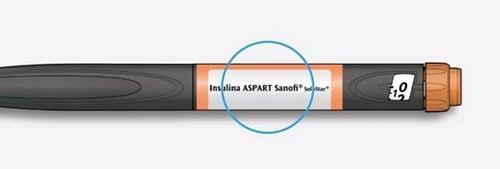
1A Check the name and expiration date on the pen label.
- Make sure you have the correct insulin. This is particularly important if you use other pen injectors.
- Never use pens after the expiration date.
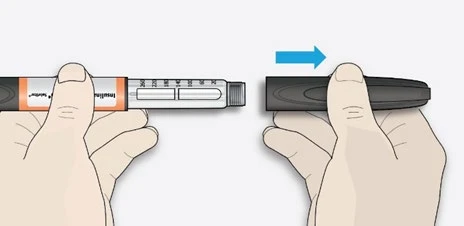
1B Remove the cap.
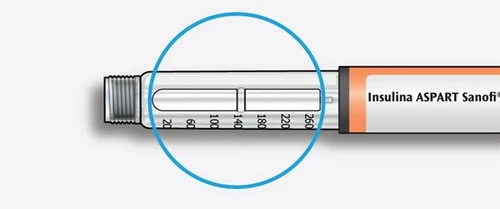
1C Check that the insulin is clear.
- Do not use the pen if the insulin appears cloudy, discolored, or contains particles.
STEP 2: Attach a new needle
- Always use a new sterile needle for each injection. This helps prevent using blocked needles, contamination, and infections.
- Use only needles compatible for use with Insulina aspart Sanofi.
2A Take a new needle and remove the protective seal.

2B Hold the needle straight and screw it onto the pen until it is firmly attached. Do not overtighten.
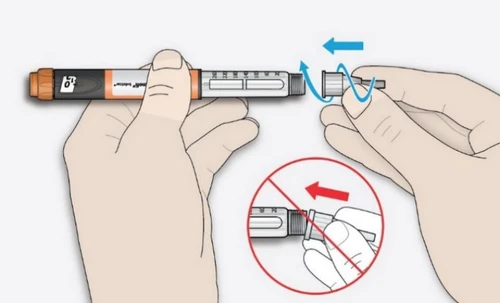
2C Remove the outer needle cap. Keep it for later use.
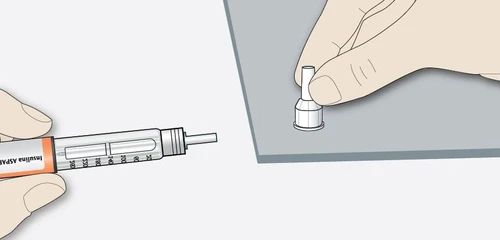
2D Remove the inner needle cap and discard it.
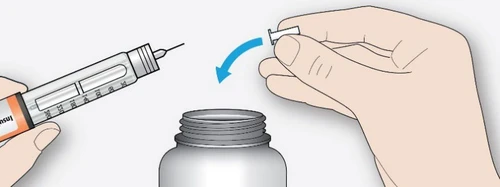
Handling needles
- Be careful when handling needles to prevent needlestick injuries and transmission of cross-infections.
STEP 3: Perform a safety test
- Always perform a safety test before each injection:
- to check that the pen and needle are working correctly;
- to ensure you receive the correct insulin dose.
3A Select 2 units by rotating the dose selector until the dose indicator aligns with “2”.
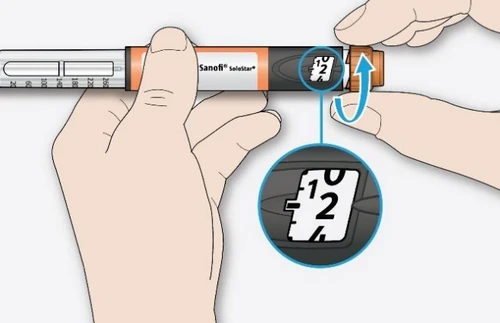
3B Press the injection button fully.
- If insulin comes out from the needle tip, the pen is working properly.
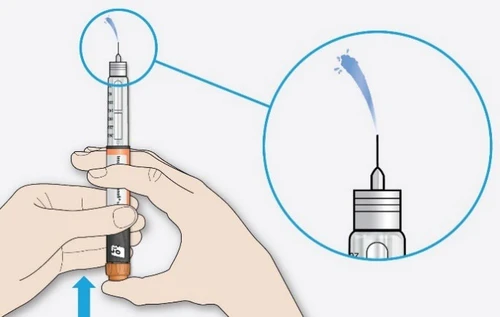
If no insulin appears:
- You may need to repeat the procedure up to 3 times before insulin appears.
- If no insulin appears after repeating the procedure three times, the needle may be blocked. In this case:
- replace the needle (see STEP 6 and STEP 2),
- then repeat the safety test (STEP 3).
- Do not use the pen if insulin still does not come out. Use a new pen.
- Never withdraw insulin from the pen with a syringe.
If air bubbles are present
- Air bubbles may be visible in the insulin. This is normal and not dangerous.
STEP 4: Select the dose
- Never select a dose or press the injection button without a needle attached. The pen may be damaged.
4A Ensure a needle is attached and the dose is set to “0”.
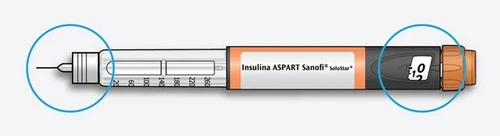
4B Rotate the dose selector until the dose indicator aligns with the desired dose.
- If you have selected too high a dose, you can turn the dose selector backwards.
- If the pen does not contain enough units for the prescribed dose, the dose selector will stop at the number of remaining units.
- If you cannot select the full prescribed dose, use a new pen or inject the available units and use a new pen to complete the dose.
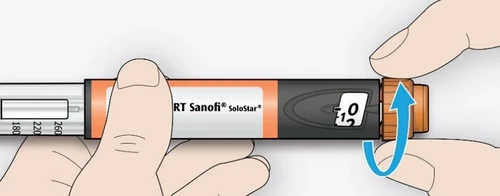
How to read the dose window
Even numbers align with the dose indicator:
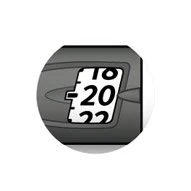
Odd numbers are indicated by a line between the even numbers:


Insulin units in the pen
- The pen contains a total of 300 insulin units. Doses from 1 to 80 units can be selected in 1-unit increments. Each pen contains more than one dose.
- You can approximately determine how many insulin units remain based on the position of the plunger on the insulin scale.
STEP 5: Administer the dose
- If pressing the injection button is difficult, do not force it, as the pen may break.

For suggestions, see the following section.
5A Select an injection site as shown in the image
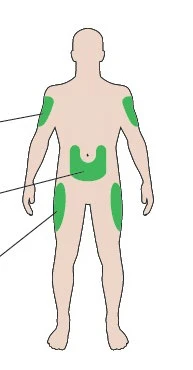
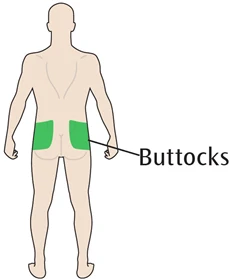
5B Insert the needle into the skin as shown by your doctor, pharmacist, or nurse.
- Do not press the injection button yet.
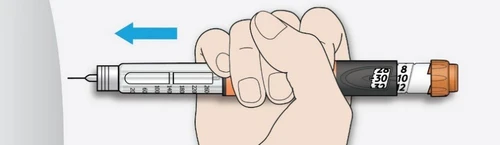
5C Place your thumb on the injection button. Press it fully and keep it pressed.
- Do not press the button diagonally, otherwise your thumb may block the rotation of the dose selector.
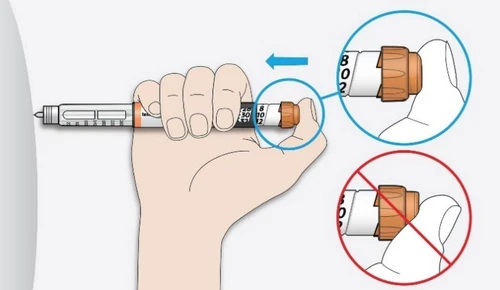
5D Keep the injection button pressed, and when “0” appears in the dose window, count slowly to 10.
- This ensures you receive the full dose.
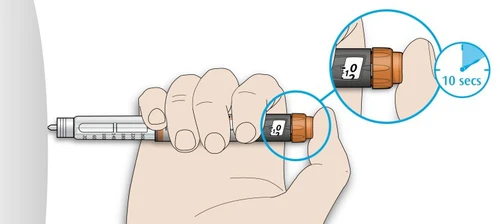
5E After holding the button and counting to 10, release the injection button. Then remove the needle from the skin.
If pressing the button is difficult:
- replace the needle (see STEP 6 and STEP 2), then perform a safety test (see STEP 3)
- if pressing the button remains difficult, use a new pen
- never withdraw insulin from the pen with a syringe
STEP 6: Remove the needle
- Be careful when handling needles to prevent needlestick injuries and cross-infections.
- Never reattach the inner needle cap.
6A Replace the outer needle cap and use it to unscrew the needle from the pen.
- To reduce the risk of accidental needlestick injury, never reposition the inner needle cap.
- If someone else is administering the injection or if you are injecting another person, take particular care during needle removal and disposal.
- Follow recommended safety measures for needle removal and disposal (ask your doctor, pharmacist, or nurse) to reduce the risk of accidental needlestick injury and transmission of infectious diseases.
6B Dispose of the used needle in a puncture-resistant container, or as directed by your pharmacist or local authorities.
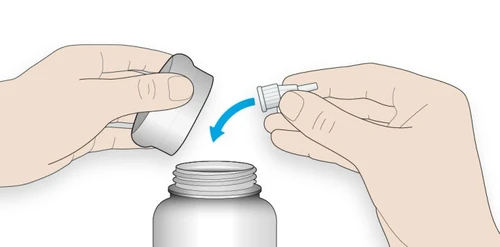
6C Replace the cap on the pen.
- Do not return the pen to the refrigerator.
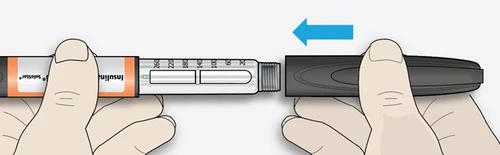
How to store and maintain the pen
- The exterior of the pen may be cleaned with a damp cloth (water only). Do not immerse, wash, or lubricate the pen, as it may be damaged.
- Remove the needle and dispose of the used pen as directed by your pharmacist or local authorities.
- For further information on storage and use of the pen, refer to sections 2 and 5 of the package leaflet.