Imcivree
Italy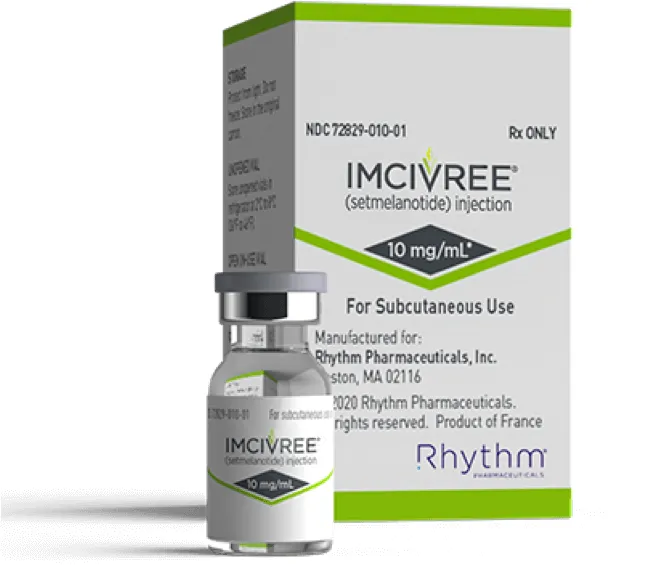
Table of Contents
Package leaflet: Information for the user
IMCIVREE 10 mg/mL solution for injection
setmelanotide
This medicinal product is subject to additional monitoring. This will allow for rapid identification of new safety information. You can help by reporting any side effects you experience while taking this medicine. See the end of section 4 for information on how to report side effects.
Please read all of this leaflet carefully before you start using this medicine because it contains important information for you.
- Keep this leaflet. You may need to read it again.
- If you have any questions, ask your doctor, pharmacist or nurse.
- This medicine has been prescribed for you only. Do not give it to other people, even if their symptoms are the same as yours, as it may be harmful.
- If you experience any side effect, including those not listed in this leaflet, tell your doctor, pharmacist or nurse. See section 4.
Contents of this leaflet
- What IMCIVREE is and what it is used for
- What you need to know before using IMCIVREE
- How to use IMCIVREE
- Possible side effects
- How to store IMCIVREE
- Contents of the pack and other information
1. What IMCIVREE is and what it is used for
IMCIVREE contains the active substance setmelanotide. It is used in adults and children aged 2 years and older to treat obesity caused by certain genetic conditions that affect how the brain controls the feeling of hunger.
This medicine is used to treat the following genetic conditions:
- Bardet-Biedl syndrome (BBS)
- POMC (pro-opiomelanocortin) deficiency obesity
- PCSK1 (proprotein convertase subtilisin/kexin type 1) deficiency obesity
- LEPR (leptin receptor) deficiency obesity.
People with these conditions lack certain natural substances involved in regulating appetite, or these substances do not function properly. This leads to increased levels of hunger and results in obesity. The medicine helps restore appetite control and reduces the symptoms of the condition.
2. What you should know before using IMCIVREE
Do not use IMCIVREE
- if you are allergic to setmelanotide or to any of the other ingredients of this medicine (listed in section 6).
Warnings and precautions
Talk to your doctor, pharmacist, or nurse before using IMCIVREE.
Before starting and during treatment with this medicine, your doctor must check your skin for any dark spots or areas. While using this medicine, dark spots or patches may appear on your skin. A check before starting treatment will help identify any new spots that appear after using this medicine.
In male patients, spontaneous penile erections are very common (may affect more than 1 in 10 people) when using this medicine. If an erection lasts longer than 4 hours, seek urgent medical advice. Prolonged erections (priapism), if untreated, may reduce the ability to have erections in the future.
Children
Do not administer this medicine to children under 2 years of age, as there is no information available on its use in children below this age.
Other medicines and IMCIVREE
Inform your doctor or pharmacist if you are taking, have recently taken, or might take any other medicines.
Pregnancy and breastfeeding
If you are pregnant, think you may be pregnant, planning to become pregnant, or are breastfeeding, ask your doctor or pharmacist for advice before using this medicine.
Use of IMCIVREE is not recommended during pregnancy or while trying to become pregnant, as it has not been studied in pregnant women. Weight loss during pregnancy may harm the unborn baby.
Talk to your doctor before taking this medicine if you are breastfeeding. Your doctor will discuss with you the benefits and risks of taking IMCIVREE during this time.
Driving and using machines
This medicine is not expected to affect your ability to drive or use machinery.
IMCIVREE contains benzyl alcohol.
This medicine contains 10 mg of benzyl alcohol in each 1 mL, equivalent to 1 mg per mg of your dose.
Benzyl alcohol has been associated with a risk of serious adverse effects in young children (under 3 years of age). There is an increased possibility that benzyl alcohol may accumulate in their bodies (so-called “metabolic acidosis”), leading to “gasping syndrome”. Children aged 2 years should be monitored by a doctor for signs of this accumulation (including rapid heart rate, rapid breathing, or confusion).
Benzyl alcohol may cause allergic reactions.
Ask your doctor or pharmacist for advice if you are pregnant or breastfeeding. This is because benzyl alcohol may accumulate in the body and may cause adverse effects (called “metabolic acidosis”).
Ask your doctor for advice if you have kidney or liver disease. This is because benzyl alcohol may accumulate in the body and may cause adverse effects (called “metabolic acidosis”).
IMCIVREE contains sodium
This medicine contains less than 1 mmol of sodium (23 mg) per dose, i.e., essentially “sodium-free”.
3. How to use IMCIVREE
Use this medicine exactly as instructed by your doctor or pharmacist. If you have
any doubts, consult your doctor or pharmacist.
IMCIVREE is administered via a subcutaneous injection (injection under the skin), once daily in the
morning. This medicine is for long-term use.
Your doctor will tell you the correct dose to inject.
Obesity due to pro-opiomelanocortin deficiency, obesity due to proprotein convertase subtilisin/kexin type 1 deficiency, and obesity due to leptin receptor deficiency
The recommended doses in adults and children aged 12 years and older are as follows:
| Week of treatment | Daily dose in mg | Volume to inject |
|------------------------|----------------------|----------------------|
| Weeks 1–2 | 1 mg once daily | 0.1 mL once daily |
| Week 3 and onwards | 2 mg once daily | 0.2 mL once daily |
| If dose is insufficient and side effects are acceptable | 2.5 mg once daily | 0.25 mL once daily |
| If dose is insufficient and side effects are acceptable | 3 mg once daily | 0.3 mL once daily |
In children aged between 6 and <12 years, the recommended doses are as follows:
| Week of treatment | Daily dose in mg | Volume to inject |
|------------------------|----------------------|----------------------|
| Weeks 1–2 | 0.5 mg once daily | 0.05 mL once daily |
| Weeks 3–4 | 1 mg once daily | 0.1 mL once daily |
| Week 5 and onwards | 2 mg once daily | 0.2 mL once daily |
| If dose is insufficient and side effects are acceptable | 2.5 mg once daily | 0.25 mL once daily |
The following are the recommended doses in children aged between 2 and <6 years:
| Body weight/treatment week | Daily dose | Volume to be injected |
| <20 kg | ||
| Week 1 and subsequent | 0.5 mg once daily | 0.05 mL once daily |
| 20-<30 kg | ||
| Weeks 1-2 | 0.5 mg once daily | 0.05 mL once daily |
| Week 3 and subsequent (if the dose is not sufficient and adverse effects are acceptable) | 1 mg once daily | 0.1 mL once daily |
| 30-<40 kg | ||
| Weeks 1-2 | 0.5 mg once daily | 0.05 mL once daily |
| Weeks 3-4 (if the dose is not sufficient and adverse effects are acceptable) | 1 mg once daily | 0.1 mL once daily |
| Week 5 and subsequent (if the dose is not sufficient and adverse effects are acceptable) | 1.5 mg once daily | 0.15 mL once daily |
| ≥40 kg | ||
| Weeks 1-2 | 0.5 mg once daily | 0.05 mL once daily |
| Weeks 3-4 (if the dose is not sufficient and adverse effects are acceptable) | 1 mg once daily | 0.1 mL once daily |
| Weeks 5-6 (if the dose is not sufficient and adverse effects are acceptable) | 1.5 mg once daily | 0.15 mL once daily |
| Weeks 7-8 (if the dose is not sufficient and adverse effects are acceptable) | 2 mg once daily | 0.2 mL once daily |
| Week 9 and subsequent (if the dose is not sufficient and adverse effects are acceptable) | 2.5 mg once daily | 0.25 mL once daily |
After the initial dose, if the adverse effects of a subsequent dose are not acceptable, the dose will be reduced to the previous dose level. If the adverse effects of the reduced dose are well tolerated, the dose will continue to be increased.
In patients with mild or moderate renal impairment, no dose adjustments are required.
The recommended doses for adults and children aged 12 to 17 years with severe renal impairment are as follows:
Week of treatment Daily dose in mg Volume to inject
Weeks 1–2 0.5 mg once daily 0.05 mL once daily
Week 3 onwards (if adverse effects are acceptable) 1 mg once daily 0.1 mL once daily
If the dose is insufficient and adverse effects are acceptable 2 mg once daily 0.2 mL once daily
If the dose is insufficient and adverse effects are acceptable 2.5 mg once daily 0.25 mL once daily
If the dose is insufficient and adverse effects are acceptable 3 mg once daily 0.3 mL once daily
If the adverse effects of the initial 0.5 mg dose are not acceptable, the dose will be reduced to 0.25 mg (0.025 mL). If the adverse effects of the 0.25 mg once daily dose are acceptable, the dose will continue to be increased.
After the initial dose, if the adverse effects of a subsequent dose are not acceptable, the dose will be reduced to the previous dose level. If the adverse effects of the reduced dose are acceptable, the dose will continue to be increased.
If the adverse effects of the 3 mg dose are not acceptable, the dose will be reduced to 2.5 mg, and treatment will continue at this dose.
The recommended doses for children aged 6 to less than 12 years with severe renal impairment are as follows:
Week of treatment Daily dose in mg Volume to inject
Weeks 1–2 0.25 mg once daily 0.025 mL once daily
Weeks 3–4 (if adverse effects are acceptable) 0.5 mg once daily 0.05 mL once daily
Week 5 onwards (if adverse effects are acceptable) 1 mg once daily 0.1 mL once daily
If the dose is insufficient and adverse effects are acceptable 2 mg once daily 0.2 mL once daily
If the adverse effects of the initial 0.25 mg dose are not acceptable, treatment must be discontinued.
After the initial dose, if the adverse effects of a subsequent dose are not acceptable, the dose will be reduced to the previous dose level. If the adverse effects of the reduced dose are acceptable, the dose will continue to be increased.
If the adverse effects of the 2 mg dose are not acceptable, the dose will be reduced to 1 mg, and treatment will continue at this dose.
The recommended doses for children aged 2 to less than 6 years with severe renal impairment are as follows:
| Body weight/treatment week | Daily dose | Volume to be injected |
| <20 kg | ||
| Week 1 and onwards | 0.25 mg once daily | 0.025 mL once daily |
| 20-<30 kg | ||
| Weeks 1-2 | 0.25 mg once daily | 0.025 mL once daily |
| Week 3 and onwards (if dose is insufficient and side effects are acceptable) | 0.5 mg once daily | 0.05 mL once daily |
| 30-<40 kg | ||
| Weeks 1-2 | 0.25 mg once daily | 0.025 mL once daily |
| Weeks 3-4 (if dose is insufficient and side effects are acceptable) | 0.5 mg once daily | 0.05 mL once daily |
| Week 5 and onwards (if dose is insufficient and side effects are acceptable) | 1 mg once daily | 0.1 mL once daily |
| ≥40 kg | ||
| Weeks 1-2 | 0.25 mg once daily | 0.025 mL once daily |
| Weeks 3-4 (if dose is insufficient and side effects are acceptable) | 0.5 mg once daily | 0.05 mL once daily |
| Weeks 5-6 (if dose is insufficient and side effects are acceptable) | 1 mg once daily | 0.1 mL once daily |
| Week 7 and onwards (if dose is insufficient and side effects are acceptable) | 1.5 mg once daily | 0.15 mL once daily |
If the adverse effects of the initial dose of 0.25 mg are not acceptable, treatment must be discontinued.
After the initial dose, if the adverse effects of a subsequent dose are not acceptable, the dose should be reduced to the previous dose level. If the adverse effects of the reduced dose are acceptable, dose escalation may continue.
Bardet-Biedl Syndrome
The following recommended doses are for adults and children aged 16 years and older:
| Week of treatment | Daily dose in mg | Volume to inject |
|------------------------|------------------------|------------------------|
| Weeks 1-2 | 2 mg once daily | 0.2 mL once daily |
| Week 3 onwards (if adverse effects are acceptable) | 3 mg once daily | 0.3 mL once daily |
If the adverse effects of the initial 2 mg dose are not acceptable, the dose should be reduced to 1 mg (0.1 mL). If the adverse effects of the 1 mg once-daily dose are acceptable, dose escalation may continue.
After the initial dose, if the adverse effects of a subsequent dose are not acceptable, the dose should be reduced to the previous dose level. If the adverse effects of the reduced dose are acceptable, dose escalation may continue.
If the adverse effects of the 3 mg dose are not acceptable, the dose should be reduced to 2 mg, and treatment should continue at this dose.
The following recommended doses are for children aged 6 to less than 16 years:
| Week of treatment | Daily dose in mg | Volume to inject |
|------------------------|------------------------|------------------------|
| Week 1 | 1 mg once daily | 0.1 mL once daily |
| Week 2 (if adverse effects are acceptable) | 2 mg once daily | 0.2 mL once daily |
| Week 3 onwards (if adverse effects are acceptable) | 3 mg once daily | 0.3 mL once daily |
If the adverse effects of the initial 1 mg dose are not acceptable, the dose should be reduced to 0.5 mg (0.05 mL). If the adverse effects of the 0.5 mg dose are acceptable, dose escalation may continue.
After the initial dose, if the adverse effects of a subsequent dose are not acceptable, the dose should be reduced to the previous dose level.
If the adverse effects of the reduced dose are acceptable, dose escalation may continue.
If the adverse effects of the 3 mg dose are not acceptable, the dose should be reduced to 2 mg, and treatment should continue at this dose.
The following recommended doses are for children aged 2 to <6 years:
| Patient weight/week of treatment | Daily dose | Volume to inject |
| <20 kg | ||
| Week 1 and onwards | 0.5 mg once daily | 0.05 mL once daily |
| 20–<30 kg | ||
| Weeks 1–2 | 0.5 mg once daily | 0.05 mL once daily |
| Week 3 and onwards (if dose is not sufficient and adverse effects are acceptable) | 1 mg once daily | 0.1 mL once daily |
| 30–<40 kg | ||
| Weeks 1–2 | 0.5 mg once daily | 0.05 mL once daily |
| Weeks 3–4 (if dose is not sufficient and adverse effects are acceptable) | 1 mg once daily | 0.1 mL once daily |
| Week 5 and onwards (if dose is not sufficient and adverse effects are acceptable) | 1.5 mg once daily | 0.15 mL once daily |
| ≥40 kg | ||
| Weeks 1–2 | 0.5 mg once daily | 0.05 mL once daily |
| Weeks 3–4 (if dose is not sufficient and adverse effects are acceptable) | 1 mg once daily | 0.1 mL once daily |
| Weeks 5–6 (if dose is not sufficient and adverse effects are acceptable) | 1.5 mg once daily | 0.15 mL once daily |
| Weeks 7–8 (if dose is not sufficient and adverse effects are acceptable) | 2 mg once daily | 0.2 mL once daily |
| Week 9 and onwards (if dose is not sufficient and adverse effects are acceptable) | 2.5 mg once daily | 0.25 mL once daily |
After the initial dose, if the adverse effects of a subsequent dose are not acceptable, the dose will be reduced to the previous dose level. If the adverse effects of the reduced dose are acceptable, dose escalation will continue.
In patients with mild or moderate renal impairment, no dose adjustments are required.
The following are the recommended doses for adults and children aged 16 to 17 years with severe renal impairment:
| Week of treatment | Daily dose in mg | Volume to inject | |------------------------|------------------------|------------------------| | Weeks 1–2 | 0.5 mg once daily | 0.05 mL once daily | | Week 3 and onwards (if adverse effects are acceptable) | 1 mg once daily | 0.1 mL once daily | | If the dose is not sufficient and adverse effects are acceptable | 2 mg once daily | 0.2 mL once daily | | If the dose is not sufficient and adverse effects are acceptable | 2.5 mg once daily | 0.25 mL once daily | | If the dose is not sufficient and adverse effects are acceptable | 3 mg once daily | 0.3 mL once daily |
If the adverse effects of the initial 0.5 mg dose are not acceptable, the dose will be reduced to 0.25 mg (0.025 mL). If the adverse effects of the 0.25 mg once-daily dose are acceptable, dose escalation will continue.
After the initial dose, if the adverse effects of a subsequent dose are not acceptable, the dose will be reduced to the previous dose level. If the adverse effects of the reduced dose are acceptable, dose escalation will continue.
If the adverse effects of the 3 mg dose are not acceptable, the dose will be reduced to 2.5 mg and treatment will continue at this dose.
The following are the recommended doses for children aged 6 to less than 16 years with severe renal impairment:
| Week of treatment | Daily dose in mg | Volume to inject | |------------------------|------------------------|------------------------| | Weeks 1–2 | 0.25 mg once daily | 0.025 mL once daily | | Weeks 3–4 (if adverse effects are acceptable) | 0.5 mg once daily | 0.05 mL once daily | | Week 5 and onwards (if adverse effects are acceptable) | 1 mg once daily | 0.1 mL once daily | | If the dose is not sufficient and adverse effects are acceptable | 2 mg once daily | 0.2 mL once daily |
If the adverse effects of the initial 0.25 mg dose are not acceptable, treatment must be discontinued.
After the initial dose, if the adverse effects of a subsequent dose are not acceptable, the dose will be reduced to the previous dose level.
If the adverse effects of the reduced dose are acceptable, dose escalation will continue.
If the adverse effects of the 2 mg dose are not acceptable, the dose will be reduced to 1 mg and treatment will continue at this dose.
The following are the recommended doses for children aged 2 to less than 6 years with severe renal impairment:
| Body weight/week of treatment | Daily dose | Volume to be injected |
| <20 kg | ||
| Week 1 and onwards | 0.25 mg once daily | 0.025 mL once daily |
| 20-<30 kg | ||
| Weeks 1-2 | 0.25 mg once daily | 0.025 mL once daily |
| Week 3 and onwards (if dose is insufficient and adverse effects are acceptable) | 0.5 mg once daily | 0.05 mL once daily |
| 30-<40 kg | ||
| Weeks 1-2 | 0.25 mg once daily | 0.025 mL once daily |
| Weeks 3-4 (if dose is insufficient and adverse effects are acceptable) | 0.5 mg once daily | 0.05 mL once daily |
| Week 5 and onwards (if dose is insufficient and adverse effects are acceptable) | 1 mg once daily | 0.1 mL once daily |
| ≥40 kg | ||
| Weeks 1-2 | 0.25 mg once daily | 0.025 mL once daily |
| Weeks 3-4 (if dose is insufficient and adverse effects are acceptable) | 0.5 mg once daily | 0.05 mL once daily |
| Weeks 5-6 (if dose is insufficient and adverse effects are acceptable) | 1 mg once daily | 0.1 mL once daily |
| Week 7 and onwards (if dose is insufficient and adverse effects are acceptable) | 1.5 mg once daily | 0.15 mL once daily |
If the side effects of the initial 0.25 mg dose are not acceptable, treatment must be discontinued.
After the initial dose, if the side effects of a subsequent dose are not acceptable, the dose should be reduced to the previous dose level. If the side effects of the reduced dose are acceptable, the dose increase may continue.
The doctor should regularly monitor the effectiveness of this medicine; if necessary, the doctor may adjust the dose. In growing children and adolescents, the impact of weight loss on growth and development should be monitored.
This medicine is indicated for long-term use. Discontinuation or irregular use may lead to a recurrence or worsening of symptoms. It is essential to carefully follow the dosing regimen as directed by the doctor or pharmacist.
How to administer IMCIVREE
IMCIVREE is injected into the fatty layer beneath the skin of the abdomen. The doctor, pharmacist, or nurse will show you how to do this. Once you feel comfortable administering the injection yourself or to your child, you may do so at home.
IMCIVREE should be administered at the beginning of the day to maximize hunger reduction while awake. IMCIVREE may be administered regardless of meals.
Before administering IMCIVREE, read the following instructions carefully.
Step 1. Preparing the injection
Gather the necessary items and place them on a clean, flat surface.
The following items, provided separately, will be needed:

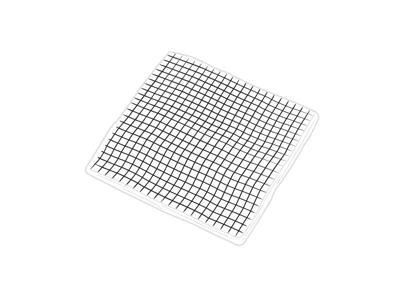
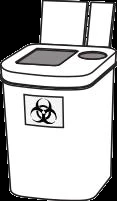
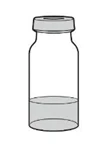
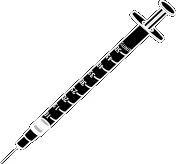
Wash hands thoroughly with soap and warm water.
Open the two alcohol swabs and the gauze pad.
Step 2. Checking the vial
Check the expiration date on the vial label, listed after “EXP”: MM/YYYY.
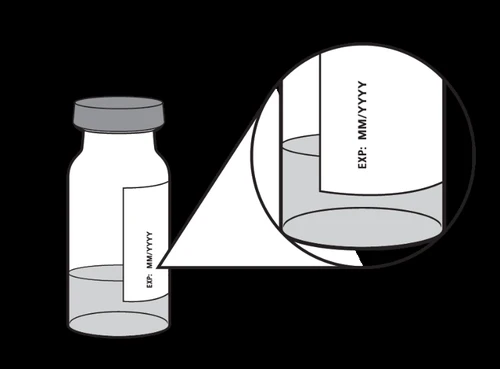
The liquid should appear clear or slightly yellow.
Do not use the medicine if:
- the expiration date has passed
- the liquid is cloudy
- particles are visible in the vial
- the plastic cap of a new vial is broken or missing
- the vial has been stored at a temperature above 30 °C.
Step 3. Preparing the vial
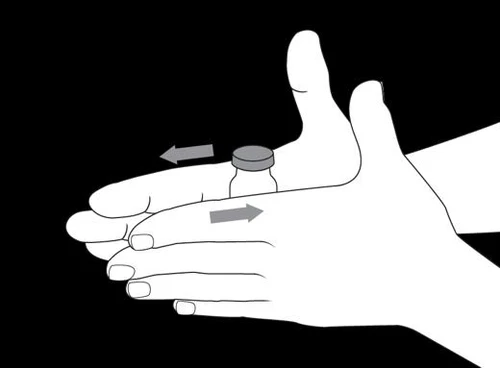
- Before use, allow the vial to reach room temperature by removing it from the refrigerator 15 minutes before administration or by gently rolling it between the palms for 60 seconds.
- Do not use hot water, microwave, or other devices to warm the vial.
- Do not shake the vial.
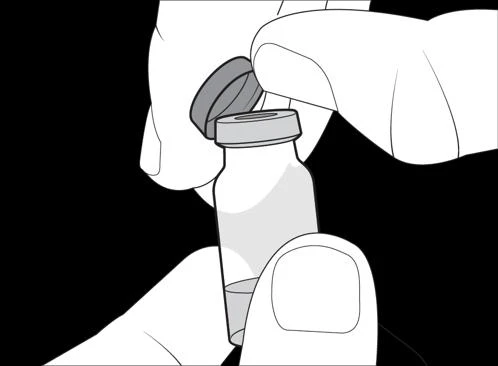
- If using a new vial, remove the plastic cap and dispose of it in household waste.
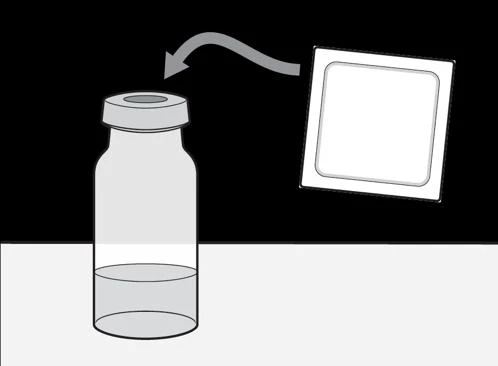
- Clean the top of the grey vial stopper with an alcohol swab. Discard the used alcohol swab in household waste.
- Do not remove the vial stopper.
Step 4. Preparing the syringe
- For doses of 0.25 mg (0.025 mL or 2.5 units), use a 0.3 mL syringe with 0.5 (half) unit increments and a needle of size 29–31 gauge with a length between 6 and 13 mm, suitable for subcutaneous injection.
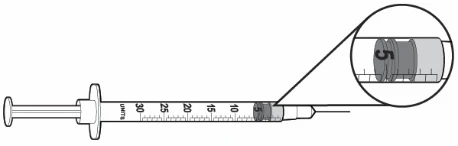
Dose of 0.25 mg = 0.025 mL or 2.5 units
- For doses between 0.5 mg and 3 mg (0.05 mL to 0.3 mL), use a 1 mL syringe with dose increments of 0.01 mL and a needle of size 28–29 gauge with a length between 6 and 13 mm, suitable for subcutaneous injection.
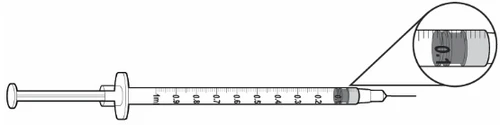
Dose of 0.5 mg = 0.05 mL
Dose of 1 mg = 0.1 mL
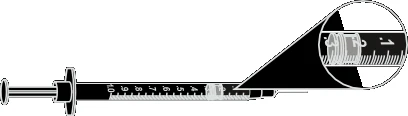

Dose of 2 mg = 0.2 mL
Dose of 3 mg = 0.3 mL
- Hold the needle cap and pull back the plunger to fill the syringe with air equal to the amount of medicine to be used.
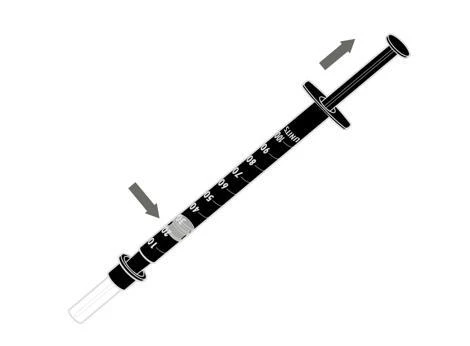
- Remove the needle cap from the syringe. Quickly and carefully pull out the cap away from yourself.
- Place the vial upright on a flat surface. Hold the syringe and position it directly above the vial. Insert the needle straight through the center of the grey vial stopper until fully inserted.
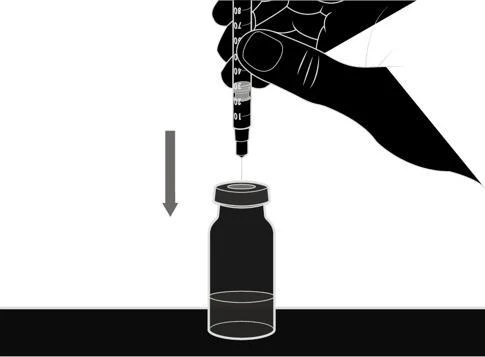
- Push the plunger down to inject the air from the syringe into the vial.
- Without removing the needle, gently turn the vial upside down.
- Ensure the needle tip is fully immersed in the liquid medicine and not in the air above the liquid.
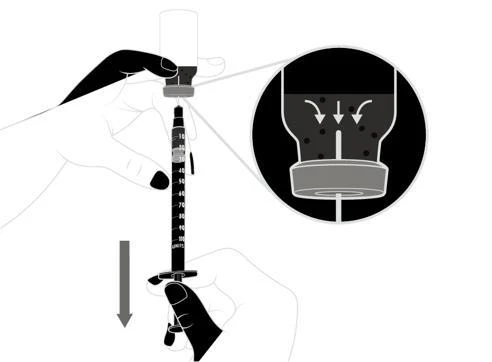
- Slowly pull back the plunger to draw the required dose of medicine into the syringe. To measure the dose, ensure you read the units starting from the end closest to the black rubber stopper.
- Keep the needle in the vial and check for the presence of large air bubbles in the syringe.
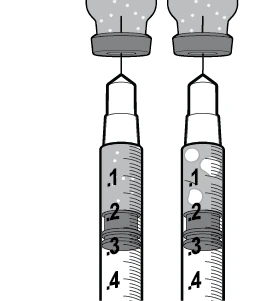
large
small
air bubbles air bubbles
- If air bubbles are visible, they must be removed from the syringe. To remove them:
- Gently tap the side of the syringe with your finger to move the air bubble to the top of the syringe;
- Expel the contents back into the vial;
- Repeat the previous steps to refill the syringe; this time pull the plunger more slowly and ensure the needle tip remains fully immersed in the vial liquid to minimize the formation of air bubbles.
- Once there are no large air bubbles in the syringe, place the vial upright on a hard surface.
- Hold the vial with one hand and the barrel of the syringe with the fingertips of the other hand. Pull the needle up and out of the vial.
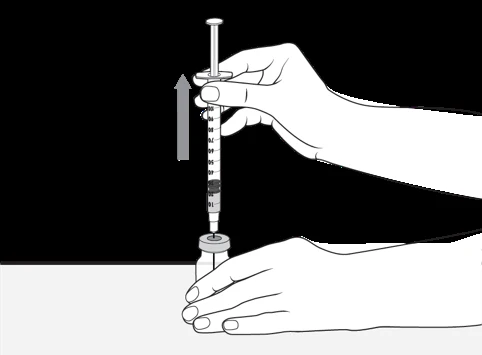
- Place the syringe on the hard surface, ensuring the needle does not touch the surface. Do not recap the needle.
Step 5. Preparing the injection site
- Choose the abdominal area for the injection.
- Change the injection site each day.
- Ensure the injection site is at least 5 cm from the navel.
- Do not inject into areas that are red, swollen, or irritated.
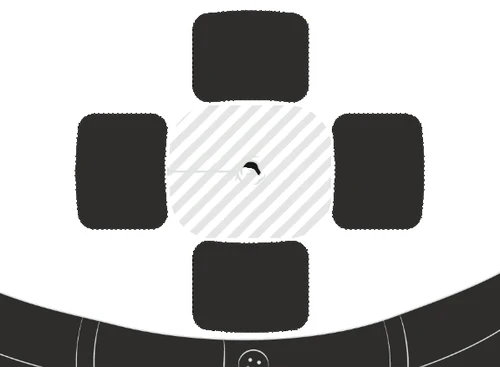
5 cm
- Clean the selected injection site with the second alcohol swab using a circular motion.
- Allow the skin to dry for approximately 10 seconds.
- Do not touch, fan, or blow on the cleaned area.
Step 6. Administering IMCIVREE
- Hold the syringe between the thumb and index finger of your dominant hand.
- With the other hand, gently pinch about 5 cm of skin between the thumb and index finger. Hold the skin fold until the injection is complete.
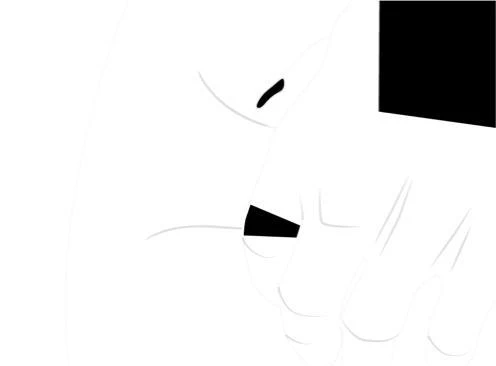
- Hold the center of the syringe at a 90º angle to the skin and push the needle straight into the injection site, ensuring it is fully inserted.
- Do not hold or push the plunger while inserting the needle.
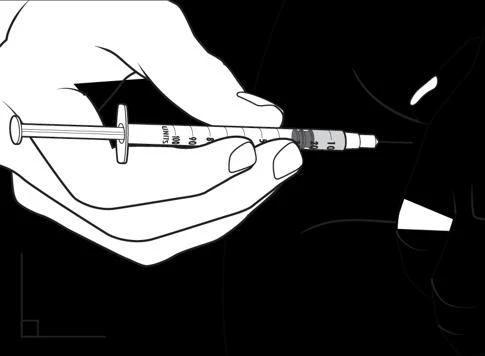
- Holding the syringe barrel between the thumb and middle finger, use the index finger to slowly push the plunger to administer the medicine.
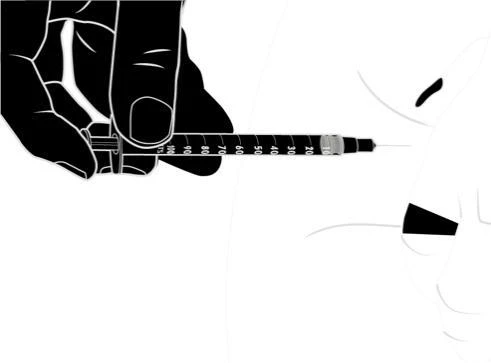
- Count to 5 after injecting IMCIVREE to ensure all the medicine has been expelled from the syringe.
- Release the pinched skin and withdraw the needle.
- Use the gauze pad to apply gentle pressure to the injection site, then dispose of the pad in household waste.
- Place the used syringe into a sharps container. Do not dispose of it in household waste.
- If any medicine remains in the vial, return the vial to its carton and store it in the refrigerator or in a safe place at a temperature below 30 °C until the next dose.
If you use more IMCIVREE than you should
If you or your child uses more IMCIVREE than prescribed, contact your doctor.
If you forget to use IMCIVREE
If you forget to administer the medicine, skip the missed dose and administer the next dose at the usual time. Do not use a double dose to make up for the missed dose.
If you stop using IMCIVREE
If you stop treatment with this medicine, hunger may return and weight loss may cease.
If you have any questions about the use of this medicine, consult your doctor, pharmacist, or nurse.
4. Possible side effects
Like all medicines, this medicine can cause side effects, although not everyone experiences them.
Very common (may affect more than 1 in 10 people)
dark areas or spots on the skin
pain, bruising, or inflammation (redness and/or swelling) at the injection site
tiredness
nausea or vomiting
headache
spontaneous penile erections
increased penile erections
skin tumour
Common (may affect up to 1 in 10 people)
dry, red or itchy skin
rash
skin lesions
hair loss
weakness
pain
dry mouth
indigestion
diarrhoea
feeling of constipation
stomach ache
heartburn
dizziness
female genital discomfort
difficulty sleeping
depression
change in sexual arousal
increased sexual desire
excess of eosinophils, a type of white blood cells
back pain
muscle cramps
cough
Uncommon (may affect up to 1 in 100 people)
redness of the skin
lines or stretch marks on the skin
increased sweating
abnormal distribution of fatty tissue
itchy rash
peeling of the skin
sensitivity to heat or cold
chills
feeling cold
feeling hot
change in gum colour
stomach swelling
increased salivation
flatulence
increased levels of liver enzymes in blood tests
drowsiness
headache (migraine)
loss or change in sense of smell
taste disorders
inability of females to achieve or maintain sexual arousal
genital discomfort or sensitivity
decreased sexual desire
female genital disorder
menstrual pain
sleep disorder
nightmares
flat, coloured skin spot
joint pain
yawning
runny nose
muscle or bone pain
pain in legs or arms
increased levels of muscle enzymes in blood tests
change in the colour of the white part of the eye
hot flush
vertigo
appetite disorders
feeling thirsty
Reporting of side effects
If you experience any side effect, including those not listed in this leaflet, talk to your doctor, pharmacist or nurse. You can also report side effects directly via the national reporting system referred to in Annex V. By reporting side effects, you can help provide more information on the safety of this medicine.
5. How to store IMCIVREE
Keep this medicine out of the sight and reach of children.
Do not use this medicine after the expiry date stated on the carton and vial.
The expiry date refers to the last day of that month.
IMCIVREE should be stored in a refrigerator at 2 °C – 8 °C until the expiry date stated on the carton. Alternatively, IMCIVREE may be stored at room temperature not exceeding 30 °C for up to 30 days or until the expiry date, whichever comes first. Keep all vials (including opened ones) in the original carton to protect them from light. After first use of a vial, discard it after 28 days.
Do not freeze this medicine.
If IMCIVREE has been exposed to temperatures above 30 °C, do not use it and dispose of it according to local guidelines. Do not use this medicine if you notice any particles in suspension or cloudiness.
Always use a new syringe for each administration.
Do not dispose of any medicine via wastewater or household waste. Ask your pharmacist how to dispose of medicines you no longer use. This will help protect the environment.
6. Package contents and other information
What IMCIVREE contains
- The active substance is setmelanotide. Each multidose vial contains 10 mg of setmelanotide in 1 mL of solution.
The other components are:
- benzyl alcohol (see section 2 What you need to know before using IMCIVREE)
- n-(carbonyl-methoxy-polyethylene glycol-2000)-1,2-distearoyl-glycero-3-phosphoethanolamine sodium salt (mPEG-2000-DSPE)
- sodium carmellose (see section 2 What you need to know before using IMCIVREE)
- mannitol
- phenol
- disodium edetate (see section 2 What you need to know before using IMCIVREE)
- water for injections
- hydrochloric acid (for pH adjustment)
- sodium hydroxide (for pH adjustment).
Description of the appearance of IMCIVREE and contents of the pack
IMCIVREE is a clear, colourless to slightly coloured solution.
This medicinal product is supplied in clear glass vials with a stopper and a cap, containing 1 mL of injectable solution.
IMCIVREE is available in packs containing 1 or 10 multidose vials.
Not all pack sizes may be marketed.
Marketing Authorisation Holder and Manufacturer
Rhythm Pharmaceuticals Netherlands B.V.
Radarweg 29,
1043 NX Amsterdam,
The Netherlands
Other sources of information
More detailed information on this medicinal product is available on the website of the European Medicines Agency: http://www.ema.europa.eu.