Icandra
Italy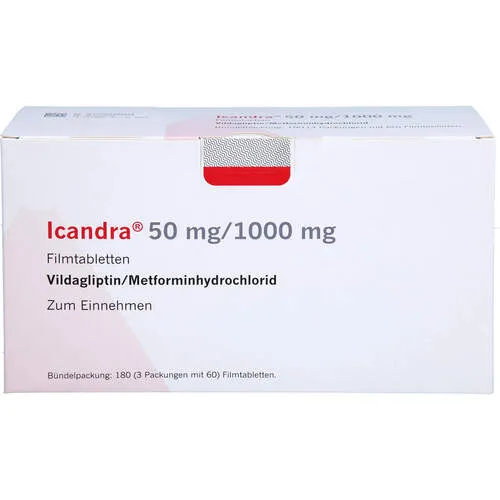
Table of Contents
F Patient Information Leaflet: Information for the User
Icandra 50 mg/850 mg film-coated tablets
Icandra 50 mg/1000 mg film-coated tablets
vildagliptin/metformin hydrochloride
Please read this leaflet carefully before taking this medicine, as it contains
important information for you.
- Keep this leaflet. You may need to read it again.
- If you have any questions, ask your doctor, pharmacist, or nurse.
- This medicine has been prescribed for you only. Do not give it to others, even if their symptoms are the same as yours, as it could be harmful.
- If you experience any side effects, including those not listed in this leaflet, contact your doctor, pharmacist, or nurse. See section 4.
Contents of this leaflet
- What Icandra is and what it is used for
- What you need to know before taking Icandra
- How to take Icandra
- Possible side effects
- How to store Icandra
- Contents of the pack and other information
1. What Icandra is and what it is used for
The active substances in Icandra, vildagliptin and metformin, belong to a group of medicines
called “oral antidiabetics”.
Icandra is used to treat adult patients with type 2 diabetes. This type of diabetes is also known
as non-insulin-dependent diabetes mellitus. Icandra is used when diabetes cannot be controlled
by diet and exercise alone and/or in combination with other antidiabetic medicines (insulin or sulfonylureas).
Type 2 diabetes develops when the body does not produce enough insulin, or when the insulin
produced by the body does not work properly. It may also develop when the body produces too
much glucagon.
Both insulin and glucagon are produced in the pancreas. Insulin helps lower blood sugar levels,
especially after meals. Glucagon stimulates the liver to produce sugar, causing blood sugar levels to rise.
How Icandra works
Both active substances, vildagliptin and metformin, help control blood sugar levels. The substance vildagliptin works by increasing insulin production and reducing glucagon production in the pancreas. The substance metformin works by helping the body use insulin more effectively.
This medicine has been shown to reduce blood sugar levels. This may help prevent complications arising from your diabetes.
2. What you need to know before taking Icandra
Do not take Icandra
- if you are allergic to vildagliptin, metformin, or any of the other ingredients of this medicine (listed in section 6). If you think you may be allergic to any of these substances, consult your doctor before taking Icandra.
- if you have uncontrolled diabetes associated, for example, with severe hyperglycaemia (high blood glucose levels), nausea, vomiting, diarrhoea, rapid weight loss, lactic acidosis (see below “Risk of lactic acidosis”) or ketoacidosis. Ketoacidosis is a condition in which substances called “ketone bodies” accumulate in the blood and may lead to diabetic pre-coma. Symptoms include stomach pain, rapid and deep breathing, drowsiness, and breath with an unusually fruity odour.
- if you have recently had a heart attack or if you have heart failure or severe circulatory problems or breathing difficulties that could be signs of heart problems.
- if you have severely reduced kidney function.
- if you have a serious infection or are severely dehydrated (your body has lost a lot of water).
- if you are due to undergo an X-ray examination with a contrast agent (a special type of X-ray involving an injectable dye). See also the information provided in the section “Warnings and precautions”.
- if you have liver problems.
- if you drink alcohol excessively (either on a daily basis or occasionally).
- if you are breastfeeding (see also “Pregnancy and breastfeeding”).
Warnings and precautions
Risk of lactic acidosis
Icandra may cause a very rare but very serious side effect called lactic acidosis, particularly if the kidneys are not functioning properly. The risk of developing lactic acidosis is higher in the presence of uncontrolled diabetes, serious infections, prolonged fasting or alcohol consumption, dehydration (see below for further information), liver problems, and any other medical condition characterized by reduced oxygen supply to part of the body (such as severe heart disease).
If you have any of the medical conditions described above, consult your doctor for further instructions.
Temporarily stop taking Icandra if you develop a medical condition
that may be associated with dehydration (significant loss of body fluids), such as severe vomiting, diarrhoea, fever, exposure to heat, or if you are drinking less fluids than usual. Consult your doctor for further instructions.
If you experience any of the symptoms of lactic acidosis, stop taking Icandra immediately and consult
your doctor or go to the nearest hospital, because lactic acidosis can lead to coma.
Symptoms of lactic acidosis include:
- vomiting
- stomach ache (abdominal pain)
- muscle cramps
- a general feeling of malaise associated with severe fatigue
- difficulty breathing
- reduced body temperature and slower heartbeat
Lactic acidosis is a medical emergency and must be treated in hospital.
Icandra is not a substitute for insulin. Therefore, Icandra should not be prescribed for the treatment of type 1 diabetes.
Consult your doctor, pharmacist, or nurse before taking Icandra if you have or have had a disease of the pancreas.
Consult your doctor, pharmacist, or nurse before taking Icandra if you are taking an antidiabetic medicine known as a sulphonylurea. If you take it together with Icandra, your doctor may decide to reduce your dose of sulphonylurea to avoid low blood glucose levels (hypoglycaemia).
If you previously took vildagliptin but had to stop due to liver disease, you must not take this medicine.
Skin lesions are a common complication of diabetes. You are advised to follow the skin and foot care recommendations provided by your doctor or nurse. You are also advised to pay particular attention to the development of new blisters or ulcers while taking Icandra. If this occurs, you should consult your doctor immediately.
If you are due to undergo major surgery, you must stop taking Icandra during the procedure and for a certain period afterwards. Your doctor will decide when you should stop and when you should resume treatment with Icandra.
Before starting treatment with Icandra, a test will be performed to assess liver function, which will be repeated every three months during the first year of treatment and periodically thereafter. This is to detect as early as possible any signs of increased liver enzymes.
During treatment with Icandra, your doctor will check your kidney function at least once a year, or more frequently if you are elderly and/or if kidney function worsens.
Your doctor will regularly monitor your blood and urine sugar levels.
Children and adolescents
The use of Icandra is not recommended in children and adolescents under 18 years of age.
Other medicines and Icandra
If you are due to receive an intravenous injection of an iodine-containing contrast agent, for example for an X-ray, you must stop taking Icandra before or during the injection. Your doctor will decide when you should stop and when you should resume treatment with Icandra.
Inform your doctor if you are taking, have recently taken, or might take any other medicine. You may need to have more frequent blood glucose and kidney function tests, or your doctor may decide to adjust the dose of Icandra. It is particularly important to mention the following:
- glucocorticoids, generally used to treat inflammation
- beta-2 agonists, generally used to treat respiratory disorders
- other medicines used to treat diabetes
- medicines that increase urine production (diuretics)
- medicines used to treat pain and inflammation (NSAIDs and COX-2 inhibitors, such as ibuprofen and celecoxib)
- certain medicines used to treat high blood pressure (ACE inhibitors and angiotensin II receptor antagonists)
- certain medicines acting on the thyroid
- certain medicines acting on the nervous system
- certain medicines used to treat angina (e.g., ranolazine)
- certain medicines used to treat HIV infection (e.g., dolutegravir)
- certain medicines used to treat a specific type of thyroid cancer (medullary thyroid cancer) (e.g., vandetanib)
- certain medicines used to treat heartburn and peptic ulcers (e.g., cimetidine)
Icandra and alcohol
Avoid excessive alcohol consumption during treatment with Icandra, as this may increase the risk of lactic acidosis (see section “Warnings and precautions”).
Pregnancy and breastfeeding
- If you are pregnant, think you may be pregnant, or are planning to become pregnant, consult your doctor before taking this medicine. Your doctor will discuss with you the potential risks of taking Icandra during pregnancy.
- Do not use Icandra if you are pregnant or breastfeeding (see also “Do not take Icandra”).
Ask your doctor or pharmacist for advice before taking any medicine.
Driving and using machines
If you feel dizzy when taking Icandra, do not drive or operate machinery.
3. How to take Icandra
The amount of Icandra you should take varies depending on your individual condition.
Your doctor will tell you exactly what dose to take.
Always take this medicine exactly as your doctor has instructed you. If you have any doubts, consult your doctor or pharmacist.
The recommended dose is one film-coated tablet of 50 mg/850 mg or 50 mg/1000 mg taken twice daily.
If you have reduced kidney function, your doctor may prescribe a lower dose. Your doctor may also prescribe a lower dose if you are taking an antidiabetic medicine known as a sulfonamide.
Your doctor may prescribe this medicine alone or in combination with certain medicines that lower blood sugar levels.
When and how to take Icandra
- Swallow the tablets whole with a glass of water.
- Take one tablet in the morning and one in the evening, with food or immediately after a meal. Taking the tablet immediately after eating will reduce the risk of stomach upset.
Continue to follow any dietary advice your doctor has given you. In particular, if you are following a diet for weight control due to diabetes, you should continue it during treatment with Icandra.
If you take more Icandra than you should
If you take too many Icandra tablets, or if someone else takes your tablets, contact your doctor or pharmacist immediately. Medical treatment may be required. If you need to see a doctor or go to hospital, take the pack and this leaflet with you.
If you forget to take Icandra
If you forget to take a tablet, take it with your next meal, unless you are already due to take one. Do not take a double dose (two tablets together) to make up for a missed tablet.
If you stop taking Icandra
Continue taking this medicine for as long as your doctor prescribes it, so that you can keep your blood sugar under control. Do not stop treatment with Icandra unless your doctor tells you to. If you have any doubts about how long to take this medicine, consult your doctor.
If you have any questions about the use of this medicine, ask your doctor, pharmacist, or nurse.
4. Possible side effects
Like all medicines, this medicine can cause side effects, although not everyone gets them.
You must stop taking Icandra and contact your doctor immediately if you experience any of the following side effects:
- Lactic acidosis (very rare: may occur in up to 1 in 10,000 people):
- Icandra may cause a very rare but serious side effect called lactic acidosis (see section “Warnings and precautions”). If this occurs, you must stop taking Icandra and seek immediate medical attention at the nearest doctor or hospital, as lactic acidosis can lead to coma.
- Angioedema (rare: may occur in up to 1 in 1,000 people): symptoms include swelling of the face, tongue or throat, difficulty swallowing, breathing difficulties, sudden appearance of skin rashes or hives, which may indicate a reaction called “angioedema”.
- Liver disease (hepatitis) (uncommon: may occur in up to 1 in 100 people): symptoms include yellowing of the skin or eyes, nausea, loss of appetite, or dark-coloured urine, which may indicate liver disease (hepatitis).
- Inflammation of the pancreas (pancreatitis) (uncommon: may occur in up to 1 in 100 people). Symptoms include severe and persistent pain in the abdomen (stomach area), which may spread to the back, as well as nausea and vomiting.
Other side effects
While taking Icandra, some patients have experienced the following side effects:
- Common (may occur in up to 1 in 10 people): sore throat, runny nose, fever, itchy rash, excessive sweating, joint pain, dizziness, headache, uncontrollable tremor, constipation, nausea (feeling unwell), vomiting, diarrhoea, flatulence, heartburn, stomach pain and pain around the stomach (abdominal pain).
- Uncommon (may occur in up to 1 in 100 people): fatigue, weakness, metallic taste, low blood glucose levels, loss of appetite, swelling of hands, ankles or feet (oedema), chills, inflammation of the pancreas, muscle pain.
- Very rare (may occur in up to 1 in 10,000 people): signs of high levels of lactic acid in the blood (known as lactic acidosis), such as drowsiness or dizziness, severe nausea or vomiting, abdominal pain, irregular heartbeat or rapid and deep breathing; skin redness, itching; reduced levels of vitamin B12 (pallor, fatigue, mental symptoms such as confusion or memory problems).
During the marketing of this medicine, the following side effects have also been reported:
- Frequency not known (cannot be estimated from the available data): localized skin peeling or blisters, inflammation of blood vessels (vasculitis), which may cause skin rash or round, red, flat, raised spots under the skin surface or bruising.
Reporting of side effects
If you experience any side effect, including those not listed in this leaflet, talk to your doctor, pharmacist or nurse. You can also report side effects directly through the national reporting system listed in Annex V. By reporting side effects, you can help provide more information on the safety of this medicine.
5. How to store Icandra
- Keep this medicine out of the sight and reach of children.
- Do not use this medicine after the expiry date which is stated on the blister and on the carton after “EXP”/”Scad”. The expiry date refers to the last day of that month.
- Do not store above 30°C.
- Store in the original packaging (blister) to protect the medicine from moisture.
- Do not dispose of any medicine via wastewater or household waste. Ask your pharmacist how to dispose of medicines no longer used. This will help protect the environment.
6. Package contents and other information
What Icandra contains
- The active substances are vildagliptin and metformin hydrochloride.
- Each film-coated tablet of Icandra 50 mg/850 mg contains 50 mg of vildagliptin and 850 mg of metformin hydrochloride (equivalent to 660 mg of metformin).
- Each film-coated tablet of Icandra 50 mg/1000 mg contains 50 mg of vildagliptin and 1000 mg of metformin hydrochloride (equivalent to 780 mg of metformin).
- The other components are: hydroxypropylcellulose, magnesium stearate, hypromellose, titanium dioxide (E 171), yellow iron oxide (E 172), macrogol 4000 and talc.
Description of the appearance of Icandra and contents of the pack
The film-coated tablets of Icandra 50 mg/850 mg are yellow, oval-shaped, marked with “NVR” on one side and “SEH” on the other.
The film-coated tablets of Icandra 50 mg/1000 mg are dark yellow, oval-shaped, marked with “NVR” on one side and “FLO” on the other.
Icandra is available in packs containing 10, 30, 60, 120, 180 or 360 film-coated tablets, and in multiple packs containing 120 (2x60), 180 (3x60) or 360 (6x60) film-coated tablets.
Not all pack sizes may be marketed in your country.
Marketing Authorisation Holder
Novartis Europharm Limited
Vista Building
Elm Park, Merrion Road
Dublin 4
Ireland
Manufacturer
Lek d.d, PE PROIZVODNJA LENDAVA
Trimlini 2D
Lendava, 9220
Slovenia
Novartis Pharma GmbH
Roonstrasse 25
D-90429 Nuremberg
Germany
Novartis Pharmaceutical Manufacturing LLC
Verovškova ulica 57
1000 Ljubljana
Slovenia
Novartis Farmacéutica, S.A.
Gran Via de les Corts Catalanes, 764
08013 Barcelona
Spain
For further information on this medicinal product, please contact the local representative of the Marketing Authorisation Holder:
België/Belgique/Belgien Lietuva
Novartis Pharma N.V. SIA Novartis Baltics Lietuvos filialas
Tél/Tel: +32 2 246 16 11 Tel: +370 5 269 16 50
България Luxembourg/Luxemburg
Novartis Bulgaria EOOD Novartis Pharma N.V.
Тел.: +359 2 489 98 28 Tél/Tel: +32 2 246 16 11
Česká republika Magyarország
Novartis s.r.o. Novartis Hungária Kft.
Tel: +420 225 775 111 Tel.: +36 1 457 65 00
Danmark Malta
Novartis Healthcare A/S Novartis Pharma Services Inc.
Tlf: +45 39 16 84 00 Tel: +356 2122 2872
Deutschland Nederland
Novartis Pharma GmbH Novartis Pharma B.V.
Tel: +49 911 273 0 Tel: +31 88 04 52 111
Eesti Norge
SIA Novartis Baltics Eesti filiaal Novartis Norge AS
Tel: +372 66 30 810 Tlf: +47 23 05 20 00
Ελλάδα Österreich
Novartis (Hellas) A.E.B.E. Novartis Pharma GmbH
Τηλ: +30 210 281 17 12 Tel: +43 1 86 6570
España Polska
Laboratorios Gebro Pharma, S.A. Novartis Poland Sp. z o.o.
Tel: +34 93 205 86 86 Tel.: +48 22 375 4888
France Portugal
Novartis Pharma S.A.S. Laboratório Normal – Produtos Farmacêuticos Lda.
Tél: +33 1 55 47 66 00 Tel. +351 21 000 8600
Hrvatska România
Novartis Hrvatska d.o.o. Novartis Pharma Services Romania SRL
Tel. +385 1 6274 220 Tel: +40 21 31299 01
Ireland Slovenija
Novartis Ireland Limited Novartis Pharma Services Inc.
Tel: +353 1 260 12 55 Tel: +386 1 300 75 50
Ísland Slovenská republika
Vistor hf. Novartis Slovakia s.r.o.
Sími: +354 535 7000 Tel: +421 2 5542 5439
Italia Suomi/Finland
Novartis Farma S.p.A. Novartis Finland Oy
Tel: +39 02 96 54 1 Puh/Tel: +358 (0)10 6133 200
Κύπρος Sverige
Novartis Pharma Services Inc. Novartis Sverige AB
Τηλ: +357 22 690 690 Tel: +46 8 732 32 00
Latvija United Kingdom (Northern Ireland)
SIA Novartis Baltics Novartis Ireland Limited
Tel: +371 67 887 070 Tel: +44 1276 698370
Other sources of information
More detailed information on this medicinal product is available on the website of the European Medicines Agency: http://www.ema.europa.eu