Hirudoid
Italy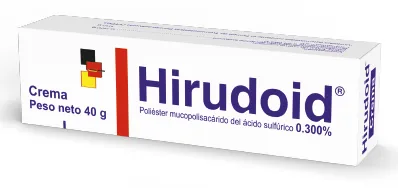
Table of Contents
- Package leaflet: Information for the user
- HIRUDOID 25,000 IU Cream
- 1. What HIRUDOID is and what it is used for
- 2. What you should know before using HIRUDOID
- 3. How to use HIRUDOID
- 4. Possible adverse reactions
- 5. How to store HIRUDOID
- 6. Package contents and other information
- Package leaflet: information for the user
- HIRUDOID 25,000 IU Gel
- Package leaflet: Information for the user
- HIRUDOID 40,000 IU Cream
- Instructions for the user: package leaflet
- HIRUDOID 40,000 IU Gel
- 1. What HIRUDOID is and what it is used for
- 2. What you need to know before using HIRUDOID
- 3. How to use HIRUDOID
- 4. Possible side effects
- 5. How to store HIRUDOID
- 6. Pack contents and other information
Package leaflet: Information for the user
HIRUDOID 25,000 IU Cream
Glycosaminoglycan polysulfate
Read this entire leaflet carefully before using this medicine because it contains important information for you.
Use this medicine exactly as described in this leaflet or as directed by your doctor or pharmacist.
- Keep this leaflet. You may need to read it again.
- If you need more information or advice, consult your pharmacist.
- If you experience any side effects, including those not listed in this leaflet, contact your doctor or pharmacist. See section 4.
- Contact your doctor if you do not notice any improvement or if you experience worsening of symptoms.
Contents of this leaflet:
- What HIRUDOID is and what it is used for
- What you need to know before using HIRUDOID
- How to use HIRUDOID
- Possible side effects
- How to store HIRUDOID
- Contents of the pack and other information
1. What HIRUDOID is and what it is used for
HIRUDOID contains the active substance glycosaminoglycan polysulfate, which has anti-inflammatory and antithrombotic properties, meaning it prevents the formation of blood clots (thrombi).
HIRUDOID is used to treat:
- inflammation of a vein located beneath the skin surface (superficial phlebitis) or a blood clot causing inflammation of a vein (thrombophlebitis);
- inflammation caused by varicose veins (venous dilation);
- bruises (hematomas).
2. What you should know before using HIRUDOID
Do not use HIRUDOID
- if you are allergic to the active substance, to any heparinoid (a medicine with anticoagulant action similar to heparin), or to any of the other ingredients of this medicine (listed in section 6).
Warnings and precautions
Talk to your doctor or pharmacist before using HIRUDOID.
Stop treatment and contact your doctor immediately if allergic reactions occur after applying the cream.
Other medicines and HIRUDOID
No interactions between HIRUDOID and other medicines are known.
Nevertheless, inform your doctor or pharmacist if you are taking, have recently taken, or might take any other medicines.
Pregnancy and breastfeeding
If you are pregnant, suspect you may be pregnant, planning to become pregnant, or breastfeeding, consult your doctor or pharmacist before using this medicine.
Driving and using machines
HIRUDOID does not impair the ability to drive or operate machinery.
HIRUDOID contains parahydroxybenzoates, lanolin, and cetylstearyl alcohol
Parahydroxybenzoates may cause allergic reactions (including delayed reactions).
Lanolin and cetylstearyl alcohol may cause local skin reactions (e.g. contact dermatitis).
3. How to use HIRUDOID
Use this medicine exactly as stated in this leaflet or as instructed by your doctor or pharmacist. If you have any doubts, consult your doctor or pharmacist.
If the inflammation is not particularly extensive, the recommended dose is 3–5 cm of cream applied 1–2 times a day.
The cream dose may be spread onto a gauze dressing and then applied to the affected area.
If the inflammation is extensive, the recommended dose is 25 cm of cream per day for 3–4 days; thereafter, the dose should be halved and treatment continued until symptoms disappear.
Instructions for use:
- Gently massage around the inflamed area, avoiding the affected part itself.
- Do not apply the cream to open wounds or mucous membranes.
- Do not swallow.
If you use more HIRUDOID than you should
If you accidentally use too much HIRUDOID, consult your doctor or pharmacist.
4. Possible adverse reactions
No adverse reactions have been reported following the use of HIRUDOID.
Reporting of adverse reactions
If you experience any adverse reaction, including those not listed in this leaflet, contact your doctor or pharmacist.
You may also report adverse reactions directly through the national reporting system at www.agenziafarmaco.gov.it/it/responsabili.
By reporting adverse reactions, you can help provide more information on the safety of this medicine.
5. How to store HIRUDOID
Keep this medicine out of the sight and reach of children.
Do not use this medicine after the expiry date which is stated on the carton after "Exp". The expiry date refers to the last day of that month.
Do not dispose of any medicine via wastewater or household waste. Ask your pharmacist how to dispose of medicines no longer required. This will help protect the environment.
6. Package contents and other information
What HIRUDOID contains
- The active substance is glycosaminoglycane polysulfate. 100 g of cream contain 0.3 g (equivalent to 25,000 I.U.) of active substance.
- The other ingredients are glycerol, potassium hydroxide, stearic acid, lanolin, cetostearyl alcohol, myristyl alcohol, thymol, methyl parahydroxybenzoate, propyl parahydroxybenzoate, isopropyl alcohol, purified water.
Description of the appearance of HIRUDOID and contents of the pack
White cream with a characteristic odour, for topical use.
HIRUDOID is available in packs of 40 g of cream in an aluminium tube.
Marketing Authorization Holder
EG S.p.A., Via Pavia, 6 – 20136 Milan, Italy
Manufacturer
Mobilat Produktions GmbH - Pfaffenhofen (Germany)
STADA Arzneimittel AG, Stadastrasse 2-18, 61118 Bad Vilbel (Germany)
Package leaflet: information for the user
HIRUDOID 25,000 IU Gel
Glycosaminoglycan Polysulfate
Read this leaflet carefully before using this medicine because it contains important information for you.
Use this medicine exactly as described in this leaflet or as your doctor or pharmacist has instructed you.
- Keep this leaflet. You may need to read it again.
- If you need more information or advice, consult your pharmacist.
- If you experience any side effects, including those not listed in this leaflet, contact your doctor or pharmacist. See section 4.
- Contact your doctor if you notice no improvement or if symptoms worsen.
Contents of this leaflet:
- What HIRUDOID is and what it is used for
- What you need to know before using HIRUDOID
- How to use HIRUDOID
- Possible side effects
- How to store HIRUDOID
- Package contents and other information
1. What HIRUDOID is and what it is used for
HIRUDOID contains the active substance glycosaminoglycan polysulfate, which has anti-inflammatory and antithrombotic properties, meaning it helps prevent the formation of blood clots (thrombi).
HIRUDOID is used to treat:
- Inflammation of a vein located beneath the skin surface (superficial phlebitis) or a blood clot causing inflammation of a vein (thrombophlebitis);
- Inflammation caused by varicose veins (venous dilation);
- Bruises (hematomas).
2. What you need to know before using HIRUDOID
Do not use HIRUDOID
- If you are allergic to the active substance, to a heparinoid (a medicine with anticoagulant action similar to heparin), or to any of the other ingredients of this medicine (listed in section 6).
Warnings and precautions
Talk to your doctor or pharmacist before using HIRUDOID.
Discontinue treatment and contact your doctor immediately if allergic reactions occur after applying the gel.
Other medicines and HIRUDOID
No interactions between HIRUDOID and other medicines are known.
However, inform your doctor or pharmacist if you are taking, have recently taken, or might take any other medicines.
Pregnancy and breastfeeding
If you are pregnant, suspect you may be pregnant, planning to become pregnant, or breastfeeding, consult your doctor or pharmacist before using this medicine.
Driving and using machines
HIRUDOID does not impair the ability to drive or operate machinery.
HIRUDOID contains propylene glycol
Propylene glycol may cause skin irritation.
3. How to use HIRUDOID
Use this medicine exactly as described in this leaflet or as directed by your doctor or pharmacist. If in doubt, consult your doctor or pharmacist.
If the inflammation is not extensive, the recommended dose is 5–10 cm of gel applied several times daily.
If the inflammation is extensive, larger amounts of gel may be used for 3–4 days; thereafter, the dose should be halved and treatment continued until symptoms disappear.
Instructions for use:
- Gently massage the gel around the inflamed area, avoiding direct application on the affected site.
- Do not apply the gel on open wounds or mucous membranes.
- Do not swallow.
If you use more HIRUDOID than you should
If you accidentally use too much HIRUDOID, contact your doctor or pharmacist.
4. Possible side effects
No adverse effects have been reported following the use of HIRUDOID.
Reporting of side effects
If you experience any side effects, including those not listed in this leaflet, contact your doctor or pharmacist. You may also report side effects directly via the national reporting system at: www.agenziafarmaco.gov.it/it/responsabili.
By reporting side effects, you help provide more information on the safety of this medicine.
5. How to store HIRUDOID
Keep this medicine out of the sight and reach of children.
Do not use this medicine after the expiry date stated on the packaging after "Exp." The expiry date refers to the last day of that month.
Do not dispose of medicines via wastewater or household waste. Ask your pharmacist how to dispose of medicines no longer in use. This will help protect the environment.
6. Package contents and other information
What HIRUDOID contains
- The active substance is glycosaminoglycan polysulfate. 100 g of gel contain 0.3 g (equivalent to 25,000 IU) of active substance.
- The other ingredients are isopropanol, polyacrylic acid, propylene glycol, sodium hydroxide, purified water.
Description of the appearance of HIRUDOID and package contents
A transparent, colorless gel for topical use with a characteristic odor.
HIRUDOID is available in 40 g aluminum tubes.
Marketing Authorization Holder
EG S.p.A., Via Pavia, 6 – 20136 Milan, Italy
Manufacturer
Mobilat Produktions GmbH - Pfaffenhofen (Germany)
STADA Arzneimittel AG, Stadastrasse 2–18, 61118 Bad Vilbel (Germany)
Package leaflet: Information for the user
HIRUDOID 40,000 IU Cream
Glycosaminoglycan Polysulfate
Read this entire leaflet carefully before using this medicine because it contains important information for you.
Use this medicine exactly as described in this leaflet or as your doctor or pharmacist has instructed you.
- Keep this leaflet. You may need to read it again.
- If you need more information or advice, consult your pharmacist.
- If you experience any side effects, including those not listed in this leaflet, contact your doctor or pharmacist. See section 4.
- Contact your doctor if you do not notice improvement or if your symptoms worsen.
Contents of this leaflet:
- What HIRUDOID is and what it is used for
- What you need to know before using HIRUDOID
- How to use HIRUDOID
- Possible side effects
- How to store HIRUDOID
- Contents of the pack and other information
1. What HIRUDOID is and what it is used for
HIRUDOID contains the active substance glycosaminoglycan polysulfate, which has anti-inflammatory and antithrombotic activity, meaning it helps prevent the formation of blood clots (thrombi).
HIRUDOID is used to treat:
- Inflammation of a vein located beneath the skin surface (superficial phlebitis), or a blood clot causing inflammation of a vein (thrombophlebitis);
- Swelling caused by slowed blood circulation in the veins (venous stasis edema);
- Pain, inflammation, swelling, and trophic disorders in post-phlebitic and varicose conditions;
- Bruises (hematomas).
2. What you need to know before using HIRUDOID
Do not use HIRUDOID
- If you are allergic to the active substance, to any heparinoid (a medicine with anticoagulant action similar to heparin), or to any of the other ingredients of this medicine (listed in section 6).
Warnings and precautions
Talk to your doctor or pharmacist before using HIRUDOID.
Stop treatment and contact your doctor immediately if you experience allergic reactions after applying the cream.
Other medicines and HIRUDOID
No interactions between HIRUDOID and other medicines are known.
However, inform your doctor or pharmacist if you are taking, have recently taken, or might take any other medicines.
Pregnancy and breastfeeding
If you are pregnant, suspect you may be pregnant, planning a pregnancy, or breastfeeding, consult your doctor or pharmacist before using this medicine.
Driving and using machines
HIRUDOID does not impair your ability to drive or operate machinery.
3. How to use HIRUDOID
Use this medicine exactly as described in this leaflet or as your doctor or pharmacist has instructed. If in doubt, consult your doctor or pharmacist.
The recommended dose is 3–5 cm of cream applied 2–3 times daily.
If necessary, especially at the beginning of treatment, you may use a larger amount of cream.
Instructions for use:
- Gently massage the treated area to promote absorption of the cream.
- If you suffer from particularly painful inflammation associated with thrombosis, gently massage the cream into the affected skin area and surrounding tissue, and cover with a cotton gauze dressing or similar.
- Do not apply the cream on open wounds or mucous membranes.
- Do not swallow.
If you use more HIRUDOID than you should
If you accidentally use too much HIRUDOID, contact your doctor or pharmacist.
4. Possible side effects
No side effects have been reported following the use of HIRUDOID.
Reporting of side effects
If you experience any side effects, including those not listed in this leaflet, contact your doctor or pharmacist. You may also report side effects directly via the national reporting system at www.agenziafarmaco.gov.it/it/responsabili.
By reporting side effects, you help provide more information on the safety of this medicine.
5. How to store HIRUDOID
Keep this medicine out of the sight and reach of children.
Do not use this medicine after the expiry date stated on the packaging after "Exp". The expiry date refers to the last day of that month.
Store below 25°C.
Do not dispose of medicines via wastewater or household waste. Ask your pharmacist how to dispose of medicines you no longer use. This will help protect the environment.
6. Contents of the pack and other information
What HIRUDOID contains
- The active substance is glycosaminoglycan polysulfate. 100 g of cream contains 445 mg (equivalent to 40,000 IU) of active substance.
- The other ingredients are cutina LE, medium-chain triglycerides, myristyl alcohol, isopropyl myristate, bentonite, rosemary oil, isopropyl alcohol, imidurea, phenoxyethanol, purified water.
Description of HIRUDOID and contents of the pack
A cream for topical use, white to pale beige in color, with a characteristic odor. HIRUDOID is available in 50 g tubes made of aluminum.
Marketing Authorization Holder
EG S.p.A., Via Pavia, 6 – 20136 Milan, Italy
Manufacturer
Mobilat Produktions GmbH - Pfaffenhofen (Germany)
STADA Arzneimittel AG, Stadastrasse 2–18, 61118 Bad Vilbel (Germany)
Instructions for the user: package leaflet
HIRUDOID 40,000 IU Gel
Glycosaminoglycan Polysulfate
Please read this leaflet carefully before using this medicine as it contains important information for you.
Use this medicine exactly as described in this leaflet or as your doctor or pharmacist has instructed you.
- Keep this leaflet. You may need to read it again.
- If you would like further information or advice, consult your pharmacist.
- If you experience any side effects, including those not listed in this leaflet, contact your doctor or pharmacist. See section 4.
- Contact your doctor if you do not notice any improvement or if you notice a worsening of symptoms.
Contents of this leaflet:
- What HIRUDOID is and what it is used for
- What you need to know before using HIRUDOID
- How to use HIRUDOID
- Possible side effects
- How to store HIRUDOID
- Package contents and other information
1. What HIRUDOID is and what it is used for
HIRUDOID contains the active substance glycosaminoglycan polysulfate, which has anti-inflammatory and antithrombotic properties, meaning it helps prevent the formation of blood clots (thrombi).
HIRUDOID is used to treat:
- inflammation of a vein located beneath the skin surface (superficial phlebitis) or a blood clot causing inflammation of a vein (thrombophlebitis);
- swelling caused by slowed blood circulation in the veins (venous stasis edema);
- pain, inflammation, swelling, and trophic disorders in post-phlebitic and varicose conditions;
- bruises (hematomas).
2. What you need to know before using HIRUDOID
Do not use HIRUDOID
- if you are allergic to the active substance, to any heparinoid (a medicine with anticoagulant action similar to heparin), or to any of the other ingredients of this medicine (listed in section 6).
Warnings and precautions
Talk to your doctor or pharmacist before using HIRUDOID.
Stop treatment and contact your doctor immediately if allergic reactions occur after applying the gel.
Other medicines and HIRUDOID
No interactions between HIRUDOID and other medicines are known.
However, inform your doctor or pharmacist if you are taking, have recently taken, or might take any other medicines.
Pregnancy and breastfeeding
If you are pregnant, think you may be pregnant, planning a pregnancy, or are breastfeeding, consult your doctor or pharmacist before using this medicine.
Driving and using machines
HIRUDOID does not impair the ability to drive or operate machinery.
HIRUDOID contains propylene glycol
Propylene glycol may cause skin irritation.
3. How to use HIRUDOID
Use this medicine exactly as stated in this leaflet or according to your doctor's or pharmacist's instructions.
If you have any doubts, consult your doctor or pharmacist.
The recommended dose is 3-5 cm of gel applied 2-3 times a day.
Instructions for use:
- Gently massage the treated area to promote absorption of the gel.
- Do not apply the gel on open wounds or mucous membranes.
- Do not swallow.
- The gel may be used during certain physical therapy techniques that facilitate drug penetration through the skin, such as iontophoresis (apply the gel to the cathode) and ultrasound.
If you use more HIRUDOID than you should
If you accidentally use too much HIRUDOID, consult your doctor or pharmacist.
4. Possible side effects
No side effects have been reported following the use of HIRUDOID.
Reporting of side effects
If you experience any side effects, including those not listed in this leaflet, please contact your doctor or pharmacist.
You can also report side effects directly via the national reporting system at www.agenziafarmaco.gov.it/it/responsabili.
By reporting side effects, you can help provide further information on the safety of this medicine.
5. How to store HIRUDOID
Keep this medicine out of the sight and reach of children.
Do not use this medicine after the expiry date stated on the carton after "Exp". The expiry date refers to the last day of that month.
Do not dispose of any medicine via wastewater or household waste. Ask your pharmacist how to dispose of medicines no longer required. This will help protect the environment.
6. Pack contents and other information
What HIRUDOID contains
- The active substance is glicosaminoglicanopolisolfato. 100 g of gel contain 445 mg (equivalent to 40,000 IU) of active substance.
- The other ingredients are isopropanol, propylene glycol, sodium hydroxide, polyacrylic acid, purified water.
Description of the appearance of HIRUDOID and pack contents
Transparent, colourless gel for topical use with a characteristic odour. HIRUDOID is available in packs of 50 g of gel in an aluminium tube.
Marketing Authorisation Holder
EG S.p.A., Via Pavia, 6 – 20136 Milan, Italy
Manufacturer
Mobilat Produktions Gmbh - Pfaffenhofen (Germany)
STADA Arzneimittel AG, Stadastrasse 2-18, 61118 Bad Vilbel (Germany)