Haemate P
Italy
Table of Contents
- Package leaflet: Information for the user
- HAEMATE P 500 IU / 1200 IU
- 1. What HAEMATE P is and what it is used for
- 2. What you should know before using HAEMATE P
- 3. How to use HAEMATE P
- 4. Possible side effects
- The following information is intended exclusively for physicians or healthcare professionals
Package leaflet: Information for the user
HAEMATE P 500 IU / 1200 IU
powder and solvent for solution for injection or infusion
HAEMATE P 1000 IU / 2400 IU
powder and solvent for solution for injection or infusion
Human coagulation Factor VIII
Human von Willebrand Factor
Please read all of this leaflet carefully before you start using this medicine, as it contains important information for you.
- Keep this leaflet. You may need to read it again.
- If you have any questions, ask your doctor, pharmacist, or nurse.
- This medicine has been prescribed for you only. Do not give it to other people, even if they have the same symptoms as you, because it could be harmful.
- If you experience any side effects, including those not listed in this leaflet, tell your doctor, pharmacist, or nurse. See section 4.
Contents of this leaflet:
- What HAEMATE P is and what it is used for
- What you need to know before receiving HAEMATE P
- How to use HAEMATE P
- Possible side effects
- How to store HAEMATE P
- Contents of the pack and other information
1. What HAEMATE P is and what it is used for
HAEMATE P belongs to a group of medicines called haemostatics or antihemorrhagics, which are used to
control bleeding. This medicine contains as active substances human coagulation factor VIII and human von Willebrand factor, obtained from the liquid part of blood (plasma). These two factors
are involved in the blood coagulation process.
HAEMATE P is indicated for the prevention and treatment of bleeding due to:
- congenital deficiency of factor VIII in the blood (haemophilia A), acquired deficiency of this factor, or production of substances that interfere with the action of factor VIII (anti-factor VIII antibodies or inhibitors);
- reduced levels of von Willebrand factor in the blood (von Willebrand disease), in connection with surgical procedures when treatment with desmopressin alone is not effective or is contraindicated.
Haemate P contains both FVIII and VWF. If you have haemophilia A, your doctor will prescribe Haemate P specifying
the number of FVIII units you require. If you have von Willebrand disease, your doctor will prescribe Haemate P specifying
the number of VWF units you require.
2. What you should know before using HAEMATE P
Do not use HAEMATE P
- if you are allergic to human coagulation factor VIII, human von Willebrand factor, or to any of the other components of this medicine (listed in section 6).
Warnings and precautions
Traceability
It is strongly recommended that whenever Haemate P is administered, the name and batch number of the medicine be recorded in order to maintain traceability of the batch used.
Talk to your doctor, pharmacist, or nurse before using HAEMATE P.
The development of inhibitors (antibodies) is a known complication that may occur during treatment with all factor VIII medicines. Inhibitors, especially at high levels, may prevent the treatment from working properly, and you or your child will be closely monitored for the development of such inhibitors. If HAEMATE P does not control bleeding in you or your child, inform your doctor immediately.
Furthermore, during treatment with HAEMATE P, your doctor will perform regular checks to determine whether your body has produced substances that interfere with the action of von Willebrand factor (neutralizing antibodies or inhibitors), especially if you suffer from severe deficiency of von Willebrand factor (Type 3 von Willebrand disease).
In either case, if you have high levels of these inhibitory substances, treatment with HAEMATE P may not be effective and alternative therapies may be required.
If you suffer from von Willebrand factor deficiency (von Willebrand disease), this medicine may cause blood clots in the veins (thrombotic events, pulmonary embolism), especially if:
- you are undergoing or have recently undergone surgery (perioperative period, particularly without thromboprophylaxis);
- you get up too early after prolonged bed rest (early mobilization);
- you are obese;
- you have been given high doses of this medicine;
- you have cancer;
- you have excessive increases in factor VIII levels in the blood, especially if you use this medicine for a long time. Your doctor will closely monitor you to promptly detect early signs of blood clot formation in the veins (see section “Possible side effects”).
As with other medicines derived from human blood plasma, administered by intravenous injection (intravenous route), allergic reactions (hypersensitivity) may occur, presenting with the following symptoms:
- skin irritation (urticaria), which may spread throughout the body (generalized urticaria);
- chest tightness;
- difficulty breathing (dyspnea);
- drop in blood pressure (hypotension);
- severe allergic reaction (anaphylaxis);
- shock. If you experience these symptoms, stop treatment immediately and contact your doctor, who will initiate appropriate therapy.
If you know you have heart disease or are at risk of heart disease, inform your doctor or pharmacist.
If you have a central venous access device (CVAD), your doctor should consider the risk of CVAD-related complications, including: local infections, bacteria in the blood (bacteremia), and blood clot formation in the blood vessel (thrombosis) where the catheter is placed.
Viral safety
For medicines derived from human blood or plasma, certain safety measures are taken to prevent transmission of infections to patients. These safety measures include:
- careful selection of donors;
- testing of each donation and plasma pool (a mixture of multiple donations) for the presence of viruses/infections;
- inclusion of blood and plasma processing steps capable of inactivating or removing viruses.
Despite these measures, when administering medicines derived from human blood or plasma, the risk of transmitting infections can never be completely ruled out.
This also applies to emerging or unknown viruses or other infectious agents.
The measures taken are considered effective against enveloped viruses such as human immunodeficiency virus (HIV), hepatitis B virus (HBV), and hepatitis C virus (HCV), and against some non-enveloped viruses such as hepatitis A virus (HAV). However, these measures have limited effectiveness against parvovirus B19, which may cause severe infections, particularly if you are pregnant, have immune system problems (immunodeficient patients), or have certain types of anemia (e.g. sickle cell anemia or hemolytic anemia).
If you receive regular or repeated treatments with medicines derived from human plasma, your doctor may recommend appropriate vaccination against hepatitis A and B.
Children and adolescents
The warnings and precautions listed above apply to both adults and children.
Other medicines and HAEMATE P
Inform your doctor, pharmacist, or nurse if you are taking, have recently taken, or might take any other medicines.
No interactions between HAEMATE P and other medicines are known.
Pregnancy, breast-feeding and fertility
If you are pregnant, suspect you may be pregnant, planning to become pregnant, or are breast-feeding, consult your doctor, pharmacist, or nurse before using this medicine.
No animal reproductive studies have been conducted with HAEMATE P.
Due to the rarity of haemophilia A in women, there is no clinical experience regarding the use of factor VIII during pregnancy and breast-feeding.
No clinical studies are available on von Willebrand factor (VWF) replacement therapy during pregnancy or breast-feeding.
Therefore, factor VIII and VWF should be used during pregnancy and breast-feeding only if clearly necessary and under close medical supervision.
Driving and using machines
No effects on the ability to drive and use machines have been observed.
HAEMATE P contains sodium
Haemate P 500 IU / 1200 IU contains 35 mg of sodium (a main component of table salt) per vial, equivalent to 1.8% of the recommended maximum daily intake of sodium for an adult.
Haemate P 1000 IU / 2400 IU contains 70 mg of sodium (a main component of table salt) per vial, equivalent to 3.5% of the recommended maximum daily intake of sodium for an adult.
3. How to use HAEMATE P
Use this medicine exactly as instructed by your doctor or pharmacist. If you have any doubts, consult your doctor, pharmacist, or nurse.
Treatment with this medicine must be carried out under the strict supervision of a doctor specialized in the treatment of haemophilia.
Your doctor will determine the appropriate dose and duration of treatment based on your blood levels of factor VIII and von Willebrand factor, the site and severity of bleeding, and your overall health condition.
After administration of the medicine, your doctor will monitor you to observe for any possible allergic reactions (see section “Warnings and precautions”).
If you use this medicine for a prolonged period, excessive increases in factor VIII levels may occur (see section “Warnings and precautions”). Therefore, after 24–48 hours of treatment, your doctor will assess whether a dose reduction or an increase in the interval between doses is necessary.
Use in children
For the treatment of haemophilia A, data on the use of this medicine in children are not available.
For the treatment of von Willebrand disease, the dose will be determined by the doctor based on body weight, following the same guidelines as for use in adults.
If you use more HAEMATE P than you should
The consequences of an overdose are unknown.
If you think you have been given too much of this medicine, inform your doctor immediately or go to the nearest hospital.
However, if you have used more HAEMATE P than recommended, inform your doctor or pharmacist right away.
You should be aware that receiving high doses of this medicine may lead to the formation of blood clots in the veins (thrombotic risk).
4. Possible side effects
Like all medicines, this medicine can cause side effects, although not everybody gets them.
In children who have not previously been treated with factor VIII-containing medicines, the development of inhibitory antibodies (see section 2) may be very common (more than 1 in 10 patients); however, in patients who have previously received treatment with factor VIII (more than 150 days of treatment), the risk is uncommon (less than 1 in 100 patients). If this occurs, the medicine may stop working properly and you or your child may experience persistent bleeding. If this happens, you must contact your doctor immediately.
The following side effects may also occur:
Very rare (may affect up to 1 in 10,000 people):
- production of substances that interfere with the action of von Willebrand factor, especially if you suffer from severe von Willebrand disease (Type 3). In this case, you must be closely monitored for the development of these inhibitors;
- fever;
- allergic reactions (hypersensitivity) including:
- swelling of the face, lips, mouth, tongue or throat due to fluid accumulation, which may cause difficulty in swallowing and breathing (angioedema);
- burning or stinging sensation at the injection site;
- chills;
- increased blood flow to the face and neck with a feeling of warmth (flush);
- skin irritation (urticaria), even widespread across the body (generalized urticaria);
- headache (cephalalgia);
- low blood pressure (hypotension);
- lethargy, feeling of fatigue;
- nausea;
- increased heart rate (tachycardia);
- chest tightness (thoracic tightness);
- tingling;
- vomiting;
- difficulty breathing (dyspnea);
- severe allergic reaction (severe anaphylaxis), including shock in isolated cases;
- formation of blood clots (thrombosis), in veins (deep vein thrombosis) or in organs such as the lungs (pulmonary embolism), especially if you have known risk factors or suffer from von Willebrand disease and receive FVIII complex products containing VWF, resulting in high plasma levels of FVIII:C (see section “Warnings and precautions”).
Frequency not known (frequency cannot be estimated from the available data):
- increase in circulating blood volume (hypervolemia). In this case, your doctor will closely monitor you for early signs of this condition, especially if you are receiving high or frequently repeated doses, if your body has produced substances that neutralize the effect of the medicine (so-called inhibitors), or if you are undergoing or have undergone surgery;
- destruction of red blood cells (hemolysis), especially if your blood group is A, B or AB. In this case, your doctor will monitor your blood tests;
- transmission of viruses and other microorganisms that can cause diseases (pathogens) (see section “Warnings and precautions”).
Reporting of side effects
If you experience any side effect, including those not listed in this leaflet, please contact your doctor or pharmacist.
You can also report side effects directly via the national reporting system at: www.aifa.gov.it/content/segnalazioni-reazioni-avverse.
By reporting side effects, you can help provide more information on the safety of this medicine.
5. How to store HAEMATE P
Keep this medicine out of the sight and reach of children.
Do not use this medicine after the expiry date stated on the packaging after “Exp.”. The expiry date refers to the last day of that month.
Store at a temperature not exceeding 25°C and keep in the original packaging to protect from light.
Do not freeze. If the reconstituted solution is not administered immediately, it must be used within 3 hours.
Do not dispose of any medicine via wastewater or household waste. Ask your pharmacist how to dispose of medicines no longer in use. This will help protect the environment.
6. Contents of the pack and other information
What HAEMATE P contains
HAEMATE P 500 IU / 1200 IU powder and solvent for solution for injection or infusion
- The active substances are factor VIII (FVIII:C) from human plasma and von Willebrand factor (VWF:RCo).
- One vial of powder contains 500 IU of factor VIII and 1200 IU of von Willebrand factor. After reconstitution with 10 ml of water for injections, HAEMATE P 500 contains:
o approximately 50 IU/ml (500 IU/10 ml) of factor VIII;
o approximately 120 IU/ml (1200 IU/10 ml) of von Willebrand factor. - Other components are:
o powder vial: human albumin, glycine, sodium chloride, sodium citrate, sodium hydroxide or hydrochloric acid (in small quantities for pH adjustment);
o solvent vial: water for injections.
HAEMATE P 1000 IU / 2400 IU powder and solvent for solution for injection or infusion
- The active substances are factor VIII (FVIII:C) from human plasma and von Willebrand factor (VWF:RCo). One vial of powder contains 1000 IU of factor VIII and 2400 IU of von Willebrand factor. After reconstitution with 15 ml of water for injections, HAEMATE P 1000 contains:
o approximately 66.6 IU/ml (1000 IU/15 ml) of factor VIII;
o approximately 160 IU/ml (2400 IU/15 ml) of von Willebrand factor. - Other components are:
o powder vial: human albumin, glycine, sodium chloride, sodium citrate, sodium hydroxide or hydrochloric acid (in small quantities for pH adjustment);
o solvent vial: water for injections.
Description of HAEMATE P and contents of the pack
Haemate P is presented as a white or pale yellow powder or as a friable solid and is supplied with a vial of water for injections as solvent.
After filtration/withdrawal, the reconstituted product solution should be clear or slightly opalescent and must not contain visible particles or color changes.
HAEMATE P 500 IU / 1200 IU powder and solvent for solution for injection or infusion
Box containing: 1 vial of powder, 1 vial of water for injections (10 ml), 1 transfer system with filter 20/20 - Mix2Vial, administration set (inner box): 1 single-use syringe of 10 ml without needle, 1 infusion set, 2 alcohol swabs, 1 non-sterile plaster.
HAEMATE P 1000 IU / 2400 IU powder and solvent for solution for injection or infusion
Box containing: 1 vial of powder, 1 vial of water for injections (15 ml), 1 transfer system with filter 20/20 - Mix2Vial, administration set (inner box): 1 single-use syringe of 20 ml without needle, 1 infusion set, 2 alcohol swabs, 1 non-sterile plaster.
Marketing Authorization Holder and Manufacturer
CSL Behring GmbH – Emil-von-Behring-Str. 76 – D-35041 Marburg – Germany
Representative in Italy
CSL Behring S.p.A. – Viale del Ghisallo, 20 - 20151 Milano – Italy
The following information is intended exclusively for physicians or healthcare professionals
Special warnings and appropriate precautions for use
Haemophilia A
The development of neutralizing antibodies (inhibitors) against factor VIII is a known complication in the
treatment of patients with haemophilia A. These inhibitors are generally IgG immunoglobulins directed
against the procoagulant activity of factor VIII and are quantified in Bethesda Units (BU) per ml of plasma
using the modified assay. The risk of developing inhibitors is related to the severity of the disease and the
duration of exposure to factor VIII, being higher within the first 20 exposure days. Rarely, inhibitors may
develop after more than 100 exposure days.
Cases of recurrent inhibitor development (low titer) have been observed following a switch from one FVIII
product to another in previously treated patients with more than 100 exposure days and a prior history of
inhibitor development. Therefore, it is recommended to closely monitor all patients for recurrence of
inhibitors after any switch from one product to another.
The clinical significance of inhibitor development will depend on the inhibitor titer: low-titer inhibitors that
are transient or remain consistently low will have less impact on the risk of suboptimal clinical response
compared to high-titer inhibitors.
In general, all patients treated with coagulation factor VIII products should be carefully monitored for the
development of inhibitors through appropriate clinical observations and laboratory tests. If expected plasma
factor VIII activity levels are not achieved, or if bleeding is not controlled with an adequate dose, testing
should be performed to determine whether factor VIII inhibitors are present. In patients with high inhibitor
levels, therapy with factor VIII may not be effective, and alternative therapeutic approaches should be
considered. Management of these patients should be entrusted to physicians experienced in the treatment of
haemophilia and factor VIII inhibitors.
von Willebrand Disease
There is a risk of thrombotic events, including pulmonary embolism, particularly in patients with known
clinical or laboratory risk factors (e.g., in the perioperative period, especially in the absence of thromboprophylaxis or early mobilization, in cases of obesity, overdose of HAEMATE*P, or cancer). Therefore, at-risk patients should be monitored for the onset of early signs of thrombosis. If appropriate, a regimen for venous thromboembolism prophylaxis should be initiated in accordance with current recommendations.
When using products containing factor VIII and VWF, the treating physician should be aware that prolonged treatment may lead to excessive increases in FVIII:C levels. Patients receiving products containing FVIII:C and VWF:RCo should be closely monitored to avoid excessive increases in plasma FVIII:C levels, which may increase the risk of thrombotic events.
Patients with von Willebrand disease, especially type 3, may develop neutralizing antibodies against VWF (inhibitors). If expected VWF:RCo activity levels in plasma are not achieved, or if the administered dose fails to effectively control bleeding, appropriate testing should be performed to determine the possible presence of VWF inhibitors. In patients with high inhibitor titers, therapy may prove ineffective, and alternative therapeutic options should be considered.
Dosage
Haemophilia A
Monitoring of treatment
During treatment, appropriate monitoring of factor VIII levels is recommended to determine the required dose and frequency of infusions. Individual patients may vary in their response to factor VIII, achieving different in vivo recovery levels and exhibiting different half-lives. Dosing based on body weight may require adjustment in underweight or overweight patients. In particular, during major surgical procedures, precise monitoring of replacement therapy through coagulation parameter control (plasma factor VIII activity) is essential.
Patients should be monitored for the development of factor VIII inhibitors. See also section 2.
The dosage and duration of replacement therapy depend on the severity of factor VIII deficiency, the location and extent of bleeding, and the patient's clinical condition.
It is important to calculate the dose using the number of IU of FVIII:C specified.
The number of factor VIII units to be administered is expressed in International Units (IU), referring to the current WHO standard for factor VIII concentrate products.
Factor VIII activity in plasma is expressed as a percentage (relative to normal human plasma) or preferably in IU (in accordance with the International Standard for factor VIII in plasma).
One International Unit of factor VIII activity is equivalent to the amount of factor VIII present in 1 ml of normal human plasma.
The calculation of the required factor VIII dose is based on the empirical finding that 1 IU of factor VIII per kg of body weight increases plasma factor VIII activity by approximately 2% of normal activity (2 IU/dl). The required dose is determined using the following formula:
Required units = body weight [kg] × desired increase in factor VIII [% or IU/dl] × 0.5.
The dose and frequency of administration should always be based on the clinical efficacy observed in individual cases.
In the case of the following bleeding episodes, factor VIII activity should not fall below the indicated plasma activity level (in % of normal or in IU/dl). The following table may be used as a reference for dosing in cases of bleeding events or surgical procedures:
| Severity of bleeding / Type of surgical procedure | Required Factor VIII level (% or IU/dl) | Dosing frequency (hours) / Duration of treatment (days) |
| Bleeding | ||
| Early hemarthrosis, intramuscular bleeding, or oral cavity hemorrhage. | 20 – 40 | Repeat infusion every 12-24 hours for at least 1 day until resolution of the bleeding episode or healing, as indicated by pain resolution. |
| More extensive hemarthroses, intramuscular hemorrhages, or hematomas. | 30 – 60 | Repeat infusion every 12-24 hours for 3-4 days or more until resolution of pain and acute disability. |
| Life-threatening hemorrhages. | 60 - 100 | Repeat infusion every 8-24 hours until resolution of the event. |
| Surgery | ||
| Minor surgery, including dental extractions. | 30 – 60 | Every 24 hours, for at least 1 day, until healing is achieved. |
| Major surgery | 80 – 100 (pre- and post-operatively) | Repeat infusion every 8-24 hours until adequate wound healing is achieved; thereafter continue therapy for at least 7 days to maintain Factor VIII activity between 30-60% (IU/dl). |
For long-term prophylaxis of bleeding in patients with severe haemophilia A, the usual doses are 20 to 40 IU of Factor VIII per kg of body weight administered at intervals of 2-3 days. In some cases, particularly in younger patients, shorter intervals or higher doses may be required.
If the expected plasma levels of Factor VIII activity are not achieved or if bleeding is not controlled with an adequate dose, patients should be monitored to detect the possible development of a Factor VIII inhibitor. In patients with high levels of inhibitor, therapy with Factor VIII may prove ineffective, and alternative therapeutic measures should be considered. In such cases, treatment should be carried out under the supervision of physicians experienced in the management of haemophilia.
Paediatric population
Clinical data in children are not available.
von Willebrand disease
It is important to calculate the dose using the number of IU of VWF:RCo specified.
Administration of 1 IU/kg of VWF:RCo generally results in an increase in circulating VWF:RCo levels of approximately 0.02 IU/ml (2%).
VWF:RCo levels > 0.6 IU/ml (60%) and FVIII:C levels > 0.4 IU/ml (40%) should be achieved.
Normally, to achieve haemostasis, administration of 40–80 IU/kg of von Willebrand Factor (VWF:RCo) and 20–40 IU/kg of FVIII:C per kg of body weight is recommended.
An initial dose of 80 IU/kg of von Willebrand Factor may be necessary, especially in patients with Type 3 von Willebrand disease: in such cases, maintaining adequate levels may require higher doses compared to other types of von Willebrand disease.
Prevention of bleeding during surgical procedures or following major trauma:
To prevent excessive bleeding during or after surgery, administration should occur 1–2 hours before the procedure.
Appropriate doses should then be administered every 12–24 hours.
The dose and duration of treatment depend on the individual clinical condition, the type and severity of bleeding, and the levels of VWF:RCo and FVIII:C.
When using preparations containing both Factor VIII and von Willebrand Factor, physicians should be aware that prolonged treatment may lead to excessive increases in FVIII:C levels. To avoid excessive elevation of FVIII:C, after 24–48 hours of treatment, consideration should be given to reducing the dose and/or increasing the interval between administrations, or using VWF-containing products with low FVIII content.
Paediatric population
In children, the dose is based on body weight, and generally the same guidelines as for adults are followed. The frequency of administration should always be adjusted to ensure clinical efficacy in each individual case.
Instructions for use, handling and disposal
Unused product and waste materials derived from this medicinal product must be disposed of in accordance with local legal requirements.
General instructions:
The solution should appear clear or slightly opalescent. After filtration/withdrawal (see below), the reconstituted product should be visually inspected prior to administration to ensure the absence of particles or discoloration. Even when the instructions below are carefully followed, floccules or particles may occasionally remain. The Mix2Vial filter, included in the package, will remove such particles. Do not use solutions that are cloudy or contain floccules or particles after filtration. Filtration does not affect the final dose calculation.
Reconstitution and withdrawal must be performed under aseptic conditions.
Reconstitution:
Allow the diluent to reach room temperature. Ensure that the flip-off caps of the vials have been removed and that the stoppers have been disinfected with an antiseptic solution. Wait until the antiseptic solution has dried before opening the Mix2Vial package.
1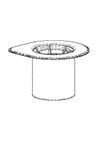 |
|
2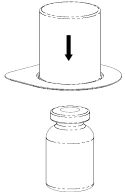 |
|
3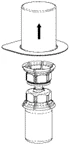 |
|
4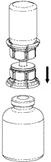 |
|
5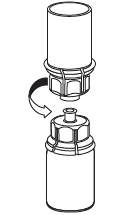 |
|
6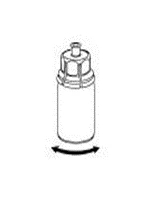 |
|
7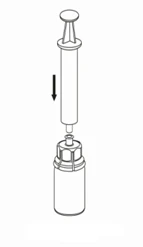 |
|
Withdrawal and administration:
8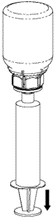 |
|
9 |
|
For the injection of HAEMATE P, the use of disposable plastic syringes is recommended, as glass syringe surfaces tend to stick with this type of solution.
Administration method
Before administration, the reconstituted preparation should be brought to room or body temperature. Inject slowly intravenously at a rate comfortable for the patient. Take care to avoid blood entering the syringe containing the product. Once the product has been transferred into a syringe, it must be used immediately.
If higher doses of Factor VIII are required, administration may be performed by infusion, transferring the reconstituted product into a suitable infusion system.
The injection or infusion rate must not exceed 4 ml/min. Monitor the patient closely for any immediate reactions. If any reaction possibly related to the administration of HAEMATE occurs, reduce the infusion rate or discontinue administration according to the patient's clinical condition.
Undesirable effects
All patients should be carefully monitored to detect early signs of hypervolemia.
Additionally, patients with blood groups A, B, and AB should be monitored for signs of intravascular hemolysis and/or reduction in hematocrit levels.
Patients receiving products containing FVIII:C and VWF:RCo must be closely monitored to avoid excessive increases in plasma FVIII:C levels, which may increase the risk of thrombotic events, including pulmonary embolism.
Incompatibilities
This medicinal product must not be mixed with other medicinal products, solvents, or diluents except those listed in the excipients section.
Shelf life
3 years at 25°C
After reconstitution, the product has demonstrated chemical and physical stability for 3 hours at room temperature (maximum +25°C).
From a microbiological standpoint, and considering that HAEMATE P does not contain preservatives, the reconstituted product should be used immediately. If not administered immediately, the duration and conditions of storage prior to use are the responsibility of the user. Under no circumstances should storage at room temperature exceed 3 hours.
Once the product has been drawn into a syringe, it must be used immediately.
For further information, consult the Summary of Product Characteristics.