Gyno-Canesten
Italy
Table of Contents
- Patient Information Leaflet
- Gyno-Canesten 2% vaginal cream
- 1. What Gyno-Canesten is and what it is used for
- 2. What you need to know before using Gyno-Canesten
- 3. How to use Gyno-Canesten
- 4. Possible side effects
- 5. How to store Gyno-Canesten
- 6. Package contents and other information
- Patient information leaflet
- Gyno-Canesten
- 1. What Gyno-Canesten is and what it is used for
- 2. What you need to know before using Gyno-Canesten
- 3. How to use Gyno-Canesten
- 4. Possible side effects
- 5. How to store Gyno-Canesten
- 6. Package contents and other information
Patient Information Leaflet
Gyno-Canesten 2% vaginal cream
clotrimazole
Please read all of this leaflet carefully before you start using this medicine because it contains important information for you.
Use this medicine exactly as described in this leaflet or as your doctor or pharmacist has instructed you.
- Keep this leaflet. You may need to read it again.
- If you need more information or advice, consult your pharmacist.
- If you experience any side effects, including those not listed in this leaflet, contact your doctor or pharmacist. See section 4.
- Contact your doctor if you do not notice improvement or if your symptoms worsen after 7 days.
Contents of this leaflet:
- What Gyno-Canesten is and what it is used for
- What you need to know before using Gyno-Canesten
- How to use Gyno-Canesten
- Possible side effects
- How to store Gyno-Canesten
- Contents of the pack and other information
1. What Gyno-Canesten is and what it is used for
Gyno-Canesten contains clotrimazole, an antifungal agent that inhibits the growth of fungi.
Gyno-Canesten is used for the treatment of localized symptoms caused by vulvovaginal and glans (the most distal portion of the penis) infections due to Candida, previously diagnosed, in adults and adolescents over 12 years of age. These symptoms include itching, leucorrhoea (whitish vaginal discharge), redness and swelling sensation of the vaginal mucosa and glans, and burning during urination.
Consult your doctor if you do not feel better or if you feel worse after 7 days of treatment.
2. What you need to know before using Gyno-Canesten
Do not use Gyno-Canesten
- if you are allergic to clotrimazole or to any of the other ingredients of this medicine (listed in section 6).
Warnings and precautions
Talk to your doctor or pharmacist before using Gyno-Canesten if:
- you have suffered from the same symptoms less than 2 months ago,
- you have fever, lower abdominal pain, back pain, foul-smelling vaginal discharge, nausea, vaginal bleeding and/or shoulder pain.
The use, especially if prolonged, of topical products (applied to the skin) may cause sensitization reactions (development of increased sensitivity); if this occurs, treatment must be discontinued and a doctor or pharmacist should be consulted.
Avoid contact with the eyes. Do not swallow.
It is preferable to start and complete treatment during the intermenstrual period.
During treatment with this medicine, avoid vaginal intercourse, as the infection could be transmitted to your partner.
Furthermore, to prevent reinfection, particularly in cases of Candida vulvitis or balanitis, local treatment of the partner is recommended.
During treatment with Gyno-Canesten, do not use tampons, vaginal douches, spermicides, or other vaginal products.
During pregnancy, use Gyno-Canesten vaginal tablets and insert them without an applicator.
During treatment with Gyno-Canesten, the effectiveness and safety of latex-based products such as condoms and diaphragms may be reduced.
Other medicines and Gyno-Canesten
Inform your doctor or pharmacist if you are taking, have recently taken, or might take any other medicines.
In particular, inform your doctor if you are being treated with sirolimus or oral tacrolimus (used to prevent organ transplant rejection), as Gyno-Canesten may increase blood levels of sirolimus and tacrolimus. In this case, your doctor will closely monitor your condition.
Pregnancy, breastfeeding and fertility
If you are pregnant, suspect you may be pregnant, planning a pregnancy, or are breastfeeding, consult your doctor or pharmacist before using this medicine.
Pregnancy
Clinical data on the risk during pregnancy are limited.
Gyno-Canesten may be used during pregnancy only if clearly needed and under medical supervision.
Breastfeeding
Gyno-Canesten may be used during breastfeeding.
Fertility
No studies on the effects of clotrimazole on fertility in humans have been conducted; however, animal studies have not shown any reproductive toxicity.
Driving and using machines
This medicine does not affect or affects only insignificantly the ability to drive or operate machinery.
Gyno-Canesten cream contains 20 mg/g of benzyl alcohol
- may cause allergic reactions;
- may cause mild local irritation.
- Gyno-Canesten cream contains cetostearyl alcohol May cause local skin reactions (e.g. contact dermatitis).
3. How to use Gyno-Canesten
Use this medicine exactly as stated in this leaflet or as instructed by your doctor or pharmacist. If you have any doubts, consult your doctor or pharmacist.
Apply as deeply as possible into the vagina once daily, preferably in the evening before bedtime, for 3 consecutive days. If necessary, treatment may be extended for another 3 days.
In case of vulvitis or balanitis caused by Candida, apply a thin layer of Gyno-Canesten cream 2–3 times a day to the entire urogenital and anal area. In case of balanitis, also apply the cream to the foreskin (the skin covering the glans, the most distal part of the penis). Enhance absorption of the locally applied cream by gently massaging the area.
Duration of treatment
The maximum treatment duration is 7 days. If symptoms persist, consult your doctor.
In case of vulvitis or balanitis, treatment should be continued for 1–2 weeks.
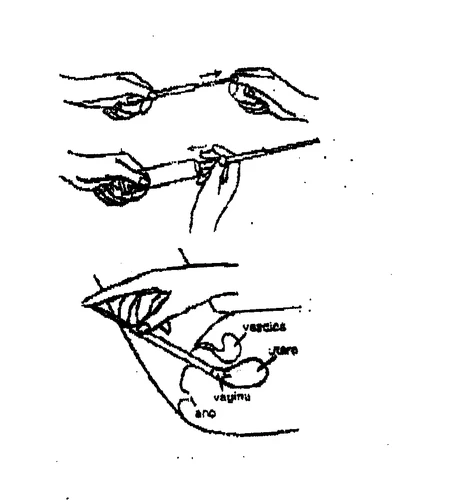
Instructions for use
-
Pull the plunger of the single-use applicator out until it stops.
-
Open the tube. Insert the single-use applicator into the tube and press firmly. Fill the applicator by carefully squeezing the tube.
-
Once lying in a supine position (on your back) with knees slightly bent, insert the applicator as deeply as possible into the vagina and empty it by steadily and continuously pressing the plunger.
-
Remove the applicator and discard it.
The applicator must be used only once and then discarded to avoid possible reinfections.
Hygiene advice
It is important to follow certain personal hygiene practices for prevention:
- avoid wearing tight-fitting clothing;
- avoid wearing nylon or other synthetic underwear: prefer cotton or natural fiber garments;
- avoid using alkaline pH intimate soaps: use acidic pH (pH 5) cleansers to maintain the normal acidic environment of the vagina;
- avoid vaginal douching, which may disrupt the vaginal environment and promote infection;
- if using internal sanitary pads, change them frequently and avoid using them at night; it is preferable to use external sanitary pads.
If you use more Gyno-Canesten than you should
Acute intoxication is unlikely, as it is improbable that toxicity would occur after a single vaginal or cutaneous application of an excessive dose (application over a large area under conditions favorable for absorption) or after accidental oral ingestion. There is no specific antidote. If you accidentally ingest or swallow an excessive amount of Gyno-Canesten, contact your doctor immediately or go to the nearest hospital.
If you forget to use Gyno-Canesten
Continue treatment as recommended.
If you have any doubts about how to use Gyno-Canesten, consult your doctor or pharmacist.
4. Possible side effects
Like all medicines, this medicine can cause side effects, although not everyone will experience them.
The following side effects may occur with this medicine, with a frequency not known (the frequency cannot be estimated from the available data):
- anaphylactic reaction (severe allergic reaction),
- angioedema (swelling of the face, lips, mouth, tongue, and throat which may cause breathing or swallowing difficulties),
- hypersensitivity (allergy),
- syncope (fainting),
- hypotension (low blood pressure),
- dyspnea (difficulty breathing),
- abdominal pain,
- nausea,
- skin rash,
- urticaria (skin irritation),
- exfoliation in the genital area,
- vaginal discharge,
- vaginal bleeding,
- discomfort in the genital area,
- erythema (redness) in the genital area,
- burning in the genital area,
- itching in the genital area,
- pain in the genital area,
- irritation, pain, and edema (fluid accumulation) at the application site.
Following the instructions provided in this leaflet reduces the risk of side effects.
Reporting of side effects
If you experience any side effect, including those not listed in this leaflet, consult your doctor or pharmacist. You may also report side effects directly via the national reporting system at https://www.aifa.gov.it/content/segnalazioni-reazioni-avverse.
By reporting side effects, you can help provide more information on the safety of this medicine.
5. How to store Gyno-Canesten
Keep this medicine out of the sight and reach of children.
Do not use this medicine after the expiry date stated on the packaging. The expiry date refers to the last day of that month. The expiry date applies to the product in its original, unopened packaging, when stored correctly.
Do not use Gyno-Canesten 2% cream more than 3 months after first opening.
Do not dispose of any medicine via wastewater or household waste. Ask your pharmacist how to dispose of medicines you no longer use. This will help protect the environment.
It is important to always keep the information about the medicine available; therefore, retain both the carton and the package leaflet.
6. Package contents and other information
What Gyno-Canesten contains
- The active substance is clotrimazole. 5 g of vaginal cream contains 100 mg of clotrimazole.
- The other ingredients are: sorbitan monostearate, polysorbate 60, cetil palmitate, cetyl stearyl alcohol, octyldodecanol, benzyl alcohol, purified water.
Description of the appearance of Gyno-Canesten and pack contents
Gyno-Canesten is a vaginal cream for gynaecological use.
Pack contents: 30 g with 6 single-use applicators.
Marketing Authorisation Holder and Manufacturer
Marketing Authorisation Holder
Bayer Spa – Viale Certosa 130 – Milan
Manufacturer
Kern Pharma SL – Barcelona - Spain
or
GP Grenzach Produktions GmbH - Germany
Patient information leaflet
Gyno-Canesten
100 mg vaginal tablets
clotrimazole
Please read this leaflet carefully before using this medicine because it contains important information for you.
Always use this medicine exactly as described in this leaflet or as your doctor or pharmacist has instructed you.
- Keep this leaflet. You may need to read it again.
- If you need more advice or information, consult your pharmacist.
- If you experience any side effects, including those not listed in this leaflet, contact your doctor or pharmacist. See section 4.
- Contact your doctor if you do not notice improvement or if your symptoms worsen after 7 days.
Contents of this leaflet:
- What Gyno-Canesten is and what it is used for
- What you need to know before using Gyno-Canesten
- How to use Gyno-Canesten
- Possible side effects
- How to store Gyno-Canesten
- Contents of the pack and other information
1. What Gyno-Canesten is and what it is used for
Gyno-Canesten contains clotrimazole, an antifungal agent that inhibits the growth of fungi.
Gyno-Canesten is used for the treatment of local symptoms caused by diagnosed Candida vulvovaginal infections.
These symptoms include itching, leucorrhoea (whitish vaginal discharge), redness and swelling of the vaginal mucosa, and burning sensation during urination.
Consult your doctor if you do not feel better or if you feel worse after 7 days of treatment.
2. What you need to know before using Gyno-Canesten
Do not use Gyno-Canesten
- if you are allergic to clotrimazole or to any of the other ingredients of this medicine (listed in section 6).
Warnings and precautions
Talk to your doctor or pharmacist before using Gyno-Canesten if:
- you suffered from the same symptoms less than 2 months ago,
- you have fever, lower abdominal pain, back pain, foul-smelling vaginal discharge, nausea, vaginal bleeding and/or shoulder pain.
Use, especially if prolonged, of topical products (applied to the skin) may cause sensitization reactions (development of increased sensitivity); in such cases treatment must be discontinued and a doctor or pharmacist should be consulted.
Avoid contact with the eyes. Do not swallow.
It is preferable to start and complete treatment during the intermenstrual period.
During use of this medicine, avoid vaginal intercourse, as the infection could be transmitted to your partner.
Furthermore, to prevent reinfection, particularly in the presence of vulvitis or candidal balanitis, local treatment of the partner with Gyno-Canesten cream is recommended.
During treatment with Gyno-Canesten, do not use tampons, vaginal douches, spermicides or other vaginal products.
During pregnancy, use Gyno-Canesten vaginal tablets and insert them without an applicator.
During treatment with Gyno-Canesten, the effectiveness and safety of latex-based products such as condoms and diaphragms may be reduced.
Other medicines and Gyno-Canesten
Inform your doctor or pharmacist if you are taking, have recently taken, or might take any other medicines.
In particular, inform your doctor if you are being treated with sirolimus or oral tacrolimus (used to prevent rejection of organ transplants), as Gyno-Canesten may increase blood levels of sirolimus and tacrolimus. In this case, your doctor will closely monitor your condition.
Pregnancy, breastfeeding and fertility
If you are pregnant, think you may be pregnant, planning a pregnancy, or are breastfeeding, consult your doctor or pharmacist before using this medicine.
Pregnancy
Available clinical data on the risk during pregnancy are limited.
Gyno-Canesten may be used during pregnancy only if clearly needed and under medical supervision.
Breastfeeding
Gyno-Canesten may be used during breastfeeding.
Fertility
No studies on the effects of clotrimazole on fertility in humans have been conducted; however, animal studies have not shown any reproductive toxicity.
Driving and using machines
This medicine does not affect or affects only negligibly the ability to drive or use machinery.
3. How to use Gyno-Canesten
Use this medicine exactly as described in this leaflet or as instructed by your doctor or pharmacist. If you have any doubts, consult your doctor or pharmacist.
Insert as deeply as possible into the vagina once daily, preferably in the evening before going to bed, for 6 consecutive days; alternatively, insert 2 tablets for only 3 consecutive days.
In cases of Candida vulvitis or balanitis, apply a thin layer of Gyno-Canesten cream 2–3 times a day to the entire urogenital and anal area.
In chronic recurrent forms, the daily dosage may be increased to 2 vaginal tablets in the evening for a period of 6–12 days.
Duration of treatment
The maximum treatment duration is 7 days. If symptoms persist, consult your doctor.
Instructions for use
After thoroughly washing your hands and assuming a supine position (lying on your back) with knees slightly bent, insert the vaginal tablet directly with your finger as deeply as possible into the vagina.
For Gyno-Canesten vaginal tablets to dissolve completely, the vagina must have an adequate level of moisture. Otherwise, undissolved fragments of the tablet may be expelled. To avoid this, it is important to insert the medicine as deeply as possible into the vagina at bedtime. If, despite this precaution, the tablet does not dissolve completely overnight, consider using Gyno-Canesten vaginal cream instead.
Health education notes
It is important to follow certain personal hygiene practices for prevention:
- Avoid wearing tight-fitting clothing;
- Avoid wearing nylon or other synthetic fiber underwear: prefer cotton or natural fiber garments;
- Avoid using alkaline pH intimate soaps: use acidic pH (pH 5) cleansers to maintain the normal acidic environment of the vagina;
- Avoid using vaginal douches, which may disrupt the vaginal environment and thus promote infection;
- If using internal sanitary pads, change them frequently and avoid using them at night; external sanitary pads are preferable.
If you use more Gyno-Canesten than you should
Acute intoxication is unlikely, as it is improbable that it would occur after a single vaginal or cutaneous application of an excessive dose (application over a large area under conditions favorable to absorption) or after accidental oral ingestion. There is no specific antidote.
If you accidentally ingest or swallow an excessive amount of Gyno-Canesten, contact your doctor immediately or go to the nearest hospital.
If you forget to use Gyno-Canesten
Continue treatment as recommended.
If you have any questions about the use of Gyno-Canesten, consult your doctor or pharmacist.
4. Possible side effects
Like all medicines, this medicine can cause side effects, although not everybody gets them.
- anaphylactic reaction (severe allergic reaction),
- angioedema (swelling of the face, lips, mouth, tongue, and throat which may cause breathing or swallowing difficulties),
- hypersensitivity (allergy),
- syncope (fainting),
- hypotension (low blood pressure),
- dyspnea (difficulty breathing),
- abdominal pain,
- nausea,
- skin rash,
- urticaria (skin irritation),
- exfoliation in the genital area,
- vaginal discharge,
- vaginal bleeding,
- discomfort in the genital area,
- erythema (redness) in the genital area,
- burning in the genital area,
- itching in the genital area,
- pain in the genital area,
- irritation, pain, and edema (fluid accumulation) at the application site.
Following the instructions in this leaflet reduces the risk of side effects.
Reporting of side effects
If you experience any side effect, including those not listed in this leaflet, please inform your doctor or pharmacist. You may also report side effects directly via the national reporting system at https://www.aifa.gov.it/content/segnalazioni-reazioni-avverse.
By reporting side effects, you can help provide more information on the safety of this medicine.
5. How to store Gyno-Canesten
Keep this medicine out of the sight and reach of children.
Do not use this medicine after the expiry date stated on the packaging. The expiry date refers to the last day of that month. The expiry date applies to the product in its original, unopened packaging, correctly stored.
Do not store above 25°C.
Do not dispose of any medicine via wastewater or household waste. Ask your pharmacist how to dispose of medicines you no longer use. This will help protect the environment.
It is important to always keep the information available, therefore keep both the carton and the package leaflet.
6. Package contents and other information
What Gyno-Canesten contains
- The active substance is clotrimazole. Each vaginal tablet contains 100 mg of clotrimazole.
- The other ingredients are: monohydrate lactose, maize starch, magnesium stearate, anhydrous colloidal silica, calcium lactate pentahydrate, crospovidone, lactic acid, hypromellose, microcrystalline cellulose.
Description of the appearance of Gyno-Canesten and contents of the pack
Gyno-Canesten is presented as vaginal tablets for gynaecological use.
The pack contains 12 vaginal tablets.
Marketing Authorisation Holder and Manufacturer
Marketing Authorisation Holder
Bayer Spa – Viale Certosa 130 – Milan
Manufacturer
GP Grenzach Produktions GmbH - Germany