Guttalax
Italy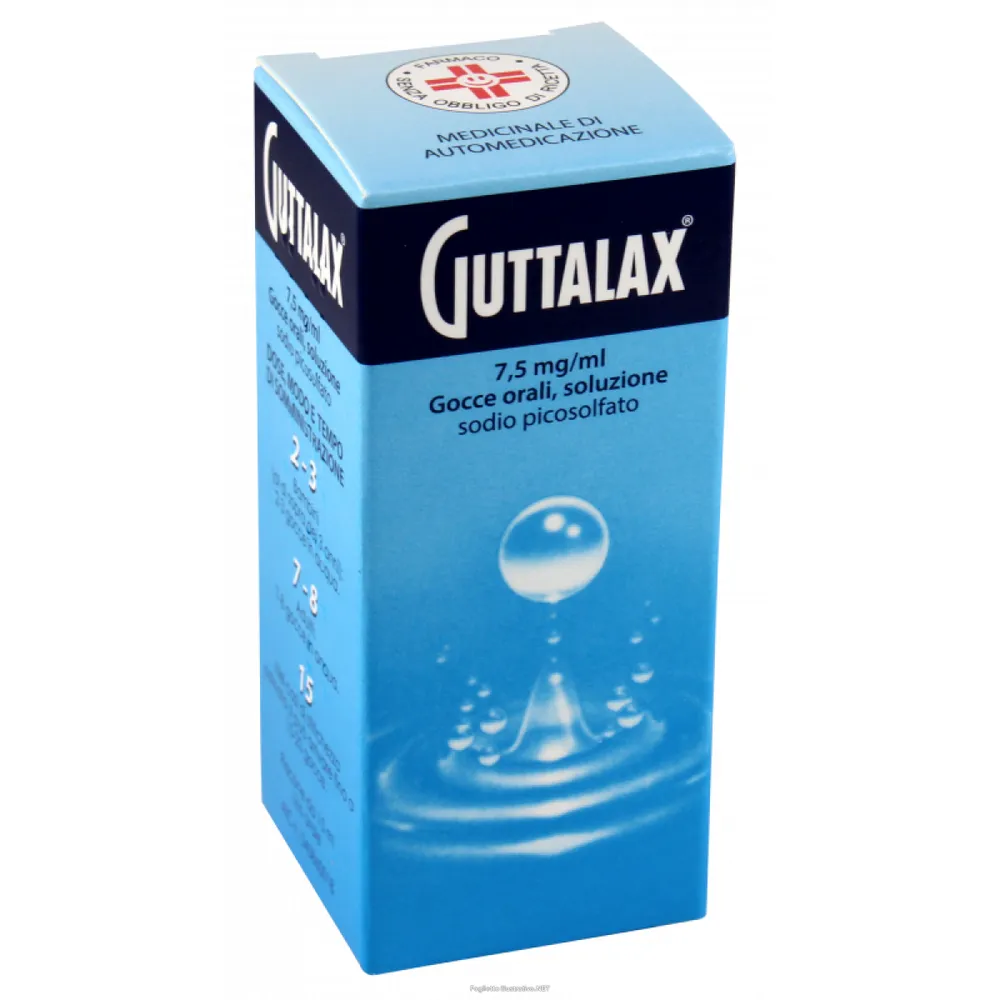
Table of Contents
- Patient Information Leaflet: Instructions for the User
- GUTTALAX 2.5 mg Soft Capsules
- 1. What Guttalax is and what it is used for
- 2. What you should know before taking/giving Guttalax to the child
- 3. How to take/give Guttalax to a child
- 4. Possible side effects
- 5. How to store Guttalax
- 6. Package contents and other information
- Package leaflet: information for the user
- GUTTALAX 7.5 mg/ml oral drops, solution
- 1. What Guttalax is and what it is used for
- 2. What you should know before taking/giving Guttalax to the child
- 3. How to take/give Guttalax to a child
- 4. Possible side effects
- 5. How to store Guttalax
- 6. Package contents and other information
Patient Information Leaflet: Instructions for the User
GUTTALAX 2.5 mg Soft Capsules
Sodium Picosulfate
Please read all of this leaflet carefully before taking/giving this medicine to your child, as it contains important information for you.
Always take/give this medicine exactly as described in this leaflet or as your doctor or pharmacist has instructed.
- Keep this leaflet. You may need to read it again.
- If you need more information or advice, consult your pharmacist.
- If any adverse reactions occur, including those not listed in this leaflet, contact your doctor or pharmacist. See section 4.
- Contact your doctor if you do not notice any improvement or if symptoms worsen after 7 days.
Contents of this leaflet:
- What Guttalax is and what it is used for
- What you need to know before taking/giving Guttalax to your child
- How to take/give Guttalax to your child
- Possible side effects
- How to store Guttalax
- Package contents and other information
1. What Guttalax is and what it is used for
Guttalax contains sodium picosulfate. It belongs to a group of medicines called stimulant laxatives, which work by stimulating intestinal movements and accelerating the passage of intestinal contents.
Guttalax is used in adults, children over 4 years of age, and adolescents for the short-term treatment of occasional constipation.
Consult your doctor if you do not feel better or if you feel worse after 7 days.
2. What you should know before taking/giving Guttalax to the child
Do not take/do not give the child Guttalax if
- you and/or the child are allergic to sodium picosulfate or to any of the other ingredients of this medicine (listed in section 6);
- you and/or the child suffer from intestinal muscle blockage (paralytic ileus) preventing normal intestinal transit;
- you and/or the child suffer from acute, severe abdominal pain, with or without fever, such as appendicitis (inflammation of the appendix, a part of the intestine), or severe stomach pain associated with nausea and vomiting;
- you and/or the child suffer from intestinal obstruction or narrowing (intestinal stenosis) or of the bile ducts (where bile flows, a substance involved in certain digestive processes);
- you and/or the child suffer from acute inflammation of the stomach and intestines;
- you and/or the child suffer from unexplained rectal bleeding;
- you and/or the child suffer from severe loss of body water (dehydration);
- you and/or the child suffer from nausea or vomiting;
- you and/or the child suffer from gallstones (presence of small stones obstructing bile flow);
- you and/or the child suffer from impaired liver function (hepatic insufficiency).
Do not administer Guttalax soft capsules to children under 4 years of age.
If you are pregnant or breastfeeding, see section “Pregnancy, breastfeeding and fertility”.
Warnings and precautions
Talk to your doctor or pharmacist before taking/giving Guttalax to the child.
After taking Guttalax, cases of dizziness and/or fainting (syncope) have been reported. Data
relating to these cases suggest that such events, rather than being related to taking Guttalax, may be interpreted as manifestations of “defecation syncope” (attributable to the effort of defecation), or as a reflex response to abdominal pain associated with constipation itself.
Like all laxatives, do not take/do not give the child Guttalax daily or for prolonged periods without first consulting a doctor to determine the cause of constipation. Treatment of chronic or recurrent constipation always requires medical supervision for diagnosis, prescription of medication, and monitoring during therapy.
In particular, consult your doctor:
- when the need for a laxative arises from a sudden change in previous bowel habits (frequency and characteristics of bowel movements) lasting more than two weeks, or when use of the laxative fails to produce an effect;
- in cases of episodes of chronic or recurrent constipation;
- if you are elderly or in poor health.
Do not use this medicine to try to lose weight. This medicine does not reduce calorie absorption from the intestine and may cause serious adverse effects. This medicine, like other stimulant laxatives, does not help with weight loss.
Laxative abuse
Abuse of laxatives (frequent or prolonged use, or excessive doses) may cause persistent diarrhoea, resulting in loss of water, mineral salts (especially potassium), and other essential nutrients.
In severe cases, dehydration (loss of fluids) or hypokalaemia (reduced levels of potassium in the blood) may occur, which can lead to cardiac or neuromuscular dysfunction, especially if you are also taking cardiac glycosides, diuretics, or corticosteroids.
Abuse of laxatives, particularly contact laxatives (stimulant laxatives), may lead to dependence (and thus possible need for progressively increasing doses), chronic constipation, and loss of normal intestinal function (intestinal atony).
Children and adolescents
Do not administer Guttalax to children aged between 4 and 12 years without first consulting a doctor.
Other medicines and Guttalax
Tell your doctor or pharmacist if you/the child are taking, have recently taken, or might take any other medicines.
Inform your doctor if you/the child are taking:
- diuretics (medicines that increase urinary excretion);
- adrenocorticosteroids (medicines for treating inflammation). If you take these medicines and excessive doses of Guttalax, you may experience an imbalance of substances in the blood (electrolytes). This imbalance, in turn, may increase sensitivity to cardioactive glycosides (medicines for treating heart disorders);
- antacids (for treating heartburn). These may alter the effect of the medicine; wait at least one hour before taking the laxative;
- antibiotics. These may reduce the laxative effect of Guttalax;
- oral anticoagulants (medicines that make the blood more fluid). Continued use of Guttalax with oral anticoagulants may enhance their effect and alter glucose tolerance (a type of sugar).
Laxatives may reduce the intestinal transit time and thus the absorption of other medicines taken simultaneously by oral route.
Therefore, avoid taking/giving the child laxatives and other medicines at the same time: after taking/giving a medicine to the child, wait at least 2 hours before taking the laxative.
Guttalax with drinks
Milk may alter the effect of the medicine; wait at least 1 hour before taking/giving the laxative to the child.
Pregnancy, breastfeeding and fertility
If you are pregnant, suspect you may be pregnant, plan to become pregnant, or are breastfeeding, ask your doctor or pharmacist for advice before taking this medicine.
Pregnancy
There are no adequate and well-controlled studies on the use of this medicine during pregnancy. Therefore, although no adverse or harmful effects have ever been reported during pregnancy, use Guttalax only if necessary and under direct medical supervision, with the doctor evaluating the expected benefit against any possible risk to the fetus.
Breastfeeding
Sodium picosulfate and its derivatives do not pass into breast milk; however, use the medicine only if necessary and under direct medical supervision, with the doctor evaluating the expected benefit against any possible risk to the infant.
Fertility
No studies have been conducted to investigate effects on human fertility.
Driving and using machines
Since no studies have been performed on the effects on the ability to drive and use machines, no effects of Guttalax affecting such abilities are known.
However, patients should be informed that, due to a reflex response to abdominal pain related to constipation itself, dizziness and/or fainting (syncope) may occur.
If you/the child experience abdominal pain (abdominal spasm), avoid potentially dangerous activities such as driving vehicles/bicycles or operating machinery.
Guttalax contains sodium
This medicine contains less than 1 mmol of sodium (23 mg) per soft capsule, i.e. essentially “sodium-free”.
3. How to take/give Guttalax to a child
Take/give this medicine to your child exactly as stated in this leaflet or as directed by your doctor or pharmacist. If you have any doubts, consult your doctor or pharmacist.
The recommended dose is as follows:
Adults
2–3 soft capsules per day (5–7.5 mg).
Use in children and adolescents
Children between 4 and 10 years: 1 soft capsule per day (2.5 mg).
Children over 10 years: 2–3 soft capsules per day (5–7.5 mg).
Children aged between 4 and 12 years should take Guttalax under medical supervision. Do not administer Guttalax to children under 4 years of age.
For children under 4 years of age, use Guttalax oral drops.
Warning: Do not exceed the recommended doses without medical advice.
It is advisable to start with the lowest recommended dose.
The correct dose is the lowest dose that produces easy evacuation of soft stools.
If necessary, the dose may be increased gradually, but must never exceed the maximum recommended dose.
Take/give the soft capsules preferably in the evening to induce bowel movement the following morning.
Do not take/give the soft capsules together with milk or antacids (e.g. bicarbonate).
The soft capsules should be swallowed with an adequate amount of water (a full glass). A fluid-rich diet enhances the effect of the medicine.
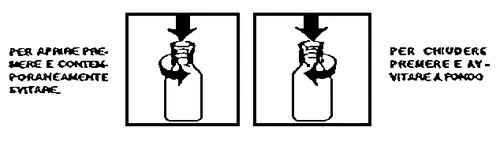
Open the bottle containing the soft capsules as shown in the figure:
Duration of treatment
Use laxatives as infrequently as possible and for no longer than seven days. Use beyond this period requires a doctor's prescription following appropriate individual assessment.
Consult your doctor if symptoms recur frequently or if you have noticed any recent changes in bowel habits.
If you take/give your child more Guttalax than you should
In case of accidental ingestion/overdose of Guttalax, contact your doctor immediately or go to the nearest hospital, where appropriate measures will be taken.
Symptoms
If you take/give your child excessive doses of Guttalax, symptoms may include abdominal cramps and watery stools (diarrhea), as well as significant loss of fluids and blood components (potassium and other electrolytes).
Cases of colonic mucosal ischemia (when the colon, a part of the intestine, is inadequately oxygenated due to reduced blood supply) have been reported.
Chronic abuse of Guttalax, as with other laxatives, may result in chronic diarrhea, abdominal pain, low blood potassium levels (hypokalaemia), increased production of a hormone (aldosterone) by the adrenal gland, which may lead to low potassium levels (secondary hyperaldosteronism), and formation of kidney stones (renal calculi). In addition, kidney damage, reduced blood acidity (metabolic alkalosis), and muscle weakness due to low potassium levels (hypokalaemia) may occur.
See also the section “Warnings and precautions” regarding laxative abuse.
If you forget to take/give your child Guttalax
Do not take/give a double dose to make up for the missed capsule.
If you stop treatment with Guttalax
If you have any doubts about using this medicine, consult your doctor or pharmacist.
4. Possible side effects
Like all medicines, this medicine can cause side effects, although not everyone gets them.
The following side effects are listed by frequency:
very common (may affect more than 1 in 10 people)
- diarrhoea; common (may affect up to 1 in 10 people)
- abdominal cramps, abdominal pain and abdominal discomfort; uncommon (may affect up to 1 in 100 people)
- dizziness. Cases of dizziness occurring after taking sodium picosulfate appear to be due to a reflex response (for example, following abdominal pain or bowel movement);
- vomiting, nausea; not known (frequency cannot be estimated from the available data)
- hypersensitivity;
- skin reactions such as swelling of the skin and mucous membranes of the face, lips and throat (angioedema), rash due to taking the medicine, rash, itching;
- fainting (syncope). Cases of fainting occurring after taking sodium picosulfate appear to be due to a reflex response (for example, following abdominal pain or bowel movement).
In addition, the following effects may occasionally occur, particularly in cases of severe constipation:
- stomach cramps (cramping pains);
- severe stomach pains with cramps (abdominal colic).
These side effects are generally transient.
Reporting of side effects
If you and/or the child experience any side effect, including those not listed in this leaflet, talk to your doctor or pharmacist. You can also report side effects directly via the national reporting system on the website of the Italian Medicines Agency: https://www.aifa.gov.it/content/segnalazioni-reazioni-avverse. By reporting side effects, you can help provide more information on the safety of this medicine.
5. How to store Guttalax
Keep this medicine out of the sight and reach of children.
Do not use this medicine after the expiry date stated on the packaging after "Exp".
The expiry date refers to the last day of that month.
Store below 30°C.
Do not dispose of any medicine via wastewater or household waste. Ask your pharmacist how to
dispose of medicines you no longer use. This will help protect the environment.
6. Package contents and other information
What Guttalax contains
- The active substance is: sodium picosulfate 2.5 mg.
- The other components are: macrogol 400, propylene glycol, purified water, gelatin, glycerol.
Description of the appearance of Guttalax and contents of the pack
Guttalax 2.5 mg soft capsules are presented as round soft gelatin capsules for oral use.
Pack size: 30 soft capsules.
Marketing Authorization Holder
Opella Healthcare Italy S.r.l.
Viale L. Bodio, 37/B
20158 Milano (Italy)
Manufacturer
Opella Healthcare Hungary Limited Liability Company (Opella Healthcare Hungary Ltd.) -
Veresegyház site
2112, Veresegyház, Lévai u. 5, Hungary
Health education notes
First of all, you should bear in mind that in most cases, a balanced diet rich in water and fibre (bran, vegetables and fruit) can permanently resolve constipation problems.
Many people believe they are constipated if they do not have a bowel movement every day. This is a mistaken belief, as going less than daily is completely normal for many individuals. Instead, consider that constipation occurs when bowel movements are reduced compared to your own personal habits and are associated with the passage of hard stools. If episodes of constipation occur repeatedly, consult your doctor.
Package leaflet: information for the user
GUTTALAX 7.5 mg/ml oral drops, solution
Sodium picosulfate
Please read this leaflet carefully before taking/giving the child this medicine because
it contains important information for you.
Always take/give the child this medicine exactly as described in this leaflet or as your doctor or pharmacist has told you to do.
- Keep this leaflet. You may need to read it again.
- If you would like more information or advice, please consult your pharmacist.
- If any side effects occur, including those not listed in this leaflet, consult your doctor or pharmacist. See section 4.
- Consult your doctor if you do not notice improvement or if symptoms worsen after 7 days.
Contents of this leaflet:
- What Guttalax is and what it is used for
- What you need to know before taking/giving the child Guttalax
- How to take/give the child Guttalax
- Possible side effects
- How to store Guttalax
- Contents of the pack and other information
1. What Guttalax is and what it is used for
Guttalax contains sodium picosulfate. It belongs to a group of medicines called stimulant laxatives, which work by stimulating intestinal movements and accelerating the passage of intestinal contents.
Guttalax is used in adults, children from 3 years of age, and adolescents for the short-term treatment of occasional constipation.
Consult your doctor if you do not feel better or feel worse after 7 days.
2. What you should know before taking/giving Guttalax to the child
Do not take/do not give Guttalax to the child
- if you and/or the child are allergic to sodium picosulfate or to any of the other ingredients of this medicine (listed in section 6);
- if you and/or the child suffer from intestinal muscle paralysis (paralytic ileus) that prevents normal intestinal transit;
- if you and/or the child suffer from acute, severe abdominal pain, with or without fever, such as appendicitis (inflammation of the appendix, a part of the intestine), or severe stomach pain associated with nausea and vomiting;
- if you and/or the child suffer from intestinal obstruction or narrowing (intestinal stenosis) or obstruction/narrowing of the bile ducts (where bile flows, a substance involved in some digestive processes);
- if you and/or the child suffer from acute inflammation of the stomach and intestines;
- if you and/or the child suffer from unexplained rectal bleeding;
- if you and/or the child suffer from severe loss of body water (state of dehydration);
- if you and/or the child suffer from nausea or vomiting;
- if you and/or the child suffer from a hereditary disease that may be incompatible with one of the excipients (see "Guttalax contains sorbitol, sodium benzoate and sodium");
- if you and/or the child suffer from gallstones (presence of small stones obstructing bile flow);
- if you and/or the child suffer from reduced liver function (hepatic insufficiency).
Do not administer Guttalax drops to children under 3 years of age.
If you are pregnant or breastfeeding, see section "Pregnancy, breastfeeding and fertility".
Warnings and precautions
Talk to your doctor or pharmacist before taking/giving Guttalax to the child.
After taking Guttalax, cases of dizziness and/or fainting (syncope) have been reported.
Available data suggest that these events, rather than being related to Guttalax intake, may be interpreted as manifestations of "defecation syncope" (caused by straining during defecation), or as a reflex response to abdominal pain associated with constipation itself.
Like all laxatives, do not take/do not give Guttalax daily or for prolonged periods without prior medical evaluation of the cause of constipation. Treatment of chronic or recurrent constipation always requires medical intervention for diagnosis, prescription of medication, and monitoring during therapy.
In particular, consult your doctor:
- when the need for a laxative arises from a sudden change in previous bowel habits (frequency and characteristics of bowel movements) lasting more than two weeks, or when use of the laxative fails to produce effects;
- in cases of episodes of chronic or recurrent constipation;
- if you are elderly or in poor health.
Do not use this medicine to try to lose weight. This medicine does not reduce calorie absorption from the intestine and may cause serious adverse effects. This medicine, like other stimulant laxatives, does not help with weight loss.
Laxative abuse
Abuse of laxatives (frequent or prolonged use, or excessive doses) may cause persistent diarrhea, leading to loss of water, mineral salts (especially potassium), and other essential nutrients.
In severe cases, dehydration (fluid loss) or hypokalemia (decreased blood potassium levels) may occur, which can lead to cardiac or neuromuscular dysfunction, especially if you are concurrently taking cardiac glycosides, diuretics, or corticosteroids.
Abuse of laxatives, particularly stimulant (contact) laxatives, may lead to dependence (and thus possible need for progressive dose increases), chronic constipation, and loss of normal intestinal function (intestinal atony).
Children and adolescents
Do not administer Guttalax to children aged between 3 and 12 years without first consulting a doctor.
Other medicines and Guttalax
Inform your doctor or pharmacist if you/the child are taking, have recently taken, or might take any other medicines.
Inform your doctor if you/the child are taking:
- diuretics (medicines that increase urinary excretion);
- adrenocorticosteroids (medicines used to treat inflammation). If you take these medicines along with excessive doses of Guttalax, you may develop an imbalance of substances in the blood (electrolytes). This imbalance, in turn, may increase sensitivity to cardioactive glycosides (medicines used to treat heart disorders);
- antacids (used to treat heartburn). These may alter the effect of the medicine; wait at least one hour before taking the laxative;
- antibiotics. These may reduce the laxative effect of Guttalax;
- oral anticoagulants (medicines that make the blood thinner). Prolonged use of Guttalax with oral anticoagulants may enhance their effect and alter glucose tolerance (a type of sugar).
Laxatives may reduce the intestinal transit time and thus the absorption of other medicines taken simultaneously by mouth.
Therefore, avoid taking/giving the child laxatives and other medicines at the same time: after taking/giving any medicine to the child, wait at least 2 hours before taking the laxative.
Guttalax with drinks
Milk may alter the effect of the medicine; wait at least one hour before taking/giving the laxative to the child.
Pregnancy, breastfeeding and fertility
If you are pregnant, suspect you may be pregnant, plan to become pregnant, or are breastfeeding, consult your doctor or pharmacist before taking this medicine.
Pregnancy
There are no adequate and well-controlled studies on the use of this medicine during pregnancy. Therefore, although no adverse or harmful effects have ever been reported during pregnancy, use Guttalax only if necessary and under direct medical supervision, with the doctor evaluating the expected benefit against any possible risk to the fetus.
Breastfeeding
Sodium picosulfate and its derivatives do not pass into breast milk; however, use the medicine only if necessary and under direct medical supervision, with the doctor evaluating the expected benefit against any possible risk to the infant.
Fertility
No studies have been conducted to investigate effects on human fertility.
Driving and using machines
Since no studies have been conducted on the effects on the ability to drive or use machines, no effects of Guttalax impairing such abilities are known.
However, patients should be informed that, due to a reflex response to abdominal pain related to constipation itself, dizziness and/or fainting (syncope) may occur.
If you/the child experience abdominal pain (abdominal cramps), avoid potentially dangerous activities such as driving vehicles/bicycles or operating machinery.
Guttalax contains sorbitol, sodium benzoate and sodium
Each drop of this medicine contains 30 mg of sorbitol, equivalent to 600 mg of sorbitol in the maximum recommended daily dose for adult treatment (20 drops) and to 90 mg of sorbitol in the maximum recommended daily dose for pediatric treatment (3 drops).
Sorbitol is a source of fructose. If your doctor has told you that you (or your child) have an intolerance to certain sugars, or if you have been diagnosed with hereditary fructose intolerance (HFI), a rare genetic condition in which patients cannot metabolize fructose, speak with your doctor before you (or your child) take this medicine.
Each drop of this medicine contains 0.13 mg of sodium benzoate, equivalent to 2.7 mg of benzoate salt in the maximum recommended daily dose for adult treatment (20 drops) and to 0.4 mg of benzoate salt in the maximum recommended daily dose for pediatric treatment (3 drops).
This medicine contains less than 1 mmol of sodium (23 mg) in 20 drops, i.e., essentially "sodium-free".
3. How to take/give Guttalax to a child
Take/give this medicine to the child exactly as described in this leaflet or as directed by your doctor or pharmacist. If you have any doubts, consult your doctor or pharmacist.
The recommended dose is as follows:
Adults
7-8 drops in water. Reduce the dose if the effect is too strong, or increase it if the laxative effect is not achieved.
In cases of persistent constipation, you may take up to a maximum of 15-20 drops in water.
Use in children and adolescents
Children over 3 years: 2-3 drops in water.
Children aged between 3 and 12 years should take Guttalax under medical supervision.
Guttalax must not be used in children under 3 years of age.
Warning: Do not exceed the recommended doses without medical advice.
It is advisable to start with the lowest recommended dose.
The correct dose is the minimum required to produce easy passage of soft stools.
If necessary, the dose may be increased, but must never exceed the maximum dose indicated.
Take/give the drops to the child preferably in the evening to induce bowel movement the following morning.
Do not take/give the drops together with milk or antacids (e.g. bicarbonate).
The drops should be taken with an adequate amount of water. A diet rich in fluids enhances the effect of the medicine.
Duration of treatment
Use laxatives as infrequently as possible and for no longer than seven days. Use beyond this period requires a doctor's prescription following appropriate individual assessment.
Consult your doctor if the condition recurs or if you have noticed any recent changes in its characteristics.
If you take/give the child more Guttalax than you should
In case of accidental ingestion/overdose of Guttalax, contact your doctor immediately or go to the nearest hospital, where appropriate measures will be taken.
Symptoms
If you take/give the child excessive doses of Guttalax, symptoms may include abdominal cramps and watery stools (diarrhea), as well as significant loss of body fluids and blood components (potassium and other electrolytes).
Cases of colonic mucosal ischemia (when the colon, a part of the intestine, is inadequately oxygenated due to reduced blood supply) have been reported.
If you or the child chronically abuse Guttalax or other laxatives, chronic diarrhea, abdominal pain, low blood potassium levels (hypokalaemia), increased production of an adrenal hormone (aldosterone), which may lead to low blood potassium levels (secondary hyperaldosteronism), and kidney stone formation (nephrolithiasis) may occur. In addition, kidney damage, reduced blood acidity (metabolic alkalosis), and muscle weakness due to low potassium levels (hypokalaemia) may develop.
See also the information in section “Warnings and precautions” regarding laxative abuse.
If you forget to take/give the child Guttalax
Do not take/give a double dose to make up for a forgotten dose.
If you stop treatment with Guttalax
If you have any doubts about using this medicine, consult your doctor or pharmacist.
4. Possible side effects
Like all medicines, this medicine can cause side effects, although not everybody gets them.
The following side effects are listed according to frequency:
very common (may affect more than 1 in 10 people)
- diarrhoea; common (may affect up to 1 in 10 people)
- abdominal cramps, abdominal pain and abdominal discomfort; uncommon (may affect up to 1 in 100 people)
- dizziness. Cases of dizziness occurring after administration of sodium picosulfate appear to be attributable to a reflex response (for example, following abdominal pain or bowel movement);
- vomiting, nausea; not known (frequency cannot be estimated from the available data)
- hypersensitivity;
- skin reactions such as swelling of the skin and mucous membranes of the face, lips and throat (angioedema), rashes due to taking the medicine, rash, pruritus;
- fainting (syncope). Cases of fainting occurring after administration of sodium picosulfate appear to be attributable to a reflex response (for example, following abdominal pain or bowel movement).
In addition, the following effects may occasionally occur, more frequently in cases of severe constipation:
- stomach cramps (cramp-like pains);
- severe stomach pains with cramps (abdominal colic).
These side effects are generally transient.
Reporting of side effects
If you and/or the child experience any side effect, including those not listed in this leaflet, please consult your doctor or pharmacist. You may also report side effects directly via the national reporting system on the website of the Italian Medicines Agency: https://www.aifa.gov.it/content/segnalazioni-reazioni-avverse . By reporting side effects, you can help provide more information on the safety of this medicine.
5. How to store Guttalax
Keep this medicine out of the sight and reach of children.
Do not use this medicine after the expiry date stated on the carton after "Exp".
The expiry date refers to the last day of that month.
Keep the bottle in its outer packaging to protect the medicine from light.
After first opening the bottle, the product can be used for 12 months.
Do not dispose of any medicine via wastewater or household waste. Ask your pharmacist how to dispose of medicines you no longer use. This will help protect the environment.
6. Package contents and other information
What Guttalax contains
- The active substance is: sodium picosulfate; 1 ml of solution contains 7.5 mg of sodium picosulfate, equivalent to 0.5 mg of sodium picosulfate per drop of solution.
- The other components are: sodium benzoate (E211), liquid sorbitol (E420) (see section “Guttalax contains sorbitol, sodium benzoate and sodium”), sodium citrate, citric acid monohydrate, purified water.
Description of the appearance of Guttalax and contents of the pack
Guttalax is an oral solution. The pack consists of a bottle with a dropper containing 10 ml or 15 ml.
Not all pack sizes may be marketed.
Marketing Authorization Holder
Opella Healthcare Italy S.r.l.
Viale L. Bodio, 37/B
20158 Milano (Italy)
Manufacturer
Istituto De Angeli S.r.l. – Loc. Prulli n. 103/c – 50066 Reggello (FI)
Health education notes
First of all, you should bear in mind that in most cases, a balanced diet rich in water and fibre (bran, vegetables and fruit) can permanently resolve constipation.
Many people believe they suffer from constipation if they do not have a bowel movement every day. This is a mistaken belief, as going less than daily is completely normal for many individuals. Instead, consider that constipation occurs when bowel movements are reduced compared to your usual pattern and are associated with the passage of hard stools. If episodes of constipation recur frequently, consult your doctor.