Ginoden
Italy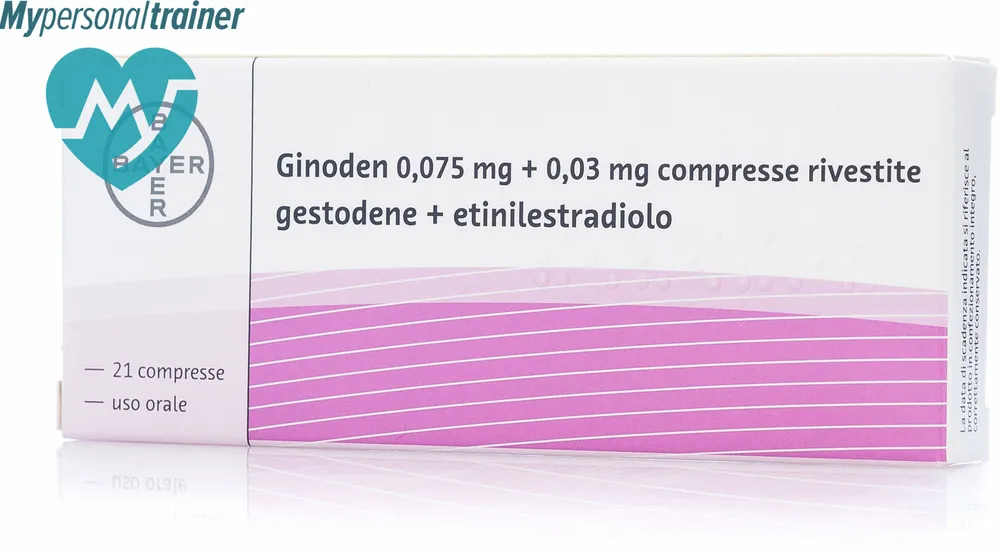
Table of Contents

Package leaflet: Information for the user
Ginoden 0.075 mg + 0.03 mg coated tablets
gestodene + ethinylestradiol
Please read this entire instruction leaflet carefully before taking this medicine, because it contains important information for you.
- Keep this leaflet. You may need to read it again.
- If you have any questions, consult your doctor or pharmacist.
- This medicine has been prescribed for you only. Do not give it to others, even if their symptoms are the same as yours, as it could be harmful.
- If you experience any adverse effects, including those not listed in this leaflet, consult your doctor or pharmacist. See section 4.
Important information about combined hormonal contraceptives (CHCs):
- They are among the most reliable reversible contraceptive methods when used correctly;
- They slightly increase the risk of blood clots in veins and arteries, especially during the first year of use or when restarting a combined hormonal contraceptive after a break of 4 or more weeks;
- Be vigilant and consult your doctor if you think you may be experiencing symptoms of a blood clot (see section “Blood clots”).
Contents of this leaflet:
- What Ginoden is and what it is used for
- What you need to know before taking Ginoden
- How to take Ginoden
- Possible side effects
- How to store Ginoden
- Package contents and other information
1. What Ginoden is and what it is used for
Ginoden is a medicine containing two different female hormones: gestodene (a progestogen) and
ethinylestradiol (an oestrogen), which belong to a group of medicines called combined oestrogen-progestogen preparations, fixed combinations.
This medicine is a combined hormonal contraceptive (COC) used to prevent pregnancy.
2. What you should know before taking Ginoden
General information
Before starting to take Ginoden, you must read the information about blood clots in the section
"Blood clots". It is particularly important that you read about the symptoms of a blood clot (see
section "Blood clots").
Before starting or resuming use of Ginoden, a thorough medical examination is recommended. In addition, periodic check-ups—at least once a year—are advisable while using this product. The frequency and type of examination will be determined by your doctor and will particularly include monitoring of blood pressure, breast examination, abdominal and general gynecological examination including a Pap test and relevant blood tests.
Like all oral contraceptive pills, Ginoden does not protect against HIV infection (AIDS) or any other sexually transmitted disease. Ginoden is prescribed for personal use only and must not be shared among multiple users.

Do not take Ginoden
Do not take Ginoden if you have any of the conditions listed below.
If you have any of the conditions listed below, consult your doctor. Your doctor will discuss with you other birth control methods that may be more suitable for your individual case.
- if you are allergic to the active substances gestodene and ethinylestradiol or to any of the other ingredients of this medicine (listed in section 6);
- if you have (or have ever had) a blood clot in a blood vessel in your leg (deep vein thrombosis, DVT), lung (pulmonary embolism, PE), or other organs;
- if you know you have a disorder affecting blood clotting, such as protein C deficiency, protein S deficiency, antithrombin-III deficiency, factor V Leiden, or antiphospholipid antibodies;
- if you are scheduled for surgery or will be bedridden for a prolonged period (see section "Blood clots");
- if you have ever had a heart attack or stroke;
- if you have (or have ever had) angina pectoris (a condition causing severe chest pain and which may be an early sign of heart attack) or transient ischemic attack (TIA – temporary stroke-like symptoms);
- if you have any of the following diseases, which may increase the risk of arterial blood clots:
- severe diabetes with blood vessel damage,
- very high blood pressure,
- very high levels of fats (cholesterol or triglycerides) in the blood,
- a condition known as hyperhomocysteinemia;
- if you have (or have ever had) a type of migraine called "migraine with aura";
- if you have (or have ever had) jaundice (yellowing of the skin) or severe liver disease;
- if you have (or have ever had) breast cancer or cancer of the genital organs;
- if you have (or have ever had) benign or malignant liver tumour;
- if you have vaginal bleeding of unknown origin;
- if you are (or suspect you may be) pregnant;
- if you have vascular eye diseases;
- in combination with Ritonavir (an antiviral medicine). If any of these conditions occur for the first time while using the product, stop taking it immediately and consult your doctor. In the meantime, use non-hormonal contraceptive methods. See also “General information”.
Do not take Ginoden if you have hepatitis C and are taking medicines containing
ombitasvir/paritaprevir/ritonavir, dasabuvir, glecaprevir/pibrentasvir, or
sofosbuvir/velpatasvir/voxilaprevir (also see section “Other medicines and Ginoden”).
Warnings and precautions
When to be especially careful with Ginoden
When should you contact a doctor?
Seek urgent medical advice
- if you notice possible signs of a blood clot which may indicate that you have a blood clot in the leg (deep vein thrombosis), in the lung (pulmonary embolism), a heart attack, or a stroke (see the following section "Blood clots").
For a description of the symptoms of these serious adverse effects, refer to the section “How to recognize a blood clot”.

This patient information leaflet describes certain situations in which you should stop taking the product or in which its effectiveness may be reduced. In such situations, you should either avoid sexual intercourse or use additional non-hormonal contraceptive precautions such as condoms or other barrier methods. Do not use rhythm or basal body temperature methods, which may be unreliable, since the pill alters the normal fluctuations in body temperature and cervical mucus that occur during the menstrual cycle.
Precautions
If you have any of the conditions listed below, use of a combined oral contraceptive may require close medical supervision. Inform your doctor if you have any of the conditions listed below before starting to take Ginoden. Your doctor may recommend a completely different (non-hormonal) method of contraception.
Inform your doctor if any of the following conditions apply to you.
If any of these conditions develop or worsen while you are using Ginoden, inform your doctor.
- smoking;
- diabetes;
- overweight;
- hypertension;
- heart valve disorders or certain heart rhythm disorders;
- superficial phlebitis (vein inflammation);
- varicose veins;
- history of thrombosis, heart attack, or stroke (even in close family members);
- migraine (one-sided headache);
- depression;
- epilepsy (see “Other medicines and Ginoden”);
- history of high cholesterol and triglyceride (fats) levels in the blood (even in close family members);
- breast lumps;
- family history of breast cancer;
- liver or gallbladder disease;
- porphyria (a metabolic blood disorder);
- if you suffer or have suffered from chloasma (brownish-yellow pigmented patches, especially on the face). In this case, avoid prolonged exposure to sunlight or ultraviolet rays;
- if you have suffered from herpes gestationis (an autoimmune skin disease affecting women during pregnancy or immediately after childbirth);
- certain medical conditions characterized by resistance to Activated Protein C, hyperhomocysteinemia, antithrombin III deficiency, protein C deficiency, protein S deficiency, antiphospholipid antibodies (anticardiolipin antibodies, lupus anticoagulant), which predispose to venous or arterial thrombosis;
- Sydenham's chorea (a disorder of the central nervous system);
- hearing loss due to otosclerosis;
- if you have symptoms of angioedema such as swelling of the face, tongue and/or throat and/or difficulty swallowing or hives with possible breathing difficulties, contact your doctor immediately. Medicines containing estrogens may induce or worsen symptoms of hereditary or acquired angioedema;
- if you have Crohn's disease or ulcerative colitis (chronic inflammatory bowel disease);
- if you have systemic lupus erythematosus (SLE, a disease affecting the body's natural defense system);
- if you have hemolytic uremic syndrome (HUS, a blood clotting disorder causing kidney failure);
- if you have sickle cell anemia (an inherited red blood cell disorder);

- if you have high levels of fats in the blood (hypertriglyceridemia) or a family history of this condition. Hypertriglyceridemia has been associated with an increased risk of developing pancreatitis (inflammation of the pancreas);
- if you are scheduled for surgery or will be bedridden for a prolonged period (see section “Blood clots”);
- if you have recently given birth, your risk of developing blood clots is higher. Ask your doctor how long after delivery you can start taking Ginoden;
- if you have inflammation of veins just under the skin (superficial thrombophlebitis);
- if you have varicose veins.
If any of the above conditions appear for the first time, recur, or worsen during use of the pill, consult your doctor.
Do not take preparations containing Hypericum perforatum (St. John's wort) concurrently with medicines containing oral contraceptives, digoxin, theophylline, carbamazepine, phenobarbital, or phenytoin due to the risk of decreased plasma levels and reduced therapeutic efficacy of oral contraceptives, digoxin, theophylline, carbamazepine, phenobarbital, and phenytoin (see section “Other medicines and Ginoden”).
Psychiatric disorders
Some women using hormonal contraceptives, including Ginoden, have reported depression or depressed mood. Depression can be severe and may sometimes lead to suicidal thoughts. If you experience mood changes or depressive symptoms, contact your doctor as soon as possible for further medical advice.
BLOOD CLOTS
Using a combined hormonal contraceptive such as Ginoden increases the risk of developing a blood clot compared to not using one. In rare cases, a blood clot can block blood vessels and cause serious problems.
Blood clots can develop
- in veins (a condition called “venous thrombosis”, “venous thromboembolism” or VTE);
- in arteries (a condition called “arterial thrombosis”, “arterial thromboembolism” or ATE).
Recovery from blood clots is not always complete. Rarely, serious long-term effects may occur, and very rarely, such events may be fatal.
It is important to remember that the overall risk of a harmful blood clot associated with Ginoden is low.
HOW TO RECOGNIZE A BLOOD CLOT
Seek immediate medical attention if you notice any of the following signs or symptoms.
Are you experiencing any of these signs? What might you be suffering from?
Deep vein thrombosis
Swelling in one leg or along a vein in the leg or foot,
especially if accompanied by:
- pain or tenderness in the leg, which may only be felt when standing or walking;
- increased warmth in the affected leg;
- change in skin color of the leg, such as paleness, redness, or bluish discoloration.

| Pulmonary embolism |
| Symptoms occurring more frequently in one eye: •sudden loss of vision or •painless blurring of vision that may progress to vision loss. | Retinal vein thrombosis (blood clot in the eye) |
| Heart attack |
| Stroke |
| Blood clots blocking other blood vessels |

BLOOD CLOTS IN A VEIN
What can happen if a blood clot forms in a vein?
- The use of combined hormonal contraceptives has been associated with an increased risk of developing blood clots in the veins (venous thrombosis). However, these side effects are rare. In most cases, they occur during the first year of using a combined hormonal contraceptive.
- If a blood clot forms in a vein of the leg or foot, it may cause deep vein thrombosis (DVT).
- If a blood clot travels from the leg and lodges in the lung, it may cause a pulmonary embolism.
- Very rarely, a clot may form in another organ such as the eye (retinal vein thrombosis). When is the risk of developing a blood clot in a vein the highest? The risk of developing a blood clot in a vein is highest during the first year of first-time use of a combined hormonal contraceptive. The risk may also be higher if you restart taking a combined hormonal contraceptive (the same medicine or a different one) after a break of 4 or more weeks.
After the first year, the risk decreases but remains slightly higher than if you were not
using a combined hormonal contraceptive.
When you stop taking Ginoden, the risk of developing a blood clot returns to
normal levels within a few weeks.
What is the risk of developing a blood clot?
The risk depends on your natural risk of VTE (venous thromboembolism) and on the type of combined hormonal contraceptive you are taking.
The overall risk of developing a blood clot in the leg or lung (DVT or PE) with
Ginoden is low.
- Among 10,000 women who do not use any combined hormonal contraceptive and who are not pregnant, about 2 will develop a blood clot in one year.
- Among 10,000 women who use a combined hormonal contraceptive containing levonorgestrel, norethisterone, or norgestimate, about 5–7 will develop a blood clot in one year.
- Among 10,000 women who use a combined hormonal contraceptive containing gestodene, such as Ginoden, about 9–12 will develop a blood clot in one year.
- The risk of developing a blood clot depends on your medical history (see below “Factors that increase the risk of developing a blood clot”).
| Risk of developing a blood clot in one year | |
| Women who do not use a combined hormonal pill, patch or ring and who are not pregnant | About 2 women out of 10,000 |
| Women who use a combined oral contraceptive pill containing levonorgestrel, norethisterone or norgestimate | About 5-7 women out of 10,000 |
| Women who use Ginoden | About 9-12 women out of 10,000 |

Factors that increase the risk of developing a blood clot in a vein
The risk of developing a blood clot with Ginoden is low, but certain conditions can increase it. Your risk is higher:
if you are significantly overweight (body mass index or BMI above 30 kg/m²);
if a close relative has had a blood clot in a leg, lung, or another organ at a young age (under approximately 50 years). In this case, you might have an inherited blood clotting disorder;
if you are scheduled for surgery or need to remain bedridden for a prolonged period due to injury or illness, or if you have a leg in a cast. You may need to stop taking Ginoden several weeks before surgery or during periods of reduced mobility. If you need to stop taking Ginoden, ask your doctor when you can start taking it again;
as you get older (especially over 35 years of age);
if you have given birth within the last few weeks.
The risk of developing a blood clot increases when you have more than one of these conditions.
Air travel (lasting >4 hours) may temporarily increase the risk of blood clot formation, especially if you have one or more of the other risk factors listed above.
It is important that you inform your doctor if any of these conditions apply to you, even if you are uncertain. Your doctor may decide to have you stop taking Ginoden.
If any of the conditions listed above change while you are using Ginoden—for example, if a close relative develops thrombosis without a known cause or if you gain significant weight—contact your doctor.
BLOOD CLOTS IN AN ARTERY
What can happen if a blood clot forms in an artery?
Like blood clots in veins, clots in arteries can cause serious problems—for example, they can lead to a heart attack or stroke.
Factors that increase the risk of developing a blood clot in an artery
It is important to note that the risk of heart attack or stroke associated with the use of Ginoden is very low, but it may increase:
with increasing age (over 35 years);
if you smoke. When using a combined hormonal contraceptive such as Ginoden, it is advisable to stop smoking. If you are unable to stop smoking and are over 35 years old, your doctor may recommend using a different type of contraceptive;
if you are overweight;
if you have high blood pressure;
if a close relative has had a heart attack or stroke at a young age (under approximately 50 years). In this case, you may also have an increased risk of heart attack or stroke;
if you or a close relative have high levels of fats in the blood (cholesterol or triglycerides);
if you suffer from migraine, especially migraine with aura;
if you have heart problems (valvular defect, a heart rhythm disorder called atrial fibrillation);
if you have diabetes.

If you have more than one of these conditions, or if one of them is particularly severe, the risk of developing a blood clot may be even higher.
If any of the above conditions change while you are using Ginoden—for example, if you start smoking, if a close relative develops thrombosis without a known cause, or if you gain significant weight—contact your doctor.
Tumors
Breast cancer diagnoses are slightly more frequent in women using the pill compared to women of the same age who do not use it. This slight increase in breast cancer diagnoses gradually disappears within 10 years after stopping treatment. It is not known whether this difference is due to the pill.
This increase could be due to earlier diagnosis (as women are examined more frequently), to the biological effect of the pill, or to both factors. Breast cancer diagnosed in women taking the pill tends to be clinically less advanced than in women who do not use it.
Benign liver tumors have been reported rarely in women taking the pill, and malignant liver tumors even more rarely. Such tumors may cause internal bleeding. Consult your doctor immediately if you experience severe abdominal pain.
An increased incidence of cervical cancer has been reported in women who use the pill for a long time. This may not be due to the pill itself, but rather to sexual behavior and other factors involved in the development of tumors in general.
The tumors mentioned above can be life-threatening or fatal.
When to consult a doctor
Seek medical advice urgently:
- if you notice possible signs of a blood clot, which may indicate a blood clot in the leg (deep vein thrombosis), in the lung (pulmonary embolism), a heart attack, or a stroke (see the following section "Blood clots"). For a description of the symptoms of these serious side effects, refer to the section “How to recognize a blood clot”.
Periodic check-ups
While using the pill, your doctor will ask you to attend periodic check-ups, usually once a year.
Consult your doctor as soon as possible if:
you notice any change in your health status, particularly related to what is described in this patient information leaflet (see also “Do not take Ginoden” and “When to be particularly cautious with Ginoden”). Do not forget to consider family history;
you detect a lump in your breast;
you need to take other medicines (see also “Other medicines and Ginoden”);
you are immobilized or need to undergo surgery (consult your doctor at least four weeks in advance);
you experience unusually heavy or unusual vaginal bleeding;
you missed taking tablets during the first week of use and had sexual intercourse in the seven days before the missed dose;
you miss two consecutive periods or suspect you are pregnant—do not start a new pack without your doctor’s approval.
Stop taking the tablets and consult your doctor immediately if you notice possible signs of thrombosis:
sudden onset of coughing;
severe chest pain that may radiate to the left arm;
sudden shortness of breath;

unusual, severe, or prolonged headache or migraine attack;
partial or complete loss of vision or double vision;
slurred speech or inability to speak;
sudden changes in hearing, smell, or taste;
dizziness or fainting;
weakness or numbness in any part of the body;
severe abdominal pain;
severe pain or swelling in one leg.
The situations and symptoms listed above are described and explained in greater detail in other sections of this patient information leaflet.
Children and adolescents
The safety and efficacy of Ginoden in children and adolescents under 18 years of age have not been established. No data are available.
Patients with hepatic impairment (liver)
Do not take Ginoden if you have liver disease. See “Do not take Ginoden” and “Warnings and precautions.”
Patients with renal impairment (kidneys)
Ginoden has not been specifically studied in patients with reduced kidney function.
Other medicines and Ginoden
Inform your doctor or pharmacist if you are taking, have recently taken, or might take any other medicines, including those without a prescription.
Some medicines may affect the levels of Ginoden in the blood and reduce the effectiveness of the pill. These include:
- primidone, phenytoin, barbiturates, carbamazepine, oxcarbazepine, topiramate, felbamate (used to treat epilepsy),
- rifampicin (used to treat tuberculosis) and rifabutin,
- protease inhibitors and non-nucleoside reverse transcriptase inhibitors, such as ritonavir and nevirapine (used to treat infections such as HIV and hepatitis C),
- griseofulvin (used to treat other infections),
- azole antifungals, such as itraconazole, voriconazole, fluconazole (used to treat fungal infections),
- macrolide antibiotics, such as clarithromycin, erythromycin (used to treat bacterial infections),
- calcium channel blockers, such as verapamil and diltiazem (used to treat certain heart conditions and high blood pressure),
- etoricoxib (arthritis, osteoarthritis),
- modafinil and flunarizine.
Ginoden may interfere with the mechanism of action of other medicines, for example:
- medicines containing cyclosporine;
- lamotrigine (antiepileptic);
- melatonin (a hormone);
- midazolam (a sedative);
- theophylline (used to dilate the airways);
- tizanidine (used to relax muscles);
- omeprazole.

Preparations containing Hypericum perforatum should not be taken simultaneously with oral contraceptives, as this may result in loss of contraceptive effectiveness. Unintended pregnancies and resumption of menstrual bleeding have been reported due to enzyme induction responsible for drug metabolism by Hypericum perforatum preparations. The enzyme-inducing effect may persist for at least 2 weeks after discontinuation of Hypericum perforatum treatment (see “Ginoden with food and drinks”).
Always inform the doctor prescribing the pill about any other medicines you are taking, and also inform any other doctors or dentists prescribing other medicines that you are using Ginoden, so they can determine whether and for how long additional contraceptive methods are needed.
The use of the pill may affect the results of certain blood tests, but these changes generally remain within the normal reference range. Therefore, it is advisable to inform the doctor requesting the tests that you are taking the pill.
Do not take Ginoden if you have hepatitis C and are taking medicines containing ombitasvir/paritaprevir/ritonavir, dasabuvir, glecaprevir/pibrentasvir, or sofosbuvir/velpatasvir/voxilaprevir, as these products may cause increases in liver function blood test results (elevated liver enzyme ALT). Your doctor will prescribe a different type of contraceptive before starting treatment with these medicines.
Ginoden may be resumed approximately 2 weeks after completion of this treatment. See the section “Do not take Ginoden.”
Ginoden with food and drinks
Ginoden should not be taken with grapefruit juice.
While taking oral contraceptives, do not take preparations containing St. John’s wort (Hypericum perforatum). Concurrent use may lead to loss of contraceptive effectiveness (see “Other medicines and Ginoden”).
Pregnancy and breastfeeding
If you are pregnant, suspect you may be pregnant, plan to become pregnant, or are breastfeeding, consult your doctor or pharmacist before taking this medicine.
Do not take Ginoden if you are pregnant or suspect you are pregnant.
Ginoden is not recommended during breastfeeding.
Driving and using machines
No effects on the ability to drive or use machines have been observed.
Ginoden contains sodium
This medicine contains less than 1 mmol (23 mg) of sodium per tablet, i.e., essentially ‘sodium-free’.
Ginoden contains lactose and sucrose
If your doctor has diagnosed you with an intolerance to certain sugars, contact your doctor before taking this medicine.
3. How to take Ginoden

Take this medicine exactly as directed by your doctor or pharmacist. If you are
unsure, consult your doctor or pharmacist.
The Ginoden pack contains 21 tablets, each marked with the day of the week on which it should be taken. Take one tablet at approximately the same time every day, with a little water if necessary. Follow the direction of the arrows until all 21 tablets have been taken. Do not take tablets during the following 7 days, during which your period (withdrawal bleeding) should occur, usually starting 2–3 days after taking the last tablet of Ginoden. Start the new pack on the eighth day, even if your period has not yet finished. By doing so, you will always start the new pack on the same day of the week, and withdrawal bleeding will occur approximately on the same days each month.
Combined oral contraceptives, when taken correctly, have a failure rate of 1% per year. The failure rate increases if tablets are missed or not taken correctly.
Starting the first pack
No hormonal contraceptive used in the previous month
Begin taking Ginoden on the first day of your menstrual cycle, i.e. the first day of your period, taking the tablet marked with that day of the week. For example, if your period starts on Friday, take the tablet marked Friday. Then continue in the order indicated by the arrows. You may also start between the second and fifth day of the cycle, but in this case, use an additional contraceptive method (barrier method) for the first seven days of tablet intake during the first cycle.
Switching from another combined oral contraceptive, vaginal ring, or contraceptive patch
You may start taking Ginoden the day after taking the last active tablet of your previous contraceptive (i.e. without any tablet-free interval). If your previous pack contains inactive tablets, start Ginoden the day after the last active tablet (in case of doubt, consult your doctor). You may start later, but not later than the day after the tablet-free interval (or the day after the last inactive tablet) of your previous contraceptive. If you have used a vaginal ring or contraceptive patch, you should preferably start taking Ginoden on the day of removal of the last ring or patch of a cycle, or at the latest, when the next application would have been due. If you follow these instructions, no additional contraceptive method is required.
Switching from a progestogen-only pill (mini-pill)
You may stop the mini-pill on any day and start taking Ginoden the next day at the same time. However, during the first seven days of tablet intake, use an additional contraceptive method (barrier method) when having sexual intercourse.
Switching from an injectable or implant contraceptive or from a progestogen-releasing intrauterine system (IUS)
Start taking Ginoden on the day when the next injection is due or on the day the implant is removed. However, during the first seven days of tablet intake, use an additional contraceptive method (barrier method) when having sexual intercourse.
After childbirth
The timing of starting the pill after childbirth should be determined by your doctor. He or she will decide whether to start treatment between the 21st and 28th day postpartum or later. In the latter case, an additional barrier method should be used during the first 7 days of tablet intake. However, if you have had sexual intercourse in the meantime, exclude pregnancy or wait for the first menstrual period before starting the pill.
If you are breastfeeding and wish to take Ginoden, consult your doctor first (see "Pregnancy and breastfeeding").
After spontaneous or induced abortion
Follow your doctor’s instructions.
If you take more Ginoden than you should

There are no reports of serious adverse effects following the accidental intake of multiple tablets at once. In such cases, nausea, vomiting, or vaginal bleeding may occur. Even girls who have not yet had their first period but have accidentally taken this medicine may experience such bleeding.
In case of accidental overdose or ingestion of Ginoden, contact your doctor immediately or go to the nearest hospital.

If you forget to take Ginoden
If less than 12 hours have passed since the usual time of intake, the reliability of the pill is maintained. Take the missed tablet as soon as you remember, and continue taking tablets as usual.
If more than 12 hours have passed since the usual time of intake, the reliability of the pill may be reduced. The more consecutive tablets you miss, the higher the risk that contraceptive protection is reduced. The risk of pregnancy is particularly high if tablets are missed at the beginning or end of the pack. Follow the instructions below (see also the flowchart that follows).
More than one tablet missed in a pack
Consult your doctor.
One tablet missed during the first week
Take the missed tablet as soon as you remember (even if this means taking two tablets at the same time) and continue as usual. Use additional contraceptive methods (barrier method) for the next 7 days.
If you had sexual intercourse during the week before the missed tablet, pregnancy may have occurred. Inform your doctor immediately.
One tablet missed during the second week
Take the missed tablet as soon as you remember (even if this means taking two tablets at the same time) and continue as usual. The contraceptive reliability is maintained. No additional contraceptive precautions are necessary.
One tablet missed during the third week
You may choose one of the following options, without the need for additional contraceptive precautions.
- Take the missed tablet as soon as you remember (even if this means taking two tablets at the same time) and continue as usual. Start the new pack immediately after finishing the current one, without any tablet-free interval. Withdrawal bleeding may not occur until the end of the second pack, but you may experience intermenstrual bleeding (spotting) during tablet intake. or
- Stop taking tablets from the current pack, observe a tablet-free interval of 7 days or less (including the day of the missed tablet) and then continue with a new pack. If you choose this option, you can always start the new pack on the same day of the week as usual. If you miss one or more tablets and do not have a withdrawal bleed during the first tablet-free interval, pregnancy may have occurred. Consult your doctor before starting the new pack.

more than one consult your doctor
tablet
missed in a
cycle
yes
first did you have intercourse during the week
week before the missed tablet?
no
- take the missed tablet
- use additional contraceptive precautions for 7 days
- finish the pack
only one
tablet
missed (more than second ▪ take the missed tablet
hours passed) week ▪ finish the pack
- take the missed tablet third ▪ finish the pack week ▪ do not observe the tablet-free interval
- continue with the new pack
or
- stop the current pack
- observe a tablet-free interval (no more than 7 days, including the day the tablet was missed)
- continue with a new pack

In case of gastrointestinal disturbances (e.g. vomiting and/or diarrhoea)
If you vomit or have severe diarrhoea within 3–4 hours after taking Ginoden, the active ingredient may not have been completely absorbed. This is similar to missing a tablet. Therefore, follow the instructions for missed tablets.
Delaying your period: what you should know
Although not recommended, it is possible to delay your period by starting a new pack of Ginoden without observing the 7-day tablet-free interval. Breakthrough bleeding or spotting may occur during the second pack. Continue with the next pack after the usual 7-day interval.
Consult your doctor before deciding to delay your period.
Changing the day your period starts: what you should know
If you take the tablets as instructed, your periods will start approximately on the same day of the week. If you wish to change this day, you may shorten (but never extend) the usual 7-day break between two consecutive packs. For example, if your periods usually start on Friday and you wish them to start on Tuesday (3 days earlier), you should start the next pack 3 days earlier. If the interval between two cycles is too short (e.g. 3 days or less), you may not have a period during that interval. In such cases, you may experience breakthrough bleeding or spotting during the next treatment cycle.
Consult your doctor if you have any doubts about how to proceed.
In case of unexpected bleeding
With all oral contraceptives, vaginal bleeding between periods (breakthrough bleeding) may occur during the first few months of use. Irregular bleeding usually resolves once the body has adjusted to the pill (usually after about 3 cycles).
Consult your doctor if such bleeding persists, becomes heavy, or recurs regularly.
If your period does not occur
If all tablets have been taken correctly, you have not vomited, and no other medicines have been taken, it is very unlikely that you are pregnant. Continue taking the medicine as usual.
If your period does not occur for two consecutive cycles, pregnancy may have occurred. Consult your doctor immediately. Do not start a new pack until pregnancy has been ruled out by your doctor.
If you stop taking Ginoden
You may stop taking Ginoden at any time. If you do not wish to become pregnant, consult your doctor about alternative methods of contraception.
If you wish to stop taking Ginoden because you want to become pregnant, speak to your doctor. In this case, it is generally advisable to wait until your periods return to normal before trying to conceive.
If you have any doubts about how to use this medicine, consult your doctor or pharmacist.
4. Possible side effects
Like all medicines, this medicine can cause side effects, although not everybody will experience them.

If you experience any side effect, especially if severe or persistent, or if you notice any change in your health that you think may be due to Ginoden, inform your doctor.
All women taking combined hormonal contraceptives have an increased risk of developing blood clots in the veins (venous thromboembolism (VTE)) or blood clots in the arteries (arterial thromboembolism (ATE)). For more detailed information on the different risks associated with taking combined hormonal contraceptives, see section “When to be particularly careful with Ginoden”.
Serious side effects
Serious adverse reactions associated with the use of the pill, and their symptoms, are described in the section “When to be particularly careful with Ginoden”. For further information, read these sections and contact your doctor immediately.
Contact your doctor immediately if you experience any of the following symptoms of angioedema: swelling of the face, tongue and/or throat and/or difficulty swallowing, or hives with possible difficulty breathing (see also section “Warnings and precautions”).
Other side effects
The following side effects have been reported in women taking the pill:
- breast tenderness, pain and discharge;
- headache, migraine (unilateral headache);
- changes in sexual desire, depressed mood;
- intolerance to contact lenses;
- nausea, vomiting and feeling unwell;
- changes in vaginal discharge;
- skin reactions;
- fluid retention;
- changes in body weight;
- hypersensitivity reactions;
- oligomenorrhoea (increased interval between menstrual periods), amenorrhoea (absence of menstruation);
- intermenstrual bleeding;
- harmful blood clots in a vein or artery, for example:
- in a leg or foot (DVT),
- in a lung (PE),
- heart attack,
- stroke,
- mini-stroke or temporary symptoms similar to stroke, known as transient ischaemic attack (TIA),
- blood clots in the liver, stomach/intestines, kidneys or eye.
The likelihood of developing a blood clot may be higher if you have any other condition that increases this risk (see section 2 for more information on conditions that increase the risk of blood clots and symptoms of a blood clot).
Following the instructions contained in this leaflet reduces the risk of side effects.
Reporting of side effects

If you experience any side effect, including those not listed in this leaflet, talk to your doctor or pharmacist. You can also report side effects directly via the national reporting system at
https://www.aifa.gov.it/content/segnalazioni-reazioni-avverse. By reporting side effects, you can help provide more information on the safety of this medicine.
5. How to store Ginoden
Keep this medicine out of the sight and reach of children.
Do not use this medicine after the expiry date stated on the packaging (blister, carton) following "Exp." The expiry date refers to the last day of that month.
Do not store above 25 °C.
Keep in the original packaging to protect the medicine from light.
Store all medicines properly.
Do not use the product if you notice any change in tablet colour or tablet crumbling, or in the presence of any other visible signs of deterioration.
Do not dispose of any medicine via wastewater or household waste. Ask your pharmacist how to dispose of medicines no longer in use. This will help protect the environment.
6. Package contents and other information
What Ginoden contains
The active substances are gestodene and ethinylestradiol. Each coated tablet contains 0.075 mg of
gestodene and 0.03 mg of ethinylestradiol.
The other components are: lactose monohydrate, maize starch, povidone 25, sodium calcium edetate,
magnesium stearate, sucrose, povidone 90, macrogol 6000, calcium carbonate, talc, ethylene glycol ester of montanic acid (wax E).
Description of the appearance of Ginoden and contents of the pack
Coated tablets for oral use.
The product is packaged in calendar blisters containing 21 coated tablets.
Marketing Authorization Holder
Bayer S.p.A. - Viale Certosa, 130 - 20156 Milan (Italy).
Manufacturer
Bayer AG, Muellerstrasse 170-178, D-13353; Berlin (Germany).
Bayer Weimar GmbH & Co. KG, Doebereinerstrasse 20, 99427; Weimar (Germany).