Gentts
Italy
Table of Contents
- Patient Information Leaflet: Information for the Patient
- GenTTS 5 micrograms/hour transdermal patch, 10 micrograms/hour transdermal patch, 20 micrograms/hour transdermal patch
- 1. What GenTTS is and what it is used for
- 2. What you need to know before using GenTTS
- 3. How to use GenTTS
- 4. Possible side effects
- 5. How to store GenTTS
- 6. Package contents and other information
Patient Information Leaflet: Information for the Patient
GenTTS 5 micrograms/hour transdermal patch, 10 micrograms/hour transdermal patch, 20 micrograms/hour transdermal patch
Buprenorphine
Please read this leaflet carefully before using this medicine because it contains important information for you.
- Keep this leaflet. You may need to read it again.
- If you have any questions, ask your doctor or pharmacist.
- This medicine has been prescribed for you only. Do not give it to others, even if their symptoms are the same as yours, as it could be harmful.
- If you experience any adverse reaction, including those not listed in this leaflet, contact your doctor or pharmacist. See section 4.
Contents of this leaflet:
- What GenTTS is and what it is used for
- What you need to know before using GenTTS
- How to use GenTTS
- Possible side effects
- How to store GenTTS
- Contents of the pack and other information
1. What GenTTS is and what it is used for
GenTTS contains the active substance buprenorphine, which belongs to a group of medicines called strong analgesics or "painkillers". Your doctor has prescribed it to relieve moderate, long-lasting pain that requires treatment with a strong painkiller.
GenTTS must not be used to treat acute pain.
GenTTS works through the skin. After application, buprenorphine passes into the bloodstream through the skin. Each patch lasts for seven days.
2. What you need to know before using GenTTS
Do not use GenTTS:
- if you are allergic to buprenorphine or any of the other ingredients of this medicine (listed in section 6);
- if you suffer from breathing problems;
- if you are drug-dependent;
- if you are taking a type of medicine known as a monoamine oxidase inhibitor (for example, tranylcypromine, phenelzine, isocarboxazid, moclobemide, or linezolid), or if you have taken such medicines within the last two weeks;
- if you have myasthenia gravis (a condition in which muscles become weak);
- if you have previously experienced withdrawal symptoms such as agitation, anxiety, tremor, or sweating after stopping alcohol consumption.
GenTTS must not be used to treat symptoms associated with drug withdrawal.
Warnings and precautions
Talk to your doctor, pharmacist, or nurse before using GenTTS:
- if you are being treated with antidepressants;
Using these medicines together with GenTTS may lead to serotonin syndrome, a potentially life-threatening condition (see “Other medicines and GenTTS”);
- if you suffer from seizures, epileptic attacks, or convulsions;
- if you suffer from sleep-related breathing disorders (sleep apnea);
- if you have a severe headache or feel unwell due to head trauma or increased intracranial pressure (e.g., due to a brain disorder). This is because the patches may worsen symptoms or mask the severity of a head injury;
- if you suffer from dizziness or fainting;
- if you have severe liver problems;
- if you or someone in your family has ever abused or been dependent on alcohol, prescription medicines, or illegal drugs ("dependence");
- if you are a smoker;
- if you have ever had mood disorders (depression, anxiety, or personality disorders) or have been treated by a psychiatrist for other mental illnesses;
- if you have a high fever, as this may lead to increased absorption of the active ingredient into the bloodstream beyond normal levels;
- if you suffer from constipation.
Sleep-related breathing disorders
GenTTS may cause sleep-related breathing disorders such as sleep apnea (pauses in breathing during sleep) and sleep-related hypoxemia (low blood oxygen levels during sleep). Symptoms may include breathing pauses during sleep, nighttime awakenings due to breathlessness, difficulty maintaining sleep, or excessive daytime sleepiness. If you or someone else notices these symptoms, contact your doctor. Your doctor may consider reducing your dose.
This medicine may cause reactions at the application site, usually presenting as mild or moderate skin inflammation. Typical signs may include redness, swelling, itching, rash, small blisters, and pain/burning sensation at the application site.
In most cases, the cause is skin irritation, and these reactions disappear after removal of the GenTTS patch. Severe allergic reactions may occur, such as blistering with discharge, which may spread beyond the application site and may not resolve quickly after patch removal. Chronic allergic reactions may lead to open wounds, bleeding, ulcers, skin discoloration, and infections. If you notice any of the above skin reactions, contact your doctor.
This medicine may increase sensitivity to pain, especially at higher doses. Inform your doctor if this occurs. A dose reduction or change of medicine may be necessary.
If you have recently undergone surgery, talk to your doctor before using these patches.
Like other opioids, GenTTS may affect the normal production of hormones in the body, such as cortisol or sex hormones, particularly if you have taken high doses for a prolonged period.
For athletes: Using this medicine without therapeutic need constitutes doping and may result in a positive anti-doping test.
Children and adolescents
Do not administer this medicine to children and adolescents under 18 years of age.
Other medicines and GenTTS
Inform your doctor or pharmacist if you are currently using, have recently used, or might use any other medicines.
Some medicines may increase the side effects of GenTTS and sometimes may cause serious reactions. Do not take other medicines during treatment with GenTTS without first discussing with your doctor, especially:
-
Antidepressants such as moclobemide, tranylcypromine, citalopram, escitalopram, fluoxetine, fluvoxamine, paroxetine, sertraline, duloxetine, venlafaxine, amitriptyline, doxepine, or
trimipramine. These medicines may interact with GenTTS, and you may experience symptoms such as rhythmic and involuntary muscle contractions, including muscles controlling eye movements, agitation, hallucinations, coma, excessive sweating, tremor, exaggerated reflexes, increased muscle tone, and body temperature above 38°C. Seek medical advice if these symptoms occur. -
GenTTS must not be used together with a type of medicine known as a monoamine oxidase inhibitor (examples include tranylcypromine, phenelzine, isocarboxazide, moclobemide, and linezolid), or if you have taken such medicines within the last two weeks.
-
If you take certain medicines such as phenobarbital or phenytoin (commonly used to treat seizures, epileptic attacks, or convulsions), carbamazepine (a medicine used to treat seizures, epileptic attacks, convulsions, or certain pain conditions), or rifampicin (a medicine used to treat tuberculosis), the effects of GenTTS may be reduced.
-
GenTTS may cause drowsiness, feeling unwell, or fainting in some people, or make you breathe more slowly or weakly. These side effects may worsen if taken together with other medicines that have similar effects. These include certain medicines used to treat pain, depression, anxiety, psychiatric or mental disorders, medicines to help sleep, medicines for high blood pressure such as clonidine, other opioids (which may be present in painkillers or certain cough syrups, e.g., morphine, dextropropoxyphene, codeine, dextromethorphan, noscapine), sedating antihistamines, or anesthetics such as halothane.
-
Concomitant use of GenTTS and sedative medicines such as benzodiazepines (medicines used to treat anxiety or help sleep) or related drugs increases the risk of drowsiness, breathing difficulties (respiratory depression), coma, and may be life-threatening. Therefore, concomitant use should only be considered when no other therapeutic alternatives are possible. However, if your doctor prescribes GenTTS together with sedative medicines, the dose and duration of concomitant treatment must be determined by your doctor. Inform your doctor about all sedative medicines you are taking and follow your doctor’s dose recommendations carefully. It may be helpful to inform friends or family members about the signs and symptoms listed above. Contact your doctor if such symptoms occur.
Use of GenTTS with food, drinks, and alcohol
Alcohol may worsen certain side effects, and you may feel unwell if you drink alcohol while using GenTTS. Drinking alcohol during GenTTS use may also impair your reaction time.
Pregnancy, breastfeeding, and fertility
You must not use GenTTS patches if you are pregnant or breastfeeding, or if you suspect you are pregnant or are planning a pregnancy, unless otherwise directed by your doctor after careful consideration of the benefits and risks for both mother and child.
Consult your doctor or pharmacist before using this medicine.
Driving and use of machines
GenTTS may affect your reactions and may impair your ability to respond adequately and quickly in unexpected or sudden events. This is particularly true:
- at the beginning of treatment;
- if you are taking medicines to treat anxiety or to help sleep;
- if your dose is increased.
If you experience these symptoms (e.g., dizziness, drowsiness, or blurred vision), you must not drive or operate machinery during treatment with GenTTS or within 24 hours after removing the patch.
3. How to use GenTTS
Use this medicine exactly as instructed by your doctor or pharmacist. If you
have any doubts, consult your doctor or pharmacist.
Different strengths of GenTTS are available. Your doctor will decide which strength of GenTTS is most
suitable for you.
During treatment, your doctor may switch you to a smaller or larger patch if necessary, or may instruct
you to use a combination of up to two patches. Do not use a higher dose than recommended. Do not apply more than two patches at the same time, up to a maximum total dose of 40 micrograms/hour.
If you think that the effect of GenTTS is too weak or too strong, talk to your doctor or pharmacist.
Adults and elderly patients
Unless otherwise instructed by your doctor, apply one GenTTS patch (as described in detail below) and
replace it every seventh day, preferably at the same time. Your doctor may wish to adjust the dose after
3–7 days to achieve optimal pain control. If your doctor has advised you to take additional painkillers
alongside the patch, follow their instructions carefully; otherwise, you may not get full benefit from
treatment with GenTTS. The patch should be worn for 3 full days before increasing the dose, as this is
the time required to determine the maximum effect of a given dose.
Patients under 18 years of age
GenTTS must not be used in patients under 18 years of age.
Patients with kidney disease/patients on dialysis
In patients with kidney disease, no dose adjustment is necessary.
Patients with liver disease
In patients with liver disease, the effects and duration of action of GenTTS may be affected, and your
doctor will monitor you more closely.
Method of administration
GenTTS transdermal patch is for transdermal use.
GenTTS works through the skin. After application, buprenorphine passes into the bloodstream through
the skin.
Do not cut or divide the patch.
Before applying the transdermal patch
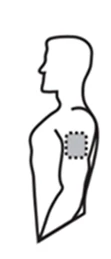 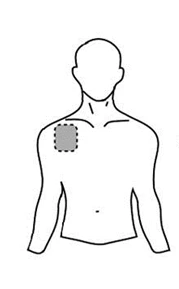 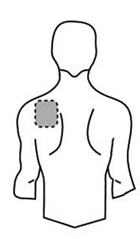 | Upper arm or Front or Back or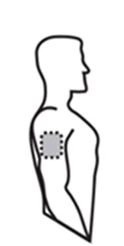 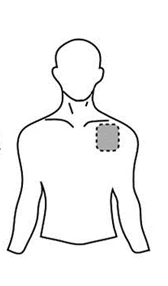 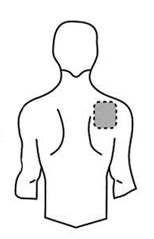 |
- The GenTTS patch must be applied to a mostly hairless or nearly hairless area of skin. If suitable hair-free areas are not available, the hair should be trimmed with scissors. Do not shave it.
- Avoid areas where the skin is red, irritated, or otherwise damaged, for example large scars.
- The chosen skin area must be dry and clean. If necessary, wash it with cold or lukewarm water. Do not use soap, alcohol, oil, lotions, or other detergents. After a hot bath or shower, wait until the skin is completely dry and cool. Do not apply lotions, creams, or ointments to the selected area, as this may prevent the patch from adhering properly.
Applying the patch
- Step 1: each transdermal patch is sealed in

a pouch. Just before use, cut the pouch with scissors along the sealed edge. Remove the transdermal patch. Do not use the patch if the pouch seal is broken.
- Step 2: the adhesive side of the transdermal patch is
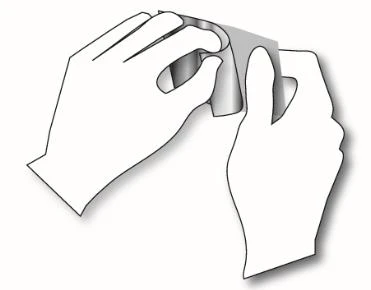
covered by a transparent protective film. Carefully peel off one part of the film. Avoid touching the adhesive surface of the transdermal patch.
- Step 3: apply the transdermal patch to the selected
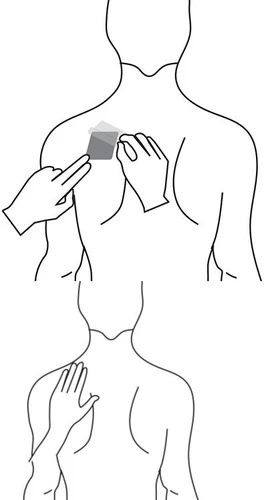
skin area and remove the remaining protective film.
-
Step 4: press the transdermal patch firmly onto the skin with the palm of your hand and slowly count to 30. Ensure that the entire patch is in contact with the skin, especially at the edges.
Wearing the transdermal patch
You must wear the patch for seven days. Provided you have applied the patch correctly, the risk of it detaching is minimal. If the edges of the patch begin to lift, you may secure them with an appropriate adhesive tape. You may take a shower, bath, or swim while wearing the patch.
Do not expose the patch to external heat sources (e.g., heating pads, electric blankets, heat lamps, saunas, hot tubs, heated water beds, hot water bottles, etc.), as this could cause more of the active substance to be absorbed into the bloodstream than normal. External heat may also prevent the patch from adhering properly. If you develop a high fever, this may alter the effects of GenTTS (see section “Warnings and precautions” above).
In the unlikely event that the patch detaches before it needs to be changed, do not reuse the same patch. Apply a new one immediately (see below “Changing the transdermal patch”).
Changing the transdermal patch -
Remove the old patch.
-
Fold the patch in half with the adhesive side facing inward.
-
Open and remove a new patch. Use the empty pouch to dispose of the old patch.
-
Apply a new patch to a different suitable skin site (as described above). Do not apply a new patch to the same area for 3–4 weeks.
-
Remember to change the patch at the same time of day. It is important to note down the time of day.
Duration of treatment
Your doctor will tell you how long you should be treated with GenTTS. Do not stop treatment without consulting your doctor, as pain may return and you may not feel well (see below “If you stop using GenTTS”).
If you use more GenTTS than you should
As soon as you realize you have used more patches than recommended, remove all patches and contact your doctor or hospital immediately. People who have taken an excessive dose may feel very drowsy and unwell. They may also experience breathing difficulties or lose consciousness and may require emergency treatment in hospital. When contacting your doctor, make sure to bring this patient information leaflet and all remaining patches to show the doctor.
If you forget to apply GenTTS
Apply a new patch as soon as you remember. Also, note down the date, as the usual patch change day may now be different. If you change the patch very late, pain may return. In this case, contact your doctor.
Do not apply an additional patch to make up for a missed application.
If you stop using GenTTS
If you stop using GenTTS too early or discontinue treatment, pain may return. If you wish to stop treatment, consult your doctor. They will advise you on what can be done and whether you can take other medicines.
Some people may experience side effects when they have used strong painkillers for a long time and then stop. The risk of experiencing such effects after stopping GenTTS is very low. However, if you feel restless, anxious, nervous, or shaky, if you are overactive, have difficulty sleeping, or have digestive problems, inform your doctor.
The pain-relieving effect of GenTTS persists for a certain period after the patch is removed. Do not start another opioid analgesic (strong painkiller) within 24 hours of removing the patch.
If you have any questions about the use of this medicine, consult your doctor or pharmacist.
4. Possible side effects
Like all medicines, this medicine can cause side effects, although not everyone experiences them.
Serious side effects associated with GenTTS are similar to those observed with other strong painkillers and include breathing difficulties and low blood pressure.
This medicine may cause allergic reactions, although severe allergic reactions are rare.
Remove the patch and inform your doctor immediately if you experience sudden wheezing, difficulty breathing, swelling of the eyelids, face or lips, rash or itching, especially if widespread throughout the body.
As with all strong painkillers, there is a risk of developing dependence on GenTTS.
The following additional side effects have been reported in patients treated with buprenorphine:
Very common (may affect more than 1 in 10 people):
- Headache, dizziness, drowsiness.
- Constipation, feeling unwell or even nausea.
- Itching.
- Rash, redness, itching, inflammation or swelling of the skin at the application site.
Common (may affect up to 1 in 10 people):
- Loss of appetite.
- Confusion, depression, anxiety, sleep disturbances, nervousness, tremor (trembling).
- Shortness of breath.
- Abdominal pain or discomfort, diarrhoea, indigestion, dry mouth.
- Sweating, skin rashes.
- Tiredness, unusual weakness, muscle weakness, swelling of the hands, ankles or feet.
Uncommon (may affect up to 1 in 100 people):
- Restlessness, agitation, feelings of extreme happiness, hallucinations, nightmares, decreased sex drive, aggression.
- Changes in taste, difficulty speaking, reduced sensitivity to pain or touch, tingling or numbness.
- Memory loss, migraine, fainting, problems with concentration or coordination.
- Dry eyes, blurred vision.
- Ringing or buzzing in the ears, dizziness or vertigo.
- High or low blood pressure, chest pain, rapid or irregular heartbeat.
- Cough, hiccups, wheezing.
- Flatulence.
- Weight loss.
- Dry skin.
- Spasms, discomfort and pain.
- Difficulty starting to urinate.
- Fever.
- Increased risk of accidental injuries (e.g. falls).
- Withdrawal symptoms such as agitation, anxiety, sweating or tremor after stopping treatment with GenTTS.
If you need to have blood tests, remember to tell your doctor that you are using GenTTS. This is important because GenTTS can affect liver function, which may influence the results of certain blood tests.
Rare (may affect up to 1 in 1,000 people):
- Angina (chest pain associated with heart disease).
- Mental disorders.
- Balance problems.
- Swelling of the eyelids or face, reduced pupil size.
- Breathing difficulties, worsening of asthma, rapid breathing.
- Feeling faint, especially when standing up.
- Difficulty swallowing.
- Local allergic reaction with marked swelling (in such cases, treatment must be stopped).
- Swelling and irritation inside the nose.
- Decreased erection, sexual dysfunction.
- Flu-like illness.
- Skin redness.
- Dehydration.
Very rare (may affect up to 1 in 10,000 people):
- Muscle contractions.
- Mood swings.
- Earache.
- Blisters.
Not known (frequency cannot be estimated from the available data):
- Breathing problems during sleep (sleep apnoea syndrome), see section 2 “Warnings and precautions”.
- Convulsions, epileptic seizures and fits.
- Inflammation of the intestinal wall. Symptoms may include fever, vomiting and stomach pain or discomfort.
- Increased sensitivity to pain.
- Abdominal pain or discomfort due to colic.
- Feeling detached from oneself.
- Withdrawal symptoms in babies born to mothers who were given buprenorphine during pregnancy may include high-pitched crying, irritability and restlessness, agitation (tremor), feeding difficulties, sweating and failure to gain weight.
- Need to take increasingly higher doses of this medicine to achieve the same level of pain relief (tolerance).
- Contact dermatitis (rash with inflammation which may include a burning sensation), skin discolouration.
Reporting of side effects
If you experience any side effect, including those not listed in this leaflet, talk to your doctor or pharmacist.
You can also report side effects directly via the national reporting system at: https://www.aifa.gov.it/content/segnalazioni-reazioni-avverse.
By reporting side effects, you can help provide more information on the safety of this medicine.
5. How to store GenTTS
Keep this medicine out of the sight and reach of children.
Do not use this medicine after the expiry date stated on the carton or sachet.
The expiry date refers to the last day of that month. After the expiry date, return any unused patches to a pharmacy.
This medicine does not require any special storage conditions.
Do not use the patch if the sachet seal is broken.
Used patches should be folded in half with the adhesive side inwards and disposed of safely, out of the sight and reach of children.
Do not dispose of any medicine via wastewater or household waste. Ask your pharmacist how to dispose of medicines no longer in use. This will help protect the environment.
6. Package contents and other information
What GenTTS patch contains
The active substance is buprenorphine.
GenTTS 5 micrograms/hour:
Each transdermal patch contains 5 mg of buprenorphine over an area of 6.25 cm² and releases 5 micrograms
of buprenorphine per hour (over a period of 7 days).
GenTTS 10 micrograms/hour:
Each transdermal patch contains 10 mg of buprenorphine over an area of 12.5 cm² and releases 10
micrograms of buprenorphine per hour (over a period of 7 days).
GenTTS 20 micrograms/hour:
Each transdermal patch contains 20 mg of buprenorphine over an area of 25 cm² and releases 20 micrograms
of buprenorphine per hour (over a period of 7 days).
The other ingredients are:
Adhesive matrix (containing buprenorphine): povidone, levulinic acid, oleyl oleate, poly[acrylic acid-co-butyl acrylate-co-(2-ethylhexyl)acrylate-co-vinyl acetate]
Adhesive matrix (without buprenorphine): poly[(2-ethylhexyl)acrylate-co-glycidyl methacrylate-co-(2-hydroxyethyl)acrylate-co-vinyl acetate]
Separating film between adhesive matrices with and without buprenorphine: polyethylene terephthalate film
Backing layer: polyester
Protective film: siliconized polyethylene terephthalate film
Blue printing ink.
Description of the appearance of GenTTS and contents of the pack
Transdermal patch
Three dosage strengths are available.
GenTTS 5 micrograms/hour:
Each transdermal patch is beige in colour with rounded corners and bears the inscription “Buprenorphin” and “5 μg/h”
GenTTS 10 micrograms/hour:
Each transdermal patch is beige in colour with rounded corners and bears the inscription “Buprenorphin” and “10 μg/h”
GenTTS 20 micrograms/hour:
Each transdermal patch is beige in colour with rounded corners and bears the inscription “Buprenorphin” and “20 μg/h”
One transdermal patch is sealed in a child-resistant pouch. The patches are available in boxes containing 4 transdermal patches.
Not all pack sizes may be marketed.
Marketing Authorization Holder
Istituto Gentili S.r.l.
Via San Giuseppe Cottolengo 15
20143 Milano (MI)
Italy
Manufacturer
Labtec GmbH
Heykenaukamp 10
21147 Hamburg
Germany
This medicinal product is authorized in the Member States of the European Economic Area under the following names:
Germany: GenTTS 7 Tage 5 Mikrogramm/Stunde transdermales Pflaster
GenTTS 7 Tage 10 Mikrogramm/Stunde transdermales Pflaster
GenTTS 7 Tage 20 Mikrogramm/Stunde transdermales Pflaster
Italy: GenTTS 5 microgrammi/ora cerotto transdermico
GenTTS 10 microgrammi/ora cerotto transdermico
GenTTS 20 microgrammi/ora cerotto transdermico