Gentalyn Beta
Italy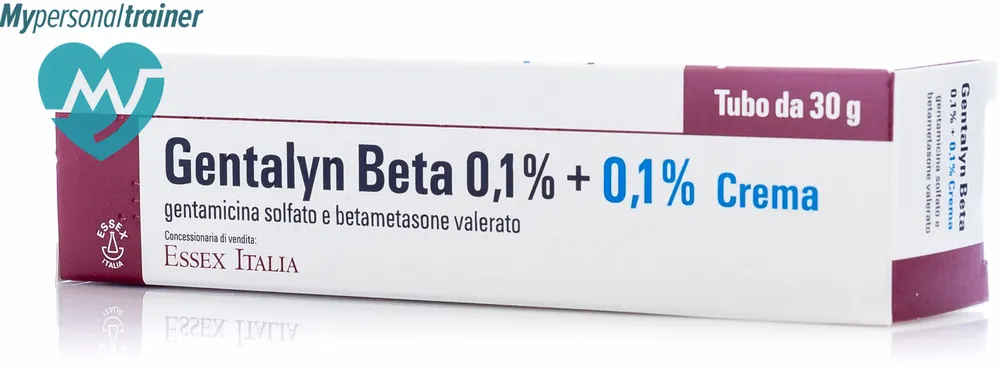
Table of Contents
- Package leaflet: information for the patient
- Gentalyn Beta 0.1% + 0.1% cream
- 1. What Gentalyn Beta is and what it is used for
- 2. What you need to know before using Gentalyn Beta
- 3. How to use Gentalyn Beta
- 4. Possible side effects
- 5. How to store Gentalyn Beta
- 6. Package contents and other information
- Patient information leaflet: information for the patient
- Gentalyn Beta 0.1% + 0.05% cream
- 1. What Gentalyn Beta is and what it is used for
- 2. What you need to know before using Gentalyn Beta
- 3. How to use Gentalyn Beta
- 4. Possible side effects
- 5. How to store Gentalyn Beta
- 6. Package contents and other information
PACKAGE LEAFLET
Package leaflet: information for the patient
Gentalyn Beta 0.1% + 0.1% cream
gentamicin sulfate/betamethasone valerate
Please read this leaflet carefully before using this medicine because it contains important information for you.
- Keep this leaflet. You may need to read it again.
- If you have any questions, ask your doctor or pharmacist.
- This medicine has been prescribed for you only. Do not give it to other people, even if their symptoms are the same as yours, as it may be harmful.
- If you experience any side effects, including those not listed in this leaflet, contact your doctor or pharmacist. See section 4.
Contents of this leaflet:
- What Gentalyn Beta is and what it is used for
- What you need to know before using Gentalyn Beta
- How to use Gentalyn Beta
- Possible side effects
- How to store Gentalyn Beta
- Package contents and other information
1. What Gentalyn Beta is and what it is used for
Gentalyn Beta contains two active substances:
- gentamicin sulfate, an antibiotic active against many bacteria;
- betamethasone valerate, which belongs to a class of medicines called corticosteroids, hormones that perform numerous functions, including an important role in controlling inflammation.
Gentalyn Beta 0.1% + 0.1% is indicated for the local treatment of skin diseases (dermatoses)
due to allergies or inflammatory conditions that have become infected or when there is a
risk of infection.
Gentalyn Beta 0.1% + 0.1% is indicated for the treatment of the following skin conditions:
- atopic eczema, infantile, characterized by itching, redness, scaling, and skin elevations;
- nummular eczema, characterized by itchy, round or oval lesions;
- anal and genital itching;
- itching in the elderly;
- contact dermatitis, characterized by redness, scaling, small blisters, vesicles, minor superficial wounds, and crusts that appear following contact with certain substances;
- seborrheic dermatitis, characterized by a skin rash affecting areas rich in sebaceous glands such as the scalp, face, chest, and ears;
- neurodermatitis, characterized by itching and scaling;
- intertrigo, characterized by redness, scaling, irritation, and itching due to friction between adjacent body parts;
- sunburn, characterized by itching, pain, burning sensation, and the presence of blisters;
- exfoliative dermatitis, characterized by small blisters, redness, swelling, crusts, and scaly, generally itchy skin;
- radiation dermatitis, characterized by itchy redness, patches of skin with increased pigmentation, hair loss, blisters, and pain;
- stasis dermatitis, characterized by darker areas, red spots, thin or sometimes thickened skin, accompanied by itching and pain;
- psoriasis, characterized by red patches, thickening, silvery-white scaling, and sometimes itching.
2. What you need to know before using Gentalyn Beta
Do not use Gentalyn Beta
- if you are allergic to the active substances or to any of the other ingredients of this medicine (listed in section 6);
- if you have tuberculosis of the skin, herpes simplex, or other viral skin diseases.
Warnings and precautions
Talk to your doctor or pharmacist before using Gentalyn Beta.
If Gentalyn Beta causes you irritation or sensitization, your doctor will discontinue treatment and prescribe appropriate therapy.
Any adverse reaction reported with systemic corticosteroids (taken orally or by injection), including adrenal suppression, may also occur with topical corticosteroids (used locally), especially in children.
If you apply Gentalyn Beta over a large skin surface, particularly if the skin is damaged, under occlusive dressing, or for prolonged periods, absorption into the body of betamethasone and gentamicin increases (see "Occlusive dressing technique" in section 3). In such cases, adverse effects associated with systemic use of gentamicin may occur. Your doctor will take special precautions, particularly in infants and children (see "Children and adolescents").
Gentamicin sulfate may cause allergic reactions to other antibiotics of the same family (cross-allergenicity among aminoglycosides).
Prolonged use of topical antibiotics may sometimes lead to overgrowth of organisms not sensitive to the antibiotic, including fungi. In such cases, or if irritation, sensitization, or further infections develop, your doctor will discontinue treatment with gentamicin and prescribe specific therapy.
Do not use Gentalyn Beta in the eyes.
Contact your doctor if you experience blurred vision or other visual disturbances.
Children and adolescents
Children may be more sensitive than adults to the hormonal effects of the active substance betamethasone (hypothalamic-pituitary-adrenal axis suppression, Cushing's syndrome, delayed growth, and intracranial hypertension).
Other medicines and Gentalyn Beta
Tell your doctor or pharmacist if you are taking, have recently taken, or might take any other medicines.
Pregnancy and breastfeeding
If you are pregnant, think you might be pregnant, planning to become pregnant, or are breastfeeding, consult your doctor or pharmacist before using this medicine.
Pregnancy
Use Gentalyn Beta only if your doctor considers that the expected benefit justifies the potential risk to the fetus. If you are pregnant, do not use this medicine at high doses or for prolonged periods.
Breastfeeding
Your doctor will decide whether you should discontinue breastfeeding or stop the treatment, taking into account the importance of the medicine for your condition.
Driving and using machines
Gentalyn Beta does not affect the ability to drive or operate machinery.
Gentalyn Beta contains chlorocresol. It may cause allergic reactions.
Gentalyn Beta contains cetyl stearyl alcohol. It may cause localized skin reactions (e.g. contact dermatitis).
3. How to use Gentalyn Beta
Use this medicine exactly as directed by your doctor or pharmacist. If you have
any doubts, consult your doctor or pharmacist.
Apply a small amount of cream to the affected area 2–3 times daily.
Psoriatic lesions unresponsive to treatment and deep dermatoses that have become
infected may respond better to therapy with Gentalyn Beta when this
medicine is used with the occlusive dressing technique described below.
Occlusive dressing technique
- Apply a thick layer of cream over the entire surface of the lesion, cover with a light gauze and then with transparent, waterproof, flexible plastic material extending beyond the edges of the treated area.
- Seal the edges to the surrounding healthy skin using adhesive tape or other means.
- Keep the dressing in place over the affected area for 1 to 3 days and repeat the procedure 3–4 times as needed. With this method, you should observe significant improvement within a few days. Rarely, inflammation of the skin under the dressing may develop, requiring removal of the occlusive dressing.
If you use more Gentalyn Beta than you should
In case of accidental ingestion/overdose of Gentalyn Beta, contact your doctor immediately or go to the nearest hospital.
Excessive or prolonged use of Gentalyn Beta may alter certain hormones in the body (it may suppress the pituitary-adrenal function, causing secondary adrenal insufficiency and signs of hypercorticism including Cushing's syndrome).
A single episode of overdose with the antibiotic gentamicin is unlikely to produce symptoms. However, excessive and prolonged use of gentamicin on the skin may lead to the development of lesions caused by fungi and bacteria that are not sensitive to it.
If you forget to use Gentalyn Beta
Do not apply a double amount to make up for a missed dose.
If you stop using Gentalyn Beta
If you have any doubts about using this medicine, consult your doctor or pharmacist.
4. Possible side effects
Like all medicines, this medicine can cause side effects, although not everyone will experience them.
The following side effects have been reported very rarely:
- hypersensitivity
- skin rash
- skin discoloration.
The following side effects have been described due to the use of corticosteroids applied to the skin,
especially following the use of occlusive dressings:
- burning
- itching
- irritation
- dryness of the skin
- inflammation of the hair-bearing skin (folliculitis)
- excessive hair growth (hypertrichosis)
- acne (acneiform eruptions)
- change in skin color (hypopigmentation)
- skin inflammation with red rashes around the mouth (perioral dermatitis)
- allergic contact dermatitis (skin inflammation due to contact with allergenic substances)
- skin maceration
- secondary skin infection
- thinning of the skin (cutaneous atrophy)
- skin streaks (striae)
- acute skin inflammation with itching and sweat retention beneath the skin layers (miliaria).
Treatment with the antibiotic gentamicin may cause temporary irritation (erythema and itching), which
usually does not require discontinuation of treatment.
The following side effects may occur with frequency not known:
- blurred vision.
Reporting of side effects
If you experience any side effect, including those not listed in this leaflet, talk to your doctor or pharmacist.
You may also report side effects directly via the national reporting system at https://www.aifa.gov.it/content/segnalazioni-reazioni-avverse.
By reporting side effects, you can help provide more information on the safety of this medicine.
5. How to store Gentalyn Beta
This medicine does not require any special storage conditions.
After first opening, the medicine is valid for 3 months.
Keep this medicine out of the sight and reach of children.
Do not use this medicine after the expiry date stated on the packaging after "Exp.". The expiry date refers to the last day of that month.
Do not dispose of any medicine via wastewater or household waste. Ask your pharmacist how to dispose of medicines you no longer use. This will help protect the environment.
6. Package contents and other information
What Gentalyn Beta contains
- The active substances are gentamicin sulfate and betamethasone valerate. 100 g of cream contain 0.166 g of gentamicin sulfate (equivalent to 0.1 g of gentamicin) and 0.122 g of betamethasone valerate (equivalent to 0.1 g of betamethasone).
- The other components are chlorocresol, polyethylene glycol monostearyl ether (cetomacrogol 1000), cetyl alcohol, stearyl alcohol, white soft paraffin, liquid paraffin, sodium phosphate, phosphoric acid, purified water.
Description of the appearance of Gentalyn Beta and contents of the pack
Gentalyn Beta 0.1% + 0.1% cream – 30 g tube.
Marketing Authorisation Holder and Manufacturer
Marketing Authorisation Holder
Organon Italia S.r.l., Piazza Carlo Magno, 21 - 00162 Rome, Italy
Manufacturer
Organon Heist bv
Industriepark 30
2220 Heist-op-den-Berg, Belgium
Patient information leaflet: information for the patient
Gentalyn Beta 0.1% + 0.05% cream
sulfate gentamicin/valerate betamethasone
Please read this leaflet carefully before using this medicine because it contains important information for you.
- Keep this leaflet. You may need to read it again.
- If you have any questions, consult your doctor or pharmacist.
- This medicine has been prescribed for you only. Do not give it to others, even if they have the same symptoms as you, because it could be harmful.
- If you experience any adverse reactions, including those not listed in this leaflet, contact your doctor or pharmacist. See section 4.
Contents of this leaflet:
- What Gentalyn Beta is and what it is used for
- What you need to know before using Gentalyn Beta
- How to use Gentalyn Beta
- Possible side effects
- How to store Gentalyn Beta
- Contents of the pack and other information
1. What Gentalyn Beta is and what it is used for
Gentalyn Beta contains two active substances:
- gentamicin sulfate, an antibiotic active against a wide range of bacteria;
- betamethasone valerate, which belongs to a class of medicines called corticosteroids, hormones that perform numerous functions, with an important role in controlling inflammation.
Gentalyn Beta 0.1% + 0.05% is indicated for the local treatment of skin diseases (dermatoses)
due to allergies or inflammation that have become infected or when there is a risk of infection.
Gentalyn Beta 0.1% + 0.05% is indicated for the treatment of the following skin conditions:
- atopic eczema in infants, characterized by itching, redness, scaling, and skin elevations;
- nummular eczema, characterized by itchy, round or oval lesions;
- anal and genital itching;
- itching in the elderly;
- contact dermatitis, characterized by redness, scaling, small blisters, vesicles, minor superficial wounds, and crusts that appear upon contact with certain substances;
- seborrheic dermatitis, characterized by skin eruptions affecting areas rich in sebaceous glands such as the scalp, face, chest, and ears;
- neurodermatitis, characterized by itching and scaling;
- intertrigo, characterized by redness, scaling, irritation, and itching due to friction between adjacent body parts;
- sunburn, characterized by itching, pain, burning sensation, and the presence of blisters;
- exfoliative dermatitis, characterized by small blisters, redness, swelling, crusts, and scaly, generally itchy skin;
- radiation dermatitis, characterized by itchy redness, patches of skin with intensified color, hair loss, blisters, and pain;
- stasis dermatitis, characterized by darker areas, thin red spots, sometimes thickened, accompanied by itching and pain;
- psoriasis, characterized by red patches, thickening, silvery-white scaling, and sometimes itching.
Gentalyn Beta 0.1% + 0.05% is also indicated:
- for maintenance therapy of severe or resistant dermatoses, once adequate improvement has been achieved with Gentalyn Beta 0.1% + 0.1%;
- for the treatment of milder or less resistant dermatoses, particularly those affecting extensive areas of the body or chronic conditions requiring prolonged treatment.
2. What you need to know before using Gentalyn Beta
Do not use Gentalyn Beta
- if you are allergic to the active substances or to any of the other ingredients of this medicine (listed in section 6);
- if you have skin tuberculosis, herpes simplex, or other viral skin diseases.
Warnings and precautions
Talk to your doctor or pharmacist before using Gentalyn Beta.
If Gentalyn Beta causes you irritation or sensitization, your doctor will discontinue treatment and prescribe appropriate therapy.
Any adverse effects reported with systemic corticosteroids (taken orally or by injection), including adrenal suppression (reduced function of the adrenal glands), may also occur with topical corticosteroids (used locally), especially in children.
If you apply Gentalyn Beta over a large area of skin, particularly if the skin is damaged, under occlusive dressing, or for prolonged periods, absorption into the body of betamethasone and gentamicin increases (see “Occlusive dressing technique” in section 3). In such cases, adverse effects associated with systemic use of gentamicin may occur. Your doctor will take special precautions, especially in infants and children (see “Children and adolescents”).
Gentamicin sulfate may cause allergic reactions to other antibiotics of the same family (cross-allergenicity among aminoglycosides).
Prolonged use of topical antibiotics may sometimes lead to overgrowth of organisms not sensitive to the antibiotic, including fungi. In such cases, or if irritation, sensitization, or further infections develop, your doctor will discontinue treatment with gentamicin and prescribe specific therapy.
Do not use Gentalyn Beta in the eyes.
Contact your doctor if you experience blurred vision or other visual disturbances.
Children and adolescents
Children may be more sensitive than adults to the hormonal effects of the active substance betamethasone (hypothalamic-pituitary-adrenal axis suppression, Cushing's syndrome, delayed growth in height and weight, and intracranial hypertension).
Other medicines and Gentalyn Beta
Inform your doctor or pharmacist if you are currently using, have recently used, or might use any other medicines.
Pregnancy and breastfeeding
If you are pregnant, think you might be pregnant, planning a pregnancy, or breastfeeding, consult your doctor or pharmacist before using this medicine.
Pregnancy
Use Gentalyn Beta only when your doctor considers that the expected benefit justifies the potential risk to the fetus. If you are pregnant, do not use this medicine at high doses or for prolonged periods.
Breastfeeding
Your doctor will decide whether you should discontinue breastfeeding or stop the treatment, taking into account the importance of the medicine for your condition.
Driving and using machines
Gentalyn Beta does not affect the ability to drive or operate machinery.
Gentalyn Beta contains chlorocresol. It may cause allergic reactions.
Gentalyn Beta contains cetyl stearyl alcohol. It may cause local skin reactions (e.g. contact dermatitis).
3. How to use Gentalyn Beta
Use this medicine exactly as directed by your doctor or pharmacist. If you have
any doubts, consult your doctor or pharmacist.
Apply a small amount of cream to the affected area 2–3 times daily.
Psoriatic lesions that do not respond to treatment and deep dermatoses complicated by infection may respond better to therapy with Gentalyn Beta when this medicine is used with the occlusive dressing technique described below.
Occlusive dressing technique
- Apply a thick layer of cream over the entire surface of the lesion, cover with a light gauze and then with transparent, waterproof, flexible plastic material extending beyond the margins of the treated area.
- Seal the edges to the surrounding healthy skin using adhesive tape or other suitable means.
- Keep the dressing in place on the affected area for a period of 1 to 3 days and repeat the procedure 3–4 times as needed. With this method, you will observe significant improvement within a few days. Rarely, inflammation of the skin under the dressing may develop, requiring removal of the occlusive dressing.
If you use more Gentalyn Beta than you should
In case of accidental ingestion/overdose of Gentalyn Beta, contact your doctor immediately or go to the nearest hospital.
Excessive or prolonged use of Gentalyn Beta may alter certain hormones in the body (it may suppress pituitary-adrenal function, causing secondary adrenal insufficiency and signs of hypercorticism including Cushing's syndrome).
A single episode of overdose with the antibiotic gentamicin is unlikely to cause symptoms. However, excessive and prolonged use of gentamicin on the skin may lead to the development of lesions caused by fungi and bacteria that are not sensitive to it.
If you forget to use Gentalyn Beta
Do not apply a double dose to make up for the missed dose.
If you stop using Gentalyn Beta
If you have any questions about using this medicine, consult your doctor or pharmacist.
4. Possible side effects
Like all medicines, this medicine can cause side effects, although not everybody gets them.
The following side effects have been reported very rarely:
- hypersensitivity
- skin rash
- skin discolouration.
The following side effects have been described due to the use of corticosteroids applied to the skin, especially following the use of occlusive dressings:
- burning sensation
- itching
- irritation
- dryness of the skin
- inflammation of the hair-bearing skin (folliculitis)
- excessive hair growth (hypertrichosis)
- acne (acneiform eruptions)
- change in skin colour (hypopigmentation)
- skin inflammation with red rashes around the mouth (perioral dermatitis)
- allergic contact dermatitis (skin inflammation due to contact with allergenic substances)
- skin maceration
- secondary skin infection
- thinning of the skin (cutaneous atrophy)
- skin streaks
- acute skin inflammation with itching and sweat retention beneath the skin layers (miliaria).
Treatment with the antibiotic gentamicin may cause temporary irritation (erythema and itching), which usually does not require discontinuation of treatment.
The following side effects may occur with frequency not known:
- blurred vision.
Reporting of side effects
If you experience any side effect, including those not listed in this leaflet, talk to your doctor or pharmacist. You may also report side effects directly via the national reporting system at the website https://www.aifa.gov.it/content/segnalazioni-reazioni-avverse.
By reporting side effects, you can help provide more information on the safety of this medicine.
5. How to store Gentalyn Beta
Do not store above 25°C.
Keep this medicine out of the sight and reach of children.
Do not use this medicine after the expiry date stated on the packaging after “Exp.”. The expiry date refers to the last day of that month.
Do not dispose of any medicine via wastewater or household waste. Ask your pharmacist how to dispose of medicines you no longer use. This will help protect the environment.
6. Package contents and other information
What Gentalyn Beta contains
- The active substances are gentamicin sulfate and betamethasone valerate. 100 g of cream contain 0.166 g of gentamicin sulfate (equivalent to 0.1 g of gentamicin) and 0.061 g of betamethasone valerate (equivalent to 0.05 g of betamethasone).
- The other components are chlorocresol, macrogol cetostearyl ether (cetomacrogol 1000), cetostearyl alcohol, white soft paraffin, liquid paraffin, sodium phosphate, phosphoric acid, purified water.
Description of the appearance of Gentalyn Beta and contents of the pack
Gentalyn Beta 0.1% + 0.05% cream – tube of 20 g.
Marketing Authorization Holder and Manufacturer
Marketing Authorization Holder
Organon Italia S.r.l., Piazza Carlo Magno, 21 - 00162 Rome, Italy
Manufacturer
Organon Heist bv
Industriepark 30
2220 Heist-op-den-Berg, Belgium