Fobuler
ItalyTable of Contents
- Fobuler, 80 micrograms/4.5 micrograms/inhalation, inhalation powder
- 1. What Fobuler 80 micrograms/4.5 micrograms is and what it is used for
- 2. What you need to know before using Fobuler 80 micrograms/4.5 micrograms
- 3. How to use Fobuler 80 micrograms/4.5 micrograms
- 4. Possible side effects
- 5. How to store Fobuler 80 micrograms/4.5 micrograms
- 6. Package contents and other information
- Fobuler, 160 micrograms/4.5 micrograms/inhalation, inhalation powder
- 1. What is Fobuler 160 mcg/4.5 mcg and what is it used for?
- 4. Possible side effects
- 5. How to store Fobuler 160 mcg/4.5 mcg
- 6. Package contents and other information
- Fobuler, 320 micrograms/9 micrograms/inhalation, powder for inhalation
- 4. Possible side effects
- 5. How to store Fobuler 320 mcg/9 mcg
- 6. Package contents and other information
QR code linking to the URL: www.oeh.fi/bfit
Scan this code or visit www.oeh.fi/bfit to view instructions on how to use the Easyhaler
Patient Information Leaflet
Fobuler, 80 micrograms/4.5 micrograms/inhalation, inhalation powder
Budesonide/formoterol fumarate dihydrate
Please read this leaflet carefully before taking this medicine, as it contains important information for you.
- Keep this leaflet. You may need to read it again.
- If you have any questions, consult your doctor or pharmacist.
- This medicine has been prescribed for you only. Do not give it to others, even if their symptoms are the same as yours, as it may be harmful.
- If you experience any side effects, including those not listed in this leaflet, inform your doctor or pharmacist. See section 4.
Contents of this leaflet:
- What Fobuler 80 micrograms/4.5 micrograms is and what it is used for
- What you need to know before using Fobuler 80 micrograms/4.5 micrograms
- How to use Fobuler 80 micrograms/4.5 micrograms
- Possible side effects
- How to store Fobuler 80 micrograms/4.5 micrograms
- Contents of the pack and other information
1. What Fobuler 80 micrograms/4.5 micrograms is and what it is used for
Fobuler consists of an inhaler used for the treatment of asthma in adults, adolescents, and children over 6 years of age. It contains two different medicines: budesonide and formoterol fumarate dihydrate.
- Budesonide belongs to a group of medicines called "corticosteroids". It works by reducing and preventing swelling and inflammation in the lungs.
- Formoterol fumarate dihydrate belongs to a group of medicines called "long-acting β2-adrenergic receptor agonists" or "bronchodilators". It works by relaxing the muscles in the airways, thereby making breathing easier.
This medicine is not suitable for people with severe asthma. It may be prescribed for asthma in two different ways.
a) Some people are prescribed two asthma inhalers: Fobuler 80 micrograms/4.5 micrograms and a separate "reliever inhaler" to use as needed.
- They use Fobuler every day to help prevent asthma symptoms from occurring.
- They use the "reliever inhaler" when asthma symptoms occur, to help relieve breathing difficulties.
b) Some people are prescribed Fobuler 80 micrograms/4.5 micrograms as their only asthma inhaler.
- They use Fobuler every day to help prevent asthma symptoms from occurring.
- They also use Fobuler when they need extra doses to relieve asthma symptoms, to help relieve breathing difficulties. They do not require a separate inhaler for this purpose.
2. What you need to know before using Fobuler 80 micrograms/4.5 micrograms
Do not use Fobuler 80 micrograms/4.5 micrograms:
- if you are allergic to budesonide, formoterol, or any of the other ingredients of this medicine (listed in section 6), which includes lactose (containing small amounts of milk proteins).
Warnings and Precautions
Talk to your doctor or pharmacist before using Fobuler if:
- You have diabetes.
- You have a lung infection.
- You have high blood pressure or have ever had heart problems in the past (including irregular heartbeat, very fast pulse, narrowed arteries, or heart failure).
- You have thyroid or adrenal gland problems.
- You have low levels of potassium in your blood.
- You have severe liver problems.
Rinse your mouth with water after inhaling the dose to help prevent a fungal infection in the mouth.
Contact your doctor if you experience blurred vision or other visual disturbances.
For those engaged in sports: using this medicine without a therapeutic need constitutes doping and may lead to a positive anti-doping test.
Other medicines and Fobuler
Inform your doctor or pharmacist if you are taking, have recently taken, or might take any other medicines, including those obtained without a prescription.
Some medicines may increase the effects of Fobuler, and your doctor will monitor carefully if you are taking such medicines (including certain HIV medications: ritonavir, cobicistat).
In particular, inform your doctor or pharmacist if you are taking any of the following medicines:
- Beta-blockers (such as atenolol or propranolol for high blood pressure), including eye drops (such as timolol for glaucoma).
- Medicines for rapid or irregular heartbeat (such as quinidine).
- Digoxin, often used to treat heart failure.
- Diuretics, also known as “water tablets” (such as furosemide), used to treat high blood pressure.
- Oral steroid medicines (such as prednisolone).
- Xanthine derivatives (such as theophylline or aminophylline), often used to treat asthma.
- Other bronchodilators (such as salbutamol).
- Tricyclic antidepressants (such as amitriptyline) and the antidepressant nefazodone.
- Phenothiazine medicines (such as chlorpromazine and prochlorperazine).
- Medicines to treat infections (such as ketoconazole, itraconazole, voriconazole, posaconazole, clarithromycin, and telithromycin).
- Medicines for Parkinson’s disease (such as levodopa).
- Medicines for thyroid problems (such as levothyroxine).
If you fall into any of the above categories, or if you are in any doubt, consult your doctor or pharmacist before using Fobuler.
Also inform your doctor or pharmacist if you are due to undergo general anesthesia for a surgical or dental procedure.
Pregnancy and breastfeeding
- If you are pregnant, think you may be pregnant, planning to become pregnant, or breastfeeding, consult your doctor or pharmacist before taking this medicine.
- Do not take Fobuler unless instructed by your doctor.
- If you become pregnant while using Fobuler, do not stop using it but contact your doctor immediately.
Driving and using machines
Fobuler has no effect or a negligible effect on the ability to drive or operate tools or machinery.
Fobuler contains lactose, a type of sugar. If your doctor has told you that you have an intolerance to certain sugars, consult your doctor before using this medicine. The amount of lactose contained in this medicine generally does not cause problems in people with lactose intolerance. However, the excipient lactose contains small amounts of milk proteins that may cause allergic reactions.
3. How to use Fobuler 80 micrograms/4.5 micrograms
- Always use this medicine exactly as instructed by your doctor. If you have any doubts, consult your doctor or pharmacist.
- It is important to use Fobuler every day, even if you currently have no asthma symptoms.
- If you are using Fobuler for asthma, your doctor will want to monitor your symptoms periodically.
If you have been taking oral steroid tablets for your asthma, your doctor may gradually reduce the number of tablets you are taking once you have started using Fobuler. If you have taken oral steroids for a long period, your doctor may require you to have periodic blood tests. After reducing the dose of oral steroids, you may feel generally unwell, even though your breathing symptoms may have improved. You might experience symptoms such as a blocked or runny nose, muscle or joint weakness or pain, or a skin rash (eczema). If any of these symptoms concern you, or if you develop symptoms such as headache, fatigue, nausea (feeling unwell), or vomiting, contact your doctor immediately. You may need to take another medicine if allergic or arthritic symptoms occur. Ask your doctor if you have any doubts about continuing treatment with Fobuler.
Your doctor may consider adding oral steroid tablets to your usual treatment during periods of stress (for example, if you have a respiratory infection or before undergoing surgery).
Important information about asthma symptoms
If you notice the onset of breathlessness or wheezing while using Fobuler, you must continue using it but consult your doctor as soon as possible, as you may need additional treatment.
Contact your doctor immediately if:
- Your breathing worsens or you wake up frequently at night due to asthma.
- You begin to experience chest tightness in the morning or if chest tightness lasts longer than usual. These signs may indicate that your asthma is not adequately controlled and that you may need different or additional treatment immediately.
ASTHMA
Fobuler 80 micrograms/4.5 micrograms may be prescribed for asthma in two different ways. The amount of Fobuler to use and when to use it depends on your doctor's prescription.
a) If you have been prescribed Fobuler and a separate reliever inhaler to use as needed, read section “A) Use of Fobuler and a separate reliever inhaler as needed”.
b) If you have been prescribed Fobuler as your only inhaler, read section “B) Use of Fobuler as the sole inhaler for asthma”.
A) Use of Fobuler and a separate reliever inhaler as needed
Use Fobuler every day. This helps prevent the onset of asthma symptoms.
Adults (18 years and over)
- The usual dose is 1 or 2 inhalations twice daily.
- Your doctor may increase this dose to 4 inhalations twice daily.
- If your symptoms are well controlled, your doctor may advise you to take the medicine once daily.
Adolescents (12–17 years)
- The usual dose is 1 or 2 inhalations twice daily.
- If your symptoms are well controlled, your doctor may advise you to take the medicine once daily.
Children (6–11 years)
- The usual dose is 2 inhalations twice daily.
The use of Fobuler should be avoided in children under 6 years of age.
Your doctor (or nurse) will help you manage your asthma and adjust the dose of this medicine to the lowest effective dose that controls your asthma. However, do not change the dose without first discussing it with your doctor (or nurse).
Use the separate reliever inhaler as needed to treat asthma symptoms when they occur.
Always carry your “reliever inhaler” with you so you can use it when needed. Do not use Fobuler to treat asthma symptoms—use the reliever inhaler instead.
B) Use of Fobuler as the sole inhaler for asthma
Use Fobuler in this way only if instructed by your doctor and if you are over 12 years of age.
Use Fobuler 80 micrograms/4.5 micrograms every day. This helps prevent the onset of asthma symptoms. You may take:
- 1 inhalation in the morning and 1 inhalation in the evening or
- 2 inhalations in the morning or
- 2 inhalations in the evening.
Also use Fobuler 80 micrograms/4.5 micrograms as a “reliever inhaler” to treat asthma symptoms when they occur.
- If asthma symptoms occur, take 1 inhalation and wait a few minutes.
- If you do not feel better, take another inhalation.
- Do not take more than 6 inhalations at one time.
Always carry Fobuler with you so you can use it when needed.
Normally, a total daily dose exceeding 8 inhalations is not required. However, your doctor may allow you to take up to 12 inhalations per day for a limited period.
If you regularly need to use 8 or more inhalations per day, consult your doctor or nurse, as your treatment may need to be adjusted.
Do not use more than 12 inhalations in total within 24 hours.
If asthma symptoms occur during physical exercise, use Fobuler as described in this leaflet.
However, do not use Fobuler immediately before exercise to prevent symptoms.
If you use more Fobuler than you should
It is important that you take the dose as indicated in this leaflet or as advised by your doctor. Do not exceed the prescribed dose without consulting your doctor.
The most common symptoms that may occur if you use more Fobuler 80 micrograms/4.5 micrograms than prescribed are: tremor, headache, or rapid heartbeat.
If you forget to use Fobuler
- If you forget to take a dose, take it as soon as you remember. However, if it is almost time for your next dose, skip the missed dose.
- Do not take a double dose to make up for a forgotten dose.
If you have any questions about how to use this medicine, consult your doctor or pharmacist.
Instructions on how to use the inhaler are at the end of this leaflet.
4. Possible side effects
Like all medicines, Fobuler may cause side effects, although not everyone experiences them.
If you experience any of the following, stop using Fobuler and contact your doctor immediately:
- Swelling of the face, particularly around the mouth (tongue and/or throat and/or difficulty swallowing) or hives, accompanied by breathing difficulties (angioedema) and/or sudden feeling of severe illness. This could indicate an allergic reaction. This effect is rare and may affect up to 1 in 1,000 people.
- Sudden wheezing or shortness of breath immediately after using the inhaler. If you experience any of these symptoms, you must immediately stop using Fobuler and use your “as-needed” inhaler instead. Contact your doctor immediately if you need to change your treatment. This occurs very rarely, affecting fewer than 1 in 10,000 people.
Other possible side effects:
Common (may affect up to 1 in 10 people)
- Palpitations (awareness of heartbeat), tremor, or restlessness. If these effects occur, they are usually mild and generally disappear with continued use of Fobuler.
- Oral candidiasis (a fungal infection in the mouth). This is less likely if you rinse your mouth with water after using Fobuler.
- Mild sore throat, cough, and hoarseness.
- Headache.
Uncommon (may affect up to 1 in 100 people)
- Feeling restless, nervousness, or agitation.
- Disturbed sleep.
- Dizziness.
- Nausea (feeling unwell).
- Increased heart rate.
- Bruising of the skin.
- Muscle cramps.
- Blurred vision.
Rare (may affect up to 1 in 1,000 people)
- Skin rash, itching.
- Bronchospasm (narrowing of the airway muscles causing wheezing). If wheezing occurs immediately after using Fobuler, stop using Fobuler and contact your doctor immediately.
- Low levels of potassium in the blood.
- Irregular heartbeat.
Very rare (may affect up to 1 in 10,000 people)
- Depression.
- Behavioural changes, particularly in children.
- Chest pain or tightness in the chest (angina pectoris).
- Increased blood sugar (glucose) levels.
- Taste disturbances, for example, an unpleasant taste in the mouth.
- Changes in blood pressure.
Inhaled corticosteroids may affect the body’s normal production of steroid hormones, particularly when high doses are used over a prolonged period. These effects include:
- Changes in bone mineral density (thinning of the bones).
- Cataract (clouding of the lens in the eye).
- Glaucoma (increased pressure in the eye).
- Slowed growth in children and adolescents.
- Effects on the adrenal gland (a small gland located above the kidney). The occurrence of these effects is much less likely with inhaled corticosteroids than with oral corticosteroid tablets.
Reporting of side effects
If you experience any side effect, including those not listed in this leaflet, talk to your doctor or pharmacist.
You can also report side effects directly via the national reporting system at: https://www.aifa.gov.it/content/segnalazioni-reazioni-avverse.
By reporting side effects, you can help provide more information on the safety of this medicine.
5. How to store Fobuler 80 micrograms/4.5 micrograms
- Keep this medicine out of the sight and reach of children.
- Do not use the inhaler after the expiry date stated on the carton, aluminium pouch or inhaler label, following the word "Exp". The expiry date refers to the last day of that month.
- After opening the aluminium pouch, store at a temperature not exceeding 25 °C and protect from moisture. It is recommended to keep the Easyhaler in its protective case.
- If Fobuler gets wet, it must be replaced with a new one.
- Replace Fobuler 4 months after opening the aluminium pouch. Please note the date of opening the pouch to help you remember.
- Do not dispose of medicines via wastewater or household waste. Ask your pharmacist how to dispose of medicines no longer required. This will help protect the environment.
6. Package contents and other information
What Fobuler 80 micrograms/4.5 micrograms contains
The active substances are budesonide and formoterol fumarate dihydrate. Each inhaled dose contains 80
micrograms of budesonide and 4.5 micrograms of formoterol fumarate dihydrate.
The excipient is lactose monohydrate (which contains milk proteins).
Description of the appearance of Fobuler 80 micrograms/4.5 micrograms and package contents
Fobuler 80 micrograms/4.5 micrograms consists of an inhaler containing the medicine. The inhalation powder
is white to slightly yellowish in colour. Each inhaler contains 60 or 120 doses and has a white body and a red
top.
Fobuler 80 micrograms/4.5 micrograms is available in packages containing 1 or 3 inhalers.
Not all pack sizes may be marketed.
Your pack may include a protective case. If a protective cap is needed, please contact the Marketing Authorisation Holder (details below).
Marketing Authorisation Holder and Manufacturer
Marketing Authorisation Holder
Orion Corporation
Orionintie 1
FI-02200 Espoo
Finland
Manufacturer
Orion Corporation Orion Pharma
Orionintie 1
FI-02200 Espoo
Finland
Detailed and up-to-date information on how to use this product is available by scanning this QR code (also included on the box and on the inhaler label) with a smartphone. The same information is also available at the following URL: www.oeh.fi/bfit
QR code linking to the URL: www.oeh.fi/bfit
How to use the Easyhaler inhaler
Information about Easyhaler
Fobuler may differ from inhalers you have used previously. Therefore, it is very important to use it correctly, as incorrect use may result in you not receiving the correct amount of medicine. This could make you feel much worse or may mean that your asthma is not properly treated.
Your doctor, nurse or pharmacist will show you how to use the inhaler correctly. Make sure you understand the correct way to use the inhaler. If in doubt, contact your doctor, nurse or pharmacist. As with all inhalers, caregivers of children must ensure that children prescribed Fobuler use the correct inhalation technique as described below. You may also use the instructional video available at www.oeh.fi/bfit
First use of the Easyhaler
| The Easyhaler is supplied in an aluminium foil bag. Do not open the aluminium foil bag until you are ready to start using the medicine, as this helps keep the powder dry in the inhaler. When you are ready to start treatment, open the bag and mark the date, for example on your calendar. Use the inhaler within 4 months of opening the aluminium foil bag. | 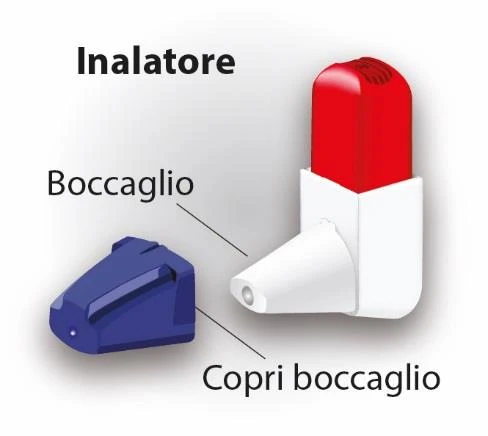 |
CORRECT USE
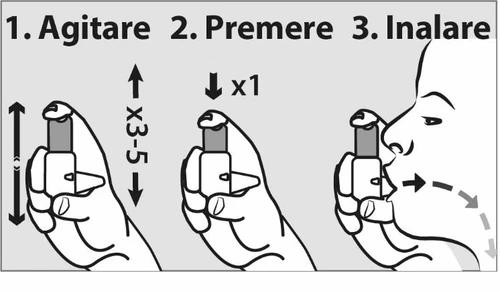
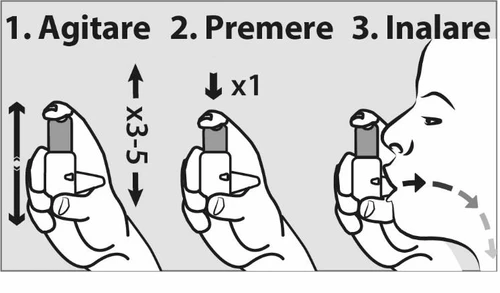
| Step 1: SHAKE • Remove the mouthpiece cover • Shake the inhaler 3 to 5 times while holding it in an upright position | SHAKE x 3-5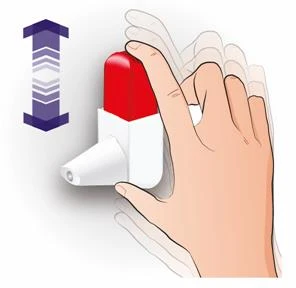 | Important points to remember • It is important to keep the inhaler in an upright position • If you press it accidentally while shaking, clear the powder from the mouthpiece as shown below |
| Step 2: PRESS • Continue holding the inhaler upright between index finger and thumb • Press down until you hear a click, then allow the inhaler to click again. This releases a dose • Press down only once | PRESS x 1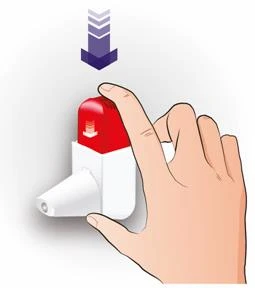 | Important points to remember • The inhaler will not click if the mouthpiece cover is still in place • Press down only once • If you press it accidentally more than once, clear the powder from the mouthpiece as shown below • Press to release the dose before inhaling—do not press and inhale at the same time • Keep the inhaler upright while pressing and while inhaling the dose. If you turn it upside down, the powder may escape before being inhaled. |
| Step 3: INHALE • Continue holding the inhaler in an upright position • Breathe out normally • Place the mouthpiece in your mouth, between your teeth, and close your lips tightly around it • Breathe in quickly and deeply • Remove the inhaler from your mouth, then breathe out normally. | INHALE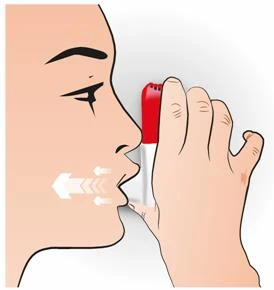 | Important points to remember • Make sure the entire mouthpiece is properly placed in your mouth so the medicine reaches your lungs • Ensure your lips are tightly sealed around the mouthpiece • Do not breathe out into the inhaler. This is important: it could block the inhaler. If you do breathe out into the inhaler, clear the powder from the mouthpiece as shown below |
If another inhalation is required, repeat steps 1–3 Shake-Press-Inhale.
After using the inhaler:
- Replace the mouthpiece cover over the mouthpiece. This helps prevent accidental activation of the inhaler.
- After taking the dose, rinse the mouth with water and spit it out.
| How to clear the powder from the mouthpiece If you press the inhaler accidentally, press it more than once, or if you have exhaled into it, clear the mouthpiece. Tap the mouthpiece on the table or on the palm of your hand to remove the powder. Then restart with the Shake-Press-Inhale steps. | 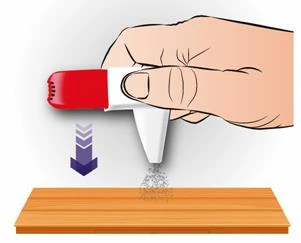 |
Cleaning the Easyhaler
Keep the inhaler dry and clean. If necessary, the mouthpiece of the inhaler can be cleaned with a dry cloth or tissue. Do not use water: the powder in the Easyhaler is sensitive to moisture.
| Using the Easyhaler with a protective case A protective case can be used with the inhaler. This helps to extend the product's lifespan. When placing the inhaler into the protective case for the first time, ensure that the mouthpiece cover is on the inhaler, as this prevents accidental activation of the dose. The inhaler can be used without removing it from the protective case. Follow the same instructions as above: 1. Shake – 2. Press – 3. Inhale. Remember to: Hold the inhaler upright when pressing Close the mouthpiece cover after taking the dose, as this prevents accidental activation of the inhaler. | 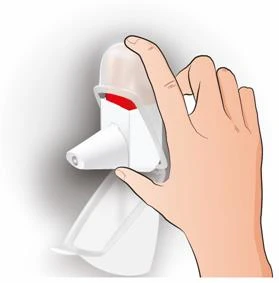 |
| When to switch to a new Easyhaler The dose counter shows the number of doses remaining. The dose counter advances after every 5 doses. When the dose counter starts turning red, 20 doses remain. If you do not already have a new Easyhaler, contact your doctor for a new prescription. When the dose counter reaches 0 (zero), the Easyhaler must be replaced. If you are using the protective case, keep it and insert the new inhaler into it. | 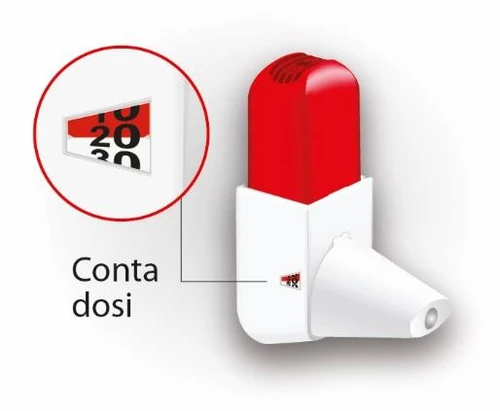 |
Remember
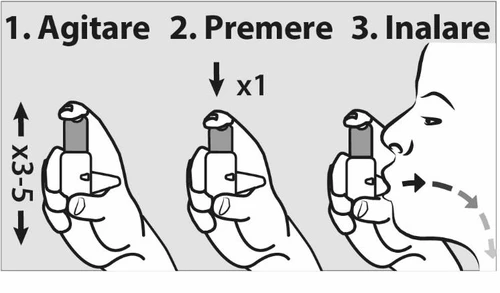
- 1. Shake - 2. Press - 3. Inhale.
- After taking the dose, rinse your mouth with water and spit it out.
- Do not wet the inhaler; protect it from moisture.
If you have any questions about how to use this medicine, consult your doctor or pharmacist.
QR code linking to the URL: www.oeh.fi/bfit
Scan this code or visit www.oeh.fi/bfit to view instructions on how to use the Easyhaler
Patient Information Leaflet
Fobuler, 160 micrograms/4.5 micrograms/inhalation, inhalation powder
Budesonide/formoterol fumarate dihydrate
Please read this leaflet carefully before using this medicine as it contains important information for you.
- Keep this leaflet. You may need to read it again.
- If you have any questions, consult your doctor or pharmacist.
- This medicine has been prescribed for you only. Do not give it to others, even if their symptoms are the same as yours, as it could be harmful.
- If you experience any side effects, including those not listed in this leaflet, consult your doctor or pharmacist. See section 4.
Contents of this leaflet:
- What Fobuler 160 mcg/4.5 mcg is and what it is used for
- What you need to know before using Fobuler 160 mcg/4.5 mcg
- How to use Fobuler 160 mcg/4.5 mcg
- Possible side effects
- How to store Fobuler 160 mcg/4.5 mcg
- Contents of the pack and other information
1. What is Fobuler 160 mcg/4.5 mcg and what is it used for?
Fobuler is an inhaler used for the treatment of asthma in adults and adolescents aged 12 to 17 years. It is also used for the treatment of symptoms of Chronic Obstructive Pulmonary Disease (COPD) in adults aged 18 years and older. It contains two different medicines: budesonide and formoterol fumarate dihydrate.
- Budesonide belongs to a group of medicines called "corticosteroids". It works by reducing and preventing swelling and inflammation in the lungs.
- Formoterol fumarate dihydrate belongs to a group of medicines called "long-acting beta-adrenoceptor agonists" or "bronchodilators". It works by relaxing the muscles in the airways, thereby making breathing easier.
Asthma
Fobuler 160 mcg/4.5 mcg may be prescribed for asthma in two different ways.
a) Some patients are prescribed two inhalers for asthma: Fobuler 160 mcg/4.5 mcg and a separate “reliever inhaler”.
- They use Fobuler every day. This helps prevent the onset of asthma symptoms.
- They use the “reliever inhaler” when they experience asthma symptoms, to help restore normal breathing.
b) Some patients are prescribed Fobuler 160 mcg/4.5 mcg as the only inhaler for asthma.
- They use Fobuler every day. This helps prevent the onset of asthma symptoms.
- They also use Fobuler when they need extra doses to relieve asthma symptoms, to help restore normal breathing and, if agreed with their doctor, also to prevent the onset of asthma symptoms (for example, during physical exercise or exposure to allergens). They do not need a separate inhaler for this purpose.
Chronic Obstructive Pulmonary Disease (COPD)
Fobuler 160 mcg/4.5 mcg can also be used to treat symptoms of COPD in adults. COPD is a chronic disease of the lung airways, often caused by cigarette smoking.
2 What you should know before using Fobuler 160 mcg/4.5 mcg
Do not use Fobuler 160 mcg/4.5 mcg:
- if you are allergic to budesonide, formoterol, or any of the other ingredients of this medicine (listed in section 6), which include lactose (containing small amounts of milk proteins).
Warnings and Precautions
Talk to your doctor or pharmacist before using Fobuler if:
- You have diabetes.
- You have a lung infection.
- You have high blood pressure or have previously had heart problems (including irregular heartbeat, very fast pulse, narrowed arteries, or heart failure).
- You have thyroid or adrenal gland problems.
- You have low levels of potassium in your blood.
- You have severe liver problems.
Contact your doctor if you experience blurred vision or other visual disturbances.
Rinse your mouth after inhaling the dose to help prevent a fungal infection in the mouth.
Other medicines and Fobuler
Tell your doctor or pharmacist if you are taking, have recently taken, or might take any other medicines, including those without a prescription.
Some medicines can increase the effects of Fobuler, and your doctor will carefully monitor you if you are taking these medicines (including some HIV medications: ritonavir, cobicistat).
In particular, inform your doctor or pharmacist if you are taking any of the following medicines:
- Beta-blockers (such as atenolol or propranolol for high blood pressure), including eye drops (such as timolol for glaucoma).
- Medicines for rapid or irregular heartbeat (such as quinidine).
- Medicines such as digoxin, often used to treat heart failure.
- Diuretics, also known as "water tablets" (such as furosemide), used to treat high blood pressure.
- Oral steroid medicines (such as prednisolone).
- Xanthine medicines (such as theophylline or aminophylline), often used to treat asthma.
- Other bronchodilators (such as salbutamol).
- Tricyclic antidepressants (such as amitriptyline) and the antidepressant nefazodone.
- Phenothiazine medicines (such as chlorpromazine and prochlorperazine).
- Medicines to treat infections (such as ketoconazole, itraconazole, voriconazole, posaconazole, clarithromycin, and telithromycin).
- Medicines for Parkinson's disease (such as levodopa).
- Medicines for thyroid problems (such as levothyroxine).
If you are in any of the above situations, or if you are unsure, consult your doctor or pharmacist before using Fobuler.
Also inform your doctor or pharmacist if you are due to undergo general anesthesia for a surgical or dental procedure.
Pregnancy and breastfeeding
- If you are pregnant, think you may be pregnant, planning to become pregnant, or breastfeeding, consult your doctor or pharmacist before taking this medicine.
- Do not take Fobuler unless instructed by your doctor.
- If you become pregnant while being treated with Fobuler, do not stop using Fobuler but consult your doctor immediately.
Driving and using machines
Fobuler has no effect or a negligible effect on the ability to drive or use tools or machines.
Fobuler contains lactose, a type of sugar. If your doctor has told you that you have an intolerance to certain sugars, consult your doctor before using this medicine. The amount of lactose contained in this medicine usually does not cause problems in people with lactose intolerance. However, the excipient lactose contains small amounts of milk proteins that may cause allergic reactions.
For athletes
Using this medicine without a therapeutic need constitutes doping and may result in a positive anti-doping test.
3 How to use Fobuler 160 mcg/4.5 mcg
- Always use this medicine exactly as prescribed by your doctor. If you have any doubts, consult your doctor or pharmacist.
- It is important to use Fobuler every day, even if you do not currently have asthma or COPD symptoms.
- If you are using Fobuler for asthma, your doctor will want to periodically review your symptoms.
If you have been taking oral steroid tablets for your asthma or COPD, your doctor may reduce the number of tablets you are taking once you start using Fobuler. If you have been taking oral steroids for a long time, your doctor may ask you to have periodic blood tests. When reducing the number of oral steroids, you may feel generally unwell even though your respiratory symptoms may be improving. You may experience symptoms such as nasal congestion and runny nose, muscle weakness or joint pain, or skin rash (eczema). If any of these symptoms concern you, or if you experience symptoms such as headache, fatigue, nausea (feeling unwell), or vomiting (feeling unwell), contact your doctor immediately. You may need to take another medicine for allergic or arthritic symptoms. Ask your doctor if you have any doubts about continuing or discontinuing treatment with Fobuler.
Your doctor may consider adding oral steroids to your usual treatment during periods of stress (for example, when you have a respiratory infection or before surgery).
Important information about asthma or COPD symptoms
If you notice the onset of breathlessness or wheezing while using Fobuler, you should continue using it but consult your doctor as soon as possible, as you may need additional treatment.
Contact your doctor immediately if:
- Your breathing worsens or if you wake up frequently at night due to asthma.
- You start experiencing chest tightness in the morning or if chest tightness lasts longer than usual. These signs may indicate that your asthma or COPD is not properly controlled and that you may need immediate different or additional treatment.
ASTHMA
Fobuler 160 mcg/4.5 mcg may be prescribed for asthma in two different ways. The amount of Fobuler to use and when to use it depends on your doctor's prescription.
c) If you have been prescribed Fobuler and a separate reliever inhaler, read section “A) Use of Fobuler and a separate reliever inhaler”.
d) If you have been prescribed Fobuler as the only inhaler for asthma, read section “B) Use of Fobuler as the only inhaler for asthma”.
A) Use of Fobuler and a separate reliever inhaler
Use Fobuler every day. This helps prevent the onset of asthma symptoms.
Adults (18 years and older)
- The usual dose is 1 or 2 inhalations, twice daily.
- Your doctor may increase this dose to 4 inhalations, twice daily.
- If your symptoms are well controlled, your doctor may ask you to take the medicine once daily.
Adolescents (12–17 years)
- The usual dose is 1 or 2 inhalations, twice daily.
- If your symptoms are well controlled, your doctor may ask you to take the medicine once daily.
A lower strength of Fobuler is available for children aged 6 to 11 years.
Use of Fobuler is not recommended in children under 6 years of age.
Your doctor (or nurse) will help manage your asthma and adjust the dose of this medicine to the lowest dose that controls your asthma. However, do not change the dose without first discussing it with your doctor (or nurse).
Use the separate “reliever inhaler” to treat asthma symptoms when they occur.
Always carry your “reliever inhaler” with you so you can use it when needed. Do not use Fobuler to treat asthma symptoms—use the reliever inhaler instead.
B) Use of Fobuler as the only inhaler for asthma
Use Fobuler in this way only if instructed by your doctor and if you are over 12 years of age.
Use Fobuler 160 mcg/4.5 mcg every day. This helps prevent the onset of asthma symptoms. You may take:
- 1 inhalation in the morning and 1 inhalation in the evening or
- 2 inhalations in the morning or
- 2 inhalations in the evening.
Your doctor may increase this dose to 2 inhalations twice daily.
Also use Fobuler 160 mcg/4.5 mcg as a “reliever inhaler” to treat asthma symptoms when they occur and to prevent the onset of asthma symptoms (for example, during physical exercise or exposure to allergens).
- If asthma symptoms occur, take 1 inhalation and wait a few minutes.
- If you do not feel better, take another inhalation.
- Do not take more than 6 inhalations at one time.
Always carry Fobuler with you to use when needed.
Normally, a total daily dose exceeding 8 inhalations is not required. However, your doctor may allow you to take up to 12 inhalations per day for a limited period.
If you regularly need to use 8 or more inhalations per day, consult your doctor or nurse, as your treatment may need to be adjusted.
Do not use more than 12 inhalations in total within 24 hours.
If asthma symptoms occur during physical exercise, use Fobuler as described in this leaflet. It is important to discuss with your doctor the use of Fobuler to prevent asthma symptoms; your prescribed treatment may be influenced by how often you exercise or how often you are exposed to allergens.
COPD (Chronic Obstructive Pulmonary Disease)
- For use only in adults (18 years and older).
- The usual dose is 1 inhalation twice daily.
Your doctor may also prescribe other bronchodilator medicines, for example anticholinergics (such as tiotropium or ipratropium bromide) for COPD.
If you use more Fobuler than you should
It is important that you take the dose as indicated on the label or as advised by your doctor.
Do not exceed the prescribed dose without consulting your doctor.
The most common symptoms that may occur if you use more Fobuler 160 mcg/4.5 mcg than you should are: tremor, headache, or rapid heartbeat.
If you forget to use Fobuler
- If you forget to take a dose, take it as soon as you remember. However, if it is almost time for your next dose, skip the missed dose.
- Do not take a double dose to make up for a forgotten dose.
If you have any doubts about using this medicine, consult your doctor or pharmacist.
Instructions on how to use the inhaler are at the end of this leaflet.
4. Possible side effects
Like all medicines, this medicine can cause side effects, although not everyone gets them.
If any of the following occur, stop using Fobuler and contact your doctor immediately:
- Swelling of the face, particularly around the mouth (tongue and/or throat and/or difficulty swallowing) or hives accompanied by breathing difficulties (angioedema) and/or sudden fainting sensation, which could indicate an allergic reaction. This effect is rare and may affect up to 1 in 1,000 people.
- Sudden wheezing and shortness of breath immediately after using your inhaler. If you experience any of these symptoms, stop using Fobuler immediately and use your “reliever” inhaler. Contact your doctor immediately if you need to change your treatment. This is very rare and may affect up to 1 in 10,000 people. Inform your doctor if you experience any of the following symptoms while taking Fobuler, as they could be signs of a lung infection:
- Fever or chills.
- Increased mucus production or changes in mucus colour.
- Worsening cough or increased breathing difficulties.
Pneumonia (lung infection) in patients with COPD is a common side effect (may affect up to 1 in 10 people).
Other possible side effects:
Common (may affect up to 1 in 10 people)
- Palpitations (awareness of heartbeat), tremor, or restlessness. If these effects occur, they are usually mild and tend to disappear with continued use of Fobuler.
- Oral thrush (a fungal infection in the mouth). This is less likely if you rinse your mouth with water after using Fobuler.
- Mild sore throat, cough, and hoarseness.
- Headache.
Uncommon (may affect up to 1 in 100 people)
- Feeling restless, nervous, or agitated.
- Disturbed sleep.
- Dizziness.
- Nausea (feeling unwell).
- Increased heart rate.
- Skin bruising.
- Muscle cramps.
- Blurred vision.
Rare (may affect up to 1 in 1,000 people)
- Skin rash, itching.
- Bronchospasm (narrowing of the muscles in the airways causing wheezing). If wheezing occurs immediately after using Fobuler, stop using Fobuler and contact your doctor immediately.
- Low levels of potassium in the blood.
- Irregular heartbeat.
Very rare (may affect up to 1 in 10,000 people)
- Depression.
- Behavioural changes, particularly in children.
- Chest pain or tightness (angina pectoris).
- Increased blood sugar (glucose) levels.
- Taste disturbances, such as an unpleasant taste in the mouth.
- Changes in blood pressure.
Inhaled corticosteroids may affect the normal production of steroid hormones in the body, particularly if high doses are used for prolonged periods. These effects include:
- Changes in bone mineral density (thinning of the bones).
- Cataract (clouding of the lens in the eye).
- Glaucoma (increased pressure in the eye).
- Slowed growth in children and adolescents.
- Effects on the adrenal gland (a small gland near the kidney). These effects are much less likely with inhaled corticosteroids than with corticosteroid tablets.
Reporting of side effects
If you experience any side effect, including those not listed in this leaflet, talk to your doctor or pharmacist. You can also report side effects directly via the national reporting system at https://www.aifa.gov.it/content/segnalazioni-reazioni-avverse.
By reporting side effects, you can help provide more information on the safety of this medicine.
5. How to store Fobuler 160 mcg/4.5 mcg
- Keep this medicine out of the sight and reach of children.
- Do not use this medicine after the expiry date stated on the carton, the aluminium foil pouch, or on the inhaler label after "Exp". The expiry date refers to the last day of that month.
- After opening the aluminium foil pouch, store below 25 °C and protect from moisture. It is recommended to keep the Easyhaler in its protective case.
- If your Fobuler becomes damp, it must be replaced with a new one.
- Replace Fobuler 4 months after opening the aluminium foil pouch. Please note the opening date of the pouch to help you remember.
- Do not dispose of medicines via wastewater or household waste. Ask your pharmacist how to dispose of medicines you no longer use. This will help protect the environment.
6. Package contents and other information
What Fobuler 160 mcg/4.5 mcg contains
- The active substances are budesonide and formoterol fumarate dihydrate. Each inhaled dose contains 160 micrograms of budesonide and 4.5 micrograms of formoterol fumarate dihydrate.
- The excipient is lactose monohydrate (which contains milk proteins).
Description of the appearance of Fobuler 160 mcg/4.5 mcg and contents of the pack
Fobuler 160 mcg/4.5 mcg consists of an Easyhaler inhaler containing the medicine. The inhalation powder is
white to slightly yellowish in colour. Each inhaler contains 60 doses and has a white body with a red top.
Fobuler 160 mcg/4.5 mcg is available in packs of 1 or 3 inhalers, and 120 doses also in packs of 2 inhalers.
It is possible that not all pack sizes are marketed.
Your pack may include a protective case. If you require a protective cap, please contact the Marketing Authorisation Holder (details below).
Marketing Authorisation Holder and Manufacturer
Marketing Authorisation Holder
Orion Corporation
Orionintie 1
FI-02200 Espoo
Finland
Sales Concessionaire
Farmaceutici Caber S.r.l
Via del Mare, 36 Pomezia
(RM)
Manufacturer
Orion Corporation Orion Pharma
Orionintie 1
FI-02200 Espoo
Finland
Detailed and up-to-date information on how to use this product is available by scanning this QR code (also included on the box and on the inhaler label) with a smartphone. The same information is also available at the following URL: www.oeh.fi/bfit
QR code linking to the URL: www.oeh.fi/bfit
How to use the Easyhaler inhaler
Information about Easyhaler
Fobuler may differ from inhalers you have used previously. Therefore, it is very important that you use it correctly, as incorrect use may result in you not receiving the proper dose of medicine. This could make you feel much worse or may mean that your asthma or COPD is not properly treated.
Your doctor, nurse, or pharmacist will show you how to use the inhaler correctly. Make sure you understand the correct way to use the inhaler. If in doubt, contact your doctor, nurse, or pharmacist. As with all inhalers, caregivers of children must ensure that children prescribed Fobuler use the correct inhalation technique as described below. You may also use the instructional video available at www.oeh.fi/bfit.
First use of the Easyhaler
| The Easyhaler is supplied in an aluminium foil pouch. Do not open the aluminium foil pouch until you are ready to start using the medicine, as this helps keep the powder dry in the inhaler. When you are ready to start treatment, open the pouch and mark the date, for example on your calendar. Use the inhaler within 4 months of opening the foil pouch. | 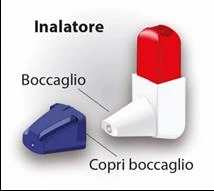 |
CORRECT USE
| Step 1: SHAKE • Remove the mouthpiece cover • Shake the inhaler 3 to 5 times while holding it in an upright position | SHAKE x 3-5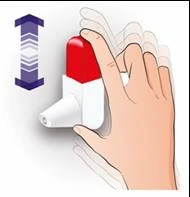 | Important points to remember • It is important to keep the inhaler in an upright position • If you accidentally press while shaking the inhaler, clear the powder from the mouthpiece as shown below |
| Step 2: PRESS • Continue holding the inhaler upright between your index finger and thumb • Press down until you hear a click and allow the inhaler to click again. This releases one dose • Press down only once | PRESS x 1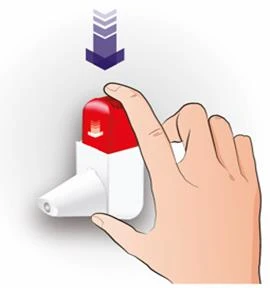 | Important points to remember • The inhaler will not click if the mouthpiece cover is still in place • Press down only once • If you accidentally press more than once, clear the powder from the mouthpiece as shown below • Press to release the dose before inhaling; do not press and inhale at the same time • Keep the inhaler upright while pressing and while inhaling the dose. If you turn it upside down, the powder may escape before being inhaled. |
| Step 3: INHALE • Continue holding the inhaler in an upright position • Breathe out normally • Place the mouthpiece in your mouth between your teeth and close your lips tightly around it • Breathe in strongly and deeply • Remove the inhaler from your mouth, then breathe out normally. | INHALE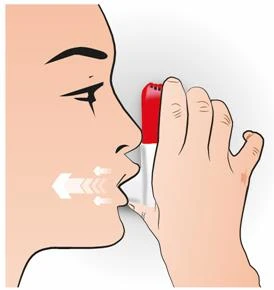 | Important points to remember • Make sure the entire mouthpiece is properly placed in your mouth so the medicine reaches your lungs • Ensure your lips are tightly sealed around the mouthpiece • Do not breathe out into the inhaler. This is important: it could clog the inhaler. If you do breathe out into the inhaler, clear the powder from the mouthpiece as shown below |
If you need to take another inhalation, repeat steps 1–3 Shake-Press-Inhale.
After using the inhaler:
- Replace the mouthpiece cover over the mouthpiece. This helps prevent accidental activation of the inhaler.
- After taking the dose, rinse your mouth with water and spit it out.
| How to clear the powder from the mouthpiece If you have pressed the inhaler accidentally, pressed it more than once, or breathed out into it, clear the mouthpiece. Tap the mouthpiece on the table or on the palm of your hand to remove the powder. Then repeat the steps: Shake-Press-Inhale. | 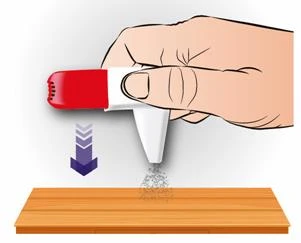 |
Cleaning the Easyhaler
Keep the inhaler dry and clean. If necessary, the mouthpiece of the inhalator may be cleaned with a dry cloth or dry tissue. Do not use water: the powder in the Easyhaler is sensitive to moisture.
| Using the Easyhaler with a protective case You may use a protective case with the inhaler. This helps improve the product's lifespan. When placing the inhaler into the protective case for the first time, ensure that the mouthpiece cover is in place on the inhaler, as this prevents accidental activation of the inhalation. You may use the inhaler without removing it from the protective case. Follow the same instructions described above: 1. Shake – 2. Press – 3. Inhale. Remember to: Hold the inhaler upright when pressing Close the mouthpiece cover after taking the dose, as this prevents accidental activation of the inhaler. | 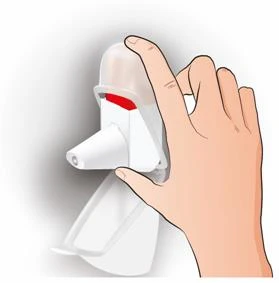 |
| When to switch to a new Easyhaler The dose counter shows the number of doses remaining. The dose counter advances after every 5 doses. When the dose counter begins to turn red, there are still 20 doses left to deliver. If you do not already have a new Easyhaler, contact your doctor for a new prescription. When the dose counter reaches 0 (zero), the Easyhaler must be replaced. If you are using the protective case, keep it and insert the new inhaler into it. | 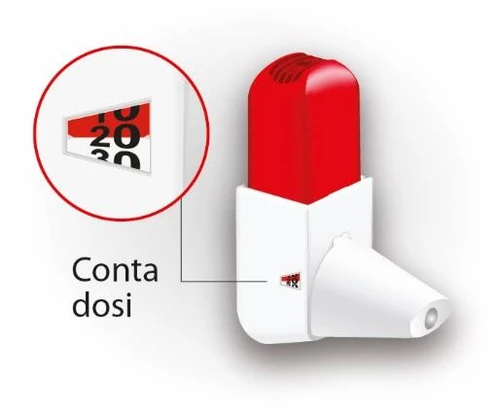 |
Remember
- 1. Shake - 2. Press - 3. Inhale.
- After taking the dose, rinse your mouth with water and spit it out.
- Do not wet the inhaler; protect it from moisture.
If you have any questions about using this medicine, consult your doctor or pharmacist.
QR code linking to the URL: www.oeh.fi/bfit
Scan this code or visit www.oeh.fi/bfit to view instructions on how to use the Easyhaler
Package leaflet: Information for the patient
Fobuler, 320 micrograms/9 micrograms/inhalation, powder for inhalation
Budesonide/formoterol fumarate dihydrate
Please read this leaflet carefully before taking this medicine as it contains important information for you.
- Keep this leaflet. You may need to read it again.
- If you have any questions, consult your doctor or pharmacist.
- This medicine has been prescribed for you only. Do not give it to others, even if their symptoms are the same as yours, as it could be harmful.
- If you experience any adverse reactions, including those not listed in this leaflet, contact your doctor or pharmacist. See section 4.
Contents of this leaflet:
- What Fobuler 320 mcg/9 mcg is and what it is used for
- What you need to know before using Fobuler 320 mcg/9 mcg
- How to use Fobuler 320 mcg/9 mcg
- Possible side effects
- How to store Fobuler 320 mcg/9 mcg
- Contents of the pack and other information
1 What Fobuler 320 mcg/9 mcg is and what it is used for
Fobuler consists of an inhaler used for the treatment of asthma in adults and adolescents aged between 12 and 17 years. It is also used for the treatment of symptoms of Chronic Obstructive Pulmonary Disease (COPD) in adults aged 18 years and over. It contains two different medicines: budesonide and formoterol fumarate dihydrate.
- Budesonide belongs to a group of medicines called "corticosteroids". It works by reducing and preventing swelling and inflammation in your lungs.
- Formoterol fumarate dihydrate belongs to a group of medicines called "long-acting beta-2 adrenergic agonists" or "bronchodilators". It works by relaxing the muscles in the airways, thus making breathing easier.
Asthma
For asthma, your doctor will prescribe two inhalers: Fobuler 320 mcg/9 mcg and a separate "reliever inhaler".
- Use Fobuler every day. This helps prevent the onset of asthma symptoms.
- Use the "reliever inhaler" when asthma symptoms occur, to help restore normal breathing.
Do not use Fobuler 320 mcg/9 mcg as a reliever inhaler.
Chronic Obstructive Pulmonary Disease (COPD)
Fobuler 320 mcg/9 mcg may also be used to treat symptoms of severe COPD in adults. COPD is a chronic lung disease, often caused by cigarette smoking.
2 What you need to know before using Fobuler 320 mcg/9 mcg
Do not use Fobuler 320 mcg/9 mcg:
- if you are allergic to budesonide, formoterol, or any of the other ingredients of this medicine (listed in section 6), which includes lactose (containing small amounts of milk proteins).
Warnings and Precautions
Consult your doctor or pharmacist before using Fobuler if:
- You have diabetes.
- You have a lung infection.
- You have high blood pressure or have ever had heart problems in the past (including irregular heartbeat, very rapid pulse, narrowed arteries, or heart failure).
- You have thyroid or adrenal gland problems.
- You have low potassium levels in your blood.
- You have severe liver problems. Contact your doctor if you experience blurred vision or other visual disturbances. Rinse your mouth after inhaling the dose to help prevent a fungal infection in the mouth.
Other medicines and Fobuler
Inform your doctor or pharmacist if you are taking, have recently taken, or might take any other medicines, including those without a prescription.
Some medicines can increase the effects of Fobuler, and your doctor will monitor carefully if you are taking these (including certain HIV medications: ritonavir, cobicistat).
In particular, inform your doctor or pharmacist if you are taking any of the following medicines:
- Beta-blockers (such as atenolol or propranolol for high blood pressure), including eye drops (such as timolol for glaucoma).
- Medicines for rapid or irregular heartbeat (such as quinidine).
- Medicines such as digoxin, often used to treat heart failure.
- Diuretics, also known as "water tablets" (such as furosemide), used to treat high blood pressure.
- Oral steroid medicines (such as prednisolone).
- Xanthine derivatives (such as theophylline or aminophylline), often used to treat asthma.
- Other bronchodilators (such as salbutamol).
- Tricyclic antidepressants (such as amitriptyline) and the antidepressant nefazodone.
- Phenothiazine medicines (such as chlorpromazine and prochlorperazine).
- Medicines to treat infections (such as ketoconazole, itraconazole, voriconazole, posaconazole, clarithromycin, and telithromycin).
- Medicines for Parkinson's disease (such as levodopa).
- Medicines for thyroid problems (such as levothyroxine).
If you fall into any of the above categories, or if you are unsure, consult your doctor or pharmacist before using Fobuler.
Also inform your doctor or pharmacist if you are scheduled to undergo general anaesthesia for surgery or dental procedures.
Pregnancy and breastfeeding
- If you are pregnant, think you might be pregnant, planning to become pregnant, or breastfeeding, ask your doctor or pharmacist for advice before taking this medicine.
- Do not take Fobuler unless instructed by your doctor.
- If you become pregnant while using Fobuler, do not stop using it but contact your doctor immediately.
Driving and using machines
Fobuler has no effect or a negligible effect on the ability to drive or use tools or machinery.
Fobuler contains lactose, a type of sugar. If your doctor has told you that you have an intolerance to certain sugars, consult your doctor before using this medicine. The amount of lactose contained in this medicine is generally not problematic for people with lactose intolerance. However, the excipient lactose contains small amounts of milk proteins which may cause allergic reactions.
For athletes
Using this medicine without therapeutic need constitutes doping and may lead to a positive result in anti-doping tests.
3 How to use Fobuler 320 mcg/9 mcg
- Always use this medicine exactly as prescribed by your doctor. If in doubt, consult your doctor or pharmacist.
- It is important to use Fobuler every day, even if you currently have no asthma or COPD symptoms.
- If you are using Fobuler for asthma, your doctor will periodically review your symptoms. If you have been taking oral steroids for your asthma or COPD, your doctor may reduce the number of tablets you are taking once you start using Fobuler. If you have taken oral steroids for a long time, your doctor may require periodic blood tests. When reducing oral steroid dosage, you may feel generally unwell even though your respiratory symptoms may improve. You might experience symptoms such as nasal congestion, runny nose, weakness, muscle or joint pain, or skin rash (eczema). If any of these symptoms concern you, or if you experience headache, fatigue, nausea (feeling unwell), or vomiting, contact your doctor immediately. You may need additional medication for allergic or arthritic symptoms. Ask your doctor if you have any doubts about continuing Fobuler therapy. Your doctor may consider adding oral steroids to your usual treatment during periods of stress (e.g., during a respiratory infection or before surgery).
Important information about asthma or COPD symptoms
If you notice the onset of breathlessness or wheezing while using Fobuler, continue using it but consult your doctor as soon as possible, as you may need additional treatment.
Contact your doctor immediately if:
- Your breathing worsens or you wake up frequently at night due to asthma.
- You start experiencing chest tightness in the morning or if chest tightness lasts longer than usual. These signs may indicate that your asthma or COPD is not adequately controlled and you may need immediate different or additional treatment.
ASTHMA
Use Fobuler every day. This helps prevent the onset of asthma symptoms.
Adults (18 years and over)
- The usual dose is 1 inhalation, twice daily.
- Your doctor may increase this dose to 2 inhalations, twice daily.
- If symptoms are well controlled, your doctor may advise you to take the medicine once daily.
Adolescents (12–17 years)
- The usual dose is 1 or 2 inhalations, twice daily.
- If symptoms are well controlled, your doctor may advise you to take the medicine once daily.
- A lower strength of Fobuler is available for children aged 6 to 11 years.
Fobuler is not recommended for children under 6 years of age.
Your doctor (or nurse) will help manage your asthma and adjust the dose of this medicine to the lowest effective dose. However, do not change the dose without first discussing it with your doctor (or nurse).
Use the separate "reliever inhaler" to treat asthma symptoms when they occur.
Always carry your "reliever inhaler" with you so you can use it when needed. Do not use Fobuler to treat asthma symptoms—use the reliever inhaler instead.
COPD (Chronic Obstructive Pulmonary Disease)
- For use in adults only (18 years and over).
- The usual dose is 1 inhalation twice daily.
Your doctor may also prescribe other bronchodilator medicines, such as anticholinergics (e.g., tiotropium or ipratropium bromide) for COPD.
If you use more Fobuler than you should
It is important that you take the dose as indicated on the label or as advised by your doctor. Do not exceed the prescribed dose without consulting your doctor.
The most common symptoms if you use more Fobuler 320 mcg/9 mcg than recommended are: tremor, headache, or rapid heartbeat.
If you forget to use Fobuler
- If you forget to take a dose, take it as soon as you remember. However, if it is almost time for your next dose, skip the missed dose.
- Do not take a double dose to make up for a forgotten dose.
If you have any doubts about how to use this medicine, consult your doctor or pharmacist.
Instructions on how to use the inhaler are at the end of this leaflet.
4. Possible side effects
Like all medicines, this medicine can cause side effects, although not everyone gets them.
If any of the following occur, stop using Fobuler and contact your doctor immediately:
- Swelling of the face, particularly around the mouth (tongue and/or throat and/or difficulty swallowing) or hives accompanied by breathing difficulties (angioedema) and/or sudden feeling of fainting, which could indicate an allergic reaction. This effect is rare and affects up to 1 in 1,000 people.
- Sudden wheezing and shortness of breath immediately after using your inhaler. If any of these symptoms occur, you must stop using Fobuler immediately and use your “as-needed” inhaler instead. Contact your doctor immediately if you need to change your treatment. This occurs very rarely, affecting up to 1 in 10,000 people. Inform your doctor if you experience any of the following symptoms while taking Fobuler, as they could be signs of a lung infection:
- Fever or chills.
- Increased mucus production or changes in mucus colour.
- Worsening cough or increased breathing difficulties.
Pneumonia (lung infection) in patients with COPD is a common side effect (may affect up to 1 in 10 people).
Other possible side effects:
Common (may affect up to 1 in 10 people)
- Palpitations (awareness of heartbeat), tremor, or restlessness. If these effects occur, they are usually mild and tend to disappear with continued use of Fobuler.
- Oral thrush (a fungal infection in the mouth). This is less likely if you rinse your mouth with water after using Fobuler.
- Mild sore throat, cough, and hoarseness.
- Headache.
Uncommon (may affect up to 1 in 100 people)
- Feeling restless, nervous, or agitated.
- Disturbed sleep.
- Dizziness.
- Nausea (feeling unwell).
- Fast heartbeat.
- Bruising of the skin.
- Muscle cramps.
- Blurred vision.
Rare (may affect up to 1 in 1,000 people)
- Skin rash, itching.
- Bronchospasm (narrowing of the muscles in the airways, causing wheezing). If wheezing occurs immediately after using Fobuler, stop using Fobuler and contact your doctor immediately.
- Low levels of potassium in the blood.
- Irregular heartbeat.
Very rare (may affect up to 1 in 10,000 people)
- Depression.
- Changes in behaviour, particularly in children.
- Chest pain or tightness (angina pectoris).
- Increased blood sugar (glucose) levels.
- Taste disturbances, such as an unpleasant taste in the mouth.
- Changes in blood pressure.
Inhaled corticosteroids may affect the normal production of steroid hormones in the body, particularly if high doses are used for prolonged periods. These effects include:
- Changes in bone mineral density (thinning of the bones).
- Cataract (clouding of the eye's lens).
- Glaucoma (increased pressure in the eye).
- Slowed growth in children and adolescents.
- Effects on the adrenal gland (a small gland near the kidney). These effects are much less likely with inhaled corticosteroids than with oral corticosteroid tablets.
Reporting of side effects
If you experience any side effect, including those not listed in this leaflet, talk to your doctor or pharmacist. You can also report side effects directly via the national reporting system at: https://www.aifa.gov.it/content/segnalazioni-reazioni-avverse.
By reporting side effects, you can help provide more information on the safety of this medicine.
5. How to store Fobuler 320 mcg/9 mcg
- Keep this medicine out of the sight and reach of children.
- Do not use this medicine after the expiry date which is stated on the carton, the aluminium pouch, or the label of the inhaler after Exp.. The expiry date refers to the last day of that month.
- After opening the aluminium pouch, store at a temperature not exceeding 25 °C and protect from moisture. It is recommended to keep the Easyhaler in its protective case.
- If your Fobuler becomes damp, it must be replaced with a new one.
- Replace Fobuler 4 months after opening the aluminium pouch. Record the date of opening the pouch to help you remember.
- Do not dispose of any medicine via wastewater or household waste. Ask your pharmacist how to dispose of medicines no longer in use. This will help protect the environment.
6. Package contents and other information
What Fobuler 320 mcg/9 mcg contains
- The active substances are budesonide and formoterol fumarate dihydrate. Each inhaled dose contains 320 micrograms of budesonide and 9 micrograms of formoterol fumarate dihydrate.
- The excipient is lactose monohydrate (which contains milk proteins).
Description of the appearance of Fobuler 320 mcg/9 mcg and contents of the pack
Fobuler 320 mcg/9 mcg consists of an Easyhaler inhaler containing the medicine. The inhaled powder is white to slightly yellowish in colour. Each inhaler contains 60 doses and has a white body with a red top.
Fobuler 320 mcg/9 mcg is available in packs containing 1, 2 or 3 inhalers.
Not all pack sizes may be marketed.
The pack may contain a protective case. If you require a protective cap, please contact the marketing authorisation holder (details below).
Marketing Authorisation Holder and Manufacturer
Marketing Authorisation Holder
Orion Corporation
Orionintie 1
FI-02200 Espoo
Finland
Sales Licence Holder
Farmaceutici Caber S.r.l
Via del Mare, 36 Pomezia
(RM)
Italy
Manufacturer
Orion Corporation Orion Pharma
Orionintie 1
FI-02200 Espoo
Finland
Detailed and up-to-date information on how to use this product is available by scanning this QR code (also included on the box and on the inhaler label) with a smartphone. The same information is also available at the following URL: www.oeh.fi/bfit.
QR code linking to the URL: www.oeh.fi/bfit
How to use the Easyhaler inhaler
Information about Easyhaler
Fobuler may differ from inhalers you have used previously. Therefore, it is very important that you use it correctly, as incorrect use may result in you not receiving the correct amount of medicine. This could make you feel much worse or may mean that your asthma or COPD is not properly treated.
Your doctor, nurse or pharmacist will show you how to use the inhaler correctly. Make sure you understand the correct way to use the inhaler. If you have any doubts, contact your doctor, nurse or pharmacist. As with all inhalers, caregivers of children must ensure that children prescribed Fobuler use the correct inhalation technique as described below. You may also refer to the instructional video available at www.oeh.fi/bfit.
First use of the Easyhaler
| The Easyhaler is supplied in an aluminium pouch. Do not open the aluminium pouch until you are ready to start using the medicine, as this helps keep the powder dry in the inhaler. When you are ready to start treatment, open the pouch and mark the date, for example on your calendar. Use the inhaler within 4 months of opening the aluminium pouch. | 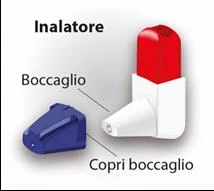 |
CORRECT USE
| Step 1: SHAKE • Remove the mouthpiece cover • Shake the inhaler 3 to 5 times while holding it in an upright position | SHAKE x 3-5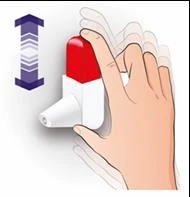 |
Important points to remember • It is important to keep the inhaler in an upright position • If you press it accidentally while shaking, clear the powder from the mouthpiece as shown below |
| Step 2: PRESS • Continue holding the inhaler upright between your index finger and thumb • Press down until you hear a click and allow the inhaler to click again. This releases one dose • Press down only once | PRESS x 1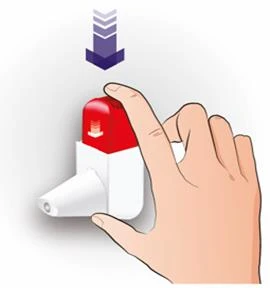 |
Important points to remember • The inhaler will not click if the mouthpiece cover is still in place • Press down only once • If you accidentally press it more than once, clear the powder from the mouthpiece as shown below • Press to release the dose before inhaling—do not press and inhale at the same time • Keep the inhaler in an upright position while pressing and while inhaling the dose. If you turn it upside down, the powder may escape before being inhaled. |
| Step 3: INHALE • Continue holding the inhaler in an upright position • Breathe out normally • Place the mouthpiece in your mouth between your teeth and close your lips tightly around it • Breathe in strongly and deeply • Remove the inhaler from your mouth, then breathe out normally | INHALE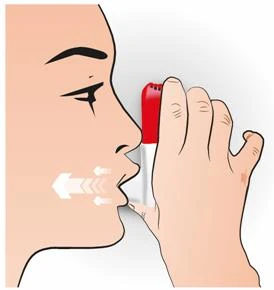 |
Important points to remember • Make sure the entire mouthpiece is properly placed in your mouth so the medicine reaches your lungs • Ensure your lips are sealed tightly around the mouthpiece • Do not breathe out into the inhaler. This is important: it could clog the inhaler. If you do breathe out into the inhaler, clear the powder from the mouthpiece as shown below |
If another inhalation is required, repeat steps 1-3 Shake-Press-Inhale.
After using the inhaler:
- Replace the mouthpiece cover over the mouthpiece. This helps prevent accidental activation of the inhaler.
- After taking the dose, rinse the mouth with water and spit it out.
| How to clear powder from the mouthpiece If you have pressed the inhaler accidentally, pressed it more than once, or breathed out into it, clear the mouthpiece. Tap the mouthpiece on the table or on the palm of your hand to remove the powder. Then restart with the steps Shake-Press-Inhale. | 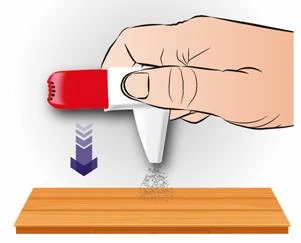 |
Cleaning the Easyhaler
Keep the inhaler dry and clean. If necessary, the mouthpiece of the inhalator can be cleaned with a dry cloth or tissue. Do not use water: the powder in the Easyhaler is sensitive to moisture.
| Using the Easyhaler with a protective case You may use a protective case with the inhaler. This helps improve the product's lifespan. When placing the inhaler into the protective case for the first time, ensure that the mouthpiece cover is in place on the inhaler, as this prevents the inhaler from being accidentally activated. You can use the inhaler without removing it from the protective case. Follow the same instructions as above: 1. Shake – 2. Press – 3. Inhale. Remember to: Hold the inhaler upright when pressing Close the mouthpiece cover after taking the dose, as this prevents accidental activation of the inhaler. | 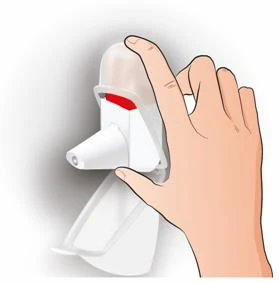 |
| When to switch to a new Easyhaler The dose counter shows the number of doses remaining. The dose counter advances after every 5 actuations. When the dose counter begins to turn red, 20 doses remain. If you do not already have a new Easyhaler, contact your doctor for a new prescription. When the dose counter reaches 0 (zero), the Easyhaler must be replaced. If you are using the protective case, keep it and insert the new inhaler into it. | 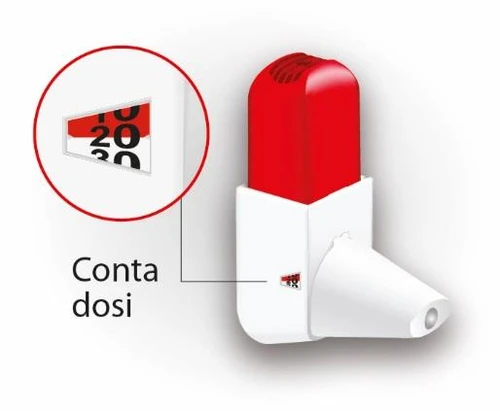 |
Remember
- 1. Shake - 2. Press - 3. Inhale.
- After taking the dose, rinse your mouth with water and spit it out.
- Do not wet the inhaler; protect it from moisture.
If you have any doubts about how to use this medicine, consult your doctor or pharmacist.