Fluticasone Doc Generici
ItalyTable of Contents
- Package leaflet: Information for the patient
- FLUTICASONE DOC 125 micrograms per dose, pressurised inhalation suspension, 250 micrograms per dose, pressurised inhalation suspension
- 1. What FLUTICASONE DOC is and what it is used for
- 2. What you need to know before using FLUTICASONE DOC
- 3. How to use FLUTICASONE DOC
- 4. Possible side effects
- 5. How to store FLUTICASONE DOC
- 6. Package contents and other information
Package leaflet: Information for the patient
FLUTICASONE DOC 125 micrograms per dose, pressurised inhalation suspension, 250 micrograms per dose, pressurised inhalation suspension
Generic medicine
Please read all of this leaflet carefully before you start using this medicine, because it contains important information for you.
- Keep this leaflet. You may need to read it again.
- If you have any questions, ask your doctor, pharmacist or nurse.
- This medicine has been prescribed for you only. Do not give it to other people, even if their symptoms are the same as yours, as it may be harmful.
- If you get any side effects, including those not listed in this leaflet, tell your doctor, pharmacist or nurse. (See section 4.)
Contents of this leaflet
- What FLUTICASONE DOC is and what it is used for
- What you need to know before using FLUTICASONE DOC
- How to use FLUTICASONE DOC
- Possible side effects
- How to store FLUTICASONE DOC
- Contents of the pack and other information
1. What FLUTICASONE DOC is and what it is used for
This medicine contains the active substance fluticasone propionate, which belongs to a group of medicines called corticosteroids.
FLUTICASONE DOC works by reducing inflammation in the lungs.
This helps prevent asthma attacks in people who require regular treatment. It takes 4-7 days for this medicine to take effect, and it is very important to use it regularly.
FLUTICASONE DOC is not intended for the treatment of sudden asthma attacks when you feel short of breath.
- A different medicine is used to treat sudden asthma attacks
2. What you need to know before using FLUTICASONE DOC
Do not use FLUTICASONE DOC
- if you are allergic to fluticasone propionate or to any of the other ingredients of this medicine (listed in section 6).
Warnings and precautions
Stop taking FLUTICASONE DOC immediately
- if you experience breathing difficulties with an immediate increase in wheezing shortly after taking a dose of this medicine.
Talk to your doctor, pharmacist, or nurse before using FLUTICASONE DOC
- if you have ever been treated for tuberculosis (TB);
- if you have a history of diabetes mellitus (because fluticasone may increase blood sugar levels);
- if you have used high doses of this medicine for a prolonged period and notice any of the following conditions:
- weight gain and a rounded (moon-shaped) face (Cushing's syndrome),
- vague symptoms such as stomach pain, nausea, diarrhea, headache, or drowsiness (adrenal suppression, acute adrenal crisis). This is more likely during an infection such as a viral infection or stomach pain,
- thinning of the bones,
- eye problems (cataract and glaucoma),
- slowed growth (mainly observed in children and adolescents).
If you are unsure whether any of the above conditions apply to you, talk to your doctor, pharmacist, or nurse before using FLUTICASONE DOC.
Contact your doctor if you experience blurred vision or other visual disturbances.
Other medicines and FLUTICASONE DOC
Inform your doctor or pharmacist if you are taking, have recently taken, or might take any other medicines. In particular, inform your doctor or pharmacist if you are taking any of the following medicines:
- medicines used to treat various types of infections such as ketoconazole, clarithromycin, telithromycin, ritonavir, cobicistat, atazanavir, indinavir, nelfinavir, or saquinavir. These medicines may increase the effects of FLUTICASONE DOC, and your doctor may need to monitor you closely if you are taking these medicines.
- oral steroid tablets together with inhaled FLUTICASONE DOC, or if you have recently stopped taking oral steroid tablets. You should carry a medical alert card indicating that you are taking steroids, as there is a risk of impaired adrenal function, especially during stressful situations such as a serious accident or surgery, and your doctor may decide to prescribe additional steroid medication during such periods.
If you are unsure whether any of the above conditions apply to you, talk to your doctor or pharmacist before using FLUTICASONE DOC.
Pregnancy, breastfeeding, and fertility
If you are pregnant, think you might be pregnant, planning to become pregnant, or are breastfeeding, ask your doctor or pharmacist for advice before using this medicine.
Driving and using machines
It is unlikely that FLUTICASONE DOC will affect your ability to drive or operate machinery.
3. How to use FLUTICASONE DOC
FLUTICASONE DOC is available in two different concentrations for inhalation use only.
Your doctor will decide which concentration you need. Always use this medicine exactly as instructed
by your doctor. If you have any doubts, consult your doctor, pharmacist, or nurse.
Taking this medicine
- FLUTICASONE DOC can be used with the Volumatic spacer device in patients who have difficulty coordinating the actuation of a spray (dose) of medicine immediately after starting to inhale.
- The initial dose should be appropriate to the severity of the disease. Your doctor will aim to reduce your dose to the lowest level that effectively controls your asthma.
Adults and adolescents aged over 16 years
The recommended dose is 50–500 micrograms twice daily.
Use in children
FLUTICASONE DOC is not recommended for children under 16 years of age.
If you have been using high doses of an inhaled steroid for a long time, you may occasionally need additional
steroids, for example during stressful situations such as a car accident or before surgery. Your doctor may decide
to prescribe additional steroids during such periods.
Instructions for use
Your doctor, nurse, or pharmacist should show you how to use the inhaler. They should check your technique
periodically. Not using FLUTICASONE DOC correctly or as prescribed may prevent the medicine from controlling
your asthma as it should.
The medicine is contained in a pressurized canister placed inside a plastic holder with a mouthpiece. To prevent
the inhaler from becoming blocked, it is important to clean it at least once a week.
Checking that the inhaler works
1 When using the inhaler for the first time, test it to ensure it is working. Remove the mouthpiece cap by gently squeezing its sides with your index finger and thumb to release it.
2 To ensure proper function, shake the inhaler well, point the mouthpiece away from you, and press the canister to release four sprays into the air. If you have not used the inhaler for one week or more, release two sprays into the air.
How to use the inhaler
It is important to begin breathing in as slowly as possible just before using the inhaler.
1 Stand or sit upright when using the inhaler.
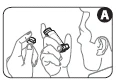
2 Remove the mouthpiece cap. Check inside and outside to ensure the mouthpiece is clean and free of foreign objects (Figure A).
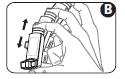
3 Shake the inhaler 4 or 5 times to ensure any loose particles are removed and the contents are evenly mixed (Figure B).
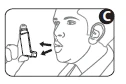
4 Hold the inhaler upright with your thumb placed under the base, below the mouthpiece. Breathe out as fully as possible (Figure C). Do not inhale again.
5 Place the mouthpiece in your mouth, between your teeth, sealing your lips around it.
Do not bite the mouthpiece (Figure D).
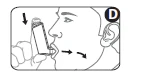
6 Breathe in through your mouth. Immediately after starting to inhale, press down on the top of the canister to release one spray of medicine. Do this while continuing to breathe in steadily and deeply (Figure D).
7 Holding your breath, remove the inhaler from your mouth and release pressure from your finger on the top of the inhaler. Continue holding your breath for a few seconds, or as long as possible (Figure E).

If your doctor has instructed you to take two puffs, wait about half a minute before taking the next puff, repeating steps 3 to 7.
8 Then rinse your mouth with water and spit it out. This helps prevent unwanted effects in the mouth or throat. You may also brush your teeth.
9 After using the inhaler, always replace the mouthpiece cap to protect it from dust. Push the cap on until you hear a click.
At first, practice in front of a mirror. If you see a "mist" coming from the top of the inhaler or from the sides of your mouth, repeat the procedure.
Older children or people with weak hands may find it easier to hold the inhaler with both hands. Place both index fingers on top of the inhaler and both thumbs under the base, below the mouthpiece.
Your doctor, nurse, or pharmacist can advise you.
How to clean the inhaler
To prevent the inhaler from becoming blocked, it is important to clean it at least once a week.
To clean the inhaler:
- Remove the mouthpiece cap.
- Never remove the metal canister from the plastic holder.
- Clean the inside and outside of the mouthpiece and the plastic holder with a dry cloth or tissue.
- Replace the mouthpiece cap.
Do not immerse the metal canister in water.
If you use more FLUTICASONE DOC than you should
If you have taken more medicine than you should, inform your doctor as soon as possible.
It is important that you take the dose stated on the pharmacist’s label or recommended by your doctor. Do not increase or decrease the dose without consulting your doctor.
If you forget to use FLUTICASONE DOC
- Take the next dose at the usual time.
- Do not take a double dose to make up for a missed dose.
If you stop using FLUTICASONE DOC
Do not stop treatment even if you feel better, unless your doctor has told you to. Patients who have taken high doses of steroids for a long time should not stop taking the medicine suddenly without talking to their doctor, as this could worsen asthma.
Stopping treatment suddenly may also make you feel unwell and cause symptoms such as vomiting, drowsiness, nausea, headache, fatigue, loss of appetite, low blood sugar levels, and seizures.
If you have any questions about using this medicine, consult your doctor, nurse, or pharmacist.
4. Possible side effects
Like all medicines, this medicine can cause side effects, although not everyone experiences them. If you notice any of the following serious side effects, stop using this medicine and
inform your doctor immediately. Urgent medical treatment may be required.
- Allergic reaction (may affect up to 1 in 100 people) or severe allergic reactions (may affect up to 1 in 10,000 people), including signs such as skin rash, redness, itching, or hives
- Swelling of the face, lips, mouth, tongue, or throat, which may cause difficulty swallowing or breathing, rash with itching, feeling faint, dizziness, and collapse
- Your breathing worsens or you experience wheezing immediately after using the inhaler
Other side effects include:
Very common (affects more than 1 in 10 people)
- Oral and throat candidiasis (fungal infection)
Common (affects less than 1 in 10 people)
- Hoarseness
- Bruising
- Pneumonia (lung infection) in patients with COPD
Inform your doctor if you experience any of the following symptoms while taking FLUTICASONE DOC, as they may be signs of a lung infection:
- Fever or chills
- Increased mucus production, changes in mucus color
- Worsening cough or increased difficulty breathing
Rare (may affect up to 1 in 1,000 people)
- Esophageal candidiasis (thrush)
Very rare (affects less than 1 in 10,000 people)
- Difficulty sleeping or feelings of anxiety, excitement, and irritability (these effects occur mainly in children)
- Joint pain
- Indigestion
- Increased blood sugar (glucose) levels
- Long-term use of high doses of FLUTICASONE DOC may lead to: adrenal suppression, adrenal crisis, Cushing's syndrome, thinning of the bones, eye problems (such as cataract and glaucoma, characterized by increased pressure in the eye), and slowed growth in children and adolescents (see section 2 "Warnings and precautions"). Your doctor will help prevent this by ensuring you use the lowest steroid dose needed to control your symptoms.
Not known (frequency cannot be estimated from available data)
- Depression
- Feeling restless or nervous (these effects occur mainly in children)
- Nosebleeds
- Blurred vision
Reporting of side effects
If you experience any side effects, including those not listed in this leaflet, talk to your doctor, pharmacist, or nurse. You can also report side effects directly via
https://www.aifa.gov.it/content/segnalazioni-reazioni-avverse.
By reporting side effects, you can help provide more information on the safety of this medicine.
5. How to store FLUTICASONE DOC
- Keep this medicine out of the sight and reach of children.
- Clean your inhaler on a weekly basis, and if it becomes blocked, as described in the section “How to clean the inhaler”.
- Do not use this medicine after the expiry date stated on the label and the carton after Exp. The expiry date refers to the last day of that month.
- The canister contains liquid under pressure. Do not expose it to temperatures above 50 °C. Do not pierce the canister. Do not refrigerate or freeze. Protect from freezing and direct sunlight.
- If the inhaler becomes very cold, remove the metal canister from the plastic holder and warm it with your hands for a few minutes before use. Never use any other means to warm it.
- The metal canister is pressurized. Do not pierce, break, or burn it, even when it appears to be empty.
- Do not dispose of any medicine via wastewater or household waste. Ask your pharmacist how to dispose of medicines you no longer use. This will help protect the environment.
- If you are told to stop taking this medicine, return the inhaler to your pharmacist for proper disposal.
6. Package contents and other information
What FLUTICASONE DOC contains
- The active substance is fluticasone propionate. One metered dose (from the valve) contains 125 or 250 micrograms of fluticasone propionate, respectively. This corresponds to a delivered dose (from the actuator) of 110 mcg or 227 mcg of fluticasone propionate, respectively.
- The other component is norflurane (HFA 134a).
Description of the appearance of FLUTICASONE DOC and contents of the pack
- FLUTICASONE DOC is a white suspension contained in an aluminium pressurised canister sealed with a metering valve, an actuator, and a dust cap.
- Each canister contains 120 actuations of 125 or 250 micrograms of fluticasone propionate.
Packs:
Single pack: each single pack contains one 120-actuation canister.
Multiple pack: pack of 2 or 3 single packs.
Hospital pack: pack of 10 single packs.
Not all pack sizes may be marketed.
Marketing Authorisation Holder and Manufacturer
Marketing Authorisation Holder
DOC Generici Srl
Via Turati 40
20121 Milano, Italy
Manufacturer
S&D Pharma CZ, spol. s r.o
Theodor 28, 273 08 Pchery (Pharmos a.s. facility)
Czech Republic
Cipla (EU) Limited,
Dixcart House, Addlestone Road, Bourne Business Park,
Addlestone, Surrey, KT15 2LE,
United Kingdom.
Cipla Europe NV
De Keyserlei 58-60,
Box-19, 2018 Antwerp,
Belgium
Orion Corporation Orion Pharma
Orionintie 1
FI-02200 Espoo
Finland
This leaflet is available in large print upon request.
This medicinal product is authorised in the Member States of the European Economic Area under the following names:
| Sweden | Fluticasone Cipla 125 microgram/dose inhalation spray, suspension Fluticasone Cipla 250 microgram/dose inhalation spray, suspension |
| Finland | Fluticasone Orion Cipla 125 microg/dose inhalation spray, suspension Fluticasone Orion Cipla 250 microg/dose inhalation spray, suspension |
| Germany | Fluticasone Cipla 125 microgram/spray pressurized inhalation, suspension Fluticasone Cipla 250 microgram/spray pressurized inhalation, suspension |
| Hungary | Fluticasone Cipla 125 microgram/dose pressurized inhalation suspension Fluticasone Cipla 250 microgram/dose pressurized inhalation suspension |
| Italy | FLUTICASONE DOC 125 micrograms per dose, pressurized suspension for inhalation FLUTICASONE DOC 250 micrograms per dose, pressurized suspension for |
| inhalation | |
| Norway | Fluticasone Cipla 125 microgram/dose inhalation aerosol, suspension Fluticasone Cipla 250 microgram/dose inhalation aerosol, suspension |
| Spain | Fluticasone Cipla 125 micrograms/inhalation, suspension for inhalation in pressurized container Fluticasone Cipla 250 micrograms/inhalation, suspension for inhalation in pressurized container |