Fluconazole Biondustria LIM
Italy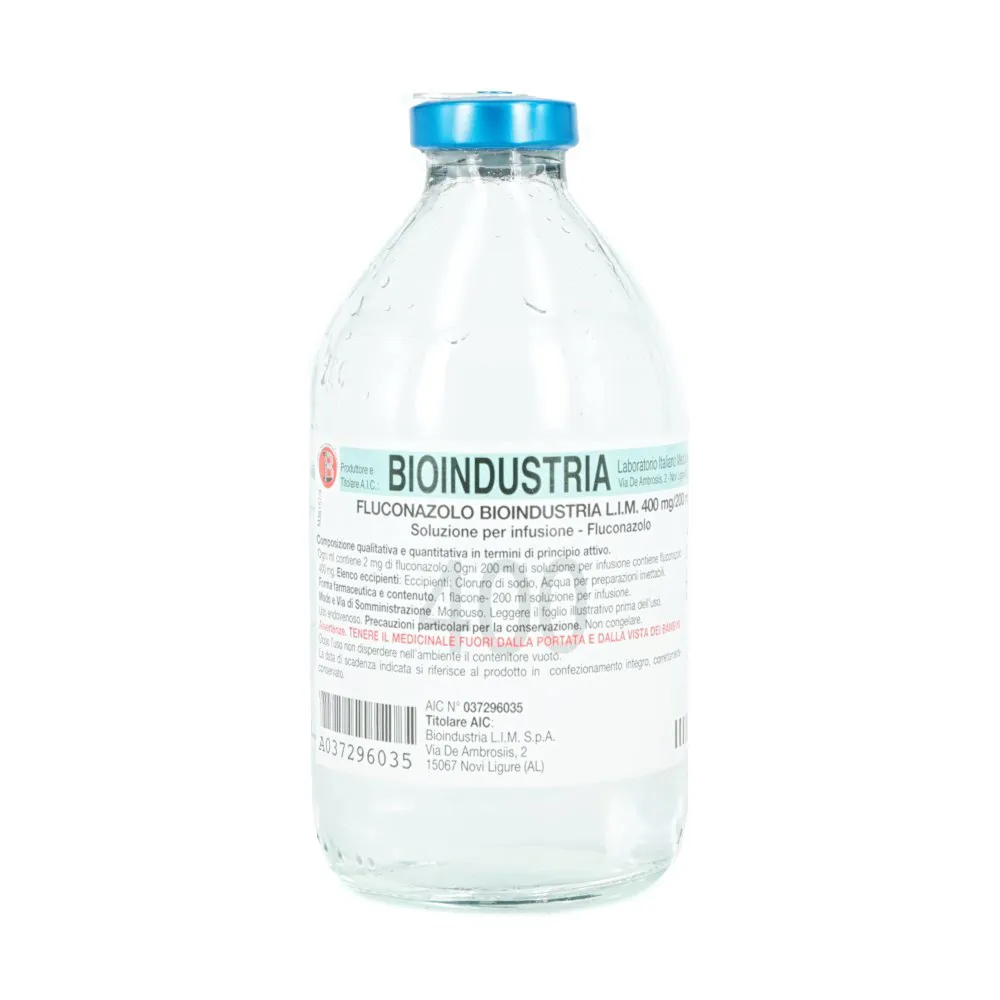
Table of Contents
- Package leaflet: Information for the user
- FLUCONAZOLE Bioindustria L.I.M. 100 mg/50 ml Infusion solution
- 1. What FLUCONAZOLO Bioindustria L.I.M. is and what it is used for
- 2. What you need to know before taking FLUCONAZOLE Bioindustria L.I.M.
- 3. How to use FLUCONAZOLE Bioindustria L.I.M.
- 4. Possible side effects
- 5. How to store FLUCONAZOLE Bioindustria L.I.M.
- 6. Package contents and other information
Package leaflet: Information for the user
FLUCONAZOLE Bioindustria L.I.M. 100 mg/50 ml Infusion solution
FLUCONAZOLE Bioindustria L.I.M. 200 mg/100 ml Infusion solution
FLUCONAZOLE Bioindustria L.I.M. 400 mg/200 ml Infusion solution
Fluconazole
Generic medicine
Read this leaflet carefully before using this medicine, because it contains
important information for you.
- Keep this leaflet. You may need to read it again.
- If you have any questions, ask your doctor or nurse.
- If you experience any side effects, including those not listed in this leaflet, inform your doctor or nurse. See section 4.
Contents of this leaflet
- What FLUCONAZOLE Bioindustria L.I.M. is and what it is used for
- What you need to know before using FLUCONAZOLE Bioindustria L.I.M.
- How to use FLUCONAZOLE Bioindustria L.I.M.
- Possible side effects
- How to store FLUCONAZOLE Bioindustria L.I.M.
- Contents of the pack and other information
1. What FLUCONAZOLO Bioindustria L.I.M. is and what it is used for
FLUCONAZOLO Bioindustria L.I.M. contains the active substance fluconazole, which belongs to a group of medicines called "antifungals", used to treat infections caused by fungi and yeasts.
FLUCONAZOLO Bioindustria L.I.M. is indicated for the treatment of fungal infections (mycoses) and can be used to prevent Candida infections. The most common cause of fungal infections is a yeast called Candida.
Adults
Your doctor may prescribe this medicine to treat the following fungal infections:
- Infection of the tissues covering the brain (cryptococcal meningitis)
- Disease of the bronchopulmonary system (coccidioidomycosis)
- Infections caused by Candida found in the bloodstream, organs (e.g. heart, lungs), or urinary tract
- Infection of the throat and oral mucosa (oropharyngeal candidiasis, esophageal candidiasis, candiduria, and chronic mucocutaneous candidiasis, invasive candidiasis)
- Inflammation of the mouth due to dental prosthesis, and in cases where oral hygiene and other treatments are insufficient (chronic atrophic candidiasis, denture stomatitis)
This medicine is also indicated for:
- Prevention of recurrence of infection of the tissues covering the brain (cryptococcal meningitis), if you have already suffered from it and there is a high risk of the infection reappearing;
- Prevention of recurrence of mucosal candidiasis (oropharyngeal or esophageal candidiasis);
- Prevention of Candida infections if you have a low number of white blood cells in the blood, for example if you have blood disorders (malignant hematological diseases) and are undergoing chemotherapy, or if you are receiving blood cell transplantation (Hematopoietic Stem Cells).
Children and adolescents (from 0 to 17 years of age)
Your doctor may prescribe this medicine for:
- Treatment of Candida infections of the mucous membranes (infection of the oral mucosa, infection of the throat);
- Infections caused by Candida found in the bloodstream, organs (e.g. heart, lungs), or urinary tract;
- Treatment of infections of the tissues covering the brain (cryptococcal meningitis).
FLUCONAZOLO Bioindustria L.I.M. may also be prescribed to:
- Prevent Candida infections (if your immune system is weakened or not functioning properly);
- Prevent recurrence of cryptococcal meningitis.
2. What you need to know before taking FLUCONAZOLE Bioindustria L.I.M.
Do not use FLUCONAZOLE Bioindustria L.I.M.
- if you are allergic (hypersensitive) to fluconazole, to similar medicines (azole compounds) you have used to treat fungal infections, or to any of the other ingredients of this medicine (listed in section 6). Symptoms may include itching, skin redness, or difficulty breathing;
- if you are taking any of the following medicines (see section “Other medicines and FLUCONAZOLE BIOINDUSTRIA L.I.M.” and “Warnings and precautions”):
- certain medicines used to treat allergies such as astemizole, terfenadine;
- cisapride, a medicine used to treat certain stomach problems;
- certain medicines used to treat irregular heartbeat (cardiac arrhythmias), such as quinidine;
- pimozide, used for certain mental disorders;
- erythromycin, an antibiotic used to treat certain bacterial infections.
Warnings and precautions
Talk to your doctor or nurse before being administered FLUCONAZOLE
Bioindustria L.I.M.:
- if you have kidney problems (impaired renal function);
- if you have liver problems, as serious complications may occur, including death. If symptoms of liver problems develop, such as loss of appetite (anorexia), nausea, vomiting, fatigue, or yellowing of the skin and whites of the eyes (jaundice), stop treatment with this medicine and contact your doctor immediately;
- if you have heart disease (structural heart conditions, electrolyte abnormalities) or if you are taking other medicines that may alter normal heart rhythm (cardiac arrhythmia) (see section “Other medicines and FLUCONAZOLE Bioindustria L.I.M.”);
- if you have abnormal levels of potassium, calcium, or magnesium in your blood;
- if you develop severe skin reactions (itching, skin redness, or difficulty breathing);
- if you experience signs of “adrenal insufficiency”, where the adrenal glands do not produce adequate amounts of certain steroid hormones such as cortisol (chronic or prolonged fatigue, muscle weakness, loss of appetite, weight loss, abdominal pain);
- if you are taking terfenadine, a medicine used to treat allergies, or if you are taking halofantrine, a medicine used to treat malaria (see section “Other medicines and FLUCONAZOLE Bioindustria L.I.M.”);
- if you have previously developed a severe skin rash or skin peeling, blisters and/or mouth ulcers after using FLUCONAZOLE Bioindustria L.I.M.
Severe skin reactions, including drug reaction with eosinophilia and
systemic symptoms (DRESS), have been reported with treatment with FLUCONAZOLE Bioindustria L.I.M.
Stop taking FLUCONAZOLE Bioindustria L.I.M. and contact your
doctor immediately if you notice any of the symptoms related to severe skin reactions described in
section 4.
If the fungal infection does not improve, alternative antifungal therapy may be required.
If you develop skin irritation (rash) or more serious disorders associated with blistering and lesions (exfoliative skin reactions such as Stevens-Johnson syndrome and toxic epidermal necrolysis) during treatment with this medicine, stop treatment with this medicine. These conditions may be more likely if you have AIDS.
FLUCONAZOLE Bioindustria L.I.M. must not be used to treat infections caused by
tinea capitis.
There are no available data on the dose to be used in the treatment of
cryptococcosis and deep endemic mycoses (paracoccidioidomycosis, lymphocutaneous sporotrichosis, and histoplasmosis).
Other medicines and FLUCONAZOLE Bioindustria L.I.M.
Tell your doctor or nurse if you are using, have recently used, or might use any other medicine.
Tell your doctor immediately if you are taking:
-
cisapride, a medicine used to treat certain stomach problems;
-
terfenadine, a medicine used to treat allergies, as changes in heart rhythm may occur. Avoid taking terfenadine and FLUCONAZOLE Bioindustria L.I.M. together if the prescribed dose of FLUCONAZOLE Bioindustria L.I.M. is 400 mg or more per day. If you need to take a dose of
FLUCONAZOLE Bioindustria L.I.M. lower than 400 mg together with terfenadine, your doctor should monitor your health condition during treatment with both medicines; -
astemizole, used to treat allergies;
-
certain medicines used to treat irregular heartbeat, such as quinidine;
-
erythromycin, used to treat certain bacterial infections;
-
pimozide, used for certain mental disorders; as these must not be taken with FLUCONAZOLE Bioindustria L.I.M. (see section: “Do not use FLUCONAZOLE Bioindustria L.I.M.”).
There are some medicines that may interact with FLUCONAZOLE Bioindustria L.I.M.
Inform your doctor if you are taking any of the following medicines:
- halofantrine, a medicine used to treat malaria;
- rifampicin, rifabutin, azithromycin, used to treat certain bacterial infections;
- alfentanil and fentanyl, medicines used as anesthetics;
- amitriptyline, nortriptyline, medicines used to treat depression;
- amphotericin B, voriconazole, used to treat certain fungal infections;
- medicines used to make the blood thinner and prevent clotting (warfarin or similar medicines);
- certain medicines used to treat anxiety or as tranquilizers, such as midazolam and triazolam or similar medicines (benzodiazepines);
- medicines used to treat epileptic seizures (carbamazepine, phenytoin);
- certain medicines used to treat high blood pressure (hypertension) (calcium channel blockers such as nifedipine, isradipine, amlodipine, verapamil, felodipine, and losartan);
- olaparib (used to treat ovarian carcinoma);
- certain medicines used to treat certain tumors (cyclophosphamide, vincristine, vinblastine, or similar medicines);
- ciclosporin, everolimus, sirolimus, and tacrolimus, medicines used after organ transplants to prevent rejection;
- methadone, a medicine used to treat pain;
- medicines used to treat inflammation (celecoxib, flurbiprofen, naproxen, ibuprofen, lornoxicam, meloxicam, diclofenac (non-steroidal anti-inflammatory drugs - NSAIDs));
- medicines used to treat inflammation, asthma, and allergies (prednisone (steroid));
- saquinavir, zidovudine also known as AZT, used to treat AIDS;
- medicines used to treat diabetes (chlorpropamide, glibenclamide, glipizide, and tolbutamide);
- theophylline, used to control asthma;
- tofacitinib, used to treat rheumatoid arthritis;
- vitamin A-containing medicines (dietary supplement);
- ivacaftor (used to treat cystic fibrosis);
- amiodarone (used to treat “arrhythmias”, irregular heartbeats);
- hydrochlorothiazide (a diuretic);
- medicines used to prevent pregnancy (oral contraceptives);
- statins (atorvastatin, simvastatin, fluvastatin, and similar medicines) used to reduce high cholesterol levels.
Fluconazole Bioindustria L.I.M. with food and drinks
You may take this medicine with or without food.
Pregnancy, breastfeeding, and fertility
Do not take FLUCONAZOLE Bioindustria L.I.M. if you are pregnant, suspect you may be pregnant, are planning a pregnancy, or are breastfeeding, unless otherwise advised by your doctor.
Fluconazole taken during the first trimester of pregnancy may increase the risk of miscarriage. Fluconazole taken at low doses during the first trimester may slightly increase the risk of the baby being born with bone and/or muscle malformations.
You may continue breastfeeding after taking a single dose of FLUCONAZOLE
Bioindustria L.I.M. 150 mg.
You must not breastfeed if you are taking repeated doses of FLUCONAZOLE Bioindustria L.I.M.
Driving and using machines
You should be aware that dizziness or seizures may occur while driving or operating machinery.
FLUCONAZOLE Bioindustria L.I.M. contains sodium
This medicine contains 3.54 mg of sodium (0.154 mmol) per ml.
FLUCONAZOLE Bioindustria L.I.M. contains 177 mg of sodium (main component of table salt) per 50 ml. This corresponds to 8.8% of the maximum daily sodium intake recommended in an adult's diet.
This should be taken into account in patients with impaired renal function or those on a low-sodium diet.
3. How to use FLUCONAZOLE Bioindustria L.I.M.
This medicinal product must be used only by specialized medical personnel as a slow intravenous injection (infusion). FLUCONAZOLE Bioindustria L.I.M. is available as a solution and will not be further diluted. Instructions for healthcare professionals are included in a section at the end of this leaflet.
The recommended dose and duration of treatment depend on the severity and type of infection, as listed below. If you have any doubts, consult your doctor or nurse.
Adults
| Condition | Dose |
| Treatment of cryptococcal meningitis | 400 mg on the first day, then 200–400 mg once daily for 6–8 weeks or longer, if necessary. Sometimes doses are increased up to 800 mg. |
| Prevention of recurrence of cryptococcal meningitis | 200 mg once daily until you are told to stop. |
| Treatment of coccidioidomycosis | 200–400 mg once daily for 11 months up to 24 months or longer if necessary. Sometimes doses are increased up to 800 mg. |
| Treatment of endemic Candida fungal infections | 800 mg on the first day, then 400 mg once daily until you are told to stop. |
| Treatment of oral mucosal infections, throat infections, and denture-related stomatitis | 200–400 mg on the first day, then 100–200 mg once daily until you are told to stop. |
| Mucosal candidiasis – dose depends on site of infection | 50–400 mg once daily for 7–30 days until you are told to stop. |
| Prevention of recurrence of oral mucosal infections, throat infection | 100–200 mg once daily, or 200 mg three times a week while you are at risk of acquiring an infection. |
| Prevention of Candida infections (if your immune system is weakened or not functioning properly) | 200–400 mg once daily when you are at risk of acquiring an infection. |
Use in adolescents from 12 to 17 years old
The dose will be determined by the doctor.
Always take the dose prescribed by your doctor (either the adult or pediatric dosage).
Use in children up to 11 years old
The dose will be determined by the doctor based on the child's body weight in kilograms.
The maximum recommended dose is 400 mg per day.
| Condition | Daily dose |
| Oral and pharyngeal mucosal candidiasis – dosage and duration of treatment depend on the severity and site of infection | 3 mg per kg of body weight once daily (on the first day, 6 mg per kg of body weight may be administered) |
| Cryptococcal meningitis or deep endemic Candida infections | 6 mg to 12 mg per kg of body weight once daily |
| Prevention of recurrence of cryptococcal meningitis | 6 mg per kg of body weight once daily |
| Prevention of Candida infection in children (if their immune system is not functioning properly) | 3 mg to 12 mg per kg of body weight once daily |
Use in children from 0 to 4 weeks of age
Use in children from 3 to 4 weeks of age:
The same dosage recommended for children up to 11 years of age, but administered once every 2 days. The maximum dose is 12 mg per kg of body weight every 48 hours.
Use in children under 2 weeks of age:
The same dosage recommended for children up to 11 years of age, but administered once every 3 days.
The maximum dose is 12 mg per kg of body weight every 72 hours.
Use in elderly patients
The same dose recommended for adults should be used, unless you have renal problems.
Use in patients with renal impairment
The doctor may adjust the dosage according to renal function.
If you use more FLUCONAZOLE Bioindustria L.I.M. than you should
This medicine will be administered by trained healthcare professionals; therefore, overdose is unlikely. However, if excessive doses are accidentally administered, symptoms may include experiencing sensations, thoughts, or perceptions of things that are not real (hallucinations) and behavioral changes (paranoia).
If you think you have been given more FLUCONAZOLE Bioindustria L.I.M., inform your doctor or nurse immediately.
If you forget to use FLUCONAZOLE Bioindustria L.I.M.
This medicine will be administered by trained healthcare professionals; therefore, it is unlikely that a dose will be missed. However, if you think a dose has not been administered, contact your doctor or nurse.
If you have any doubts about the use of this medicine, contact your doctor or nurse immediately.
4. Possible side effects
Like all medicines, this medicine can cause side effects, although not everyone gets them.
Stop taking FLUCONAZOLO Bioindustria L.I.M. and contact your doctor immediately if you notice any of the following symptoms:
- Widespread rash, high body temperature, and swollen lymph nodes (DRESS syndrome or drug hypersensitivity syndrome).
Some people may experience allergic reactions, although severe allergic reactions are rare. If you experience any side effect, including those not listed in this leaflet, contact your doctor. If you experience any of the following symptoms, contact your doctor immediately:
- Sudden breathlessness, difficulty breathing or tightness in the chest
- Swelling of the eyelids, face or lips
- Itching all over the body, skin redness or itchy red patches
- Skin rashes
- Severe skin reactions, for example rashes causing blisters (which may affect the mouth and tongue)
FLUCONAZOLO Bioindustria L.I.M. may affect the liver. Symptoms of liver problems include:
- Tiredness
- Loss of appetite
- Vomiting
- Yellowing of the skin and whites of the eyes (jaundice)
If you experience any of these symptoms, stop taking FLUCONAZOLO Bioindustria L.I.M. and contact your doctor immediately.
Other side effects
If any of the side effects worsen, or if you notice any side effect not listed in this leaflet, inform your doctor.
Common (may affect up to 1 in 10 people):
- Headache (cephalalgia)
- Stomach ache (abdominal pain), diarrhoea, nausea, vomiting
- Increased liver function test values in blood tests
- Skin irritation (rash)
Uncommon (may affect up to 1 in 100 people):
- Reduction in the number of red blood cells (anaemia), which may cause paleness, weakness or breathlessness
- Decreased appetite
- Insomnia, drowsiness
- Seizures, dizziness, vertigo, tingling, prickling or numbness, altered taste
- Constipation (stipsis), digestive problems (dyspepsia), flatulence, dry mouth
- Muscle pain (myalgia)
- Liver disorders (cholestasis, increased bilirubin) and yellowing of the skin and eyes (jaundice)
- Swelling, blisters, skin irritation (rash, urticaria, pruritus), increased sweating
- Fatigue, general malaise, reduced muscle strength (asthenia), fever
Rare (may affect up to 1 in 1,000 people):
- Lower than normal levels of white blood cells that help defend against infections (agranulocytosis, leucopenia, neutropenia)
- Decreased levels of platelets in the blood (thrombocytopenia), which may affect blood clotting
- Abnormal skin colouring (red or purplish), which may be caused by reduced platelet levels or other changes in blood cells
- Changes in blood chemistry, increased levels of cholesterol and fats in the blood (hypercholesterolaemia, hypertriglyceridaemia)
- Decreased potassium levels in the blood (hypokalaemia)
- Chills
- Abnormal electrocardiogram (ECG), changes in heart rhythm (Torsades de pointes, QT prolongation)
- Liver problems (liver failure, hepatocellular necrosis), inflammation of the liver (hepatitis), damage to liver cells (hepatocellular damage)
- Allergic skin reactions (sometimes severe), including rashes with widespread blistering and peeling of the skin, serious skin reactions (toxic epidermal necrolysis, Stevens-Johnson syndrome, acute generalised exanthematous pustulosis, exfoliative dermatitis), swelling of the lips and face
- Hair and scalp hair loss (alopecia)
Frequency not known, but possible (frequency cannot be estimated from the available data):
- Hypersensitivity reaction with rash, fever, swollen glands, increased levels of a type of white blood cells (eosinophilia), and inflammation of internal organs (liver, lungs, heart, kidneys and large intestine) (drug reaction or rash with eosinophilia and systemic symptoms (DRESS)).
Reporting of side effects
If you experience any side effect, including those not listed in this leaflet, contact your doctor or pharmacist. You may also report side effects directly via the national reporting system at:
http://www.aifa.gov.it/content/segnalazioni-reazioni-avverse
By reporting side effects, you can help provide more information on the safety of this medicine.
5. How to store FLUCONAZOLE Bioindustria L.I.M.
Keep this medicine out of the sight and reach of children.
Do not use this medicine after the expiry date stated on the container after “EXP.”.
The expiry date refers to the last day of that month.
Do not freeze.
This medicine is for single use only (single-dose). Once opened, the medicine must be used immediately. Any unused medicine must be discarded.
Do not use this medicine if you notice visible particles or if the solution is not clear or discoloured.
Do not dispose of any medicine via wastewater or household waste. Ask your pharmacist how to dispose of medicines no longer required. This will help protect the environment.
6. Package contents and other information
What FLUCONAZOLO Bioindustria L.I.M. 100 mg/50 ml, 200 mg/100 ml and 400 mg/200 ml infusion solution contains
- The active substance is fluconazole. Each ml contains 2 mg of fluconazole.
- The other components are: sodium chloride (see section 2, “Fluconazolo Bioindustria L.I.M. contains sodium”), water for injections.
Description of the appearance of FLUCONAZOLO Bioindustria L.I.M. and package contents
FLUCONAZOLO Bioindustria L.I.M. is a clear, colourless solution free from visible particles.
It is available in packs of 25 and 50 vials of 50 ml, 25 vials of 100 ml and 25 vials of 200 ml.
Marketing Authorization Holder and Manufacturer
Bioindustria Laboratorio Italiano Medicinali S.p.A.
Via De Ambrosiis 2, 15067 Novi Ligure (AL) - Italy
The following information is intended exclusively for physicians or healthcare professionals:
DOSAGE AND ADMINISTRATION
The dosage should be based on the nature and severity of the fungal infection. Treatment of infections requiring multiple doses should continue until clinical parameters or other laboratory tests indicate that the active fungal infection has resolved. Inadequate duration of treatment may lead to recurrence of the active infection.
Adults
| Indications | Dosage | Duration of treatment | |
| Cryptococcosis |
| Loading dose: 400 mg on day 1 Maintenance dose: 200 mg to 400 mg daily | Generally for at least 6–8 weeks. In life-threatening infections, the dose may be increased up to 800 mg |
| 200 mg daily | Indefinitely at a daily dose of 200 mg | |
| Coccidioidomycosis | 200 mg to 400 mg daily | 11 months up to 24 months or longer depending on the patient. 800 mg daily may be considered for certain infections, especially meningitis | |
| Invasive Candidiasis | Loading dose: 800 mg on day 1 Subsequent dose: 400 mg daily | Generally, the recommended duration of therapy for candidemia is 2 weeks after the first negative blood culture result and resolution of signs and symptoms attributable to candidemia | |
| Treatment of mucosal Candidiasis |
| Loading dose: 200 mg to 400 mg on day 1 Subsequent dose: 100 mg to 200 mg daily | 7 to 21 days (until oropharyngeal candidiasis is in remission). Longer durations may be used in patients with severe immunosuppression |
| Loading dose: 200 mg to 400 mg on day 1 Subsequent dose: 100 mg to 200 mg daily | 14 to 30 days (until esophageal candidiasis is in remission). Longer durations may be used in patients with severe immunosuppression | |
| 200 mg to 400 mg daily | 7 to 21 days. Longer durations may be used in patients with severe immunosuppression | |
| 50 mg daily | 14 days | |
| 50 mg to 100 mg daily | Up to 28 days. Longer durations based on both severity of infection and underlying immunosuppression or condition | |
| Prevention of relapse of mucosal candidiasis in HIV patients at high |
| 100 mg to 200 mg daily or 200 mg three times weekly | Indefinite duration in patients with chronic immunosuppression |
| risk of relapse | |||
| 100 mg to 200 mg daily or 200 mg three times weekly | Indefinite duration in patients with chronic immunosuppression | |
| Genital candidiasis |
| 150 mg | Single dose |
| 150 mg every third day for a total of 3 doses (day 1, 4, and 7), followed by a maintenance dose of 150 mg once weekly | Maintenance phase: 6 months | |
| Prophylaxis of Candida infections in patients with prolonged neutropenia | 200 mg to 400 mg | Treatment should begin several days before anticipated onset of neutropenia and continue for 7 days after recovery from neutropenia, once the neutrophil count has risen above 1000 cells/mm³ | |
Special populations
Elderly
Dosage should be adjusted according to renal function (see "Renal impairment").
Renal impairment
Fluconazolo Bioindustria L.I.M. is mainly eliminated unchanged in the urine. Dose adjustments are not required when administering a single-dose therapy. However, when administering repeated doses of fluconazole to patients with renal insufficiency (including the paediatric population), an initial loading dose between 50 mg and 400 mg should be administered, based on the recommended daily dose for the indication. After this initial loading dose, the daily dosage (depending on the indication) should be adjusted according to the following scheme:
| Creatinine clearance (ml/min) | Recommended dose (percentage) |
| > 50 | 100% |
| ≤ 50 (no hemodialysis) | 50% |
| Hemodialysis | 100% after each hemodialysis session |
Patients undergoing regular haemodialysis should receive 100% of the recommended dose after each haemodialysis session; on non-dialysis days, patients should receive a reduced dose based on creatinine clearance.
Hepatic impairment
Limited data are available in patients with hepatic impairment; therefore, fluconazole should be administered with caution in patients with impaired hepatic function.
Paediatric population
In the paediatric population, the maximum daily dose of 400 mg must not be exceeded.
As with similar infections in adults, treatment duration should be based on clinical and mycological response. Fluconazole Bioindustria L.I.M. is administered as a single daily dose.
For paediatric patients with impaired renal function, refer to the dosage recommendations in the section “Renal impairment”. The pharmacokinetics of fluconazole have not been studied in the paediatric population with renal failure (for “term neonates” who often show primarily renal immaturity, see below).
Infants, toddlers and children (from 28 days to 11 years):
| Indications | Dosage | Recommendations |
| Initial dose: 6 mg/kg; subsequent dose: 3 mg/kg/day | The initial dose may be used on the first day to achieve steady-state levels more rapidly. |
| Dose: 6 to 12 mg/kg/day | Depending on the severity of the disease |
| Dose: 6 mg/kg/day | Depending on the severity of the disease |
| Dose: 3 to 12 mg/kg/day | Depending on the extent and duration of induced neutropenia (see dosing in adults) |
Adolescents (12 to 17 years of age):
Based on body weight and pubertal development, the physician will need to evaluate which dosage regimen is most appropriate (adult or pediatric). Clinical data indicate that children have a higher fluconazole clearance than adults. A dose of 100, 200, and 400 mg in adults corresponds to a dose of 3, 6, and 12 mg/kg in children, respectively, to achieve comparable systemic exposure.
Term newborns (0 to 27 days of age):
Fluconazole elimination in newborns is slow. There are limited pharmacokinetic data supporting this dosage regimen in term newborns.
| Age | Dosage | Recommendations |
| Full-term neonates (from 0 to 14 days) | The same mg/kg dose indicated for infants and children should be administered every 72 hours | The maximum dose of 12 mg/kg every 72 hours must not be exceeded |
| Full-term neonates (from 15 to 27 days) | The same mg/kg dose indicated for infants and children should be administered every 48 hours | The maximum dose of 12 mg/kg every 48 hours must not be exceeded |
ADMINISTRATION INSTRUCTIONS
FLUCONAZOLE may be administered either orally or by intravenous infusion, depending on the patient's clinical condition. When switching from intravenous to oral administration, or vice versa, no adjustment of the daily dose is required. The physician must prescribe the most appropriate pharmaceutical form and dosage according to age, body weight, and dosing regimen. The capsule formulation is not suitable for use in neonates and young children. Oral liquid formulations of fluconazole are available and are more appropriate for this population.
The infusion rate must not exceed 10 ml/min. FLUCONAZOLE Bioindustria L.I.M. infusion solution is formulated in 9 mg/ml (0.9%) sodium chloride solution; each 200 mg (100 ml vial) contains 15 mmol of Na and Cl. Since the product is supplied diluted in sodium chloride solution, the administered fluid volume should be taken into account in patients requiring restriction of sodium or fluid intake.
OVERDOSE
Cases of overdose with FLUCONAZOLE Bioindustria L.I.M. have been reported, with concomitant hallucinations and paranoid behavior. In case of accidental overdose, symptomatic treatment may be necessary (including appropriate supportive therapy and, if needed, gastric lavage).
Fluconazole is mainly excreted via the urine; forced diuresis may increase the rate of elimination. A 3-hour hemodialysis session reduces plasma levels by approximately 50%.
SHELF LIFE
3 years. This medicinal product is for single use only. After opening, any unused portion of the infusion solution must be discarded.
SPECIAL STORAGE PRECAUTIONS
Do not freeze. From a microbiological standpoint, diluted solutions should be used immediately. If not used immediately, the storage times and conditions prior to use are the responsibility of the user and generally should not exceed 24 hours at temperatures between 2 and 8°C, unless dilution has been performed under controlled and validated aseptic conditions.
SPECIAL PRECAUTIONS FOR DISPOSAL AND HANDLING
Fluconazole infusion solution is compatible with the following intravenous fluids: Dextrose 5% and 20%, Ringer's solution, Hartmann's solution, Potassium chloride in dextrose, Sodium bicarbonate 4.2% and 5%, Aminofusin 3.5%, Saline solution 9 mg/ml (0.9%), Dialaflex (peritoneal dialysis solution 6.36%).
Fluconazole infusion solution may be administered through an existing intravenous line containing one of the solutions listed above. Although no specific incompatibilities have been observed, mixing with other medicinal products prior to infusion is not recommended.
The infusion solution is intended for single use only. Dilution must be performed under aseptic conditions. The solution should be inspected visually for particulate matter or discoloration before administration. The solution should be used only if it is clear and free from particles.
Any unused medicinal product and waste material derived from this medicinal product must be disposed of in accordance with local regulations.