Floxygen
Italy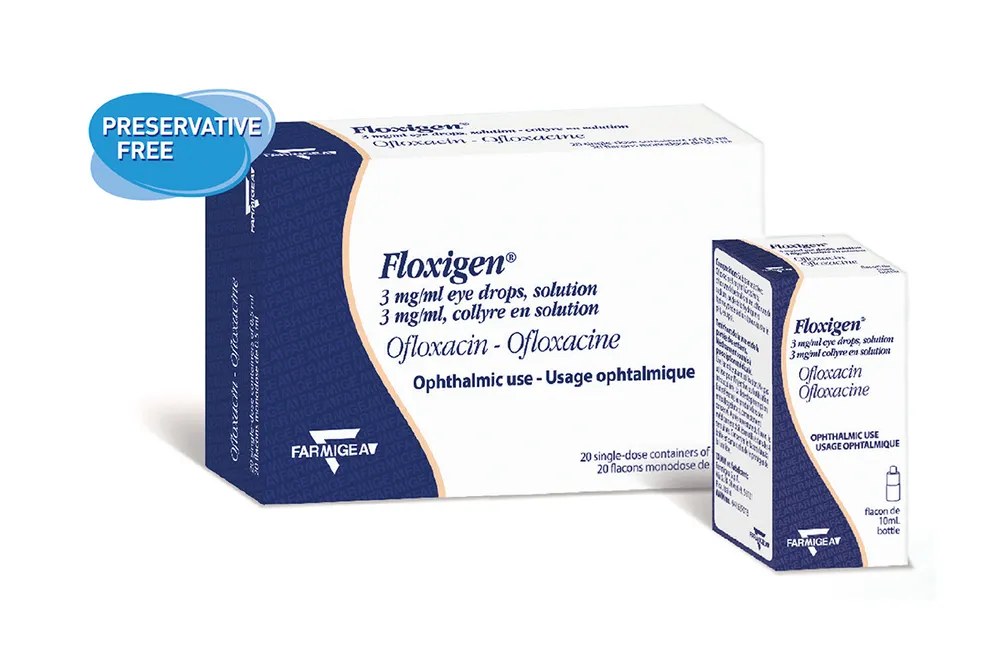
Table of Contents
- Package leaflet: Information for the patient
- 1. What FLOXIGEN is and what it is used for
- 2. What you should know before using FLOXIGEN
- 3. How to use FLOXIGEN
- 4. Possible side effects
- 5. How to store FLOXIGEN
- 6. Package contents and other information
- Patient information leaflet
- FLOXIGEN 3 mg/ml eye drops, solution – 1 bottle
- 1. What FLOXIGEN is and what it is used for
- 2. What you should know before using FLOXIGEN
- 3. How to use FLOXIGEN
- Instructions for use
- 4. Possible side effects
- 5. How to store FLOXIGEN
- 6. Package contents and other information
Package leaflet: Information for the patient
FLOXIGEN 3 mg/ml eye drops, solution in single-dose container - 20 single-dose containers in LDPE
Ofloxacin
Please read all of this leaflet carefully before you start using this medicine because it contains
important information for you.
- Keep this leaflet. You may need to read it again.
- If you have any questions, ask your doctor or pharmacist.
- This medicine has been prescribed for you only. Do not give it to other people, even if their symptoms are the same as yours, as it may be harmful.
- If you experience any side effects, including those not listed in this leaflet, tell your doctor or pharmacist.
Contents of this leaflet
- What FLOXIGEN is and what it is used for
- What you need to know before using FLOXIGEN
- How to use FLOXIGEN
- Possible side effects
- How to store FLOXIGEN
- Contents of the pack and other information
1. What FLOXIGEN is and what it is used for
FLOXIGEN contains ofloxacin, which belongs to a group of medicines called antibacterial agents known as fluoroquinolones.
FLOXIGEN is an eye drop formulation indicated for the treatment of external ocular infections caused by microorganisms sensitive to ofloxacin, leading to inflammation of the front lining of the eye (conjunctivitis) or inflammation of the eyelid (blepharitis), simultaneous inflammation of the front lining of the eye and the eyelid (blepharoconjunctivitis), simultaneous inflammation of the cornea and the front lining of the eye (keratoconjunctivitis), inflammation of the tear sac (dacryocystitis), inflammation of the group of sebaceous glands located in the eyelid (meibomitis), or inflammation of the cornea (keratitis).
FLOXIGEN is also indicated for the treatment of corneal ulcers caused by infections and for the prevention of infections following surgical procedures.
2. What you should know before using FLOXIGEN
Do not use FLOXIGEN
- If you are allergic (hypersensitive) to ofloxacin (or to other quinolone antibacterial agents), or to any of the other ingredients of this medicine (listed in section 6).
Warnings and Precautions
Talk to your doctor or pharmacist before using FLOXIGEN
- if you have had an allergic reaction to other quinolone antibacterial agents
- if you wear contact lenses
- if there is any defect or ulceration on the surface of the eye, as use of the product may increase the risk of corneal perforation.
- if you were born with, or have a family history of, prolonged QT interval (seen on ECG, an electrical recording of the heart),
- you have an electrolyte imbalance in the blood (especially low levels of potassium or magnesium in the blood),
- you have a very slow heart rate (called 'bradycardia'),
- you have weak heart function (heart failure),
- you have a history of heart attack (myocardial infarction),
- if you are a woman or an elderly patient,
- if you are taking other medicines that may cause abnormal changes in the ECG (see section 'Other medicines and FLOXIGEN').
Prolonged use could lead to a new bacterial infection not treatable with FLOXIGEN.
FLOXIGEN may potentially increase sensitivity to sunlight. During use of FLOXIGEN, direct exposure to sun or solar radiation should be avoided.
If an allergic reaction to ofloxacin occurs, discontinue administration of the drug. Patients who have shown hypersensitivity to other quinolone antibacterial agents should use FLOXIGEN with caution.
In patients who have taken quinolones orally or intravenously, including ofloxacin, serious and occasionally fatal anaphylactic/anaphylactoid reactions have been reported, some occurring after the first dose. Some reactions were accompanied by circulatory collapse, loss of consciousness, rapid swelling of tissues (including swelling of the larynx, throat, or face), airway obstruction, shortness of breath, urticaria, and itching.
When using FLOXIGEN, consider the risk of the eye drops passing into the nose and back of the throat, which may lead to development of bacterial resistance. As with any other antibiotic, prolonged use may result in overgrowth of microorganisms not responsive to ofloxacin; therefore, if no improvement is observed after 10 days, discontinue use and consult your ophthalmologist.
Stevens-Johnson syndrome (painful rash and blisters) and corneal precipitates (inflammatory deposits on the eye surface) have been reported in patients receiving ofloxacin eye drops, although it is unclear whether the eye drops were the cause.
Anterior segment eye damage has been reported in patients with pre-existing corneal lesions/wounds or ulcers when treated with fluorquinolone eye drops.
However, many of these reports involved significant confounding factors such as advanced age, presence of large ulcers, concomitant ocular conditions (e.g. severe dry eye), systemic inflammatory diseases (e.g. rheumatoid arthritis), and concomitant use of ocular steroids or non-steroidal anti-inflammatory drugs. Nevertheless, caution is required regarding the risk of corneal perforation when using FLOXIGEN to treat patients with pre-existing corneal lesions/wounds or ulcers.
Tendon swelling and rupture have occurred in individuals taking oral or intravenous fluorquinolones, particularly in elderly patients and those receiving concomitant corticosteroid therapy.
Discontinue use of FLOXIGEN if you develop tendon pain or swelling (tendinitis).
Children
The safety and efficacy of the product in infants under one year of age have not been established; therefore, use is not recommended.
Neonates (children up to 28 days of age)
Information on the use of FLOXIGEN in neonates for the treatment of conjunctivitis is very limited.
Use of FLOXIGEN is not recommended in neonates with neonatal ophthalmia caused by Neisseria gonorrhoeae or Chlamydia trachomatis, as the product has not been evaluated in such patients.
Consult your doctor before using FLOXIGEN in neonates to determine the appropriateness of treatment.
Other medicines and FLOXIGEN
Tell your doctor or pharmacist if you are taking, have recently taken, or might take any other medicines.
Inform your doctor if you are taking other medicines that may alter heart rhythm: drugs belonging to the antiarrhythmic group (e.g. quinidine, hydroquinidine, disopyramide, amiodarone, sotalol, dofetilide, ibutilide), tricyclic antidepressants, certain antimicrobial agents (macrolide group), or certain antipsychotics.
It has been shown that drugs belonging to the same class as ofloxacin, when administered systemically, inhibit the metabolic elimination of caffeine and theophylline. However, drug interaction studies conducted with systemic ofloxacin show that ofloxacin does not have this effect.
Although there has been an increased number of reports of drowsiness, depression, and seizures when drugs of the same class as ofloxacin are taken concomitantly with non-steroidal anti-inflammatory drugs (such as aspirin, ibuprofen, diclofenac, etc.), these effects have not been reported with the use of ofloxacin.
Pregnancy and breastfeeding
If you are pregnant, think you may be pregnant, are planning a pregnancy, or are breastfeeding, consult your doctor or pharmacist before using this medicine.
Due to lack of adequate and well-controlled clinical studies in pregnant women, and because systemic use of quinolones has caused joint problems in immature animals, use of this medicine during pregnancy is not recommended.
Since ofloxacin and other quinolones administered systemically are excreted in breast milk, there may be a risk to the nursing infant; therefore, a decision should be made whether to discontinue breastfeeding or to discontinue therapy, taking into account the importance of the drug for the mother.
Driving and use of machines
Your vision may become blurred for a short time immediately after applying FLOXIGEN.
Therefore, do not drive or operate machinery until your vision clears.
Important information about certain components of FLOXIGEN
Contact lenses
Contact lenses should generally not be worn during treatment with this product. However, in certain situations where wearing contact lenses is unavoidable, remove the lenses before using FLOXIGEN. Wait at least 15 minutes after using the eye drops before reinserting the contact lenses.
3. How to use FLOXIGEN
Use FLOXIGEN exactly as directed by your doctor. If in doubt,
please consult your doctor or pharmacist.
The recommended dose is 1-2 drops 4-6 times daily. For the treatment of bacterial keratitis and infectious corneal ulcers,
administration during the first two days of treatment may be more frequent
(1-2 drops every 30 minutes), then over the following 7 days the dose should be gradually reduced to 1-2 drops
every hour, until completing treatment with 1-2 drops 4 times daily.
Treatment with FLOXIGEN should be limited to the period necessary to achieve clinical healing.
FLOXIGEN may only be used as an ophthalmic solution for topical ocular use: do not use for injections or intraocular use.
Instructions for use
Apply the eye drops as follows:
- Wash your hands. Tilt your head backward and look at the ceiling.
- Gently pull down the lower eyelid to form a small "pocket".
- Invert the single-dose container and press it to instill one or two drops into each eye to be treated.
- Release the lower eyelid and close the eye for 30 seconds.
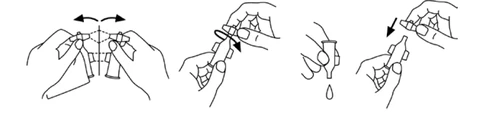
If a drop misses the eye, try again.
To avoid contamination, ensure that the tip of the single-dose container does not touch the eye or any other object.
The eye drop solution contains no preservatives and must be used immediately after opening.
It is very important to apply the eye drops correctly. If in doubt, consult your doctor or
pharmacist.
If you use more FLOXIGEN than you should
If you apply too many drops, wash your eye(s) with clean water and apply the next dose at the usual time.
If this medicine is accidentally ingested, contact your doctor immediately or go to the nearest hospital.
If you forget to use FLOXIGEN
If you miss a dose, apply it as soon as you remember, unless it is almost time for the next dose. In that case, skip the missed dose.
Then continue with your regular dosing schedule.
Do not use a double dose to make up for a forgotten dose.
If you stop using FLOXIGEN
FLOXIGEN should be used according to the instructions provided by your doctor.
If you have any further questions about the use of this product, consult your doctor or pharmacist.
4. Possible side effects
Like all medicines, FLOXIGEN can cause side effects, although not everyone experiences them.
The following side effects are known, although the number of people affected has not been established.
If any of the following side effects is bothersome or persistent, consult your doctor:
Common side effects (may affect up to 1 in 10 people)
Eye disorders
- Eye irritation
- Eye discomfort
Side effects with unknown frequency (frequency cannot be determined from the available data)
Eye disorders
- Vision disturbances (blurred vision)
- Tearing
- Mild stinging or burning sensation
- Eye redness
- Eye discomfort or pain
- Inflammation of the surface of the eye
- Redness and inflammation of the thin layer covering the white part of the eye
- Allergic eye reactions (including eye and eyelid itching)
- Light sensitivity
- Feeling of having a foreign body in the eye
- Eye swelling (including eyelid swelling)
- Dry eyes
Nervous system disorders
- Dizziness
Gastrointestinal disorders
- Nausea
Skin and subcutaneous tissue disorders
- Swelling around the face
With the use of Floxigen, potentially life-threatening skin rashes (Stevens-Johnson syndrome, toxic epidermal necrolysis) have been reported, which initially appear as red, target-like spots or circular patches, often with central blisters, on the trunk.
Cardiac problems
Unknown frequency: rapid heartbeat, potentially fatal irregular heartbeat, changes in heart rhythm (known as 'QT interval prolongation', detectable on ECG, the recording of the heart's electrical activity).
Very rare side effects (may affect up to 1 in 10,000 people)
Immune system disorders
Allergic reactions including subcutaneous swelling that may occur in various areas such as face, lips or other body regions; skin rash, itching or hives; swelling of the mouth, tongue or throat which may cause airway obstruction leading to wheezing, difficulty swallowing, breathing difficulties or dyspnea; severe and sudden allergic reaction (potentially fatal).
Reporting of side effects
If you experience any side effect, including those not listed in this leaflet, speak to your doctor or pharmacist. You can report side effects directly via the national reporting system at https://www.aifa.gov.it/content/segnalazioni-reazioni-avverse. By reporting side effects, you can help provide more information on the safety of this medicine.
5. How to store FLOXIGEN
Keep this medicine out of the sight and reach of children.
Do not use FLOXIGEN after the expiry date stated on the packaging and on the single-dose container after the abbreviation "Exp".
The expiry date refers to the last day of that month.
Store the medicine in the original packaging to protect it from light.
Do not store the medicine at temperatures above 25°C.
The product must be used immediately after opening; discard any remaining solution after opening.
After the first opening of the aluminium pouch, the medicine must be used within 2 months; after this period, any remaining medicine must be discarded.
Do not dispose of medicines via wastewater or household waste. Ask your pharmacist how to dispose of medicines no longer in use. This will help protect the environment.
6. Package contents and other information
What FLOXIGEN contains
- The active substance is Ofloxacin 3 mg/ml.
- The other components are: sodium chloride, sodium hydroxide or hydrochloric acid (to adjust pH), water for injections.
Description of the appearance of FLOXIGEN and contents of the pack
FLOXIGEN is an eye drop solution contained in single-dose containers made of low-density polyethylene with a volume of 0.5 ml. Each
package contains 20 single-dose containers; strips of 5 single-dose containers are packaged in aluminium pouches.
Marketing Authorization Holder and Manufacturer
Farmigea S.p.A.
Via G.B. Oliva, 6/8
56121 Pisa
Farmigea S.p.A.
Via G.B. Oliva, 8
56121 Pisa
Selling Agent
POLIFARMA S.p.A.
Viale dell’Arte 69
00144 Roma
Patient information leaflet
FLOXIGEN 3 mg/ml eye drops, solution – 1 bottle
Ofloxacin
Please read this leaflet carefully before using this medicine because it contains important information for you.
- Keep this leaflet. You may need to read it again.
- If you have any questions, ask your doctor or pharmacist.
- This medicine has been prescribed for you only. Do not give it to others, even if they have the same symptoms as you, because it could be harmful.
- If you experience any adverse reactions, including those not listed in this leaflet, contact your doctor or pharmacist.
Contents of this leaflet
- What FLOXIGEN is and what it is used for
- What you need to know before using FLOXIGEN
- How to use FLOXIGEN
- Possible side effects
- How to store FLOXIGEN
- Contents of the pack and other information
1. What FLOXIGEN is and what it is used for
FLOXIGEN contains ofloxacin, which belongs to a group of medicines known as antibacterial fluoroquinolones.
FLOXIGEN is an eye drop formulation indicated for the treatment of external ocular infections caused by microorganisms sensitive to ofloxacin, leading to inflammation of the front covering of the eye (conjunctivitis) or inflammation of the eyelid (blepharitis), simultaneous inflammation of the front covering of the eye and the eyelid (blepharoconjunctivitis), simultaneous inflammation of the cornea and the front covering of the eye (keratoconjunctivitis), inflammation of the tear sac (dacryocystitis), inflammation of the group of sebaceous glands present in the eyelid (meibomitis), and inflammation of the cornea (keratitis).
FLOXIGEN is also indicated for the treatment of corneal ulcers caused by infections and for the prevention of infections following eye surgery.
2. What you should know before using FLOXIGEN
Do not use FLOXIGEN
- If you are allergic (hypersensitive) to ofloxacin, to other quinolone antibacterial agents, benzalkonium chloride, or to any of the other ingredients of this medicine (listed in section 6)
Warnings and Precautions
Talk to your doctor or pharmacist before using FLOXIGEN
- if you have had an allergic reaction to other quinolone antibacterial agents
- if you wear contact lenses
- if there is any defect or ulceration on the surface of the eye, as use of the product may increase the risk of corneal perforation
- if you were born with or have a family history of prolonged QT interval (seen on ECG, an electrical recording of the heart)
- you have an electrolyte imbalance in the blood (especially low levels of potassium or magnesium in the blood)
- you have a very slow heart rate (called 'bradycardia')
- you have a weak heart (heart failure)
- you have a history of heart attack (myocardial infarction)
- if you are female or elderly
- if you are taking other medicines that may cause abnormal changes in the ECG (see section 'Other medicines and FLOXIGEN').
Prolonged use may lead to a new bacterial infection not treatable with FLOXIGEN. FLOXIGEN
may potentially increase sensitivity to sunlight. During treatment with FLOXIGEN, avoid
direct exposure to sunlight or solar radiation. If an allergic reaction to ofloxacin occurs, discontinue
administration of the drug. Patients who have shown sensitivity to other quinolone antibacterial agents
should use FLOXIGEN with caution.
In patients who have taken quinolones orally or intravenously, including ofloxacin, serious and occasional life-threatening allergic (anaphylactic/anaphylactoid) reactions have been reported, some occurring after the first dose. Some reactions were accompanied by circulatory collapse, loss of consciousness, rapid swelling of tissues (including swelling of the larynx, throat, or face), airway obstruction, shortness of breath, urticaria, and itching.
When using FLOXIGEN, consider the risk of the eye drops passing into the nose and back of the throat, which may lead to development of bacterial resistance. As with any other antibiotic, prolonged use may result in overgrowth of microorganisms not responsive to ofloxacin; therefore, if no improvement is observed after 10 days, discontinue use and consult your ophthalmologist. Stevens-Johnson syndrome (painful rash and blisters) and corneal precipitates (inflammatory deposits on the eye surface) have been reported in patients receiving ofloxacin eye drops, although it is unclear whether the eye drops were the cause. Anterior segment eye damage has been reported in patients with pre-existing lesions/wounds or corneal ulcers when treated with fluorquinolone eye drops.
However, significant confounding factors have been identified in many of these reports, such as advanced age, presence of large ulcers, concomitant ocular conditions (e.g. severe dry eye), systemic inflammatory diseases (e.g. rheumatoid arthritis), and concomitant use of ocular steroids or non-steroidal anti-inflammatory drugs. Nevertheless, caution is required regarding the risk of corneal perforation when using FLOXIGEN to treat patients with pre-existing lesions/wounds or corneal ulcers.
Tendon swelling and rupture have occurred in individuals taking oral or intravenous fluorquinolones, particularly in elderly patients and those receiving concomitant corticosteroid therapy.
Discontinue use of FLOXIGEN if you develop tendon pain or swelling (tendinitis).
Children
The safety and efficacy of the product in infants under one year of age have not been established; therefore, use is not recommended.
Neonates (children up to 28 days of age)
Information on the use of FLOXIGEN in neonates for the treatment of conjunctivitis is very limited.
Use of FLOXIGEN is not recommended in neonates with neonatal ophthalmia caused by Neisseria gonorrhoeae or Chlamydia trachomatis, as the use of the product has not been evaluated in such patients.
Consult your doctor before using FLOXIGEN in neonates to determine the appropriateness of treatment.
Other medicines and FLOXIGEN
Inform your doctor or pharmacist if you are taking, have recently taken, or might take any other medicines.
Inform your doctor if you are taking other medicines that may alter heart rhythm: drugs belonging to the antiarrhythmic group (e.g. quinidine, hydroquinidine, disopyramide, amiodarone, sotalol, dofetilide, ibutilide), tricyclic antidepressants, certain antimicrobial agents (macrolide group), or certain antipsychotics.
It has been shown that administration of drugs belonging to the same class as ofloxacin, when taken systemically, inhibits the metabolic elimination of caffeine and theophylline. However, drug interaction studies conducted with systemic ofloxacin demonstrate that ofloxacin does not have this effect.
Although there has been an increased number of reports of drowsiness, depression, and seizures when drugs of the same class as ofloxacin are taken concomitantly with non-steroidal anti-inflammatory drugs (such as aspirin, ibuprofen, diclofenac, etc.), these have not been reported with the use of ofloxacin.
Pregnancy and breast-feeding
If you are pregnant, suspect you may be pregnant, planning to become pregnant, or are breast-feeding, consult your doctor or pharmacist before using this medicine. Due to the lack of adequate and well-controlled clinical studies in pregnant women and because systemic use of quinolones has caused joint problems in immature animals, use of this medicine during pregnancy is not recommended.
Since ofloxacin and other quinolones administered systemically are excreted in breast milk, there may be a risk to the nursing infant; therefore, a decision should be made whether to discontinue breastfeeding or to discontinue therapy, taking into account the importance of the medicine to the mother.
Driving and using machines
Your vision may become blurred for a short time immediately after applying FLOXIGEN. Therefore, do not drive or operate machinery until your vision clears.
This medicine contains 0.005 mg of benzalkonium chloride per drop (with a theoretical drop volume of approximately 50 µL), equivalent to 0.1 mg/mL, which may cause eye irritation, especially if you have dry eye or corneal disorders (the transparent outer layer of the eye). If you experience an unusual sensation, burning, or pain in the eye after using this medicine, speak with your doctor. Benzalkonium chloride may be absorbed by soft contact lenses and may cause discoloration. Remove contact lenses before using this medicine and wait 15 minutes before reinserting them.
Contact lenses
- Contact lenses should generally not be worn during treatment with this product. However, there are some situations where wearing contact lenses is unavoidable. In such cases, remove contact lenses before using FLOXIGEN. Wait at least 15 minutes after using the eye drops before reinserting contact lenses.
3. How to use FLOXIGEN
Use FLOXIGEN exactly as directed by your doctor. If in doubt, consult your doctor or pharmacist.
The recommended dose is 1-2 drops 4-6 times daily. For the treatment of bacterial keratitis and infectious corneal ulcers, administration during the first two days of treatment may be more frequent (1-2 drops every 30 minutes); thereafter, for the following 7 days, the dose should be gradually reduced to 1-2 drops every hour, until completing treatment with 1-2 drops 4 times daily. Treatment with FLOXIGEN should be limited to the period necessary to achieve clinical recovery. FLOXIGEN must be used only as an ophthalmic solution for topical ocular use: do not use for injections or intraocular use.
Instructions for use
Do not use the bottle if the tamper-evident seal on the cap is not intact before use.
Apply the eye drops as follows:
- Wash your hands. Tilt your head backwards and look at the ceiling.
- Gently pull down the lower eyelid to form a small "pocket".
- Turn the bottle upside down and press it to instill one or two drops into each eye to be treated.
- Release the lower eyelid and close the eye for 30 seconds.

If a drop fails to enter the eye, try again.
To avoid any contamination, take care that the dropper tip does not touch the eye or any other object.
Replace the cap and close the bottle immediately after use.
It is very important to apply the eye drops correctly. For any doubts, ask your doctor or pharmacist.
If you use more FLOXIGEN than you should
If you apply too many drops, wash your eye(s) with clean water and apply the next dose at the usual time.
If, accidentally, someone swallows this medicine, contact your doctor immediately or go to the nearest hospital.
If you forget to use FLOXIGEN
If you forget a dose, apply it as soon as you remember, unless it is almost time for the next dose; in that case, skip the missed dose.
Then apply the next dose as usual, continuing your regular treatment.
Do not use a double dose to make up for a forgotten dose.
If you stop using FLOXIGEN
FLOXIGEN must be used according to the instructions provided by your doctor.
If you have any further questions about the use of this product, consult your doctor or pharmacist.
4. Possible side effects
Like all medicines, FLOXIGEN may cause side effects, although not everyone experiences them.
The following side effects are known, although the number of people affected is not known.
The following categories describe the likelihood of experiencing a side effect:
Not known: frequency cannot be estimated from the available data
Very common: affects more than 1 in 10 people
Common: affects up to 1 in 10 people
Uncommon: affects up to 1 in 100 people
Rare: affects up to 1 in 1,000 people
Very rare: affects up to 1 in 10,000 people
If any of the following side effects is bothersome or persistent, consult your doctor:
Common side effects (may affect up to 1 in 10 people)
Eye disorders
- Eye irritation
- Eye discomfort
Side effects with unknown frequency (frequency cannot be estimated from the available data)
Eye disorders
- Vision disturbances (blurred vision)
- Tearing
- Mild stinging or burning sensation
- Eye redness
- Eye discomfort or pain
- Inflammation of the eye surface
- Redness and inflammation of the thin layer covering the white part of the eye
- Allergic eye reactions (including eye and eyelid itching)
- Light sensitivity
- Sensation of a foreign body in the eye
- Eye swelling (including eyelid swelling)
- Dry eyes
Nervous system disorders
- Dizziness
Gastrointestinal disorders
- Nausea
Skin and subcutaneous tissue disorders
- Swelling around the face
- With use of Floxigen, potentially life-threatening skin rashes (Stevens-Johnson syndrome, toxic epidermal necrolysis) have been reported, which initially appear as red spots resembling targets or circular patches, often with central blisters, on the trunk.
Cardiac problems
Unknown frequency: increased heart rate, potentially fatal irregular heart rhythm, changes in heart rhythm (defined as 'QT interval prolongation', detectable on ECG, the recording of the heart's electrical activity).
Very rare side effects (may affect up to 1 in 10,000 people)
Immune system disorders
Allergic reactions including subcutaneous swelling that may occur in various areas such as face, lips or other body regions; skin rash, itching or hives; swelling of the mouth, tongue or throat which may cause airway obstruction leading to wheezing, difficulty swallowing, breathing difficulties or dyspnea; severe and sudden allergic reaction (potentially fatal).
Reporting of side effects
If you experience any side effect, including those not listed in this leaflet, talk to your doctor or pharmacist. You can report side effects directly via the national reporting system at https://www.aifa.gov.it/content/segnalazioni-reazioni-avverse. By reporting side effects, you can help provide more information on the safety of this medicine.
5. How to store FLOXIGEN
Keep this medicine out of sight and reach of children.
After opening, do not use the bottle for more than 4 weeks, even if there is still medicine remaining in the bottle.
Do not use FLOXIGEN after the expiry date stated on the label of the bottle and on the carton after the word “Exp”. The expiry date refers to the last day of that month.
Keep the bottle in the outer packaging to protect it from light.
Do not use FLOXIGEN if you notice that the security seal on the bottle is broken or not intact.
Do not dispose of any medicine via wastewater or household waste. Ask your pharmacist how to properly dispose of medicines you no longer use. This will help protect the environment.
6. Package contents and other information
What FLOXIGEN contains
- The active substance is Ofloxacin 3 mg/ml.
- The other components are: benzalkonium chloride, sodium chloride, sodium hydroxide or hydrochloric acid (to adjust pH), water for injections.
Description of the appearance of FLOXIGEN and contents of the pack
FLOXIGEN is an eye drop solution contained in a 10 ml plastic bottle. Each box contains 1 plastic bottle with a screw cap.
Marketing Authorization Holder and Manufacturer
Farmigea S.p.A
Via G.B. Oliva, 6/8
56121 Pisa
Farmigea S.p.A.
Via G.B. Oliva, 8
56121 Pisa
Distributor for Sales
POLIFARMA S.p.A.
Viale dell’Arte 69
00144 Roma