Flixoderm
Italy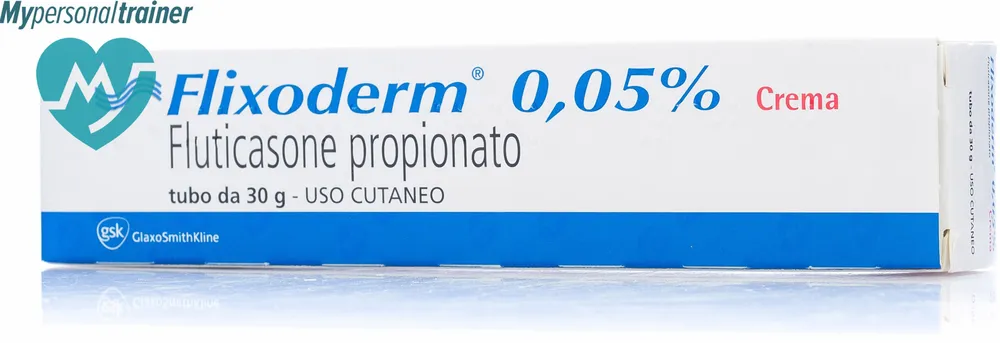
Table of Contents
Package leaflet: Information for the user
Flixoderm 0.05% cream, 0.005% ointment
Fluticasone propionate
Please read all of this leaflet carefully before you start using this medicine because it contains important information for you.
- Keep this leaflet. You may need to read it again.
- If you have any questions, ask your doctor or pharmacist.
- This medicine has been prescribed for you only. Do not give it to other people, even if their symptoms are the same as yours, as it may be harmful.
- If you experience any side effect, including those not listed in this leaflet, tell your doctor or pharmacist. See section 4.
Contents of this leaflet:
- What Flixoderm is and what it is used for
- What you need to know before using Flixoderm
- How to use Flixoderm
- Possible side effects
- How to store Flixoderm
- Contents of the pack and other information
1. What Flixoderm is and what it is used for
Flixoderm contains fluticasone propionate, which belongs to a group of medicines called corticosteroids. Corticosteroids help reduce swelling and irritation.
Flixoderm cream and Flixoderm ointment are used to help reduce redness and itching caused by certain skin conditions in adults and children aged one year and older, such as:
- eczema;
- prurigo nodularis (itchy nodules on arms and legs);
- psoriasis (thickened patches of inflamed red skin, often covered with silvery scales);
- neurodermatitis, including lichen simplex chronicus (itchy, thickened skin patches caused by scratching);
- lichen planus (a skin disease causing itching and reddish-purple skin rashes, typically on wrists, arms, and legs);
- seborrheic dermatitis (itching affecting the face, scalp, chest, and back, associated with red, scaly lesions);
- allergic contact reactions;
- discoid lupus erythematosus (a skin disease affecting most frequently the face, ears, and scalp, causing scarring and increased skin sensitivity to sunlight);
- generalized erythroderma in association with systemic steroid therapy, a skin condition characterized by widespread and uniform redness accompanied by desquamation of the stratum corneum of the epidermis;
- insect bites;
- miliaria rubra (an acute inflammatory skin condition characterized by an itchy rash caused by obstruction of the sweat glands and subsequent retention of sweat in the subcutaneous layers).
2. What you need to know before using Flixoderm
Do not use Flixoderm
- if you are allergic to the active substance or to any of the other ingredients of this medicine (listed in section 6)
- if your child is under one year of age
- to treat any of the following skin conditions, which could otherwise worsen:
- acne
- severe skin redness and redness around the nose (rosacea)
- rash with spots around the mouth (perioral dermatitis)
- viral skin infections (herpes simplex, chickenpox)
- itching in the anal and genital area (penis and vagina)
- infected skin (unless an anti-infective treatment for the infection is already being used)
- skin itching without inflammation
- in case of infections caused by fungi or bacteria
Do not use Flixoderm if any of the conditions listed above apply to you or your child. If you have any doubts about appropriate use, consult your doctor or pharmacist.
Warnings and precautions
Talk to your doctor or pharmacist before using Flixoderm:
- if you or your child have previously had an allergic reaction when using steroids;
- if you are applying the cream under an occlusive dressing (in children, diapers may act as an occlusive dressing). An occlusive dressing may enhance absorption of the active substance through the skin, increasing the risk of accidentally using too much medication;
- if you are elderly and/or have impaired renal or hepatic function. In such cases, it is advisable to use the smallest amount of medication for the shortest time needed to achieve the desired clinical benefit;
- if you have psoriasis, your doctor may need to monitor you more frequently.
- Contact your doctor if you experience blurred vision or other visual disturbances.
If you are unsure whether any of the conditions described above apply to you or your child, speak with your doctor or pharmacist before using this medicine.
Other medicines and Flixoderm
Inform your doctor or pharmacist if you are taking, have recently taken, or might take any other medicines.
In particular, be cautious if you are taking ritonavir or itraconazole, as they may increase the effect of this medicine.
Pregnancy and breastfeeding
If you are pregnant, think you might be pregnant, planning to become pregnant, or are breastfeeding, consult your doctor or pharmacist before using this medicine.
Pregnancy
Use the smallest amount of medication for the shortest possible time.
Breastfeeding
If you use fluticasone propionate while breastfeeding, avoid applying it to the breast area to prevent the child from ingesting it.
Flixoderm cream contains imidurea, cetostearyl alcohol and propylene glycol
Flixoderm cream contains an excipient called imidurea. The body metabolizes imidurea into a degradation product called formaldehyde. Formaldehyde may cause skin reactions, including redness and itching.
Flixoderm cream contains cetostearyl alcohol. It may cause local skin reactions (e.g., contact dermatitis).
Flixoderm cream contains propylene glycol. It may cause skin irritation.
Flixoderm ointment contains propylene glycol. It may cause skin irritation.
3. How to use Flixoderm
Use this medicine exactly as directed by your doctor or pharmacist. If you have any doubts, consult your doctor or pharmacist.
Cream - Cream application is indicated for lesions at any site and is preferred for treating delicate and moist skin areas.
Ointment - Dry-type skin irritations benefit more from ointment application.
How to use this medicine
- Apply a thin layer of cream or ointment sufficient to cover the entire affected area up to a maximum of twice daily. Frequency may be reduced or you may switch to a less potent corticosteroid if skin improvement is observed.
- Use this cream or ointment only on the skin.
- Do not use this product over a large body surface for a prolonged period (daily for weeks or months) unless specifically prescribed by your doctor.
- Always clean the skin before each new application, as germs causing infections thrive in warm, moist areas.
- If applying the cream or ointment to another person, make sure to wash your hands after use or wear disposable plastic gloves.
- If the condition being treated does not improve, consult your doctor.
Topical corticosteroid therapy should be gradually discontinued once the disease is under control, and treatment should continue with an emollient cream as maintenance therapy.
Following sudden discontinuation of topical corticosteroids, especially potent ones, a relapse of pre-existing dermatoses may occur.
Application to the face
Apply Flixoderm to the face only if advised by your doctor. Prolonged facial application should be avoided, as facial skin may easily become thin.
Do not apply the cream or ointment to the eyes.
If you use more Flixoderm than you should
If, by mistake, you use more Flixoderm than recommended on some occasions, do not be alarmed. However, if you accidentally ingest the medicine, you may feel unwell. Contact your doctor or go to the hospital as soon as possible.
If you forget to use Flixoderm
- If you forget to use Flixoderm, apply it as soon as you remember, then continue as before.
- Do not apply an extra dose to make up for a missed dose.
If you stop using Flixoderm
If you have been using Flixoderm regularly, make sure to talk to your doctor before stopping treatment.
If you have any doubts about how to use this medicine, consult your doctor or pharmacist.
4. Possible side effects
Like all medicines, this medicine can cause side effects, although not everyone gets them.
Stop using Flixoderm and contact your doctor as soon as possible if:
- your skin condition does not improve or worsens, or if you notice swelling during treatment. Flixoderm may cause an allergic reaction; you might have an infection or require other treatments. Stop using Flixoderm and contact your doctor as soon as possible.
Other side effects that may occur when using Flixoderm include:
Common (may affect up to 1 in 10 people)
- irritation or itching
Uncommon (may affect up to 1 in 100 people)
- burning sensation during application
Very rare (may affect up to 1 in 10,000 people)
Prolonged use of Flixoderm, or use under occlusive dressings, may cause the following symptoms:
- weight gain
- moon face / rounding of the face
- obesity
- skin discoloration, which may cause streak-like marks
- thinning of the skin, which may make underlying veins more visible
- lightening of the skin
- hirsutism, increased body hair
Other very rare reactions that may occur include:
- allergic reactions at the application site
- worsening of skin conditions
- redness
- rash or hives
- treatment of psoriasis with corticosteroids, or stopping such treatment, may trigger the pustular form of the disease
- skin infection
Not known (frequency cannot be estimated from the available data)
- blurred vision
Additional side effects in children
In children, the following symptoms may occur:
- slowed growth
- delayed weight gain
Very rarely, abnormalities in blood test parameters may be observed:
- decreased levels of endogenous cortisol
- hyperglycemia / glycosuria
- hypertension
- osteoporosis
- cataract
- glaucoma
If any of these conditions occur, it is advisable to discuss them with your doctor for further investigation.
If you experience a side effect
Inform your doctor or pharmacist if any of the listed side effects
become severe or troublesome, or if you notice any side effect not listed in
this leaflet.
Reporting of side effects
Reporting suspected adverse reactions after a medicine has been authorized is important, as it allows continuous monitoring of the benefit-risk balance of the medicine. Healthcare professionals are encouraged to report any suspected adverse reactions via the national reporting system at the following website: http://www.agenziafarmaco.gov.it/content/come-segnalare-una-sospetta-reazione-avversa
5. How to store Flixoderm
Keep this medicine out of the sight and reach of children.
Do not use this medicine after the expiry date stated on the pack after EXP.
The expiry date refers to the last day of that month.
Do not dispose of any medicine via wastewater or household waste. Ask your pharmacist
how to dispose of medicines you no longer use. This will help protect the environment.
Store below 30°C.
Do not freeze.
6. Package contents and other information
What Flixoderm contains
Flixoderm cream
- The active substance is fluticasone propionate. Each gram contains 0.5 mg of fluticasone propionate (0.05% w/w).
The other components are: liquid paraffin; isopropyl myristate; cetyl stearyl alcohol;
polyoxethylene cetyl stearyl ether (Cetomacrogol 1000); propylene glycol; imidurea; sodium
phosphate; citric acid monohydrate; purified water.
Flixoderm ointment
- The active substance is fluticasone propionate. Each gram contains 0.05 mg of fluticasone propionate (0.005% w/w).
The other components are: propylene glycol; sorbitan sesquioleate; microcrystalline wax;
liquid paraffin.
Description of the appearance of Flixoderm and contents of the pack
Flixoderm 0.05% cream: 30 g tube
Flixoderm 0.005% ointment: 30 g tube
Marketing Authorization Holder and Manufacturer
Marketing Authorization Holder
GlaxoSmithKline S.p.A. - Via A. Fleming, 2 - Verona
Manufacturer
Glaxo Operations UK Ltd. – Harmire Road - Barnard Castle - United Kingdom
Other sources of information
More detailed information on this medicinal product is available on the AIFA website