Fleet enema
Italy
Table of Contents
- Package leaflet: Information for the user
- Clisma Fleet 21.4 g/9.4 g rectal solution
- 1. What Clisma Fleet is and what it is used for
- 2. What you need to know before using Clisma Fleet
- 3. How to use Clisma Fleet
- 1. REMOVE THE ORANGE PROTECTIVE CAP.
- 4. Place the used enema back into its packaging for disposal.
- 4. Possible side effects
- 5. How to store Clisma Fleet
- 6. Package contents and other information
Package leaflet: Information for the user
Clisma Fleet 21.4 g/9.4 g rectal solution
sodium dihydrogen phosphate dihydrate / disodium hydrogen phosphate dodecahydrate
Please read this leaflet carefully before using this medicine because it contains important information for you.
Always use this medicine exactly as described in this leaflet or as your doctor, pharmacist, or nurse has told you to do.
- Keep this leaflet. You may need to read it again.
- If you need more advice or information, contact your pharmacist.
- If you experience any side effects, including those not listed in this leaflet, contact your doctor, pharmacist, or nurse.
- Contact your doctor if you do not notice improvement or if you notice worsening of symptoms after 7 days.
Contents of this leaflet
- What Clisma Fleet is and what it is used for.
- What you need to know before using Clisma Fleet.
- How to use Clisma Fleet.
- Possible side effects.
- How to store Clisma Fleet.
- Contents of the pack and other information.
1. What Clisma Fleet is and what it is used for
Short-term treatment of occasional constipation in adults and children over 3 years of age; pre- and post-operative bowel evacuation, in obstetrics, and in preparation for radiological examinations and endoscopic investigations of the distal portion of the intestine.
Consult your doctor if you do not feel better or if you feel worse after 7 days.
2. What you need to know before using Clisma Fleet
Do not use Clisma Fleet:
- If you are allergic to disodium hydrogen phosphate dodecahydrate, sodium dihydrogen phosphate dihydrate, or any of the other ingredients of this medicine (listed in section 6).
- If you have a severely enlarged bowel (also known as megacolon).
- If you have a narrowed or incomplete opening of the anus or rectum.
- If you have a blockage in the lower colon (Hirschsprung's disease).
- If you have a suspected intestinal obstruction.
- If you have an intestinal blockage or impaired normal bowel emptying (sometimes called paralytic ileus).
- If your doctor has told you that you may have:
- Appendicitis
- A perforated/damaged or blocked bowel
- Active inflammatory bowel disease (such as Crohn’s disease or ulcerative colitis).
- If you have undiagnosed rectal bleeding.
- If you have kidney problems.
- If you suffer from congestive heart failure (the heart is unable to pump blood adequately throughout the body).
- If you have recently been ill or feel nauseous or thirsty.
- If you experience abdominal pain (stomach pain).
- If the patient is under 3 years of age.
Warnings and precautions
Talk to your doctor, pharmacist, or nurse before using Clisma Fleet if:
- You are frail or elderly.
- You have uncontrolled blood pressure.
- You have any heart or kidney disorders.
- You suffer from ascites (excess fluid in the peritoneal cavity).
- You suffer from rectal ulcer (ulceration of the rectal tract) or fissures (tears in the skin of the rectal tract).
- You have had a colostomy.
- You suffer from electrolyte imbalances (changes in salt levels in the body such as low calcium, low potassium, high phosphate or sodium levels). Please consult your doctor, even if these conditions occurred at any time in the past. You may need closer monitoring during treatment.
Other medicines and Clisma Fleet
Inform your doctor or pharmacist if you are taking, have recently taken, or might take any
other medicines:
- Medicines for treating high blood pressure (hypertension) or angina (calcium channel blockers).
- Medicines to empty the bladder (diuretics).
- Medicines for mental disorders (containing lithium).
- Other medicines that may cause dehydration or alter levels of salts (potassium, sodium, phosphate, or water) in the body, known as electrolyte imbalance.
- Some medicines for bowel cleansing (sodium phosphates).
- Medicines that affect heart rhythm (which may prolong the QT interval, e.g. amiodarone, arsenic trioxide, astemizole, azithromycin, erythromycin, clarithromycin, chlorpromazine, cisapride, citalopram, domperidone, terfenadine, procainamide).
- Non-steroidal anti-inflammatory drugs (NSAIDs) such as acetylsalicylic acid or ibuprofen.
Pregnancy, breastfeeding and fertility
If you are pregnant, suspect you may be pregnant, planning to become pregnant, or are breastfeeding,
ask your doctor or pharmacist for advice before using this medicine.
Since the components of Clisma Fleet may pass into breast milk, it is recommended that breast milk
be expressed and discarded for at least 24 hours after using Clisma Fleet.
Driving and using machines Clisma Fleet does not affect the ability to drive or operate machinery,
but you should remain close to toilet facilities after using this medicine.
Important information about some excipients
Due to the presence of benzalkonium chloride, the product is irritating and may cause local skin reactions.
3. How to use Clisma Fleet
Use this medicine exactly as directed by your doctor or pharmacist.
If you have any doubts, consult your doctor or pharmacist.
Adults and children over 12 years of age:
The recommended dose is one bottle (118 ml delivered dose), not more than once daily or as directed by the physician.
Children between 3 and 12 years of age:
Half dose, not more than once daily or as directed by the physician.
Do not administer to children under 3 years of age.
For rectal use only.
In occasional constipation, laxatives should be used as infrequently as possible and for no longer than seven days. Use for longer periods requires a doctor's prescription following appropriate evaluation of the individual case.
Administration of more than one bottle within a 24-hour period may be harmful.
INSTRUCTIONS FOR USE:
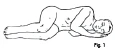
Position: Lie on your left side with both knees bent and arms in a resting position (Fig. 1).
ADMINISTRATION:
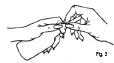
1. REMOVE THE ORANGE PROTECTIVE CAP.
Gently pull off the cap while holding the bottle upright, gripping the ridged cap with your fingers. (Fig. 2)
- With steady pressure, gently insert the enema tip into the rectum, directing the tip towards the navel. Squeeze the bottle until almost all of the liquid has been released.
Stop use if resistance is encountered. Forcing the enema can cause injury.
Note: It is not necessary to completely empty the bottle. The bottle contains more liquid than needed for effective use, so a small amount will remain.
- Gently remove the cannula from the rectum. Some leakage of the enema liquid is normal. Remain in the same position (Fig. 1) until a strong urge to evacuate is felt (usually within 2 to 5 minutes).
4. Place the used enema back into its packaging for disposal.
If you notice rectal bleeding, stop administration immediately and
contact a doctor immediately.
Expect frequent bowel movements within 5 minutes after taking a dose of
Fleet Enema. This is normal and shows that the medicine is working. If you have not had a
bowel movement within this time, consult your doctor. Do not use more Fleet Enema
unless advised by your doctor. Stay close to a toilet until the effects have passed.
Drink plenty of fluids, for example water, clear soups, herbal teas, black tea or black coffee, or diluted syrups / fruit juices without pulp (but not red or purple-colored juices) to avoid dehydration. In general, you should drink 250 ml (one glass) every hour until the effect of the Fleet Enema has passed. After this, drink fluids, preferably water, to satisfy your thirst following any hospital procedure, or as directed by your doctor.
If you use more Fleet Enema than you should, or if you accidentally ingest (drink) the medicine,
contact your doctor or pharmacist. If you use more Fleet Enema than recommended, you may feel dehydrated, thirsty, and experience muscle stiffness. If possible, take the container or packaging with you to show the doctor or pharmacist.
If you have any doubts about the use of this medicine, consult your doctor, pharmacist, or nurse.
4. Possible side effects
Like all medicines, this medicine can cause side effects, although not everyone experiences them.
Fleet Enema is well tolerated when used as directed. However, adverse events associated with the use of Fleet Enema have frequently been reported. In some cases, adverse events may occur, particularly if the enema is used inappropriately.
Very rare side effects (may affect up to 1 in 10,000 people): hypersensitivity, for example urticaria.
- Blisters, itching, burning.
- Dehydration, hyperphosphatemia, hypocalcemia, hypokalemia, hypernatremia, metabolic acidosis.
- Nausea, vomiting, abdominal pain, abdominal distension, diarrhea, gastrointestinal pain, anal discomfort and proctalgia.
- Rectal irritation, pain, burning, chills.
Reporting of side effects
If you experience any side effect, including those not listed in this leaflet, consult your doctor, pharmacist or nurse. You may also report side effects directly via the national reporting system at the website
http://www.agenziafarmaco.gov.it/it/responsabili .
By reporting side effects, you can help provide more information on the safety of this medicine.
5. How to store Clisma Fleet
Keep this medicine out of the sight and reach of children.
Do not use this medicine after the expiry date which is stated on the label after EXP.
The expiry date refers to the last day of that month.
Do not store above 25°C.
Do not dispose of any medicine via wastewater or household waste. Ask your pharmacist
how to dispose of medicines you no longer use. This will help protect the environment.
6. Package contents and other information
What Clisma Fleet contains
The active substances are sodium dihydrogen phosphate dihydrate and disodium hydrogen phosphate dodecahydrate.
Each 118 ml dose provides the equivalent of 21.4 g (18.1% w/v) of sodium dihydrogen phosphate dihydrate and
9.4 g (8.0% w/v) of disodium hydrogen phosphate dodecahydrate.
It contains 4.4 g of sodium per delivered dose.
The other components are benzalkonium chloride, disodium edetate, purified water.
The lubricant on the nozzle is white soft paraffin.
Description of the appearance of Clisma Fleet and contents of the pack
Clisma Fleet is a clear, colourless, odourless solution free from precipitates and cloudiness, contained in a white plastic bottle with a white cap and an orange protective cap. The bottle contains 133 ml of Clisma Fleet, of which 118 ml is the delivered dose.
Marketing Authorisation Holder and Manufacturer
Casen Recordati, S.L.
Autovia de Logroño km 13,300
50180 Utebo, Zaragoza, Spain.
Promoter
RECORDATI Industria Chimica e Farmaceutica S.p.A.
Via M. Civitali, 1 – 20148 Milan