Flectorartro
Italy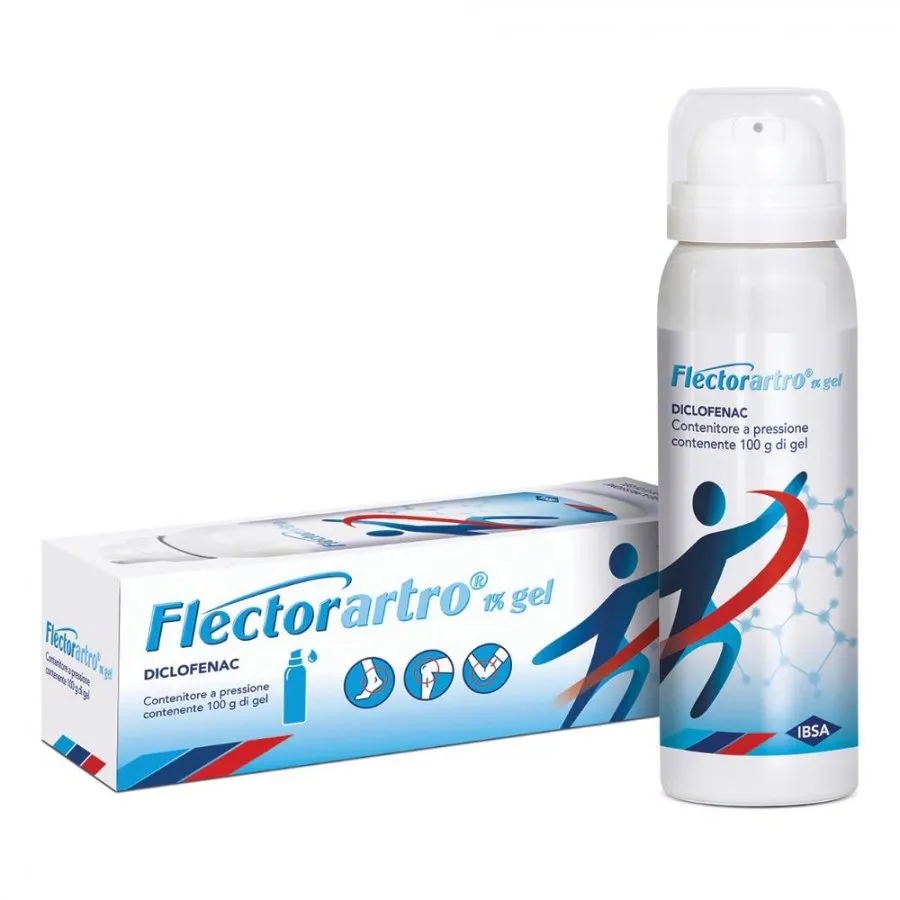
Table of Contents
Package leaflet: Information for the patient
Diclovec 1% gel
Diclofenac
Please read this leaflet carefully before using this medicine because it contains
important information for you.
Always use this medicine exactly as described in this leaflet or as your doctor or
pharmacist has instructed you.
Keep this leaflet. You may need to read it again.
If you need more information or advice, consult your pharmacist.
If any of the side effects occur, including those not listed in this leaflet, contact your doctor or
pharmacist. See section 4.
Contact your doctor if you do not notice any improvement or if your symptoms worsen after 4 days.
Contents of this leaflet:
- What Diclovec 1% gel is and what it is used for
- What you need to know before using Diclovec 1% gel
- How to use Diclovec 1% gel
- Possible side effects
- How to store Diclovec 1% gel
- Contents of the pack and other information
1. What Diclovec 1% gel is and what it is used for
Diclovec contains the active substance diclofenac epolamine, a medicine belonging to the
non-steroidal anti-inflammatory drugs (NSAIDs).
Diclovec 1% gel is indicated for the local symptomatic relief of pain and inflammatory conditions
caused by post-traumatic injuries, such as bruises, sprains, and tendinitis.
2. What you need to know before using Diclovec 1% gel
Do not use Diclovec 1% gel if:
- you are allergic to diclofenac, acetylsalicylic acid (aspirin), or any other non-steroidal anti-inflammatory drug (NSAID)
- you are allergic to any of the other ingredients of Diclovec 1% gel (listed in section 6)
- you experience asthma attacks, breathing difficulties, hives, or acute rhinitis (runny nose) after taking acetylsalicylic acid (aspirin) or other NSAIDs
- you have skin lesions, including exudative or infected areas, eczema, burns, or wounds
- you are in the third trimester of pregnancy (see Pregnancy and breastfeeding)
- you are a child or adolescent under 15 years of age
If any of the above conditions apply to you, consult your doctor or pharmacist.
Use special caution with Diclovec 1% gel if:
- You have cardiovascular diseases
- You have kidney diseases
- You have liver diseases
- You currently suffer from or have previously suffered from gastric ulcer (peptic ulcer)
- You have an inflammatory bowel disease such as Crohn's disease or ulcerative colitis, or are prone to intestinal bleeding
- You are regularly exposed to sunlight or artificial UV rays
Do not apply Diclovec to large areas or on damaged, diseased, irritated skin, or open wounds.
Diclovec must not come into contact with the eyes or moist membranes lining certain body parts internally, such as the mouth or nasal cavities (mucous membranes), and must never be taken orally.
Discontinue treatment if you develop a skin rash after applying the product.
The use of gloves is recommended for physiotherapists.
Other medicines and Diclovec
The low level of systemic absorption of diclofenac following topical application of the gel makes interactions with other medicines highly unlikely.
Inform your doctor or pharmacist if you are currently using, have recently used, or might use any other medicines, including those not requiring a prescription.
Pregnancy and breastfeeding
The use of Diclovec 1% gel is not recommended during pregnancy. Do not use Diclovec 1% gel from the beginning of the third trimester of pregnancy onwards.
Like other NSAIDs, diclofenac is excreted in breast milk in small amounts. At therapeutic doses of Diclovec 1% gel, effects on the breastfed infant are not expected; however, during breastfeeding, the product should only be used under medical or pharmacist supervision. In such cases, Diclovec 1% gel must not be applied to the breasts of nursing mothers or to other extensive skin areas. Always use the lowest effective dose for the shortest necessary duration.
Consult your doctor or pharmacist before using any medicine.
Driving and using machines
Topical application of Diclovec 1% gel does not affect the ability to drive vehicles or operate machinery.
Important information about some components of Diclovec:
Diclovec contains propylene glycol, which may cause skin irritation. It also contains methyl benzoate, which may cause mild irritation to the skin, eyes, and mucous membranes.
3. How to use Diclovec 1% gel
If you have any doubts, consult your doctor or pharmacist.
The product is for topical application on the skin, only in adults and adolescents over 15 years of age.
Depending on the size of the area to be treated, apply 2–4 g two to four times a day, for a maximum treatment duration of two weeks. After application, wash your hands unless they are the area being treated.
Diclovec 1% gel may be used with non-occlusive dressings, but must not be used with occlusive, non-breathable dressings. Do not arbitrarily change the dosage indicated in this leaflet or recommended by your doctor or pharmacist. If you feel that the effect of the medicine is too weak or too strong, inform your doctor or pharmacist.
If you forget to use Diclovec 1% gel
Do not use more than the recommended daily dose.
If you have any doubts about how to use this medicine, consult your doctor or pharmacist.
4. Possible side effects
Like all medicines, Diclovec 1% gel can cause side effects, although not everyone experiences them.
Common side effects (affecting from 1 to 10 in 100 patients)
- Skin rash, eczema, erythema (skin redness), dermatitis (allergic and contact), pruritus
Rare side effects (affecting from 1 to 10 in 10,000 patients)
- Bullous dermatitis (formation of blisters)
Very rare side effects (affecting less than 1 in 10,000 patients)
- Hypersensitivity (including urticaria), angioneurotic edema
- Pustular rash
- Asthma
- Photosensitivity (reaction after exposure to sunlight or artificial UV rays)
Frequency not known:
- Anaphylactoid reaction
Since Diclovec 1% gel is applied to the skin of the affected area, there is a lower risk of developing side effects such as gastrointestinal problems, including pain, indigestion or signs of bleeding in the stomach or intestine, which may occur with oral diclofenac. However, if Diclovec 1% gel is not used correctly, these side effects may occur.
Reporting of side effects
If you experience any side effect, including those not listed in this leaflet, talk to your doctor or pharmacist. You may also report side effects directly via the national reporting system at www.agenziafarmaco.gov.it/it/responsabili. By reporting side effects, you can help provide more information on the safety of this medicine.
5. How to store Diclovec 1% gel
Keep this medicine out of the sight and reach of children.
This medicine does not require any special storage conditions.
Do not use Diclovec 1% gel after the expiry date stated on the pack, tube, or container. The expiry date refers to the last day of that month.
Once the tube has been opened, Diclovec 1% gel should be used within 9 months.
Do not dispose of medicines via wastewater or household waste. Ask your pharmacist how to dispose of medicines you no longer use. This will help protect the environment.
6. Package contents and other information
What Diclovec 1% gel contains
The active substance is diclofenac epolamine.
100 g of gel contain 1 g of sodium diclofenac in the form of diclofenac epolamine.
The other components are soybean lecithin, macrogol glycerol hydroxystearate, macrogol stearate,
carbomer, sodium hydroxide, isopropyl alcohol, fragrance (Floral PH-Y containing benzyl
acetate, phenylethyl alcohol, hydroxycitronellal, Paraguay petitgrain oil, cinnamyl alcohol,
propylene glycol, methyl benzoate), purified water.
Compressed air (only for pressurized container).
Description of the appearance of Diclovec 1% gel and contents of the pack
This medicinal product is a white to off-white gel, contained in an aluminum tube or in a pressurized container. Each tube contains 50, 60 or 100 g of gel, while the pressurized container contains 100 g of gel.
It is possible that not all pack sizes are marketed.
Marketing Authorization Holder:
IBSA Farmaceutici Italia S.r.l., via Martiri di Cefalonia 2, 26900 Lodi
Responsible manufacturers for batch release
IBSA Farmaceutici Italia S.r.l., via Martiri di Cefalonia 2, 26900 Lodi
and
Laboratoires Genevrier SA, 280 rue de Goa – ZI les Trois Moulins, 06600 Antibes, France
This medicinal product is authorized in the European Economic Area countries under the following names:
Belgium Diclotopic
France Diclamine
Italy Diclovec