Flecainide Eg
Italy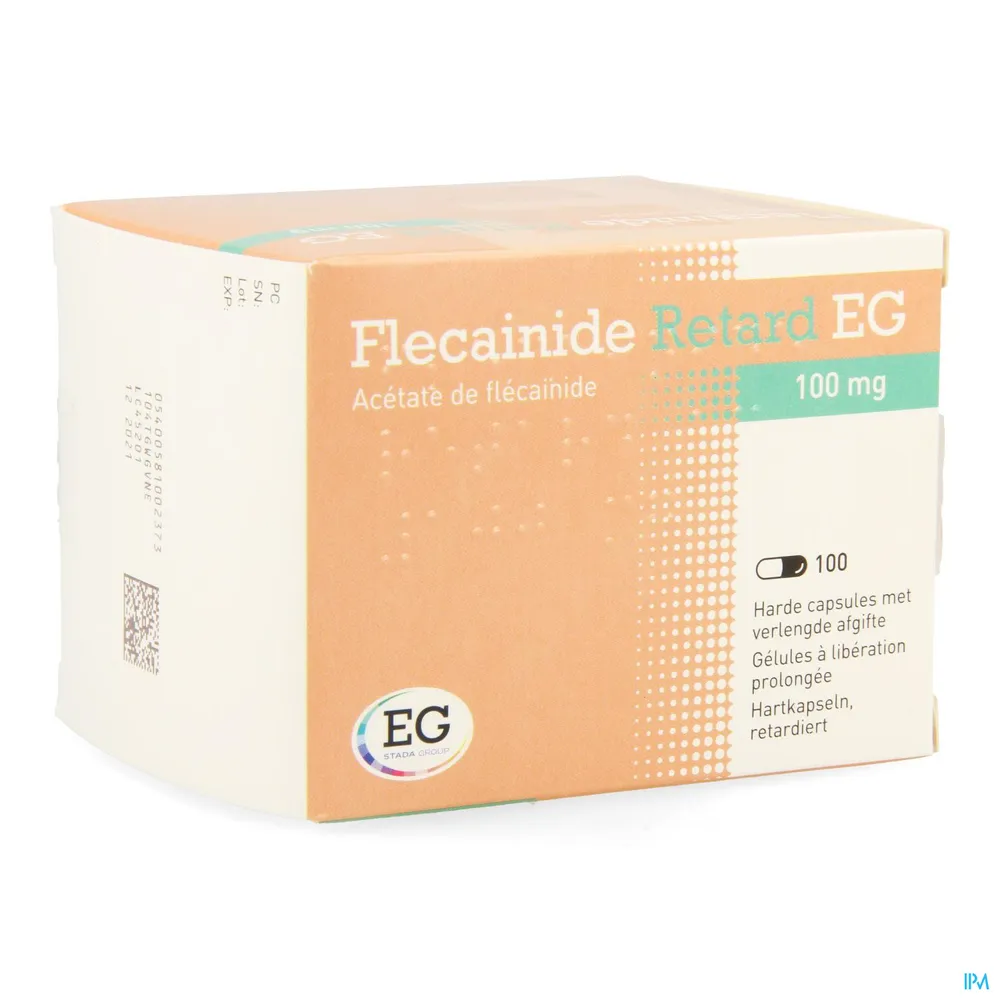
Table of Contents
- Package leaflet: Information for the user
- Flecainide EG 50 mg and 100 mg tablets
- 1. What Flecainide EG is and what it is used for
- 2. What you need to know before taking Flecainide EG
- 3. How to take Flecainide EG
- 4. Possible side effects
- 5. How to store Flecainide EG
- 6. Package contents and other information
Package leaflet: Information for the user
Flecainide EG 50 mg and 100 mg tablets
Flecainide acetate
Please read all of this leaflet carefully before you start taking this medicine because it contains important information for you.
- Keep this leaflet. You may need to read it again.
- If you have any questions, ask your doctor, pharmacist or nurse.
- This medicine has been prescribed for you only. Do not pass it on to others, even if their symptoms seem identical to yours, as it could be harmful.
- If you experience any side effects, including those not listed in this leaflet, inform your doctor, pharmacist or nurse. See section 4.
Contents of this leaflet
- What Flecainide EG is and what it is used for
- What you need to know before taking Flecainide EG
- How to take Flecainide EG
- Possible side effects
- How to store Flecainide EG
- Contents of the pack and other information
1. What Flecainide EG is and what it is used for
Flecainide EG belongs to a group of medicines known as antiarrhythmics.
Antiarrhythmics work by controlling the rate and rhythm of the heartbeat.
Flecainide EG is used to treat:
- Arrhythmias (irregular heartbeat)
- Tachycardia (heartbeat that is too fast)
- Atrial fibrillation (rapid contractions of the heart muscles). It is important for the doctor to treat these conditions quickly and effectively to prevent the development of more serious heart problems. The tablets are available in two strengths: 50 mg and 100 mg.
2. What you need to know before taking Flecainide EG
Do not take Flecainide EG:
- if you are allergic to flecainide acetate or to any of the other ingredients of Flecainide EG (see section 6).
- if you have heart failure
- if you have cardiogenic shock (the heart is unable to pump all the blood the body needs)
- if you have atrioventricular block (failure to transmit some beats to the ventricles)
- if you have long-standing atrial fibrillation (rapid contractions of the heart muscles)
- if you have or have had heart disorders, including heart valve problems or conduction disorders
- if you have sinus node dysfunction (a specific condition in which the heartbeat is irregular)
- if you have had a myocardial infarction (heart attack)
- if you have Brugada syndrome, a genetic condition causing severe heart rhythm disturbances and which may lead to sudden death in apparently healthy individuals.
- if you are pregnant or breastfeeding. Flecainide EG is not recommended for use in children under 12 years of age; however, dairy products such as milk, infant foods, and possibly yoghurt may reduce the amount of flecainide acetate absorbed in children and infants. If you have any of the conditions listed above, inform your doctor or nurse.
Before taking Flecainide EG, your doctor or nurse may check:
- your fluid levels
- your liver and kidney function. This is to ensure that Flecainide EG is suitable for you and to help your doctor determine the correct dose for you.
Talk to your doctor or nurse before taking Flecainide EG if:
- you have high blood pressure
- you suffer from angina (chest pain)
- you have a cardiovascular disease
- you have kidney disease or kidney problems
- you have liver disease or liver problems
- you have a pacemaker. Warnings and precautions Inform your doctor or nurse if you are taking any of the following treatments:
- other medicines used to treat heart arrhythmias or heart problems, such as cardiac glycosides, beta-blockers, verapamil, propranolol, or amiodarone
- medicines to lower blood pressure
- antidepressants (medicines for depression) such as tricyclic antidepressants, Prozac, fluoxetine, paroxetine, or reboxetine
- anticonvulsants (medicines used to prevent seizures) such as phenytoin, phenobarbital, or carbamazepine
- antipsychotics (medicines used to treat mental disorders) such as clozapine
- antihistamines (medicines for allergic reactions) such as mizolastine or terfenadine
- quinine (a medicine for malaria)
- medicines for the treatment of HIV such as ritonavir, lopinavir, or indinavir
- diuretics (water tablets)
- cimetidine (a medicine for stomach disorders)
- bupropion (a smoking cessation aid)
- other medicines, including those purchased without a prescription. These medicines may interfere with your treatment.
Pregnancy and breastfeeding
If you are pregnant, think you may be pregnant, planning to become pregnant, or are breastfeeding, ask your doctor or pharmacist for advice before taking Flecainide EG.
Driving and use of machines
Your ability to drive, operate machinery, or perform work on unstable supports may be affected by the occurrence of adverse reactions such as dizziness and visual disturbances (if present).
3. How to take Flecainide EG
Take Flecainide EG exactly as your doctor has told you. If you are unsure, consult your doctor or pharmacist.
Important:
Your doctor will determine the correct dose for your condition. Treatment with
Flecainide EG will be started in a hospital setting. If you are switching from a different
formulation (e.g. from a Flecainide injection), your doctor must carry out this switch carefully and monitor you closely.
Adults:
Supraventricular arrhythmias (irregular heartbeat originating in the upper chambers
of the heart)
- Flecainide EG 50 mg tablets: the usual dose is one tablet taken twice daily.
- Flecainide EG 100 mg tablets: the usual dose is half a tablet taken twice daily. Your doctor may prescribe a maximum dose of 300 mg per day (3 tablets of 100 mg or 6 tablets of 50 mg).
Ventricular arrhythmias (irregular heartbeat originating in the lower chambers
of the heart)
- Flecainide EG 50 mg tablets: the usual dose is two tablets taken twice daily.
- Flecainide EG 100 mg tablets: the usual dose is one tablet taken twice daily. Your doctor may prescribe a maximum dose of 400 mg per day (4 tablets of 100 mg or 8 tablets of 50 mg).
Elderly patients and patients with kidney problems or heart disorders:
- Your doctor may advise a lower dose for elderly patients or patients with kidney problems or heart disorders. While taking this medicine, your doctor may ask you to undergo regular checks to ensure the medicine is working properly and that your dose is appropriate.
Children:
- Flecainide EG is not recommended for children under 12 years of age. However, dairy products such as milk, infant formulas, and possibly yoghurt, may reduce the amount of flecainide acetate absorbed in children and infants.
If you take more Flecainide EG than you should
If you accidentally take too much, go immediately to the nearest hospital emergency department.
If you forget to take Flecainide EG
Do not take a double dose to make up for forgotten doses. Simply take the next dose as scheduled.
If you stop taking Flecainide EG
Do not stop treatment with Flecainide EG without first discussing it with your doctor.
If you have any questions about the use of this medicine, please consult your doctor or nurse.
4. Possible side effects
Like all medicines, this medicine can cause side effects, although not everyone experiences them.
Some side effects can be serious. If you experience any of the following side effects,
contact your doctor immediately:
Common (affects 1 in 100 people):
- changes in heart rate; very strong, fast or slow heartbeat
- chest pain
- shortness of breath or breathing problems
- fever, skin redness or increased sweating
- fainting or feeling faint
Rare (affects 1 in 10,000 people):
- ringing in the ears
- yellowing of the skin and eyes (jaundice)
- seizures
Other side effects (frequency not known):
- heart attack
- cardiac arrest/heart failure (loss of breath, loss of consciousness and loss of heart function)
Other side effects include those listed below; inform your doctor if they worsen.
Very common (affects more than 1 in 10 people):
- dizziness
- blurred or double vision
Common (affects 1 in 100 people):
- feeling weak or tired
- lack of energy and strength
- swelling (fluid retention)
Uncommon (affects 1 in 1,000 people):
- blood disorders (reduced red blood cell count, reduced white blood cell count, reduced platelet count)
- feeling unwell
- constipation
- stomach pain or indigestion
- loss of appetite
- diarrhoea
- flatulence
- bloating
- red, itchy or swollen skin rash
- hair loss
Rare (affects 1 in 10,000 people):
- dizziness (spinning sensation)
- confusion and hallucinations
- depression
- feeling anxious (worry)
- forgetfulness
- sleep disorders
- numbness, tingling, itching, stinging or burning sensation on the skin
- unsteady gait, convulsive movements or lack of coordination, difficulty speaking
- reduced sense of touch
- excessive sweating and skin redness
- tremors
- strong desire to sleep or prolonged sleeping
- headache
Very rare (affects less than 1 in 10,000 people):
- small dark spots on the eyeball
- skin sensitivity to sunlight
Other side effects (frequency not known):
- lung disease and lung scarring
- liver disorders
Reporting of side effects
If you experience any side effect, including those not listed in this leaflet, talk to your doctor or pharmacist. You can also report side effects directly via the national reporting system at:
http://www.agenziafarmaco.gov.it/content/come-segnalare-una-sospetta-reazione-avversa .
By reporting side effects, you can help provide more information on the safety of this medicine.
5. How to store Flecainide EG
Keep this medicine out of the sight and reach of children.
Do not use this medicine after the expiry date stated on the carton after "EXP". The expiry date refers to the last day of that month.
This medicine does not require any special storage conditions.
Do not dispose of medicines via wastewater or household waste. Ask your pharmacist how to dispose of medicines you no longer use. This will help protect the environment.
6. Package contents and other information
What Flecainide EG contains
- The active substance is flecainide acetate. Each 50 mg tablet contains 50 mg of flecainide acetate. Each 100 mg tablet contains 100 mg of flecainide acetate.
- The other components are: microcrystalline cellulose (pH 101 and pH 102), sodium croscarmellose, and magnesium stearate.
Description of the appearance of Flecainide EG and contents of the pack
The 50 mg tablets are white to off-white, round, biconvex tablets with a diameter of approximately 6.5 mm, marked with "HP" on one side and "183" on the other.
The 100 mg tablets are white to off-white, round, biconvex tablets with a diameter of approximately 8.5 mm, featuring a break line and marked with "H" and "P" on one side and "184" on the other. The tablet can be divided into equal doses.
The 50 mg tablets are available in packs of 20, 30, 60 and 100 tablets in blister packs.
The 100 mg tablets are available in packs of 20, 60 and 100 tablets in blister packs.
Not all pack sizes may be marketed.
Marketing Authorisation Holder and Manufacturer
Marketing Authorisation Holder
EG S.p.A.
Via Pavia 6
20136 Milan
Italy
Manufacturers
Tillomed Laboratories Ltd
220 Butterfield
Great Marlings
Luton, LU2 8DL
United Kingdom
Emcure Pharma UK Limited
Basepoint Business Centre
110 Butterfield
Great Marlings
Luton
LU2 8DL
United Kingdom
Tillomed Pharma GmbH
Manhagener Allee 36
22926 Ahrensburg
Germany
This medicinal product is authorised in the European Economic Area countries under the following names:
United Kingdom: Flecainide acetate 50 mg and 100 mg tablets
Germany: Flecainid Tillomed 50 mg and 100 mg tabletten
Italy: Flecainide EG
This leaflet was last updated on <{MM/YYYY}>