Flebogamma DIF
Italy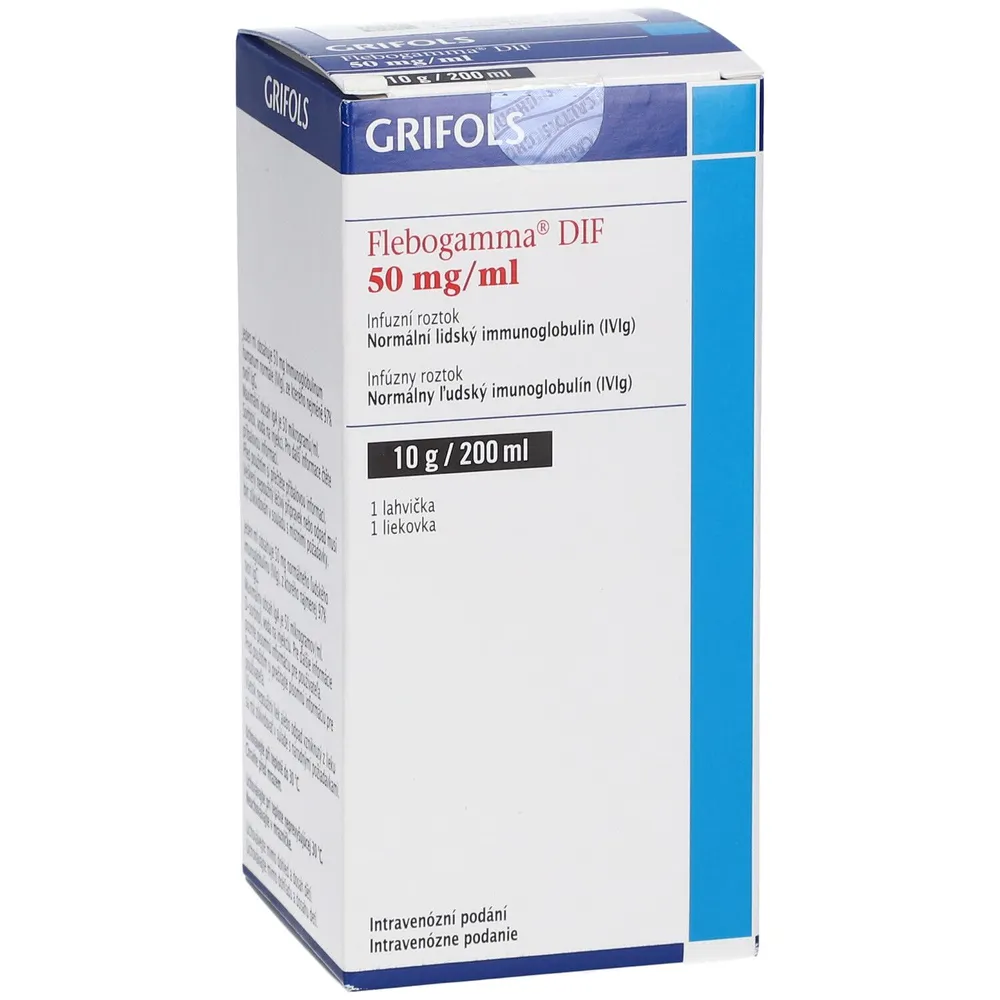
Table of Contents
- Package leaflet: Information for the user
- Flebogamma DIF 50 mg/ml solution for infusion
- 1. What Flebogamma DIF is and what it is used for
- 2. What you need to know before using Flebogamma DIF
- 3. How to use Flebogamma DIF
- 4. Possible side effects
- 5. How to store Flebogamma DIF
- 6. Package contents and other information
- Package leaflet: information for the user
- Flebogamma DIF 100 mg/ml solution for infusion
- 1. What Flebogamma DIF is and what it is used for
- 2. What you should know before using Flebogamma DIF
- 3. How to use Flebogamma DIF
- 4. Possible side effects
- 5. How to store Flebogamma DIF
- 6. Package contents and other information
Package leaflet: Information for the user
Flebogamma DIF 50 mg/ml solution for infusion
Human normal immunoglobulin (IVIg)
Please read this leaflet carefully before using this medicine because it contains important information for you.
- Keep this leaflet. You may need to read it again.
- If you have any questions, ask your doctor, pharmacist, or nurse.
- This medicine has been prescribed for you only. Do not give it to other people, even if their symptoms are the same as yours, as it may be harmful.
- If you experience any adverse reaction, including those not listed in this leaflet, contact your doctor, pharmacist, or nurse. See section 4.
Contents of this leaflet
- What Flebogamma DIF is and what it is used for
- What you need to know before using Flebogamma DIF
- How to use Flebogamma DIF
- Possible side effects
- How to store Flebogamma DIF
- Contents of the pack and other information
1. What Flebogamma DIF is and what it is used for
What Flebogamma DIF is
Flebogamma DIF contains normal human immunoglobulin, a highly purified protein
extracted from human plasma (a component of blood from donors). This medicine belongs to the group
of medicines called intravenous immunoglobulins. These are used in the treatment of conditions in which
the immune defence system does not function properly.
What Flebogamma DIF is used for
Treatment of adults, children and adolescents (2-18 years) who do not have sufficient levels of
antibodies (Flebogamma DIF is used as replacement therapy). There are two groups:
- Patients with Primary Immunodeficiency Syndrome (PID), with antibody deficiency diagnosed at birth (group 1)
- Patients with secondary immunodeficiency syndromes (SID) with severe or recurrent infections, ineffective antimicrobial treatment, and who have demonstrated inability to produce specific antibodies (PSAF)* or serum IgG levels < 4 g/l (group 2)
*PSAF = inability to achieve at least a 2-fold increase in IgG antibody titres against
pneumococcal polysaccharide and peptide antigen-containing vaccines.
Treatment of susceptible adults, children and adolescents (2-18 years) in whom active vaccination
against measles is not indicated or not recommended.
Treatment of adults, children and adolescents (2-18 years) with autoimmune disorders
(immunomodulation). There are five groups:
-
Primary Immune Thrombocytopenia (ITP), in which the number of platelets in the blood is greatly reduced. Platelets play an important role in the blood clotting process, and a low platelet count may cause unwanted bleeding and bruising. The medicine is also
used in patients at high risk of bruising, or prior to hospitalization to adjust platelet count. -
Guillain-Barré Syndrome, in which the immune system damages nerves and impairs their proper function.
-
Kawasaki Disease (in this case in combination with acetylsalicylic acid therapy), a childhood illness in which blood vessels (arteries) become inflamed and dilated.
-
Chronic Inflammatory Demyelinating Polyradiculoneuropathy (CIDP), a rare and progressive disease causing limb weakness, numbness, pain and fatigue.
-
Multifocal Motor Neuropathy (MMN), a rare disease causing slowly progressive, asymmetric weakening of the limbs, without sensory loss.
2. What you need to know before using Flebogamma DIF
Do not use Flebogamma DIF
- If you are allergic to normal immunoglobulins or to any of the other ingredients of this medicine (listed in section 6).
- If you have immunoglobulin A (IgA) deficiency or have developed antibodies against IgA.
- If you have hereditary fructose intolerance, a rare genetic disease in which the enzyme that metabolizes fructose is absent. In newborns and young children (0–2 years), hereditary fructose intolerance (HFI) may not yet have been diagnosed, and in such individuals administration of this medicine may result in death. Therefore, newborns and young children must not receive this medicine (see special warnings regarding excipients at the end of this section).
Warnings and precautions
Talk to your doctor, pharmacist, or nurse before using Flebogamma DIF.
Some adverse reactions may occur more frequently:
- if the intravenous infusion is too fast
- if you are receiving Flebogamma DIF for the first time, or if you have been switched from another normal human immunoglobulin medicine, or if a long time has passed since your last intravenous infusion (e.g., several weeks). You will be closely monitored for up to one hour after the infusion to check for any adverse reactions.
Allergic reactions are rare. They may occur if you do not have enough IgA in your blood or if you have developed anti-IgA antibodies.
Patients with pre-existing risk factors
Inform your doctor if you have any other illness or condition, as monitoring is necessary in patients with pre-existing risk factors for thrombotic events (blood clot formation). In particular, tell your doctor if:
- you have diabetes
- you have high blood pressure
- you have a history of vascular disease or thrombosis
- you are overweight
- you have reduced blood volume
- you have diseases causing increased blood viscosity
- you are over 65 years of age.
Patients with kidney problems
If you have kidney disease and are receiving Flebogamma DIF for the first time, kidney problems may occur.
Your doctor will consider risk factors and may take measures such as reducing the infusion rate or discontinuing treatment.
Effects on blood tests
After receiving Flebogamma DIF, results of certain blood tests may be altered for some time. If you are scheduled for a blood test after taking Flebogamma DIF, inform the laboratory staff or your doctor that you have taken this medicine.
Special safety warnings
When medicines are produced from human plasma or blood, precautionary measures are taken to prevent infections that could be transmitted to patients. These measures include:
- careful selection of plasma and blood donors to ensure that those at risk of infection are excluded
- testing of each donation and plasma pool for viruses or infections
- inclusion of viral inactivation or removal steps during the manufacturing process of human plasma or blood.
Despite these measures, when medicines derived from human plasma or blood are administered, the possibility of transmitting an infection cannot be completely ruled out. This applies to all viruses of unknown origin, emerging viruses, or other types of infections.
The measures taken are considered effective against lipid-enveloped viruses such as human immunodeficiency virus (HIV), hepatitis B, and hepatitis C, as well as against non-enveloped viruses such as hepatitis A and parvovirus B19.
Immunoglobulins have not been associated with transmission of hepatitis A or parvovirus B19, probably because the antibodies against these infections present in the product have a protective effect.
It is strongly recommended that whenever Flebogamma DIF is administered, the name and batch number of the medicine (shown on the label and box after "Batch") be recorded to maintain traceability of the batches used.
Children and adolescents
During infusion of Flebogamma DIF, vital parameters (body temperature, blood pressure, heart rate, and respiratory rate) must be monitored.
Other medicines and Flebogamma DIF
Inform your doctor or pharmacist if you are taking, or have recently taken, any other medicines.
- Effects on vaccines: Flebogamma DIF may reduce the effectiveness of certain types of vaccines (live attenuated virus vaccines). For rubella, mumps, and varicella vaccines, a period of up to 3 months should elapse after administration of this product before receiving those vaccines. For measles vaccine, this interval should be extended to 1 year.
- During treatment with Flebogamma DIF, avoid concomitant use of medicines that increase water excretion from the body (loop diuretics).
Pregnancy and breastfeeding
If you are pregnant, think you may be pregnant, are planning to become pregnant, or are breastfeeding, consult your doctor or pharmacist before using this medicine.
Driving and using machines
During treatment, reactions (e.g., dizziness or nausea) may occur that could affect your ability to drive or operate machinery.
Flebogamma DIF contains sorbitol
Sorbitol is a source of fructose. If you (or the child) have been diagnosed with hereditary fructose
intolerance, a rare genetic disorder, you (or the child) must not take this medicine. Patients with
hereditary fructose intolerance are unable to metabolize fructose, and its accumulation may cause
serious adverse effects.
Before taking this medicine, inform your doctor if you (or the child) have hereditary fructose
intolerance or if the child feels unwell, vomits, or experiences unpleasant reactions such as
abdominal bloating, cramps, or diarrhea after consuming sweet foods or drinks.
Flebogamma DIF contains sodium
This medicine contains less than 7.35 mg of sodium (a main component of table salt) in 100 ml. This is equivalent to 0.37% of the maximum daily intake recommended in an adult's diet.
3. How to use Flebogamma DIF
Flebogamma DIF is administered by intravenous injection (intravenous infusion). It may be administered by you yourself if you have been properly trained by hospital staff or a healthcare professional. You must perform the infusion exactly as shown to you, in order to avoid introducing microorganisms. You must never administer the treatment alone; an experienced healthcare professional trained in the preparation of the medicine, insertion of the cannula, administration, and monitoring for adverse reactions must always be present.
The dose to be administered depends on your disease and your body weight and will be calculated by your doctor (see the section on instructions for healthcare professionals at the end of this leaflet).
At the beginning of the infusion, you will receive Flebogamma DIF at a low rate (0.01 - 0.02 ml/kg/min). If you feel well, your doctor may then gradually increase the infusion rate (up to 0.1 ml/kg/min).
Use in children over 2 years of age
The dose in children is not considered different from that in adults, as it is based on the child's disease and body weight.
If you use more Flebogamma DIF than you should
If you take more Flebogamma DIF than you should, your body may receive too much fluid. This is particularly likely if you are a patient at risk, an elderly patient, or a patient with heart or kidney problems. Inform your doctor immediately.
If you forget to use Flebogamma DIF
Inform your doctor or pharmacist immediately and follow their instructions.
Do not receive a double dose to make up for the missed dose.
If you have any doubts about how to use this medicine, consult your doctor, pharmacist, or nurse.
4. Possible side effects
Like all medicines, this medicine can cause side effects, although not everybody will experience them.
In rare and isolated cases, the following side effects have been reported with immunoglobulin preparations.
Contact your doctor immediately if you experience any of the following side effects during or after the infusion:
- A sudden drop in blood pressure and, in isolated cases, anaphylactic shock (signs of which include, among others, rash, hypotension, palpitations, wheezing, cough, sneezing, and difficulty breathing), even if you did not previously show hypersensitivity during prior administration.
- Cases of transient non-infectious meningitis (signs include headache, photophobia or light intolerance, neck stiffness).
- Cases of temporary reduction in red blood cells in the blood (reversible haemolytic anaemia/haemolysis).
- Cases of transient skin reactions (side effects affecting your skin).
- Increase in serum creatinine levels (a test measuring your kidney function) and/or acute kidney injury (signs include lower back pain, fatigue, decreased urine output).
- Thromboembolic reactions, such as: myocardial infarction (chest tightness with sensation of abnormally rapid heartbeat), stroke (facial, arm or leg muscle weakness, difficulty speaking or understanding others when they speak), pulmonary embolism (shortness of breath, chest pain and fatigue), deep vein thrombosis (pain and swelling in one limb).
- Cases of transfusion-related acute lung injury (TRALI) causing hypoxia (lack of oxygen), dyspnoea (difficulty breathing), tachypnoea (rapid breathing), cyanosis (lack of oxygen in the blood), fever and hypotension.
Other side effects
Common (may affect up to 1 in 10 infusions):
- headache
- fever (increased body temperature)
- tachycardia (increased heart rate)
- hypotension
Uncommon (may affect up to 1 in 100 infusions):
- bronchitis
- nasopharyngitis
- dizziness (motion sickness)
- hypertension
- increased blood pressure
- wheezing
- productive cough
- abdominal pain (including upper abdominal pain)
- diarrhoea
- vomiting
- nausea
- urticaria
- pruritus
- rash (skin eruption)
- back pain
- myalgia (muscle pain)
- arthralgia (joint pain)
- febrile chills (feeling cold with shivering) or chills
- pain
- reaction at injection site
- positive Coombs test
- decrease in blood pressure
Rare (may affect up to 1 in 1,000 infusions):
- hypersensitivity
- abnormal behaviour
- migraine
- blood pressure fluctuations
- hot flush (flushing)
- cough
- asthma
- dyspnoea (difficulty breathing)
- epistaxis (nosebleed)
- nasal discomfort
- laryngeal pain
- contact dermatitis
- hyperhidrosis (excessive sweating)
- rash
- muscle spasms
- neck pain
- limb pain
- urinary retention
- asthenia (weakness or fatigue)
- chest pain
- reactions at infusion site (erythema, extravasation, inflammation, pain)
- reactions at injection site (including oedema, pain, pruritus and swelling at the injection site)
- peripheral oedema
- increased alanine aminotransferase (liver transaminase)
Additional side effects in children and adolescents
Compared to adults, a higher incidence of headache, fever, increased heart rate and low blood pressure has been observed in children.
Reporting of side effects
If you experience any side effect, including those not listed in this leaflet, tell your doctor, pharmacist or nurse. You can also report side effects directly through the national reporting system listed in Annex V. By reporting side effects, you can help provide more information on the safety of this medicine.
5. How to store Flebogamma DIF
Keep this medicine out of the sight and reach of children.
Do not use this medicine after the expiry date stated on the label and carton after EXP.
Do not store above 30 °C. Do not freeze.
The solution should be clear or slightly opalescent. Do not use this medicine if you notice that the solution is cloudy or contains a deposit.
Do not dispose of any medicine via wastewater or household waste. Ask your pharmacist how to dispose of medicines you no longer use. This will help protect the environment.
6. Package contents and other information
What Flebogamma DIF contains
- The active substance is normal human immunoglobulin (IVIg). One ml contains 50 mg of normal human immunoglobulins, of which at least 97% consists of IgG.
Each 10 ml vial contains: 0.5 g of normal human immunoglobulin
Each 50 ml vial contains: 2.5 g of normal human immunoglobulin
Each 100 ml vial contains: 5 g of normal human immunoglobulin
Each 200 ml vial contains: 10 g of normal human immunoglobulin
Each 400 ml vial contains: 20 g of normal human immunoglobulin
The percentage distribution of IgG subclasses is approximately 66.6% IgG1, 28.5% IgG2, 2.7% IgG3 and 2.2% IgG4.
Contains trace amounts of IgA (less than 50 micrograms/ml).
- The other components are sorbitol and water for injections (see section 2 for further information on the components).
Description of the appearance of Flebogamma DIF and contents of the pack
Flebogamma DIF is a solution for infusion. The solution is clear or slightly opalescent and colourless or pale yellow.
Flebogamma DIF is supplied in vials of 0.5 g/10 ml, 2.5 g/50 ml, 5 g/100 ml, 10 g/200 ml and 20 g/400 ml.
Pack size: 1 vial.
Not all pack sizes may be marketed.
Marketing Authorisation Holder and Manufacturer
Instituto Grifols, S.A.
Can Guasc, 2 - Parets del Vallès
08150 Barcelona - Spain
For further information about this medicinal product, please contact the local representative of the Marketing Authorisation Holder:
AT/BE/BG/EE/ES/HR/HU/IE/LV/CY/EL/LT/LU/MT/NL/RO/SI/SK/UK(NI)
Instituto Grifols, S.A.
Tel: +34 93 571 01 00
CZ
Grifols S.R.O.
Tel: +4202 2223 1415
DE
Grifols Deutschland GmbH
Tel: +49 69 660 593 100
DK/FI/IS/NO/SE
Grifols Nordic AB
Tel: +46 8 441 89 50
FR
Grifols France
Tél: +33 (0)1 53 53 08 70
IT
Grifols Italia S.p.A.
Tel: +39 050 8755 113
PL
Grifols Polska Sp. z o.o.
Tel: +48 22 378 85 60
PT
Grifols Portugal, Lda.
Tel: +351 219 255 200
More detailed information on this medicinal product is available on the website of the European Medicines Agency: http://www.ema.europa.eu.
The following information is intended for healthcare professionals only (for further information see section 3):
Posology and method of administration
The dose and dosing regimen depend on the indication.
The dose should be adjusted according to the specific needs of each patient, as determined by clinical response. Weight-based dosing may require adjustment in underweight or overweight patients. The dosing regimens described below are provided as a guideline.
The recommended dosages are summarised in the following table:
| Indication | Dose | Frequency of infusions |
| Replacement therapy | ||
| Primary immunodeficiency syndrome | Initial dose: 0.4 - 0.8 g/kg Maintenance dose: 0.2 - 0.8 g/kg | every 3 - 4 weeks |
| Secondary immunodeficiencies | 0.2 - 0.4 g/kg | every 3 - 4 weeks |
| Indication | Dose | Frequency of infusions |
| Measles pre-/post-exposure prophylaxis: | ||
| Post-exposure prophylaxis in susceptible patients | 0.4 g/kg | As soon as possible and within 6 days of exposure; may be repeated once after 2 weeks to maintain serum measles antibody levels > 240 mIU/mL |
| Post-exposure prophylaxis in patients with PID/SID | 0.4 g/kg | In addition to maintenance therapy, administered as a supplemental dose within 6 days of exposure |
| Pre-exposure prophylaxis in patients with PID/SID | 0.53 g/kg | If a patient receives a maintenance dose lower than 0.53 g/kg every 3 - 4 weeks, the dose should be increased once to at least 0.53 g/kg |
| Immunomodulation: | ||
| Primary Immune Thrombocytopenia | 0.8 - 1 g/kg or 0.4 g/kg/day | Day 1, with possible repetition once within 3 days for 2 - 5 days |
| Guillain-Barré Syndrome | 0.4 g/kg/day | for 5 days |
| Kawasaki Disease | 2 g/kg | as a single dose in combination with acetylsalicylic acid |
| Chronic Inflammatory Demyelinating Polyneuropathy (CIDP) | Initial dose: 2 g/kg Maintenance dose: 1 g/kg | administered in divided doses over 2 - 5 days every 3 weeks; maintenance in divided doses over 1 - 2 days |
| Multifocal Motor Neuropathy (MMN) | Initial dose: 2 g/kg Maintenance dose: 1 g/kg or 2 g/kg | administered in divided doses over 2 - 5 consecutive days every 2 - 4 weeks; or every 4 - 8 weeks in divided doses over 2 - 5 days |
Flebogamma DIF must be administered intravenously at an initial rate of
0.01 - 0.02 ml/kg/min for the first thirty minutes. If well tolerated, the infusion rate may be
gradually increased up to a maximum of 0.1 ml/kg/min.
In a clinical trial in patients with chronic ITP, a significant increase in mean platelet levels (64,000/µl) was achieved, although normal levels were not reached.
Paediatric population
Since the dosage for each indication is calculated based on body weight and adjusted according to the clinical response in the above-mentioned conditions, the dosage in children is not considered different from that in adults.
Incompatibilities
Flebogamma DIF must not be mixed with other drugs or intravenous fluids and must be administered through a separate intravenous line.
Special warnings
Sorbitol
This medicinal product must not be administered to patients with hereditary fructose intolerance unless strictly necessary.
In children under 2 years of age, hereditary fructose intolerance may not yet have been diagnosed. Medicinal products containing sorbitol/fructose administered intravenously may be life-threatening and must be contraindicated in these patients unless there is a clear clinical need and no alternative therapeutic options are available.
A careful clinical history must be taken, with particular attention to symptoms of hereditary fructose intolerance, before administering this medicinal product.
It is strongly recommended that whenever Flebogamma DIF is administered, the name and batch number of the product be recorded, to maintain a link between patients and the batches used.
Instructions for handling and disposal
The product should be brought to room temperature (not exceeding 30 °C) before use.
The solution should be clear or slightly opalescent. Do not use Flebogamma DIF if the solution is cloudy or contains precipitates.
Any unused medicinal product and waste material derived from such medicinal product must be disposed of in accordance with local regulations.
Package leaflet: information for the user
Flebogamma DIF 100 mg/ml solution for infusion
Normal human immunoglobulin (IVIg)
Please read this leaflet carefully before using this medicine because it contains important information for you.
- Keep this leaflet. You may need to read it again.
- If you have any questions, ask your doctor, pharmacist, or nurse.
- This medicine has been prescribed for you only. Do not give it to other people, even if their symptoms are the same as yours, as it may be harmful.
- If you experience any adverse reactions, including those not listed in this leaflet, contact your doctor, pharmacist, or nurse. See section 4.
Contents of this leaflet
- What Flebogamma DIF is and what it is used for
- What you need to know before using Flebogamma DIF
- How to use Flebogamma DIF
- Possible side effects
- How to store Flebogamma DIF
- Contents of the pack and other information
1. What Flebogamma DIF is and what it is used for
What Flebogamma DIF is
Flebogamma DIF contains human normal immunoglobulin, a highly purified protein
extracted from human plasma (a component of blood from donors). This medicine belongs to the group
of medicines known as intravenous immunoglobulins. These are used in the treatment of conditions in which
the immune defense system against diseases does not function properly.
What Flebogamma DIF is used for
Treatment of adults, children and adolescents (2–18 years) who do not have sufficient levels of
antibodies (Flebogamma DIF is used as replacement therapy). There are two groups:
- Patients with Primary Immunodeficiency Syndrome (PID), with antibody deficiency diagnosed at birth (group 1)
- Patients with secondary immunodeficiency syndromes (SID) with severe or recurrent infections, ineffective antimicrobial treatment, and demonstrated inability to produce specific antibodies (PSAF)* or serum IgG levels < 4 g/l (group 2)
*PSAF = inability to achieve at least a 2-fold increase in IgG antibody titres following
polysaccharide pneumococcal and peptide antigen-containing vaccines.
Treatment of adults, children and adolescents (2–18 years) who are susceptible and in whom active vaccination
against measles is not indicated or not recommended.
Treatment of adults, children and adolescents (2–18 years) with autoimmune disorders
(immunomodulation). There are five groups:
-
Primary Immune Thrombocytopenia (ITP), in which the number of platelets in the blood is greatly reduced. Platelets play an important role in the blood clotting process, and a low platelet count may cause unwanted bleeding and bruising. The medicine is also used in patients at high risk of bruising, or prior to hospitalization to adjust platelet count.
-
Guillain-Barré Syndrome, in which the immune system damages nerves and impairs their proper function.
-
Kawasaki Disease (in this case together with acetylsalicylic acid therapy), a childhood disease in which blood vessels (arteries) become enlarged.
-
Chronic Inflammatory Demyelinating Polyradiculoneuropathy (CIDP), a rare and progressive disease causing limb weakness, numbness, pain and fatigue.
-
Multifocal Motor Neuropathy (MMN), a rare disease causing slowly progressive, asymmetric limb weakness, without sensory loss.
2. What you should know before using Flebogamma DIF
Do not use Flebogamma DIF
- If you are allergic to normal immunoglobulins or to any of the other ingredients of this medicine (listed in section 6).
- If you have immunoglobulin A (IgA) deficiency or have developed antibodies against IgA.
- If you have hereditary fructose intolerance, a rare genetic disorder in which the enzyme needed to metabolize fructose is missing. In newborns and young children (0–2 years), hereditary fructose intolerance (HFI) may not yet have been diagnosed, and administration of this medicine to such individuals may be fatal. Therefore, newborns and young children must not receive this medicine (see special warnings regarding excipients at the end of this section).
Warnings and precautions
Talk to your doctor, pharmacist, or nurse before using Flebogamma DIF.
Some adverse effects may occur more frequently:
- if the intravenous infusion is too fast.
- if you are receiving Flebogamma DIF for the first time, or if you previously used another human immunoglobulin medicine (IVIg), or if a long time has passed since your last intravenous infusion (e.g., several weeks). You will be closely monitored for up to one hour after the infusion to check for any adverse effects.
Allergic reactions are rare. They may occur in rare cases of IgA deficiency or if you have developed anti-IgA antibodies.
Patients with pre-existing risk factors
Inform your doctor if you have any other illness or condition, as monitoring is necessary in patients with pre-existing risk factors for thrombotic events (blood clot formation). In particular, tell your doctor if:
- you have diabetes
- you have high blood pressure
- you have a history of vascular disease or thrombosis
- you are overweight
- you have reduced blood volume
- you have diseases causing increased blood viscosity
- you are over 65 years of age
Patients with kidney problems
If you have kidney disease and are receiving Flebogamma DIF for the first time, kidney problems may occur.
Your doctor will consider risk factors and may take measures such as reducing the infusion rate or stopping treatment.
Effects on blood tests
After receiving Flebogamma DIF, results of certain blood tests may be altered for some time. If you are due to have a blood test after taking Flebogamma DIF, tell the laboratory staff or your doctor that you have taken this medicine.
Special safety warnings
When medicines are prepared from human plasma or blood, precautionary measures are taken to prevent infections that could be transmitted to patients. These measures include:
- careful selection of plasma and blood donors to ensure that those at risk of infection are excluded
- testing of each donation and each plasma pool for viruses or infections
- inclusion of viral inactivation or removal methods during the manufacturing process of human plasma or blood.
Despite these measures, when medicines prepared from human plasma or blood are administered, the possibility of transmitting an infection cannot be completely ruled out. This applies to all viruses of unknown origin, emerging viruses, or other types of infections.
The measures taken are considered effective against lipid-enveloped viruses such as human immunodeficiency virus (HIV), hepatitis B, and hepatitis C, as well as against non-lipid-enveloped viruses such as hepatitis A and parvovirus B19.
Immunoglobulins have not been associated with transmission of hepatitis A or parvovirus B19, probably because the antibodies against these infections contained in the product have a protective effect.
It is strongly recommended that whenever Flebogamma DIF is administered, the name and batch number of the medicine (shown on the label and box after "Batch") are recorded to maintain traceability of the batches used.
Children and adolescents
During infusion of Flebogamma DIF, vital signs (body temperature, blood pressure, heart rate, and respiratory rate) must be monitored.
Other medicines and Flebogamma DIF
- Inform your doctor or pharmacist if you are taking, or have recently taken, any other medicines.
- Effects on vaccines: Flebogamma DIF may reduce the effectiveness of certain types of vaccines (live attenuated virus vaccines). For rubella, mumps, and varicella, a period of up to 3 months should elapse after administration of this product before receiving those vaccines. For measles, this interval should be extended to 1 year.
- During treatment with Flebogamma DIF, avoid concomitant use of medicines that increase water excretion from the body (loop diuretics).
Pregnancy and breastfeeding
If you are pregnant, think you may be pregnant, are planning to become pregnant, or are breastfeeding, consult your doctor or pharmacist before using this medicine.
Driving and using machines
During treatment, reactions (e.g., dizziness or nausea) may occur that could affect your ability to drive or operate machinery.
Flebogamma DIF contains sorbitol
Sorbitol is a source of fructose. If your doctor has diagnosed you (or the child) with hereditary
fructose intolerance, a rare genetic disorder, you (or the child) must not take this medicine. Patients
with hereditary fructose intolerance are unable to metabolize fructose, and its accumulation may cause
serious side effects.
Before taking this medicine, inform your doctor if you (or the child) have hereditary fructose
intolerance or if the child feels unwell, vomits, or has unpleasant reactions such as stomach bloating,
cramps, or diarrhea after consuming sweet foods or drinks.
Flebogamma DIF contains sodium
This medicine contains less than 7.35 mg of sodium (a main component of table salt) in 100 ml. This is equivalent to 0.37% of the maximum daily intake recommended in an adult's diet.
3. How to use Flebogamma DIF
Flebogamma DIF is administered by intravenous injection (intravenous infusion). It may be administered by yourself if you have been properly trained by hospital staff or a healthcare professional. You must perform the infusion exactly as shown to you, to avoid introducing microorganisms. You must never administer the treatment alone; a healthcare professional experienced in the preparation of the medicinal product, insertion of the cannula, administration, and monitoring for adverse reactions must always be present.
The dose to be administered depends on your body weight and will be calculated by your doctor (see the section on instructions for healthcare professionals at the end of this leaflet).
At the beginning of the infusion, you will receive Flebogamma DIF at a low rate (0.01 ml/kg/min). If you feel well, your doctor may then gradually increase the infusion rate (up to 0.08 ml/kg/min).
Use in children over 2 years of age
The dose in children is not considered different from that in adults, as it is based on the child's disease and body weight.
If you use more Flebogamma DIF than you should
If you take more Flebogamma DIF than you should, your body may retain too much fluid. This is particularly possible if you are a high-risk patient, an elderly patient, or a patient with heart or kidney problems. Inform your doctor immediately.
If you forget to use Flebogamma DIF
Inform your doctor or pharmacist immediately and follow their instructions.
Do not administer a double dose to make up for a missed dose.
If you have any doubts about how to use this medicine, consult your doctor, pharmacist, or nurse.
4. Possible side effects
Like all medicines, this medicine can cause side effects, although not everybody gets them.
The following side effects have been reported in rare and isolated cases with immunoglobulin preparations. Contact your doctor immediately if you experience any of the following side effects during or after the infusion:
- A sudden drop in blood pressure and, in isolated cases, anaphylactic shock (signs of which include, among others, rash, hypotension, palpitations, wheezing, cough, sneezing, and difficulty breathing), even if you did not show hypersensitivity during previous administration.
- Cases of transient aseptic meningitis (signs of which include headache, photophobia or light intolerance, neck stiffness).
- Cases of temporary reduction in red blood cells (reversible hemolytic anemia/hemolysis).
- Cases of temporary skin reactions (side effects affecting the skin).
- Increase in serum creatinine levels (a test measuring kidney function) and/or acute renal failure (signs of which include lower back pain, fatigue, and reduced urine output).
- Thromboembolic reactions, such as: myocardial infarction (chest tightness with sensation of abnormally fast heartbeat), stroke (facial, arm or leg weakness, difficulty speaking or understanding speech), pulmonary embolism (shortness of breath, chest pain, and fatigue), deep vein thrombosis (pain and swelling in one limb).
- Cases of transfusion-related acute lung injury (TRALI), causing hypoxia (lack of oxygen), dyspnea (difficulty breathing), tachypnea (rapid breathing), cyanosis (bluish discoloration of the skin due to lack of oxygen), fever, and hypotension.
Other side effects:
Very common (may affect more than 1 in 10 infusions):
- headache
Common (may affect up to 1 in 10 infusions):
- tachycardia (increased heart rate)
- hypotension (low blood pressure)
- fever (elevated body temperature)
- febrile chills (feeling cold with shivering) or chills
- nausea
- vomiting
- back pain
- myalgia (muscle pain)
Uncommon (may affect up to 1 in 100 infusions):
- hypersensitivity
- influenza-like illness
- dizziness (motion sickness)
- tremor (shaking)
- photophobia (excessive sensitivity to light)
- vertigo
- hypertension (high blood pressure)
- wheezing
- abdominal pain (including upper abdominal pain)
- diarrhea
- flatulence
- pruritus (itching)
- rash
- limb discomfort
- muscle spasms and muscle tension
- neck pain
- pain in extremities
- chest discomfort/chest pain
- fatigue
- feeling cold
- malaise
- peripheral edema
- increased heart rate
- contusion
- urinary tract infection
- aseptic meningitis
- decrease in red and white blood cells
- anorexia (loss of appetite)
- insomnia
- radiculopathy (neck or back pain and other symptoms such as weakness, tingling, or numbness in arms and legs)
- vasovagal syncope (temporary loss of consciousness)
- conjunctivitis (inflammation of the eye conjunctiva)
- maculopathy (disease of the macula in the retina of the eye)
- blurred vision
- ear pain
- cyanosis (bluish discoloration of the skin)
- increase or decrease in blood pressure
- hot flush (flushing)
- hematoma
- thrombosis
- lymphedema
- dyspnea (difficulty breathing)
- epistaxis (nosebleed)
- nasal discharge (excessive mucus production)
- sinus pain
- respiratory tract symptoms with cough
- abdominal discomfort and distension
- dry mouth
- hematemesis (vomiting blood)
- acne
- alopecia (hair loss)
- hyperhidrosis (excessive sweating)
- ecchymosis (skin bruising)
- erythema (redness of the skin)
- arthralgia (joint pain)
- musculoskeletal discomfort
- infusion-related reaction and infusion site reaction (including erythema and pain at the infusion site)
- irritability (nervousness)
- parainfluenza-like syndrome
- deterioration in general physical health
- decreased hemoglobin
- increased reticulocyte count
- decreased heart rate
Additional side effects in children and adolescents
Compared to adults, a higher incidence of headache, chills, fever, nausea, vomiting, low blood pressure, increased heart rate, and back pain has been observed in children.
Cyanosis (lack of oxygen in the blood) has been reported in one child but not in adults.
Side effects may be reduced by switching to Flebogamma DIF 50 mg/ml. If you experience an increase in side effects, consult your doctor.
Reporting of side effects
If you experience any side effect, including those not listed in this leaflet, talk to your doctor, pharmacist, or nurse. You can also report side effects directly via the national reporting system detailed in Annex V. By reporting side effects, you can help provide more information on the safety of this medicine.
5. How to store Flebogamma DIF
Keep this medicine out of the sight and reach of children.
Do not use this medicine after the expiry date stated on the label and the carton after EXP.
Do not store above 30 °C. Do not freeze.
The solution should be clear or slightly opalescent. Do not use this medicine if you notice that the solution is cloudy or contains a precipitate.
Do not dispose of any medicine via wastewater or household waste. Ask your pharmacist how to dispose of medicines no longer used. This will help protect the environment.
6. Package contents and other information
What Flebogamma DIF contains
- The active substance is normal human immunoglobulin (IVIg). One ml contains 100 mg of normal human immunoglobulins, of which at least 97% consists of IgG.
Each 50 ml vial contains: 5 g of normal human immunoglobulins.
Each 100 ml vial contains: 10 g of normal human immunoglobulins.
Each 200 ml vial contains: 20 g of normal human immunoglobulins.
The percentage distribution of IgG subclasses is approximately 66.6% IgG_, 27.9% IgG_, 3.0% IgG_, and 2.5% IgG_.
It contains IgA only in trace amounts (less than 100 micrograms/ml).
- The other components are sorbitol and water for injections (see section 2 for further information on the components).
Description of the appearance of Flebogamma DIF and package contents
Flebogamma DIF is a solution for infusion. The solution is clear or slightly opalescent and colorless or pale yellow.
Flebogamma DIF is supplied in vials containing 5 g/50 ml, 10 g/100 ml, and 20 g/200 ml.
Pack size: 1 vial.
Not all pack sizes may be marketed.
Marketing Authorization Holder and Manufacturer
Instituto Grifols, S.A.
Can Guasc, 2 - Parets del Vallès
08150 Barcelona - Spain
For further information about this medicinal product, please contact the local representative of the Marketing Authorization Holder:
AT/BE/BG/EE/ES/HR/HU/IE/LV/CY/EL/LT/LU/MT/NL/RO/SI/SK/UK(NI)
Instituto Grifols, S.A.
Tel: +34 93 571 01 00
CZ
Grifols S.R.O.
Tel: +4202 2223 1415
DE
Grifols Deutschland GmbH
Tel: +49 69 660 593 100
DK/FI/IS/NO/SE
Grifols Nordic AB
Tel: +46 8 441 89 50
FR
Grifols France
Tél: +33 (0)1 53 53 08 70
IT
Grifols Italia S.p.A.
Tel: +39 050 8755 113
PL
Grifols Polska Sp. z o.o.
Tel: +48 22 378 85 60
PT
Grifols Portugal, Lda.
Tel: +351 219 255 200
More detailed information on this medicinal product is available on the website of the European Medicines Agency: http://www.ema.europa.eu.
The following information is intended exclusively for healthcare professionals (for further information see section 3):
Posology and method of administration
The dose and dosing regimen depend on the indication.
The dose should be adjusted according to the specific needs of each patient, as determined by clinical response. Weight-based dosing may require adjustment in underweight or overweight patients. The dosing regimens described below are provided as a guideline.
The recommended dosages are summarized in the following table:
| Indication | Dose | Frequency of infusions |
| Replacement therapy | ||
| Primary immunodeficiency syndromes | Initial dose: 0.4 - 0.8 g/kg Maintenance dose: 0.2 - 0.8 g/kg | every 3 - 4 weeks |
| Secondary immunodeficiencies | 0.2 - 0.4 g/kg | every 3 - 4 weeks |
| Measles pre-/post-exposure prophylaxis: | ||
| Post-exposure prophylaxis in susceptible patients | 0.4 g/kg | As soon as possible and within 6 days of exposure; may be repeated once after 2 weeks to maintain serum anti-measles antibody levels > 240 mIU/mL |
| Post-exposure prophylaxis in patients with PID/SID | 0.4 g/kg | In addition to maintenance therapy, administered as a supplemental dose within 6 days of exposure |
| Pre-exposure prophylaxis in patients with PID/SID | 0.53 g/kg | If a patient receives a maintenance dose lower than 0.53 g/kg every 3 - 4 weeks, the dose should be increased once to at least 0.53 g/kg |
| Immunomodulation: | ||
| Primary Immune Thrombocytopenia | 0.8 - 1 g/kg or 0.4 g/kg/day | Day 1, with possible repetition once within 3 days for 2 - 5 days |
| Guillain-Barré Syndrome | 0.4 g/kg/day | for 5 days |
| Kawasaki Disease | 2 g/kg | as a single dose in combination with acetylsalicylic acid |
| Chronic Inflammatory Demyelinating Polyradiculoneuropathy (CIDP) | Initial dose: 2 g/kg Maintenance dose: 1 g/kg | divided over 2 - 5 days every 3 weeks; maintenance dose divided over 1 - 2 days |
| Multifocal Motor Neuropathy (MMN) | Initial dose: 2 g/kg Maintenance dose: 1 g/kg or 2 g/kg | divided over 2 - 5 consecutive days every 2 - 4 weeks; or every 4 - 8 weeks in divided doses over 2 - 5 days |
Flebogamma DIF must be administered intravenously at an initial rate of 0.01 ml/kg/min for the first 30 minutes. If tolerated, increase the infusion rate to 0.02 ml/kg/min for the next 30 minutes. If again tolerated, increase the infusion rate to 0.04 ml/kg/min for the third 30-minute period. If the infusion is well tolerated by the patient, further increases of 0.02 ml/kg/min may be made at 30-minute intervals, up to a maximum rate of 0.08 ml/kg/min.
It has been reported that the frequency of adverse reactions to IVIg increases with the infusion rate. The infusion rate during the first infusions should be slow. If no adverse reactions occur, the infusion rate may be gradually increased in subsequent infusions up to the maximum rate. For patients who have experienced adverse reactions, it is advisable to reduce the infusion rate in subsequent infusions and limit the maximum rate to 0.04 ml/kg/min, or alternatively administer IVIg 5%.
Paediatric population
Since the dosage for each indication is calculated based on body weight and adjusted according to the clinical response to the above-mentioned conditions, the dosage in children is not considered different from that in adults.
Incompatibilities
Flebogamma DIF must not be mixed with other medicinal products or intravenous fluids and must be administered via a separate intravenous line.
Special warnings
Sorbitol
This medicinal product must not be administered to patients with hereditary fructose intolerance unless strictly necessary.
In children under 2 years of age, hereditary fructose intolerance may not yet have been diagnosed. Medicinal products containing sorbitol/fructose administered intravenously may be life-threatening and must be contraindicated in these patients unless there is a clear clinical need and no alternative therapeutic options are available.
A thorough clinical history, with particular attention to symptoms of hereditary fructose intolerance, must be obtained before administering this medicinal product.
It is strongly recommended that whenever Flebogamma DIF is administered, the product name and batch number are recorded, in order to maintain a link between patients and the batches used.
Instructions for handling and disposal
The product should be brought to room temperature (not exceeding 30°C) before use.
The solution should be clear or slightly opalescent. Do not use Flebogamma DIF if the solution appears cloudy or contains particulate matter.
Any unused medicinal product and waste material derived from such medicinal product must be disposed of in accordance with local regulations.