Fentanyl Zentiva
Italy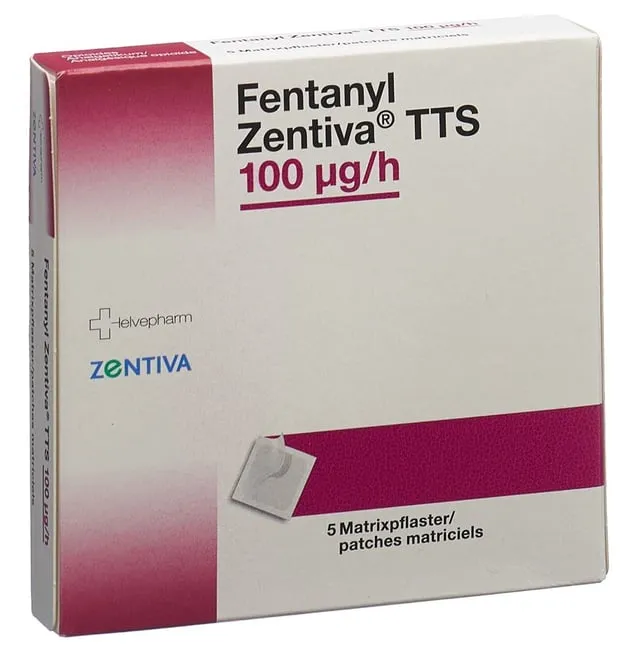
Table of Contents
- PACKAGE LEAFLET: INFORMATION FOR THE USER
- Fentanil Zentiva 25 micrograms/h transdermal patch, 50 micrograms/h transdermal patch, 75 micrograms/h transdermal patch, 100 micrograms/h transdermal patch
- 1. What Fentanil Zentiva Transdermal Patch is and what it is used for
- 2. What you need to know before using Fentanil Zentiva transdermal patch
- 3. How to use Fentanil Zentiva transdermal patch
- 4. Possible side effects
- 5. How to store Fentanil Zentiva transdermal patch
- 6. Package contents and other information
PACKAGE LEAFLET: INFORMATION FOR THE USER
Fentanil Zentiva 25 micrograms/h transdermal patch, 50 micrograms/h transdermal patch, 75 micrograms/h transdermal patch, 100 micrograms/h transdermal patch
Generic medicine
Important information you need to know about Fentanil Zentiva transdermal patch
- This patch contains a powerful painkiller
- Make sure the old patch has been removed before applying a new one
- Patches must not be cut
- Do not expose patches to sources of heat (such as hot water bottles)
- If fever occurs, contact your doctor immediately
- Follow dosage instructions carefully and replace the patch only every 3 days (72 hours)
- If breathing becomes shallow and weak, remove the patch and consult a doctor.
Please read this leaflet carefully before using this medicine because it contains
important information for you.
- Keep this leaflet. You may need to read it again.
- If you have any questions, ask your doctor, nurse, or pharmacist.
- This medicine has been prescribed for you. Do not give it to other people, even if their symptoms are the same as yours, as it could be dangerous.
- If you experience any side effects, including those not listed in this leaflet, contact your doctor, pharmacist, or nurse. See section 4.
Contents of this leaflet:
- What Fentanil Zentiva is and what it is used for
- What you need to know before using Fentanil Zentiva
- How to use Fentanil Zentiva
- Possible side effects
- How to store Fentanil Zentiva
- Contents of the pack and other information
1. What Fentanil Zentiva Transdermal Patch is and what it is used for
The name of the medicine is Fentanil Zentiva Transdermal Patch. In this leaflet it will be referred to as Fentanil Zentiva or simply patch.
The patch helps to relieve severe and persistent pain.
Fentanil Zentiva Transdermal Patch contains a medicine called fentanil. Fentanil belongs to a group of potent painkillers known as opioids.
The medicine passes slowly from the patch into the body through the skin.
2. What you need to know before using Fentanil Zentiva transdermal patch
Fentanil Zentiva transdermal patch can be used in children from 2 years of age who have
previously used opioid painkillers. If the patch has been prescribed for your child, the term
"you" used below should be understood as referring to "your child".
Do not use Fentanil Zentiva transdermal patch if
- you are allergic to fentanyl or any of the excipients of this medicine listed in section 6;
- your pain is short-term;
- your central nervous system (brain and spinal cord) is severely impaired, for example due to brain trauma;
- you suffer from breathing difficulties (slower and weaker breathing) and feel unusually drowsy.
Do not use this medicine if any of the conditions listed above apply to you or your
child. If you are unsure, ask your doctor or pharmacist before using Fentanil Zentiva.
Warnings and precautions
Talk to your doctor or pharmacist before using Fentanil Zentiva.
Fentanil Zentiva is a medicine that can be life-threatening to children. This applies
even to unused transdermal patches. Please note that the appearance of this medicine
may be attractive to a child, which could lead to fatal outcomes in some cases.
Fentanil Zentiva may cause adverse effects in people who do not usually take prescribed
opioid medicines.
Transfer of the patch to another person
The patch must only be used on the skin of the person for whom it has been prescribed by
a doctor. Cases have been reported of accidental adhesion of a patch to a family member of a
user due to close contact or sharing the same bed. Adhesion of the
patch to another person (especially a child) may cause overdose. If the patch adheres to
another person’s skin, remove it immediately and contact a doctor.
-
As with other strong painkillers, Fentanil Zentiva may cause drowsiness and slower or weaker breathing. Very rarely, these breathing difficulties can be life-threatening or fatal in people who have never used strong opioid painkillers related to morphine (such as Fentanil Zentiva) or morphine itself. If you, your partner, or your caregiver notice that you or your child are breathing much more slowly
or weakly, then: -
Remove the patch
-
Contact your doctor or go immediately to the nearest hospital
-
Stay awake and talk as much as possible
-
If fever occurs during application of Fentanil Zentiva, speak with your doctor, as this may affect the passage of the medicine through the skin.
-
Do not expose the patch to direct heat, such as heating pads, hot water bottles, electric blankets, heated waterbeds, heat lamps or sunbeds, intense sunlight, prolonged hot baths, sauna, or hot tubs. These may affect the absorption of the medicine through the skin.
-
Check with your doctor or pharmacist before using this medicine if you have or have ever had:
-
Lung or breathing problems
-
Heart, blood pressure, or blood volume problems, or liver or kidney problems;
-
Brain tumors
-
Persistent headaches or brain lesions. Your doctor may need to monitor you more closely.
-
If you are very ill, very thin, or elderly, you may be more sensitive to the effects of the patch.
-
If you suffer from a condition in which muscles are weak or tire easily, known as myasthenia gravis, speak with your doctor or pharmacist before taking Fentanil Zentiva.
-
Like many other strong painkillers, repeated use of the patches may lead to tolerance to the medicine or development of dependence on the medicine.
-
Talk to your doctor if you have abused or been dependent on alcohol, prescription medicines, or illegal drugs.
-
Fentanil Zentiva may cause constipation. Speak with your doctor or pharmacist, who will advise you on how to prevent constipation.
If you are unsure whether any of the conditions listed above apply to you, speak with your doctor or pharmacist before using Fentanil Zentiva.
Children and adolescents
Fentanil Zentiva must not be used in children under 2 years of age.
Fentanil Zentiva must not be used in children who have not previously been treated with
strong opioid painkillers such as morphine.
Other types of patches
Other types of fentanyl transdermal patches are available, but they are not exactly the same.
If the patch looks different from the one you have previously used, speak with your doctor
or pharmacist before using it.
Other medicines and Fentanil Zentiva transdermal patch
Inform your doctor or pharmacist if you are using, have recently used, or might use
any other medicines.
In particular, inform your doctor or pharmacist if you are using:
- Other pain medicines, such as other opioid painkillers (buprenorphine, nalbuphine, or pentazocine)
- Medicines that help you sleep
- Medicines that help you stay calm (tranquilizers) and medicines for mental disorders
- Medicines to relax muscles
- Some medicines used to treat depression (such as citalopram, duloxetine, escitalopram, fluoxetine, fluvoxamine, paroxetine, sertraline, venlafaxine)
- Some medicines used to treat depression (called MAOIs). You must not use Fentanil Zentiva within 14 days of stopping these medicines
- Nefazodone, a medicine used to treat depression
- Some antihistamines (especially those that may cause drowsiness)
- Some antibiotics used to treat infections, such as erythromycin, clarithromycin, or troleandomycin
- Medicines used to treat fungal infections, such as itraconazole, ketoconazole, fluconazole, or voriconazole
- Medicines used to treat HIV infections, such as ritonavir or nelfinavir
- Medicines used to treat irregular heartbeats, such as amiodarone, diltiazem, or verapamil
- Rifampicin (for treating tuberculosis)
- Some medicines used to treat epilepsy (such as carbamazepine, phenobarbital, or phenytoin).
Inform your doctor if you are taking certain medicines for depression, known
as Serotonin Reuptake Inhibitors (SSRIs), serotonin-noradrenaline reuptake inhibitors (SNRIs), or MAO inhibitors. Your doctor needs to know about the use of these medicines because concomitant use with Fentanil Zentiva may increase the risk
of developing serotonin syndrome, a potentially life-threatening condition.
Your doctor knows which medicines are safe during treatment with Fentanil Zentiva. You may need to be closely monitored if you are taking any of the medicines listed above, or if you have recently stopped taking any of the medicines listed above, as this may affect the dose of Fentanil Zentiva you require.
If you are unsure whether any of the conditions listed above apply to you, speak with your doctor or pharmacist before using Fentanil Zentiva.
Surgery or medical procedures
If you are scheduled to receive an anaesthetic, inform your doctor or dentist that you are
using Fentanil Zentiva.
Fentanil Zentiva transdermal patch with food, drinks, and alcohol
Do not drink alcohol unless you have first discussed it with your doctor. Fentanil Zentiva may make you drowsy or cause you to breathe much more slowly. Drinking alcohol may worsen these effects.
Pregnancy and breastfeeding
If you are pregnant, think you may be pregnant, are planning a pregnancy, or are breastfeeding,
ask your doctor or pharmacist for advice before using this medicine.
Cases have been reported of newborns experiencing withdrawal symptoms after the mother used Fentanil Zentiva for a prolonged period during pregnancy.
Fentanil Zentiva must not be used during childbirth, as the medicine may affect the baby's breathing.
Do not breastfeed while using Fentanil Zentiva. You must not breastfeed for 3 days after removing the Fentanil Zentiva patch. This is because small amounts of the medicine may pass into breast milk.
Ask your doctor or pharmacist for advice before taking any medicine during pregnancy or breastfeeding.
Driving and operating machinery
Fentanil Zentiva may cause drowsiness. If this occurs, do not drive or operate any tools or machinery.
3. How to use Fentanil Zentiva transdermal patch
Always use this medicine exactly as instructed by your doctor or pharmacist. If you have any doubts, consult your doctor or pharmacist.
Using and replacing the patches
- Each patch contains enough medicine for at least 3 days (72 hours)
- You must change the patch every third day, unless your doctor tells you otherwise
- Always remove the old patch before applying a new one
- Always change the patch at the same time of day every 3 days (72 hours)
- If you are using more than one patch, change all patches at the same time
- Make a note of the day, date, and time when you apply the patch, so you remember when it needs to be changed
- The table below shows you on which day of the week to change the patch:
Apply the patch on → Change the patch at the same time on
Monday → Thursday
Tuesday → Friday
Wednesday → Saturday
Thursday → Sunday
Friday → Monday
Saturday → Tuesday
Sunday → Wednesday
Where to apply the patch
Adults
- Apply the patch to a flat area of the upper body or arm
Children
- Always apply the patch to the upper back to make it difficult for your child to touch or remove it
- Check frequently to ensure the patch remains stuck to the skin
- It is important that your child does not remove the patch and put it in their mouth, as this could be life-threatening or even fatal
- It may take some time before the patch becomes fully effective. Therefore, your child may need an additional painkiller until the patch works properly. Your doctor will inform you if this is necessary
- Children must be closely monitored for up to 48 hours after:
- Application of the first patch
- Application of a high-dose patch
For you or your child, do not apply the patch on:
- The same skin area two times in a row
- Sensitive, moving skin areas, or on cut, irritated, or damaged skin, moles, or other skin abnormalities
- Hairy skin. If hair is present, do not shave it (shaving may irritate the skin); instead, trim the hair as close to the skin as possible
Several days must pass before reapplying a patch to the same skin area.
Where to apply the patch
Step 1: Skin preparation
- Ensure the skin is completely dry, clean, and cool before applying the patch
- If cleaning is needed, use only cool water
- Do not use soap or other detergents, creams, foams, oils, or talcum powder before applying the patch
- Do not apply the patch directly to the skin immediately after a hot bath or shower
Step 2: Opening the pouch
- Each patch is sealed in its individual pouch
- Tear or cut to open the pouch
- Carefully tear or cut along the edge of the pouch completely (if using scissors, cut as close to the edge as possible to avoid damaging the patch)
- Grasp both sides and pull to open the pouch
- Remove the patch and use it immediately
- Keep the empty pouch to dispose of the used patch later
- Use each patch only once
- Do not remove the patch from its pouch until you are ready to use it
- Check the patch for any damage
- Do not use the patch if it has been cut, divided, or appears damaged
- Never cut or divide the patch
Step 3: Peeling and pressing
- Ensure the patch will be covered by loose clothing and not constricted by tight bands or elastic
- Carefully peel back half of the plastic backing from the center of the patch. Try not to touch the adhesive side of the patch
- Press the adhesive side of the patch firmly onto the skin
- Remove the remaining part of the backing and press the entire patch onto the skin with the palm of your hand
- Hold it in place for at least 30 seconds. Make sure it adheres well, especially around the edges
Step 4: Disposal of the patch
- Immediately after removing the patch, fold it in half so that the adhesive side sticks to itself
- Place the folded patch back into its original pouch and dispose of it in household waste
- Since used patches still contain some medicine that can be dangerous to children, keep used patches out of the reach and sight of children
Step 5: Washing hands
- Wash your hands afterward with clean water
Additional information about Fentanil Zentiva patches
How quickly does the patch work?
- It may take up to 1 day for the first patch to work fully
- Your doctor may give you another painkiller for the first day or more
- After that, the patch should help relieve your pain continuously, allowing you to stop taking other painkillers. However, your doctor may still prescribe an additional painkiller from time to time
If you forget to change the patch
- If you forget, change the patch as soon as you remember and note the day and time. Then change the next patch after 3 days (72 hours) as usual
- If you are very late in changing the patch, speak to your doctor, as you may need an additional painkiller, but do not apply an extra patch
If you use too many patches or use the wrong dosage
If you have applied more patches than prescribed or used the wrong dosage, remove the patch immediately and contact your doctor or go to the nearest hospital.
Signs of overdose include difficulty breathing or shallow breathing, extreme tiredness, excessive drowsiness, inability to think clearly, walk or speak normally, and feeling faint, dizzy, or confused.
If the patch comes off
- If a patch comes off before it is time to change it, apply a new one immediately and note the day and time. Use a new skin area on:
- The upper body or arms (for adults)
- The upper back (for children)
- Leave the new patch in place for another 3 days (72 hours) before changing it as usual
- If your patches continue to fall off, speak to your doctor, nurse, or pharmacist
If the patch sticks to another person
- Use the patch only on the skin of the person for whom it was prescribed
- Make sure the patch does not detach and stick to another person or child, especially when sharing a bed or during close contact
- If a patch accidentally sticks to another person, remove it immediately and contact your doctor
How long should you use the patch?
Fentanil Zentiva patches are for long-lasting pain. Your doctor will tell you how long you should use them.
If pain worsens
- If pain worsens while using these patches, your doctor may prescribe a patch with a higher dosage, or give you an additional painkiller (or both)
- If increasing the patch dosage does not work, your doctor may decide to stop the treatment
If you wish to stop using the patches
- Talk to your doctor before stopping the use of these patches
- If you have been using them for a long time, your body may have become accustomed to them. Stopping suddenly may make you feel unwell
- If you stop using the patches, do not restart without first consulting your doctor. You may need a patch with a different dosage when you start again
Daily activities while using the patches
- The patches are water-resistant
- You may take a shower or bath while wearing the patch, but do not rub the patch
- If your doctor agrees, you may exercise or engage in sports while wearing the patch
- You may swim while wearing the patch, but:
- Do not use hot tubs or heated pools
- Do not wear tight or elastic bands over the patch
- Do not expose the patch to direct heat sources such as heating pads, hot water bottles, electric blankets, heated waterbeds, heat lamps, sunlamps, intense sunlight, prolonged hot baths, or saunas. These may affect the absorption of the medicine through the skin.
If you have further questions about using this medicine, ask your doctor or pharmacist.
4. Possible side effects
Like all medicines, this medicinal product can cause side effects, although not everybody gets them.
Remove the patch and contact your doctor or go immediately to the nearest hospital if you
experience or suspect any of the effects listed below. You may require urgent medical treatment.
- If you feel unusually drowsy, or breathe more slowly or more weakly than usual. Very rarely, these breathing difficulties can be life-threatening or even fatal, especially in patients who have never previously used strong opioid painkillers (such as Fentanil Zentiva or morphine). If you, your partner or your caregiver notice that you or your child are breathing more slowly or weakly, follow the instructions above, keep moving and speak as much as possible.
- Sudden swelling of the face or throat, severe irritation, redness or blistering of the skin. These may be signs of a severe allergic reaction. This occurs only in a small number of people.
- Seizures, epileptic fits. These effects may affect up to 1 in 100 people.
- Reduced level of consciousness or loss of consciousness. These effects may affect up to 1 in 100 people.
The following side effects have been reported
Very common (may affect more than 1 in 10 people)
- Feeling sick (nausea), or being sick (vomiting), constipation
- Dizziness, drowsiness, or difficulty sleeping
- Headache
Common (may affect up to 1 in 10 people)
- Allergic reactions
- Awareness of your heartbeat (also known as palpitations), rapid heartbeat
- High blood pressure
- Loss of appetite or dry mouth
- Sedation, feeling nervous, anxious or depressed
- Confusion, hallucinations (seeing or hearing things that are not there)
- Tingling sensation, tremor, feeling lightheaded
- Muscle spasms
- Stomach pain, indigestion, difficulty urinating
- Diarrhoea
- Feeling cold, excessive sweating
- General feeling of being unwell, tiredness, weakness
- Swelling of the hands, ankles or feet
- Itching of the skin, skin rash or reddened skin
Uncommon (may affect up to 1 in 100 people)
- Flu-like symptoms
- Slow heart rate
- Low blood pressure
- Decreased sensitivity, especially of the skin
- Blurred vision
- Bluish discolouration of the skin
- Feeling restless, disoriented, excited or unusually carefree
- Memory loss, difficulty speaking
- Eczema and/or other skin disorders including dermatitis at the application site
- Sexual dysfunction
- Complete intestinal obstruction
- Muscle contractions
- Fever, changes in body temperature
- Withdrawal symptoms (such as feeling unwell, nausea, diarrhoea, anxiety or chills)
Rare side effects (may affect up to 1 in 1,000 people)
- Blurred vision due to pupil constriction
- Hiccups
- Partial obstruction of the small or large intestine
- Irregular heartbeats
- Dilation of blood vessels
Very rare side effects (may affect up to 1 in 10,000 people)
- Painful swelling
- Loss of coordination and balance
- Lazy eye
- Bladder pain, reduced urine output during the day compared to normal
The following side effects have been reported during clinical studies in children (up to 18 years
of age):
Very common side effects (may affect more than 1 in 10 people)
- Headache
- Feeling or being sick
- Constipation, diarrhoea
- Itching
Common side effects (may affect up to 1 in 10 people)
- Allergic reactions
- Loss of appetite, stomach pain
- Difficulty sleeping, drowsiness, tiredness, feeling weak
- Feeling anxious or depressed, hallucinations (seeing or hearing things that are not there), dizziness
- Tremor, decreased sensitivity especially of the skin
- Dry mouth
- Skin rash, excessive sweating, reddening of the skin
- Muscle spasms
- Difficulty passing urine
- Swelling of the hands, ankles or feet
- Skin reactions at the patch application site
Uncommon side effects (may affect up to 1 in 100 people)
- Confusion
- Tingling sensation
- Constriction of the pupils
- Feeling disoriented
- Bluish skin discolouration, eczema and/or other skin disorders including dermatitis at the patch application site
- Withdrawal symptoms (such as feeling unwell, nausea, diarrhoea, anxiety or chills), flu-like symptoms
If you experience any of these side effects, talk to your doctor, nurse or pharmacist.
Skin rash, itching or sweating (may affect up to 1 in 10 people). You may notice rashes, redness or mild itching of the skin at the patch application site. This is usually mild and resolves after removal of the patch. If this does not happen, or if the patch causes significant skin irritation, inform your doctor.
Cases of withdrawal symptoms have been reported in newborn babies following prolonged use of Fentanil Zentiva by the mother during pregnancy.
Like many other strong painkillers, repeated use of the patches may lead to tolerance to the medicine or dependence.
If you experience any of these side effects, inform your doctor, nurse or pharmacist.
If you switch from another painkiller to Fentanil Zentiva patches, you may experience symptoms such as feeling unwell, nausea, diarrhoea, anxiety or chills. Inform your doctor if you notice any of these effects.
Reporting of side effects
If you experience any side effect, including those not listed in this leaflet, talk to your doctor or pharmacist. You can also report side effects directly via the national reporting system at
www.agenziafarmaco.gov.it/it/responsabili. By reporting side effects, you can help provide more information on the safety of this medicine.
5. How to store Fentanil Zentiva transdermal patch
Keep this medicinal product out of the sight and reach of children, even after use.
High amounts of active substance remain in transdermal patches even after they have been used.
Do not use this medicinal product after the expiry date stated on the packaging. The expiry date refers to the last day of that month.
Do not store above 30°C.
Handling of the patch
Used patches must be folded so that the adhesive side sticks to itself and then must be safely discarded. Accidental exposure to used or unused patches may result in fatal outcome, especially in children. Unused patches must be returned to a pharmacy (hospital pharmacy).
6. Package contents and other information
What Fentanil Zentiva contains
- The active substance is fentanyl
Fentanil Zentiva 25 micrograms/h transdermal patch
Each patch releases 25 micrograms of fentanyl per hour. Each 7.5 cm patch contains 4.125 mg of fentanyl.
Fentanil Zentiva 50 micrograms/h transdermal patch
Each patch releases 50 micrograms of fentanyl per hour. Each 15 cm patch contains 8.25 mg of fentanyl.
Fentanil Zentiva 75 micrograms/h transdermal patch
Each patch releases 75 micrograms of fentanyl per hour. Each 22.5 cm patch contains 12.375 mg of fentanyl.
Fentanil Zentiva 100 micrograms/h transdermal patch
Each patch releases 100 micrograms of fentanyl per hour. Each 30 cm patch contains 16.5 mg of fentanyl.
- The excipients are: Adhesive layer: Polycrylate adhesive layer. Reinforcement film: Polypropylene sheet, blue printing ink. Release membrane: Silicone-coated polyethylene terephthalate sheet.
Description of the appearance of the Fentanil Zentiva transdermal patch and contents of the
packaging
Fentanil Zentiva transdermal patch is a transparent transdermal patch with an adhesive surface allowing it to adhere to the skin. The transdermal patches feature a blue print indicating the dosage strength.
Fentanil Zentiva transdermal patch is available in packages containing 3, 5, 10 or 20 transdermal patches.
Not all pack sizes may be marketed.
NOTE
It is not possible to achieve all required dosage levels with Fentanil Zentiva transdermal patch. Other fentanyl-based patches are available which allow achieving these different dosage levels.
Marketing Authorisation Holder and Manufacturer
Marketing Authorisation Holder
Zentiva Italia S.r.l. - Viale Bodio 37/b, 20158 Milan, Italy
Manufacturer
Acino AG – Am Windfeld 35, 83714 Miesbach (Germany)
This medicinal product has been authorised in the Member States of the European Economic Area under the following names:
Germany: Fentanyl Winthrop 25/50/75/100 Mikrogramm/h transdermales Pflaster
Italy: Fentanil Zentiva 25 micrograms/h transdermal patch
Fentanil Zentiva 50 micrograms/h transdermal patch
Fentanil Zentiva 75 micrograms/h transdermal patch
Fentanil Zentiva 100 micrograms/h transdermal patch
Hungary: Fentanyl-Zentiva 25/50/75/100 mikrogramm/óra transzdermális tapasz
This patient information leaflet was last revised on: