Feiba
Italy
Table of Contents
- Package leaflet: Information for the patient
- FEIBA 500 U.I./20 ml powder and solvent for solution for infusion, 1000 U.I./20 ml powder and solvent for solution for infusion
- 1. What FEIBA is and what it is used for
- 2. What you need to know before using FEIBA
- 3. How to use FEIBA
- 4. Possible side effects
- 5. How to store FEIBA
- 6. Package contents and other information
- Patient Information Leaflet
- FEIBA 100 IU/mL powder and solvent for solution for infusion
- 1. What FEIBA is and what it is used for
- 2. What you should know before using FEIBA
- 3. How to use FEIBA
- 4. Possible adverse reactions
- 5. How to store FEIBA
- 6. Package contents and other information
Package leaflet: Information for the patient
FEIBA 500 U.I./20 ml powder and solvent for solution for infusion, 1000 U.I./20 ml powder and solvent for solution for infusion
Activated prothrombin complex
Please read this leaflet carefully before using this medicine because it contains important information for you.
- Keep this leaflet. You may need to read it again.
- If you have any questions, ask your doctor, pharmacist or nurse.
- This medicine has been prescribed for you only. Do not give it to other people, even if their symptoms are the same as yours, as it may be harmful.
- If you experience any side effect, including those not listed in this leaflet, tell your doctor, pharmacist or nurse. See section 4.
Contents of this leaflet:
- What FEIBA is and what it is used for
- What you need to know before using FEIBA
- How to use FEIBA
- Possible side effects
- How to store FEIBA
- Contents of the pack and other information
1. What FEIBA is and what it is used for
FEIBA is a medicinal product containing a group of substances necessary for blood clotting, and is used in cases where patients have substances in their blood that inhibit normal coagulation. Blood coagulation is the process by which bleeding (haemorrhage) is stopped. The presence in the blood of coagulation inhibitors—substances that block certain stages of the coagulation process—may lead to bleeding, sometimes severe.
In such cases, administration of FEIBA, which acts downstream of the coagulation block, may stop blood loss.
FEIBA is used in patients of all age groups for the treatment and prevention of bleeding (spontaneous or related to minor surgical procedures) caused by:
- Congenital (hereditary diseases) or acquired presence of factor VIII inhibitor;
- Presence of factor XIa inhibitor.
2. What you need to know before using FEIBA
Do not use FEIBA if there are alternative therapeutic options available
- if you are allergic to activated prothrombin complex or to any of the other ingredients of this medicine (listed in section 6);
- if you have a blood disorder called disseminated intravascular coagulation (DIC);
- if you have a blockage of a blood vessel due to a blood clot (thrombosis or thromboembolism, including myocardial infarction).
Warnings and precautions
Talk to your doctor before using FEIBA.
In particular, inform your doctor:
-
if you are at risk of developing a blockage of a blood vessel due to a blood clot (acute thrombosis or thromboembolism), especially if you fall into any of the following categories:
-
if you are being treated with recombinant factor VIIa (see section 2. Other medicines and FEIBA), a medicine used to prevent and treat bleeding episodes;
-
if you have abnormalities in blood lipid levels;
-
if you are obese;
-
if you are a smoker;
-
if you have previously experienced episodes of venous or arterial blood vessel blockages (e.g., DIC or advanced atherosclerotic disease);
-
if you have or suspect you may have a tendency to develop allergic reactions;
-
if you suffer from blood coagulation disorders (e.g., congenital or acquired hemophilia).
Cases of thrombotic microangiopathy have been reported in a clinical trial conducted in patients treated with emicizumab who received FEIBA as part of treatment for sudden bleeding episodes.
Your doctor will monitor you and perform tests during treatment with FEIBA.
Viral safety
FEIBA is a medicine derived from human blood or plasma (the liquid component of blood).
When medicines are produced from human blood or plasma, certain safety measures are applied to prevent transmission of infections to patients. These include:
- careful selection of blood and plasma donors to ensure that individuals potentially carrying infections are excluded;
- testing of each donation and plasma pool to detect signs of viruses/infections;
- inclusion of steps during blood or plasma processing that can inactivate or remove viruses.
Despite these measures, whenever medicines prepared from human blood or plasma are administered, the possibility of transmitting an infection cannot be completely ruled out. This also applies to unknown or emerging viruses or other types of infections.
The measures taken in the production of FEIBA are considered effective against lipid-enveloped viruses such as human immunodeficiency virus (HIV), hepatitis B virus (HBV), and hepatitis C virus (HCV), as well as against non-lipid-enveloped viruses such as hepatitis A virus (HAV). The measures are considered to have limited effectiveness against non-lipid-enveloped viruses such as parvovirus B19. Infection with parvovirus B19 may be severe in pregnant women (fetal infection) and in individuals with immunodeficiency or increased red blood cell turnover (e.g., in hemolytic anemia).
The medicine contains antibodies, called isoagglutinins, directed against blood group antigens present on the surface of red blood cells (anti-A and anti-B antibodies). These passively transferred antibodies may interfere with certain serological tests (Coombs test) and, rarely, may cause hemolysis.
It is strongly recommended that every time FEIBA is administered, the name and batch number of the product be recorded in order to maintain traceability between the patient and the batch of product used.
Children
Experience with the use of FEIBA in children under 6 years of age is limited.
Other medicines and FEIBA
Inform your doctor or pharmacist if you are taking, have recently taken, or might take any other medicines.
In particular, inform your doctor:
- if you are taking medicines that inhibit blood coagulation through a process called fibrinolysis (e.g., tranexamic acid or aminocaproic acid). Your doctor may ask you to undergo periodic blood tests to monitor blood fluidity;
- if you are taking recombinant factor VIIa, a medicine used to prevent and treat bleeding episodes;
- if you are taking emicizumab. If your doctor considers treatment with FEIBA in combination with emicizumab, you will be closely monitored.
Pregnancy, breastfeeding, and fertility
If you are pregnant, suspect you may be pregnant, plan to become pregnant, or are breastfeeding, consult your doctor before using this medicine.
During pregnancy and breastfeeding, your doctor will evaluate whether to administer FEIBA to you.
The effects of this medicine on pregnancy, breastfeeding, and fertility are unknown.
Refer to the warnings in the section titled Viral safety for information on the risk of infection with parvovirus B19.
Driving and using machines
FEIBA has no effect on the ability to drive vehicles or operate machinery.
FEIBA contains sodium
This medicine contains 80 mg of sodium (the main component of table salt) per vial.
This corresponds to 4% of the maximum daily recommended dietary intake for an adult.
3. How to use FEIBA
Use this medicine exactly as instructed by your doctor or pharmacist. If you have
any doubts, consult your doctor or pharmacist.
The recommended dose must not exceed a single dose of 100 units/kg of body weight and a daily dose
of 200 units/kg of body weight, unless the severity of the bleeding warrants and justifies the use of a higher dose.
When this medicine is used to control bleeding episodes, it should be administered only for the time strictly necessary to achieve the therapeutic effect.
This medicine must be administered into a vein, always following your doctor's instructions exactly.
Your doctor will determine the dose based on your clinical condition and the severity of the bleeding.
Use in children and adolescents
Experience in children under 6 years of age is limited. The dose will be determined by the doctor based on the child's age and clinical condition.
If you use more FEIBA than you should
Thrombotic and thromboembolic events have been reported with doses exceeding 200 units/kg. If signs or symptoms of thrombotic or thromboembolic events occur, the infusion must be stopped immediately and appropriate diagnostic and therapeutic measures must be initiated.
4. Possible side effects
Like all medicines, this medicine can cause side effects, although not everybody will experience them.
If you experience any of the following side effects during treatment with FEIBA, inform your doctor immediately. The doctor will IMMEDIATELY STOP administration at the first sign of trouble and will provide appropriate treatment for these symptoms, which may be life-threatening:
- hypersensitivity and allergic reactions, which in some cases may progress to severe systemic allergic reactions (anaphylaxis). Allergic reactions may include the following symptoms:
o swelling of the skin, subcutaneous tissues, and mucous membranes of the face and mouth (angioedema), urticaria, allergic manifestations affecting the stomach and intestines, difficulty breathing (bronchospasm), low blood pressure, drowsiness, and agitation;
o reduced blood flow to internal organs (hypovolemic shock);
o chills, fever, and increased blood pressure; - obstruction of normal blood flow in a blood vessel caused by a blood clot (thrombotic or thromboembolic events). Immediate availability of equipment, medications, and healthcare personnel qualified to manage emergencies related to these side effects is essential.
The possible side effects listed below are categorized according to the following frequency:
Common (may affect up to 1 in 10 people)
- dizziness
- headache
- skin rash
- low blood pressure (hypotension)
- hypersensitivity reactions
- false positive results in laboratory tests for hepatitis B (positive anti-hepatitis B surface antibody tests)
Not known (frequency cannot be estimated from the available data)
- increased levels of inhibitor in the blood
- drowsiness
- taste disturbances (dysgeusia)
- difficulty breathing (dyspnea)
- nausea
- chest pain
- chest discomfort
- chills
- fever (pyrexia)
In addition, the following further side effects have been reported:
Effects related to the immune system (the body's defense system):
- severe allergic reaction (anaphylactic reaction up to shock)
Effects related to blood circulation:
- widespread presence of blood clots (DIC or Disseminated Intravascular Coagulation)
- increased blood pressure (hypertension)
- blockage of a blood vessel due to a blood clot (venous and/or arterial thrombosis)
- flushing
Effects related to the nervous system:
- tingling sensations (paresthesia)
- lack of blood flow to the brain (thrombotic stroke and embolic stroke)
Effects related to the heart:
- increased heart rate (tachycardia)
- heart attack (myocardial infarction)
Effects related to the lungs:
- difficulty breathing (bronchospasm)
- wheezing
- cough
- blockage of a blood vessel in the lungs (pulmonary embolism)
Effects related to the stomach and intestines:
- abdominal discomfort
- vomiting
- diarrhea
Effects related to the skin:
- itching (pruritus)
- swelling of the skin, subcutaneous tissues, and mucous membranes of the face and mouth (angioedema)
- urticaria
General effects related to the body and the site of administration:
- malaise
- feeling of warmth
- injection site pain
Effects related to diagnostic tests:
- increased fibrin D-dimer
Reporting of side effects
If you experience any side effect, including those not listed in this leaflet, please contact your doctor, pharmacist, or nurse. You may also report side effects directly via
www.aifa.gov.it/content/segnalazioni-reazioni-avverse.
By reporting side effects, you can help provide more information on the safety of this medicine.
5. How to store FEIBA
Store below 25°C.
Do not freeze.
Keep in the original packaging to protect the medicine from light.
Keep this medicine out of the sight and reach of children.
Do not use this medicine after the expiry date stated on the carton after “Expiry”. The expiry date refers to the last day of that month.
After reconstitution, the medicine must be used immediately.
Do not use this medicine if the reconstituted solution is cloudy, contains deposits, or shows abnormal discolouration.
Do not use if the product, its sterile barrier system, or its packaging is damaged or shows signs of deterioration.
Do not dispose of any medicine via wastewater or household waste. Ask your pharmacist how to dispose of medicines you no longer use. This will help protect the environment.
6. Package contents and other information
What FEIBA contains
- The active substance is activated prothrombin complex, measured in FEIBA Units (U.F.). The product contains 500 U.F. or 1000 U.F.
- The other components are trisodium citrate dihydrate, sodium chloride (see section 2 “FEIBA contains sodium”), water for injections.
Description of the appearance of FEIBA and contents of the pack
FEIBA is a lyophilized powder or friable solid, white, whitish or pale green in colour. The solvent
(water for injections) is a clear, colourless liquid.
After reconstitution, the solution is clear or slightly opalescent and free from foreign particles.
Each pack contains one vial of powder, one vial of solvent, and the devices necessary for reconstitution and administration.
FEIBA is available in the following pack sizes:
1 vial of 500 UF powder + 1 vial of 20 ml water for injections and kit for reconstitution and administration (1 single-use syringe, 1 single-use needle, 1 filter needle, 1 transfer needle, 1 venting needle, 1 butterfly needle – infusion set);
1 vial of 1000 UF powder + 1 vial of 20 ml water for injections and kit for reconstitution and administration (1 single-use syringe, 1 single-use needle, 1 filter needle, 1 transfer needle, 1 venting needle, 1 butterfly needle – infusion set);
1 vial of 500 UF powder + 1 vial of 20 ml water for injections + 1 BAXJECT II Hi-Flow device (needle-free reconstitution device), 1 single-use luer-lock syringe, 1 single-use needle, 1 butterfly needle – infusion set;
1 vial of 1000 UF powder + 1 vial of 20 ml water for injections + 1 BAXJECT II Hi-Flow device (needle-free reconstitution device), 1 single-use luer-lock syringe, 1 single-use needle, 1 butterfly needle – infusion set.
Not all pack sizes may be marketed.
Marketing Authorisation Holder and Manufacturer
Marketing Authorisation Holder
Baxalta Innovations GmbH
Industriestrasse 67, 1221 Vienna
Representative in Italy:
Takeda Italia S.p.A.
Tel. +39 06 502601
Manufacturer
Takeda Manufacturing Austria AG
Industriestrasse 67
1221 Vienna
Austria
The following information is intended exclusively for physicians or healthcare professionals:
Dosage and method of administration
Dosage
Treatment must be initiated under the supervision of a physician specialized in the treatment of haemophilia.
For the treatment of spontaneous bleeding episodes and bleeding associated with surgery, the dose, timing, frequency of administration, and duration of therapy depend on the site and extent of bleeding, the patient's clinical condition, and the choice should be guided by individual clinical efficacy.
The single dose should not exceed 100 units/kg body weight and the daily dose should not exceed 200 units/kg body weight unless the severity of bleeding justifies and warrants the use of a higher dose.
When used to control bleeding episodes, the product should be administered only for the time strictly necessary to achieve the therapeutic effect.
In case of inadequate response to treatment with the product, platelet count should be performed, as a sufficient number of functionally intact platelets is considered necessary for the product’s efficacy.
Due to the complex mechanism of action, direct monitoring of the active substances is not available. Coagulation tests such as whole blood clotting time and activated partial thromboplastin time (aPTT) may not correlate with clinical improvement.
Global haemostatic tests such as thromboelastography (TEG) or thrombin generation assay (TGA) may be useful tools for monitoring and optimizing treatment.
a) Patients with Factor VIII inhibitor:
Clinical results obtained so far in the treatment of patients with Factor VIII inhibitor indicate that the efficacy of FEIBA may vary within certain limits from patient to patient due to differing inhibitor titres and other unknown factors. Therefore, although not considered a general rule, higher inhibitor levels may require higher dosages.
The following indications must be distinguished:
Spontaneous bleeding episodes
Administration of 60 to 100 units/kg body weight is recommended, repeated at intervals of 8–12 hours until complete wound healing, disappearance of pain, and cessation and resorption of internal bleeding. If no therapeutic benefit is observed despite administration of a dose of 100 units/kg every 8 hours, co-administration of 40 units/kg of a human Factor VIII concentrate is recommended.
Administration of Factor VIII must always follow that of FEIBA. Bleeding episodes treated at home may be managed with doses up to 150 units/kg depending on the severity of bleeding. According to literature reports, home prophylactic treatment may be performed by administering FEIBA 3 times per week at a dosage of 75 to 100 units/kg, adjusted according to the patient's bleeding tendency.
Prophylactic treatment should be initiated with the lowest possible dose within the indicated range; the patient should be re-evaluated after 12 weeks to optimize the individual dosage.
Minor surgical procedures
The same therapeutic regimen recommended for spontaneous bleeding is advised; however, the effect of replacement therapy should be verified before surgery, and if necessary, the dose increased or combined treatment with Factor VIII concentrate (40 units/kg) considered.
Combined therapy with Factor VIII concentrate may also reduce activated partial thromboplastin time to normal values. Furthermore, to assess the potential risk of disseminated intravascular coagulation during treatment, repeated monitoring of platelets, fibrinogen, and fibrinogen degradation products (FDP) is recommended.
Before each administration of FEIBA in patients with Factor VIII inhibitor, platelet count should be checked, as, according to experience reported by some authors (Bloom, Vermylen, Wensley), the efficacy of FEIBA depends on a normal platelet count. If platelet count is below 100,000/mm³, this parameter must be normalized prior to FEIBA treatment by administration of platelet concentrates. It should be emphasized that administration of animal-derived Factor VIII concentrates may depress platelet count, resulting in FEIBA inefficacy if subsequently used.
b) Patients with Factor XIa inhibitor:
In the limited clinical experience available, the cephalin clotting time was normalized in one patient undergoing aorto-coronary bypass surgery treated with approximately 40 units/kg of FEIBA for several days as a single daily dose. Monitoring of efficacy and adverse effects should be performed using the same tests mentioned for patients with Factor VIII inhibitor.
Method of administration
The product must be administered intravenously immediately after reconstitution with the solvent supplied.
The rate of administration should ensure patient comfort and must not exceed the maximum limit of 2 units/kg body weight per minute.
Warnings and precautions
Appropriate vaccination (against hepatitis A and B) should be considered for patients receiving regular/repeated administration of human plasma-derived products, including FEIBA.
It is strongly recommended that, whenever FEIBA is administered to a patient, the product name and batch number be recorded to maintain traceability between patient and product batch.
Due to patient-specific factors, the response to a bypassing agent may vary. In specific bleeding episodes, patients who respond inadequately to one bypassing agent may respond to another; therefore, use of an alternative agent should be considered.
Administration of FEIBA to patients with inhibitors may cause an initial anamnestic increase in inhibitor levels. After continued administration of FEIBA, inhibitors may decrease over time.
Published clinical data suggest that the efficacy of FEIBA is not reduced.
In most cases, the titre remains at a constant level.
After administration of high doses of FEIBA, a transient increase in antibodies against passively transferred hepatitis B surface antigens may lead to false-positive results in serological tests.
Incompatibilities
In the absence of compatibility studies, FEIBA must not be mixed with other medicinal products or solvents.
Only the injection/infusion set supplied with the pack should be used, as reduced therapeutic efficacy may occur due to adsorption of coagulation factors derived from human plasma onto the internal surfaces of certain types of devices.
Shelf life
2 years, if correctly stored in intact packaging. After reconstitution, the product must not be refrigerated.
Chemical and physical stability after reconstitution has been demonstrated for 3 hours at a temperature between 20°C and 25°C.
From a microbiological standpoint, the product must be used immediately after reconstitution. If the reconstituted solution is not used immediately, the conditions and duration of storage are the responsibility of the user.
Special precautions for disposal and handling
FEIBA does not contain preservatives. Therefore, it must be reconstituted immediately before administration.
Aseptic technique must be used throughout the entire reconstitution process, and the solution must be used immediately after reconstitution.
FEIBA must be administered exclusively by intravenous route after reconstitution with the sterile water for injections supplied.
Gently swirl until the substance is completely dissolved. Ensure that FEIBA is fully dissolved; otherwise, the active substance will not pass through the device filter.
After reconstitution, the solution should be clear or slightly opalescent. Do not use cloudy solutions or those containing deposits. The reconstituted product must be inspected visually before administration for particulate matter or abnormal colouration.
Avoid mixing FEIBA with other products or substances. It is recommended to flush the venous access line with isotonic saline solution before and after FEIBA infusion.
If devices other than those supplied with FEIBA are used, ensure that a filter with a porosity of at least 149 µm is employed.
Reconstitution of the lyophilisate
The lyophilisate must be reconstituted only immediately before administration.
Any unused residue must not be reused.
- Warm the solvent vial (water for injections) to room temperature (not exceeding 37°C).
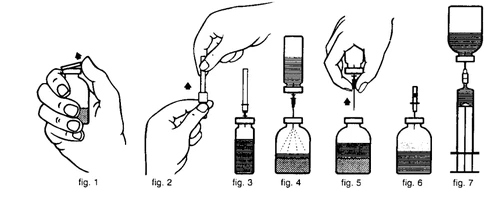
- Remove the protective caps from the lyophilisate and solvent vials (Fig.1) and disinfect the rubber stoppers of both vials with alcohol. Place the vials on a flat surface.
- Both ends of the transfer needle are protected by two plastic caps joined by a welded seal. Rotate one cap to break the seal (Fig.2), free the needle, and insert it into the rubber stopper of the solvent vial (Fig.3).
- Remove the other cap from the transfer needle, taking care not to touch the needle.
- Invert the solvent vial and insert the free end of the transfer needle halfway through the center of the rubber stopper of the lyophilisate vial (Fig.4). Since the lyophilisate vial is under vacuum, the solvent will be drawn into it.
- Separate the solvent vial (with needle inserted) from the lyophilisate vial (Fig.5) and gently swirl the latter to aid dissolution.
- After complete dissolution of the lyophilized substance, insert the venting needle (Fig.6); any foam formed will dissolve rapidly. Remove the venting needle.
Injection
- Rotate the protective cap of the filter needle to break the seal and remove it. Attach the filter needle to the single-use syringe and draw the solution into the syringe (Fig.7).
- Remove the filter needle and attach the injection needle (or butterfly needle) to the syringe. Administer the solution slowly (not exceeding 2 units/kg/min) intravenously.
If the solution is infused, it is advisable to use single-use infusion devices equipped with a filter.
Reconstitution of the lyophilisate (packs with BAXJECT II Hi-Flow device)
- Warm the closed solvent vial (water for injections) to room temperature, e.g., by using a water bath to warm it within a few minutes (not exceeding 37°C).
- Remove the protective caps from the lyophilisate and solvent vials and disinfect the rubber stoppers of both vials with alcohol. Place the vials on a flat surface.
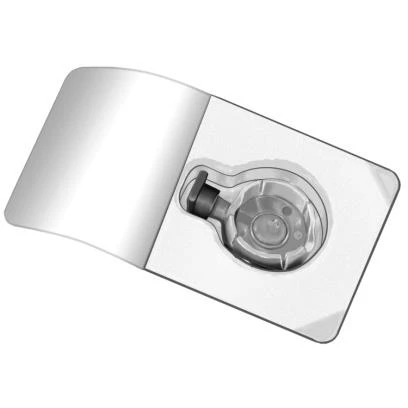
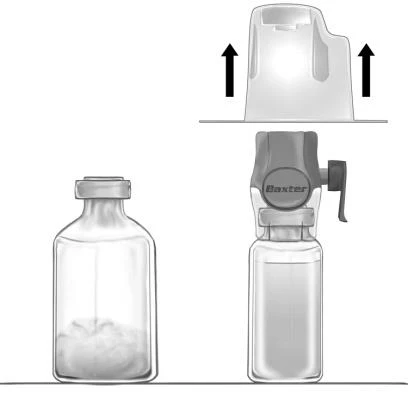
- Open the BAXJECT II Hi-Flow device package by removing the top part, taking care not to touch the inside (Fig. a). Do not remove the device from the package.
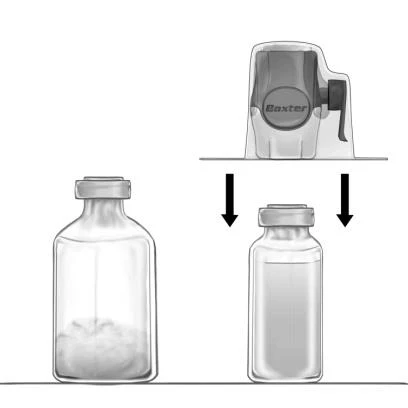
- Invert the box, insert the plastic tip through the solvent stopper (Fig. b). Grasp the edge of the box and pull it away to release the device (Fig. c). Do not remove the blue cap from the BAXJECT II Hi-Flow device.
- Holding the BAXJECT II Hi-Flow connected to the solvent vial, invert the system so that the solvent vial is positioned above the device.
- Insert the other plastic tip through the stopper of the concentrate vial. The solvent will be drawn into the concentrate vial (Fig. d).
- Gently swirl, without shaking, until the substance is completely dissolved. Ensure that FEIBA is fully dissolved, otherwise the active substance will not pass through the device filter.
Fig. a Fig. b Fig. c
Injection/Infusion:
- Remove the blue cap from the BAXJECT II Hi-Flow. Firmly connect the luer-lock syringe to the BAXJECT II Hi-Flow. DO NOT ALLOW AIR INTO THE SYRINGE. (Fig. e). To ensure a secure connection between the syringe and BAXJECT II Hi-Flow, use of a luer-lock syringe is highly recommended (during assembly, rotate the syringe clockwise until locked in place).
- Invert the system so that the dissolved product is on top. Draw the solution into the syringe by slowly pulling back the plunger, ensuring that the connection between BAXJECT II Hi-Flow and the luer-lock syringe remains stable throughout the entire aspiration process (Fig. f).
- Disconnect the syringe.
- If foam is present in the syringe, wait until it dissipates. Administer the solution slowly by intravenous injection or infusion using the infusion set (or single-use needle) provided.
Fig. d Fig. e Fig. f
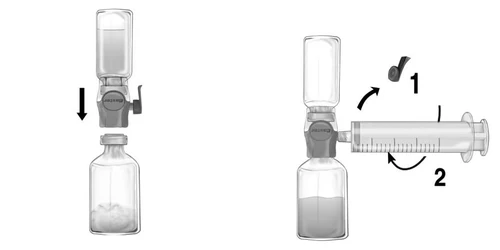
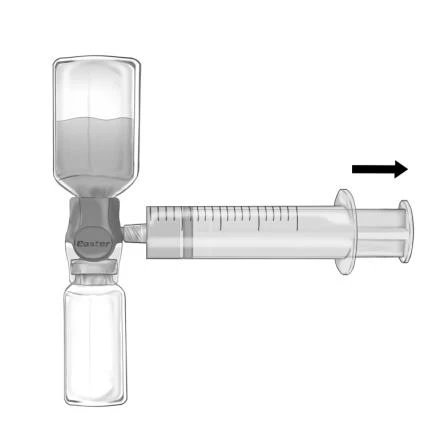
The rate of injection/infusion must not exceed 2 units of FEIBA per kg body weight/minute.
Patient Information Leaflet
FEIBA 100 IU/mL powder and solvent for solution for infusion
Activated prothrombin complex
Please read this leaflet carefully before using this medicine as it contains important information for you.
- Keep this leaflet. You may need to read it again.
- If you have any questions, ask your doctor, pharmacist, or nurse.
- This medicine has been prescribed for you only. Do not give it to other people, even if their symptoms are the same as yours, as it may be harmful.
- If you experience any adverse reactions, including those not listed in this leaflet, contact your doctor, pharmacist, or nurse. See section 4.
Contents of this leaflet:
- What FEIBA is and what it is used for
- What you need to know before using FEIBA
- How to use FEIBA
- Possible side effects
- How to store FEIBA
- Contents of the pack and other information
1. What FEIBA is and what it is used for
FEIBA is a medicinal product containing a combination of substances necessary for blood clotting, and is used in cases where the patient's blood contains substances that interfere with normal coagulation. Blood coagulation is the process by which bleeding (haemorrhage) is stopped. The presence in the blood of coagulation inhibitors—substances that block certain stages of the coagulation process—can lead to bleeding episodes, even severe ones.
In such cases, administration of FEIBA, which acts downstream of the coagulation block, can stop blood loss.
FEIBA is used in patients of all age groups for the treatment and prevention of bleeding episodes (spontaneous or related to minor surgical procedures) caused by:
- Congenital (hereditary diseases) or acquired factor VIII inhibitor;
- Presence of factor XIa inhibitor.
2. What you should know before using FEIBA
Do not use FEIBA if there are alternative therapeutic options:
- if you are allergic to activated prothrombin complex or to any of the other ingredients of this medicine (listed in section 6);
- if you have a blood disorder called disseminated intravascular coagulation (DIC);
- if you have a blockage of a blood vessel due to a blood clot (thrombosis or thromboembolism, including myocardial infarction).
Warnings and precautions
Talk to your doctor before using FEIBA.
In particular, inform your doctor:
-
if you are at risk of developing a blood vessel blockage due to a blood clot (acute thrombosis or thromboembolism), especially if you fall into any of the following categories:
-
if you are being treated with recombinant factor VIIa (see section 2. Other medicines and FEIBA), a medicine used to prevent and treat bleeding episodes;
-
if you have abnormalities in blood lipid levels;
-
if you are obese;
-
if you are a smoker;
-
if you have previously experienced episodes of venous or arterial blood vessel blockages (e.g. DIC, advanced atherosclerotic disease, elevated fibrin D-dimer, or superficial thrombophlebitis);
-
if you have or suspect you may have a tendency to develop allergic reactions;
-
if you suffer from blood coagulation disorders (e.g. congenital or acquired haemophilia).
Cases of thrombotic microangiopathy have been reported in a clinical trial conducted in patients treated with emicizumab who received FEIBA as part of treatment for sudden bleeding episodes.
Your doctor will monitor and carry out tests during your treatment with FEIBA.
Viral safety
FEIBA is a medicine derived from human blood or plasma (the liquid component of blood).
When medicines are made from human blood or plasma, certain safety measures are applied to prevent transmission of infections to patients. These include:
- careful selection of blood and plasma donors to ensure that individuals potentially carrying infections are excluded;
- testing of each donation and plasma pool to detect signs of viruses/infections;
- inclusion of steps during the processing of blood or plasma that can inactivate or remove viruses.
Despite these measures, whenever medicines prepared from human blood or plasma are administered, the possibility of transmitting an infection cannot be completely ruled out. This also applies to unknown or emerging viruses or other types of infections.
The measures taken in the production of FEIBA are considered effective against enveloped viruses such as human immunodeficiency virus (HIV), hepatitis B virus (HBV), hepatitis C virus (HCV), and against non-enveloped viruses such as hepatitis A virus (HAV). The measures are considered to have limited effectiveness against non-enveloped viruses such as parvovirus B19. Parvovirus B19 infection may be severe in pregnant women (fetal infection) and in individuals with immunodeficiency or increased red blood cell turnover (e.g. in haemolytic anaemia).
The medicine contains antibodies, called isoagglutinins, directed against blood group antigens present on the surface of red blood cells (anti-A and anti-B antibodies). These passively transferred antibodies may interfere with certain serological tests (Coombs test) and, rarely, cause haemolysis.
It is strongly recommended that, every time FEIBA is administered, the name and batch number of the product be recorded in order to maintain traceability between the patient and the batch of product used.
Children
Experience with the use of FEIBA in children and adolescents is limited. The same dosage used in adults should be adapted according to the child's clinical condition.
Elderly
Clinical data on the use of FEIBA in elderly patients are limited.
Other medicines and FEIBA
Inform your doctor or pharmacist if you are taking, have recently taken, or might take any other medicines.
In particular, inform your doctor:
- if you are taking medicines that inhibit blood coagulation through a process called fibrinolysis (e.g. tranexamic acid or aminocaproic acid). Your doctor may ask you to have periodic blood tests to monitor blood fluidity;
- if you are taking recombinant factor VIIa, a medicine used to prevent and treat bleeding episodes;
- if you are taking emicizumab. If your doctor considers treatment with FEIBA in combination with emicizumab, you will be closely monitored.
Pregnancy, breastfeeding and fertility
If you are pregnant, think you might be pregnant, are planning to become pregnant, or are breastfeeding, consult your doctor before using this medicine.
FEIBA should be used during pregnancy only if strictly necessary.
During pregnancy and breastfeeding, your doctor will assess whether to administer FEIBA to you.
The effects of this medicine on pregnancy, breastfeeding and fertility are unknown.
Refer to the warnings in the section entitled Viral safety for information on the risk of infection with parvovirus B19.
Driving and using machines
FEIBA has no effect on the ability to drive vehicles or operate machinery.
FEIBA contains sodium
500 IU
This medicine contains 40 mg of sodium (the main component of table salt) per vial.
This corresponds to 2% of the maximum daily recommended dietary intake for an adult.
1,000 IU
This medicine contains 80 mg of sodium (the main component of table salt) per vial.
This corresponds to 4% of the maximum daily recommended dietary intake for an adult.
2,500 IU
This medicine contains 200 mg of sodium (the main component of table salt) per vial.
This corresponds to 10% of the maximum daily recommended dietary intake for an adult.
3. How to use FEIBA
Use this medicine exactly as instructed by your doctor or pharmacist. If you have
any doubts, consult your doctor or pharmacist.
The recommended dose must not exceed a single dose of 100 units/kg body weight and a daily dose
of 200 units/kg body weight, unless the severity of bleeding warrants and justifies the use of a higher dose.
When this medicine is used to control bleeding episodes, it should be administered only for the time strictly necessary to achieve the therapeutic effect.
This medicine must be administered into a vein, always following your doctor's instructions exactly.
Your doctor will determine the dose based on your medical condition and the severity of bleeding.
The reconstituted product must not be stored in the refrigerator.
After complete reconstitution of FEIBA, the injection or infusion must be started
immediately and completed within three hours of reconstitution.
Use in children and adolescents
Experience in children and adolescents is limited. The dose will be determined by the doctor based on
the child's age and medical condition.
If you use more FEIBA than you should
Thrombotic and thromboembolic events have been reported with doses exceeding 200 units/kg. If signs or symptoms of thrombotic or thromboembolic events occur, the infusion must be stopped
immediately and appropriate diagnostic and therapeutic measures must be initiated.
4. Possible adverse reactions
Like all medicines, this medicine can cause adverse reactions, although not everyone experiences them.
If you experience any of the following adverse reactions during treatment with FEIBA, inform your doctor immediately. The doctor will IMMEDIATELY DISCONTINUE administration at the first sign of trouble and will provide appropriate therapy to treat these symptoms, which may be life-threatening:
- hypersensitivity and allergic reactions, which in some cases may progress to severe systemic allergic reactions (anaphylaxis). Allergic reactions may include the following symptoms:
o swelling of the skin, subcutaneous tissues, and mucous membranes of the face and mouth (angioedema), urticaria, allergic manifestations affecting the stomach and intestines, difficulty breathing (bronchospasm), low blood pressure, drowsiness, and agitation;
o reduced blood flow to internal organs (hypovolemic shock);
o chills, fever, and increased blood pressure; - obstruction of normal blood flow in a blood vessel caused by a blood clot (thrombotic or thromboembolic events). Immediate access to appropriate equipment, medications, and healthcare personnel for emergency treatment of these adverse reactions is essential.
The possible adverse reactions listed below are categorized according to the following frequency:
Common (may affect up to 1 in 10 people)
- dizziness
- headache
- skin rash
- low blood pressure (hypotension)
- hypersensitivity reactions
- false positive results in laboratory tests for hepatitis B (positive anti-hepatitis B surface antibody tests)
Not known (frequency cannot be estimated from the available data)
- increased inhibitor levels in the blood
- drowsiness
- taste disturbances (dysgeusia)
- difficulty breathing (dyspnea)
- nausea
- chest pain
- chest discomfort
- chills
- fever (pyrexia)
In addition, the following further adverse reactions have been reported:
Reactions affecting the immune system (the body's defense system):
- severe allergic reaction (anaphylactic reaction up to shock)
Reactions affecting the circulatory system:
- widespread presence of blood clots (DIC or Disseminated Intravascular Coagulation)
- increased blood pressure (hypertension)
- blockage of a blood vessel due to a blood clot (venous and/or arterial thrombosis; superficial thrombophlebitis)
- flushing
Reactions affecting the nervous system:
- tingling sensations (paresthesia)
- lack of blood flow to the brain (thrombotic stroke and embolic stroke)
Reactions affecting the heart:
- rapid heartbeat (tachycardia)
- heart attack (myocardial infarction)
Reactions affecting the lungs:
- difficulty breathing (bronchospasm)
- wheezing
- cough
- blockage of a blood vessel in the lungs (pulmonary embolism)
Reactions affecting the stomach and intestines:
- abdominal discomfort
- vomiting
- diarrhea
Reactions affecting the skin:
- itching (pruritus)
- swelling of the skin, subcutaneous tissues, and mucous membranes of the face and mouth (angioedema)
- urticaria
General reactions affecting the whole body and the site of administration:
- malaise
- feeling of warmth
- pain at injection site
Reactions affecting diagnostic tests:
- increased fibrin D-dimer
Reporting of adverse reactions
If you experience any adverse reaction, including those not listed in this leaflet, consult your doctor, pharmacist, or nurse. You may also report adverse reactions directly via
www.aifa.gov.it/content/segnalazioni-reazioni-avverse.
By reporting adverse reactions, you can help provide more information on the safety of this medicine.
5. How to store FEIBA
Do not store above 25°C. Do not freeze.
Keep in the original packaging to protect the medicine from light.
Keep this medicine out of the sight and reach of children.
Do not use this medicine after the expiry date stated on the carton after "Exp.". The expiry date refers to the last day of that month.
After reconstitution, the medicine must be used immediately.
Do not use this medicine if the reconstituted solution appears cloudy, contains deposits, or shows abnormal discoloration.
Do not use if the product, its sterile barrier system, or its packaging is damaged or shows signs of deterioration.
Do not dispose of any medicine via wastewater or household waste. Ask your pharmacist how to dispose of medicines you no longer use. This will help protect the environment.
6. Package contents and other information
What FEIBA contains
Powder
- The active substance is activated prothrombin complex, measured in FEIBA Units (FU).
- 1 mL contains 100 FU of activated prothrombin complex.
- FEIBA 100 FU/mL is available in three different presentations:
- The FEIBA 500 FU presentation contains 500 FU of activated prothrombin complex in 200–600 mg of human plasma protein.
- The FEIBA 1,000 FU presentation contains 1,000 FU of activated prothrombin complex in 400–1,200 mg of human plasma protein.
- The FEIBA 2,500 FU presentation contains 2,500 FU of activated prothrombin complex in 1,000–3,000 mg of human plasma protein.
- The other components are sodium chloride (see section 2 “FEIBA contains sodium”) and sodium citrate.
Solvent
- Water for injections.
Description of the appearance of FEIBA and contents of the pack
FEIBA is a lyophilized powder or friable solid, white, off-white, or pale green in colour. The solvent
(water for injections) is a clear, colourless liquid.
After reconstitution, the solution is clear or slightly opalescent and free from foreign particles.
Each pack contains a vial of powder, a vial of solvent, and the devices necessary for reconstitution and administration.
FEIBA is available in the following pack sizes:
1 x 500 FU
1 x 1,000 FU
1 x 2,500 FU
Not all pack sizes may be marketed.
Contents of the pack:
1 vial of FEIBA powder and solvent for solution for infusion of 500 FU, 1,000 FU or 2,500 FU
1 vial of 5 mL, 10 mL or 25 mL water for injections
1 BAXJECT II Hi-Flow (needle-free reconstitution device)
1 single-use syringe
1 butterfly needle with clamp
Marketing Authorisation Holder and Manufacturer
Marketing Authorisation Holder
Baxalta Innovations GmbH
Industriestrasse 67, 1221 Vienna
Representative in Italy:
Takeda Italia S.p.A.
Tel. +39 06 502601
Manufacturer
Takeda Manufacturing Austria AG
Industriestrasse 67
1221 Vienna
Austria
The following information is intended for healthcare professionals only:
Dosage and method of administration
Treatment must be initiated and monitored by a physician experienced in the treatment of coagulation disorders.
Dosage
For the treatment of spontaneous bleeding and surgical bleeding, the dose, timing, frequency of administration, and duration of therapy depend on the site and extent of bleeding, the patient's clinical condition, and should be guided by individual clinical response.
The single dose should not exceed 100 units/kg body weight and the daily dose should not exceed 200 units/kg body weight unless the severity of bleeding justifies higher dosing.
When used to control bleeding episodes, the product should be administered only for the time strictly necessary to achieve the therapeutic effect.
If there is an inadequate response to treatment with the product, platelet count should be performed, as a sufficient number of functionally intact platelets is considered necessary for product efficacy.
Due to the complex mechanism of action, direct monitoring of the active substances is not available. Coagulation tests such as whole blood clotting time and activated partial thromboplastin time (aPTT) may not correlate with clinical improvement.
Global haemostatic tests such as thromboelastography (TEG) or thrombin generation assay (TGA) may be useful tools for monitoring and optimising treatment.
a) Patients with Factor VIII inhibitor:
Clinical results obtained so far in the treatment of patients with Factor VIII inhibitor indicate that the efficacy of FEIBA may vary within certain limits from patient to patient due to differences in inhibitor titre and other unknown factors. Therefore, although not considered a general rule, higher inhibitor levels may require higher doses.
The following indications must be distinguished:
Spontaneous bleeding episodes
A dose of 60 to 100 units/kg body weight is recommended, repeated every 8–12 hours until complete wound healing, disappearance of pain, and cessation and resorption of internal bleeding. If no therapeutic benefit is observed despite administration of a dose of 100 units/kg every 8 hours, co-administration of 40 units/kg of human Factor VIII concentrate is recommended.
Administration of Factor VIII should always follow that of FEIBA. Bleeding episodes treated at home may be controlled by administering up to 150 units/kg depending on the severity of bleeding. According to literature reports, home prophylactic treatment may be performed by administering FEIBA 3 times per week at a dose of 75 to 100 units/kg, adjusted according to the patient's bleeding tendency.
Prophylactic treatment should be initiated with the lowest possible dose within the recommended range; the patient should be reassessed after 12 weeks to optimise the individual dose.
Minor surgical procedures
The same therapeutic regimen recommended for spontaneous bleeding episodes is advised; however, the effect of replacement therapy should be verified before surgery, and the dose increased if necessary, or combined treatment with Factor VIII concentrate (40 units/kg) considered.
Combined therapy with Factor VIII concentrate may also reduce activated partial thromboplastin time to normal values. Furthermore, to assess the potential risk of disseminated intravascular coagulation during treatment, repeated monitoring of platelets, fibrinogen, and fibrinogen degradation products (FDP) is recommended.
Before each administration of FEIBA in patients with Factor VIII inhibitor, platelet count should be checked, as, according to experience reported by some authors (Bloom, Vermylen, Wensley), the efficacy of FEIBA depends on a normal platelet count. If platelet count is below 100,000/mm³, this parameter should be normalised prior to FEIBA treatment by administering platelet concentrates. It should be noted that administration of animal-derived Factor VIII concentrates may reduce platelet count, resulting in FEIBA inefficacy if used.
b) Patients with Factor XIa inhibitor:
In the limited case reports available, the cephalin clotting time was normalised in one patient undergoing coronary artery bypass surgery, treated with approximately 40 units/kg of FEIBA for several days as a single daily dose. Monitoring of efficacy and adverse effects should be performed using the same tests as for patients with Factor VIII inhibitor.
Method of administration
The product must be administered intravenously immediately after reconstitution with the provided solvent.
FEIBA should be infused at an infusion rate of 2 FU/kg body weight per minute. In patients who tolerate well an infusion rate of 2 FU/kg body weight per minute, the rate may be increased in subsequent infusions up to a maximum of 10 FU/kg body weight per minute. Experience with high infusion rates in paediatric patients is limited; therefore, use of a rate higher than 2 FU/kg should be evaluated and determined by the physician for each individual patient and should only be performed in patients who have well tolerated the initial infusion rate and under close medical supervision.
The rate of administration must ensure patient comfort and must not exceed the maximum limit of 10 units/kg body weight per minute.
Warnings and precautions
Appropriate vaccination (against hepatitis A and B) should be considered for patients receiving regular/repeated administration of human plasma-derived products, including FEIBA.
It is strongly recommended that, whenever FEIBA is administered to a patient, the product name and batch number be recorded to maintain traceability between patient and product batch.
Due to patient-specific factors, response to a bypassing agent may vary. In particular bleeding episodes, patients who respond inadequately to one bypassing agent may respond to another; therefore, use of an alternative agent should be considered.
Administration of FEIBA to patients with inhibitors may cause an initial anamnestic increase in inhibitor levels. With continued administration of FEIBA, inhibitors may decrease over time.
Published clinical data suggest that the efficacy of FEIBA is not reduced.
In most cases, the titre remains at a constant level.
After administration of high doses of FEIBA, a transient increase in antibodies against passively transferred hepatitis B surface antigens may lead to false-positive results in serological tests.
Incompatibilities
In the absence of compatibility studies, FEIBA must not be mixed with other medicinal products or solvents.
Only the infusion/injection set supplied with the pack should be used, as reduced therapeutic efficacy may occur due to adsorption of coagulation factors derived from human plasma onto internal surfaces of certain types of devices.
Shelf life
2 years, if stored correctly in intact packaging. After reconstitution, the product must not be refrigerated.
Chemical and physical stability after reconstitution has been demonstrated for 3 hours at a temperature between 20°C and 25°C.
From a microbiological standpoint, the product must be used immediately after reconstitution. If the reconstituted solution is not used immediately, the conditions and duration of storage are the responsibility of the user.
Special precautions for disposal and handling
FEIBA does not contain preservatives. Therefore, it must be reconstituted immediately before administration.
Aseptic technique must be used throughout the reconstitution process, and the solution must be used immediately after reconstitution.
FEIBA must be administered exclusively by intravenous route after reconstitution with the sterile water for injections provided.
Gently swirl until the substance dissolves completely. Ensure that FEIBA is fully dissolved, otherwise the active substance will not pass through the device filter.
After reconstitution, the solution should be clear or slightly opalescent. Do not use cloudy solutions or those containing deposits. The reconstituted product must be inspected visually before administration for particulate matter or abnormal colouration.
Avoid mixing FEIBA with other products or substances. It is recommended to flush the venous access line with isotonic saline solution before and after infusion of FEIBA.
If devices other than those supplied with FEIBA are used, ensure that a filter with a porosity of at least 149 µm is used.
The reconstituted product must not be refrigerated.
After complete reconstitution of FEIBA, injection or infusion must be started immediately and completed within three hours of reconstitution.
Reconstitution of the powder for solution for infusion using the BAXJECT II Hi-Flow device
- Warm the closed solvent vial (water for injections) to room temperature, for example using a water bath to heat it within a few minutes (do not exceed 37°C).
- Remove the protective caps from the lyophilisate and solvent vials and disinfect the rubber stoppers with alcohol. Place the vials on a flat surface.
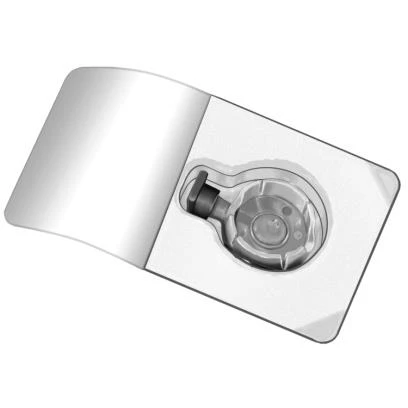
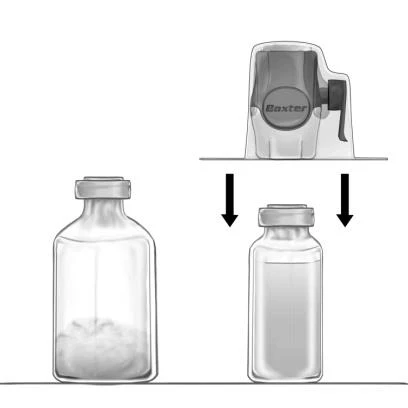
- Open the BAXJECT II Hi-Flow device package by removing the top part, taking care not to touch the inside (Fig. a). Do not remove the device from the package.
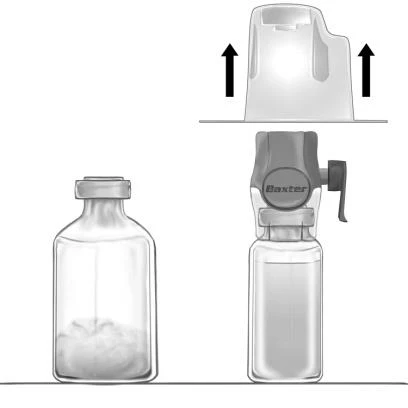
- Turn the box upside down and insert the plastic spike through the solvent stopper (Fig. b). Hold the edge of the box and pull it away to release the device (Fig. c). Do not remove the blue cap from the BAXJECT II Hi-Flow device.
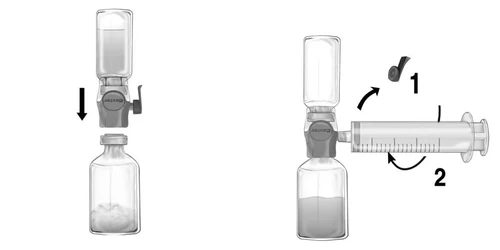
- Holding the BAXJECT II Hi-Flow connected to the solvent vial, invert the system so that the solvent vial is above the device.
- Insert the other plastic spike through the concentrate stopper. The solvent will be drawn into the concentrate vial (Fig. d).
- Gently swirl, without shaking, until the substance is completely dissolved. Ensure that FEIBA is fully dissolved, otherwise the active substance will not pass through the device filter.
Fig. a Fig. b Fig. c
Injection/Infusion:
- Remove the blue cap from the BAXJECT II Hi-Flow. Firmly attach the syringe to the BAXJECT II Hi-Flow. DO NOT ALLOW AIR INTO THE SYRINGE. (Fig. e). To ensure a secure connection between the syringe and BAXJECT II Hi-Flow, use of a luer-lock syringe is highly recommended (rotate the syringe clockwise until locked during assembly).
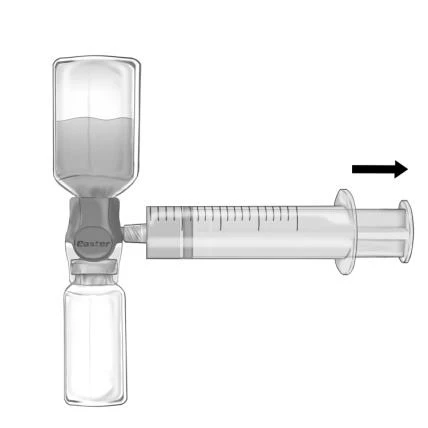
- Invert the system so that the dissolved product is on top. Slowly draw the solution into the syringe by pulling back the plunger SLOWLY, ensuring that the connection between BAXJECT II Hi-Flow and the syringe remains stable throughout the aspiration process (Fig. f).
- Disconnect the syringe.
- If foam is present in the syringe, wait until it dissipates. Administer the solution slowly by intravenous injection using the provided infusion set.
Fig. d Fig. e Fig. f
The injection/infusion rate must not exceed 10 FEIBA units per kg body weight per minute.