Farlutal
Italy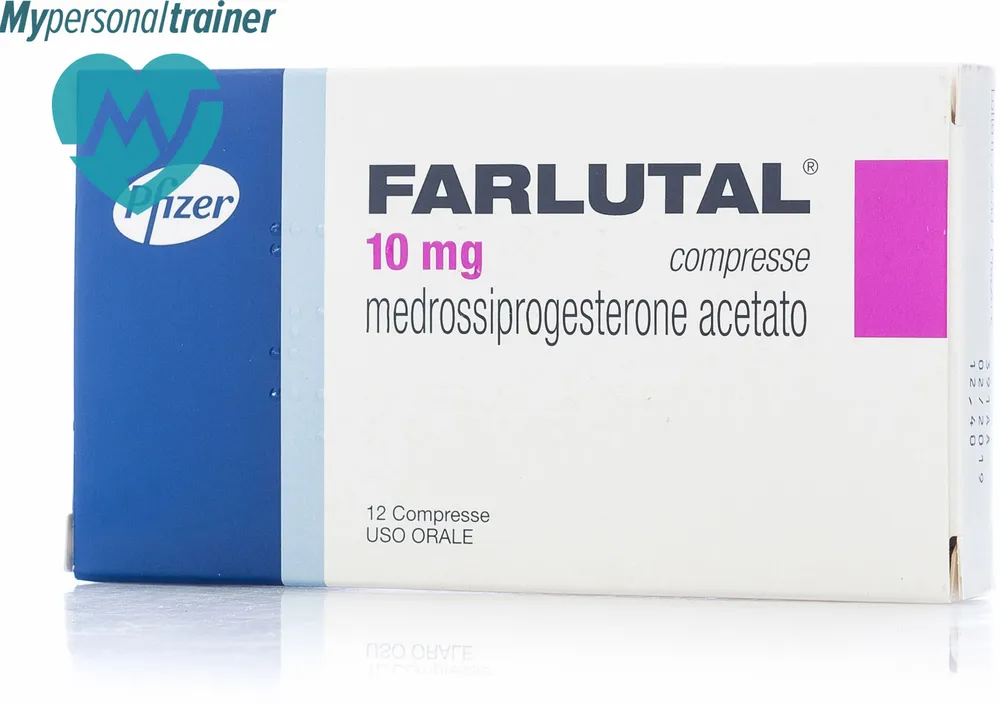
Table of Contents
Package leaflet: Information for the patient
FARLUTAL 500 mg tablets
medroxyprogesterone acetate
Please read this leaflet carefully before taking this medicine because it contains important information for you.
- Keep this leaflet. You may need to read it again.
- If you have any questions, ask your doctor or pharmacist.
- This medicine has been prescribed for you only. Do not give it to others, even if their symptoms are the same as yours, as it could be harmful.
- If you experience any adverse reactions, including those not listed in this leaflet, contact your doctor or pharmacist. See section 4.
Contents of this leaflet:
- What Farlutal is and what it is used for
- What you need to know before taking Farlutal
- How to take Farlutal
- Possible side effects
- How to store Farlutal
- Contents of the pack and other information
1. What Farlutal is and what it is used for
Farlutal contains the active substance medroxyprogesterone acetate. Medroxyprogesterone belongs to a group of medicines called progestins, which act by slowing the growth of certain hormone-sensitive tumours.
Farlutal is used to treat:
- breast cancer, cancer of the tissue lining the inner wall of the uterus (endometrial cancer), prostate cancer, and kidney cancer;
- a condition characterised by enlargement of the prostate gland (prostatic adenoma);
- significant weight loss and marked reduction of normal body functions in advanced stages of cancer or AIDS, a serious disease of the immune system.
2. What you should know before taking Farlutal
Do not take Farlutal:
- if you are allergic to medroxyprogesterone or to any of the other ingredients of this medicine (listed in section 6);
- if you are or think you may be pregnant (see section Pregnancy and breastfeeding);
- if you have experienced vaginal bleeding and do not know the cause;
- if you have severe liver problems (hepatic insufficiency);
- if your doctor suspects or has diagnosed early-stage breast cancer.
Warnings and precautions
Talk to your doctor or pharmacist before taking Farlutal if you think any of the following conditions apply to you, as some of these conditions may require that your doctor monitors you regularly during treatment with this medicine:
- you have vaginal bleeding, but do not know the cause. You must undergo medical examinations to determine the cause of this condition before taking Farlutal (see section Do not take Farlutal);
- you have or have had fluid retention (edema);
- you have or have had depression;
- you have diabetes or an intolerance to certain sugars;
- you have high levels of calcium in the blood due to cancer that has spread to the bones;
- you have kidney problems (renal insufficiency);
- you have liver problems (see section Do not take Farlutal);
- you are a pre-menopausal woman, because taking this medicine may mask the onset of menopause.
Inform your doctor if any of the following conditions occur or worsen during treatment with Farlutal (also see section 4 Possible side effects):
- sudden partial or complete loss of vision, protruding eyes, double vision, or new-onset headache. Immediately stop taking Farlutal and have an ophthalmological examination before resuming treatment;
- sudden swelling and pain in the limbs, especially in the legs, or sudden onset of chest pain and breathing difficulties. These may be symptoms of blood clots forming in the veins (thrombosis), or of these clots traveling to the lungs, where they may block a blood vessel (thromboembolism). Immediately stop taking Farlutal and consult your doctor;
- Cushing's syndrome, a disorder that may present with some or all of the following symptoms: fatigue or easy tiredness, rapid weight gain and obesity (especially in the trunk and face), loss of sexual desire, impotence, frigidity, increased blood pressure (hypertension), menstrual cycle disturbances (dysmenorrhea), cessation of menstruation (amenorrhea), abnormal hair growth (hirsutism), sudden mood changes (depression, nervousness, irritability), skin problems such as reddish-purple stretch marks (striae) especially on hips, abdomen, and lower limbs, increased sebum production (oily skin and/or hair), bone and joint pain, prolonged wound healing time, or increased susceptibility to infections.
During treatment with Farlutal, your doctor may recommend that you take adequate amounts of calcium and vitamin D and undergo regular tests to assess your bone condition (bone mineral density tests), especially if you need to take this medicine for a prolonged period.
Laboratory tests
- If you have been advised to go to a specialized laboratory for tests involving tissue sampling (biopsies) from the uterus, inform the laboratory staff that you are taking Farlutal, as this medicine may alter test results;
- If you are advised to have blood tests, inform your doctor and/or laboratory staff that you are taking Farlutal, as this medicine may alter blood levels of certain hormones.
Other medicines and Farlutal
Inform your doctor or pharmacist if you are taking, have recently taken, or might take any other medicines.
It is particularly important that you inform your doctor if you are taking medicines containing aminoglutethimide, a substance used in the treatment of advanced breast or prostate cancer, as these may reduce the effectiveness of Farlutal.
Pregnancy and breastfeeding
If you are pregnant, suspect you may be pregnant, are planning a pregnancy, or are breastfeeding, consult your doctor or pharmacist before taking this medicine.
Pregnancy
Farlutal must not be used during pregnancy (see section Do not take Farlutal), as taking this medicine during the first three months of pregnancy may cause genital malformations in the fetus. If you become pregnant while using this medicine, you must immediately stop taking Farlutal and consult your doctor.
If you are a sexually active woman, you must use an effective contraceptive method during treatment with this medicine to avoid pregnancy.
Breastfeeding
Medroxyprogesterone acetate, the active ingredient in Farlutal, passes into breast milk. Since its effects on the infant are unknown, consult your doctor or pharmacist before taking this medicine while breastfeeding.
Driving and using machines
It is not known whether Farlutal affects the ability to drive or operate machinery. If in doubt, consult your doctor or pharmacist.
Farlutal 500 mg tablets contain lactose
Farlutal 500 mg tablets contain 212.50 mg of lactose per tablet.
If your doctor has diagnosed you with an intolerance to certain sugars, contact him/her before taking this medicine.
3. How to take Farlutal
Take this medicine exactly as prescribed by your doctor or pharmacist. If you have
any doubts, consult your doctor or pharmacist.
- Breast cancer, endometrial cancer (lining tissue inside the uterus), prostate cancer, kidney cancer, prostate adenoma
The recommended dose is from 100 mg to 1000 mg daily. You may divide the daily dose into 2 or 3 smaller doses, especially if the amount to be taken is very high. Your doctor will advise you on the most appropriate dosage and duration of treatment for your condition. - Severe weight loss and marked reduction of normal body functions in advanced stages of cancer and in severe immunodeficiency disease known as AIDS
The recommended dose is 1000 mg daily, which you may take as a single dose or divided into 2 separate doses.
If you take more Farlutal than you should
If you take an excessive dose of this medicine, contact your doctor immediately.
4. Possible side effects
Like all medicines, this medicine can cause side effects, although not everyone gets them.
Stop taking this medicine and contact your doctor immediately if you experience any of the following side effects, as they may be serious (see section 2, Warnings and precautions):
- severe allergic reaction (e.g. anaphylactic shock)
- swelling of the face, tongue, and throat, which may cause difficulty swallowing and breathing (angioedema)
- sudden partial or complete loss of vision, bulging eyes, double vision, or headache
- sudden swelling and pain in the limbs, especially in the legs, or sudden onset of chest pain and breathing difficulties. These may be symptoms of blood clots forming in the veins (thrombi)
- stroke. Symptoms of a stroke may include:
- speech disturbances
- loss of strength on one side of the body (half of the face, arm, and leg, either on the right or left side)
- tingling sensations or loss of sensation on one side of the body
- inability to see well in half of the visual field
- clumsy movements, loss of balance, dizziness
- severe and sudden headache
Other symptoms not listed in this leaflet may also occur. If you or someone near you suspects a stroke is occurring, go immediately to the hospital emergency department. - sudden chest pain, which may be a symptom of heart attack or pulmonary embolism
- heart problems (congestive heart failure)
Other side effects:
Common (may affect up to 1 in 10 people):
- changes in body weight
- increased appetite
- insomnia
- headache
- dizziness
- tremors
- vomiting, constipation, nausea
- excessive sweating
- impotence
- fluid retention in the body, swelling in various parts of the body, especially in the ankles and/or legs (edema)
- fatigue
Uncommon (may affect up to 1 in 100 people):
- corticosteroid-like effects, such as Cushing's syndrome (see section 2 “Warnings and precautions”)
- worsening of diabetes mellitus
- high levels of calcium in the blood
- depression
- euphoria
- changes in sexual desire
- inflammation of the veins, especially in the legs, leading to thrombus formation
- diarrhea
- dry mouth
- acne
- abnormal growth of body hair (hirsutism)
- abnormal vaginal bleeding (irregular, increased, or decreased)
- breast pain
- muscle spasms
Rare (may affect up to 1 in 1,000 people):
- hypersensitivity to the medicine
- nervousness
- drowsiness
- yellowish discoloration of the skin, the white part of the eye, and the oral mucous membranes (jaundice)
- patchy hair loss (alopecia)
- skin rash
- malaise
- fever
- changes in blood glucose levels (glycemia) following a glucose tolerance test. This condition is known as “impaired glucose tolerance”
- high blood pressure (arterial hypertension)
Frequency not known (frequency cannot be estimated from the available data):
- prolonged absence of ovulation
- confusion
- loss of concentration
- hand tremors, sweating, nocturnal leg cramps (adrenergic-like effects)
- vision damage due to blockage of an artery supplying blood to the eye (retinal embolism and thrombosis)
- cataract (as a complication of diabetes)
- vision disorders
- rapid heartbeat (tachycardia)
- heightened awareness of heartbeat (palpitations)
- urticaria, itching
- presence of sugar in the urine
- absence of menstruation (amenorrhea)
- ulcers of the mucosa in the lower part of the uterus (cervix)
- discharge from the cervix (lower part of the uterus)
- abnormal milk secretion from the breasts even when not breastfeeding (galactorrhea)
- changes in liver function tests
- increased number of white blood cells and platelets
Reporting of side effects
If you experience any side effect, including those not listed in this leaflet, please inform your doctor or pharmacist. You may also report side effects directly via the national reporting system at the following website: https://www.aifa.gov.it/content/segnalazioni-reazioni-avverse.
By reporting side effects, you can help provide more information on the safety of this medicine.
5. How to store Farlutal
Keep this medicine out of the sight and reach of children.
Do not use this medicine after the expiry date stated on the packaging after "Expiry". The expiry date refers to the last day of that month.
Farlutal 500 mg tablets: Store below 30°C.
Do not dispose of any medicine via wastewater or household waste. Ask your pharmacist how to dispose of medicines you no longer use. This will help protect the environment.
6. Package contents and other information
What Farlutal contains
The active substance is medroxyprogesterone acetate.
Farlutal tablets:
Each 500 mg Farlutal tablet contains 500 mg of medroxyprogesterone acetate.
The other ingredients are: lactose (see section 2 “Farlutal 500 mg tablets contain lactose”),
crospovidone, povidone K25, polysorbate 80, microcrystalline cellulose, magnesium stearate.
Description of the appearance of Farlutal and contents of the pack
The 500 mg Farlutal tablets are oblong, convex tablets, marked with “FCE 500” and a break line on both sides.
The tablets are available in Al/PVC blisters in packs of 30 tablets.
The score line is not intended to divide the tablet into equal doses.
Not all pack sizes may be marketed.
Marketing Authorization Holder and Manufacturer
Marketing Authorization Holder
Pfizer Italia S.r.l. - Via Isonzo, 71 - 04100 Latina
Manufacturer
Farlutal 500 mg tablets
Pfizer Italia S.r.l.
Località Marino del Tronto,
Ascoli Piceno (AP)