Epistatus
Italy
Table of Contents
- Package leaflet: Information for the user
- Epistatus 2.5 mg oral mucosal solution, 5 mg oral mucosal solution, 7.5 mg oral mucosal solution, 10 mg oral mucosal solution
- 1. What Epistatus is and what it is used for
- 2. What you need to know before using Epistatus
- 3. How to use Epistatus
- 4. Possible side effects
- 5. How to store Epistatus
- 6. Package contents and other information
Package leaflet: Information for the user
Epistatus 2.5 mg oral mucosal solution, 5 mg oral mucosal solution, 7.5 mg oral mucosal solution, 10 mg oral mucosal solution
midazolam
Please read all of this leaflet carefully before using this medicine because it contains important information for you.
- Keep this leaflet. You may need to read it again.
- If you have any questions, ask your doctor or pharmacist.
- This medicine has been prescribed for your child or adolescent only. Do not give it to other people, even if their symptoms are the same as those of the patients for whom it was prescribed, because it could be harmful.
- If any adverse reaction occurs, including those not listed in this leaflet, contact your doctor or pharmacist. See section 4.
Contents of this leaflet
- What Epistatus is and what it is used for
- What you need to know before using Epistatus
- How to use Epistatus
- Possible side effects
- How to store Epistatus
- Contents of the pack and other information
1. What Epistatus is and what it is used for
Epistatus oral mucosal solution contains a medicine called midazolam, which belongs to a group of medicines known as benzodiazepines.
Epistatus is used to stop prolonged acute convulsive seizures (‘epileptic fits’) in infants, young children, children, and adolescents aged from 3 months up to but less than 18 years.
In children aged from 3 months up to but less than 6 months, this medicine should only be administered in a hospital setting where monitoring is possible and resuscitation equipment is available (see “Warnings and precautions” for more information).
This medicine should only be used by parents/caregivers of patients who have been diagnosed with epilepsy. The patient’s doctor must provide instructions to parents or caregivers on how to administer Epistatus and what to do if the seizure does not stop (see also “How to administer Epistatus”).
2. What you need to know before using Epistatus
Do not use Epistatus if the patient has
- an allergy to midazolam, to any other benzodiazepine (such as diazepam or nitrazepam), or to any of the other components of this medicine (listed in section 6).
- a disease called 'myasthenia gravis' (which causes muscle weakness).
- severe breathing problems (Epistatus may worsen breathing difficulties).
- sleep apnoea syndrome (which causes frequent interruptions in breathing during sleep).
- severe liver problems.
Warnings and precautions
Talk to the doctor or pharmacist before using Epistatus if the patient:
- has a lung disorder causing breathing difficulties, as this medicine may worsen breathing.
- has kidney, liver, or heart problems.
- is taking any other medicine with sedative effects and feels very weak, debilitated, or lacks energy, because this medicine acts on the central nervous system (CNS).
- regularly drinks large amounts of alcohol or has had problems with alcohol use in the past (see "Epistatus contains ethanol (alcohol)").
- regularly uses recreational drugs or has had problems with drug use in the past.
This medicine may affect the patient’s memory of events after it has been administered (temporary memory loss). Patients must be closely observed by parents or caregivers after administration of the medicine. See also section 4 (Possible side effects).
Since delayed severe breathing problems (such as slower or weaker breathing than expected) cannot be excluded in younger children, children aged 3 to less than 6 months must be treated in a hospital setting where monitoring and resuscitation equipment are available.
If you have any doubts whether the patient falls into any of the above categories, consult the doctor or pharmacist before administering this medicine.
Children and adolescents
This medicine must not be given to children under 3 months of age, as there is insufficient information available for this age group.
Other medicines and Epistatus
Inform the doctor or pharmacist if the patient is taking, has recently taken, or might take any other medicines. If you have any doubts about whether a medicine taken by the patient could affect the use of Epistatus, consult the doctor or pharmacist.
This is extremely important because using more than one medicine at the same time may strengthen or weaken the effects of the medicines.
The effects of Epistatus may be increased by medicines such as:
- antiepileptic medicines (for the treatment of epilepsy), e.g. phenytoin
- antibiotics, e.g. erythromycin, clarithromycin
- antifungal medicines, e.g. ketoconazole, voriconazole, fluconazole, itraconazole, posaconazole
- anti-ulcer medicines, e.g. cimetidine, ranitidine, omeprazole
- medicines used to treat blood pressure, e.g. diltiazem, verapamil
- some medicines used to treat HIV and AIDS, e.g. saquinavir, lopinavir/ritonavir combination
- narcotic analgesics (very strong painkillers), e.g. fentanyl
- medicines used to lower blood lipids, e.g. atorvastatin
- medicines used to treat nausea, e.g. nabilone
- hypnotics (medicines that induce sleep)
- sedative antidepressants (medicines for the treatment of depression that cause drowsiness)
- sedatives (medicines that relax)
- anaesthetics (to relieve pain)
- antihistamines (for the treatment of allergies).
The effects of Epistatus may be reduced by medicines such as:
- rifampicin (used to treat tuberculosis)
- xanthines (used to treat asthma)
- St. John’s wort (a herbal medicine). This must be avoided in patients taking Epistatus.
Epistatus may increase the effect of certain muscle relaxants, e.g. baclofen (causing increased drowsiness). This medicine may also prevent some other medicines from working properly, e.g. levodopa (used to treat Parkinson’s disease).
Concomitant use of Epistatus and opioids (strong painkillers, substitution therapy medicines, and some cough medicines) increases the risk of drowsiness, breathing difficulties (respiratory depression), coma, and may be fatal. For this reason, concomitant use should only be considered when no other treatment options are possible.
However, if your doctor prescribes Epistatus together with opioids, the dose and duration of concomitant opioid treatment must be limited by your doctor.
Inform your doctor about all opioid-containing medicines you are taking and carefully follow the doses recommended by your doctor. It may be helpful to inform friends or relatives so they are aware of the signs and symptoms listed above. Contact your doctor if these symptoms occur.
Epistatus contains a small amount of alcohol and therefore must not be administered concomitantly with disulfiram.
Consult your doctor or pharmacist about the medicines the patient should avoid during treatment with Epistatus.
Surgical procedures
If the patient is to be given an inhaled anaesthetic (one that the patient breathes in) for a surgical procedure or dental treatment, it is important to inform the doctor or dentist that Epistatus has been administered.
Epistatus with food, drinks and alcohol
The patient must not consume alcohol during treatment with Epistatus. Alcohol may increase the sedative effects of Epistatus and cause severe drowsiness.
The patient must not drink grapefruit juice during treatment with Epistatus. Grapefruit juice may increase the sedative effects of Epistatus and cause severe drowsiness.
Pregnancy, breastfeeding and fertility
Pregnancy
If the patient is pregnant, suspects she may be pregnant, or is planning a pregnancy, consult the doctor before administering this medicine.
Midazolam may be used during pregnancy if absolutely necessary. Administration of repeated doses of this medicine during the last 3 months of pregnancy or during labour may cause problems in the newborn baby; these may include irregular heartbeat, hypothermia (low body temperature), poor sucking, breathing difficulties, and low muscle tone at birth.
Breastfeeding
Inform the doctor if the patient is breastfeeding. Although small amounts of this medicine may pass into breast milk, it may not be necessary to stop breastfeeding. The doctor will advise the patient whether to temporarily stop breastfeeding after administration of Epistatus.
Driving and using machines
Epistatus may significantly impair the ability to drive vehicles and use machinery.
This medicine may cause drowsiness, forgetfulness, or affect concentration and coordination in the patient. This may affect their ability to perform tasks requiring skill, such as driving a vehicle, riding a bicycle, or operating machinery. After administration of this medicine, the patient must not drive, ride a bicycle, or operate machinery until fully recovered.
Consult the doctor if further advice is needed.
Epistatus contains maltitol
If the doctor has told the patient that they have an intolerance to certain sugars, inform the doctor before administering this medicine.
Epistatus contains ethanol (alcohol)
Epistatus 2.5 mg oral mucosal solution
This medicine contains 49 mg of alcohol (ethanol) per dose. The amount per dose of this medicine is equivalent to less than 1 mL of beer or 1 mL of wine.
Epistatus 5 mg oral mucosal solution
This medicine contains 99 mg of alcohol (ethanol) per dose. The amount per dose of this medicine is equivalent to less than 3 mL of beer or 1 mL of wine.
Epistatus 7.5 mg oral mucosal solution
This medicine contains 148 mg of alcohol (ethanol) per dose. The amount per dose of this medicine is equivalent to less than 4 mL of beer or 2 mL of wine.
Epistatus 10 mg oral mucosal solution
This medicine contains 197 mg of alcohol (ethanol) per dose. The amount per dose of this medicine is equivalent to less than 5 mL of beer or 2 mL of wine.
The small amount of alcohol present in this medicine will not have noticeable effects.
Epistatus contains sodium
This medicine contains less than 1 mmol (23 mg) of sodium per dose, i.e. essentially 'sodium-free'.
3. How to use Epistatus
Use this medicine exactly as instructed by the doctor. If you have any doubts, consult the
doctor or pharmacist. The patient's doctor must provide parents or caregivers with instructions on how to administer Epistatus and what to do if the seizure does not stop.
Epistatus is for oral mucosal use only, which means it must be administered solely inside the mouth. Take care during administration to avoid the risk of patient choking.
Depending on age, your child will have received one of the following dosage strengths, supplied in packages with specifically coloured labels:
| Age range | Dose | Package label color |
| 3 - 6 months in a hospital setting | 2.5 mg (0.25 mL) | Yellow |
| > 6 months < 1 year | 2.5 mg (0.25 mL) | Yellow |
| 1 year < 5 years | 5 mg (0.5 mL) | Blue |
| 5 years < 10 years | 7.5 mg (0.75 mL) | Purple |
| 10 years < 18 years | 10 mg (1 mL) | Orange |
This dose is fully contained in an oral administration syringe. Do not administer more than one dose without first consulting a doctor.
Children aged between 3 and less than 6 months should be treated in a hospital setting where monitoring is possible and resuscitation equipment is available.
The patient must be kept under close observation after administration of Epistatus, and someone must be present.
Epistatus must not be injected. Do not attach a needle to the syringe.
How to prepare for administering this medicine
If the patient is having a convulsive seizure ("epileptic seizure"), allow the body to move freely and do not try to restrain it. Move the patient only if they are in danger from their surroundings, for example a road, deep water, hot cooking appliances, fire, or sharp objects.
Support the patient’s head with something soft, such as a pillow or your lap.
How to administer this medicine
Ask a doctor, pharmacist, or nurse to show you how to take or administer this medicine. Always consult them if you have any doubts.
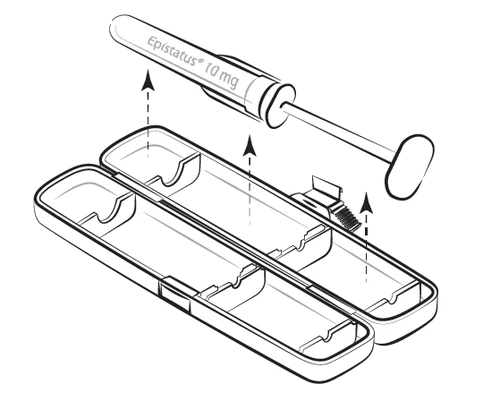
Step 1
Pull the tamper-evident tab on the side of the secondary polypropylene packaging, open it, and remove the syringe.
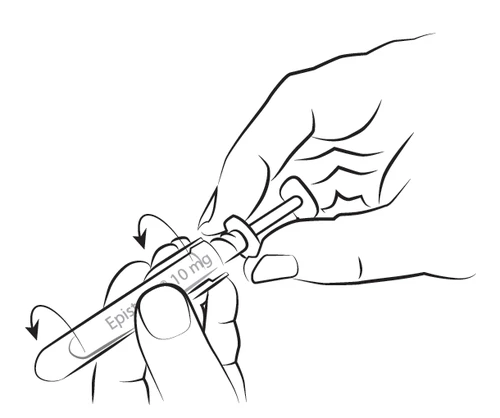
Step 2
Holding the transparent finger grips, unscrew the amber protective cap counterclockwise and remove the amber protective cap.
.
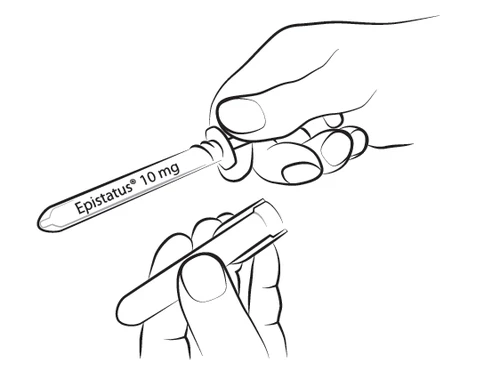
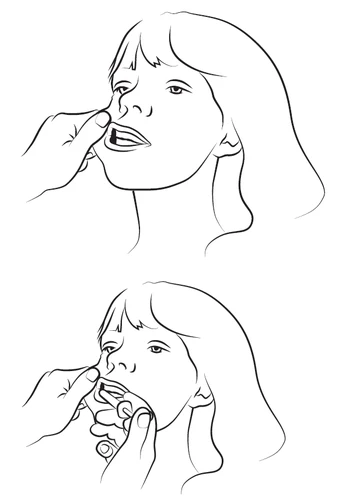
Step 3
Using your index finger and thumb, gently pinch and pull back the patient's cheek. Insert the tip of the syringe into the back of the space between the inside of the cheek and the lower gum (oral cavity).
Step 4
Slowly administer approximately half of the solution into the oral cavity on one side of the mouth, then slowly administer the remainder on the other side by pressing the plunger of the syringe until it stops. If it is particularly difficult to insert the syringe into one oral cavity, administer the entire dose over 4–5 seconds into the other oral cavity. Dispose of the syringe and cap safely.
If the patient's condition does not improve
Seek emergency medical assistance—call an ambulance immediately—if the patient's seizures do not stop shortly after administration of Epistatus.
Follow the instructions you have received from the patient's doctor on how to act in this situation.
A second dose of Epistatus must not be administered without medical advice.
If the patient's condition improves but the seizure ("epileptic seizure") recurs
Seek emergency medical assistance—call an ambulance immediately.
A second dose of Epistatus must not be administered without medical advice.
The used syringe must be handed over to the ambulance personnel or doctor to provide information on the dose and product received by the patient.
If you have administered more Epistatus than you should
Seek emergency medical assistance—call an ambulance immediately.
Signs that the patient has been given too much Epistatus may include:
- Drowsiness, tiredness, fatigue
- Confusion or disorientation
- Loss of coordination
- Onset of muscle weakness
- Low blood pressure—this may cause dizziness and fainting
- Difficulty breathing
The syringe must be kept and shown to the ambulance personnel or doctor.
If you have any doubts about the use of this medicine, consult your doctor or pharmacist.
4. Possible side effects
Like all medicines, this medicine can cause side effects, although not everyone gets them.
Serious side effects
Contact your doctor immediately or call an ambulance if you experience any of the
following side effects:
- Severe breathing difficulties, e.g. slow breathing, shallow breathing or blue lips. In very rare cases, breathing may stop.
- Cardiac arrest (the heart stops), reported in very rare cases. Symptoms include loss of consciousness associated with absence of heartbeat.
- Swelling of the face, lips, tongue or throat causing difficulty swallowing or breathing, or paleness, weak and rapid pulse, or feeling faint. These may be signs of a severe allergic reaction.
Other side effects
Common side effects (may affect up to 1 in 10 people):
- Drowsiness or loss of consciousness, muscle spasms and muscle tremors (uncontrollable shaking of the muscles), reduced alertness, headache, dizziness
- Feeling unwell
- Fatigue
Uncommon side effects (may affect up to 1 in 100 people):
- Agitation, hallucinations (seeing and in some cases hearing things that are not real)
- Temporary memory loss
- Rash, urticaria (irregular skin rash), itching
Very rare side effects (may affect up to 1 in 10,000 people):
- Aggression, impaired muscle coordination, physical aggression
- Epileptic seizures (fits), restlessness
- Low blood pressure, slowed heart rate or redness of the face and neck (flushing)
- Shortness of breath
- Constipation
- Dry mouth
- Hiccups
Frequency not known (frequency cannot be estimated from the available data):
- Rage, confusion, hostility, euphoria (an excessive feeling of happiness or excitement)
- Thrombosis (local blood clot or blood clot in a part of the circulatory system), laryngospasm (stiffening of the vocal cords, causing difficult and noisy breathing)
Reporting of side effects
If you get any side effect, including those not listed in this leaflet, talk to your doctor, pharmacist or nurse.
You can also report side effects directly via the national reporting system at:
https://www.aifa.gov.it/content/segnalazioni-reazioni-avverse . By reporting side effects, you can help provide more information on the safety of this medicine.
5. How to store Epistatus
Keep this medicine out of the sight and reach of children.
Do not use this medicine after the expiry date stated on the label and on the container after "EXP:". The expiry date refers to the last day of that month.
Do not store above 25°C.
Do not refrigerate or freeze.
Keep in the original packaging to protect the medicine from light.
Do not use this medicine if you notice that the syringe has been damaged or if the solution is not clear (i.e. it is cloudy or contains white particles).
Do not dispose of any medicine via wastewater or household waste. Ask your pharmacist how to dispose of medicines no longer required. This will help protect the environment.
6. Package contents and other information
What Epistatus contains
- The active substance is midazolam (as midazolam maleate). Each oral administration pre-filled syringe (0.25 mL) contains 2.5 mg of midazolam. Each oral administration pre-filled syringe (0.5 mL) contains 5 mg of midazolam. Each oral administration pre-filled syringe (0.75 mL) contains 7.5 mg of midazolam. Each oral administration pre-filled syringe (1 mL) contains 10 mg of midazolam.
- The other components are ethanol, sodium saccharin, glycerol, purified water, sodium hydroxide (for pH adjustment), and liquid maltitol.
Description of the appearance of Epistatus and contents of the pack
Epistatus oromucosal solution is a clear, colourless to pale yellow solution. It is supplied in a single-dose, pre-filled oral administration syringe (without needle), made of transparent plastic, with an amber-coloured protective cap made of transparent plastic, available in various fill volumes. Each oral administration syringe contains a single dose of 0.25 mL, 0.5 mL, 0.75 mL, or 1 mL of medicinal product.
Each oral administration syringe is individually packaged in a tamper-evident polypropylene container.
Epistatus 2.5 mg oromucosal solution: yellow syringe label, yellow container
Epistatus 5 mg oromucosal solution: blue syringe label, blue container
Epistatus 7.5 mg oromucosal solution: purple syringe label, purple container
Epistatus 10 mg oromucosal solution: orange syringe label, orange container
Marketing Authorisation Holder and Manufacturer
Marketing Authorisation Holder
SERB SA
Avenue Louise 480, 1050 Brussels
Belgium
Manufacturer
MoNo chem-pharm Produkte
GmbH, Leystraße 129, A-1200 Vienna,
Austria.
This medicinal product is authorised in the European Economic Area countries and in the United Kingdom (Northern Ireland) under the following names:
Denmark Epistatus 2.5 mg/5 mg/7.5 mg/10 mg Mundhulevæske, opløsning
Finland Epistatus 2.5 mg/5 mg/7.5 mg/10 mg Liuos suuonteloon
Sweden Epistatus
Slovenia Epistatus 2.5 mg, 5 mg, 7.5 mg, 10 mg oralna raztopina
Norway Epistatus
Germany Epistatus 2.5 mg/5 mg/7.5 mg/10 mg Lösung zur Anwendung in der Mundhöhle
Greece Epistatus 2.5 mg/5 mg/7.5 mg/10 mg Στοματικό διάλυμα
Ireland Epistatus 2.5 mg/5 mg/7.5 mg/10 mg Oromucosal Solution
Italy Epistatus
Poland Epistatus
Hungary Epistatus 2.5 mg/5 mg/7.5 mg/10 mg szájnyálkahártyán alkalmazott oldat
Portugal Epistatus 2.5 mg/5 mg/7.5 mg/10 mg solução bucal
Austria Epistatus 2.5 mg/5 mg/7.5 mg/10 mg Lösung zur Anwendung in der Mundhöhle
United Kingdom Epistatus 2.5 mg/5 mg/7.5 mg/10 mg oromucosal solution
(Northern Ireland)