Enalapril and hydrochlorothiazide EG Stada
Italy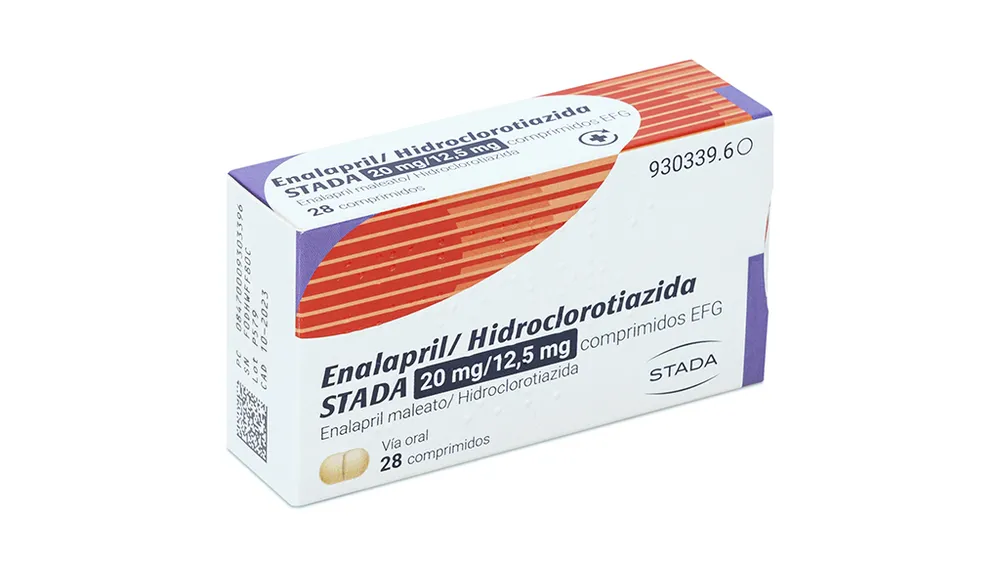
Table of Contents
- Package leaflet: Information for the user
- ENALAPRIL/HYDROCHLOROTHIAZIDE EG STADA 20 mg/6 mg tablets
- 1. What ENALAPRIL/IDROCLOROTIAZIDE EG STADA is and what it is used for
- 2. What you should know before taking ENALAPRIL/IDROCLOROTIAZIDE EG STADA
- 3. How to take ENALAPRIL/IDROCHLOROTHIAZIDE EG STADA
- 4. Possible side effects
- 5. How to store ENALAPRIL/IDROCLOROTIAZIDE EG STADA
- 6. Package contents and other information
Package leaflet: Information for the user
ENALAPRIL/HYDROCHLOROTHIAZIDE EG STADA 20 mg/6 mg tablets
enalapril/hydrochlorothiazide
Please read all of this leaflet carefully before taking this medicine because it contains important information for you.
Keep this leaflet. You may need to read it again.
If you have any questions, ask your doctor or pharmacist.
This medicine has been prescribed for you only. Do not give it to other people, even if they have the same symptoms as yours, as it may be harmful.
If you experience any side effect, including those not listed in this leaflet, tell your doctor or pharmacist. See section 4.
Contents of this leaflet
- What ENALAPRIL/HYDROCHLOROTHIAZIDE EG STADA is and what it is used for
- What you need to know before taking ENALAPRIL/HYDROCHLOROTHIAZIDE EG STADA
- How to take ENALAPRIL/HYDROCHLOROTHIAZIDE EG STADA
- Possible side effects
- How to store ENALAPRIL/HYDROCHLOROTHIAZIDE EG STADA
- Contents of the pack and other information
1. What ENALAPRIL/IDROCLOROTIAZIDE EG STADA is and what it is used for
Your doctor has prescribed ENALAPRIL/IDROCLOROTIAZIDE EG STADA for the treatment of
hypertension (high blood pressure).
The active substance enalapril in ENALAPRIL/IDROCLOROTIAZIDE EG STADA is a medicine that
belongs to a group of drugs called angiotensin-converting enzyme (ACE) inhibitors, and works by dilating blood vessels to make it easier for the heart to pump blood throughout the body. The active substance hydrochlorothiazide in ENALAPRIL/IDROCLOROTIAZIDE EG STADA is a medicine that belongs to a group of drugs called diuretics (tablets that increase urine production), and works by causing the kidneys to excrete more water and salt. Together, enalapril and hydrochlorothiazide help reduce high blood pressure.
2. What you should know before taking ENALAPRIL/IDROCLOROTIAZIDE EG STADA
Do not take ENALAPRIL/IDROCLOROTIAZIDE EG STADA
if you are allergic to enalapril maleate, hydrochlorothiazide, or any of the other ingredients of this
medicine (listed in section 6);
if you have previously been treated with a medicine of the same pharmacological group as this
medicine (ACE inhibitors) and experienced an allergic reaction with swelling of the face, lips, tongue
and/or throat, accompanied by difficulty swallowing or breathing. You must not take this medicine if
such reactions have occurred without a known cause, or if you have been diagnosed with hereditary or
idiopathic angioedema;
if you are allergic to any sulfonamide-derived medicines. Ask your doctor if you are unsure about what
sulfonamide-derived medicines are;
if you are not producing urine;
if you have severe kidney problems;
if you have diabetes or impaired kidney function and are being treated with a blood pressure-lowering medicine containing aliskiren;
if you are more than 3 months pregnant (it is better to avoid ENALAPRIL/IDROCLOROTIAZIDE EG
STADA even in the early stages of pregnancy – see section Pregnancy);
if you have severe liver problems;
if you have taken or are currently taking sacubitril/valsartan, a medicine used to treat chronic heart failure in adults, as this increases the risk of angioedema (rapid swelling under the skin, for example in the throat).
If you are unsure whether you should start taking this medicine, consult your doctor.
Warnings and precautions
Talk to your doctor or pharmacist before taking ENALAPRIL/IDROCLOROTIAZIDE EG STADA.
Inform your doctor about any medical conditions you currently have or have had in the past, and about any allergies.
Tell your doctor if you have heart disease, blood disorders, liver problems, if you are undergoing dialysis, or if you are being treated with diuretics (tablets that increase urine production), or if you have recently experienced excessive vomiting or diarrhoea. Also inform your doctor if you are on a low-sodium diet, taking potassium supplements, potassium-sparing agents, potassium-containing salt substitutes, or other medicines that may increase potassium levels in the blood (e.g. heparin [a medicine used to prevent blood clots], products containing trimethoprim such as co-trimoxazole [medicines used to treat infections]), if you are over 70 years old, if you have diabetes or kidney problems (including kidney transplant), as these conditions may lead to increased potassium levels in the blood, which can be serious. In such cases, your doctor may need to adjust the dose of ENALAPRIL/IDROCLOROTIAZIDE EG STADA or monitor your blood potassium levels. If you have diabetes and are taking oral antidiabetic medicines or insulin, you should closely monitor for possible reductions in blood glucose levels, especially during the first month of treatment with ENALAPRIL/IDROCLOROTIAZIDE EG STADA. Inform your doctor if you have ever had a severe allergic reaction involving swelling of the face, tongue and/or throat with difficulty swallowing and breathing. Be aware that black patients are at higher risk of developing this type of reaction to ACE inhibitors.
Inform your doctor if you are about to undergo a treatment called LDL apheresis or if you are about to undergo desensitization treatment to reduce the effects of an allergy to bee or wasp stings.
Inform your doctor if you suffer from low blood pressure (which may present as fainting or dizziness, especially when standing up).
Before undergoing surgery or receiving anaesthesia (even from your dentist), inform your doctor or dentist that you are taking ENALAPRIL/IDROCLOROTIAZIDE EG STADA, as a sudden drop in blood pressure may occur in association with anaesthesia.
Inform your doctor if you have a collagen vascular disease (e.g. systemic lupus erythematosus, rheumatoid arthritis or scleroderma), if you are taking immunosuppressants, or if you are taking allopurinol or procainamide, or if any combination of these factors applies to you.
Inform your doctor if you are due to undergo doping tests, as this medicine may produce a positive result.
You must inform your doctor if you suspect (or are planning) a pregnancy. This medicine is not recommended during early pregnancy and must not be taken if you are more than 3 months pregnant, as it may cause severe harm to the unborn child if taken during this period (see section Pregnancy).
Inform your doctor if you are taking a medicine containing a neprilysin inhibitor such as sacubitril (available in fixed-dose combination with valsartan), used in patients with heart failure. You may be at increased risk of an allergic reaction called angioedema.
If you are taking any of the following medicines, your risk of angioedema (rapid swelling under the skin, for example in the throat) may be increased:
racecadotril, a medicine used to treat diarrhoea;
medicines used to prevent organ transplant rejection and to treat cancer (such as temsirolimus, sirolimus, everolimus and other medicines belonging to the mTOR inhibitor class);
vildagliptin, a medicine used to treat diabetes.
Talk to your doctor before taking ENALAPRIL/IDROCLOROTIAZIDE EG STADA if you have previously had skin cancer or if you develop an unexpected skin lesion during treatment. Treatment with hydrochlorothiazide, particularly long-term use at high doses, may increase the risk of certain types of non-melanoma skin cancer and lip cancer. Protect your skin from exposure to sunlight and UV rays while taking ENALAPRIL/IDROCLOROTIAZIDE EG STADA.
Talk to your doctor if you are taking any of the following medicines used to treat high blood pressure:
an angiotensin II receptor antagonist (ARB) (also known as sartans – for example valsartan, telmisartan, irbesartan, etc.), particularly if you have kidney problems related to diabetes;
aliskiren.
Talk to your doctor if you experience a decrease in vision or eye pain with redness and sudden blurred vision. These may be symptoms of fluid accumulation in the vascular layer of the eye (choroidal effusion) or increased pressure inside the eye, and may occur within hours to weeks after taking ENALAPRIL/IDROCLOROTIAZIDE EG STADA. This may lead to permanent vision loss if not treated. You may be at higher risk of developing this symptom if you have recently had an allergy to penicillin or sulfonamides.
If you have previously experienced respiratory or lung problems (including inflammation or fluid in the lungs) after taking hydrochlorothiazide. If you develop shortness of breath or severe breathing difficulties after taking ENALAPRIL/IDROCLOROTIAZIDE EG STADA, consult a doctor immediately.
Your doctor may check your kidney function, blood pressure, and levels of electrolytes (e.g. potassium) in your blood at regular intervals.
See also the information under the heading "Do not take ENALAPRIL/IDROCLOROTIAZIDE EG STADA".
Children and adolescents
The safety and efficacy in children have not been established.
Other medicines and ENALAPRIL/IDROCLOROTIAZIDE EG STADA
Inform your doctor or pharmacist if you are taking, have recently taken, or might take any other medicines. Your doctor may need to adjust your dose and/or take other precautions.
Generally, ENALAPRIL/IDROCLOROTIAZIDE EG STADA can be taken together with other medicines. For your doctor to prescribe the correct dose of ENALAPRIL/IDROCLOROTIAZIDE EG STADA, it is particularly important that your doctor knows if you are taking any of the following medicines:
an angiotensin II receptor blocker (ARB) or aliskiren (see also sections "Do not take ENALAPRIL/IDROCLOROTIAZIDE EG STADA" and "Warnings and precautions").
Other antihypertensives (medicines to lower blood pressure).
Diuretics (medicines that increase urine production) used to treat high blood pressure, such as furosemide.
Potassium supplements (including salt substitutes containing potassium), potassium-sparing diuretics (e.g. spironolactone, triamterene and amiloride), and other medicines that may increase potassium levels in the blood (e.g. trimethoprim and co-trimoxazole for treating bacterial infections; cyclosporine, an immunosuppressant used to prevent organ transplant rejection; and heparin, a medicine used to thin the blood and prevent clotting).
Lithium (a medicine used to treat manic depression or bipolar disorder).
Tricyclic antidepressants (medicines used to treat depression).
Antipsychotics (medicines used to treat schizophrenia).
Sympathomimetics (medicines used to treat certain heart and blood vessel diseases and some cold remedies).
Antidiabetics (medicines used to treat diabetes).
NSAIDs (medicines used to treat pain and arthritis, including gold therapy).
Cholestyramine and colestipol resins (used to lower cholesterol levels in the blood). Cholestyramine and colestipol resins reduce the intestinal absorption of the hydrochlorothiazide component of ENALAPRIL/IDROCLOROTIAZIDE EG STADA. Do not take ENALAPRIL/IDROCLOROTIAZIDE EG STADA one hour before or within 4–6 hours after taking these medicines.
An mTOR inhibitor (e.g. temsirolimus, sirolimus, everolimus; medicines used to treat certain types of cancer or to prevent the body's immune system from rejecting a transplanted organ). See also the information in section "Warnings and precautions".
A medicine containing a neprilysin inhibitor such as sacubitril (available as a fixed-dose combination with valsartan) and racecadotril. The risk of angioedema (swelling of the face, lips, tongue or throat associated with difficulty breathing or swallowing) may increase. See also the information in sections "Do not take ENALAPRIL/IDROCLOROTIAZIDE EG STADA" and "Warnings and precautions".
Cytostatics (medicines used to treat cancer).
ENALAPRIL/IDROCLOROTIAZIDE EG STADA with food and drinks
Most people take ENALAPRIL/IDROCLOROTIAZIDE EG STADA with a glass of water.
Pregnancy and breastfeeding
Pregnancy
If you are pregnant, think you might be pregnant, are planning a pregnancy, or are breastfeeding, ask your doctor for advice before taking this medicine. Your doctor will usually advise you to stop treatment with ENALAPRIL/IDROCLOROTIAZIDE EG STADA before you become pregnant or as soon as pregnancy is confirmed, and will prescribe another medicine to replace ENALAPRIL/IDROCLOROTIAZIDE EG STADA. The use of this medicine is not recommended during pregnancy, and the medicine must not be taken if you are more than 3 months pregnant, as it may cause severe harm to the unborn child if taken after the third month of pregnancy.
Breast-feeding
Inform your doctor if you are breastfeeding or about to start breastfeeding.
ENALAPRIL/IDROCLOROTIAZIDE EG STADA is not recommended for breastfeeding mothers.
Driving and using machines
Individual responses to medicines may vary. Some side effects reported with this medicine may affect the ability of some patients to drive or operate machinery (see possible side effects).
ENALAPRIL/IDROCLOROTIAZIDE EG STADA contains lactose (milk sugar) and sodium
If your doctor has diagnosed you with an intolerance to certain sugars, contact him before taking this medicine.
This medicine contains less than 1 mmol (23 mg) of sodium per tablet, i.e. essentially "sodium-free".
3. How to take ENALAPRIL/IDROCHLOROTHIAZIDE EG STADA
Your doctor will decide the appropriate dose, depending on your condition and whether you are taking other medicines.
The recommended dose is one tablet once daily. Most people take
this medicine with a glass of water.
Patients with a history of kidney problems may require a lower dose of this medicine.
Any previous treatment with diuretics should be discontinued 2–3 days before starting treatment with
this medicine.
Take this medicine exactly as your doctor or pharmacist has told you. If you have
any doubts, consult your doctor or pharmacist. It is very important that you continue taking this medicine for
the entire duration prescribed by your doctor. Do not take more tablets than prescribed.
If you take more ENALAPRIL/IDROCHLOROTHIAZIDE EG STADA than you should
In case of overdose, contact your doctor immediately so that prompt medical assistance can be provided.
The most likely symptoms include dizziness or lightheadedness due to a sudden or excessive drop in blood pressure,
excessive thirst, cough, confusion, rapid breathing, anxiety, reduced urine output, or increased or slowed heart rate.
If you forget to take ENALAPRIL/IDROCHLOROTHIAZIDE EG STADA
You should take this medicine as prescribed. Do not take a double dose to make up for a missed tablet.
Simply continue your treatment as per the usual dosing schedule.
If you stop taking ENALAPRIL/IDROCHLOROTHIAZIDE EG STADA
Do not stop taking this medicine unless instructed by your doctor.
If you have any questions about how to use this medicine, consult your doctor or pharmacist.
4. Possible side effects
Like all medicines, this medicine can cause side effects, although not everyone will experience them.
Stop taking ENALAPRIL/IDROCLOROTIAZIDE EG STADA and contact your doctor immediately if any of the following occur:
- if you develop swelling of the face, lips, tongue, and/or throat, which may cause difficulty breathing or swallowing (occurs commonly: may affect up to 1 in 10 people);
- if you experience swelling of the hands, feet, or ankles (occurs commonly: may affect up to 1 in 10 people);
- if you develop hives (occurs uncommonly: may affect up to 1 in 100 people);
- severe hypersensitivity reactions with high fever, target-shaped skin rash (erythema multiforme), Stevens-Johnson syndrome, and toxic epidermal necrolysis (serious skin conditions characterized by redness, peeling, and blistering of the skin), severe skin rash with loss of skin and hair (exfoliative dermatitis), cutaneous lupus erythematosus (an autoimmune disease), redness with skin peeling (erythroderma), small fluid-filled blisters on the skin (pemphigus), purple or red spots on the skin (purpura) (occurs rarely: may affect up to 1 in 1,000 people);
- inflammation of the liver (hepatitis), liver failure which may be fatal, yellowing of the eyes or skin (jaundice) (occurs rarely: may affect up to 1 in 1,000 people);
- anaphylactic reactions (severe allergy/hypersensitivity) (frequency unknown: frequency cannot be estimated from the available data).
The initial dose may cause a greater drop in blood pressure than occurs during continued treatment. This may present as fainting or dizziness, and lying down may be helpful. Consult your doctor if you experience this.
Other side effects:
Very common (may affect more than 1 in 10 people):
blurred vision;
dizziness;
cough;
nausea;
weakness.
Common (may affect up to 1 in 10 people):
low blood potassium levels, increased blood cholesterol or fat levels, high blood uric acid levels;
headache, depression, fainting (syncope), altered taste sensation;
dizziness due to low blood pressure (including a drop in blood pressure upon standing up quickly), angina or chest pain, change in heart rhythm, rapid heartbeat;
shortness of breath;
diarrhea, abdominal pain;
skin rash;
muscle cramps;
chest pain, fatigue;
high blood potassium levels, increased blood creatinine levels.
Uncommon (may affect up to 1 in 100 people):
anaemia (including aplastic and haemolytic);
low blood sugar (hypoglycaemia), low blood magnesium (hypomagnesaemia), a condition characterized by pain and swelling of the joints due to uric acid crystals (gout);
confusion, drowsiness, insomnia, nervousness, unexplained tingling (paraesthesia), sensation of dizziness (vertigo), decreased libido;
ringing in the ears;
hot flushes, facial flushing, rapid or irregular heartbeat (palpitations), heart attack, stroke possibly due to excessively low blood pressure in high-risk patients (patients with impaired blood flow to the heart and/or brain);
runny nose, sore throat and hoarseness, chest tightness associated with asthma (difficulty breathing and wheezing);
slowed movement of food through the intestine (ileus), inflammation of the pancreas (pancreatitis), vomiting, indigestion (dyspepsia), constipation, loss of appetite (anorexia), stomach pain and/or irritation and/or stomach ulcer, dry mouth, excess gas in the stomach or intestine;
increased sweating (diaphoresis), itching, hives, hair loss (alopecia);
joint pain;
kidney problems (renal dysfunction), kidney failure, protein in the urine (proteinuria);
impotence;
feeling unwell, fever;
high blood urea levels, low blood sodium levels.
Rare (may affect up to 1 in 1,000 people):
changes in blood test values such as lower numbers of white and red blood cells, lower haemoglobin, lower platelet count, swelling of glands in the neck, armpits, or groin;
increased blood glucose levels;
unusual dreams, sleep disturbances, muscle weakness sometimes due to low potassium levels (paresis);
poor blood flow to limbs (Raynaud's phenomenon);
inflammation of the nose, accumulation of fluid or other substances in the lungs (as shown on X-rays), breathing difficulties, respiratory distress (including pneumonia and pulmonary oedema, allergic alveolitis/eosinophilic pneumonia);
mouth ulcers (stomatitis/aphthous ulceration), swollen tongue (glossitis);
gallbladder problems;
reduced urine output (oliguria), kidney disease (interstitial nephritis);
breast enlargement in men (gynaecomastia);
high levels of liver enzymes or bilirubin.
Very rare (may affect up to 1 in 10,000 people):
high blood calcium levels (hypercalcaemia);
intestinal swelling (intestinal angioedema);
acute respiratory distress (symptoms include severe shortness of breath, fever, weakness, and confusion).
Not known (frequency cannot be estimated from the available data):
sialadenitis (inflammation of a salivary gland);
skin and lip cancer (non-melanoma skin cancer);
excessive production of antidiuretic hormone, causing fluid retention, leading to weakness, tiredness, or confusion;
restlessness, dizziness;
decreased vision or eye pain due to elevated pressure (possible signs of fluid accumulation in the vascular layer of the eye (choroidal effusion), acute angle-closure glaucoma or acute myopia, yellowish vision);
inflammation of blood vessels (necrotizing vasculitis, vasculitis, cutaneous vasculitis);
a complex adverse effect has been reported that may include some or all of the following symptoms: fever, inflammation within body cavities such as the chest and abdomen (serositis), inflammation of blood vessels (vasculitis), muscle pain or inflammation of muscles (myalgia/myositis), joint pain or inflammation of joints (arthralgia/arthritis), abnormal blood tests (positive ANA antibodies, increased erythrocyte sedimentation rate [ESR]), increased white blood cell count (eosinophilia, leucocytosis), skin rash, skin sensitivity to light (photosensitivity), or other skin disorders;
presence of sugar in the urine (glycosuria).
Reporting of side effects
If you experience any side effects, including those not listed in this leaflet, talk to your doctor or pharmacist. You can also report side effects directly via the national reporting system at https://www.aifa.gov.it/content/segnalazioni-reazioni-avverse. By reporting side effects, you can help provide more information on the safety of this medicine.
5. How to store ENALAPRIL/IDROCLOROTIAZIDE EG STADA
Keep this medicine out of the sight and reach of children.
Do not use this medicine after the expiry date stated on the packaging and blister after "EXP". The expiry date refers to the last day of that month.
Store in the original packaging. Do not store above 30°C.
Do not dispose of any medicine via wastewater or household waste. Ask your pharmacist how to dispose of medicines you no longer use. This will help protect the environment.
6. Package contents and other information
What ENALAPRIL/IDROCHLOROTHIAZIDE EG STADA contains
The active substances are enalapril and hydrochlorothiazide.
Each tablet contains 20 mg of enalapril maleate and 6 mg of hydrochlorothiazide.
The other components are:
Croscarmellose sodium, monohydrate lactose, magnesium stearate, pregelatinized maize starch, sodium bicarbonate, indigotine (E132).
Description of the appearance of ENALAPRIL/IDROCHLOROTHIAZIDE EG STADA and contents of the pack
Uncoated tablets, round, biconvex, light blue in colour.
ENALAPRIL/IDROCHLOROTHIAZIDE EG STADA 20 mg/6 mg tablets are available in blisters (Aluminum/OPA/Al/PVC/AL laminated films) containing 10, 14, 20, 28, 30, 40, 50, 56, 60, 70, 80, 90, 98, 100, 112, 200, 250, 500 and 1,000 tablets.
PP container with desiccant containing 100, 200, 250, 500 or 1,000 tablets.
Not all pack sizes may be marketed.
Marketing Authorization Holder
EG S.p.A. Via Pavia, 6 - 20136 Milano (Italy)
Manufacturers
STADA ARZNEIMITTEL AG, Stadastraße 2–18, 61118 Bad Vilbel, Germany
ACTAVIS ehf., Reykjavikurvegur 76-78, IS-220 Hafnarfjordur, Iceland
Balkanpharma Dupnitsa AD, Samokovsko Shose Str. 3, 2600 Dupnitsa, Bulgaria
This medicinal product is authorized in the European Economic Area countries under the following names:
Germany: Enaplus AL 20 mg/6 mg Tabletten
Italy: ENALAPRIL/IDROCHLOROTHIAZIDE EG STADA 20 mg/6 mg Tablets
Netherlands: Enalaprilmaleaat/Hydrochloorthiazide CF 20/6 mg, tabletten
Sweden: Enalapril Comp Stada 20 mg/6 mg tablet