Emylif
Italy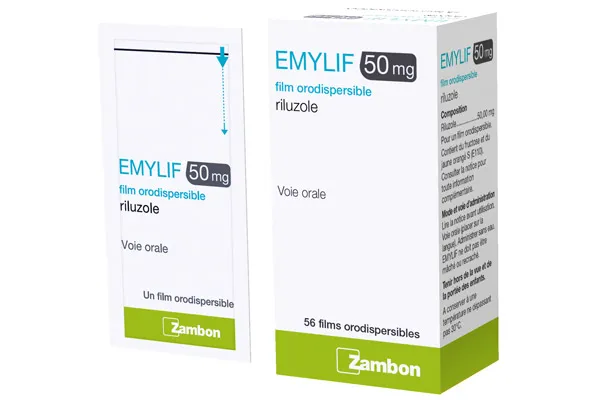
Table of Contents
PACKAGE LEAFLET
Package leaflet: information for the patient
Emylif 50 mg orodispersible film
riluzole
Please read this leaflet carefully before taking this medicine because it contains important information for you.
- Keep this leaflet. You may need to read it again.
- If you have any questions, ask your doctor or pharmacist.
- This medicine has been prescribed for you only. Do not give it to other people, even if their symptoms are the same as yours, as it may be harmful.
- If you experience any side effect, including those not listed in this leaflet, contact your doctor, pharmacist or nurse. See section 4.
Contents of this leaflet
- What Emylif is and what it is used for
- What you need to know before taking Emylif
- How to take Emylif
- Possible side effects
- How to store Emylif
- Contents of the pack and other information
1. What Emylif is and what it is used for
What Emylif is
The active substance in Emylif is riluzole, which acts on the nervous system.
What Emylif is used for
Emylif is used in adult patients with amyotrophic lateral sclerosis (ALS).
ALS is a motor neuron disease, in which damage to the nerve cells responsible for sending
signals to the muscles leads to muscle weakness, atrophy, and paralysis.
The destruction of nerve cells in motor neuron disease may be caused by an excessive amount
of glutamate (a chemical messenger) in the brain and spinal cord. Emylif interrupts the
release of glutamate, which may help prevent damage to nerve cells.
Please consult your doctor for more information about ALS and why this medicine has been prescribed for you.
2. What you need to know before taking Emylif
Do not take Emylif
- if you are allergic to riluzole or to any of the other ingredients of this medicine (listed in section 6),
- if you have any liver disease or elevated levels of certain liver enzymes (transaminases) in the blood,
- if you are pregnant or breastfeeding.
Warnings and precautions
Talk to your doctor before taking Emylif:
- if you have any liver problems: yellowing of the skin or whites of the eyes (jaundice), widespread itching, feeling unwell, malaise
- if your kidneys are not working properly
- if you have fever: this could be due to a low white blood cell count, which may increase the risk of infection
- if you have excessive salivation or severe swallowing difficulties.
If any of the above situations occur, or if you are unsure, consult your doctor,
who will decide what action to take.
Children and adolescents
If you are under 18 years of age, the use of Emylif is not recommended, as there is no available information
in this population.
Other medicines and Emylif
Inform your doctor if you are taking, have recently taken, or might take any other
medicines.
Pregnancy, breastfeeding and fertility
You MUST NOT take Emylif if you are pregnant or think you may be pregnant, or if you are breastfeeding.
If you think you may be pregnant, or if you plan to breastfeed, ask your doctor for advice before taking Emylif.
Driving and using machines
You may drive or operate tools or machinery, unless you experience dizziness or vertigo
after taking this medicine.
Emylif contains:
- 2 mg of fructose in each orodispersible film. May be harmful to teeth.
- Sunset Yellow FCF (E110). May cause allergic reactions.
3. How to take Emylif
Take this medicine exactly as directed by your doctor. If you have any doubts, consult your doctor or pharmacist.
The recommended dose is one orodispersible film, twice daily.
Orodispersible films must be taken orally every 12 hours, at the same time each day (e.g. morning and evening).
After taking this medicine, you may experience reduced oral sensitivity within 1 minute. Be careful when eating until this sensation has gone, which usually occurs within approximately 40 minutes.
Method of administration:
Instructions for oral use are provided below.
Step 1. Before taking Emylif
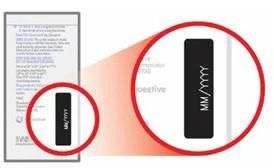
- Make sure your hands are clean and dry before handling Emylif, so that the film does not stick to your fingers.
- Before use, check the expiry date printed on the aluminium pouch, as shown in Figure 1. Do not use Emylif if past the expiry date.
Figure 1
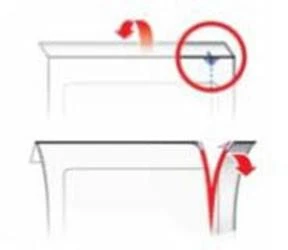
Step 2. Open the pouch
- Fold the aluminium pouch along the solid line at the top, as shown in Figure 2.
- To open, hold the folded top part of the pouch along the solid line and pull downwards from the slit point, following the arrow on the side of the pouch.
Figure 2
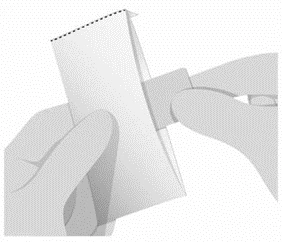
Step 3. Remove the film
- Remove the Emylif film from the aluminium pouch. Each pouch contains one dose of Emylif.
- Do not fold the Emylif film.
Figure 3
Step 4. Place the film on the tongue
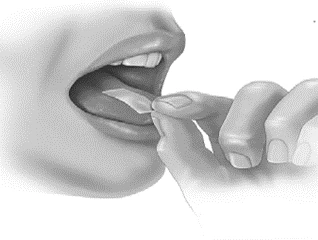
- Place the Emylif film on top of the tongue, as shown in Figure 4. The film will adhere to the tongue and begin to dissolve.
Figure 4
Step 5. Close your mouth and swallow saliva normally
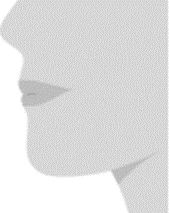
- Close your mouth as shown in Figure 5 and swallow saliva normally while the Emylif film dissolves within 3 minutes.
- Do not take Emylif with liquids.
- Do not chew, spit, or speak while the Emylif film is dissolving.
Figure 5
Step 6. Wash your hands after administering Emylif.
If you take more Emylif than you should
If you take too many orodispersible films, contact your doctor or the nearest hospital emergency department immediately.
If you forget to take Emylif
If you forget to take an orodispersible film, skip the missed dose and take the next dose at your usual scheduled time.
Do not take a double dose to make up for the forgotten film.
If you have any questions about the use of this medicine, consult your doctor or pharmacist.
4. Possible side effects
Like all medicines, this medicine can cause side effects, although not everyone gets them.
IMPORTANT
Contact your doctor immediately if you experience:
- fever (raised temperature), because Emylif can cause a reduction in the number of white blood cells. Your doctor may decide to take a blood sample to check your white blood cell count, which is important in fighting infections.
- any of the following symptoms: yellowing of the skin or whites of the eyes (jaundice), itching all over the body, feeling unwell or becoming unwell, as this may indicate liver disease (hepatitis). While you are taking Emylif, your doctor may carry out regular blood tests to make sure this does not occur.
- cough or difficulty breathing, as this could be a sign of a lung disease (called interstitial lung disease).
Other side effects
Very common side effects (may affect more than 1 in 10 people) of Emylif are:
- tiredness
- nausea
- increased levels of certain liver enzymes (transaminases) in the blood
- reduced oral sensitivity
Common side effects (may affect up to 1 in 10 people) of Emylif are:
- dizziness
- tingling or numbness of the mouth
- vomiting
- drowsiness
- increased heart rate
- diarrhoea
- headache
- abdominal pain
- pain
Uncommon side effects (may affect up to 1 in 100 people) of Emylif are:
- anaemia
- allergic reactions
- inflammation of the pancreas (pancreatitis)
Not known: frequency cannot be estimated from the available data:
- skin rash
Reporting of side effects
If you get any side effects, including ones not listed in this leaflet, talk to your doctor, pharmacist or nurse.
You can also report side effects directly via the national reporting system at https://www.aifa.gov.it/content/segnalazioni-reazioni-avverse . By reporting side effects, you can help provide more information on the safety of this medicine.
5. How to store Emylif
Keep this medicine out of the sight and reach of children.
Do not use this medicine after the expiry date stated on the sachet and carton after "Exp.". The expiry date refers to the last day of that month.
Store below 30°C.
Do not dispose of any medicine via wastewater or household waste. Ask your pharmacist how to dispose of medicines you no longer use. This will help protect the environment.
6. Package contents and other information
What Emylif contains
- The active substance is riluzole.
- The other components are: polacrilin resin, pullulan (E1204), xylitol (E967), hypromellose (E464), glycerol (E422), glycerol mono-oleate, sucralose (E955), fructose, macrogol, honey flavour, xanthan gum, lemon flavour, sunset yellow FCF (E110), white ink (purified water, titanium dioxide [E171], propylene glycol [E1520], hypromellose [E464], isopropyl alcohol, ethanol and methanol). Traces of the antioxidant butylated hydroxytoluene (E321).
Description of the appearance of Emylif and contents of the pack
Orodispersible film:
Thin film (32 mm x 22 mm), orally dispersible, orange-coloured, rectangular in shape, with the inscription “R50” printed in white on one side.
Emylif is available in packs of 14, 28, 56, 112, and 140 orodispersible films for oral use. Each cardboard box contains 14, 28, 56, 112, or 140 sachets.
Not all pack sizes may be marketed.
Marketing Authorization Holder
Zambon S.p.A.
Via Lillo del Duca 10
20091 Bresso (MI), Italy
Tel: +39 02665241
Fax: +39 02 66501492
E-mail: [email protected]
Manufacturer
Zambon S.p.A.
Via della Chimica, 9
36100 Vicenza
Italy
This medicinal product is authorised in the European Economic Area countries under the following names:
Emylif: Austria, Belgium, Denmark, Finland, France, Germany, Iceland, Italy, Luxembourg, Norway, Portugal, Spain, Sweden, Netherlands.