Emblaveo
Italy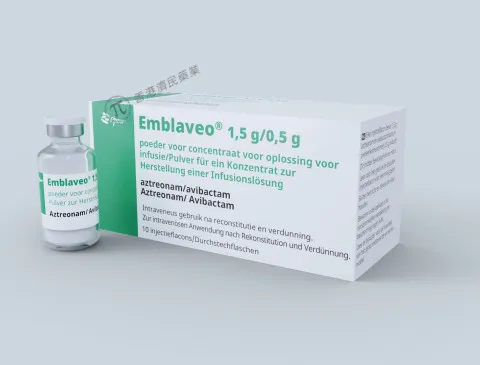
Table of Contents
- Package leaflet: Information for the user
- Emblaveo 1.5 g/0.5 g, powder for concentrate for solution for infusion
- 1. What Emblaveo is and what it is used for
- 2. What you need to know before using Emblaveo
- 3. How to use Emblaveo
- 4. Possible side effects
- 5. How to store Emblaveo
- 6. Package contents and other information
- The following information is intended exclusively for healthcare professionals:
Package leaflet: Information for the user
Emblaveo 1.5 g/0.5 g, powder for concentrate for solution for infusion
aztreonam/avibactam
Please read all of this leaflet carefully before you are given this medicine because it contains important information for you.
- Keep this leaflet. You may need to read it again.
- If you have any questions, ask your doctor or nurse.
- If you get any side effects, talk to your doctor or nurse. This includes any side effects not listed in this leaflet. See section 4.
Contents of this leaflet
- What Emblaveo is and what it is used for
- What you need to know before receiving Emblaveo
- How Emblaveo is given
- Possible side effects
- How to store Emblaveo
- Contents of the pack and other information
1. What Emblaveo is and what it is used for
What Emblaveo is
Emblaveo is an antibiotic medicine containing two active substances: aztreonam and avibactam.
- Aztreonam belongs to a group of antibiotics called "monobactams". It is able to kill certain types of bacteria (so-called Gram-negative bacteria).
- Avibactam is a "beta-lactamase inhibitor" and helps aztreonam to kill certain bacteria that aztreonam cannot kill on its own.
What Emblaveo is used for
Emblaveo is used in adults to treat:
- complicated bacterial infections of the abdomen (stomach and intestine) in which the infection has spread into the abdominal cavity (the space within the abdomen);
- hospital-acquired pneumonia (a bacterial infection of the lungs contracted in hospitals), including ventilator-associated pneumonia (pneumonia that develops in patients who require a machine called a ventilator to assist with breathing);
- complicated urinary tract infections (i.e. difficult to treat because they have spread to other parts of the body or because the patient has other concomitant diseases), including pyelonephritis (kidney infection);
- infections caused by Gram-negative bacteria that other antibiotics might not be able to kill.
2. What you need to know before using Emblaveo
Do not use Emblaveo if
- you are allergic to aztreonam, avibactam, or any of the other ingredients of this medicine (listed in section 6).
- you have ever had a severe allergic reaction (swelling of the face, hands, feet, lips, tongue, or throat; or difficulty swallowing or breathing; or a severe skin reaction) to other antibiotics belonging to the penicillin, cephalosporin, or carbapenem groups.
Warnings and precautions
Talk to your doctor or nurse before using Emblaveo if:
- you have previously had an allergic reaction (even just a rash) to other antibiotics. Signs of an allergic reaction include itching, rash, or difficulty breathing;
- you have kidney problems or are taking medicines that affect kidney function, such as other antibiotics known as aminoglycosides (streptomycin, neomycin, gentamicin). If kidney function is impaired, your doctor may prescribe a lower dose of Emblaveo and may want to perform regular blood tests during treatment to monitor kidney function. In addition, you may be at increased risk of developing serious adverse effects affecting the nervous system, such as encephalopathy (a disorder of the brain that can be caused by diseases, injuries, medicines, or chemicals), due to increased blood levels of Emblaveo unless the dose is reduced. Symptoms of encephalopathy include confusion, seizures, and altered mental function (see section 3: If you use more Emblaveo than you should);
- you have liver problems. Your doctor may want to perform regular blood tests to monitor liver function during treatment, as increases in liver enzymes have been observed with Emblaveo;
- you are taking medicines known as anticoagulants (medicines that prevent blood clotting). Emblaveo can affect blood clotting. Your doctor will monitor your blood levels to determine whether the dose of anticoagulant needs to be adjusted during treatment with Emblaveo.
Talk to your doctor if, after starting treatment with Emblaveo, you experience:
- severe, prolonged, or bloody diarrhoea, as these may be signs of inflammation of the large intestine. It may be necessary to stop treatment with Emblaveo and start specific treatment for diarrhoea (see section 4: Possible side effects).
- other infections. There is a small possibility that you may develop a different infection caused by another bacterium during or after treatment with Emblaveo.
Laboratory tests
If you need to undergo laboratory tests, inform your doctor that you are taking Emblaveo, as you may obtain abnormal results in a test called the direct or indirect Coombs test. This test detects the presence of antibodies directed against red blood cells.
Children and adolescents
Emblaveo must not be used in paediatric patients or adolescents under 18 years of age, as it is not known whether the medicine is safe to use in this age group.
Other medicines and Emblaveo
Tell your doctor if you are taking, have recently taken, or might take any other medicines.
Talk to your doctor before using Emblaveo if you are taking any of the following medicines:
- a medicine for gout called probenecid.
Pregnancy and breastfeeding
If you are pregnant, think you may be pregnant, planning to become pregnant, or are breastfeeding, ask your doctor for advice before using this medicine.
This medicine may be harmful to the unborn baby. It should be used during pregnancy only if your doctor considers it necessary and only if the benefit to the mother outweighs the risk to the baby.
This medicine may pass into breast milk. If you are breastfeeding, you must decide whether to stop breastfeeding or to avoid treatment with this medicine, taking into account the benefit of breastfeeding for the baby and the benefit of treatment for the woman.
Driving and using machines
Emblaveo may cause side effects such as dizziness, which may affect your ability to drive or use machines. Do not drive or operate tools or machinery if you experience side effects such as dizziness (see section 4: Possible side effects).
Emblaveo contains sodium
This medicine contains approximately 44.6 mg of sodium (a main component of table salt) per vial. This corresponds to 2.2% of the maximum daily dietary intake recommended for an adult.
3. How to use Emblaveo
Emblaveo will be administered to you by a doctor or nurse.
How much medicine to use
Emblaveo is given as an intravenous infusion directly into a vein. The usual dose is one vial (containing 1.5 g of aztreonam and 0.5 g of avibactam) every 6 hours. The first dose is higher (2 g of aztreonam and 0.67 g of avibactam). The infusion will last 3 hours. A treatment course usually lasts from 5 to 14 days, depending on the type of infection and how you respond to treatment.
Patients with kidney problems
If you have kidney problems, your doctor may reduce the dose and increase the interval between doses, as Emblaveo is eliminated from the body through the kidneys. If kidney function is impaired, levels of Emblaveo in the blood may be increased.
If you use more Emblaveo than you should
Emblaveo will be administered by a doctor or nurse, so it is unlikely that you will receive an excessive amount of this medicine. However, if you experience any adverse effects or think you have been given too much Emblaveo, inform your doctor or nurse immediately. You must inform your doctor if you experience confusion, altered mental function, movement problems, or seizures.
If you forget to use a dose of Emblaveo
If you think you have missed a dose, inform your doctor or nurse immediately.
If you have any doubts about how to use this medicine, consult your doctor or nurse.
4. Possible side effects
Like all medicines, this medicine can cause side effects, although not everybody gets them.
Serious side effects
Tell your doctor immediately if you notice any of the following serious side effects, as you may need urgent medical treatment:
- Swelling of the face, lips, eyes, tongue and/or throat, hives, and difficulty swallowing or breathing. These may be signs of an allergic reaction or angioedema, which can be potentially life-threatening.
- Severe, persistent or bloody diarrhoea (which may be associated with stomach pain or fever) that may occur during or after antibiotic treatment and may be a sign of a serious intestinal inflammation. If you experience these symptoms, do not take medicines that block or slow down intestinal movement;
- Sudden onset of a severe skin rash, or blistering or peeling of the skin, possibly accompanied by high fever or joint pain (these may be signs of more serious medical conditions such as toxic epidermal necrolysis, exfoliative dermatitis, erythema multiforme).
These serious side effects are not common (may affect up to 1 in 100 people).
Other side effects
Tell your doctor or nurse if you notice any of the following side effects:
Common: (may affect up to 1 in 10 people)
- Decrease in the number of red blood cells – detected by blood tests
- Changes in the number of certain types of blood cells (called “platelets”) – detected by blood tests
- Confusion
- Dizziness
- Diarrhoea
- Nausea or vomiting
- Stomach pain
- Increase in certain liver enzymes – detected by blood tests
- Skin rash
- Inflammation of a vein
- Inflammation of a vein associated with a blood clot
- Pain or swelling at the injection site
- Fever
Uncommon: (may affect up to 1 in 100 people)
- Increase in the number of certain types of white blood cells (called “eosinophils” and “leukocytes”) – detected by blood tests
- Difficulty falling asleep and staying asleep
- Encephalopathy (a condition affecting the brain causing altered mental state and confusion)
- Headache
- Reduced sensitivity of the mouth to touch, pain, and temperature
- Taste alteration
- Increased heart rate
- Bleeding
- Decreased blood pressure
- Flushing of the face
- Excessive contraction of the muscles in the airways causing breathing difficulties
- Stomach bleeding
- Mouth ulcers
- Increased levels of certain substances in the blood (gamma-glutamyl transferase, alkaline phosphatase, creatinine)
- Itching
- Purple, bruise-like patches, small red spots
- Excessive sweating
- Chest pain
- Weakness
Rare: (may affect up to 1 in 1,000 people)
- Fungal infections of the vagina
- Low levels of blood cells (pancytopenia)
- Marked decrease in a type of white blood cells (called “neutrophils”) used to fight infections – detected by blood tests
- Prolonged time required for a cut to stop bleeding
- Spontaneous bruising
- Abnormal result in a test called Direct or Indirect Coombs test. This test checks for antibodies that attack red blood cells.
- Seizures
- Sensations such as numbness, tingling, and prickling
- Double vision
- Dizziness
- Ringing or buzzing in the ears
- Difficulty breathing
- Abnormal breathing sounds (wheezing)
- Sneezing
- Stuffy nose (nasal congestion)
- Bad breath
- Inflammation of the liver
- Yellowing of the skin and eyes
- Muscle pain
- Breast tenderness
- Feeling of general malaise
Not known: (frequency cannot be estimated from the available data)
- Superinfection (a new infection occurring after treatment for the current infection)
Sudden chest pain has been observed with other medicines of the same type, which may be a sign of a potentially serious allergic reaction called Kounis syndrome. If this occurs, seek immediate medical advice from a doctor or nurse.
Reporting of side effects
If you get any side effects, including those not listed in this leaflet, talk to your doctor, pharmacist or nurse. You can also report side effects directly via the national reporting system listed in Annex V. By reporting side effects, you can help provide more information on the safety of this medicine.
5. How to store Emblaveo
Keep this medicine out of the sight and reach of children.
Do not use this medicine after the expiry date stated on the vial label and on the carton after "Exp.". The expiry date refers to the last day of that month.
Store in a refrigerator (2 °C-8 °C).
Keep in the original packaging to protect from light.
Do not dispose of any medicine via wastewater or household waste. Ask your pharmacist how to dispose of medicines no longer required. This will help protect the environment.
6. Package contents and other information
Contents of Emblaveo
- The active substances are aztreonam and avibactam. Each vial contains 1.5 g of aztreonam and sodium avibactam equivalent to 0.5 g of avibactam (see section 2: Emblaveo contains sodium).
- The other component is arginine.
Description of the appearance of Emblaveo and package contents
Emblaveo is a white to slightly yellow powder for concentrate for solution for infusion in a glass vial with a rubber stopper and an aluminium seal with a removable cap. It is available in packs containing 10 vials.
Marketing Authorization Holder
Pfizer Europe MA EEIG
Boulevard de la Plaine 17
1050 Brussels
Belgium
Manufacturer
Pfizer Service Company BV
Hermeslaan 11
1932 Zaventem
Belgium
For further information about this medicinal product, please contact the local representative of the Marketing Authorization Holder:
België/Belgique/Belgien Lietuva
Luxembourg/Luxemburg Pfizer Luxembourg SARL filialas Lietuvoje
Pfizer NV/SA Tel: +370 5 251 4000
Tél/Tel: +32 (0)2 554 62 11
България Magyarország
Пфайзер Люксембург САРЛ, Клон България Pfizer Kft.
Teл.: +359 2 970 4333 Tel.: + 36 1 488 37 00
Česká republika Malta
Pfizer, spol. s r.o. Vivian Corporation Ltd.
Tel: +420 283 004 111 Tel: +356 21344610
Danmark Nederland
Pfizer ApS Pfizer bv
Tlf.: +45 44 20 11 00 Tel: +31 (0)800 63 34 636
Deutschland Norge
PFIZER PHARMA GmbH Pfizer AS
Tel: +49 (0)30 550055-51000 Tlf: +47 67 52 61 00
Eesti Österreich
Pfizer Luxembourg SARL Eesti filiaal Pfizer Corporation Austria Ges.m.b.H.
Tel: +372 666 7500 Tel: +43 (0)1 521 15-0
Ελλάδα Polska
Pfizer Ελλάς A.E. Pfizer Polska Sp. z o.o.
Τηλ: +30 210 6785800 Tel.: +48 22 335 61 00
España Portugal
Pfizer, S.L. Laboratórios Pfizer, Lda.
Tel: +34 91 490 99 00 Tel: +351 21 423 5500
France România
Pfizer Pfizer Romania S.R.L.
Tél: +33 (0)1 58 07 34 40 Tel: +40 (0) 21 207 28 00
Hrvatska Slovenija
Pfizer Croatia d.o.o. Pfizer Luxembourg SARL
Tel: +385 1 3908 777 Pfizer, podružnica za svetovanje s področja farmacevtske dejavnosti, Ljubljana
Tel: +386 (0)1 52 11 400
Ireland Slovenská republika
Pfizer Healthcare Ireland Unlimited Company Pfizer Luxembourg SARL, organizačná zložka
Tel: +1800 633 363 (toll free) Tel: + 421 2 3355 5500
Tel: +44 (0)1304 616161
Ísland Suomi/Finland
Icepharma hf. Pfizer Oy
Sími: +354 540 8000 Puh/Tel: +358 (0)9 430 040
Italia Sverige
Pfizer S.r.l. Pfizer AB
Tel: +39 06 33 18 21 Tel: +46 (0)8 550 520 00
Κύπρος
Pfizer Ελλάς Α.Ε. (Cyprus Branch)
Τηλ: +357 22817690
Latvija
Pfizer Luxembourg SARL filiāle Latvijā
Tel: + 371 670 35 775
Other sources of information
More detailed information on this medicinal product is available on the website of the European Medicines Agency: https://www.ema.europa.eu.
The following information is intended exclusively for healthcare professionals:
Important: consult the Summary of Product Characteristics before prescribing this medicinal product.
This medicinal product must not be mixed with other medicinal products except with 0.9% sodium chloride injection solution, 5% glucose injection solution, or lactated Ringer's solution, as indicated below.
The powder must be reconstituted with sterile water for injections, and the resulting concentrate must then be immediately diluted prior to use. The reconstituted solution is a clear, colourless to yellow solution, free from visible particles.
Emblaveo (aztreonam/avibactam) is a fixed-combination product; each vial contains 1.5 g of aztreonam and 0.5 g of avibactam in a fixed 3:1 ratio.
Standard aseptic techniques must be used for the preparation and administration of the solution. Doses must be prepared in an appropriately sized infusion bag.
Parenteral medicinal products should be inspected visually for particulate matter before administration.
Each vial is for single use only.
The total time interval between the start of reconstitution and completion of the intravenous infusion preparation must not exceed 30 minutes.
Instructions for preparing adult doses in an INFUSION BAG:
NOTE: the following procedure describes the steps for preparing an infusion solution with a final concentration of 1.5–40 mg/mL of aztreonam and 0.50–13.3 mg/mL of avibactam. All calculations must be completed before beginning these steps.
-
Prepare the reconstituted solution (131.2 mg/mL of aztreonam and 43.7 mg/mL of avibactam):
a) Insert the needle through the vial closure and inject 10 mL of sterile water for injections.
b) Remove the needle and gently shake the vial to obtain a clear, colourless to yellow solution, free from visible particles. -
Prepare the final solution for infusion (the final concentration must be 1.5–40 mg/mL of aztreonam and 0.50–13.3 mg/mL of avibactam):
Further dilute the reconstituted solution by transferring a suitably calculated volume of the reconstituted solution into an infusion bag containing one of the following solutions: 0.9% sodium chloride injection, 5% glucose injection, or lactated Ringer's solution.
Refer to Table 1 below.
Table 1: Preparation of Emblaveo for adult doses in an INFUSION BAG
| Total dose (aztreonam/avibactam) | Volume to withdraw from the reconstituted vial(s) | Final volume after dilution in the infusion bag1,2 |
|---|---|---|
| 2,000 mg/667 mg | 15.2 mL | 50 mL to 250 mL |
| 1,500 mg/500 mg | 11.4 mL | 50 mL to 250 mL |
| 1,350 mg/450 mg | 10.3 mL | 50 mL to 250 mL |
| 750 mg/250 mg | 5.7 mL | 50 mL to 250 mL |
| 675 mg/225 mg | 5.1 mL | 50 mL to 250 mL |
| All other doses | Volume (mL) calculated according to required dose: Dose (mg of aztreonam) ÷ 131.2 mg/mL of aztreonam Or Dose (mg of avibactam) ÷ 43.7 mg/mL of avibactam | The volume (mL) will vary depending on the available infusion bag sizes and the desired final concentration (must be 1.5–40 mg/mL of aztreonam and 0.50–13.3 mg/mL of avibactam) |
1 Dilute to a final aztreonam concentration of 1.5–40 mg/mL (final avibactam concentration of 0.50–13.3 mg/mL) for in-use stability up to 24 hours at 2 °C–8 °C, followed by a maximum of 12 hours up to 30 °C in infusion bags containing 0.9% sodium chloride injection or lactated Ringer’s solution.
2 Dilute to a final aztreonam concentration of 1.5–40 mg/mL (final avibactam concentration of 0.50–13.3 mg/mL) for in-use stability up to 24 hours at 2 °C–8 °C, followed by a maximum of 6 hours up to 30 °C in infusion bags containing 5% glucose injection.
From a microbiological standpoint, the medicinal product should be used immediately unless reconstitution and dilution have taken place under controlled and validated aseptic conditions.
If not used immediately, the times and conditions of storage prior to use are the responsibility of the user and must not exceed those stated above.
Any unused medicinal product and waste material derived from this medicinal product should be disposed of in accordance with local applicable regulations.