Eltair
Italy
Table of Contents
- Package leaflet: Information for the patient
- Eltair 50 micrograms/dose nasal spray, suspension, 100 micrograms/dose nasal spray, suspension
- 1. What Eltair is and what it is used for
- 2. What you should know before using/giving Eltair to the child
- 3. How to use/give Eltair to the child
- 4. Possible side effects
- 5. How to store Eltair
- 6. Package contents and other information
Package leaflet: Information for the patient
Eltair 50 micrograms/dose nasal spray, suspension, 100 micrograms/dose nasal spray, suspension
Budesonide
Please read this leaflet carefully before you or your child uses this medicine
because it contains important information for you.
- Keep this leaflet. You may need to read it again.
- If you have any questions, ask your doctor or pharmacist.
- This medicine has been prescribed for you or your child only. Do not give it to others, even if their symptoms are the same as yours, as it may be harmful.
- If any adverse reaction occurs, including those not listed in this leaflet, contact your doctor or pharmacist. See section 4.
Contents of this leaflet:
- What Eltair is and what it is used for
- What you need to know before using/giving Eltair to your child
- How to use/give Eltair to your child
- Possible side effects
- How to store Eltair
- Contents of the pack and other information
1. What Eltair is and what it is used for
Eltair is a medicine containing the active substance budesonide.
Budesonide belongs to a group of medicines called "corticosteroids" and works by reducing inflammation of the nasal mucosa.
Eltair is indicated in adults and children over 6 years of age for the treatment of:
- nasal irritations and inflammations (rhinitis), either allergic (such as hay fever) or non-allergic (vasomotor), seasonal or perennial
- nasal polyps, or treatment and prevention after surgery for removal (polypectomy)
What are hay fever and perennial rhinitis?
Hay fever, which occurs at certain times of the year, is an allergic reaction caused by inhaling pollen from certain plants, grasses, and weeds, as well as moulds and fungal spores.
Perennial rhinitis occurs throughout the year, and its symptoms may be due to sensitivity to a wide range of substances such as house dust mites, animal hair (or dander), feathers, and certain foods.
Non-allergic rhinitis (vasomotor rhinitis) causes symptoms similar to the common cold but without an apparent cause. The symptoms of non-allergic rhinitis are similar to those of hay fever, but there is in fact no allergen causing the discomfort.
These allergies cause a runny nose, sneezing, and swelling of the nasal lining, resulting in a blocked or stuffy nose.
What are nasal polyps?
Nasal polyps are small growths that develop on the lining of the nasal passages and usually affect both nostrils. The main symptom is a sensation of nasal blockage.
Consult your doctor if you do not feel better or if you feel worse.
2. What you should know before using/giving Eltair to the child
Do not use/give Eltair to the child
- if you and/or the child are allergic to budesonide or to any of the other ingredients of this medicine (listed in section 6).
Warnings and precautions
Talk to your doctor or pharmacist before using/giving Eltair to the child.
Intranasal administration of corticosteroids may produce systemic effects even at a distance, particularly when prescribed at high doses for prolonged periods. These effects occur less frequently than with oral corticosteroid treatment and may vary between individual patients and among different corticosteroid formulations. Possible systemic effects include Cushing's syndrome, characterized by sudden weight gain, excessive hair growth, excess fat on the face and neck (moon face or Cushingoid appearance), abdominal stretch marks, possible menstrual disorders in girls, facial redness, reduced adrenal gland activity, growth retardation in children and adolescents, reduced bone mineral density, eye disorders such as cataract (clouding of the lens of the eye) and glaucoma (increased pressure inside the eye), and, more rarely, a range of psychological or behavioral effects including psychomotor hyperactivity, sleep disturbances, anxiety, depression, or aggression (particularly in children).
In particular, inform your doctor if you/the child:
- have respiratory tract infections caused by fungi or viruses
- suffer from tuberculosis (a lung infectious disease)
- have recently had nasal septum ulcers or perforations
- have recently undergone nasal surgery or experienced nasal trauma, as you should not be treated with nasal corticosteroids until fully healed
- have impaired liver function
- experience blurred vision or other visual disturbances
Switching from oral corticosteroid therapy to Eltair:
If you/the child are switching from oral corticosteroid (anti-inflammatory) treatment to Eltair nasal spray, your doctor will gradually reduce the dose of the oral corticosteroid.
Children and adolescents
Long-term treatment with this medicine is not recommended in children, as the long-term effects of intranasal corticosteroid administration in children are not fully known.
Effect on growth
The use of corticosteroids may affect growth in children and adolescents (see section "Additional undesirable effects in children and adolescents"). Therefore, it is recommended that the height of children undergoing prolonged corticosteroid treatment be monitored regularly by a physician. The doctor will carefully evaluate the benefits of corticosteroid therapy against the potential risk of growth suppression.
Other medicines and Eltair
Inform your doctor or pharmacist if you/the child are taking, have recently taken, or might take any other medicines, including those without a prescription.
Some medicines may increase the effects of ELTAIR, and your doctor may wish to monitor you closely if you are taking these medicines (including certain HIV treatments: ritonavir, cobicistat).
No interactions between budesonide and other drugs used in the treatment of nasal irritation and inflammation (rhinitis) have been observed.
In particular, inform your doctor or pharmacist if you are taking:
- ketoconazole and itraconazole (medicines used to treat fungal infections); your doctor may adjust the dose or timing of Eltair administration
- medicines containing hormones (estrogens) or oral contraceptives (birth control pills)
Laboratory tests and Eltair
Inform your doctor if you/the child need blood tests to assess the function of certain glands (ACTH stimulation test), as the test may yield false results during corticosteroid use.
Pregnancy and breastfeeding
If you are pregnant, think you might be pregnant, planning to become pregnant, or breastfeeding, consult your doctor or pharmacist before using this medicine.
Pregnancy
Currently, there are no known risks of malformations in the fetus/newborn associated with the use of this medicine during pregnancy.
Before taking this medicine, consult your doctor, who will evaluate on a case-by-case basis the expected benefits for the mother versus the potential risks for the fetus.
Breastfeeding
Although budesonide passes into breast milk, with this medicine used at recommended doses, effects on the breastfed infant are not expected.
Driving and using machines
Eltair does not affect the ability to drive vehicles or operate machinery.
Eltair contains potassium sorbate
It may cause local skin reactions (e.g., contact dermatitis).
3. How to use/give Eltair to the child
Use/give this medicine to the child exactly as directed by the doctor or
pharmacist. If you have any doubts, consult the doctor or pharmacist.
The doctor will determine the most appropriate dose for you/the child.
Treatment of rhinitis
Recommended dose for adults and children over 6 years:
- two administrations of 50 micrograms into each nostril (100 micrograms/nostril) twice daily, morning and evening, or
- two administrations of 100 micrograms into each nostril (200 micrograms/nostril) once daily in the morning.
Treatment/prevention of nasal polyposis
- 200 micrograms (100 micrograms/nostril) twice daily.
Duration of treatment
The full therapeutic effect of Eltair nasal spray is achieved only after several days of
treatment (in rare cases not before two weeks).
Treatment of allergic nasal inflammation of seasonal type should be started before exposure to allergens.
The doctor may, in some cases, combine Eltair with other allergy medicines to
control allergy effects on the eyes or with vasoconstrictor medicines (decongestants that relieve nasal congestion, obstruction) to clear nasal passages.
Instructions for correct use of Eltair
- Shake the bottle well (Figure 1)
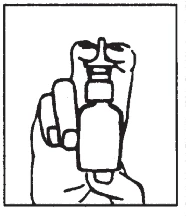
- Remove the protective cap from the nasal applicator with a gentle rotating motion.
- Holding the bottle vertically and away from the face, prime the metering valve by firmly squeezing the bottle between the fingers until a fine mist is produced. After this, the valve remains primed unless the bottle is disassembled or used very infrequently.
- Gently blow the nose before administering Eltair nasal spray to clear the nostrils properly.
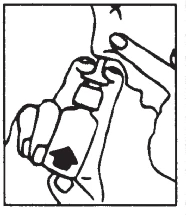
- Tilt the head slightly forward, close one nostril with a finger, and gently insert the nasal applicator into the other nostril (Figure 2).
- Press upwards on the bottom of the bottle to produce a fine mist (Figure 2).
- Remove the bottle from the nose and keep the head tilted slightly forward to allow the medication to spread to the back of the nose.
- Repeat the procedure in the other nostril.
- Replace the protective cap.
WARNING:
Use within 3 months after opening the bottle.
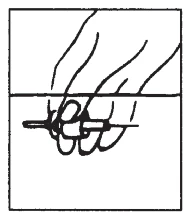
If clogged, remove the nasal applicator from the bottle and rinse it under warm water
for several minutes (Figure 3).
Do not use any sharp objects to try to clear the blockage.
If you use/give the child more Eltair than you should
Accidental ingestion of an excessive dose of Eltair is unlikely to cause problems.
However, if an excessive dose of Eltair is accidentally taken, contact your doctor immediately or go to the nearest hospital.
If you forget to use/give the child Eltair
Do not use/give a double dose to make up for a forgotten dose.
If you stop treatment with Eltair
If you have any doubts about using this medicine, consult your doctor or pharmacist.
4. Possible side effects
Like all medicines, this medicine can cause side effects, although not everyone gets them.
Systemic effects of nasal corticosteroids may occur, especially at high doses when used for prolonged periods.
The side effects listed below are categorized according to the following frequency:
Common (may affect up to 1 in 10 people)
- nasal irritation
- bloody mucus and nosebleeds
Uncommon (may affect up to 1 in 100 people)
- immediate or delayed allergic reactions, including urticaria (red, itchy skin rash), irritation, skin inflammation, angioedema (swelling of hands, feet, ankles, face, lips, tongue and/or throat), and itching
- sudden, involuntary muscle contraction (muscle spasm)
Rare (may affect up to 1 in 1,000 people)
- signs and symptoms of systemic corticosteroid effects (i.e. taken orally, intramuscularly or intravenously), including adrenal suppression (severe impairment of adrenal gland activity) and growth retardation
- severe, rapidly developing allergic reaction that may lead to collapse (anaphylactic reaction)
- voice changes (dysphonia)
- bruising
- nasal septum perforation, nasal mucosal lesions (nasal ulcer)
- blurred vision
Not known (frequency cannot be estimated from the available data)
- glaucoma (an eye disease caused by increased pressure of the fluid inside the eye)
- cataract (clouding of the lens of the eye, which focuses images)
E
Growth retardation has been reported in children treated with intranasal steroids. Due to the risk of growth suppression in the pediatric patient population, growth should be monitored as described in the section “Children and adolescents”.
Reporting of side effects
If you or the child experience any side effects, including those not listed in this leaflet, talk to your doctor or pharmacist. You can also report side effects directly via the national reporting system at www.aifa.gov.it/content/segnalazioni-reazioni-avverse.
By reporting side effects, you can help provide more information on the safety of this medicine.
5. How to store Eltair
Keep this medicine out of the sight and reach of children.
Do not use this medicine after the expiry date stated on the pack after EXP.
The expiry date refers to the last day of that month.
Do not store above 25°C. Store in the original container.
Do not dispose of medicines via wastewater or household waste. Ask your pharmacist
how to dispose of medicines no longer required. This will help protect the environment.
6. Package contents and other information
Eltair 50 micrograms/dose nasal spray, suspension
- The active substance is: budesonide (1 ml of suspension contains 1 mg of budesonide).
- The other components are: microcrystalline cellulose/sodium carboxymethylcellulose, hypromellose, sodium lauryl sulfate, macrogol 400, butylated hydroxyanisole, sodium citrate, citric acid monohydrate, potassium sorbate, disodium edetate, purified water.
Eltair 100 micrograms/dose nasal spray, suspension
- The active substance is: budesonide (1 ml of suspension contains 2 mg of budesonide).
- The other components are: microcrystalline cellulose/sodium carboxymethylcellulose, hypromellose, sodium lauryl sulfate, macrogol 400, butylated hydroxyanisole, sodium citrate, citric acid monohydrate, potassium sorbate, disodium edetate, purified water.
Description of the appearance of Eltair and contents of the pack
Eltair is a suspension for nasal nebulization supplied in a glass bottle equipped with a metering valve.
Eltair 50 micrograms/dose nasal spray contains 200 doses.
Eltair 100 micrograms/dose nasal spray contains 200 doses.
Marketing Authorization Holder
SCHARPER S.p.A.
Viale Ortles, 12
20139 Milan, Italy
Manufacturer
Mipharm S.p.A.
Via B. Quaranta, 12 – 20141 Milan, Italy