Elahere
Italy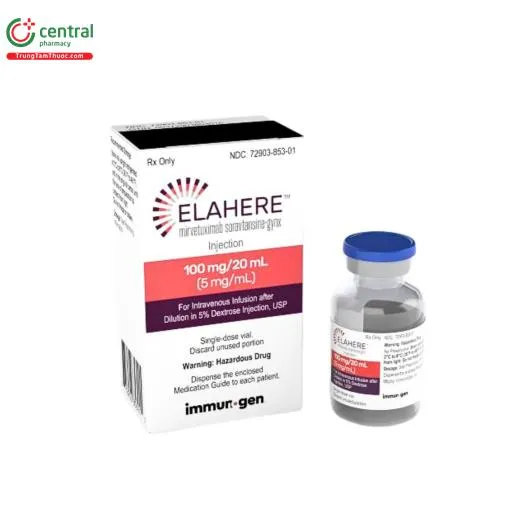
Table of Contents
- Patient Information Leaflet
- ELAHERE 5 mg/mL concentrate for solution for infusion
- 1. What ELAHERE is and what it is used for
- 2. What you should know before receiving ELAHERE
- 3. How ELAHERE is administered
- 4. Possible side effects
- 5. How to store ELAHERE
- 6. Package contents and other information
- The following information is intended exclusively for healthcare professionals:
Patient Information Leaflet
ELAHERE 5 mg/mL concentrate for solution for infusion
mirvetuximab soravtansine
V
This medicinal product is subject to additional monitoring. This will allow for rapid identification of new safety information. You can help by reporting any side effects you experience while taking this medicine. See the end of section 4 for information on how to report side effects.
Please read this leaflet carefully before receiving this medicine as it contains important information for you.
- Keep this leaflet. You may need to read it again.
- If you have any questions, consult your doctor or nurse.
- If you experience any side effects, including those not listed in this leaflet, consult your doctor or nurse. See section 4.
Contents of this leaflet
- What ELAHERE is and what it is used for
- What you need to know before receiving ELAHERE
- How ELAHERE is administered
- Possible side effects
- How to store ELAHERE
- Contents of the pack and other information
1. What ELAHERE is and what it is used for
What ELAHERE is
ELAHERE is an anticancer medicine that contains the active substance mirvetuximab soravtansine.
ELAHERE is used to treat adults with ovarian cancer, fallopian tube cancer (one of the two long, thin tubes that connect the ovaries to the uterus), or primary peritoneal cancer (a cancer that develops in the tissue lining the abdominal wall and covering the organs in the abdomen, which has not spread to this site from elsewhere in the body). It is used in patients whose tumour cells have a protein on their surface known as folate receptor alpha (FRα), who have either not responded previously or no longer respond to platinum-based chemotherapy treatment, and who have already received one to three prior therapies.
How ELAHERE works
The active substance in ELAHERE, mirvetuximab soravtansine, consists of a monoclonal antibody linked to an anticancer medicine. The monoclonal antibody is a protein that recognises the FRα protein on cancer cells and binds to it. When this occurs, mirvetuximab soravtansine enters the cancer cell and releases the anticancer agent DM4. DM4 then disrupts the normal cell growth process of the tumour cells. This may help kill cancer cells and stop the spread of the disease.
Your doctor will ensure that you undergo a test to confirm your eligibility to receive ELAHERE. This test is performed on tissue taken from the tumour. If tissue is available from a previous surgery or biopsy, the test may be carried out on this stored material. If no prior tissue is available, the test will require a new biopsy of the tumour.
Please consult your doctor or nurse if you have any questions about how ELAHERE works or why this medicine has been prescribed for you.
2. What you should know before receiving ELAHERE
Do not receive ELAHERE
- if you are allergic to mirvetuximab soravtansine or to any of the other ingredients of this medicine (listed in section 6).
Warnings and precautions
Before receiving ELAHERE, speak with your doctor or nurse if:
- you have eye problems requiring active treatment or monitoring;
- you have nerve damage in your arms and legs; symptoms may include numbness, tingling, or weakness;
- you are pregnant or plan to become pregnant. ELAHERE may harm the unborn baby if used during pregnancy.
Contact a doctor immediately if you experience any of the following serious side effects during treatment (see section 4):
- Eye problems. ELAHERE can cause serious eye problems, such as vision loss, corneal damage (the transparent layer at the front of the eye; keratopathy), dry eyes, abnormal sensitivity of the eyes to light (photophobia), or eye pain. Before starting treatment, you will be examined by an ophthalmologist. It is important that you report any new eye problems or worsening of existing eye conditions before each treatment cycle begins. Use of lubricating eye drops is recommended during treatment. If certain eye-related side effects occur, your doctor may recommend using additional eye drops containing corticosteroids. Do not wear contact lenses during treatment with ELAHERE unless advised by a healthcare professional. See “Eye care” in section 3 for more information.
- Lung inflammation. Interstitial lung disease, including severe and potentially fatal lung inflammation, may occur in patients treated with ELAHERE. Your doctor will monitor you for signs of lung inflammation. Inform your doctor if you develop cough, wheezing, chest pain, or difficulty breathing.
- Nerve damage in arms and legs. Nerve damage in the arms and legs may be severe and intense and may occur during treatment with ELAHERE. Your doctor will monitor you for signs of nerve damage. Inform your doctor if you experience symptoms such as numbness, tingling, prickling sensations (paresthesia), burning, pain, muscle weakness, or altered sense of touch (dysesthesia) in your arms or legs.
- Infusion-related reactions. Infusion-related reactions have occurred with ELAHERE. To minimize the risk of these reactions, your doctor will administer certain medications beforehand; see “Medicines given before infusion” in section 3. In case of severe reactions, your doctor will immediately stop the infusion and provide supportive treatment.
If any of the serious side effects listed above occur, your doctor may suspend or reduce treatment until symptoms resolve, or in more severe cases, treatment may be permanently discontinued.
Children and adolescents
This medicine must not be given to children or adolescents under 18 years of age, as it has not been studied in this age group.
Other medicines and ELAHERE
Tell your doctor if you are taking, have recently taken, or might take any other medicines, including prescription and over-the-counter medicines, vitamins, and herbal supplements, because some medicines may affect how ELAHERE works. ELAHERE may also affect the action of other medicines.
The following medicines may increase the risk of ELAHERE side effects by increasing ELAHERE levels in the blood. These include:
- ceritinib (an anticancer medicine used to treat non-small cell lung cancer)
- clarithromycin (an antibiotic used to treat bacterial infections)
- cobicistat, ritonavir (antiviral medicines used to treat HIV/AIDS)
- idelalisib (an anticancer medicine used to treat certain blood cancers)
- itraconazole, ketoconazole, posaconazole, voriconazole (antifungal medicines used to treat fungal infections)
- nefazodone (an antidepressant)
- telithromycin (an antibiotic used to treat community-acquired pneumonia)
Contraception
Women of childbearing potential must use effective contraception during treatment and for 7 months after the last dose of ELAHERE.
Pregnancy
ELAHERE may harm the unborn baby if used during pregnancy, as it contains a compound that can damage genes and rapidly dividing cells. Therefore, the use of ELAHERE is not recommended during pregnancy. If you are pregnant, suspect you may be pregnant, or are planning a pregnancy, consult your doctor before taking this medicine.
If you become pregnant during treatment with ELAHERE or within 7 months after stopping treatment, inform your doctor immediately.
If you are a woman of childbearing potential, you will be asked to undergo a pregnancy test before starting treatment with ELAHERE.
Breastfeeding
Do not breastfeed during treatment and for 1 month after the last dose. ELAHERE may pass into breast milk.
Fertility
Fertility studies have not been conducted with ELAHERE, and there are no data on the effect of the medicine on fertility. However, due to the mechanism of action of the medicine, fertility problems are possible when taking this medicine.
Driving and using machines
ELAHERE may affect your ability to drive or operate machinery. If you experience blurred vision, nerve damage causing pain, numbness or weakness in hands, arms, or feet, fatigue, or dizziness, do not drive or operate tools or machinery until symptoms have completely resolved.
ELAHERE contains sodium
This medicine contains less than 1 mmol (23 mg) of sodium per dose, i.e., essentially 'sodium-free'.
ELAHERE contains polysorbate
This medicine contains 2.11 mg of polysorbate 20 per vial. Polysorbates may cause allergic reactions. Inform your doctor if you have known allergies.
3. How ELAHERE is administered
ELAHERE will be administered to you by a doctor or a nurse experienced in the use of anticancer medicines.
The doctor will calculate the dose based on your body weight. You will receive ELAHERE as an intravenous infusion (intravenous drip) over 2–4 hours once every 3 weeks (this is known as a “21-day treatment cycle”). Your doctor will decide the number of cycles you will need.
Medicines given before the infusion
Your doctor will administer the following medicines approximately 30 minutes before each infusion:
- Corticosteroids (such as dexamethasone) to help prevent inflammation
- Antihistamines (such as diphenhydramine) to help prevent allergic reactions
- Antipyretics (such as paracetamol) to reduce fever
Additionally, you may receive corticosteroids the day before the infusion if you have previously experienced infusion-related reactions.
Your doctor will also give you a medicine to reduce nausea and vomiting before each dose and, if needed, afterwards as well.
Eye care
An ophthalmologist will perform an eye examination before you start treatment with ELAHERE.
- Before each treatment cycle, it is important that you inform your doctor or ophthalmologist of any new eye problems or worsening of existing eye conditions. If moderate or severe eye problems occur during treatment, your doctor may reduce your treatment dose until the eye problems improve.
- Your doctor may adjust, suspend, or permanently discontinue treatment with ELAHERE if signs and symptoms indicate worsening of eye problems.
Contact lenses
- Do not wear contact lenses during treatment with ELAHERE unless instructed otherwise by your doctor or ophthalmologist.
Eye drops
- Use of lubricating eye drops is recommended, as needed, throughout the entire duration of treatment with ELAHERE.
- If moderate or severe ocular side effects occur, your doctor may prescribe you a topical steroid eye drop.
- It is important to follow your doctor’s instructions on when to use the topical steroid eye drop and to wait at least 15 minutes after instillation of the steroid eye drop before using the lubricating eye drop.
Dose modifications if side effects occur
Your doctor will adjust the dose of ELAHERE if side effects occur (see section 4, Possible side effects).
If you receive more ELAHERE than you should
Since the infusion is administered by a doctor or a specially trained nurse, overdose is unlikely. If you accidentally receive too much medicine, the doctor will take appropriate measures to monitor you and provide necessary support.
If a dose of ELAHERE is missed
If you miss or skip an appointment, contact your doctor or your treatment centre as soon as possible to reschedule. Do not wait until your next scheduled visit.
To ensure the treatment is fully effective, it is very important not to miss a dose unless advised otherwise by your doctor.
If you stop treatment with ELAHERE
You must not stop treatment without first discussing it with your doctor.
Treatment with ELAHERE usually requires a certain number of treatment cycles. The number of infusions you will receive depends on how the tumour responds to treatment. Therefore, you should continue receiving ELAHERE even if you notice an improvement in symptoms, until your doctor decides to stop ELAHERE.
If you have any questions about the use of this medicine, ask your doctor or nurse.
4. Possible side effects
Like all medicines, this medicine can cause side effects, although not everybody gets them. The following side effects have been reported with this medicine.
Contact your doctor or nurse immediately, or seek urgent medical attention, if you experience any of the following side effects during or after treatment:
- Eye problems (very common, may affect more than 1 in 10 people): signs or symptoms may include damage to the cornea, the transparent layer of the eye (keratopathy), clouding of the lens (cataract), blurred vision, sensitivity to light (photophobia), eye pain, and dry eye.
- Lung inflammation (very common, may affect more than 1 in 10 people): signs or symptoms may include difficulty breathing, cough, low oxygen levels causing confusion, restlessness, rapid heartbeat, bluish skin, or scarring tissue in the lungs detectable by X-ray.
- Nerve damage in arms and legs (very common, may affect more than 1 in 10 people): signs and symptoms of nerve damage may include prickling sensation, tingling, burning sensation, nerve-related pain, muscle weakness, and unpleasant abnormal sense of touch, particularly in the arms or legs.
- Infusion-related/hypersensitivity reactions (common, may affect up to 1 in 10 people): signs and symptoms of infusion-related reactions may include low blood pressure, fever, chills, nausea, vomiting, headache, mental confusion, difficulty breathing, wheezing, rash, flushing, swelling of the face or around the eyes, sneezing, itching, muscle or joint pain.
Other side effects
Tell your doctor or nurse if you notice any of the following side effects:
Very common (may affect more than 1 in 10 people):
- urinary tract infection (infection of the parts of the body where urine is stored and passed)
- low number of red blood cells, which may cause tiredness and paleness (anaemia)
- low number of platelets in the blood, which may cause bleeding and bruising (thrombocytopenia)
- loss of appetite
- low levels of magnesium in the blood, with symptoms including nausea, weakness, spasms, cramps, or irregular heartbeat (hypomagnesaemia)
- headache
- abdominal swelling (abdominal distension)
- stomach ache (abdominal pain)
- diarrhoea
- constipation
- feeling unwell (nausea)
- vomiting
- joint pain (arthralgia)
- tiredness
- blood tests showing increased levels of aspartate aminotransferase (AST) and alanine aminotransferase (ALT), indicating liver problems
Common (may affect up to 1 in 10 people):
- low levels of neutrophils, a type of white blood cell that fights infections (neutropenia)
- low levels of potassium in the blood, which may cause weakness, muscle cramps, tingling, and heart rhythm disturbances (hypokalaemia)
- dehydration
- difficulty falling asleep and staying asleep, and poor quality sleep (insomnia)
- taste disturbance (dysgeusia)
- feeling dizzy
- high blood pressure (hypertension)
- fluid accumulation in the abdomen (ascites)
- condition in which stomach acid flows back into the oesophagus (gastro-oesophageal reflux disease)
- inflammation of the mucous lining of the mouth (stomatitis)
- indigestion (dyspepsia)
- high levels of bilirubin in the blood (hyperbilirubinaemia), which may cause yellowing of the skin or eyes
- itching
- muscle pain (myalgia)
- back pain
- pain in arms, hands, legs, and feet
- muscle spasms
- blood tests showing increased levels of alkaline phosphatase (ALP) and gamma-glutamyl transferase (GGT), indicating liver problems
- weight loss
Reporting of side effects
If you get any side effects, including any not listed in this leaflet, talk to your doctor or nurse. You can also report side effects directly via the national reporting system listed in Annex V. By reporting side effects, you can help provide more information on the safety of this medicine.
5. How to store ELAHERE
ELAHERE will be stored by the physician and pharmacist at the hospital or clinic.
The following information is intended for healthcare professionals.
Keep this medicine out of the sight and reach of children.
Do not use this medicine after the expiry date stated on the carton and on the vial label after “Exp.”. The expiry date refers to the last day of that month.
Store the vials in an upright position in the refrigerator (2°C – 8°C). Do not freeze.
Keep the vial in the outer packaging to protect the medicine from light.
If the diluted infusion solution is not used immediately, it can be stored at room temperature (15°C - 25°C) for up to 8 hours (including infusion time) or in the refrigerator (2°C - 8°C) for up to 24 hours, followed by a maximum of 8 hours (including infusion time) at room temperature (15°C - 25°C).
Do not use this medicine if you notice that the solution is cloudy or shows any changes in colour.
Do not dispose of any medicine via wastewater. Hospital pharmacists will dispose of medicines that are no longer used. This will help protect the environment.
6. Package contents and other information
What ELAHERE contains
- The active substance is mirvetuximab soravtansine.
- The other components are glacial acetic acid (E260), sodium acetate (E262), sucrose, polysorbate 20 (E432), and water for injections (see section 2).
Description of the appearance of ELAHERE and contents of the pack
This medicine is a colourless solution, from clear to slightly opalescent. It is supplied in a glass vial with a rubber stopper, aluminium seal, and blue flip-off cap.
Each pack contains 1 vial.
Marketing Authorisation Holder
AbbVie Deutschland GmbH & Co. KG
Knollstrasse
67061 Ludwigshafen
Germany
Manufacturer
Almac Pharma Services (Ireland) Limited
Finnabair Industrial Estate,
Dundalk, A91 P9KD, Ireland
For further information on this medicine, please contact the local representative of the Marketing Authorisation Holder:
België/Belgique/Belgien Lietuva
AbbVie SA AbbVie UAB
Tél/Tel: +32 10 477811 Tel: +370 5 205 3023
България Luxembourg/Luxemburg
АбВи ЕООД AbbVie SA
Тел: +359 2 90 30 430 Belgique/Belgien
Tél/Tel: +32 10 477811
Česká republika Magyarország
AbbVie s.r.o. AbbVie Kft.
Tel: +420 233 098 111 Tel: +36 1 455 8600
Danmark Malta
AbbVie A/S V.J.Salomone Pharma Limited
Tlf: +45 72 30-20-28 Tel: +356 21220174
Deutschland Nederland
AbbVie Deutschland GmbH & Co. KG AbbVie B.V.
Tel: 00800 222843 33 (freephone) Tel: +31 (0)88 322 2843
Tel: +49 (0) 611 / 1720-0
Eesti Norge
AbbVie OÜ AbbVie AS
Tel: +372 623 1011 Tlf: +47 67 81 80 00
Ελλάδα Österreich
AbbVie ΦΑΡΜΑΚΕΥΤΙΚΗ Α.Ε. AbbVie GmbH
Τηλ: +30 214 4165 555 Tel: +43 1 20589-0
España Polska
AbbVie Spain, S.L.U. Abbvie Sp. z o.o.
Tel: +34 91 384 09 10 Tel: +48 22 372 78 00
France Portugal
AbbVie AbbVie, Lda.
Tél: +33 (0) 1 45 60 13 00 Tel: +351 (0)21 1908400
Hrvatska România
AbbVie d.o.o. AbbVie S.R.L.
Tel: +385 (0)1 5625 501 Tel: +40 21 529 30 35
Ireland Slovenija
AbbVie Limited AbbVie Biofarmacevtska družba d.o.o.
Tel: +353 (0)1 4287900 Tel: +386 (1)32 08 060
Ísland Slovenská republika
Vistor hf. AbbVie s.r.o.
Tel: +354 535 7000 Tel: +421 2 5050 0777
Italia Suomi/Finland
AbbVie S.r.l. AbbVie Oy
Tel: +39 06 928921 Puh/Tel: +358 (0)10 2411 200
Κύπρος Sverige
Lifepharma (Z.A.M.) Ltd AbbVie AB
Τηλ: +357 22 34 74 40 Tel: +46 (0)8 684 44 600
Latvija
AbbVie SIA
Tel: +371 67605000
Other sources of information
More detailed information on this medicine is available on the website of the European Medicines Agency: https://www.ema.europa.eu/ .
To listen to or request a copy of this package leaflet in an alternative format, such as large print, please contact the local representative of the Marketing Authorisation Holder.
The following information is intended exclusively for healthcare professionals:
ELAHERE is a cytotoxic medicinal product. Follow special procedures applicable for handling and disposal.
Preparation
- Calculate the dose (mg) (based on the patient’s adjusted ideal body weight (AIBW)), the total volume (mL) of solution required, and the number of ELAHERE vials needed. More than one vial will be required for a complete dose.
- Remove ELAHERE vials from the refrigerator and allow them to warm to room temperature.
- If the solution and container permit, parenteral medicinal products should be inspected visually for particulate matter and discoloration prior to administration. ELAHERE is a colourless solution, from clear to slightly opalescent.
- The medicinal product must not be used if the solution shows discoloration or cloudiness, or if extraneous particulate matter is present.
- Gently swirl and inspect each vial before withdrawing the calculated dose volume of ELAHERE for subsequent further dilution. Do not shake the vial.
- Using aseptic technique, withdraw the calculated dose volume of ELAHERE for subsequent further dilution.
- ELAHERE contains no preservatives and is for single use only. Any unused solution remaining in the vial must be discarded.
Dilution
- ELAHERE must be diluted prior to administration with 5% glucose, to a final concentration between 1 mg/mL and 2 mg/mL.
- ELAHERE is incompatible with 9 mg/mL (0.9%) sodium chloride infusion solution. ELAHERE must not be mixed with other medicinal products or intravenous fluids.
- Determine the volume of 5% glucose required to achieve the final diluted active substance concentration. Remove excess 5% glucose from a pre-filled intravenous infusion bag, or add the calculated volume of 5% glucose to an empty sterile intravenous infusion bag. Then add the calculated dose volume of ELAHERE to the intravenous infusion bag.
- Gently mix the diluted solution by slowly inverting the bag several times to ensure uniform mixing. Do not shake or agitate.
- After dilution, chemical and physical stability has been demonstrated between 1 mg/mL and 2 mg/mL for 8 hours at 15°C – 25°C or for 24 hours at 2°C – 8°C followed by 8 hours at 15°C – 25°C.
- From a microbiological standpoint, unless the dilution method excludes the risk of microbial contamination, the medicinal product should be used immediately. If not used immediately, the times and conditions of storage during use are the responsibility of the user.
- If the diluted solution is not used immediately, store the solution in accordance with section 6.3 of the Summary of Product Characteristics. If the infusion bag was refrigerated, allow it to reach room temperature before administration. After refrigeration, administer diluted infusion solutions within 8 hours (including infusion time).
- Do not freeze the prepared infusion solution.
Administration
- Visually inspect the ELAHERE intravenous infusion bag for particulate matter or discoloration prior to administration.
- Administer premedication prior to ELAHERE (see section 4.2).
- Administer ELAHERE exclusively as an intravenous infusion, using an in-line filter made of polyethersulfone (PES) with a pore size of 0.2 or 0.22 µm. Do not substitute other membrane materials.
- The use of administration devices containing di-2-ethylhexyl phthalate (DEHP) must be avoided.
- Administer the first dose as an intravenous infusion at a rate of 1 mg/min. If well tolerated after 30 minutes at 1 mg/min, the infusion rate may be increased to 3 mg/min. If well tolerated after 30 minutes at 3 mg/min, the infusion rate may be increased to 5 mg/min.
- If no infusion-related reactions occurred with the previous dose, subsequent infusions may start at the maximum tolerated rate, with the possibility of increasing up to the maximum infusion rate of 5 mg/min, if tolerated.
- After infusion, flush the intravenous line with 5% glucose to ensure complete delivery of the dose. Do not use other intravenous fluids for flushing.
Disposal
Any unused medicinal product and waste material derived from this medicinal product must be disposed of in accordance with local regulations.