Dynastat
Italy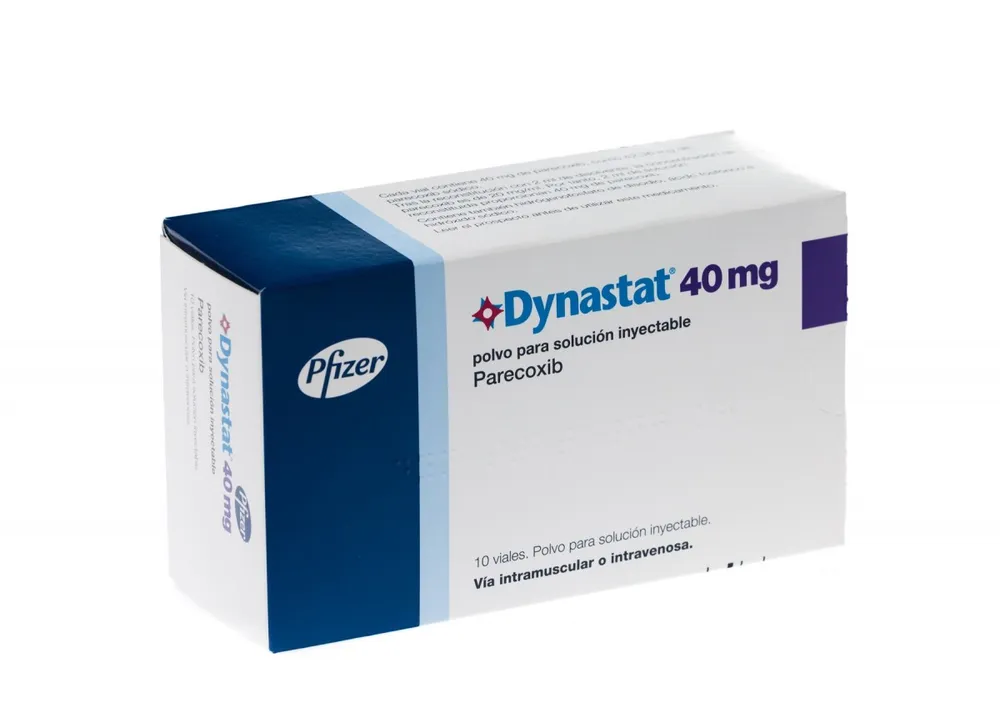
Table of Contents
- Patient Information Leaflet: Information for the User
- Dynastat 40 mg powder for injectable solution
- 1. What Dynastat is and what it is used for
- 2. What you should know before taking Dynastat
- 3. How to use Dynastat
- 4. Possible side effects
- 5. How to store Dynastat
- 6. Package contents and other information
- The following information is intended exclusively for healthcare professionals.
- Package leaflet: information for the user
- Dynastat 40 mg powder and solvent for injectable solution
- 1. What Dynastat is and what it is used for
- 2. What you should know before taking Dynastat
- 3. How to use Dynastat
- 4. Possible side effects
- 5. How to store Dynastat
- 6. Package contents and other information
- The following information is intended exclusively for healthcare professionals.
Patient Information Leaflet: Information for the User
Dynastat 40 mg powder for injectable solution
parecoxib
Please read all of this leaflet carefully before you start using this medicine because it contains important information for you.
- Keep this leaflet. You may need to read it again.
- If you have any questions, consult your doctor or nurse. If you experience any side effects, including those not listed in this leaflet, please inform your doctor or nurse. See section 4.
Contents of this leaflet
- What Dynastat is and what it is used for
- What you need to know before using Dynastat
- How to use Dynastat
- Possible side effects
- How to store Dynastat
- Contents of the pack and other information
1. What Dynastat is and what it is used for
Dynastat contains the active substance parecoxib.
Dynastat is used for the short-term treatment of postoperative pain in adults.
It belongs to a group of medicines known as COX-2 inhibitors (short for cyclooxygenase-2 inhibitors).
Pain and inflammation are sometimes caused by certain substances produced by the human body called prostaglandins.
Dynastat works by reducing the levels of these prostaglandins.
2. What you should know before taking Dynastat
Do not use Dynastat
- if you are allergic to parecoxib or to any of the other ingredients of this medicine (listed in section 6).
- if you have had a severe allergic reaction (particularly a severe skin reaction) to any medicine
- if you have had an allergic reaction to a group of medicines called “sulfonamides” (for example, certain antibiotics used to treat infections)
- if you currently have an active gastric or intestinal ulcer or gastrointestinal bleeding
- if you have had an allergic reaction to acetylsalicylic acid (aspirin) or to other non-steroidal anti-inflammatory drugs (NSAIDs) (e.g. ibuprofen) or to COX-2 inhibitors. Reactions after taking this medicine may include breathing difficulties (bronchospasm), nasal congestion, itching, skin rash, or swelling of the face, lips, or tongue, other allergic reactions, or nasal polyps
- if you are in the last three months of pregnancy
- if you are breastfeeding
- if you have severe liver disease
- if you have inflammatory bowel disease (ulcerative colitis or Crohn’s disease)
- if you have heart failure
- if you are about to undergo heart surgery or surgery on the arteries (including coronary artery surgery)
- if you have established heart disease and/or cerebrovascular disease, for example if you have had a heart attack, stroke, transient ischaemic attack (TIA), or blockages in the blood vessels of the heart or brain, or if you have undergone a procedure to remove or bypass these blockages
- if you have or have had circulation problems (peripheral arterial disease)
If any of these apply to you, you must not be given the injection. Inform your doctor or nurse immediately.
Warnings and precautions
Do not use Dynastat if you have an active gastric or intestinal ulcer or gastrointestinal bleeding
Do not use Dynastat if you have severe liver disease
Talk to your doctor or nurse before using Dynastat:
- If you have previously had a gastric or intestinal ulcer, gastrointestinal bleeding, or perforation
- If you have ever had a skin reaction (e.g. rash, hives, wheals, blisters, red spots) to any medicine
- If you are taking acetylsalicylic acid (aspirin) or other non-steroidal anti-inflammatory drugs (NSAIDs) (e.g. ibuprofen)
- If you smoke or drink alcohol
- If you have diabetes
- If you have angina, blood clotting disorders, high blood pressure, or elevated cholesterol levels
- If you are taking medicines that affect platelet aggregation
- If you have fluid retention (edema)
- If you have liver or kidney disease
- If you are dehydrated – this may occur with diarrhoea, vomiting, or inability to take in fluids
- If you have an infection, as this may mask fever (a sign of infection)
- If you are taking medicines to reduce blood clotting (e.g. warfarin/warfarin-like anticoagulants or newer oral anticoagulants such as apixaban, dabigatran, and rivaroxaban)
- If you are taking corticosteroids (e.g. prednisone)
- If you are taking a class of medicines used to treat depression called selective serotonin reuptake inhibitors (SSRIs) (e.g. sertraline).
Dynastat may cause an increase in blood pressure or worsen pre-existing hypertension, which could lead to an increased risk of adverse effects related to heart conditions. During treatment with Dynastat, your doctor may wish to monitor your blood pressure.
Use of Dynastat may lead to potentially life-threatening skin reactions, and treatment must be discontinued at the first sign of skin rash, blisters, skin peeling, mucosal lesions, or any other sign of hypersensitivity. If you develop a skin rash or experience other signs or symptoms on the skin or mucous membranes (e.g. inside the cheeks or lips), contact a doctor immediately and inform them that you are taking this medicine.
Children and adolescents
Dynastat must not be used in children and adolescents under 18 years of age.
Other medicines and Dynastat
Tell your doctor or nurse if you are taking, have recently taken, or might take any other medicines. Sometimes medicines can interact with each other. Your doctor may reduce the dose of Dynastat or other medicines, or recommend you take different medicines. It is especially important that your doctor knows if you are taking:
- Acetylsalicylic acid (aspirin) or other anti-inflammatory medicines
- Fluconazole – used for fungal infections
- ACE inhibitors, angiotensin II inhibitors, beta-blockers, and diuretics – used for high blood pressure and heart conditions
- Cyclosporine or tacrolimus – used after organ transplants
- Warfarin or other warfarin-like medicines – used to prevent blood clots, including newer agents such as apixaban, dabigatran, and rivaroxaban
- Lithium – used to treat depression
- Rifampicin – used for bacterial infections
- Antiarrhythmics – used to treat irregular heartbeat
- Phenytoin or carbamazepine – used in epilepsy
- Methotrexate – used in rheumatoid arthritis and cancer
- Diazepam – used for sedation and anxiety
- Omeprazole – used to treat ulcers
Pregnancy, breastfeeding, and fertility
- Dynastat must not be used during the last three months of pregnancy because it could harm the fetus or cause problems during delivery. It may cause kidney and heart problems in the fetus. It could affect your tendency and that of the unborn child to bleed and may cause delayed or prolonged labour. Dynastat should not be used during the first six months of pregnancy unless absolutely necessary and under medical advice. If you need to take it during this period or while trying to become pregnant, the lowest possible dose for the shortest possible time should be used. If taken for more than a few days from the 20th week of pregnancy onwards, Dynastat may cause kidney problems in the fetus, which can lead to low levels of amniotic fluid (the fluid surrounding the fetus) (oligohydramnios) or narrowing of a blood vessel (ductus arteriosus) in the unborn child’s heart. If treatment is needed for more than a few days, your doctor may recommend additional monitoring.
- If you are breastfeeding, you must not take Dynastat, as small amounts of Dynastat will pass into breast milk.
- NSAIDs, including Dynastat, may make it more difficult to conceive. Inform your doctor if you are planning a pregnancy or are having difficulty becoming pregnant.
If you are pregnant, think you may be pregnant, are planning to become pregnant, or are breastfeeding, ask your doctor or nurse for advice before taking this medicine.
Driving and using machines
If you feel dizzy or experience fatigue after the injection, do not drive or operate machinery until you feel better.
Dynastat contains sodium
This medicine contains less than 1 mmol (23 mg) of sodium per mL, i.e. essentially ‘sodium-free’.
3. How to use Dynastat
Dynastat will be administered to you by a doctor or a nurse. They will dissolve the powder before injecting the solution into your vein or muscle. The injection may be given rapidly and directly into a vein or into an existing intravenous line (a thin tube leading into a vein), or it may be administered slowly and deeply into the muscle. Dynastat may only be used for short periods and solely for pain relief.
The normally recommended initial dose is 40 mg.
A subsequent dose of 20 mg or 40 mg may be administered 6 to 12 hours after the first dose.
You must not be given more than 80 mg within 24 hours.
Some people may require lower doses:
- People with liver problems
- People with severe kidney problems
- Patients over 65 years of age weighing less than 50 kg
- People being treated with fluconazole
If Dynastat is used together with strong painkillers (called opioid analgesics) such as morphine,
the dose of Dynastat will be the same as stated above.
If you are given more Dynastat than you should, side effects that have been reported with recommended doses may occur.
If you have any doubts about how to use this medicine, consult your doctor or nurse.
4. Possible side effects
Like all medicines, this medicine can cause side effects, although not everybody gets them.
Stop treatment with Dynastat immediately and contact your doctor if:
- you develop a skin rash or ulceration anywhere on the body (e.g. skin, mouth, eyes, lips or tongue), or you develop any other sign of an allergic reaction such as skin rash, swelling of the face, lips or tongue, which may cause wheezing, difficulty breathing or swallowing (potentially fatal) – this occurs rarely
- you experience swelling, blistering or peeling of the skin – the frequency of this occurrence is not known
- skin reactions may occur at any time, but more frequently occur within the first month of treatment; the frequency of these events appears to be higher with valdecoxib, a medicine similar to parecoxib, compared to other COX-2 inhibitors
- you develop jaundice (yellowing of the skin or whites of the eyes)
- you notice signs of stomach or intestinal bleeding, such as passing black or blood-stained stools, or if you vomit blood
Very common: may occur in more than 1 in 10 people
- Nausea (feeling sick)
Common: may occur in up to 1 in 10 people
- Changes in blood pressure (increase or decrease)
- Back pain
- Swelling of ankles, legs and feet (fluid retention)
- Numbness – the skin may lose sensitivity to pain or touch
- Vomiting, stomach ache, indigestion, constipation, bloating and flatulence
- Changes in normal kidney function values
- Restlessness or difficulty falling asleep
- Dizziness
- Risk of anaemia – changes in red blood cells after surgery which may cause tiredness and shortness of breath
- Sore throat or difficulty breathing (shortness of breath)
- Itching of the skin
- Reduced urine output
- Post-extraction alveolitis (inflammation and pain following dental extraction)
- Increased sweating
- Low potassium levels in blood tests
Uncommon: may occur in up to 1 in 100 people
- Heart attack
- Risk of cerebrovascular disorders, e.g. stroke, transient ischaemic attack (temporary reduction in blood flow to the brain)/minor stroke, or angina, or blockage of blood vessels in the heart or brain
- Blood clots in the lungs
- Further increase in blood pressure
- Ulcers in the digestive tract, chronic gastric acid reflux
- Slowing of the heartbeat
- Low blood pressure when standing up
- Changes in normal liver function values
- Evidence of bruising due to low platelet count
- Risk of surgical wound infection, abnormal discharge from surgical wounds
- Changes in skin colour or bruising
- Complications in wound healing after surgery
- High blood sugar levels
- Pain at injection site or reaction at injection site
- Skin rash, itchy skin rash (urticaria)
- Anorexia (loss of appetite)
- Joint pain
- Elevated levels of enzymes in the blood from tests indicating injury or stress to the heart, brain or muscle tissue
- Dry mouth
- Muscle weakness
- Ear pain
- Unusual abdominal sounds
Rare: may occur in up to 1 in 1,000 people
- Acute kidney failure
- Hepatitis (inflammation of the liver)
- Inflammation of the throat (oesophagus)
- Inflammation of the pancreas (may cause stomach pain)
Not known: frequency cannot be estimated from the available data
- Collapse due to severe drop in blood pressure
- Heart failure
- Kidney failure
- Increased heart rate or irregular heartbeat
- Breathlessness
Reporting of side effects
If you get any side effects, including those not listed in this leaflet, talk to your doctor or nurse.
You can also report side effects directly via the national reporting system listed in Annex V. By reporting side effects, you can help provide more information on the safety of this medicine.
5. How to store Dynastat
Keep this medicine out of the sight and reach of children.
Do not use this medicine after the expiry date stated on the carton and vial after
Exp. The expiry date refers to the last day of that month.
This medicine does not require any special storage conditions prior to
reconstitution.
Dynastat should be used as soon as possible after mixing with the solvent; however, it may be stored if the instructions at the end of the leaflet are strictly followed. The solution for injection must be clear and colourless.
Do not use the solution if the injection solution shows residues of particulate matter or if there is discolouration of the powder or solution.
6. Package contents and other information
What Dynastat contains
- The active substance is parecoxib (as parecoxib sodium). Each vial contains 40 mg of parecoxib as 42.36 mg of parecoxib sodium. After reconstitution with 2 mL of solvent, a concentration of 20 mg/mL of parecoxib is obtained. After reconstitution in sodium chloride 9 mg/mL (0.9%) solution, Dynastat contains approximately 0.44 mEq of sodium per vial.
- Other excipients are: Anhydrous disodium phosphate, Phosphoric acid and/or sodium hydroxide (to adjust the acidity of the solution)
Description of the appearance of Dynastat and contents of the pack
Dynastat is available as a white to off-white powder.
The powder is contained in clear glass vials (5 mL) with a stopper, sealed with a removable purple overcap placed on the aluminum seal.
Marketing Authorization Holder and Manufacturer
Marketing Authorization Holder: Pfizer Europe MA EEIG, Boulevard de la Plaine 17, 1050 Brussels, Belgium
Manufacturer:
Pfizer Manufacturing Belgium NV, Rijksweg 12, 2870 Puurs-Sint-Amands, Belgium
For further information about this medicine, please contact the local representative of the Marketing Authorization Holder.
België/Belgique/Belgien Lietuva
Luxembourg/Luxemburg Pfizer Luxembourg SARL filialas Lietuvoje.
Pfizer NV/SA Tel: +370 5 251 4000
Tél/Tel: +32 (0)2 554 62 11
България Magyarország
Пфайзер Люксембург САРЛ, Клон България Pfizer Kft.
Тел.: +359 2 970 4333 Tel: +36 1 488 37 00
Česká republika Malta
Pfizer, spol. s r.o. Vivian Corporation Ltd.
Tel: +420 283 004 111 Tel: +356 21344610
Danmark Nederland
Pfizer ApS Pfizer bv
Tlf: +45 44 20 11 00 Tel: +31 (0)800 63 34 636
Deutschland Norge
Pfizer Pharma GmbH Pfizer AS
Tel: +49 (0)30 550055-51000 Tlf: +47 67 52 61 00
Eesti Österreich
Pfizer Luxembourg SARL Eesti filiaal Pfizer Corporation Austria Ges.m.b.H.
Tel: +372 666 7500 Tel: +43 (0)1 521 15-0
Ελλάδα Polska
PFIZER Ελλάς A.E. Pfizer Polska Sp. z o.o.
Τ λ: +30 210 6785800 Tel.: +48 22 335 61 00
España Portugal
Pfizer, S.L. Laboratórios Pfizer, Lda.
Tel: +34 91 490 99 00 Tel: +351 21 423 5500
France Romania
Pfizer Pfizer Romania S.R.L.
Tél: +33 (0)1 58 07 34 40 Tel: +40 (0)21 207 28 00
Hrvatska Slovenija
Pfizer Croatia d.o.o. Pfizer Luxembourg SARL
Tel: +385 1 3908 777 Pfizer, podružnica za svetovanje s področja farmacevtske dejavnosti, Ljubljana
Tel: +386 (0)152 11 400
Ireland Slovenská republika
Pfizer Healthcare Ireland Pfizer Luxembourg SARL, organizačná zložka
Tel: 1800 633 363 (toll free) Tel: +421 2 3355 5500
- 44 (0)1304 616161
Ísland Suomi/Finland
Icepharma hf. Pfizer Oy
Sími: +354 540 8000 Puh/Tel: +358(0)9 43 00 40
Italia Sverige
Pfizer S.r.l. Pfizer AB
Tel: +39 06 33 18 21 Tel: +46 (0)8 550 520 00
Κύπρος United Kingdom (Northern Ireland)
PFIZER Ελλάς Α.Ε. (Cyprus Branch) Pfizer Limited
Τηλ: +357 22817690 Tel: +44 (0)1304 616161
Latvija
Pfizer Luxembourg SARL filiāle Latvijā
Tel: +371 670 35 775
More detailed information on this medicine is available on the European Medicines Agency website: https://www.ema.europa.eu
The following information is intended exclusively for healthcare professionals.
Dosage – The recommended dose is 40 mg administered intravenously (i.v.) or
intramuscularly (i.m.). This may be followed every 6–12 hours as needed with doses of 20 mg or
40 mg, provided that the total daily dose does not exceed 80 mg. The intravenous bolus injection may
be administered rapidly and directly into a vein or into an existing intravenous line. The intramuscular
injection must be administered slowly and deeply into the muscle.
Clinical experience with Dynastat beyond three days is limited.
Since the cardiovascular risk of selective cyclooxygenase-2 (COX-2) inhibitors may increase with
dose and duration of exposure, treatment duration should be as short as possible and the lowest
effective daily dose should be used.
During post-marketing surveillance, cases of severe hypotension occurring immediately after
administration of parecoxib have been reported. Some of these occurred without other signs of
anaphylaxis. Physicians must be prepared to manage severe hypotension.
Administration is performed via intramuscular (i.m.) or intravenous (i.v.) injection.
The i.m. injection must be administered slowly and deeply into the muscle; the i.v. bolus injection may
be administered rapidly and directly into a vein or into an existing intravenous line.
Administration routes other than intravenous or intramuscular
Administration routes (e.g. intra-articular, intrathecal) other than intravenous or intramuscular have
not been studied and must not be used.
Solvents for reconstitution
This medicinal product must not be mixed with other medicinal products. The product must be
reconstituted only with one of the following solutions:
- Sodium chloride 9 mg/mL (0.9%) solution for injection/infusion
- Glucose 50 mg/mL (5%) solution for infusion; or
- Sodium chloride 4.5 mg/mL (0.45%) and glucose 50 mg/mL (5%) solution for injection/infusion
The following solvents must not be used for reconstitution:
- The use of Ringer's lactate solution for injection or glucose 50 mg/mL (5%) in Ringer's lactate solution for injection for reconstitution of parecoxib is not recommended, as it causes precipitation of parecoxib.
- The use of sterile water for injection is not recommended because the resulting solution is not isotonic.
Procedure for reconstitution
An aseptic technique must be used for reconstitution of lyophilized parecoxib (as sodium parecoxib).
20 mg vial: Remove the removable purple overcap until the central portion of the rubber stopper of the 20 mg parecoxib vial is visible. Using a sterile needle and syringe, withdraw 1 mL of a suitable solvent and insert the needle through the central portion of the rubber stopper to transfer the solvent into the 20 mg parecoxib vial.
40 mg vial: Remove the removable purple overcap until the central portion of the rubber stopper of the 40 mg parecoxib vial is visible. Using a sterile needle and syringe, withdraw 2 mL of a suitable solvent and insert the needle through the central portion of the rubber stopper to transfer the solvent into the 40 mg parecoxib vial.
Completely dissolve the powder by gently rotating the vial and inspect the reconstituted product before use.
The reconstituted solution must not be used if discolored, cloudy, or if particulate matter is present.
The entire contents of the vial must be withdrawn for single administration. If a dose less than 40 mg
is required, the excess medicinal product must be discarded.
Compatibility of intravenous solution
Dynastat in solution with other medicinal products may cause precipitation; therefore, Dynastat must
not be mixed with other medicinal products, either during reconstitution or at the time of administration.
In patients requiring administration of another medicinal product via the same infusion line, the line
must be flushed before and after administration of Dynastat with a compatible solution.
After reconstitution with suitable solvents, Dynastat may be injected intravenously or intramuscularly,
or administered via intravenous lines containing:
- Sodium chloride 9 mg/mL (0.9%) solution for injection/infusion
- Glucose 50 mg/mL (5%) solution for infusion
- Sodium chloride 4.5 mg/mL (0.45%) and glucose 50 mg/mL (5%) solution for injection/infusion; or
- Ringer's lactate solution for injection
Administration of the reconstituted product via the same infusion line with
glucose 50 mg/mL (5%) in Ringer's lactate solution or other intravenous fluids not listed in this section
is not recommended, as it may cause precipitation of parecoxib.
The solution is for single use only and must not be stored in a refrigerator or freezer.
The chemical and physical stability of the reconstituted solution, which must not be refrigerated or
frozen, has been demonstrated for up to 24 hours at 25°C. Therefore, 24 hours should be considered
the maximum shelf-life of the reconstituted product. However, due to the significant risk of microbiological
contamination for injectable products, the reconstituted solution should be used immediately unless
reconstitution is performed under validated and controlled aseptic conditions. If such conditions are
not met, the storage time and conditions prior to use are the responsibility of the user and should
normally not exceed 12 hours at 25°C.
Package leaflet: information for the user
Dynastat 40 mg powder and solvent for injectable solution
parecoxib
Please read this leaflet carefully before using this medicine because it contains important information for you.
- Keep this leaflet. You may need to read it again.
- If you have any doubts, consult your doctor or nurse.
- If you experience any side effects, including those not listed in this leaflet, please contact your doctor or nurse. See section 4.
Contents of this leaflet
- What Dynastat is and what it is used for
- What you need to know before using Dynastat
- How to use Dynastat
- Possible side effects
- How to store Dynastat
- Contents of the pack and other information
1. What Dynastat is and what it is used for
Dynastat contains the active substance parecoxib.
Dynastat is used for the short-term treatment of postoperative pain in adults.
It belongs to a class of medicines known as COX-2 inhibitors (short for cyclooxygenase-2 inhibitors).
Pain and swelling are sometimes caused by certain substances produced by the human body called prostaglandins. Dynastat works by reducing the levels of these prostaglandins.
2. What you should know before taking Dynastat
Do not use Dynastat
- if you are allergic to parecoxib or to any of the other ingredients of this medicine (listed in section 6).
- if you have had a severe allergic reaction (particularly a severe skin reaction) to any medicine
- if you have had an allergic reaction to a group of medicines called “sulfonamides” (for example, certain antibiotics used to treat infections)
- if you currently have an active gastric or intestinal ulcer or gastrointestinal bleeding
- if you have had an allergic reaction to acetylsalicylic acid (aspirin) or to other non-steroidal anti-inflammatory drugs (NSAIDs) (e.g. ibuprofen) or to COX-2 inhibitors. Reactions after taking this medicine may include breathing difficulties (bronchospasm), nasal congestion, itching, skin rash, or swelling of the face, lips, or tongue, other allergic reactions, or nasal polyps
- if you are in the last trimester of pregnancy
- if you are breastfeeding
- if you suffer from severe liver disease
- if you have inflammatory bowel disease (ulcerative colitis or Crohn’s disease)
- if you have heart failure
- if you are about to undergo heart surgery or surgery on the arteries (including coronary artery surgery)
- if you have established heart disease and/or cerebrovascular disease, for example if you have had a heart attack, stroke, transient ischaemic attack (TIA), or blockages in the blood vessels of the heart or brain, or if you have undergone a procedure to remove or bypass these blockages
- if you have or have had circulation problems (peripheral arterial disease)
If any of these apply to you, you must not be given the injection. Inform your doctor or nurse immediately.
Warnings and precautions
Do not use Dynastat if you have an active gastric or intestinal ulcer or gastrointestinal bleeding
Do not use Dynastat if you have severe liver disease
Talk to your doctor or nurse before using Dynastat:
- If you have previously had a gastric or intestinal ulcer, gastrointestinal bleeding, or perforation
- If you have previously had a skin reaction (e.g. rash, hives, wheals, blisters, red spots) to any medicine
- If you are taking acetylsalicylic acid (aspirin) or other non-steroidal anti-inflammatory drugs (NSAIDs) (e.g. ibuprofen)
- If you smoke or drink alcohol
- If you have diabetes
- If you have angina, blood clotting disorders, high blood pressure, or elevated cholesterol levels
- If you are taking medicines that affect platelet aggregation
- If you have fluid retention (edema)
- If you have liver or kidney disease
- If you are dehydrated – this may occur with diarrhoea, vomiting, or inability to take fluids
- If you have an infection, as this may mask fever (a sign of infection)
- If you are taking medicines to reduce blood clotting (e.g. warfarin, warfarin-like anticoagulants, or newer oral anticoagulants such as apixaban, dabigatran, and rivaroxaban)
- If you are taking medicines called corticosteroids (e.g. prednisone)
- If you are taking a class of medicines used to treat depression called selective serotonin reuptake inhibitors (SSRIs) (e.g. sertraline)
Dynastat may cause an increase in blood pressure or worsen pre-existing hypertension, which could lead to an increased risk of adverse effects related to heart conditions. During treatment with Dynastat, your doctor may wish to monitor your blood pressure.
Use of Dynastat may lead to potentially life-threatening skin rashes, and treatment must be discontinued at the first appearance of skin rash, blisters, skin peeling, mucosal lesions, or any other sign of hypersensitivity. If you develop a skin rash or other signs or symptoms on your skin or mucous membranes (e.g. inside the cheeks or lips), contact a doctor immediately and inform them that you are taking this medicine.
Children and adolescents
Dynastat must not be used in children and adolescents under 18 years of age.
Other medicines and Dynastat
Tell your doctor or nurse if you are taking, have recently taken, or might take any other medicines.
Sometimes medicines can interact with each other. Your doctor may reduce the dose of Dynastat or other medicines, or advise you to take different medicines. It is particularly important that your doctor knows if you are taking:
- Acetylsalicylic acid (aspirin) or other anti-inflammatory medicines
- Fluconazole – used for fungal infections
- ACE inhibitors, angiotensin II inhibitors, beta-blockers, and diuretics – used for high blood pressure and heart conditions
- Cyclosporine or tacrolimus – used after organ transplants
- Warfarin or other warfarin-like medicines – used to prevent blood clots, including newer agents such as apixaban, dabigatran, and rivaroxaban
- Lithium – used to treat depression
- Rifampicin – used for bacterial infections
- Antiarrhythmics – used to treat irregular heartbeat
- Phenytoin or carbamazepine – used for epilepsy
- Methotrexate – used for rheumatoid arthritis and cancer
- Diazepam – used for sedation and anxiety
- Omeprazole – used to treat ulcers
Pregnancy, breastfeeding, and fertility
- Dynastat must not be used during the last 3 months of pregnancy because it could harm the fetus or cause problems during delivery. It may cause kidney and heart problems in the fetus. It could affect your tendency and that of the unborn child to bleed and may cause delayed or prolonged labour. Dynastat should not be used during the first 6 months of pregnancy unless absolutely necessary and under medical advice. If you need to take it during this period or while trying to become pregnant, the lowest possible dose for the shortest possible time should be used. If taken for more than a few days from week 20 of pregnancy onwards, Dynastat may cause kidney problems in the fetus, leading to low levels of amniotic fluid (the fluid surrounding the fetus) (oligohydramnios) or narrowing of a blood vessel (ductus arteriosus) in the unborn child’s heart. If you require treatment for more than a few days, your doctor may recommend additional monitoring.
- If you are breastfeeding, you must not take Dynastat, as small amounts of Dynastat may pass into breast milk.
- NSAIDs, including Dynastat, may make it more difficult to conceive. Inform your doctor if you are planning a pregnancy or are having difficulty becoming pregnant.
If you are pregnant, think you may be pregnant, planning a pregnancy, or breastfeeding, ask your doctor or nurse for advice before taking this medicine.
Driving and using machines
If you feel dizzy or tired after the injection, do not drive or operate machinery until you feel better.
Dynastat contains sodium
This medicine contains less than 1 mmol (23 mg) of sodium per mL, i.e. essentially ‘sodium-free’.
3. How to use Dynastat
Dynastat will be administered to you by a doctor or a nurse. They will dissolve the powder
before injecting it and then inject the solution into your vein or muscle. The injection may
be given rapidly and directly into a vein or into an existing intravenous line (a thin tube leading into a vein), or it may be administered slowly and deeply into the muscle. Dynastat may only be given for short periods and solely for the relief of pain.
The normally recommended starting dose is 40 mg.
A subsequent dose of 20 mg or 40 mg may be given 6–12 hours after the first dose.
No more than 80 mg should be administered within 24 hours.
Some people may require lower doses:
- People with liver problems
- People with severe kidney problems
- Patients over 65 years of age weighing less than 50 kg
- People being treated with fluconazole
If Dynastat is used together with strong painkillers (called opioid analgesics) such as
morphine, the dose of Dynastat will be the same as that stated above.
If you receive more Dynastat than you should, side effects reported with the recommended doses may occur.
If you have any doubts about how to use this medicine, consult your doctor or nurse.
4. Possible side effects
Like all medicines, this medicine can cause side effects, although not everyone will experience them.
Stop treatment with Dynastat immediately and contact your doctor if:
- you develop a skin rash or ulceration anywhere on the body (e.g. skin, mouth, eyes, lips or tongue), or any other signs of an allergic reaction such as rash, swelling of the face, lips or tongue, which may cause wheezing, difficulty breathing or swallowing (potentially fatal) – this occurs rarely
- you experience swelling, blisters or peeling of the skin – the frequency of this is unknown
- skin reactions may occur at any time, but more often occur during the first month of treatment; the frequency of these events appears to be higher with valdecoxib, a medicine similar to parecoxib, compared to other COX-2 inhibitors
- you develop jaundice (yellowing of the skin or whites of the eyes)
- you show signs of stomach or intestinal bleeding, such as passing black or blood-stained stools, or if you vomit blood
Very common: may affect more than 1 in 10 people
- Nausea (feeling of discomfort)
Common: may affect up to 1 in 10 people
- Changes in blood pressure (increase or decrease)
- Back pain
- Swelling of ankles, legs and feet (fluid retention)
- Numbness – the skin may lose sensitivity to pain or touch
- Vomiting, stomach ache, indigestion, constipation, bloating and flatulence
- Changes in normal kidney function values
- Restlessness or difficulty sleeping
- Dizziness
- Risk of anaemia and changes in red blood cells after surgery, which may cause fatigue and shortness of breath
- Sore throat or difficulty breathing (shortness of breath)
- Itching of the skin
- Reduced urine output
- Post-extraction alveolitis (inflammation and pain following dental extraction)
- Increased sweating
- Low potassium levels in blood tests
Uncommon: may affect up to 1 in 100 people
- Heart attack
- Risk of cerebrovascular disorders, e.g. stroke, transient ischaemic attack (temporary reduction in blood flow to the brain)/minor stroke, or angina, or blockage of blood vessels in the heart or brain
- Blood clots in the lungs
- Further increase in blood pressure
- Ulcers in the gastrointestinal tract, chronic gastric acid reflux
- Slowing of the heartbeat
- Low blood pressure when standing
- Changes in normal liver function values
- Evidence of bruising due to low platelet count
- Risk of surgical wound infection, abnormal discharge from surgical wounds
- Changes in skin colour or bruising
- Wound healing complications after surgery
- High blood sugar levels
- Pain at the injection site or reaction at the injection site
- Skin rash, itchy skin rash (urticaria)
- Anorexia (loss of appetite)
- Joint pain
- Elevated levels of enzymes in the blood indicating damage or stress to the heart, brain or muscle tissue
- Dry mouth
- Muscle weakness
- Ear pain
- Unusual abdominal sounds
Rare: may affect up to 1 in 1,000 people
- Acute kidney failure
- Hepatitis (inflammation of the liver)
- Inflammation of the throat (oesophagus)
- Inflammation of the pancreas (may cause stomach pain)
Not known: frequency cannot be estimated from the available data
- Collapse due to severe drop in blood pressure
- Heart failure
- Kidney failure
- Increased heart rate or irregular heartbeat
- Shortness of breath
Reporting of side effects
If you experience any side effects, including those not listed in this leaflet, please consult your doctor or nurse. You can also report side effects directly via the national reporting system listed in Annex V. By reporting side effects, you can help provide more information on the safety of this medicine.
5. How to store Dynastat
Keep this medicine out of the sight and reach of children.
Do not use this medicine after the expiry date stated on the carton and vial after Exp. The expiry date refers to the last day of that month.
This medicine does not require any special storage conditions prior to reconstitution.
It is recommended to use Dynastat as soon as possible after mixing with the solvent; however, it may be stored if the instructions at the end of the package leaflet are strictly followed. The solution for injection must be clear and colourless.
Do not use the solution if the solution for injection shows residues of particulate matter or if there is discolouration of the powder or solution.
6. Package contents and other information
What Dynastat contains
- The active substance is parecoxib (as parecoxib sodium). Each vial contains 40 mg of parecoxib in the form of 42.36 mg of parecoxib sodium. After reconstitution with 2 mL of solvent, a concentration of 20 mg/mL of parecoxib is obtained. After reconstitution in sodium chloride solution 9 mg/mL (0.9%), Dynastat contains approximately 0.44 mEq of sodium per vial.
- The other excipients are:
Powder
Anhydrous disodium phosphate
Phosphoric acid and/or sodium hydroxide (to adjust the acidity of the solution)
Solvent
Sodium chloride
Hydrochloric acid or sodium hydroxide (to adjust the acidity of the solution)
Water for injections
Description of the appearance of Dynastat and contents of the pack
Dynastat is available as a white to off-white powder.
The powder is contained in clear glass vials (5 mL) with a stopper, sealed with a removable purple cap seal over an aluminum seal.
The solvent is contained in clear glass ampoules (2 mL).
Marketing Authorization Holder and Manufacturer
Marketing Authorization Holder: Pfizer Europe MA EEIG, Boulevard de la Plaine 17, 1050 Brussels, Belgium
Manufacturer:
Pfizer Manufacturing Belgium NV, Rijksweg 12, 2870 Puurs-Sint-Amands, Belgium
For further information on this medicinal product, please contact the local representative of the Marketing Authorization Holder.
België/Belgique/Belgien
Pfizer NV/SA
Tél/Tel: +32 (0)2 554 62 11
България
Пфайзер Люксембург САРЛ, Клон България
Тел.: +359 2 970 4333
Česká republika
Pfizer, spol. s r.o.
Tel: +420 283 004 111
Danmark
Pfizer ApS
Tlf: +45 44 20 11 00
Deutschland
Pfizer Pharma GmbH
Tel:+49 (0)30 550055-51000
Eesti
Pfizer Luxembourg SARL Eesti filiaal
Tel: +372 666 7500
Ελλάδα
PFIZER Ελλάς A.E.
Τηλ: +30 210 6785800
España
Pfizer, S.L.
Tel: +34 91 490 99 00
France
Pfizer
Tél: +33 (0)1 58 07 34 40
Hrvatska
Pfizer Croatia d.o.o.
Tel: +385 1 3908 777
Ireland
Pfizer Healthcare Ireland
Tel: 1800 633 363 (toll free)
+44 (0)1304 616161
Ísland
Icepharma hf.
Sími: +354 540 8000
Italia
Pfizer S.r.l.
Tel: +39 06 33 18 21
Κύπρος
PFIZER Ελλάς Α.Ε. (Cyprus Branch)
Τηλ: +357 22817690
Latvija
Pfizer Luxembourg SARL filiāle Latvijā
Tel: +371 670 35 775
Lietuva
Pfizer Luxembourg SARL filialas Lietuvoje.
Tel: +370 5 251 4000
Luxembourg/Luxemburg
Pfizer Luxembourg SARL
Tel: +32 (0)2 554 62 11
Magyarország
Pfizer Kft.
Tel.: +36 1 488 37 00
Malta
Vivian Corporation Ltd.
Tel: +356 21344610
Nederland
Pfizer bv
Tel: +31 (0)800 63 34 636
Norge
Pfizer AS
Tlf: +47 67 52 61 00
Österreich
Pfizer Corporation Austria Ges.m.b.H.
Tel: +43 (0)1 521 15-0
Polska
Pfizer Polska Sp. z o.o.
Tel.: +48 22 335 61 00
Portugal
Laboratórios Pfizer, Lda.
Tel: +351 21 423 5500
Romania
Pfizer Romania S.R.L.
Tel: +40 (0)21 207 28 00
Slovenija
Pfizer Luxembourg SARL
Pfizer, podružnica za svetovanje s področja farmacevtske dejavnosti, Ljubljana
Tel: +386 (0)152 11 400
Slovenská republika
Pfizer Luxembourg SARL, organizačná zložka
Tel: +421 2 3355 5500
Suomi/Finland
Pfizer Oy
Puh/Tel: +358(0)9 43 00 40
Sverige
Pfizer AB
Tel: +46 (0)8 550 520 00
United Kingdom (Northern Ireland)
Pfizer Limited
Tel: +44 (0)1304 616161
<------------------------------------------------------------------------------------------------------------------
More detailed information on this medicinal product is available on the website of the European Medicines Agency: https://www.ema.europa.eu
The following information is intended exclusively for healthcare professionals.
Dosage – The recommended dose is 40 mg, administered intravenously (i.v.) or
intramuscularly (i.m.). This may be followed by doses of 20 mg or 40 mg every 6–12 hours as needed,
provided that the total daily dose does not exceed 80 mg. The intravenous bolus injection may be given
rapidly and directly into a vein or into an existing intravenous line. The intramuscular injection must be
administered slowly and deeply into the muscle.
Clinical experience with Dynastat beyond three days is limited.
Since the cardiovascular risk of selective cyclooxygenase-2 (COX-2) inhibitors may increase with dose
and duration of exposure, treatment duration should be as short as possible and the lowest effective daily
dose should be used.
During post-marketing surveillance, cases of severe hypotension occurring immediately after
administration of parecoxib have been reported. Some of these occurred without other signs of
anaphylaxis. Physicians must be prepared to manage severe hypotension.
Administration is performed via intramuscular (i.m.) or intravenous (i.v.) injection.
The i.m. injection must be administered slowly and deeply into the muscle, and the i.v. bolus injection
may be administered rapidly and directly into a vein or into an existing intravenous line.
Administration routes other than intravenous or intramuscular
Administration routes (e.g., intra-articular, intrathecal) other than intravenous or intramuscular have
not been studied and must not be used.
Solvents for reconstitution
This medicinal product must not be mixed with other medicinal products. The product must be
reconstituted only with one of the following solutions:
- Sodium chloride 9 mg/mL (0.9%) solution for injection/infusion
- Glucose 50 mg/mL (5%) solution for infusion; or
- Sodium chloride 4.5 mg/mL (0.45%) and glucose 50 mg/mL (5%) solution for injection/infusion
The following solvents must not be used for reconstitution:
- Lactated Ringer’s solution for injection or glucose 50 mg/mL (5%) in lactated Ringer’s solution for injection are not recommended for reconstitution of parecoxib, as they cause precipitation of parecoxib.
- Sterile water for injection is not recommended because the resulting solution is not isotonic.
Procedure for reconstitution
An aseptic technique must be used for reconstitution of lyophilized parecoxib (as parecoxib sodium).
40 mg vial: Remove the purple aluminum overcap until the central portion of the rubber stopper of the
40 mg parecoxib vial is visible. Using a sterile needle and syringe, withdraw 2 mL of a suitable solvent
and insert the needle through the central portion of the rubber stopper to transfer the solvent into the
40 mg parecoxib vial.
Completely dissolve the powder by gentle swirling and inspect the reconstituted product before use.
The reconstituted solution must not be used if it is discolored, cloudy, or if particulate matter is present.
The entire content of the vial must be withdrawn for single administration. If a dose less than 40 mg is
required, the excess medicinal product must be discarded.
Compatibility of intravenous solution
Dynastat in solution with other medicinal products may cause precipitate formation; therefore, Dynastat
must not be mixed with other medicinal products, either during reconstitution or at the time of
administration. In patients requiring administration of another medicinal product via the same infusion
line, the line must be flushed before and after Dynastat administration with a compatible solution.
After reconstitution with suitable solvents, Dynastat may be injected intravenously or intramuscularly,
or administered solely via intravenous lines containing:
- Sodium chloride 9 mg/mL (0.9%) solution for injection/infusion
- Glucose 50 mg/mL (5%) solution for infusion
- Sodium chloride 4.5 mg/mL (0.45%) and glucose 50 mg/mL (5%) solution for injection/infusion; or
- Lactated Ringer’s solution for injection
Administration of the reconstituted product in the same infusion line with glucose 50 mg/mL (5%) in
lactated Ringer’s solution or other intravenous fluids not listed in this section is not recommended, as
it causes precipitation of parecoxib.
The solution is for single use only and must not be refrigerated or frozen.
Chemical and physical stability of the reconstituted solution, which must not be refrigerated or frozen,
has been demonstrated for up to 24 hours at 25°C. Therefore, 24 hours should be considered the
maximum shelf-life of the reconstituted product. However, due to the importance of microbiological
infection risk for injectable products, the reconstituted solution should be used immediately unless
reconstitution was performed under validated and controlled aseptic conditions.
If such conditions are not met, the storage times and conditions prior to use are the responsibility of the
user and should normally not exceed 12 hours at 25°C.