Duloxetine Zentiva
Italy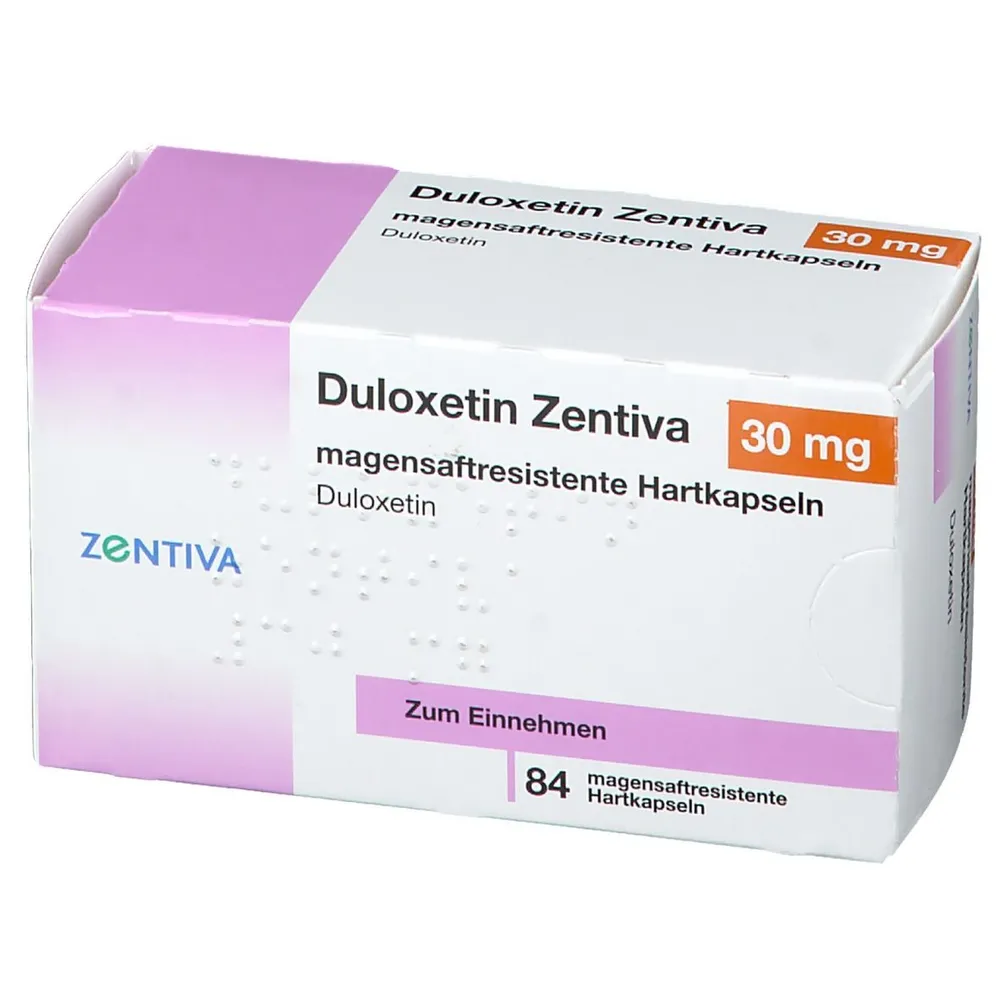
Table of Contents
- Package leaflet: Information for the user
- Duloxetina Zentiva 30 mg gastro-resistant hard capsules, 60 mg gastro-resistant hard capsules
- 1. What Duloxetina Zentiva is and what it is used for
- 2. What you should know before taking Duloxetina Zentiva
- 3. How to take Duloxetina Zentiva
- 4. Possible side effects
- 5. How to store Duloxetina Zentiva
- 6. Package contents and other information
Package leaflet: Information for the user
Duloxetina Zentiva 30 mg gastro-resistant hard capsules, 60 mg gastro-resistant hard capsules
duloxetine
Read this entire leaflet carefully before taking this medicine because it contains important information for you.
- Keep this leaflet. You may need to read it again.
- If you have any questions, ask your doctor or pharmacist.
- This medicine has been prescribed for you only. Do not give it to other people, even if they have the same symptoms as yours, as it may be harmful.
- If you experience any side effects, including those not listed in this leaflet, inform your doctor or pharmacist. See section 4.
Contents of this leaflet
- What Duloxetina Zentiva is and what it is used for
- What you need to know before taking Duloxetina Zentiva
- How to take Duloxetina Zentiva
- Possible side effects
- How to store Duloxetina Zentiva
- Contents of the pack and other information
1. What Duloxetina Zentiva is and what it is used for
Duloxetina Zentiva contains the active substance duloxetine. Duloxetina Zentiva increases the levels of serotonin and noradrenaline in the nervous system.
Duloxetina Zentiva is used in adults to treat:
- depression;
- generalized anxiety disorder (chronic feelings of anxiety or nervousness);
- diabetic neuropathic pain (often described as burning, sharp, stabbing, shooting, pressing, or like an electric shock. The affected area may have reduced sensation, or sensations where touch, heat, cold, or pressure can cause pain).
Duloxetina Zentiva starts to be effective in most people with depression or anxiety within two weeks of starting treatment, but it may take 2–4 weeks before you start feeling better. Contact your doctor if you do not begin to feel better after this time. Your doctor may continue your treatment with Duloxetina Zentiva once you feel better to prevent depression or anxiety from returning.
In people with diabetic neuropathic pain, it may take several weeks before you start feeling better. Inform your doctor if you do not feel better after 2 months.
2. What you should know before taking Duloxetina Zentiva
Do not take Duloxetina Zentiva if you:
- are allergic to duloxetine or to any of the other ingredients of this medicine (listed in section 6);
- have liver disease;
- have severe kidney disease;
- are taking or have taken within the last 14 days another medicine known as a monoamine oxidase inhibitor (MAOI) (see “Other medicines and Duloxetina Zentiva”);
- are taking fluvoxamine, which is commonly used to treat depression, or ciprofloxacin or enoxacin, which are used to treat certain infections;
- are taking other medicines containing duloxetine (see “Other medicines and Duloxetina Zentiva”).
Tell your doctor if you have high blood pressure or heart disease. Your doctor will advise you whether you can take Duloxetina Zentiva.
Warnings and precautions
Reasons why Duloxetina Zentiva may not be suitable for you include the following. Talk to your doctor before taking Duloxetina Zentiva if:
- you are taking other medicines to treat depression (see “Other medicines and Duloxetina Zentiva”);
- you are taking St. John’s wort (Hypericum perforatum), a herbal preparation;
- you have kidney disease;
- you have had seizures (epileptic fits);
- you have experienced a manic episode;
- you suffer from bipolar disorder;
- you have eye problems, including certain types of glaucoma (increased pressure inside the eye);
- you have a history of coagulation disorders (tendency to bruise easily), especially if you are pregnant (see “Pregnancy and breastfeeding”);
- you are at risk of low sodium levels (e.g. if you are taking diuretics, particularly if you are elderly);
- you are being treated with another medicine that may cause liver damage;
- you are taking opioid medicines such as those containing buprenorphine, tramadol, and pethidine. Using these medicines together with Duloxetina Zentiva may lead to serotonin syndrome, a potentially life-threatening condition (see “Other medicines and Duloxetina Zentiva”);
- you are taking other medicines containing duloxetine (see “Other medicines and Duloxetina Zentiva”).
Duloxetina Zentiva may cause a feeling of restlessness or inability to sit still. If this occurs, inform your doctor.
Medicines such as Duloxetina Zentiva (so-called selective serotonin reuptake inhibitors (SSRIs) and serotonin-noradrenaline reuptake inhibitors (SNRIs)) may cause symptoms of sexual dysfunction (see section 4). In some cases, these symptoms have persisted after discontinuation of treatment.
Suicidal thoughts and worsening of depression and anxiety disorder
If you are depressed and/or suffer from anxiety disorders, you may sometimes have thoughts of harming yourself or of suicide. These thoughts may increase when you first start treatment with antidepressants, as these medicines require some time to become effective, usually about 2 weeks, but sometimes longer.
You may be more likely to have such thoughts if you:
- have previously had thoughts of suicide or self-harm;
- are a young adult. Clinical trial data have shown an increased risk of suicidal behaviour in adults under 25 years of age with psychiatric disorders who were treated with an antidepressant.
If at any time you have thoughts of harming yourself or of suicide, contact your doctor or go immediately to hospital.
You may find it helpful to tell a relative or close friend that you are depressed or have an anxiety disorder, and ask them to read this leaflet. You may wish to ask them to inform you if they believe your depression or anxiety is worsening, or if they are concerned about changes in your behaviour.
Children and adolescents under 18 years of age
Duloxetina Zentiva is generally not recommended for use in children and adolescents under 18 years of age. In addition, you should know that patients under 18 years of age taking this type of medicine have an increased risk of adverse effects such as suicide attempts, suicidal thoughts, and hostility (particularly aggressive behaviour, oppositional behaviour, and anger).
Nevertheless, your doctor may prescribe Duloxetina Zentiva to patients under 18 years of age if he or she considers it the best option for them. If your doctor has prescribed Duloxetina Zentiva to a patient under 18 years of age and you would like further clarification, consult your doctor again. You must inform your doctor if any of the symptoms listed above appear or worsen while patients under 18 years of age are taking Duloxetina Zentiva. Furthermore, long-term effects on growth, maturation, and cognitive and behavioural development have not yet been established in this age group.
Other medicines and Duloxetina Zentiva
Tell your doctor or pharmacist if you are taking, have recently taken, or might take any other medicines.
The main active ingredient in Duloxetina Zentiva, duloxetine, is also found in other medicines used for other conditions: diabetic neuropathic pain, depression, anxiety, and urinary incontinence. Concurrent use of more than one of these medicines must be avoided. Check with your doctor if you are already taking medicines containing duloxetine.
Your doctor must decide whether you can take Duloxetina Zentiva with other medicines. Do not start or stop taking any medicine, including those purchased without a prescription and herbal preparations, before consulting your doctor.
Also inform your doctor if you are taking any of the following medicines:
- Monoamine oxidase inhibitors (MAOIs): You must not take Duloxetina Zentiva if you are currently taking, or have recently taken (within the last 14 days) another antidepressant medicine called a monoamine oxidase inhibitor (MAOI). Examples of MAOI medicines include moclobemide (an antidepressant) and linezolid (an antibiotic). Taking an MAOI together with many prescription medicines, including Duloxetina Zentiva, may cause serious or even life-threatening side effects. You must wait at least 14 days after stopping an MAOI before starting Duloxetina Zentiva. Also, you must wait at least 5 days after stopping Duloxetina Zentiva before starting an MAOI.
- Medicines that cause drowsiness: These include prescription medicines such as benzodiazepines, strong painkillers, antipsychotics, phenobarbital, and antihistamines.
- Medicines that increase serotonin levels: Triptans, tryptophan, selective serotonin reuptake inhibitors (SSRIs) (such as paroxetine and fluoxetine), serotonin-noradrenaline reuptake inhibitors (SNRIs) (such as venlafaxine), tricyclic antidepressants (such as clomipramine, amitriptyline), St. John’s wort, MAOIs (such as moclobemide and linezolid), and opioid medicines such as those containing buprenorphine, tramadol, and pethidine. These medicines increase the risk of side effects such as serotonin syndrome (see section “Warnings and precautions”); if you experience any unusual symptoms while taking any of these medicines together with Duloxetina Zentiva, consult your doctor.
- Oral anticoagulants and antiplatelet agents: Medicines that thin the blood or prevent blood clots. These medicines may increase the risk of bleeding.
Duloxetina Zentiva with food, drinks and alcohol
Duloxetina Zentiva can be taken regardless of meals. You should be cautious about drinking alcohol while being treated with Duloxetina Zentiva.
Pregnancy and breastfeeding
If you are pregnant, think you may be pregnant, plan to become pregnant, or are breastfeeding, consult your doctor or pharmacist before taking this medicine.
- Inform your doctor if you become pregnant or are planning a pregnancy while taking Duloxetina Zentiva. You should use Duloxetina Zentiva only after discussing with your doctor the potential benefits and any potential risks to the unborn child.
- Make sure your midwife and/or doctor knows that you are taking Duloxetina Zentiva. When taken during pregnancy, similar medicines (SSRIs) may increase the risk of a serious condition in newborns called persistent pulmonary hypertension of the newborn (PPHN), which causes the baby to breathe rapidly and appear blue. These symptoms usually occur within the first 24 hours after birth. If this happens to your baby, contact your midwife or doctor immediately.
- If you take Duloxetina Zentiva near the end of pregnancy, the newborn may show some symptoms shortly after birth. These usually appear at birth or within a few days after birth. Symptoms may include floppy muscles, tremors, irritability, feeding difficulties, breathing problems, and seizures. If your newborn shows any of these symptoms after birth, or if you are concerned about your baby’s health, contact your doctor or midwife for advice.
- If you take Duloxetina Zentiva near the end of your pregnancy, there is an increased risk of excessive vaginal bleeding immediately after delivery, especially if you have a history of bleeding disorders. Your doctor or midwife should be informed that you are taking duloxetine so they can advise you appropriately.
- Available data on the use of duloxetine during the first three months of pregnancy do not show an increased overall risk of birth defects in the baby. If duloxetine is taken during the second half of pregnancy, there may be an increased risk that the baby will be born prematurely (6 additional premature births per 100 women taking duloxetine in the second half of pregnancy), mostly between weeks 35 and 36 of pregnancy.
- Inform your doctor if you are breastfeeding. The use of Duloxetina Zentiva during breastfeeding is not recommended. Seek advice from your doctor or pharmacist.
Driving and using machines
Duloxetina Zentiva may cause drowsiness or dizziness. Do not drive or operate tools or machinery until you know how Duloxetina Zentiva affects you.
Duloxetina Zentiva contains sucrose
If you have been told by your doctor that you have an intolerance to certain sugars, contact your doctor before taking this medicine.
3. How to take Duloxetina Zentiva
Take this medicine exactly as instructed by your doctor or pharmacist. If you have any doubts, consult your doctor or pharmacist.
Duloxetina Zentiva is taken orally. Swallow the capsule whole, without chewing, with a glass of water.
For depression and diabetic neuropathic pain:
The usual dose of Duloxetina Zentiva is 60 mg once daily. However, your doctor will prescribe the dose they consider appropriate for you.
For generalized anxiety disorder:
The usual starting dose of Duloxetina Zentiva is 30 mg once daily. Most patients are then increased to 60 mg once daily. Your doctor will determine the dose they consider appropriate for you. The dose may be adjusted up to 120 mg daily, depending on your response to Duloxetina Zentiva.
To help you remember to take Duloxetina Zentiva, it may be helpful to take it at the same time each day.
Talk to your doctor about how long you should continue taking Duloxetina Zentiva. Do not stop taking Duloxetina Zentiva or change the dose without first discussing it with your doctor. Appropriate treatment of the condition is important to help you feel better. If left untreated, the condition may not improve and could become worse and more difficult to treat.
If you take more Duloxetina Zentiva than you should
Contact your doctor or pharmacist immediately if you have taken more Duloxetina Zentiva than prescribed. Symptoms of overdose may include drowsiness, coma, serotonin syndrome (a rare reaction that may cause feelings of extreme well-being, drowsiness, clumsiness, restlessness, feeling drunk, fever, sweating, or muscle stiffness), seizures, vomiting, and rapid heartbeat.
If you forget to take Duloxetina Zentiva
If you miss a dose, take it as soon as you remember. However, if it is almost time for your next dose, skip the missed dose and take only your next single dose as usual. Do not take a double dose to make up for the missed dose. Do not take more Duloxetina Zentiva than prescribed for one day.
If you stop taking Duloxetina Zentiva
Even if you feel better, DO NOT stop taking the capsules without first consulting your doctor. If your doctor decides you no longer need Duloxetina Zentiva, they will ask you to gradually reduce the dose over a period of at least two weeks before stopping treatment completely.
Some patients who stop taking Duloxetina Zentiva abruptly have experienced symptoms such as:
- dizziness, tingling sensations, sensations like pins and needles or electric shocks (particularly in the head), sleep disturbances (vivid dreams, nightmares, inability to sleep), fatigue, drowsiness, feelings of restlessness or agitation, anxiety, feeling unwell (nausea) or actual illness (vomiting), tremor, headache, muscle pain, irritability, diarrhoea, excessive sweating, or vertigo. These symptoms are usually not severe and disappear within a few days. However, if you experience bothersome symptoms, you should consult your doctor.
If you have any questions about the use of this medicine, ask your doctor or pharmacist.
4. Possible side effects
Like all medicines, this medicine can cause side effects, although not everybody gets them. Normally these effects are mild to moderate and often disappear after a few weeks.
Very common side effects (may affect more than 1 in 10 people):
- headache, feeling drowsy;
- feeling unwell (nausea), dry mouth.
Common side effects (may affect up to 1 in 10 people):
- loss of appetite;
- difficulty sleeping, feeling restless, reduced sex drive, anxiety, difficulty or inability to reach orgasm, unusual dreams;
- dizziness, feeling sluggish, tremor, numbness, including a sensation of tingling, prickling or skin tingling;
- blurred vision;
- tinnitus (perception of ringing or noise in the ear in the absence of an external sound stimulus);
- awareness of heartbeat (palpitations);
- increased blood pressure, hot flush;
- increased yawning;
- constipation, diarrhoea, stomach ache, feeling unwell (vomiting), heartburn, indigestion, build-up of gas in the intestine;
- increased sweating, skin rash (itchy);
- muscle pain, muscle spasm;
- painful urination, frequent urination;
- difficulty achieving an erection, ejaculation disorders;
- falls (especially in elderly people), fatigue;
- weight loss.
Children and adolescents under 18 years of age with depression treated with this medicine experienced some weight loss when first starting treatment. After 6 months of treatment, their weight increased to match that of other children and adolescents of the same age and sex.
Uncommon side effects (may affect up to 1 in 100 people):
- throat inflammation causing hoarseness;
- suicidal thoughts, difficulty falling asleep, teeth grinding or clenching, feeling disoriented, lack of motivation;
- sudden and involuntary muscle spasms or contractions, feeling of restlessness or inability to sit still or remain motionless, feeling nervous, difficulty concentrating, changes in taste sensation, problems controlling movements such as lack of coordination or involuntary muscle movements, restless legs syndrome, poor sleep quality;
- pupil dilation (the dark centre of the eye), visual disturbances;
- feeling dizzy or lightheaded (vertigo), ear pain;
- rapid and/or irregular heartbeat;
- fainting, dizziness, feeling of emptiness in the head or of impending fainting when standing, cold sensation in fingers and/or toes;
- tightness in the throat, nosebleeds;
- vomiting blood or passing black, tar-like stools, gastroenteritis, belching, difficulty swallowing;
- liver inflammation which may cause abdominal pain and yellowing of the skin or whites of the eyes;
- night sweats, hives, cold sweats, sensitivity to sunlight, increased tendency to bruise;
- muscle stiffness, muscle contraction;
- difficulty or inability to urinate, difficulty starting urination, need to urinate during the night, need to urinate more than usual, reduced urine flow;
- abnormal vaginal bleeding, abnormal menstrual cycles, including heavy, painful, irregular or prolonged periods, unusually light or absent periods, pain in the testicles or scrotum;
- chest pain, feeling cold, thirst, trembling, feeling hot, abnormal gait;
- weight gain;
- Duloxetina Zentiva may cause effects you may not be aware of, such as increases in liver enzymes, or blood levels of potassium, creatine phosphokinase, blood sugar, or cholesterol.
Rare side effects (may affect up to 1 in 1,000 people):
- severe allergic reaction causing breathing difficulties or dizziness with swelling of the tongue and lips, allergic reactions;
- reduced activity of the thyroid gland, which may cause tiredness or weight gain;
- dehydration, low sodium levels in the blood (especially in elderly people; symptoms may include dizziness, weakness, confusion, drowsiness or extreme tiredness, nausea or feeling like vomiting; more severe symptoms include loss of consciousness, seizures or falls), syndrome of inappropriate antidiuretic hormone secretion (SIADH);
- suicidal behaviour, mania (overactivity, racing thoughts and reduced need for sleep), hallucinations, aggressive behaviour and anger;
- "Serotonin syndrome" (a rare reaction which may cause feelings of extreme well-being, drowsiness, clumsiness, restlessness, feeling drunk, fever, sweating or muscle stiffness), seizures;
- increased pressure inside the eye (glaucoma);
- cough, wheezing and shortness of breath, possibly accompanied by fever;
- mouth inflammation, presence of bright red blood in stools, bad breath, inflammation of the large intestine (colon) (causing diarrhoea);
- liver failure, yellowing of the skin or whites of the eyes (jaundice);
- Stevens-Johnson syndrome (a serious condition with blistering of the skin, mouth, eyes and genitals), severe allergic reaction causing swelling of the face or throat (angioedema);
- contraction of the muscles of the mouth;
- altered odour of urine;
- menopausal symptoms, abnormal production of breast milk in men and women;
- excessive vaginal bleeding immediately after childbirth (post-partum haemorrhage).
Very rare side effects (may affect up to 1 in 10,000 people):
- Inflammation of blood vessels in the skin (cutaneous vasculitis).
Reporting of side effects
If you experience any side effect, including those not listed in this leaflet, talk to your doctor or pharmacist. You can also report side effects directly via the national reporting system indicated in Annex V. By reporting side effects, you can help provide more information on the safety of this medicine.
5. How to store Duloxetina Zentiva
Keep this medicine out of the sight and reach of children.
Do not use this medicine after the expiry date stated on the carton/blister after EXP.
The expiry date refers to the last day of that month.
Store below 30°C. Keep in the original packaging to protect the medicine from moisture.
Do not dispose of any medicine via wastewater or household waste. Ask your pharmacist how to dispose of medicines you no longer use. This will help protect the environment.
6. Package contents and other information
What Duloxetina Zentiva contains
The active substance is duloxetine. Each capsule contains duloxetine hydrochloride equivalent to 30 or 60 mg of duloxetine.
The other components are:
Capsule contents: sucrose, maize starch, hypromellose, talc, hypromellose acetate succinate, triethyl citrate.
Capsule shell:
Duloxetina Zentiva 30 mg
Capsule cap: indigo carmine (E132), titanium dioxide (E171), gelatin.
Capsule body: titanium dioxide (E171), gelatin.
Duloxetina Zentiva 60 mg:
Capsule cap: indigo carmine (E132), titanium dioxide (E171), gelatin.
Capsule body: yellow iron oxide (E172), titanium dioxide (E171), gelatin.
Description of the appearance of Duloxetina Zentiva and package contents
Duloxetina Zentiva is a hard gastro-resistant capsule. Each Duloxetina Zentiva capsule contains duloxetine hydrochloride granules with a coating to protect them from stomach acid.
Duloxetina Zentiva is available in two strengths: 30 mg and 60 mg.
The 30 mg capsules are opaque hard gelatin capsules approximately 15.9 mm long, with an opaque white body and an opaque blue cap, containing spherical granules ranging in colour from almost white to light brown-yellow.
The 60 mg capsules are opaque hard gelatin capsules approximately 19.4 mm long, with an opaque ivory body and an opaque blue cap, containing spherical granules ranging in colour from almost white to light brown-yellow.
Duloxetina Zentiva 30 mg is available in packs of 7, 28, 56, 84 and 98 capsules.
Duloxetina Zentiva 60 mg is available in packs of 14, 28, 56, 84 and 98 capsules.
Not all pack sizes may be marketed.
Marketing Authorization Holder
Zentiva, k.s.
U Kabelovny 130
102 37 Prague 10
Czech Republic
Manufacturer
S.C. Zentiva S.A
Theodor Pallady Nr 50
032266 Bucharest
Romania
For further information about this medicinal product, contact the local representative of the Marketing Authorization Holder:
België/Belgique/Belgien Lietuva
Zentiva, k.s. Zentiva, k.s.
Tél/Tel: +32 280 86 420 Tel: +370 52152025
[email protected] [email protected]
България Luxembourg/Luxemburg
Zentiva, k.s. Zentiva, k.s.
Тел: +35924417136 Tél/Tel: +352 208 82330
[email protected] [email protected]
Česká republika Magyarország
Zentiva, k.s. Zentiva Pharma Kft.
Tel: +420 267 241 111 Tel.: +36 1 299 1058
[email protected] [email protected]
Danmark Malta
Zentiva Denmark ApS Zentiva, k.s.
Tlf: +45 787 68 400 Tel: +356 2778 0890
[email protected] [email protected]
Deutschland Nederland
Zentiva Pharma GmbH Zentiva, k.s.
Tel: +49 (0) 800 53 53 010 Tel: +31 202 253 638
[email protected] [email protected]
Eesti Norge
Zentiva, k.s. Zentiva Denmark ApS
Tel: +372 52 70308 Tlf: +47 219 66 203
[email protected] [email protected]
Ελλάδα Österreich
Zentiva, k.s. Zentiva, k.s.
Τηλ: +30 211 198 7510 Tel: +43 720 778 877
[email protected] [email protected]
España Polska
Zentiva, k.s. Zentiva Polska Sp. z o.o.
Tel: +34 931 815 250 Tel: +48 22 375 92 00
[email protected] [email protected]
France Portugal
Zentiva France Zentiva Portugal, Lda
Tél: +33 (0) 800 089 219 Tel: +351 210601360
[email protected] [email protected]
Hrvatska România
Zentiva d.o.o. ZENTIVA S.A.
Tel: +385 1 6641 830 Tel: +4 021.304.7597
[email protected] [email protected]
Ireland Slovenija
Zentiva, k.s. Zentiva, k.s.
Tel: +353 818 882 243 Tel: +386 360 00 408
[email protected] [email protected]
Ísland Slovenská republika
Zentiva Denmark ApS Zentiva, a.s.
Sími: +354 539 0650 Tel: +421 2 3918 3010
[email protected] [email protected]
Italia Suomi/Finland
Zentiva Italia S.r.l. Zentiva Denmark ApS
Tel: +39-02-38598801 Puh/Tel: +358 942 598 648
[email protected] [email protected]
Κύπρος Sverige
Zentiva, k.s. Zentiva Denmark ApS
Τηλ: +357 240 30 144 Tel: +46 840 838 822
[email protected] [email protected]
Latvija United Kingdom (Northern Ireland)
Zentiva, k.s. Zentiva, k.s.
Tel: +371 67893939 Tel: +44 (0) 800 090 2408
[email protected] [email protected]
More detailed information on this medicinal product is available on the website of the European Medicines Agency: http://www.ema.europa.eu.