Doxazosin Almus
Italy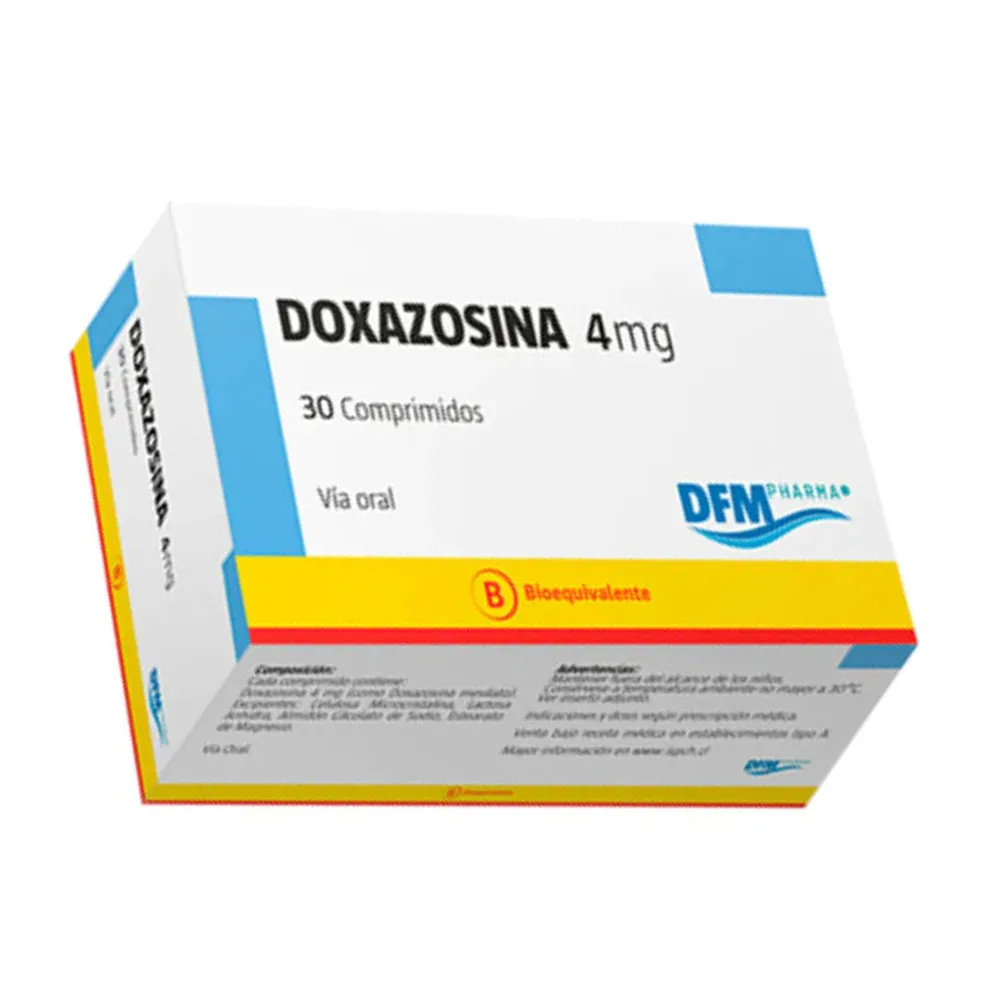
Table of Contents
- Package leaflet: Information for the user
- DOXAZOSINA ALMUS 2 mg tablets, 4 mg tablets
- 1. What DOXAZOSINA ALMUS is and what it is used for
- 2. What you should know before taking DOXAZOSIN ALMUS
- 3. How to take DOXAZOSINA ALMUS
- 4. Possible side effects
- 5. How to store DOXAZOSINA ALMUS
- 6. Package contents and other information
Package leaflet: Information for the user
DOXAZOSINA ALMUS 2 mg tablets, 4 mg tablets
Generic medicine
Please read this leaflet carefully before taking this medicine because it contains
important information for you.
- Keep this leaflet. You may need to read it again.
- If you have any questions, ask your doctor or pharmacist.
- This medicine has been prescribed for you only. Do not give it to other people, even if their symptoms are the same as yours, because it may be dangerous.
- If you experience any adverse reaction, including those not listed in this leaflet, contact your doctor or pharmacist. See section 4.
Contents of this leaflet:
- What DOXAZOSINA ALMUS is and what it is used for
- What you need to know before taking DOXAZOSINA ALMUS
- How to take DOXAZOSINA ALMUS
- Possible side effects
- How to store DOXAZOSINA ALMUS
- Contents of the pack and other information
1. What DOXAZOSINA ALMUS is and what it is used for
DOXAZOSINA ALMUS contains the active substance doxazosin, which belongs to a group of
medicines called alpha-blockers used to lower blood pressure.
DOXAZOSINA ALMUS is indicated for the treatment:
- of high blood pressure (essential arterial hypertension);
- of symptoms caused by a condition called benign prostatic hyperplasia affecting the prostate gland in men.
2. What you should know before taking DOXAZOSIN ALMUS
Do not take DOXAZOSIN ALMUS
- if you are allergic to doxazosin, to quinazolines (e.g. prazosin, terazosin), or to any of the other ingredients of this medicine (listed in section 6);
- if you have a history of orthostatic hypotension. Orthostatic hypotension consists of a sudden drop in blood pressure with dizziness, lightheadedness, or fainting when rising suddenly from a sitting or lying position;
- if, in addition to benign enlargement of the prostate (benign prostatic hyperplasia), you suffer from congestion or obstruction of the upper urinary tract, chronic recurrent urinary tract infection, or bladder stones;
- if you are breastfeeding and need to take this medicine for the treatment of high blood pressure (see section “Pregnancy and breastfeeding”);
- if you suffer from excessively low blood pressure (this applies only if you are taking doxazosin for benign prostatic enlargement);
- if you suffer from continuous urinary leakage (urinary incontinence due to reflux) or absence of urine production (anuria), with or without kidney problems (progressive renal failure). In this case, you should take this medicine only in combination with other medicines.
Warnings and precautions
Talk to your doctor or pharmacist before taking DOXAZOSIN ALMUS.
Exercise particular caution in the following cases:
- at the beginning of treatment, because this medicine may cause a drop in blood pressure (orthostatic hypotension) characterized by dizziness and weakness or, rarely, loss of consciousness (syncope) when rising suddenly from a sitting or lying position. Your doctor should monitor your blood pressure in this case (see section “Possible side effects”). Furthermore, at the beginning of treatment, you should be especially careful if you are elderly, or if you have kidney problems (renal failure), liver problems (hepatic failure), follow a low-salt diet, or take medicines to increase urine output (diuretics);
- if you have heart problems such as:
- fluid accumulation in the lungs (pulmonary edema) due to narrowing of heart valves (aortic or mitral stenosis);
- heart function disorders (high-output heart failure, right-sided heart failure due to pulmonary embolism or pericardial effusion; left ventricular heart failure with low filling pressure). If you suffer from severe ischemic heart disease, consult your doctor;
- if you have liver problems (hepatic failure). If you suffer from severe hepatic failure, taking this medicine is not recommended (see section “Use in patients with liver problems”);
- if you are taking medicines used for erectile dysfunction such as sildenafil, tadalafil, and vardenafil. In this case, inform your doctor, who will advise you on the appropriate dose. Take these medicines at least 6 hours after taking DOXAZOSIN ALMUS (see section “Other medicines and DOXAZOSIN ALMUS”);
- if you are taking medicines for stomach acidity (antacids such as cimetidine) that affect liver metabolism (see section “Other medicines and DOXAZOSIN ALMUS”);
- if you suffer from nerve problems due to diabetes (autonomic diabetic neuropathy);
- if you are scheduled for eye surgery (cataract surgery).
Children
Use in children under 12 years of age is not recommended.
Other medicines and DOXAZOSIN ALMUS
Tell your doctor or pharmacist if you are using, have recently used, or might use any other
medicine.
In particular, inform your doctor if you are taking any of the following medicines:
- medicines used for stomach acidity (antacids such as cimetidine);
- medicines used for high blood pressure (alpha-blockers and other medicines used to treat high blood pressure, including vasodilators and nitrates);
- medicines used to stimulate the sympathetic nervous system (sympathomimetics such as dopamine, ephedrine, adrenaline, metaraminol, and phenylephrine);
- medicines for erectile dysfunction called phosphodiesterase inhibitors (PDE-5 inhibitors) (see section “Warnings and precautions”).
Experimental data on human plasma indicate that doxazosin has no effect on digoxin (used in heart failure), warfarin (an anticoagulant), phenytoin (a medicine used for epilepsy), or indomethacin (an anti-inflammatory medicine).
Clinical experience has also shown that administration of doxazosin does not result in interactions with thiazide diuretics (diuretics mainly used in hypertension), furosemide (a diuretic used in heart failure), beta-blockers (medicines used to treat heart conditions), NSAIDs (anti-inflammatory medicines), antibiotics (used for bacterial infections), oral hypoglycemics (used to treat diabetes), uricosuric agents (used to treat gout), and anticoagulants. However, no further data from pharmacological interaction studies are available.
Pregnancy and breastfeeding
If you are pregnant, suspect you may be pregnant, plan to become pregnant, or are breastfeeding, ask your doctor or pharmacist for advice before using this medicine.
For the treatment of high blood pressure
Take DOXAZOSIN ALMUS during pregnancy only if necessary and under direct medical supervision.
DOXAZOSIN ALMUS is contraindicated if you are breastfeeding (see section “Do not take DOXAZOSIN ALMUS”).
Driving and use of machines
DOXAZOSIN ALMUS may impair your ability to drive or operate machinery, especially at the beginning of treatment. If this occurs, avoid driving and using machinery.
DOXAZOSIN ALMUS contains lactose
This medicine contains a sugar called lactose. If your doctor has diagnosed you with an intolerance to certain sugars, contact him or her before taking this medicine.
3. How to take DOXAZOSINA ALMUS
Take this medicine exactly as directed by your doctor or pharmacist.
If you have any doubts, consult your doctor or pharmacist.
Take the tablets once daily with a sufficient amount of water. Your doctor will determine the dose and duration of treatment for you.
Treatment of high blood pressure: The recommended dose ranges from 1 to 8 mg per day. The maximum dose is 16 mg per day.
At the beginning of therapy, take 1 mg daily (half a 2 mg tablet) before going to bed for one or two weeks. The dose may then be increased to 2 mg per day for one or two weeks. If necessary, your doctor may instruct you to gradually increase the dose to 4, 8, and up to 16 mg per day, depending on your health condition.
Treatment of benign prostatic hyperplasia: The recommended daily dose ranges from 2 to 4 mg per day. At the beginning of therapy, take 1 mg daily (half a 2 mg tablet) for the first 8 days. From day 9 to day 14, take 2 mg daily (one 2 mg tablet). If necessary, your doctor may instruct you to increase the dose to 4 mg daily (one DOXAZOSINA ALMUS 4 mg tablet), and subsequently to the maximum recommended dose of 8 mg per day (two DOXAZOSINA ALMUS 4 mg tablets). The recommended interval between dose increases is 1 to 2 weeks.
Use in elderly patients and patients with kidney problems
If you have kidney problems, it is not necessary to modify the recommended dosage. However, this medicine should be used with caution, especially at the beginning of treatment.
Use in patients with liver problems
In these patients, dose escalation must be carried out very carefully.
Use in children
The use of doxazosin is not recommended in children under 12 years of age.
If you take more DOXAZOSINA ALMUS than you should
In case of overdose, a significant drop in blood pressure may occur. In this case, the patient should immediately be placed in a supine position with the head turned to the side, and a doctor must be contacted immediately for appropriate treatment.
In case of accidental ingestion/overdose of DOXAZOSINA ALMUS, inform a doctor immediately or go to the nearest hospital.
If you forget to take DOXAZOSINA ALMUS
Do not take a double dose to make up for the missed dose.
If you stop taking DOXAZOSINA ALMUS
If you interrupt treatment with doxazosin for a few days, inform your doctor beforehand. In this case, it is recommended to restart treatment at the lowest initial dose of 1 mg per day (half a 2 mg tablet).
If you have any questions about the use of this medicine, consult your doctor or pharmacist.
4. Possible side effects
Like all medicines, this medicine can cause side effects, although not everybody will get them.
The following side effects may occur:
Common (may affect up to 1 in 10 people)
- respiratory and urinary tract infections;
- apathy;
- drowsiness, dizziness, headache (cephalalgia);
- eye problems (accommodation disorders);
- palpitations, increased heart rate (tachycardia);
- low blood pressure (hypotension), dizziness when standing up (postural hypotension);
- bronchitis, cough, difficulty in breathing (dyspnoea), cold symptoms (rhinitis);
- abdominal pain, digestive problems (dyspepsia), dry mouth, nausea;
- itching (pruritus);
- back pain, muscle pain (myalgia);
- lower urinary tract infection (cystitis), urinary incontinence;
- problems with ejaculation (delayed ejaculation);
- feeling of weakness (asthenia);
- chest pain, flu-like symptoms, swelling due to fluid accumulation in arms and legs (peripheral oedema).
Uncommon (may affect up to 1 in 100 people)
- allergic drug reactions;
- gout (a disease caused by uric acid accumulation and characterised by pain, redness and swelling of joints);
- increased appetite, anorexia, decreased potassium levels in the blood, thirst;
- agitation, depression, anxiety, insomnia, nervousness, abnormal dreams, memory loss (amnesia), emotional lability;
- stroke, decreased sensitivity (hypoesthesia), loss of consciousness (syncope), tremor;
- abnormal lacrimation, excessive sensitivity to light (photophobia);
- ringing in the ears (tinnitus);
- heart problems (angina pectoris, myocardial infarction);
- reduced blood flow to limbs (peripheral ischaemia);
- nosebleeds (epistaxis), nasal congestion;
- sore throat (pharyngitis);
- constipation, passing gas (flatulence), vomiting, diarrhoea, inflammation of stomach and intestine (gastroenteritis);
- changes in liver function tests;
- skin irritation (skin rash);
- joint pain (arthralgia) and muscle stiffness;
- difficulty in urination (dysuria), frequent need to urinate and blood in urine (haematuria);
- impotence;
- pain, facial swelling due to fluid accumulation (facial oedema), pale facial colour, facial redness;
- weight gain.
Rare (may affect up to 1 in 1,000 people)
- decreased blood sugar levels (hypoglycaemia);
- eye inflammation (conjunctivitis);
- excessive urine production (polyuria);
- muscle cramps, muscle weakness;
- swelling (oedema) of the larynx;
- sweating.
Very rare (may affect up to 1 in 10,000 people)
- skin irritation (urticaria);
- hair loss (alopecia);
- blood disorders (purpura);
- blurred vision;
- hot flushes;
- fatigue, malaise;
- blood disorders (leucopenia, thrombocytopenia);
- dizziness when standing up (postural vertigo), altered sensation in limbs (paraesthesiae);
- heart rhythm problems (bradycardia, cardiac arrhythmias);
- bronchial constriction (bronchospasm);
- gallstones (cholestasis), liver problems (hepatitis, jaundice);
- increased urine production, problems with urination and need to urinate at night (nocturia);
- breast enlargement in men (gynaecomastia);
- erection problems or painful persistent erection of the penis (priapism). Seek immediate medical advice;
- reduced body temperature in the elderly;
- altered taste (dysgeusia).
Not known (frequency cannot be estimated from the available data)
- eye problems (IFIS, a variant of intraoperative floppy iris syndrome);
- problems with ejaculation (retrograde ejaculation).
Reporting of side effects
If you experience any side effect, including those not listed in this leaflet, please inform your doctor or pharmacist. You can also report side effects directly via the national reporting system at the following website:
http://www.agenziafarmaco.gov.it/content/come-segnalare-una-sospetta-reazione-avversa
By reporting side effects, you can help provide more information on the safety of this medicine.
5. How to store DOXAZOSINA ALMUS
Keep this medicine out of the sight and reach of children.
Do not use this medicine after the expiry date stated on the packaging after "Exp.".
The expiry date refers to the last day of that month.
Do not dispose of any medicine via wastewater or household waste. Ask your pharmacist how to
dispose of medicines you no longer use. This will help protect the environment.
6. Package contents and other information
What DOXAZOSINA ALMUS 2 mg tablets contain
- The active substance is doxazosin. One tablet contains 2.43 mg of doxazosin mesilate (equivalent to 2 mg of doxazosin base).
- The other components are: microcrystalline cellulose, lactose monohydrate, sodium starch glycolate, magnesium stearate, sodium lauryl sulfate.
What DOXAZOSINA ALMUS 4 mg tablets contain
- The active substance is doxazosin. One tablet contains 4.85 mg of doxazosin mesilate (equivalent to 4 mg of doxazosin base).
- The other components are: microcrystalline cellulose, lactose monohydrate, sodium starch glycolate, magnesium stearate, sodium lauryl sulfate.
Description of the appearance of DOXAZOSINA ALMUS and contents of the pack
DOXAZOSINA ALMUS 2 mg tablets – Box containing 30 scored 2 mg tablets in blister packs.
DOXAZOSINA ALMUS 4 mg tablets – Box containing 20 scored 4 mg tablets in blister packs.
Marketing Authorization Holder and Manufacturer
Marketing Authorization Holder
Almus S.r.l. – Via Cesarea, 11/10 - 16121 Genoa – Italy
Manufacturer
Doppel Farmaceutici S.r.l. – Via Volturno, 48 – 20089 Quinto de’ Stampi – Rozzano (Milan) – Italy